Results by title
527 books match the query 'Feminism & Feminist Theory' and 37 start with b

Bad Girls Dirty Pictures
The Challenge to Reclaim FeminismAlison Assiter and Avedon Carol
Pluto Press, 1993
Many feminists would say that this widely publicised version of feminism is itself sexist, and that the increasingly vocal anti-pornography campaigns are founded on theoretical dead-ends that have allowed feminists to deviate drastically from the basic goals of women's liberation.
Bad Girls & Dirty Pictures puts these anti-sex, anti-porn arguments under the microscope of a more thorough and considered feminist analysis. It examines the flaws in the research that purports to prove the harm of pornography and warns against the continuing use of censorship by politicians and the moral right, as well as exposing the dangers of anti-porn feminist arguments.
Contributions from a wide range of women, including sex workers and academics, remind us that pornography does not have a special place in our oppression, and that censorship must still be seen as dangerous enemy of women. Bad Girls & Dirty Pictures is a much-needed antidote to falsehoods, shabby thinking, and patronising sexism that have fuelled anti-pornography campaigns and misled the women's movement.

Bad Object
Elizabeth Weed and Ellen Rooney, special issue editors
Duke University Press, 2017
Schor’s question at the time was “Will a new feminist literary criticism arise that will take literariness seriously while maintaining its vital ideological edge?” The contributors take literariness—the “bad object” of this issue—seriously. They do not necessarily engage in debates about reading, theorize new formalisms, or thematize language; rather, they invigorate and unsettle the reading experience, investigating the relationship between language and meaning.
Contributors. Lee Edelman, Frances Ferguson, Peggy Kamuf, Ramsey McGlazer, Thangam Ravindranathan, Denise Riley, Ellen Rooney, Elizabeth Weed

Badass Feminist Politics
Exploring Radical Edges of Feminist Theory, Communication, and ActivismSarah Jane Blithe
Rutgers University Press, 2022
Badass Feminist Politics includes a diverse range of engaging feminist political projects to not only analyze the work being done on the ground but provide an overview for action that can be taken on by those seeking to engage in feminist activism in their own communities. Contributors included here are working for equality and equity and resisting violent, racist, homophobic, transphobic, xenophobic, and sexist language and action during this tension-filled political moment. Collectively, the book explores what it means to live and communicate feminist politics in everyday choices and actions, and how we can facilitate learning by analyzing these examples. Taking up current issues and new theoretical perspectives, the authors offer novel perspectives into what it means to live feminist politics. This book is a testament to resilience, resistance, communication, and forward thinking about what these themes all mean for new feminist agendas. Learning how to resist oppressive structures through words and actions is particularly important for students. Badass Feminist Politics features scholars from non-dominant groups taking up issues of marginalization and oppression, which can help people accomplish their social justice goals of inclusivity on the ground and in the classroom.
Become Ungovernable
An Abolition Feminist Ethic for Democratic LivingH.L.T. Quan
Pluto Press, 2004
'Phenomenal ... Offers us possibilities for rescuing the concept of democracy from its fatal entanglement with racial, heteropatriarchal capitalism' -- Angela Y. Davis
'Embraces the unruliness of collective struggle, and recognizes freedom not as a destination but practice—an abolitionist, feminist, anticapitalist, antiracist, radically inclusive practice' -- Robin D.G. Kelley, author of Freedom Dreams
'A compelling and inspiring book that belongs in our movements and our classrooms' -- Chandra Talpade Mohanty, author of Feminism Without Borders
'An elegantly written masterpiece' -- Barbara Ransby, author of Making All Black Lives Matter
Become Ungovernable is a provocative new work of political thought setting out to reclaim “freedom”, “justice”, and “democracy”, revolutionary ideas that are all too often warped in the interests of capital and the state. Revealing the mirage of mainstream democratic thought and the false promises of liberal political ideologies, H.L.T. Quan offers an alternative approach: an abolition feminism drawing on a kaleidoscope of refusal praxes, and on a deep engagement with the Black Radical Tradition and queer analytics.
With each chapter anchored by episodes from the long history of resistance and rebellions against tyranny, Quan calls for us to take up a feminist ethic of living rooted in the principles of radical inclusion, mutuality and friendship as part of the larger toolkit for confronting fascism, white supremacy, and the neoliberal labor regime.
H.L.T. Quan is a political theorist, award-winning filmmaker and Associate Professor of Justice and Social Inquiry in the School of Social Transformation at Arizona State University. Quan is the author of Growth Against Democracy and editor of Cedric J. Robinson.
Becoming a Place of Unrest
Environmental Crisis and Ecophenomenological PraxisRobert Booth
Ohio University Press, 2021

Before the Fire Dogs Steal the Sun
An ElegyCrystal Mun-hye Baik
Duke University Press, 2026
Behind the Veil in Arabia
Women in OmanUnni Wikan
University of Chicago Press, 1991
"Wikan does provide insights into the real position of these secluded and segregated women. . . . All this is interesting and valuable."—Ahdaf Soueif, Times Literary Supplement
"The book is detailed, insightful, and . . . engrossing. Anyone interested in the day-to-day triumphs and sorrows of women who live 'behind the veil' will want to read this account."—Arab Book World
"Wikan, a fine ethnographer, has an eye for everything that is distinctive about the culture and . . . builds up a wholly convincing picture. Above all, there is a sustained attempt to penetrate the inner lives of these strangely serene people."—Frank H. Stewart, Wilson Quarterly
"This book will certainly be of interest to all scholars concerned with sexual identity in the Islamic world."—Henry Munson, American Anthropologist
Between Shadows and Noise
Sensation, Situatedness, and the UndisciplinedAmber Jamilla Musser
Duke University Press, 2024
Between Woman and Nation
Nationalisms, Transnational Feminisms, and the StateCaren Kaplan, Norma Alarcón, and Minoo Moallem, eds.
Duke University Press, 1999
This interdisciplinarily collection investigates women in diverse locales—ranging from Quebec to Beirut. The contributors consider such subjects as Yucatan feminism, Islamic fundamentalisms, Canadian gender formations, historic Chicana/o struggles, and Israeli/Palestinian conflicts. Divided into three parts, the collection first examines constructions of nationalism and communities whose practices complicate these constructions. The second section discusses regulations of particular nation-states and how they affect the lives of women, while the third presents studies of transnational identity formation, in which contributors critique ideas such as “multicultural nationalism” and “global feminism.” Arguing provocatively that such movements and concepts inadequately represent women’s interests, contributors examine how such beliefs and their attendant organizations may actually bolster the very formations they ought to subvert.
In its demonstration of the critical possibilities of feminist alliances across discrepant and distinct material conditions, Between Woman and Nation will make a unique contribution to women’s studies, feminist theory, studies of globalization and transnationalism, ethnic studies, and cultural studies.

Beverley Ditsie's Fearless Speech
A Dialogue on the Pitfalls of Queer StruggleSharad Chari with Beverley Palesa Ditsie
Temple University Press, 2027
Beverley Palesa Ditsie is a key South African Black lesbian activist, part of a world of queer activism during South Africa’s decade of transition from apartheid, when sexuality was crucial to recircuiting post-apartheid power and possibility. Part of the Gay and Lesbian Organization of the Witwatersrand (GLOW) which organized the continent’s first Pride March, she has stood steadfastly for Black lesbian self-determination and African queer representation.
Beverley Ditsie’s Fearless Speech enters this recent history of sexuality politics through an activist and a critical theorist in conversation. This book bends an account of Ditsie’s life and work in the critique of racial and sexual capitalism. Grounded in South Africa, the conversation is cut through with radical queer, materialist, and feminist critique in an internationalist frame.
Through this dialogic form, Beverley Ditsie emerges alongside other figures of fearless speech willing to stand for Black and African queer liberation, yet aware of pitfalls in these struggles that point to work that remains to be done. Beverley Ditsie’s Fearless Speech is a cautionary tale of hope for radical change in a world of deepening injustice and political homophobia.
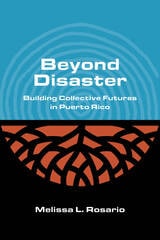
Beyond Disaster
Building Collective Futures in Puerto RicoMelissa L. Rosario
Northwestern University Press, 2025
An alternative view of Puerto Rico’s past, present, and future
How do we map the pathways to liberation where we have been taught to see only trauma, suffering, and lack? Melissa L. Rosario offers an alternative view of Puerto Rico, America’s oldest colony, removing readers from the framework of crisis to consider the deeper legacies of its current impasse. Beyond Disaster: Building Collective Futures in Puerto Rico is an intimate portrait, weaving insights from the author’s own life, research, and organizing work as a scholar in the diaspora who rematriated. Rosario bridges the genres of social history and memoir to unsettle the meaning of resistance and freedom, underscoring the deep wounds of colonialism while still uplifting the profound possibilities of embodied alternatives.
Beyond Disaster critiques the framework of debt and crisis by examining the psychological, emotional, and spiritual effects of colonialism. Rosario highlights key examples of organizing efforts to defend land and education against total enclosure, protecting life amid loss. This book offers a series of microhistories, vignettes, and prose poetry to foreground the daily practices necessary to anchor the ecological and political landscapes of our collective future.
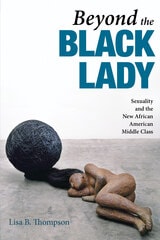
Beyond the Black Lady
Sexuality and the New African American Middle ClassLisa B. Thompson
University of Illinois Press, 2012

Beyond the Body Proper
Reading the Anthropology of Material LifeMargaret Lock and Judith Farquhar, eds.
Duke University Press, 2007
Beyond the Body Proper includes nine sections conceptually organized around themes such as everyday life, sex and gender, and science. Each section is preceded by interpretive commentary by the volume’s editors. Within the collection are articles and book excerpts focused on bodies using tools and participating in rituals, on bodies walking and eating, and on the female circumcision controversy, as well as pieces on medical classifications, spirit possession, the commodification of body parts, in vitro fertilization, and an artist/anatomist’s “plastination” of cadavers for display. Materialist, phenomenological, and feminist perspectives on embodiment appear along with writings on interpretations of pain and the changing meanings of sexual intercourse. Essays on these topics and many others challenge Eurocentric assumptions about the body as they speak to each other and to the most influential contemporary trends in the human sciences.
With selections by: Henry Abelove, Walter Benjamin, Janice Boddy, John Boswell, Judith Butler, Caroline Walker Bynum, Stuart Cosgrove, Michel de Certeau, Gilles Deleuze, Alice Domurat Dreger, Barbara Duden, Friedrich Engels, E. E. Evans-Pritchard, Judith Farquhar, Marcel Granet, Felix Guattari, Ian Hacking, Robert Hertz, Patricia Leyland Kaufert, Arthur Kleinman, Shigehisa Kuriyama, Jean Langford, Bruno Latour, Margaret Lock, Emily Martin, Karl Marx, Marcel Mauss, Maurice Merleau-Ponty, Nancy K. Miller, Lisa Jean Moore, John D. O’Neil, Aihwa Ong, Mariella Pandolfi, Susan Pedersen, Gregory M. Pflugfelder, Rayna Rapp, Nancy Scheper-Hughes, Kristofer Schipper, Matthew Schmidt, Peter Stallybrass, Michael Taussig, Charis Thompson, E.P. Thompson, Anna Lowenhaupt Tsing, Victor Turner, Terence Turner, Jose van Dijck, Keith Wailoo, Brad Weiss, Allon White

Beyond the Public Sphere
Film and the Feminist ImaginaryMaría Pía Lara
Northwestern University Press, 2021
In Beyond the Public Sphere: Film and the Feminist Imaginary, the renowned philosopher and critical theorist María Pía Lara challenges the notion that the bourgeois public sphere is the most important informal institution between social and political actors and the state.
Drawing on a wide range of films—including The Milk of Sorrow, Ixcanul, Wadja, The Stone of Patience, Marnie, A Streetcar Named Desire, and Talk to Her—Lara dissects cinematic images of women’s struggles and their oppression. She builds on this analysis, developing a concept of the feminist social imaginary as a broader and more complex space that provides a way of thinking through the possibilities for emancipatory social transformation in response to forms of domination perpetuated by patriarchal capitalism.

Beyond the Sword Maiden
A Storyteller's Introduction to the Heroine's JourneyDorothy Cleveland & Barbara Schutzgruber
Parkhurst Brothers, Inc., 2017
---Csenge Virág Zalka, storyteller, author of Tales of Superhuman Powers and Dancing on Blades

Big Feelings
Queer and Feminist Indie Rock After Riot GrrrlDan DiPiero
University of Michigan Press, 2025
By bringing listeners’ experiences into the analysis, DiPiero shows how indie rock feminisms have shifted since the 1990s, rejecting overt political messages in favor of sonic catharsis, and reflecting the complex, ambivalent feeling of being young while the world burns. In reprising the sounds of an alt-rock associated in public consciousness with white male pain, Big Feelings doubles down on the stereotypical association between femininity and emotionality to perform whole spectrums of feeling in varied states of overwhelm. In doing so, these artists draw attention to overlooked histories of women and queer musicians who have been forging indie rock all along, while also remaking how the music matters in the present.

Big Sister
Feminism, Conservatism, and Conspiracy in the HeartlandErin M. Kempker
University of Illinois Press, 2018

Biocultural Creatures
Toward a New Theory of the HumanSamantha Frost
Duke University Press, 2016

Biological Relatives
IVF, Stem Cells, and the Future of KinshipSarah Franklin
Duke University Press, 2013
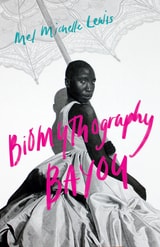
Biomythography Bayou
Mel Michelle Lewis
Bucknell University Press, 2025
Biomythography Bayou is more than just a book of memoir; it is a ritual for conjuring queer embodied knowledges and decolonial perspectives. Blending a rich gumbo of genres—from ingredients such as praise songs, folk tales, recipes, incantations, and invocations—it also includes a multimedia component, with “bayou tableau” images and audio recording links. Inspired by such writers as Audre Lorde, Zora Neale Hurston, and Octavia Butler, Mel Michelle Lewis draws from the well of her ancestors in order to chart a course toward healing Afrofutures. Showcasing the nature, folklore, dialect, foodways, music, and art of the Gulf’s coastal communities, Lewis finds poetic ways to celebrate their power and wisdom.

Birth Weight and Economic Growth
Women's Living Standards in the Industrializing WestW. Peter Ward
University of Chicago Press, 1993
Drawing on clinical records from urban maternity hospitals and outpatient services, Ward compares birth weight between cities and traces changes in fetal size during a period in which some cities experienced dramatic economic development while others stagnated. Because fetal growth is strongly affected by maternal nutrition, Ward's research sheds new light on the well-being of working-class women whose living conditions have long been obscure and exceedingly difficult to examine.
This book will interest social and economic historians, as well as scholars of women's studies and the history of medicine, and its lessons on the distribution of social benefits during economic change have immidiate relevance for today's developing countries.

Bitter Milk
Women and TeachingMadeleine R. Grumet
University of Massachusetts Press, 1988
The first and last chapters address the familial relations that fall under the category of reproduction, a frame designed to emphasize the relations of reproduction and their importance to educational theory. The chapters closest to this margin are those that address women's work in schools, and the juxtaposition is chosen to accentuate the dialectical relation of our public and private meanings. The middle chapters are the ones most directly concerned with curriculum, that provisional ground that Grumet is naming as our mediating space, the place where we can heal. The fundamental argument of this text is that knowledge evolves in human relationships.
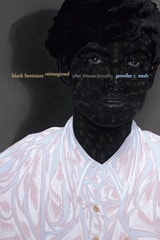
Black Feminism Reimagined
After IntersectionalityJennifer C. Nash
Duke University Press, 2019

Black Feminist Anthropology, 25th Anniversary Edition
Theory, Politics, Praxis, and PoeticsIrma McClaurin
Rutgers University Press, 2025

Black Feminist Anthropology
Theory, Politics, Praxis, and PoeticsMcClaurin, Irma
Rutgers University Press, 2001
In this volume, Irma McClaurin has collected-for the first time-essays that explore the role and contributions of black feminist anthropologists. She has asked her contributors to disclose how their experiences as black women have influenced their anthropological practice in Africa, the Caribbean, and the United States, and how anthropology has influenced their development as black feminists. Every chapter is a unique journey that enables the reader to see how scholars are made. The writers present material from their own fieldwork to demonstrate how these experiences were shaped by their identities. Finally, each essay suggests how the author's field experiences have influenced the theoretical and methodological choices she has made throughout her career.
Not since Diane Wolf's Feminist Dilemmas in the Field or Hortense Powdermaker's Stranger and Friend have we had such a breadth of women anthropologists discussing the critical (and personal) issues that emerge when doing ethnographic research.

Black Girl Autopoetics
Agency in Everyday Digital PracticeAshleigh Greene Wade
Duke University Press, 2024
Black Marriage
Ann duCille, special issue editor
Duke University Press, 2018
Against the backdrop of such scholarship, contributors look back to scholarly, legal, and literary treatments of the marriage question and address current concerns, from Beyoncé’s music and marriage to the issues of interracial coupling, marriage equality, and the much-discussed decline in African American marriage rates.
Contributors: Ann duCille, Oneka LaBennett, Mignon Moore, Kevin Quashie, Renee Romano, Hortense Spillers, Kendall Thomas, Rebecca Wanzo, Patricia Williams

Black Trans Feminism
Marquis Bey
Duke University Press, 2022
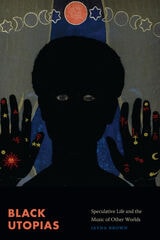
Black Utopias
Speculative Life and the Music of Other WorldsJayna Brown
Duke University Press, 2021
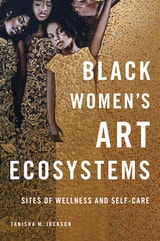
Black Women's Art Ecosystems
Sites of Wellness and Self-CareTanisha M. Jackson
University of Illinois Press, 2025
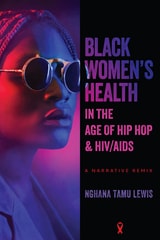
Black Women’s Health in the Age of Hip Hop and HIV/AIDS
A Narrative RemixNghana tamu Lewis
The Ohio State University Press, 2025
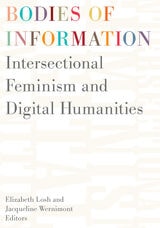
Bodies of Information
Intersectional Feminism and the Digital HumanitiesElizabeth Losh
University of Minnesota Press, 2018
A wide-ranging, interconnected anthology presents a diversity of feminist contributions to digital humanities
In recent years, the digital humanities has been shaken by important debates about inclusivity and scope—but what change will these conversations ultimately bring about? Can the digital humanities complicate the basic assumptions of tech culture, or will this body of scholarship and practices simply reinforce preexisting biases? Bodies of Information addresses this crucial question by assembling a varied group of leading voices, showcasing feminist contributions to a panoply of topics, including ubiquitous computing, game studies, new materialisms, and cultural phenomena like hashtag activism, hacktivism, and campaigns against online misogyny.
Taking intersectional feminism as the starting point for doing digital humanities, Bodies of Information is diverse in discipline, identity, location, and method. Helpfully organized around keywords of materiality, values, embodiment, affect, labor, and situatedness, this comprehensive volume is ideal for classrooms. And with its multiplicity of viewpoints and arguments, it’s also an important addition to the evolving conversations around one of the fastest growing fields in the academy.
Contributors: Babalola Titilola Aiyegbusi, U of Lethbridge; Moya Bailey, Northeastern U; Bridget Blodgett, U of Baltimore; Barbara Bordalejo, KU Leuven; Jason Boyd, Ryerson U; Christina Boyles, Trinity College; Susan Brown, U of Guelph; Lisa Brundage, CUNY; micha cárdenas, U of Washington Bothell; Marcia Chatelain, Georgetown U; Danielle Cole; Beth Coleman, U of Waterloo; T. L. Cowan, U of Toronto; Constance Crompton, U of Ottawa; Amy E. Earhart, Texas A&M; Nickoal Eichmann-Kalwara, U of Colorado Boulder; Julia Flanders, Northeastern U Library; Sandra Gabriele, Concordia U; Brian Getnick; Karen Gregory, U of Edinburgh; Alison Hedley, Ryerson U; Kathryn Holland, MacEwan U; James Howe, Rutgers U; Jeana Jorgensen, Indiana U; Alexandra Juhasz, Brooklyn College, CUNY; Dorothy Kim, Vassar College; Kimberly Knight, U of Texas, Dallas; Lorraine Janzen Kooistra, Ryerson U; Sharon M. Leon, Michigan State; Izetta Autumn Mobley, U of Maryland; Padmini Ray Murray, Srishti Institute of Art, Design, and Technology; Veronica Paredes, U of Illinois; Roopika Risam, Salem State; Bonnie Ruberg, U of California, Irvine; Laila Shereen Sakr (VJ Um Amel), U of California, Santa Barbara; Anastasia Salter, U of Central Florida; Michelle Schwartz, Ryerson U; Emily Sherwood, U of Rochester; Deb Verhoeven, U of Technology, Sydney; Scott B. Weingart, Carnegie Mellon U.

Body Drift
Butler, Hayles, HarawayArthur Kroker
University of Minnesota Press, 2012
As exemplary representatives of a form of critical feminism, the writings of Judith Butler, Katherine Hayles, and Donna Haraway offer entry into the great crises of contemporary society, politics, and culture. Butler leads readers to rethink the boundaries of the human in a time of perpetual war. Hayles turns herself into a “writing machine” in order to find a dwelling place for the digital humanities within the austere landscape of the culture of the code. Haraway is the one contemporary thinker to have begun the necessary ethical project of creating a new language of potential reconciliation among previously warring species.
According to Arthur Kroker, the postmodernism of Judith Butler, the posthumanism of Katherine Hayles, and the companionism of Donna Haraway are possible pathways to the posthuman future that is captured by the specter of body drift. Body drift refers to the fact that individuals no longer inhabit a body, in any meaningful sense of the term, but rather occupy a multiplicity of bodies: gendered, sexualized, laboring, disciplined, imagined, and technologically augmented.
Body drift is constituted by the blast of information culture envisioned by artists, communicated by social networking, and signified by its signs. It is lived daily by remixing, resplicing, and redesigning the codes: codes of gender, sexuality, class, ideology, and identity. The writings of Butler, Hayles, and Haraway, Kroker reveals, provide the critical vocabulary and political context for understanding the deep complexities of body drift and challenging the current emphasis on the material body.

Bread and Roses
Gender and Class Under CapitalismAndrea D'Atri
Pluto Press, 2021
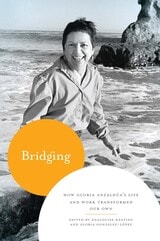
Bridging
How Gloria Anzaldúa's Life and Work Transformed Our OwnEdited by AnaLouise Keating and Gloria González-López
University of Texas Press, 2011
The inspirational writings of cultural theorist and social justice activist Gloria Anzaldúa have empowered generations of women and men throughout the world. Charting the multiplicity of Anzaldúa's impact within and beyond academic disciplines, community trenches, and international borders, Bridging presents more than thirty reflections on her work and her life, examining vibrant facets in surprising new ways and inviting readers to engage with these intimate, heartfelt contributions.
Bridging is divided into five sections: The New Mestizas: "transitions and transformations"; Exposing the Wounds: "You gave me permission to fly in the dark"; Border Crossings: Inner Struggles, Outer Change; Bridging Theories: Intellectual Activism with/in Borders; and "Todas somos nos/otras": Toward a "politics of openness." Contributors, who include Norma Elia Cantú, Elisa Facio, Shelley Fisher Fishkin, Aída Hurtado, Andrea Lunsford, Denise Segura, Gloria Steinem, and Mohammad Tamdgidi, represent a broad range of generations, professions, academic disciplines, and national backgrounds. Critically engaging with Anzaldúa's theories and building on her work, they use virtual diaries, transformational theory, poetry, empirical research, autobiographical narrative, and other genres to creatively explore and boldly enact future directions for Anzaldúan studies.
A book whose form and content reflect Anzaldúa's diverse audience, Bridging perpetuates Anzaldúa's spirit through groundbreaking praxis and visionary insights into culture, gender, sexuality, religion, aesthetics, and politics. This is a collection whose span is as broad and dazzling as Anzaldúa herself.
Building Womanist Coalitions
Writing and Teaching in the Spirit of LoveEdited by Gary L. Lemons
University of Illinois Press, 2019
Built To Win
The Female Athlete As Cultural IconLeslie Heywood
University of Minnesota Press, 2003
A timely look at the rise of women in sports
The sculpted speed of Marion Jones. The grit and agility of Mia Hamm. The slam-dunk style of Lisa Leslie. The skill and finesse of these sports figures are widely admired, no longer causing the puzzlement and discomfort directed toward earlier generations of athletic women. Built to Win explores this relatively recent phenomenon—the confident, empowered female athletes found everywhere in American popular culture.
Leslie Heywood and Shari L. Dworkin examine the role of female athletes through interviews with elementary- and high school-age girls and boys; careful readings of ad campaigns by Nike, Reebok, and others; discussions of movies like Fight Club and Girlfight; and explorations of their own sports experiences. They ask: what, if any, dissonance is there between popular images and the actual experiences of these athletes? Do these images really “redefine femininity” and contribute to a greater inclusion of all women in sport? Are sexualized images of these women damaging their quest to be taken seriously? Do they inspire young boys to respect and admire female athletes, and will this ultimately make a difference in the ways gender and power are constructed and perceived?Proposing a paradigm shift from second- to third-wave feminism, Heywood and Dworkin argue that, in the years since the passage of Title IX, gender stereotypes have been destabilized in profound ways, and they assert that female athletes and their imagery are doing important cultural work to that end. Important, refreshing, and engrossing, Built to Win examines sport in all its complexity.