Results by title
207 books match the query 'Feminist theory' and 13 start with b

Bad Objects
Essays Popular and UnpopularNaomi Schor
Duke University Press, 1995
Written in a distinctive personal and self-reflective mode, this collection offers new unpublished work and brings together for the first time some of Schor’s best-known and most influential essays. These engagements with Anglo-American feminist theory, Freud and psychoanalytic theory, French poststructuralists such as Barthes, Foucault, and Irigaray, and French fiction by or about women—especially of the nineteenth century—also address such issues as bilingual identity, professional controversies, female fetishism, and literature and gender. Schor then concludes with a provocative meditation on the future of feminism.
As they read Bad Objects, Anglo-American theoreticians who have been mainly preoccupied with French feminism will find themselves drawn into French literary and cultural history, while French literary critics and historians will be placed in contact with feminist debate.

Badass Feminist Politics
Exploring Radical Edges of Feminist Theory, Communication, and ActivismSarah Jane Blithe
Rutgers University Press, 2022
Badass Feminist Politics includes a diverse range of engaging feminist political projects to not only analyze the work being done on the ground but provide an overview for action that can be taken on by those seeking to engage in feminist activism in their own communities. Contributors included here are working for equality and equity and resisting violent, racist, homophobic, transphobic, xenophobic, and sexist language and action during this tension-filled political moment. Collectively, the book explores what it means to live and communicate feminist politics in everyday choices and actions, and how we can facilitate learning by analyzing these examples. Taking up current issues and new theoretical perspectives, the authors offer novel perspectives into what it means to live feminist politics. This book is a testament to resilience, resistance, communication, and forward thinking about what these themes all mean for new feminist agendas. Learning how to resist oppressive structures through words and actions is particularly important for students. Badass Feminist Politics features scholars from non-dominant groups taking up issues of marginalization and oppression, which can help people accomplish their social justice goals of inclusivity on the ground and in the classroom.

Become Ungovernable
An Abolition Feminist Ethic for Democratic LivingH.L.T. Quan
Pluto Press, 2004
'Phenomenal ... Offers us possibilities for rescuing the concept of democracy from its fatal entanglement with racial, heteropatriarchal capitalism' -- Angela Y. Davis
'Embraces the unruliness of collective struggle, and recognizes freedom not as a destination but practice—an abolitionist, feminist, anticapitalist, antiracist, radically inclusive practice' -- Robin D.G. Kelley, author of Freedom Dreams
'A compelling and inspiring book that belongs in our movements and our classrooms' -- Chandra Talpade Mohanty, author of Feminism Without Borders
'An elegantly written masterpiece' -- Barbara Ransby, author of Making All Black Lives Matter
Become Ungovernable is a provocative new work of political thought setting out to reclaim “freedom”, “justice”, and “democracy”, revolutionary ideas that are all too often warped in the interests of capital and the state. Revealing the mirage of mainstream democratic thought and the false promises of liberal political ideologies, H.L.T. Quan offers an alternative approach: an abolition feminism drawing on a kaleidoscope of refusal praxes, and on a deep engagement with the Black Radical Tradition and queer analytics.
With each chapter anchored by episodes from the long history of resistance and rebellions against tyranny, Quan calls for us to take up a feminist ethic of living rooted in the principles of radical inclusion, mutuality and friendship as part of the larger toolkit for confronting fascism, white supremacy, and the neoliberal labor regime.
H.L.T. Quan is a political theorist, award-winning filmmaker and Associate Professor of Justice and Social Inquiry in the School of Social Transformation at Arizona State University. Quan is the author of Growth Against Democracy and editor of Cedric J. Robinson.
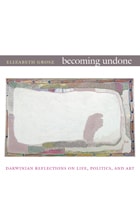
Becoming Undone
Darwinian Reflections on Life, Politics, and ArtElizabeth Grosz
Duke University Press, 2011
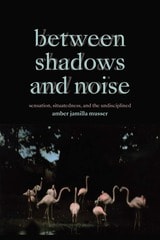
Between Shadows and Noise
Sensation, Situatedness, and the UndisciplinedAmber Jamilla Musser
Duke University Press, 2024
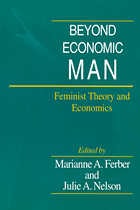
Beyond Economic Man
Feminist Theory and EconomicsEdited by Marianne A. Ferber and Julie A. Nelson
University of Chicago Press, 1993
Beyond Economic Man raises questions about the discipline not because economics is too objective but because it is not objective enough. The contributors—nine economists, a sociologist, and a philosopher—discuss the extent to which gender has influenced both the range of subjects economists have studied and the way in which scholars have conducted their studies. They investigate, for example, how masculine concerns underlie economists' concentration on market as opposed to household activities and their emphasis on individual choice to the exclusion of social constraints on choice. This focus on masculine interests, the contributors contend, has biased the definition and boundaries of the discipline, its central assumptions, and its preferred rhetoric and methods. However, the aim of this book is not to reject current economic practices, but to broaden them, permitting a fuller understanding of economic phenomena.
These essays examine current economic practices in the light of a feminist understanding of gender differences as socially constructed rather than based on essential male and female characteristics. The authors use this concept of gender, along with feminist readings of rhetoric and the history of science, as well as postmodernist theory and personal experience as economists, to analyze the boundaries, assumptions, and methods of neoclassical, socialist, and institutionalist economics.
The contributors are Rebecca M. Blank, Paula England, Marianne A. Ferber, Nancy Folbre, Ann L. Jennings, Helen E. Longino, Donald N. McCloskey, Julie A. Nelson, Robert M. Solow, Diana Strassmann, and Rhonda M. Williams.

Black Feminism Reimagined
After IntersectionalityJennifer C. Nash
Duke University Press, 2019

Body Drift
Butler, Hayles, HarawayArthur Kroker
University of Minnesota Press, 2012
As exemplary representatives of a form of critical feminism, the writings of Judith Butler, Katherine Hayles, and Donna Haraway offer entry into the great crises of contemporary society, politics, and culture. Butler leads readers to rethink the boundaries of the human in a time of perpetual war. Hayles turns herself into a “writing machine” in order to find a dwelling place for the digital humanities within the austere landscape of the culture of the code. Haraway is the one contemporary thinker to have begun the necessary ethical project of creating a new language of potential reconciliation among previously warring species.
According to Arthur Kroker, the postmodernism of Judith Butler, the posthumanism of Katherine Hayles, and the companionism of Donna Haraway are possible pathways to the posthuman future that is captured by the specter of body drift. Body drift refers to the fact that individuals no longer inhabit a body, in any meaningful sense of the term, but rather occupy a multiplicity of bodies: gendered, sexualized, laboring, disciplined, imagined, and technologically augmented.
Body drift is constituted by the blast of information culture envisioned by artists, communicated by social networking, and signified by its signs. It is lived daily by remixing, resplicing, and redesigning the codes: codes of gender, sexuality, class, ideology, and identity. The writings of Butler, Hayles, and Haraway, Kroker reveals, provide the critical vocabulary and political context for understanding the deep complexities of body drift and challenging the current emphasis on the material body.
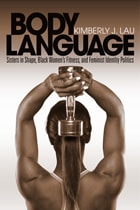
Body Language
Sisters in Shape, Black Women's Fitness, and Feminist Identity PoliticsKimberly J. Lau
Temple University Press, 2011
In her evocative ethnographic study, Body Language, Kimberly Lau traces the multiple ways in which the success of an innovative fitness program illuminates what identity means to its Black female clientele and how their group interaction provides a new perspective on feminist theories of identity politics—especially regarding the significance of identity to political activism and social change.
Sisters in Shape, Inc., Fitness Consultants (SIS), a Philadelphia company, promotes balance in physical, mental, and spiritual health. Its program goes beyond workouts, as it educates and motivates women to make health and fitness a priority. Discussing the obstacles at home and the importance of the group's solidarity to their ability to stay focused on their goals, the women speak to the ways in which their commitment to reshaping their bodies is a commitment to an alternative future.
Body Language shows how the group's explorations of black women's identity open new possibilities for identity-based claims to recognition, justice, and social change.
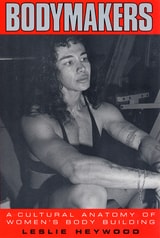
Bodymakers
A Cultural Anatomy of Women's Body BuildingLeslie Heywood
Rutgers University Press, 1998
"Bodymakers is most ambitious in terms of its engagement with feminist cultural criticism and its unconventional scope. Heywood comments on film, novels, magazine pictures, popular criticisms of feminism, the J. Crew catalog, [and] the concept of power feminism." --Gender and Society
"In this brilliantly insightful and immensely readable book, Leslie Heywood makes us think about women's body building in an entirely new way. She argues persuasively that, far from being an individualistic, apolitical act, it is a powerful form of resistance, empowering women to overcome their victim status and heal past abuse." --Myra Dinnerstein, University of Arizona
"Bodymakers has a power and an honesty that is unusual in a book with its theoretical sophistication." --Susan Bordo, author of Unbearable Weight and Twilight Zones: The Hidden Life of Cultural Images from Plato to O.J.
"With clarity, force, and passionate investment grounded in both theory and her own experience, Heywood understands that women can strengthen body, mind, and spirit through everyday practice. Her argument that body building is this kind of activist practice is as inspirational as it is poignant." --Joanna Frueh, author of Erotic Faculties
"Flexing her muscles through autobiographical, theoretical, and spectacular acts, Heywood insists that we read the muscular female body not as an 'extreme oddity' but as a 'form of activism' through which we can understand anew larger cultural issues and trends, including the American romance with individualism and the relationship of second and third wave feminisms. Muscular female bodies will never be read in the same way again." --Sidonie Smith, University of Michigan
Women with muscles are a recent phenomenon, so recent that, while generating a good deal of interest, their importance to the cultural landscape has yet to be acknowledged. Leslie Heywood looks at the sport and image of female body building as a metaphor for how women fare in our current political and cultural climate. She argues that the movement in women's body building from small, delicate bodies to large powerful ones and back again is directly connected to progress and backlash within the abortion debate, the ongoing struggle for race and gender equality, and the struggle to define "feminism" in the context of the nineties. She discusses female body building as activism, as an often effective response to abuse, race and masculinity in body building, and the contradictory ways that photographers treat female body builders. Engaging and accessible, Bodymakers reveals how female body builders find themselves both trapped and empowered by their sport.

Breaking Up (at) Totality
A Rhetoric of LaughterD. Diane Davis
Southern Illinois University Press, 2000
Rhetoric and composition theory has shown a renewed interest in sophistic countertraditions, as seen in the work of such "postphilosophers" as Jacques Derrida, Michel Foucault, and Hélène Cixous, and of such rhetoricians as Susan Jarratt and Steven Mailloux. As D. Diane Davis traces today’s theoretical interest to those countertraditions, she also sets her sights beyond them.
Davis takes a “third sophistics” approach, one that focuses on the play of language that perpetually disrupts the “either/or” binary construction of dialectic. She concentrates on the nonsequential third—excess—that overflows language’s dichotomies. In this work, laughter operates as a trope for disruption or breaking up, which is, from Davis’s perspective, a joyfully destructive shattering of our confining conceptual frameworks.

Brokered Subjects
Sex, Trafficking, and the Politics of FreedomElizabeth Bernstein
University of Chicago Press, 2018
Building Womanist Coalitions
Writing and Teaching in the Spirit of LoveEdited by Gary L. Lemons
University of Illinois Press, 2019