Results by title
1726 books match the query 'Film' and 77 start with b
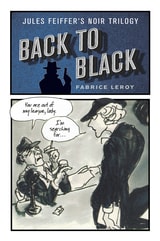
Back to Black
Jules Feiffer’s Noir TrilogyFabrice Leroy
Rutgers University Press, 2025
Named the Best Academic Work of 2025 by The Comics Journal
The legendary American cartoonist and author Jules Feiffer has enjoyed a long and varied career, working on everything from illustrating The Phantom Tollbooth to writing the screenplay for the film Popeye. But some of his most innovative work came very late in his career, with a trio of graphic novels he composed in his eighties: Kill My Mother (2014), Cousin Joseph (2016), and The Ghost Script (2018).
Back to Black provides the first full-length critical analysis of this trilogy, exploring how it pays homage to the iconography and themes of film noir through constant graphic experimentation and a striking reinvention of Feiffer’s distinctive style. Fabrice Leroy shows how Feiffer deftly alternates between dramatic and satirical tones as he plays with the conventions of noir to provide a caustic yet moving commentary on mid-twentieth-century American life. Through close readings of each novel in the trilogy, he examines Feiffer’s singular depiction of the central political issues in the United States from the Great Depression to the 1950s, which still resonate today: unionization struggles, cinematic propaganda, McCarthyism, the American Dream, immigration, antisemitism, civil rights, and gender discrimination. Placing the noir trilogy into the context of Feiffer’s long career, Back to Black demonstrates how he offers a loving pastiche of the genre without losing his unique voice or critical edge.
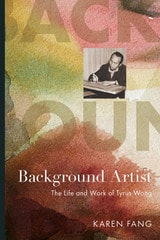
Background Artist
The Life and Work of Tyrus WongKaren Fang
Rutgers University Press, 2025
Chinese American Librarians Association Best Book Award (Honorary Mention, Adult Non-fiction category)
You might not know the name Tyrus Wong, but you probably know some of the images he created, including scenes from the beloved Disney classic Bambi. Yet when he came to this country as a child, Tyrus was an illegal immigrant locked up in an offshore detention center. How did he go on to a long and prosperous career drawing animation cels, storyboards, and greeting cards that shaped the American imagination?
Background Artist shares the inspiring story of Tyrus Wong’s remarkable 106-year life and showcases his wide array of creative work, from the paintings and fine art prints he made working for Roosevelt’s Works Progress Administration to the unique handmade kites he designed and flew on the Santa Monica beach. It tells how he came to the United States as a ten-year-old boy in 1920, at a time when the Chinese Exclusion Act barred him from legal citizenship. Yet it also shows how Wong found American communities that welcomed him and nurtured his artistic talent. Covering everything from his work as a studio sketch artist for Warner Bros. to the best-selling Christmas cards he designed for Hallmark and other greeting card companies, this book celebrates a multitalented Asian American artist and pioneer.
Larry Potash (WGN News) and "The artist who saved a Hollywood classic from never being made" (https://www.youtube.com/watch?v=P471NdY7TdE)
Backward Glances
Contemporary Chinese Cultures and the Female Homoerotic ImaginaryFran Martin
Duke University Press, 2010
As Martin explains, memorial schoolgirl love stories are popular throughout contemporary Chinese cultures. The same-sex attracted young woman appears in both openly homophobic and proudly queer-affirmative narratives, as well as in stories whose ideological valence is less immediately clear. Martin demonstrates that the stories, television programs, and films she analyzes are not idiosyncratic depictions of marginal figures, but manifestations of a broader, mainstream cultural preoccupation. Her investigation of representations of same-sex love between women sheds new light on contemporary Chinese understandings of sex, love, gender, marriage, and the cultural ordering of human life.
Bad Film Histories
Ethnography and the Early ArchiveKatherine Groo
University of Minnesota Press, 2019
A daring, deep investigation into ethnographic cinema that challenges standard ways of writing film history and breaks important new ground in understanding archives
Bad Film Histories is a vital work that unsettles the authority of the archive. Katherine Groo daringly takes readers to the margins of the film record, addressing the undertheorization of film history and offering a rigorous corrective. Taking ethnographic cinema as a crucial case study, Groo challenges standard ways of thinking and writing about film history and questions widespread assumptions about what film artifacts are and what makes them meaningful. Rather than filling holes, Groo endeavors to understand the imprecisions and absences that define film history and its archives.
Bad Film Histories draws on numerous works of ethnographic cinema, from Edward S. Curtis’s In the Land of the Head Hunters, to a Citroën-sponsored “croisière” across Africa, to the extensive archives of the Maison Lumière and the Musée Albert-Kahn, to dozens of expedition films from the 1910s and 1920s. The project is deeply grounded in poststructural approaches to history, and throughout Groo draws on these frameworks to offer innovative and accessible readings that explain ethnographic cinema’s destabilizing energies.
As Groo describes, ethnographic works are mostly untitled, unauthored, seemingly infinite in number, and largely unrestored even in their digital afterlives. Her examination of ethnographic cinema provides necessary new thought for both film scholars and those who are thrilled by cinema’s boundless possibilities. In so doing, she boldly reexamines what early ethnographic cinema is and how these films produce meaning, challenging the foundations of film history and prevailing approaches to the archive.

Bakhtin’s Adventure
An Essay on Life without MeaningBenjamin Paloff
Northwestern University Press, 2025
A century after Mikhail Bakhtin first began formulating his now-canonical reflections on freedom and literary representation, we often seem as confused as ever about the relationship between narrative form and what it means to live ethically. Focusing on the throughline of adventure in Bakhtin’s thought, we find a peculiar, yet no less ethically urgent challenge: not to imagine the literary hero as if they were a real person but to recognize how we are always imagining real people as if they were literary characters. This is a provocation with far-reaching consequences for how we understand ourselves, each other, and our situatedness in space and time.
In Bakhtin’s Adventure: An Essay on Life without Meaning, Benjamin Paloff argues that the major aesthetic, ethical, and sociological threads of Bakhtin’s thought intersect in his concept of adventure. Reading across a wide variety of media, from classic literature to contemporary film, Paloff demonstrates how, for Bakhtin and his interlocutors, the test of human freedom is whether narrative means nothing beyond its own adventure. Reframed in this light, Bakhtin’s most influential ideas (eventness, chronotope, heteroglossia, polyphony, carnival) form a cohesive model for how to maintain ethical relations in a world where we can never really know each other the way we know ourselves.

Bas Jan Ader
Death Is ElsewhereAlexander Dumbadze
University of Chicago Press, 2013

Bazin on Global Cinema, 1948-1958
By André Bazin; translated and edited by Bert Cardullo
University of Texas Press, 2014

Beautiful Terrible Ruins
Detroit and the Anxiety of DeclineApel, Dora
Rutgers University Press, 2015

Beauty and the Beast
Italianness in British CinemaElisabetta Girelli
Intellect Books, 2009
Scholarly interest in issues of national identity and representation has been increasing for years, and cinema is a major resource for that work, as it allows for cross-cultural dialogue and the portrayal of different layers of representation and cultural stereotypes. Beauty and the Beast takes a look at the depictions of Italy and the Italians in British cinema.
Elisabetta Girelli draws upon cultural and social history to assess the ongoing representation of “Italianness” in British film, and its crucial role in defining and challenging British national identity. Girelli provides an original survey of archival material such as World War II footage, and an analysis of significant British films like Summer Madness and A Room With A View. Drawing on British literary and filmic tradition to analyze the rise of specific images of the Italian other, Beauty and the Beast is a noteworthy and unique contribution to film and cultural studies.
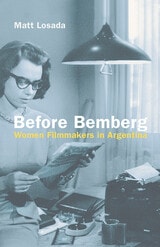
Before Bemberg
Women Filmmakers in ArgentinaMatt Losada
Rutgers University Press, 2020
Watch some of the films discussed in the book with English subtitles (https://www.youtube.com/channel/UCF_6F4am5024rklIWwExUVA?view_as=subscriber).
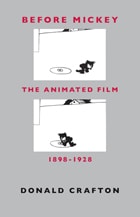
Before Mickey
The Animated Film 1898-1928Donald Crafton
University of Chicago Press, 1993
This witty and fascinating study reminds us that there was animation before Disney: about thirty years of creativity and experimentation flourishing in such extraordinary work as Gertiethe Dinosaur and Felix the Cat. Before Mickey, the first in-depth history of animation from the turn of the century until the debut of Disney, includes accounts of mechanical ingenuity, marketing, and art. Donald Crafton is equally adept at explaining techniques of sketching and camera work, evoking characteristic styles of such pioneering animators as Winsor McCay and Ladislas Starevitch, placing work in its social and economic context, and unraveling the aesthetic impact of specific cartoons.
Beijing Film Academy Yearbook 2016
Edited by the Journal of Beijing Film Academy
Intellect Books, 2017
Beijing Film Academy Yearbook 2018
Edited by The Journal of Beijing Film Academy
Intellect Books, 2020
The annual Beijing Film Academy Yearbook continues to showcase the best academic debates, discussions, and research published in the prestigious Journal of Beijing Film Academy from the previous year. This volume brings together specially selected articles, covering the most up-to-date topics in Chinese cinema studies appearing for the first time in English, in order to bridge the gap in cross-cultural research in cinema and media studies, as well as to encourage new conversations.
This book is the latest offering in Intellect China Library series, which publishes work by Chinese scholars that have not previously been available to English-language academia. Covering the subjects of film studies, visual arts, performing arts, media, and cultural studies, the series aims to foster intellectual debate and to promote closer cross-cultural intellectual exchanges by introducing important works of Chinese scholarship to readers.
Beijing Film Academy Yearbook 2021
Edited by the Journal of Beijing Film Academy
Intellect Books, 2024
The annual Beijing Film Academy Yearbook highlights the best academic debates, discussions, and research from the previous year, as previously published in the highly prestigious Journal of Beijing Film Academy. This volume brings together specially selected articles, appearing for the first time in English, to bridge the gap in cross-cultural research in cinema and media studies.
The book is the latest in the Intellect China Library series to produce work by Chinese scholars that have not previously been available to English-language academia. Covering the subjects of film studies, visual arts, performing arts, and media and cultural studies, the series aims to foster intellectual debate and to promote closer cross-cultural intellectual exchanges by introducing important works of Chinese scholarship to readers.
Beijing Film Academy Yearbook 2022
Edited by the Journal of Beijing Film Academy
Intellect Books, 2025
Beijing Film Academy 2022 offers an essential collection of the most thought-provoking debates, discussions, and research from China’s leading institution for film and media studies. For the first time in English, this volume presents carefully selected articles from the prestigious Journal of Beijing Film Academy, providing scholars and students with unparalleled access to a significant body of work from Chinese academics.
This book covers a wide range of topics–from film studies and visual arts to performing arts and media culture and provides critical insights into contemporary cinematic and media discourse in China. As part of the Intellect China Library series, it fosters cross-cultural intellectual exchange and bridges the gap between Chinese scholarship and global academia.
An indispensable resource for film and media scholars, this yearbook serves as a vital tool for understanding the evolving landscape of Chinese cinema and its global impact.
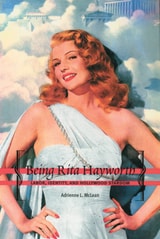
Being Rita Hayworth
Labor, Identity, and Hollywood StardomMcLean, Adrienne L
Rutgers University Press, 2004
Who was Rita Hayworth? Born Margarita Carmen Cansino, she spent her life subjected to others' definitions of her, no matter how hard she worked to claim her own identity. Although there have been many "revelations" about her life and career, Adrienne McLean's book is the first to show that such disclosures were part of a constructed image from the outset.
McLean explores Hayworth's participation in the creation of her star persona, particularly through her work as a dancer-a subject ignored by most film scholars. The passive love goddess, as it turns out, had a unique appeal to other women who, like her, found it extraordinarily difficult to negotiate the competing demands of family, domesticity, and professional work outside the home. Being Rita Hayworth also considers the ways in which the actress has been treated by film scholarship over the years to accomplish its own goals, sometimes at her expense. Several of Hayworth's best-known star vehicles-among them Gilda (1946), Down to Earth (1947), The Lady from Shanghai (1948), and Affair in Trinidad (1952)- are discussed in depth.
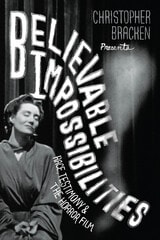
Believable Impossibilities
Race, Testimony, and the Horror FilmChristopher Bracken
University of Chicago Press, 2026
A gripping exploration of belief in the impossible through horror film, informed by philosophy, history, and anthropology.
What if aliens crash-landed at an old mine? What if you discovered your spouse is protecting you from witchcraft? What if you received messages from the dead? You wouldn’t believe it, of course—but you might investigate. As Christopher Bracken shows through this gripping exploration of the horror film, this is the first step toward believing the impossible.
In Believable Impossibilities, Bracken examines the genre in which we are most frequently called on to believe something seemingly impossible has unsettled our ordinary lives—the horror story. Whether on the page or on screen, horror draws us into narratives in which a community of nonbelievers are suddenly confronted with the challenge of believing in events and experiences that radically break with expectation. As Bracken argues, questions of belief often intersect with issues of race and Indigeneity because, historically, belief in the impossible has been racially coded as a trait of “primitive” thought. Drawing on philosophy, anthropology, and psychoanalysis, Bracken explores the fictional spaces in which the paranormal and supernatural challenge and defy our social bonds.
Below the Stars
How the Labor of Working Actors and Extras Shapes Media ProductionBy Kate Fortmueller
University of Texas Press, 2021
Longlisted for the 2022 Kraszna-Krausz Book Award, Moving Image Category
Despite their considerable presence in Hollywood, extras and working actors have received scant attention within film and media studies as significant contributors to the history of the industry. Looking not to the stars but to these supporting players in film, television, and, recently, streaming programming, Below the Stars highlights such actors as precarious laborers whose work as freelancers has critically shaped the entertainment industry throughout the twentieth and twenty-first centuries. By addressing ordinary actors as a labor force, Kate Fortmueller proposes a media industry history that positions underrepresented and quotidian experiences as the structural elements of the culture and business of Hollywood.
Resisting a top-down assessment, Fortmueller explores the wrangling of labor unions and guilds that advocated for collective action for everyday actors and helped shape professional norms. She pulls from archival research, in-person interviews, and firsthand observation to examine a history that cuts across industry boundaries and situates actors as a labor group at the center of industrial and technological upheavals, with lasting implications for race, gender, and labor relations in Hollywood.
Bernard Shaw on Cinema
Edited by Bernard F. Dukore
Southern Illinois University Press, 1997
With his customary wit and quite often with remarkable prescience, Bernard Shaw maintained a dialogue on cinema that ran almost from the infancy of the industry in 1908 until his death in 1950. Bernard F. Dukore presents the first collection of Bernard Shaw’s writings and oral statements about cinema. Of the more than one hundred comments Dukore has selected, fifty-nine—more than half—are new to today’s readers. Twelve are previously unpublished, one is published in full for the first time, and forty-six appear in a collected edition of Shaw’s writings for the first time since their publication in newspapers and magazines.
Very early in the life of cinema, Shaw perceived that as an invention, movies would be more momentous than the printing press because they appealed to the illiterate as well as the literate, to the manual laborer at the end of an exhausting day as well as to the person with more leisure. He predicted that cinema would form people’s minds and shape their conduct. He recognized that cinema’s "colossal proportions make mediocrity compulsory" by leveling art and life down to the blandest morality and to the lowest common denominator of potential audiences throughout the world.
By 1908, Shaw was familiar with experiments synchronizing movies and sound. When talkies arrived, he discerned that they would precipitate major changes in acting, writing, and economics. He also saw how they would affect live theatre: "The theatre may survive as a place where people are taught to act," he said in 1930, "but apart from that there will be nothing but ‘talkies’ soon." At that time, few people in the theatrical profession were making such prophecies, at least not in public.
Best Actress
The History of Oscar®-Winning WomenStephen Tapert
Rutgers University Press, 2020
This lavishly illustrated coffee table book offers a vital examination of the first 75 women to have won the Best Actress Oscar over the span of 90 years. From inaugural recipient Janet Gaynor to Frances McDormand’s 2018 acceptance speech that assertively brought women to the forefront, Best Actress: The History of Oscar®-Winning Women serves to promote a new appreciation for the cinematic roles these women won for, as well as the real-life roles many of them played – and still play – in advancing women’s rights and equality. Stories range from Bette Davis’ groundbreaking battle against the studio system; to the cutting-edge wardrobes of Katharine Hepburn, Diane Keaton and Cher; to the historical significance of Halle Berry’s victory; to the awareness raised around sexual violence by the performances of Jodie Foster, Brie Larson, and others.
Showcasing a dazzling collection of 200 photographs, many of which have never before been seen or published, Best Actress honors the legacies of these revered and extraordinary women while scrutinizing the roadblocks that they continue to overcome.
Best Years
Going to the Movies, 1945-1946Charles Affron and Mirella Jona Affron
Rutgers University Press, 2009
Best Years is a panoramic study, shining light on this critical juncture in American historyand the history of American cinemaùthe end of World War II (1945) and a year of unprecedented success in Hollywood's "Golden Age" (1946). This unique time, the last year of war and the first full year of peace, provides a rich blend of cinema genres and typesùfrom the battlefront to the home front, the peace film to the woman's film, psychological drama, and the period's provocative new style, film noir.
Best Years focuses on films that were famous, infamous, forgotten, and unforgettable. Big budget A-films, road shows, and familiar series share the spotlight. From Bergman and Grant in Notorious to Abbott and Costello in Lost in a Harem, Charles Affron and Mirella Jona Affron examine why the bond between screen and viewer was perhaps never tighter. Paying special attention to the movie-going public in key cities--Atlanta, New York, Boston, Honolulu, and Chicago--this ambitious work takes us on a cinematic journey to recapture a magical time.
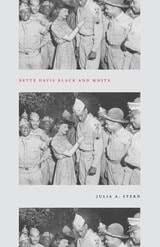
Bette Davis Black and White
Julia A. Stern
University of Chicago Press, 2021
Bette Davis was not only one of Hollywood’s brightest stars, but also one of its most outspoken advocates on matters of race. In Bette Davis Black and White, Julia A. Stern explores this largely untold facet of Davis’s brilliant career.
Bette Davis Black and White analyzes four of Davis’s best-known pictures—Jezebel (1938), The Little Foxes (1941), In This Our Life (1942), and What Ever Happened to Baby Jane? (1962)—against the history of American race relations. Stern also weaves in memories of her own experiences as a young viewer, coming into racial consciousness watching Davis’s films on television in an all-white suburb of Chicago.
Davis’s egalitarian politics and unique collaborations with her Black costars offer Stern a window into midcentury American racial fantasy and the efforts of Black performers to disrupt it. This book incorporates testimony from Davis’s Black contemporaries, including James Baldwin and C. L. R. James, as well as the African American fans who penned letters to Warner Brothers praising Davis’s work. A unique combination of history, star study, and memoir, Bette Davis Black and White allows us to contemplate cross-racial spectatorship in new ways.
Between Film and Screen
Modernism's Photo SynthesisGarrett Stewart
University of Chicago Press, 2000
In this ambitious, sophisticated study, Garrett Stewart discusses the photogram not only as the undertext of screen images but also in its unexpected links to the early modernist writings of James, Conrad, Forster, Joyce, and others. Engaging the work of such media theorists as Eisenstein, Benjamin, Kracauer, Bazin, Baudry, Cavell, Deleuze, and Jameson, this study pursues the suppressed photogram as it ripples the narrative surface of several dozen films from Lang and Chaplin through Bergman, Coppola, and beyond. To locate the exact repercussions of such effects, Stewart includes over three hundred frame enlargements drawn from genres as different as science fiction, film noir, and recent Victorian costume drama.
Between Hollywood and Moscow
The Italian Communists and the Challenge of Mass Culture, 1943-1991Stephen Gundle
Duke University Press, 2000
Gundle focuses on the theme of cultural policy, examining how the PCI’s political strategies incorporated cultural policies and activities that were intended to respond to the Americanization of daily life in Italy. In formulating this policy, Gundle contends, the Italian Communists were torn between loyalty to the alternative values generated by the Communist tradition and adaptation to the dominant influences of Italian modernization. This equilibrium eventually faltered because the attractive aspects of Americanization and pop culture proved more influential than the PCI’s intellectual and political traditions.
The first analysis in English of the cultural policies and activities of the PCI, this book will appeal to readers with an interest in modern Italy, the European left, political science, and media studies.
Between the Black Box and the White Cube
Expanded Cinema and Postwar ArtAndrew V. Uroskie
University of Chicago Press, 2014
Explaining that the postwar expanded cinema was a response to both developments, Andrew V. Uroskie argues that, rather than a formal or technological innovation, the key change for artists involved a displacement of the moving image from the familiarity of the cinematic theater to original spaces and contexts. He shows how newly available, inexpensive film and video technology enabled artists such as Nam June Paik, Robert Whitman, Stan VanDerBeek, Robert Breer, and especially Andy Warhol to become filmmakers. Through their efforts to explore a fresh way of experiencing the moving image, these artists sought to reimagine the nature and possibilities of art in a post-cinematic age and helped to develop a novel space between the “black box” of the movie theater and the “white cube” of the art gallery. Packed with over one hundred illustrations, Between the Black Box and the White Cube is a compelling look at a seminal moment in the cultural life of the moving image and its emergence in contemporary art.
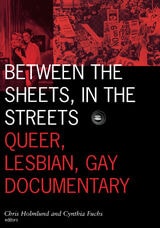
Between the Sheets, in the Streets
Queer, Lesbian, Gay DocumentaryChris Holmlund
University of Minnesota Press, 1997
The first book to focus on the connections between sexuality, activism, and documentary film.
From film festivals to university campuses, from private homes to first-run theaters, people everywhere are viewing and discussing gay, lesbian, queer, bisexual, and transgender films and videos. Between the Sheets, In the Streets considers these videos and films, testifying to the unavoidable connections between sexuality (the sheets) and activism (the streets) for all who identify as gay, lesbian, or queer in the 1990s.
This first collection of essays to focus exclusively on queer, lesbian, and gay documentary argues that documentary films and videos speak with a sense of political and social urgency, acting as testaments to the importance of reclaiming history and asserting the importance of these points of view. Among the topics discussed are representations of young queers on such shows as MTV’s The Real World; pre-Stonewall films; portrayals of lesbians and aging; video activism in Oregon and the South; and the works of Derek Jarman, Su Friedrich, Cheryl Dunye, and Sadie Benning. A range of films and videos is examined, including Strangers in Good Company, Paris Is Burning, Juggling Gender, Silverlake Life, and Without You I’m Nothing.Tracing an exhilarating range of perspectives and subject positions, Between the Sheets, In the Streets is an essential guide to current developments in queer, lesbian, and gay documentary. Contributors: Chris Cagle, Brown U; Linda Dittmar, U of Massachusetts, Boston; Lynda Goldstein, Pennsylvania State U, Wilkes-Barre Campus; Ronald Gregg, Drake U; Janet Jakobsen, U of Arizona; Lynda McAfee, New York Public Library; Kathleen McHugh, U of California, Riverside; Beverly Seckinger, U of Arizona; Marc Siegel, UCLA; Chris Straayer, Tisch School of the Arts; Erika Suderburg, U of California, Riverside; Thomas Waugh, Concordia U, Montreal; Justin Wyatt, U of North Texas.Beyond Auteurism
New Directions in Authorial Film Practices in France, Italy and Spain since the 1980sRosanna Maule
Intellect Books, 2008
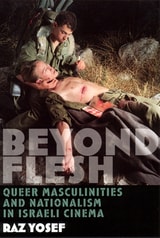
Beyond Flesh
Queer Masculinities and Nationalism in Israeli CinemaYosef, Raz
Rutgers University Press, 2004
Zionism was not only a political and ideological program but also a sexual one. The liberation of Jews and creation of a new nation were closely intertwined with a longing for the redemption and normalization of the Jewish male body. That body had to be rescued from anti-Semitic, scientific-medical discourse associating it with disease, madness, degeneracy, sexual perversity, and femininityeven with homosexuality. The Zionist movement was intent on transforming the very nature of European Jewish masculinity as it had existed in the diaspora. Zionist/Israeli films expressed this desire through visual and narrative tropes, enforcing the image of the hypermasculine, colonialist-explorer and militaristic nation-builder, an image dependent on the homophobic repudiation of the "feminine" within men.
The creation of a new heterosexual Jewish man was further intertwined with attitudes on the breeding of children, bodily hygiene, racial improvement, and Orientalist perspectiveswhich associated the East, and especially Eastern bodies, with unsanitary practices, plagues, disease, and sexual perversity. By stigmatizing Israels Eastern populations as agents of death and degeneration, Zionism created internal biologized enemies, against whom the Zionist society had to defend itself. In the name of securing the life and reproduction of the new Ashkenazi Jewry, Israeli society discriminated against both its internal enemies, the Palestinians, and its own citizens, the Mizrahim (Oriental Jews).
Yosefs critique of the construction of masculinities and queerness in Israeli cinema and culture also serves as a model for the investigation of the role of male sexuality within national culture in general.
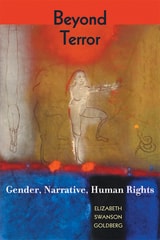
Beyond Terror
Gender, Narrative, Human RightsElizabeth Swanson Goldberg
Rutgers University Press, 2007
In traditional narrative contexts-legal, psychoanalytic, and documentary-the ethics of representing violations of human rights are widely acknowledged. But what are the principles that guide the creation and dissemination of historically based fictional narratives? Are such representations capable of shaping, changing, or even effectively depicting "real" human atrocities? How do existing ideas about gender influence the way these narratives are written and perceived?
In Beyond Terror , Elizabeth Swanson Goldberg argues that after human rights violations have occurred, the realm of representation-actual and fictional-is precisely the ground upon which struggles for justice and peace are waged in legal, emotional, and cultural terms. Moving beyond the myriad of fictional accounts that have portrayed the carnage of World War II, the Holocaust, and the Vietnam War, Goldberg focuses on emerging narratives about recent abuses, including those in South Africa, Rwanda, and Iraq.
Through the lens of literary, feminist, and human rights theory, this important book examines the meaning and influence of films such as Cry Freedom, Three Kings, and Salvador , and novels such as Gil Courtemanche's A Sunday at the Pool in Kigali , Pat Barker's Double Vision , and Edwidge Danticat's The Farming of Bones .
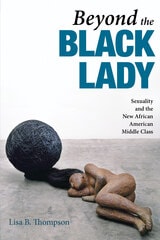
Beyond the Black Lady
Sexuality and the New African American Middle ClassLisa B. Thompson
University of Illinois Press, 2012
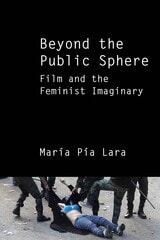
Beyond the Public Sphere
Film and the Feminist ImaginaryMaría Pía Lara
Northwestern University Press, 2021
In Beyond the Public Sphere: Film and the Feminist Imaginary, the renowned philosopher and critical theorist María Pía Lara challenges the notion that the bourgeois public sphere is the most important informal institution between social and political actors and the state.
Drawing on a wide range of films—including The Milk of Sorrow, Ixcanul, Wadja, The Stone of Patience, Marnie, A Streetcar Named Desire, and Talk to Her—Lara dissects cinematic images of women’s struggles and their oppression. She builds on this analysis, developing a concept of the feminist social imaginary as a broader and more complex space that provides a way of thinking through the possibilities for emancipatory social transformation in response to forms of domination perpetuated by patriarchal capitalism.

Beyond the Subtitle
Remapping European Art CinemaMark Betz
University of Minnesota Press, 2009
A provocative rethinking of national cinema, authorship, and the discipline of film studies
Examining European art films of the 1950s and 1960s, Mark Betz argues that it is time for film analysis to move beyond prevailing New Wave historiography, mired in outdated notions of nationalism and dragged down by decades of auteurist criticism. Focusing on the cinemas of France and Italy, Betz reveals how the flowering of European art films in the postwar era is inseparable from the complex historical and political frameworks of the time.
Remapping the practices and paradigms of film history, Beyond the Subtitle calls into question the concept of national cinema and explores the largely neglected subjects of subtitling, dubbing, and art film coproductions. Betz also analyzes the iconic figure of the “wandering woman,” or flanêuse, who appears in many of the films under consideration, in light of the postwar boom, modernization, and decolonization. Finally, he rescues the omnibus films to show the need for a new film studies approach. Beyond the Subtitle demonstrates how the geopolitical and institutional contexts that gave rise to these films and to academic film studies should be incorporated into future analysis in order to gain new insight into debates on race, gender, and imperialism.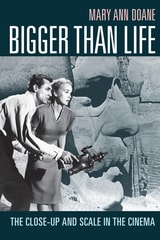
Bigger Than Life
The Close-Up and Scale in the CinemaMary Ann Doane
Duke University Press, 2021
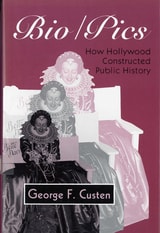
Bio/Pics
How Hollywood Constructed Public HistoryGeorge Custen
Rutgers University Press, 1992
Bio/Pics is the first comprehensive study of a once important film genre, the biographical film. Using previously unavailable archival materials from Twentieth Century-Fox, Warner Bros., MGM, and RKO studios, as well as censorship files from the Production Code Administration, George Custen argues that, through these films, Hollywood manufactured a nearly monochromatic view of history that was systematically distorted in regard to race, gender, nationality, and profession.Utilizing a carefully selected sample of over 100 films produced during the Studio Era (1927-1960), Custen maintains that the biopic constructed a Hollywood code of history out of a tightly controlled reference system, glamorizing the producers' own personal visions of what constituted a great life. Custen's examination of production practices reveals that the machinery of public history operating through these films was fueled by difference sources. His analysis of the roles played by star personae, legal considerations, censorship practices, and the producers' own ideologies brings the world of biopic alive, even into the age of the made-for-TV movie.
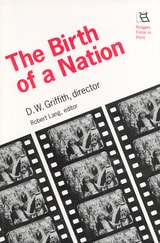
Birth of a Nation
D.W. Griffith, DirectorRobert Lang
Rutgers University Press, 1993
Robert Lang's introduction to this volume explores in fascinating detail the warped view of history that this great film presents. Griffith, a Southerner, was intent on resurrecting, idealizing, and justifying the South. In The Birth of a Nation, it is racism that unites the white North and South; the protection or abolition of slavery is not the divisive issue. In a powerful synthesis of spectacle and narrative, Griffith seeks to give the Southern cause a sense of glamour and high purpose. Lang considers the film as a historical melodrama, and by examining Griffith's "historiography as ideological practice," he traces the way in which the bloody, traumatic reality of the Civil War and Reconstruction becomes melodramatic myth. This unparalleled guide to The Birth of a Nation offers a shot-by-shot continuity script; a biographical sketch of the director; a sampling of contemporary reviews; a series of essays by distinguished critics including James Chandler, Michael Rogin, Janet Staiger, and Mimi White; and a filmography and bibliography.
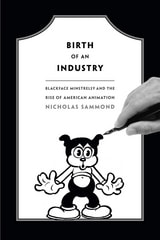
Birth of an Industry
Blackface Minstrelsy and the Rise of American AnimationNicholas Sammond
Duke University Press, 2015
Bits and Pieces
Screening Animal Life and DeathSarah O'Brien
University of Michigan Press, 2023
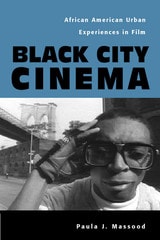
Black City Cinema
African American Urban Experiences In FilmPaula J. Massood
Temple University Press, 2003
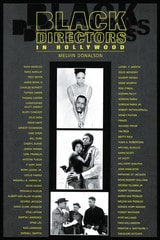
Black Directors in Hollywood
By Melvin Donalson
University of Texas Press, 2003
Hollywood film directors are some of the world's most powerful storytellers, shaping the fantasies and aspirations of people around the globe. Since the 1960s, African Americans have increasingly joined their ranks, bringing fresh insights to movie characterizations, plots, and themes and depicting areas of African American culture that were previously absent from mainstream films. Today, black directors are making films in all popular genres, while inventing new ones to speak directly from and to the black experience.
This book offers a first comprehensive look at the work of black directors in Hollywood, from pioneers such as Gordon Parks, Melvin Van Peebles, and Ossie Davis to current talents including Spike Lee, John Singleton, Kasi Lemmons, and Carl Franklin. Discussing 67 individuals and over 135 films, Melvin Donalson thoroughly explores how black directors' storytelling skills and film techniques have widened both the thematic focus and visual style of American cinema. Assessing the meanings and messages in their films, he convincingly demonstrates that black directors are balancing Hollywood's demand for box office success with artistic achievement and responsibility to ethnic, cultural, and gender issues.
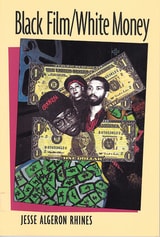
Black Film/White Money
Jesse Algeron Rhines
Rutgers University Press, 1996
In this vivid portrait of their historic and present-day contributions, Jesse Rhines explores the roles African American men and women have played in the motion picture business from 1915 to the present. He illuminates his discussion by carefully linking the history of early Black filmmaking to the current success of African American filmmakers and examines how African Americans have been affected by changes that have taken place in the industry as a whole. He focuses on the crucial role of distribution companies, the difficulty of raising money for production, the compromises that directors and writers must make to get funding, and the effect of negative, sensationalistic images on the Black community. Many well-known directors, including Spike Lee, Reginald Hudlin, and Grace Blake are interviewed in the book, allowing Rhines to give readers an inside look at how deal making does--or does not--work.
Rhines surveys significant eras in film history and their impact on African Americans, from the silent era and the impact of The Birth of a Nation , through the emergence of the Black-owned Lincoln Motion Picture Company, and the later introduction of sound, to the postwar era, the antitrust suit against Paramount Pictures, the introduction of television, and Blaxploitation movies that won audiences back. He brings the story up to date with present-day blockbusters and the success of Spike Lee, who began as an independent and became a force in the industry, and others who hope to follow in Lee's footsteps. Rhines, who has worked behind the camera himself, reflects on independent filmmaking, the risks of both failure and success, and his hope for positive change in the African African community if more African American filmmakers can come to the forefront in the business.
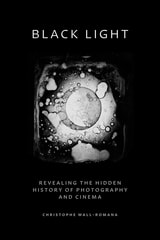
Black Light
Revealing the Hidden History of Photography and CinemaChristophe Wall-Romana
University of Minnesota Press, 2026
A radical assessment of the racial motives underlying the conception of photography and cinema
Conventional histories have long traced the origins of photography and cinema to the goal of reproducing the visible world. Black Light offers a radical counter to this understanding. Investigating the optical, cosmological, and racial thought that surrounded their conception, Christophe Wall-Romana argues that these media developed out of a desire to visualize what cannot be seen.
Taking as its starting point the concurrent invention of the telescope and industrialization of the transatlantic slave trade, Black Light shows how photography and cinema are entangled with two key preoccupations of the Enlightenment: visualizing the mysteries of the cosmos and managing Blackness. Wall-Romana uses literary and technological sources to demonstrate how racial and astronomical thinking interwove throughout the long development of our modern visual media. Retracing the impulses behind nonmimetic photoimaging and dynamic modeling, he exposes the racial underpinnings of research on photosensitive compounds such as silver nitrate and the racist lenses applied in post-Copernican cosmology.
Black Light charts the pivotal period from the seventeenth through the nineteenth century when Europeans were reckoning with “multiple worlds” and natural philosophy was giving way to “mechanical objectivity.” Wall-Romana shows how engagement with the nature of light was always entangled with racist discourses on Blackness—especially after the 1801 discovery of the invisible spectrum and its paradox of “black light.” Deprovincializing media archaeology, this book presents a groundbreaking historical framework with which to reenvision our dominant modes of seeing and understanding the world.
Retail e-book files for this title are screen-reader friendly with images accompanied by short alt text and/or extended descriptions.
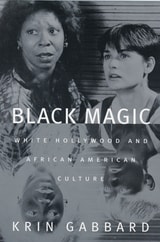
Black Magic
White Hollywood and African American CultureKrin Gabbard
Rutgers University Press, 2004
As Krin Gabbard brilliantly reveals in Black Magic, we duly recognize the cultural heritage of African Americans in literature, music, and art, but there is a disturbing pattern in the roles that blacks are asked to play-particularly in the movies. Many recent films, including The Matrix, Fargo, The Green Mile, Ghost, The Talented Mr. Ripley, Pleasantville, The Bridges of Madison County, and Crumb, reveal a fascination with black music and sexuality even as they preserve the old racial hierarchies. Quite often the dependence on African American culture remains hidden-although it is almost perversely pervasive. In the final chapters of Black Magic, Gabbard looks at films by Robert Altman and Spike Lee that attempt to reverse many of these widespread trends.
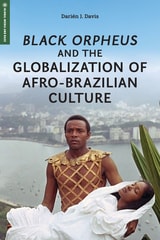
Black Orpheus and the Globalization of Afro-Brazilian Culture
Darién J. Davis
Rutgers University Press, 2026
“Black Orpheus” and the Globalization of Afro-Brazilian Culture is the first historical study in English to examine the development, production, and reception of the 1958 film Black Orpheus and its legacy in the 1960s and 1970s. It focuses on the making of the film and the trajectories of the major actors and musicians who helped construct an image of Black Brazil and provides an analysis of the globalization of Afro-Brazilian images and music in France and the United States in the wake of the movie’s success. Using archival sources, interviews, and the secondary literature from France, Brazil, and the United States, this book reveals information about the cultural histories of all three countries and gives readers new insight into the trajectories of diverse actors such as Breno Mello, Marpessa Dawn, and Léa Garcia and performers such as Agostinho dos Santos, Baden Powell, and Maria D’Apparecida.
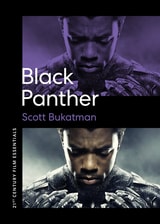
Black Panther
Scott Bukatman
University of Texas Press, 2022
Black Panther was the first Black superhero in mainstream American comics. Black Panther was a cultural phenomenon that broke box office records. Yet it wasn’t just a movie led by and starring Black artists. It grappled with ideas and conflicts central to Black life in America and helped redress the racial dynamics of the Hollywood blockbuster.
Scott Bukatman, one of the foremost scholars of superheroes and cinematic spectacle, brings his impeccable pedigree to this lively and accessible study, finding in the utopianism of Black Panther a way of re-envisioning what a superhero movie can and should be while centering the Black creators, performers, and issues behind it. He considers the superheroic Black body; the Pan-African fantasy, feminism, and Afrofuturism of Wakanda; the African American relationship to Africa; the political influence of director Ryan Coogler’s earlier movies; and the entwined performances of Chadwick Boseman’s T’Challa and Michael B. Jordan’s Killmonger. Bukatman argues that Black Panther is escapism of the best kind, offering a fantasy of liberation and social justice while demonstrating the power of popular culture to articulate ideals and raise vital questions.
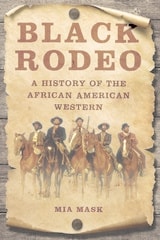
Black Rodeo
A History of the African American WesternMia Mask
University of Illinois Press, 2023
A first-of-its kind survey, Black Rodeo illuminates the figure of the Black cowboy while examining the intersection of African American film history and the western.

Black Space
Imagining Race in Science Fiction FilmBy Adilifu Nama
University of Texas Press, 2008
Winner, Rollins Book Award, Southwest Texas Popular Culture Association/American Culture Association, 2008
Science fiction film offers its viewers many pleasures, not least of which is the possibility of imagining other worlds in which very different forms of society exist. Not surprisingly, however, these alternative worlds often become spaces in which filmmakers and film audiences can explore issues of concern in our own society. Through an analysis of over thirty canonic science fiction (SF) films, including Logan's Run, Star Wars, Blade Runner, Back to the Future, Gattaca, and Minority Report, Black Space offers a thorough-going investigation of how SF film since the 1950s has dealt with the issue of race and specifically with the representation of blackness.
Setting his study against the backdrop of America's ongoing racial struggles and complex socioeconomic histories, Adilifu Nama pursues a number of themes in Black Space. They include the structured absence/token presence of blacks in SF film; racial contamination and racial paranoia; the traumatized black body as the ultimate signifier of difference, alienness, and "otherness"; the use of class and economic issues to subsume race as an issue; the racially subversive pleasures and allegories encoded in some mainstream SF films; and the ways in which independent and extra-filmic productions are subverting the SF genre of Hollywood filmmaking.
The first book-length study of African American representation in science fiction film, Black Space demonstrates that SF cinema has become an important field of racial analysis, a site where definitions of race can be contested and post-civil rights race relations (re)imagined.
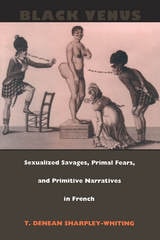
Black Venus
Sexualized Savages, Primal Fears, and Primitive Narratives in FrenchT. Denean Sharpley-Whiting
Duke University Press, 1999
The book opens with an exploration of scientific discourse on black females, using Sarah Bartmann, the so-called Hottentot Venus, and natural scientist Georges Cuvier as points of departure. To further show how the image of a savage was projected onto the bodies of black women, Sharpley-Whiting moves into popular culture with an analysis of an 1814 vaudeville caricature of Bartmann, then shifts onto the terrain of canonical French literature and colonial cinema, exploring the representation of black women by Baudelaire, Balzac, Zola, Maupassant, and Loti. After venturing into twentieth-century film with an analysis of Josephine Baker’s popular Princesse Tam Tam, the study concludes with a discussion of how black Francophone women writers and activists countered stereotypical representations of black female bodies during this period. A first-time translation of the vaudeville show The Hottentot Venus, or Hatred of Frenchwomen supplements this critique of the French male gaze of the nineteenth and early twentieth centuries.
Both intellectually rigorous and culturally intriguing, this study will appeal to students and scholars in the fields of nineteenth- and twentieth-century French literature, feminist and gender studies, black studies, and cultural studies.
Black Women Directors
Christina N. Baker
Rutgers University Press, 2022
Black women have long recognized the power of film for storytelling. For far too long, however, the cultural and historical narratives about film have not accounted for the contributions of Black women directors. This book remedies this omission by highlighting the trajectory of the culturally significant work of Black women directors in the United States, from the under-examined pioneers of the silent era, to the documentarians who sought to highlight the voices and struggles of Black women, and the contemporary Black women directors in Hollywood. Applying a Black feminist perspective, this book examines the ways that Black women filmmakers have made a way for themselves and their work by resisting the dominant cultural expectations for Black women and for the medium of film, as a whole.
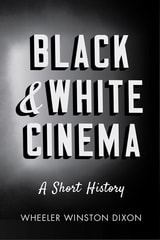
Black and White Cinema
A Short HistoryWheeler Winston Dixon
Rutgers University Press, 2015
Black and White Cinema is the first study to consider the use of black-and-white as an art form in its own right, providing a comprehensive and global overview of the era when it flourished, from the 1900s to the 1960s. Acclaimed film scholar Wheeler Winston Dixon introduces us to the masters of this art, discussing the signature styles and technical innovations of award-winning cinematographers like James Wong Howe, Gregg Toland, Freddie Francis, and Sven Nykvist. Giving us a unique glimpse behind the scenes, Dixon also reveals the creative teams—from lighting technicians to matte painters—whose work profoundly shaped the look of black-and-white cinema.
More than just a study of film history, this book is a rallying cry, meant to inspire a love for the artistry of black-and-white film, so that we might work to preserve this important part of our cinematic heritage. Lavishly illustrated with more than forty on-the-set stills, Black and White Cinema provides a vivid and illuminating look at a creatively vital era.
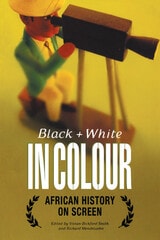
Black and White in Colour
African History on ScreenVivian Bickford-Smith
Ohio University Press, 2007
Black and White in Colour: African History on Screen considers how the African past has been represented in a wide range of historical films. Written by a team of eminent international scholars, the volume provides extensive coverage of both place and time and deals with major issues in the written history of Africa. Themes include the slave trade, imperialism and colonialism, racism, and anticolonial resistance. Many of the films will be familiar to readers: they include Out of Africa, Hotel Rwanda, Breaker Morant, Cry Freedom, The Battle of Algiers, and Chocolat.
This collection of essays is a highly original and useful contribution to African historiography, as well as a significant addition to the growing body of work within the emerging subdiscipline of “film and history.” It will appeal to those interested in African history and the ways in which films use the past to raise questions about the present.
Contributors: Mahir Saul, Ralph A. Austen, Robert Baum, Robert Harms, Nigel Worden, Carolyn Hamilton and Litheko Modisane, Richard Mendelsohn, Shamil Jeppie, Bill Nasson, Nigel Penn, Ruth Watson, Patrick Harries, David Moore, Teresa Barnes, Vivian Bickford-Smith, Mohamed Adhikari, and David Philips.