Results by title
59 books match the query 'Gay' and 5 start with b
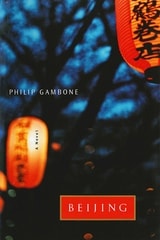
Beijing
A NovelPhilip Gambone
University of Wisconsin Press, 2003
Escaping his ghosts, AIDS widower David Masiello accepts a one-year position at a Western medical clinic in Beijing. Lonely but excited, he sets out to explore the city—both its bustling street life and its clandestine gay subculture.
David chronicles his adventures in China as he wrestles with cultural dislocation, loneliness, and sexual and spiritual longing. After a series of both comic and poignant encounters with gay Chinese men, he meets Bosheng, a handsome young artist. Though the attraction is strong, a difficult courtship ensues, during which Bosheng returns to his ancestral village to marry the girl his parents have chosen for him. Eventually, and quite unexpectedly, David and Bosheng reconnect and share an idyllic spring together. As the year ends, David must decide whether to say goodbye or face the uncertainties of a long-distance relationship.
Gambone’s novel is peopled with a host of wonderfully memorable characters: Owen, David’s forthright best friend back home; Auntie Chen, the clinic’s office mom, who wants to fix David up with a girlfriend; Stewart, David’s Beijing roommate, a graduate student doing research on Peking opera; Jiantao and Guoyang, two lovers who lecture David on the fleeting quality of American romance; and Tyson, the Australian doctor with a Chinese girlfriend, who hopes to teach David that love doesn’t need any explanations or justifications.
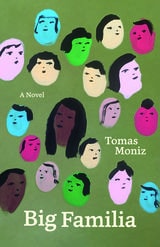
Big Familia
A NovelTomas Moniz
Acre Books, 2019
Upon the unexpected death of one of the bar’s regulars, Juan is sent reeling, and a series of upheavals follow as he both seeks and spurns intimacy, pondering the legacy of distant parents and a failed marriage and grappling with his sexuality—all the while cycling and dating, drinking at Nicks Lounge, and parenting a determined and defiant child-become-woman.
When his incarcerated father dies and Stella reveals she’s pregnant, Juan is forced to examine the emotional bonds that both hold and hinder him, to reassess his ideas of commitment, of friendship, of love. His encounters with various characters—his mother, his ex-wife, a middle-aged punker, an aspiring acupuncturist, a dapper veteran—lead Juan to the realization that he himself must change to thrive.
This is a story of making family and making mistakes, of rending and of mending. As a Latinx queer father with a mixed-race daughter, Juan exemplifies the ways identity connects and divides us. With wit, insight, and tenderness, Big Familia explores the complexities of desire, devotion, and the mysteries of the heart.
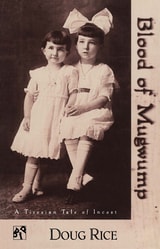
Blood of Mugwump
A Tiresian Tale of IncestDoug Rice
University of Alabama Press, 1996
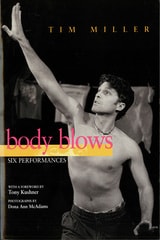
Body Blows
Six PerformancesTim Miller
University of Wisconsin Press, 2002
Hailed for his humor and passion, the internationally acclaimed performance artist Tim Miller has delighted, shocked, and emboldened audiences all over the world. Body Blows gathers six of Miller’s best-known performances that chart the sexual, spiritual, and political topography of his identity as a gay man: Some Golden States, Stretch Marks, My Queer Body, Naked Breath, Fruit Cocktail, and Glory Box. In Body Blows, Tim Miller leaps from the stage to the page, as each performance script is illustrated with striking photographs and accompanied by Miller’s notes and comment.
This book explores the tangible body blows—taken and given—of Miller’s life and times as explored in his performances: the queer-basher’s blow, the sweet blowing breath of a lover, the below-the-belt blow of HIV/AIDS, the psychic blows from a society that disrespects the humanity of lesbian and gay relationships. Miller’s performances are full of the put-up-your-dukes and stand-your-ground of such day-to-day blows that make up being gay in America
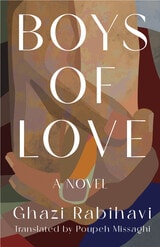
Boys of Love
Ghazi Rabihavi
University of Wisconsin Press, 2024
In Boys of Love, Ghazi Rabihavi offers both a universal story about the ups and downs of all relationships and a clear-eyed portrait of same-sex desire in Iran, where homosexuality remains punishable by death. Banned in Iran, the novel was initially published in Farsi in the UK, then translated into French and shortlisted for the Prix Médicis étranger. Rabihavi avoids both lasciviousness and exoticism in depicting a deep love between male characters living through the Iranian Cultural Revolution. Ultimately, this story challenges preconceived notions about marginalized communities in the Middle East.