Results by title
23 books match the query 'Leisure'
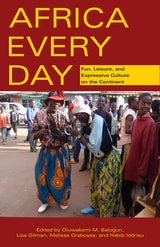
Africa Every Day
Fun, Leisure, and Expressive Culture on the ContinentOluwakemi M. Balogun
Ohio University Press, 2019
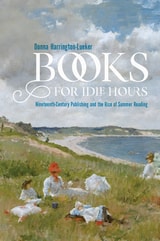
Books for Idle Hours
Nineteenth-Century Publishing and the Rise of Summer ReadingDonna Harrington-Lueker
University of Massachusetts Press, 2019
Drawing on publishing records, book reviews, readers' diaries, and popular novels of the period, Donna Harrington-Lueker explores the beginning of summer reading and the backlash against it. Countering fears about the dangers of leisurely reading—especially for young women—publishers framed summer reading not as a disreputable habit but as a respectable pastime and welcome respite. Books for Idle Hours sheds new light on an ongoing seasonal publishing tradition.

CONSUMING FANTASIES
LABOR, LEISURE, AND THE LONDON SHOPGIRL,LISE SHAPIRO SANDERS
The Ohio State University Press, 2006
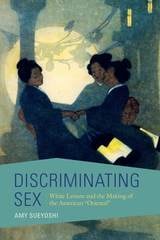
Discriminating Sex
White Leisure and the Making of the American "Oriental"Amy Sueyoshi
University of Illinois Press, 2018
Amy Sueyoshi draws on everything from newspapers to felony case files to oral histories in order to examine how whites' pursuit of gender and sexual fulfillment gave rise to racial caricatures. As she reveals, white reporters, writers, artists, and others conflated Chinese and Japanese, previously seen as two races, into one. There emerged the Oriental—a single pan-Asian American stereotype weighted with sexual and gender meaning. Sueyoshi bridges feminist, queer, and ethnic studies to show how the white quest to forge new frontiers in gender and sexual freedom reinforced—and spawned—racial inequality through the ever evolving Oriental.
Informed and fascinating, Discriminating Sex reconsiders the origins and expression of racial stereotyping in an American city.
For Fun And Profit
The Transformation of Leisure into ConsumptionRichard Butsch
Temple University Press, 1990
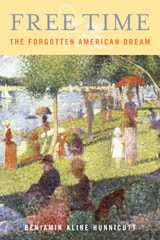
Free Time
The Forgotten American DreamBenjamin Hunnicutt
Temple University Press, 2013
Hunnicutt provides an incisive intellectual, cultural, and political history of the original "American Dream" from the colonial days to the present. Taking his cue from Walt Whitman's "higher progress," he follows the traces of that dream, cataloging the myriad voices that prepared for and lived in an opening "realm of freedom."
Free Time reminds Americans of the forgotten, best part of the "American Dream"-that more and more of our lives might be lived freely, with an enriching family life, with more time to enjoy nature, friendship, and the adventures of the mind and of the spirit.
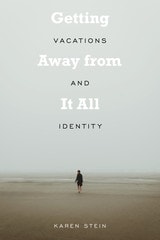
Getting Away from It All
Vacations and IdentityKaren Stein
Temple University Press, 2019
Vacations are a delimited period during which social rules and responsibilities are eased, removed, or shifted, and people have increased autonomy over what they choose to do. Recent trends in the travel industry emphasize the appeal of vacations for voluntary identity changes—when bankers can become bikers for a week or when “Momcations” allow mothers to leave their families behind. But how do our vacations allow us to shape our identity?
Getting Away from It All is a study of individuality and flexibility and the intersection of self-definition and social constraint. Karen Stein interviews vacationers about their travels and down time, focusing on “identity transitions.” She shows how objects, settings, temporal environments and social interactions limit or facilitate identity shifts, and how we arrange our vacations to achieve the shifts we desire. Stein also looks at the behavior, values, attitudes, and worldview of individuals to illuminate how people engage in either identity work or identity play.
Vacations say a lot about individuals. They signal class and economic standing and reveal aspirations and goals. Getting Away from It All insists that vacations are about more than just taking time off to relax and rejuvenate—they are about having some time to work on the person one wants to be.
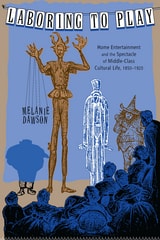
Laboring to Play
Home Entertainment and the Spectacle of Middle-Class Cultural Life, 1850-1920Melanie Dawson
University of Alabama Press, 2005
Where Leisure Became Labor and the Parlor Became a Stage for American Middle-Class Identity.
The changing styles of middle-class home entertainments, Melanie Dawson argues, point to evolving ideas of class identity in U.S. culture. Drawing from 19th- and early-20th-century fiction, guidebooks on leisure, newspaper columns, and a polemical examination of class structures, Laboring to Play interrogates the ways that leisure performances (such as parlor games, charades, home dramas, and tableaux vivants) encouraged participants to test out the boundaries that were beginning to define middle-class lifestyles.
From 19th-century parlor games involving grotesque physical contortions to early-20th-century recitations of an idealized past, leisure employments mediated between domestic and public spheres, individuals and class-based affiliations, and ideals of egalitarian social life and visible hierarchies based on privilege. Negotiating these paradigms, home entertainments provided their participants with unique ways of performing displays of individual ambitions within a world of polite social interaction.
Laboring to Play deals with subjects as wide ranging as social performances, social history (etiquette and gentility), literary history, representations of childhood, and the history of the book.
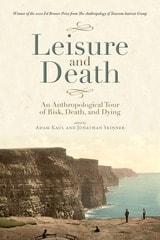
Leisure and Death
An Anthropological Tour of Risk, Death, and DyingAdam Kaul
University Press of Colorado, 2018
This anthropological study examines the relationship between leisure and death, specifically how leisure practices are used to meditate upon—and mediate—life. Considering travelers who seek enjoyment but encounter death and dying, tourists who accidentally face their own mortality while vacationing, those who intentionally seek out pleasure activities that pertain to mortality and risk, and those who use everyday leisure practices like social media or dogwalking to cope with death, Leisure and Death delves into one of the most provocative subsets of contemporary cultural anthropology.
These nuanced and well-developed ethnographic case studies deal with different and distinct examples of the intertwining of leisure and death. They challenge established conceptions of leisure and rethink the associations attached to the prospect of death. Chapters testify to encounters with death on a personal and scholarly level, exploring, for example, the Cliffs of Moher as not only one of the most popular tourist destinations in Ireland but one of the most well-known suicide destinations as well, and the estimated 30 million active posthumous Facebook profiles being repurposed through proxy users and transformed by continued engagement with the living. From the respectful to the fascinated, from the macabre to the morbid, contributors consider how people deliberately, or unexpectedly, negotiate the borderlands of the living.
An engaging, timely book that explores how spaces of death can be transformed into spaces of leisure, Leisure and Death makes a significant contribution to the burgeoning interdisciplinary literature on leisure studies and dark tourism. This book will appeal to students, scholars, and laypeople interested in tourism studies, death studies, cultural studies, heritage studies, anthropology, sociology, and marketing.
Contributors: Kathleen M. Adams, Michael Arnold, Jane Desmond, Keith Egan, Maribeth Erb, James Fernandez, Martin Gibbs, Rachel Horner-Brackett, Shingo Iitaka, Tamara Kohn, Patrick Laviolette, Ruth McManus, James Meese, Bjorn Nansen, Stravoula Pipyrou, Hannah Rumble, Cyril Schafer
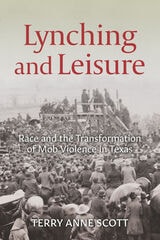
Lynching and Leisure
Race and the Transformation of Mob Violence in TexasTerry Anne Scott
University of Arkansas Press, 2022
Winner, 2022 Ottis Lock Endowment “Best Book” Award from the East Texas Historical Association
In Lynching and Leisure, Terry Anne Scott examines how white Texans transformed lynching from a largely clandestine strategy of extralegal punishment into a form of racialized recreation in which crowd involvement was integral to the mode and methods of the violence. Scott powerfully documents how lynchings came to function not only as tools for debasing the status of Black people but also as highly anticipated occasions for entertainment, making memories with friends and neighbors, and reifying whiteness. In focusing on the sense of pleasure and normality that prevailed among the white spectatorship, this comprehensive study of Texas lynchings sheds new light on the practice understood as one of the chief strategies of racial domination in the nineteenth- and twentieth-century South.
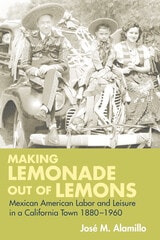
Making Lemonade out of Lemons
Mexican American Labor and Leisure in a California Town 1880-1960José M. Alamillo
University of Illinois Press, 2006
Out of the “lemons” handed to Mexican American workers in Corona, California--low pay, segregated schooling, inadequate housing, and racial discrimination--Mexican men and women made “lemonade” by transforming leisure spaces such as baseball games, parades, festivals, and churches into politicized spaces where workers voiced their grievances, debated strategies for advancement, and built solidarity. Using oral history interviews, extensive citrus company records, and his own experiences in Corona, José Alamillo argues that Mexican Americans helped lay the groundwork for civil rights struggles and electoral campaigns in the post-World War II era.
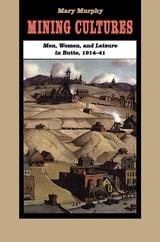
Mining Cultures
Men, Women, and Leisure in Butte, 1914-41Mary Murphy
University of Illinois Press, 1997
Butte, Montana, long deserved its reputation as a wide-open town. Mining Cultures shows how the fabled Montana city evolved from a male-dominated mining enclave to a community in which men and women participated on a more equal basis as leisure patterns changed and consumer culture grew. Mary Murphy looks at how women worked and spent their leisure time in a city dominated by the quintessential example of "men's work": mining. Bringing Butte to life, she adds in-depth research on church weeklies, high school yearbooks, holiday rituals, movie plots, and news of local fashion to archival material and interviews.
A richly illustrated jaunt through western history, Mining Cultures is the never-told chronicle of how women transformed the richest hill on earth.
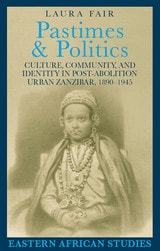
Pastimes and Politics
Culture, Community, and Identity in Post-Abolition Urban Zanzibar, 1890–1945Laura Fair
Ohio University Press, 2001
The first decades of the twentieth century were years of dramatic change in Zanzibar, a time when the social, economic, and political lives of island residents were in incredible flux, framed by the abolition of slavery, the introduction of colonialism, and a tide of urban migration. Pastimes and Politics explores the era from the perspective of the urban poor, highlighting the numerous and varied ways that recently freed slaves and other immigrants to town struggled to improve their individual and collective lives and to create a sense of community within this new environment. In this study Laura Fair explores a range of cultural and social practices that gave expression to slaves’ ideas of emancipation, as well as how such ideas and practices were gendered.
Pastimes and Politics examines the ways in which various cultural practices, including taarab music, dress, football, ethnicity, and sexuality, changed during the early twentieth century in relation to islanders’ changing social and political identities. Professor Fair argues that cultural changes were not merely reflections of social and political transformations. Rather, leisure and popular culture were critical practices through which the colonized and former slaves transformed themselves and the society in which they lived.
Methodologically innovative and clearly written, Pastimes and Politics is accessible to specialists and general readers alike. It is a book that should find wide use in courses on African history, urbanization, popular culture, gender studies, or emancipation.

People of Prowess
Sport, Leisure, and Labor in Early Anglo-AmericaNancy L. Struna
University of Illinois Press, 1996
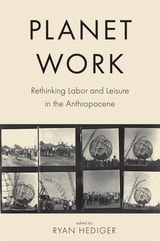
Planet Work
Rethinking Labor and Leisure in the AnthropoceneRyan Hediger
Bucknell University Press, 2023
Pleasures in Socialism
Leisure and Luxury in the Eastern BlocDavid Crowley
Northwestern University Press, 2012
Much has been written about the workings of communist governments in the USSR and the Soviet bloc, yet there is still a great deal to explore regarding their relationship to the everyday lives of the citizens living under them. This third volume builds on the editors’ Style and Socialism and Socialist Spaces, showing how the rise of consumer culture took a unique form in these countries.
Essays from top scholars address topics ranging from fashion and game shows to smoking and camping. The authors of the essays in this collection investigate the ways in which pleasurable activities, like many other facets of daily life, were both a space in which these communist governments tried to insinuate themselves and thereby further expand the reach of their authority,
and also an opportunity for people to assert their individuality.
Reflections on Leisure, Play, and Recreation
David L. Jewell
Southern Illinois University Press, 1997
In this rich and unique reference, David L. Jewell compiles the first anthology of reflections on leisure, play, and recreation.
As he began to collect these considered opinions, Jewell was pleased to discover that many people from quite diverse backgrounds shared his belief in the redeeming value of leisure, play, and recreation.
Jewell was less pleased, however, to note how often these judicious opinions have been ignored. Disproportionately high budget cuts in parks and recreation services demonstrate too clearly society’s view of leisure activities as frivolous and expendable. By selecting these voices of reason and making them available in a single volume, Jewell hopes to emphasize the "frailties of a capitalistic society’s demeaning perception" of anything other than work.
Shared Fantasy
Role Playing Games as Social WorldsGary Alan Fine
University of Chicago Press, 1983
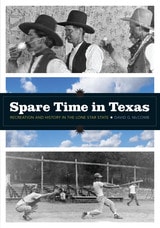
Spare Time in Texas
Recreation and History in the Lone Star StateBy David G. McComb
University of Texas Press, 2008
What do Texans' pastimes and recreations say about their characters? Looking at Texas history from a new angle, David McComb starts from the premise that how people spend their leisure time may well reveal more about their true natures and interests than the work they do or their family connections. In this innovative book, McComb traces the history of various types of recreation in Texas, gathering significant insights into the characters of Texans from the pleasures they have pursued.
Reflecting the frontier origins of Texas, McComb starts with the recreations that were most popular with men in a crude, still-developing society—drinking, gambling, and whoring. He goes on to show how, as Texas became more civilized, so did its diversions. He describes how Texans have connected with nature in parks and zoos; watched football and baseball in great stadiums such as the Astrodome and Cotton Bowl; discovered the pleasure of reading in public and university libraries; and enjoyed radio, TV, movies, and live theater in places such as Houston's Alley Theatre.
This recreational history reveals that Texans are open-minded and generous; that they respect the land; oppose prostitution but indulge in gambling and drinking; support racial and gender rights; love zoos; champion libraries; take pride in theatrical productions; and adore sports.
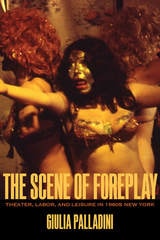
The Scene of Foreplay
Theater, Labor, and Leisure in 1960s New YorkGiulia Palladini
Northwestern University Press, 2017
Matching an original approach to historical materials and theoretical reflection, Palladini addresses the peculiar forms of production, reproduction, and consumption developed in the 1960s as labors of love, creating for artists a condition of “preliminarity” toward professional work and also functioning as a counterforce within productive economy, as a prelude where value is not yet assigned to labor.
The Scene of Foreplay proposes that such labors of love can be considered both as paradigmatic for contemporary forms of precarious labor and also resonating with echoes from marginal histories of the performing arts, in a nonlinear genealogy of queer resistance to ideas of capitalist productivity and professionalism. The book offers much for those interested in performance theory as well asin the history of theater and performance arts in the 1960s.

The Tourist State
Performing Leisure, Liberalism, and Race in New ZealandMargaret Werry
University of Minnesota Press, 2011
No longer the dreary sheep farm at the end of the world, the New Zealand of the new millennium is a hot global ticket, heralded for its bicultural dynamism, laid-back lifestyle, and scenery extraordinary enough to pass for Tolkien’s Middle Earth. How this image was crafted is the story The Tourist State tells. In a series of narratives that address the embodied dimensions of biopolitics and explore the collision of race, performance, and the cultural poetics of the state, Margaret Werry exposes the real drama behind the new New Zealand, revealing how a nation was sold to the world—and to itself.
The story stretches back to the so-called Liberal Era at the beginning of the twentieth century, in which the young settler colony touted itself as the social laboratory of the world. Focusing on where tourism and liberal governmentality coincide, The Tourist State takes us from military diplomacy at the dawn of the American Pacific to the exotic blandishments of Broadway and Coney Island, from landscape preservation to health reform and town planning, from blockbuster film to knowledge economy policy.
Weaving together interpretive history, performance ethnography, and cultural criticism, Werry offers new ways to think about race and indigeneity—and about the role of human agency in state-making.
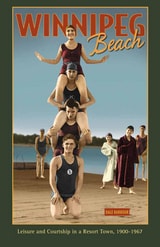
Winnipeg Beach
Leisure and Courtship in a Resort Town, 1900-1967Dale Barbour
University of Manitoba Press, 2011
Work Without End
Abandoning Shorter Hours for the Right to WorkBenjamin Kline Hunnicutt
Temple University Press, 1990