Results by title
383 books match the query 'Globalization' and 14 start with b
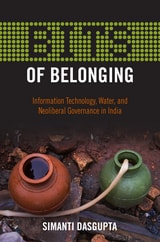
BITS of Belonging
Information Technology, Water, and Neoliberal Governance in IndiaSimanti Dasgupta
Temple University Press, 2015
India’s global success in the Information Technology industry has also prompted the growth of neoliberalism and the re-emergence of the middle class in contemporary urban areas, such as Bangalore. In her significant study, BITS of Belonging, Simanti Dasgupta shows that this economic shift produces new forms of social inequality while reinforcing older ones. She investigates this economic disparity by looking at IT and water privatization to explain how these otherwise unrelated domains correspond to our thinking about citizenship, governance, and belonging.
Dasgupta’s ethnographic study shows how work and human processes in the IT industry intertwine to meet the market stipulations of the global economy. Meanwhile, in the recasting of water from a public good to a commodity, the middle class insists on a governance and citizenship model based upon market participation. Dasgupta provides a critical analysis of the grassroots activism involved in a contested water project where different classes lay their divergent claims to the city.
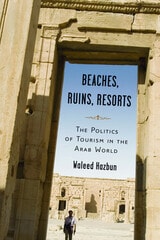
Beaches, Ruins, Resorts
The Politics of Tourism in the Arab WorldWaleed Hazbun
University of Minnesota Press, 2008
How Arab states use tourism for their own ends
Despite being viewed as a dangerous region to visit, leisure travel across the Middle East has thrived even in the post–9/11 era. In Beaches, Ruins, Resorts, Waleed Hazbun investigates this overlooked industry to show how tourism is shaping the economic development and international relations of the region in dramatic ways.
Following Europeans seeking Mediterranean beaches, Israelis crossing into Jordan as leisure tourists, and visitors discovering Dubai, Hazbun offers an original perspective on the Middle East and North Africa and challenges common portrayals of Arab nations as disconnected from the rest of the world. Rather, Hazbun reveals how government elites are using tourism to take part in globalization while, at the same time, crafting it to serve state interests. Paradoxically, the expansion of travel in the region has allowed states to encourage integration into the global economy while simultaneously expanding control over their society. Beaches, Ruins, Resorts also explores tourism’s broader beneficial effects on the region, such as aiding the peace process between Israel and Jordan, fostering Tunisia’s economic connection with Europe, and transforming Arab cities into hubs of international travel.Hazbun tells the new and surprising story of how the draw of glittering beaches, luxury hotels and resorts, and sightseeing at ancient ruins impacts the Arab world—promoting both economic globalization and political authoritarianism. In doing so, Beaches, Ruins, Resorts provides a much-needed guide for those interested in the changing nature of this fraught region and its place in the world.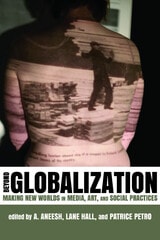
Beyond Globalization
Making New Worlds in Media, Art, and Social PracticesAneesh, A.
Rutgers University Press, 2011
Does living in a globally networked society mean that we are moving toward a single, homogenous world culture? Or, are we headed for clashes between center and periphery, imperial and subaltern, Western and non-Western, First and Third World? The interdisciplinary essays in Beyond Globalization present us with another possibility—that new media will lead to new kinds of “worldmaking.”
This provocative volume brings together the best new work of scholars within such diverse fields as history, sociology, anthropology, film, media studies, and art. Whether examining the inauguration of a virtual community on the website Second Life or investigating the appropriation of biotechnology for transgenic art, this collection highlights how mediated practices have become integral to global culture; how social practices have emerged out of computer-related industries; how contemporary apocalyptic narratives reflect the anxieties of a U.S. culture facing global challenges; and how design, play, and technology help us understand the histories and ideals
behind the digital architectures that mediate our everyday actions.
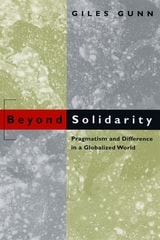
Beyond Solidarity
Pragmatism and Difference in a Globalized WorldGiles Gunn
University of Chicago Press, 2001
He finds the terms for answering these questions in a more inclusive, cosmopolitan pragmatism—one willing to explore fundamental values without recourse to absolutist arguments. Drawing on the work of William and Henry James, John Dewey, Primo Levi, Richard Rorty, and many others, as well as postcolonial writing, Jewish literature of the Holocaust, and the cultural and religious experience of African Americans in slavery, Gunn points pragmatism in a transnational direction and shows how it can better account for the consequences of diversity. Beyond Solidarity, then, is a study of the difference that difference makes in a globalized world.
Birth of Hegemony
Crisis, Financial Revolution, and Emerging Global NetworksAndrew C. Sobel
University of Chicago Press, 2012
Black Orpheus and the Globalization of Afro-Brazilian Culture
Darién J. Davis
Rutgers University Press, 2026
“Black Orpheus” and the Globalization of Afro-Brazilian Culture is the first historical study in English to examine the development, production, and reception of the 1958 film Black Orpheus and its legacy in the 1960s and 1970s. It focuses on the making of the film and the trajectories of the major actors and musicians who helped construct an image of Black Brazil and provides an analysis of the globalization of Afro-Brazilian images and music in France and the United States in the wake of the movie’s success. Using archival sources, interviews, and the secondary literature from France, Brazil, and the United States, this book reveals information about the cultural histories of all three countries and gives readers new insight into the trajectories of diverse actors such as Breno Mello, Marpessa Dawn, and Léa Garcia and performers such as Agostinho dos Santos, Baden Powell, and Maria D’Apparecida.
Black Revolutionary
William Patterson and the Globalization of the African American Freedom StruggleGerald Horne
University of Illinois Press, 2013
Black Skin, White Coats
Nigerian Psychiatrists, Decolonization, and the Globalization of PsychiatryMatthew M. Heaton
Ohio University Press, 2013
Black Skin, White Coats is a history of psychiatry in Nigeria from the 1950s to the 1980s. Working in the contexts of decolonization and anticolonial nationalism, Nigerian psychiatrists sought to replace racist colonial psychiatric theories about the psychological inferiority of Africans with a universal and egalitarian model focusing on broad psychological similarities across cultural and racial boundaries. Particular emphasis is placed on Dr. T. Adeoye Lambo, the first indigenous Nigerian to earn a specialty degree in psychiatry in the United Kingdom in 1954. Lambo returned to Nigeria to become the medical superintendent of the newly founded Aro Mental Hospital in Abeokuta, Nigeria’s first “modern” mental hospital. At Aro, Lambo began to revolutionize psychiatric research and clinical practice in Nigeria, working to integrate “modern” western medical theory and technologies with “traditional” cultural understandings of mental illness. Lambo’s research focused on deracializing psychiatric thinking and redefining mental illness in terms of a model of universal human similarities that crossed racial and cultural divides.
Black Skin, White Coats is the first work to focus primarily on black Africans as producers of psychiatric knowledge and as definers of mental illness in their own right. By examining the ways that Nigerian psychiatrists worked to integrate their psychiatric training with their indigenous backgrounds and cultural and civic nationalisms, Black Skin, White Coats provides a foil to Frantz Fanon’s widely publicized reactionary articulations of the relationship between colonialism and psychiatry. Black Skin, White Coats is also on the cutting edge of histories of psychiatry that are increasingly drawing connections between local and national developments in late-colonial and postcolonial settings and international scientific networks. Heaton argues that Nigerian psychiatrists were intimately aware of the need to engage in international discourses as part and parcel of the transformation of psychiatry at home.

Blood and Culture
Youth, Right-Wing Extremism, and National Belonging in Contemporary GermanyCynthia Miller-Idriss
Duke University Press, 2009
Miller-Idriss describes a new understanding of national belonging emerging among young Germans—one in which cultural assimilation takes precedence over blood or ethnic heritage. Moreover, she argues that teachers’ well-intentioned, state-sanctioned efforts to counter nationalist pride often create a backlash, making radical right-wing groups more appealing to their students. Miller-Idriss argues that the state’s efforts to shape national identity are always tempered and potentially transformed as each generation reacts to the official conception of what the nation “ought” to be.

Bodies in Contact
Rethinking Colonial Encounters in World HistoryTony Ballantyne and Antoinette Burton, eds.
Duke University Press, 2005
Bodies in Contact brings together important scholarship on colonial gender studies gathered from journals around the world. Breaking with approaches to world history as the history of “the West and the rest,” the contributors offer a panoramic perspective. They examine aspects of imperial regimes including the Ottoman, Mughal, Soviet, British, Han, and Spanish, over a span of six hundred years—from the fifteenth century through the mid-twentieth. Discussing subjects as diverse as slavery and travel, ecclesiastical colonialism and military occupation, marriage and property, nationalism and football, immigration and temperance, Bodies in Contact puts women, gender, and sexuality at the center of the “master narratives” of imperialism and world history.
Contributors. Joseph S. Alter, Tony Ballantyne, Antoinette Burton, Elisa Camiscioli, Mary Ann Fay, Carter Vaughn Findley, Heidi Gengenbach, Shoshana Keller, Hyun Sook Kim, Mire Koikari, Siobhan Lambert-Hurley, Melani McAlister, Patrick McDevitt, Jennifer L. Morgan, Lucy Eldersveld Murphy, Rosalind O’Hanlon, Rebecca Overmyer-Velázquez, Fiona Paisley, Adele Perry, Sean Quinlan, Mrinalini Sinha, Emma Jinhua Teng, Julia C. Wells
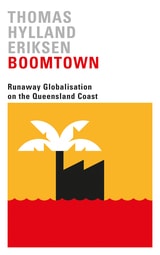
Boomtown
Runaway Globalisation on the Queensland CoastThomas Hylland Eriksen
Pluto Press, 2018
Capturing Gladstone at the peak of its accelerated growth in 2013–14, Thomas Hylland Eriksen dissects here the boomtown phenomenon in all its profound ambivalence. Based on ethnographic fieldwork, the book examines local identity, family life, infrastructure, and local services and explores the tensions and resentments surrounding migrant workers.
Writ large in Boomtown are the clashes of scale at the heart of the town’s contradictions, where the logic of big industry and the state compete with those of the individual and the local community and ecology, crystallizing the current crisis of political legitimacy that is unfurling all over the world.
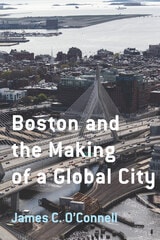
Boston and the Making of a Global City
James C. O’Connell
University of Massachusetts Press, 2025
In the late twentieth century the American and global economy shifted from manufacturing toward a knowledge industry. Following an economic low point several decades earlier, the city of Boston took advantage of the new era of globalization, fueled by dramatic advances in telecommunications, computer power, and air and sea travel, as well as its own impressive intellectual capital.
Boston and the Making of a Global City pulls together scholarship, media stories, personal interviews, and city planning documents to tell the story of Boston’s historical trajectory, as it quickly became a competitive global hub. Starting with its role as a colonial port and nineteenth-century maritime power, but moving quickly forward, the book describes how Boston capitalized on its strengths in higher education and such innovation sectors as life sciences, healthcare, information technology, and finance. Author James O’Connell traces the historical sweep of global flows—trade and supply chains, innovation and the dissemination of knowledge, investment, transportation, tourism, telecommunications, and immigration—that have shaped the city and region’s development. This volume also addresses the economic, social, and environmental challenges that Boston currently faces and how it is strategically positioned to confront them going forward.
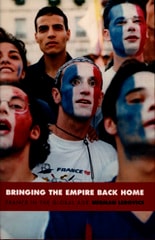
Bringing the Empire Back Home
France in the Global AgeHerman Lebovics
Duke University Press, 2004
In Bringing the Empire Back Home, the inventive cultural historian Herman Lebovics provides a riveting account of how intense disputes about what it means to be French have played out over the past half-century, redefining Paris, the regions, and the former colonies in relation to one another and the world at large. In a narrative populated with peasants, people from the former colonies, museum curators, former colonial administrators, left Christians, archaeologists, anthropologists, soccer players and their teenage fans, and, yes, leading government officials, Lebovics reveals contemporary French society and cultures as perhaps the West’s most important testing grounds of pluralism and assimilation. A lively cultural history, Bringing the Empire Back Home highlights not only the political significance of France’s efforts to synthesize the regional, national, European, ethnic postcolonial, and global but also the chaotic beauty of the endeavor.

Broken Souths
Latina/o Poetic Responses to Neoliberalism and GlobalizationMichael Dowdy
University of Arizona Press, 2013
Dowdy argues that a transnational Latina/o imaginary has emerged in response to neoliberalism—the free-market philosophy that underpins what many in the northern hemisphere refer to as “globalization.” His work examines how poets represent the places that have been “broken” by globalization’s political, economic, and environmental upheavals. Broken Souths locates the roots of the new imaginary in 1968, when the Mexican student movement crested and the Chicano and Nuyorican movements emerged in the United States. It theorizes that Latina/o poetics negotiates tensions between the late 1960s’ oppositional, collective identities and the present day’s radical individualisms and discourses of assimilation, including the “post-colonial,” “post-national,” and “post-revolutionary.” Dowdy is particularly interested in how Latina/o poetics reframes debates in cultural studies and critical geography on the relation between place, space, and nature.
Broken Souths features discussions of Latina/o writers such as Victor Hernández Cruz, Martín Espada, Juan Felipe Herrera, Guillermo Verdecchia, Marcos McPeek Villatoro, Maurice Kilwein Guevara, Judith Ortiz Cofer, Jack Agüeros, Marjorie Agosín, Valerie Martínez, and Ariel Dorfman, alongside discussions of influential Latin American writers, including Roberto Bolaño, Ernesto Cardenal, David Huerta, José Emilio Pacheco, and Raúl Zurita.