Results by title
168 books match the query 'Health Policy' and 6 start with b
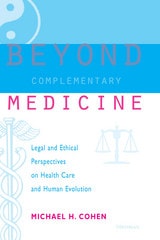
Beyond Complementary Medicine
Legal and Ethical Perspectives on Health Care and Human EvolutionMichael H. Cohen
University of Michigan Press, 2000
Integration of divergent philosophies, paradigms, and practices requires responsible investigation, informed judgment, and open-minded yet critical study and analysis of various systems of healing. Michael H. Cohen offers providers and policymakers vitally important information by addressing questions such as credentialing, malpractice, informed consent, and liability for referrals. He describes both practical strategies for minimizing liability, as well as the necessary future evolution of the legal and regulatory structure.
Cohen also probes uncharted ethical and bioethical issues in complementary medicine and integrative health care. He further explores the connection between law, medicine, and spirituality and the role of this connection in human evolution. The book's range mirrors the integrative process itself, a process of grappling with, and meaningfully assimilating, disparate traditions and unfamiliar ways of thinking about the significance of health, body, and being.
Beyond Complementary Medicine is required reading for anyone involved in health care, including executives, insurers, managed care organizations, attorneys, ethicists, and lawmakers; physicians integrating complementary and alternative therapies; complementary and alternative medicine practitioners; medical schools, law schools, and educational institutions offering programs in health care, public health, and complementary therapies; companies manufacturing herbs and dietary supplements; and most of all, patients and their families.
Michael H. Cohen is President of the Institute for Integrative and Energy Medicine, a nonprofit organization in health care policy, ethics, and legal and regulatory affairs, and an attorney with an international practice in integrative health care.

Bioethics In Social Context
edited by Barry Hoffmaster
Temple University Press, 2001
The original essays in this volume use qualitative research methods to expose the multiple contexts within which the problems of bioethics arise, are defined and debated, and ultimately resolved. In a provocative concluding essay, one contributor asks his fellow ethnographers to reflect on the ethical problems of ethnography.

Bishops and Bodies
Reproductive Care in American Catholic HospitalsLori Freedman
Rutgers University Press, 2023
One out of every six patients in the United States is treated in a Catholic hospital that follows the policies of the U.S. Conference of Catholic Bishops. These policies prohibit abortion, sterilization, contraception, some treatments for miscarriage and gender confirmation, and other reproductive care, undermining hard-won patients’ rights to bodily autonomy and informed decision-making. Drawing on rich interviews with patients and providers, this book reveals both how the bishops’ directives operate and how people inside Catholic hospitals navigate the resulting restrictions on medical practice. In doing so, Bishops and Bodies fleshes out a vivid picture of how The Church’s stance on sex, reproduction, and “life” itself manifests in institutions that affect us all.
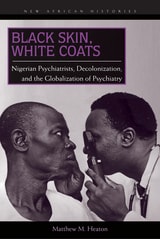
Black Skin, White Coats
Nigerian Psychiatrists, Decolonization, and the Globalization of PsychiatryMatthew M. Heaton
Ohio University Press, 2013
Black Skin, White Coats is a history of psychiatry in Nigeria from the 1950s to the 1980s. Working in the contexts of decolonization and anticolonial nationalism, Nigerian psychiatrists sought to replace racist colonial psychiatric theories about the psychological inferiority of Africans with a universal and egalitarian model focusing on broad psychological similarities across cultural and racial boundaries. Particular emphasis is placed on Dr. T. Adeoye Lambo, the first indigenous Nigerian to earn a specialty degree in psychiatry in the United Kingdom in 1954. Lambo returned to Nigeria to become the medical superintendent of the newly founded Aro Mental Hospital in Abeokuta, Nigeria’s first “modern” mental hospital. At Aro, Lambo began to revolutionize psychiatric research and clinical practice in Nigeria, working to integrate “modern” western medical theory and technologies with “traditional” cultural understandings of mental illness. Lambo’s research focused on deracializing psychiatric thinking and redefining mental illness in terms of a model of universal human similarities that crossed racial and cultural divides.
Black Skin, White Coats is the first work to focus primarily on black Africans as producers of psychiatric knowledge and as definers of mental illness in their own right. By examining the ways that Nigerian psychiatrists worked to integrate their psychiatric training with their indigenous backgrounds and cultural and civic nationalisms, Black Skin, White Coats provides a foil to Frantz Fanon’s widely publicized reactionary articulations of the relationship between colonialism and psychiatry. Black Skin, White Coats is also on the cutting edge of histories of psychiatry that are increasingly drawing connections between local and national developments in late-colonial and postcolonial settings and international scientific networks. Heaton argues that Nigerian psychiatrists were intimately aware of the need to engage in international discourses as part and parcel of the transformation of psychiatry at home.
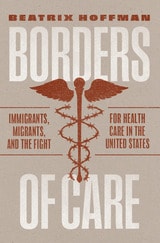
Borders of Care
Immigrants, Migrants, and the Fight for Health Care in the United StatesBeatrix Hoffman
University of Chicago Press, 2025
For the roughly ten million undocumented immigrants living in the United States, federal health care coverage is out of reach. Barred from Medicare, Medicaid, and the Affordable Care Act, most rely on hospital emergency rooms when they get sick, or clinics that don’t inquire about immigration status. Further obstacles to health care, including discrimination and the fear of deportation, mean that immigrants, undocumented or not, seek and receive less medical attention than any other population in the country. Yet immigrants haven’t always been ostracized from health care in the United States—providers and activists have for over a century worked to make medical services available to newcomers and migrants, including, at times, the undocumented.
Drawing together stories from diverse communities from the mid-nineteenth century to the present, Borders of Care examines how health care in the United States has both included and excluded immigrants. Beatrix Hoffman analyzes both the health and immigration systems, adding to our understanding of why these structures, and the policies that support them, have resisted reform. Moreover, she shows that immigrants, often scapegoated as burdens on the health-care system, have strengthened it through their responses to systemic exclusion. By creating hospitals and clinics, serving as practitioners, fighting for safer workplaces, filing lawsuits, organizing and protesting, immigrants and migrants have improved medical access for everybody and advanced the idea of health care as a universal right. As accessible as it is authoritative, Hoffman’s survey could not be more timely.
Borders of Care
Immigrants, Migrants, and the Fight for Health Care in the United StatesBeatrix Hoffman
University of Chicago Press, 2025
Probes the relationship between the immigration and health care systems in the United States.
For the roughly ten million undocumented immigrants living in the United States, federal health care coverage is out of reach. Barred from Medicare, Medicaid, and the Affordable Care Act, most rely on hospital emergency rooms when they get sick, or clinics that don’t inquire about immigration status. Further obstacles to health care, including discrimination and the fear of deportation, mean that immigrants, undocumented or not, seek and receive less medical attention than any other population in the country. Yet immigrants haven’t always been ostracized from health care in the United States—providers and activists have for over a century worked to make medical services available to newcomers and migrants, including, at times, the undocumented.
Drawing together stories from diverse communities from the mid-nineteenth century to the present, Borders of Care examines how health care in the United States has both included and excluded immigrants. Beatrix Hoffman analyzes both the health and immigration systems, adding to our understanding of why these structures, and the policies that support them, have resisted reform. Moreover, she shows that immigrants, often scapegoated as burdens on the health-care system, have strengthened it through their responses to systemic exclusion. By creating hospitals and clinics, serving as practitioners, fighting for safer workplaces, filing lawsuits, organizing and protesting, immigrants and migrants have improved medical access for everybody and advanced the idea of health care as a universal right. As accessible as it is authoritative, Hoffman’s survey could not be more timely.