Results by title
89 books match the query 'Historic sites' and 6 start with b
Becoming Villagers
Comparing Early Village SocietiesEdited by Matthew S. Bandy and Jake R. Fox
University of Arizona Press, 2010
Based on a Society for American Archaeology symposium and subsequent Amerind Advanced Seminar in 2006, Becoming Villagers examines this transformation at various places and times across the globe by focusing not on the origins of agriculture and village life but rather on their consequences. The goal of the volume is to identify regularities in the ways that societies developed in the centuries and millennia following a transition to village life. Using cases that range from China to Bolivia and from the Near East to the American Southwest, leading archaeologists situate their specific areas of specialization in a broad comparative context.
They consider the forces acting to divide and fragment early villages and the social technologies and practices by which those obstacles were, in some cases, overcome. Finally, the volume examines the long-term historical trajectories of these early village societies.
This transformative collection makes a powerful case for a renewed and invigorated archaeological focus on large-scale comparative studies. It will be an essential read for anyone interested not only in early village societies but also in the ways in which archaeology relates to anthropology, other social sciences, and history.
CONTENTS:
- “Becoming Villagers: The Evolution of Early Village Societies,” Matthew S. Bandy and Jake R. Fox
- “Population Growth, Village Fissioning, and Alternative Early Village Trajectories,” Matthew S. Bandy
- “A Scale Model of Seven Hundred Years of Farming Settlements in Southwestern Colorado,” Timothy A. Kohler and Mark D. Varien
- “‘Great Expectations,’ or the Inevitable Collapse of the Early Neolithic in the Near East,” Nigel Goring-Morris and Anna Belfer-Cohen
- “‘Ritualization’ in Early Village Society: The Case of the Lake Titicaca Basin Formative,” Amanda B. Cohen
- “The Sacred and the Secular Revisited: The Essential Tensions of Early Village Society in the Southeastern United States,” Thomas Pluckhahn
- “Substantial Structures, Few People, and the Question of Early Villages in the Mimbres Region of the North American Southwest,” Patricia A. Gilman
- “Sea Changes in Stable Communities: What Do Small Changes in Practices at Catalhoyuk and Chiripa Imply about Community Making?” Christine A. Hastorf
- “The Emergence of Early Villages in the American Southwest: Cultural Issues and Historical Perspectives,” Richard H. Wilshusen and James M. Potter
- “A Persistent Early Village Settlement System on the Bolivian Southern Altiplano,” Jake R. Fox
- “First Towns in the Americas: Searching for Agriculture, Population Growth, and Other Enabling Conditions,” John E. Clark, Jon L. Gibson, and James Zeidler
- “The Evolution of Early Yangshao Period Village Organization in the Middle Reaches of Northern China's Yellow River Valley,” Christian E. Peterson and Gideon Shelach
Behind the Big House
Reconciling Slavery, Race, and Heritage in the U.S. SouthJodi Skipper
University of Iowa Press, 2022
When residents and tourists visit sites of slavery, whose stories are told? All too often the lives of slaveowners are centered, obscuring the lives of enslaved people. Behind the Big House gives readers a candid, behind-the-scenes look at what it really takes to interpret the difficult history of slavery in the U.S. South. The book explores Jodi Skipper’s eight-year collaboration with the Behind the Big House program, a community-based model used at local historic sites to address slavery in the collective narrative of U.S. history and culture.
In laying out her experiences through an autoethnographic approach, Skipper seeks to help other activist scholars of color negotiate the nuances of place, the academic public sphere, and its ambiguous systems of reward, recognition, and evaluation.
Bending the Future
Fifty Ideas for the Next Fifty Years of Historic Preservation in the United StatesEdited by Max Page and Marla R. Miller
University of Massachusetts Press, 2016
The year 2016 marks the fiftieth anniversary of the National Historic Preservation Act, the cornerstone of historic preservation policy and practice in the United States. The act established the National Register of Historic Places, a national system of state preservation offices and local commissions, set up federal partnerships between states and tribes, and led to the formation of the standards for preservation and rehabilitation of historic structures. This book marks its fiftieth anniversary by collecting fifty new and provocative essays that chart the future of preservation.
The commentators include leading preservation professionals, historians, writers, activists, journalists, architects, and urbanists. The essays offer a distinct vision for the future and address related questions, including, Who is a preservationist? What should be preserved? Why? How? What stories do we tell in preservation? How does preservation contribute to the financial, environmental, social, and cultural well-being of communities? And if the “arc of the moral universe . . . bends towards justice,” how can preservation be a tool for achieving a more just society and world?
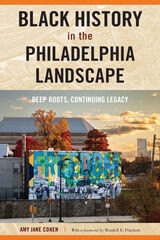
Black History in the Philadelphia Landscape
Deep Roots, Continuing LegacyAmy Jane Cohen
Temple University Press, 2024
Cohen also describes the path to erecting a statue of civil rights activist Octavius Catto at Philadelphia’s City Hall and profiles international celebrities Marian Anderson and Paul Robeson who are honored in the city. At the end of each chapter, she includes suggestions to continue readers’ exploration of this important cultural heritage.
Showing how increased attention to the role of African Americans in local and national history has resulted in numerous, sometimes controversial, alterations to the landscape, Cohen guides readers to Black history’s significance and its connections with today’s spotlight on racial justice.
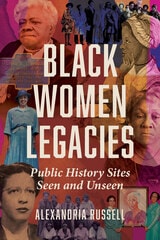
Black Women Legacies
Public History Sites Seen and UnseenAlexandria Russell
University of Illinois Press, 2024
Intersectional and original, Black Women Legacies explores the memorialization of African American women and its distinctive impact on physical and cultural landscapes throughout the United States.
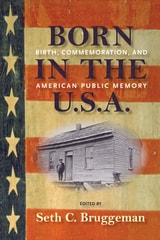
Born in the U.S.A.
Birth, Commemoration, and American Public MemorySeth C. Bruggeman
University of Massachusetts Press, 2012
Beyond asking why it is that Americans care about birthplaces and how they choose which ones to commemorate, Born in the U.S.A. offers insights from historians, curators, interpretive specialists, and others whose experience speaks directly to the challenges of managing historical sites. Each essay points to new ways of telling old stories at these mainstays of American memory. The case of the modern house museum receives special attention in a provocative concluding essay by Patricia West.
In addition to West and the editor, contributors include Christine Arato, Dan Currie, Keith A. Erekson, David Glassberg, Anna Thompson Hajdik, Zachary J. Lechner, Paul Lewis, Hilary Iris Lowe, Cynthia Miller, Laura Lawfer Orr, Robert Paynter, Angela Phelps, and Paul Reber.