Results by title
28167 books match the query 'History' and 1262 start with b
BANKSTERS BOSSES SMART MONEY
SOCIAL HISTORY OF GREAT TOLEDO BANK CRASTIMOTHY MESSER-KRUSE
The Ohio State University Press, 2004

BASTARDS AND FOUNDLINGS
ILLEGITIMACY IN EIGHTEENTH-CENTURY ENGLANDLisa Zunshine
The Ohio State University Press, 2005

BETTING THE LINE
SPORTS WAGERING IN AMERICAN LIFERichard O. Davies and Richard G. Abram
The Ohio State University Press, 2001

BEYOND SCHENKERISM
Eugene Narmour
University of Chicago Press, 1977
BEYOND THE REPRODUCTIVE BODY
Politics of Women’s Health & Work in Early Victorian EnglandMarjorie Levine-Clark
The Ohio State University Press, 2004
BLACK SWAMP FARM
Howard E. Good
The Ohio State University Press, 1997
Good remembers playing shinny with clamp-on skates and a tin can that had been stomped until it could whiz across the ice given just the right combination of speed and accuracy. He tells of the boom of the steam engine as it pulled the threshing machine to a neighboring farm on a hot summer day, and of the excitement of riding high on a wagonload of hay, gazing down on the horses’ broad, shining backs. He describes the springtime task of making soap, the ritual of the shivaree, and the pleasure of the church ice-cream social. He remembers well—and chronicles for the reader—the unproclaimed achievements of men and women whose courage and grueling toil brought them rich rewards.
First published in 1967, this reprint makes available once again a faithful portrayal of Black Swamp—a place that no longer exists—and provides a treasure trove of history for Ohioans.
BLUEGRASS
A HistoryNeil V. Rosenberg
University of Illinois Press, 2005

BUILDERS OF OHIO
A Biographical HistoryEdited by Warren Van Tine and Michael Pierce
The Ohio State University Press, 2003
Babes in Tomorrowland
Walt Disney and the Making of the American Child, 1930–1960Nicholas Sammond
Duke University Press, 2005
In vivid detail, Sammond describes how the latest thinking about human development was translated into the practice of child-rearing and how magazines and parenting manuals characterized the child as the crucible of an ideal American culture. He chronicles how Walt Disney Productions’ greatest creation—the image of Walt Disney himself—was made to embody evolving ideas of what was best for the child and for society. Bringing popular child-rearing manuals, periodicals, advertisements, and mainstream sociological texts together with the films, tv programs, ancillary products, and public relations materials of Walt Disney Productions, Babes in Tomorrowland reveals a child that was as much the necessary precursor of popular media as the victim of its excesses.

Babies In Bottles
Susan Merrill Squier
Rutgers University Press, 1994
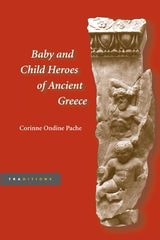
Baby and Child Heroes in Ancient Greece
Corinne Ondine Pache
University of Illinois Press, 2004
Examining literary, pictorial, and numismatic representations, Pache opens up a vast territory once occupied by children such as Charila, Opheltes, Melikertes, and the children of Herakles and Medea. She elegantly argues that the stories, songs, and sanctuaries honoring these heroes express parental fears and guilt about children's death. Pache further demonstrates that while the myths and rituals articulate basic human anxieties, their emphasis is ultimately on the beauty that transcends the gruesomeness of the narrative, turning their dread into poetry. By showing the continuity of child heroes in Greek religion, she is able to throw new light on iconographies that have previously defied explanation.
Babylonian Chronographic Texts from the Hellenistic Period
R. J. van der Spek
SBL Press, 2025

Bacardi
The Hidden WarHernando Calvo Ospina
Pluto Press, 2002
Bacchanalian Sentiments
Musical Experiences and Political Counterpoints in TrinidadKevin K. Birth
Duke University Press, 2008
Birth draws on fieldwork he conducted in one of Trinidad’s ethnically diverse rural villages to explore the relationship between music and social and political consciousness on the island. He describes how Trinidadians use the affective power of music and the physiological experience of performance to express and work through issues related to identity, ethnicity, and politics. He looks at how the performers and audience members relate to different musical traditions. Turning explicitly to politics, Birth recounts how Trinidadians used music as a means of making sense of the attempted coup d’état in 1990 and the 1995 parliamentary election, which resulted in a tie between the two major political parties. Bacchanalian Sentiments is an innovative ethnographic analysis of the significance of music, and particular musical forms, in the everyday lives of rural Trinidadians.

Bach Perspectives, Volume 10
Bach and the OrganMatthew Dirst
University of Illinois Press, 2016

Bach Perspectives, Volume 9
J.S. Bach and His Contemporaries in GermanyEdited by Andrew Talle
University of Illinois Press, 2013
In this volume, Wolfgang Hirschmann proposes an ethnographic approach that contextualizes Bach's works, addressing the aesthetic paths he took as well as those he did not pursue. Steven Zohn's essay considers Telemann's contribution to the orchestral Ouverture genre, observering how Telemann's approach to integrating the national styles of his time was quite different from, but no less rich than, Bach's. Andrew Talle compares settings and strategies of Vergnügte Ruh, beliebte Seelenlust by Bach and Graupner. Alison Dunlop presents valuable primary research on Muffat, the most commonly cited keyboard music composer in Vienna during Bach's lifetime. Finally, Michael Maul sheds new light on the Scheibe-Birnbaum controversy, contextualizing the most famous critique of J. S. Bach's compositional style by discussing the other composers that Scheibe critiqued.

Bachelor Bess
The Homesteading Letters of Elizabeth Corey, 1909-1919Philip L. Gerber
University of Iowa Press, 1990
In July 1909 twenty-one-year-old Elizabeth Corey left her Iowa farm to stake her claim to a South Dakota homestead. Over the next ten years, as she continued her schoolteaching career and carved out a home for herself in this inhospitable territory, she sent a steady stream of letters to her family back in Iowa. From the edge of modern America, Bess wrote long, gossipy accounts—"our own continuing adventure story," according to her brother Paul—of frontier life on the high plains west of the Missouri River. Irrepressible, independent-minded, and evidently fearless, the self-styled Bachelor Bess gives us a firsthand, almost daily account of her homesteading adventures. We can all stake a claim in her energetic letters.

Bachelors and Bunnies
The Sexual Politics of PlayboyCarrie Pitzulo
University of Chicago Press, 2011
For a lot of people, thoughts about the sexual politics of Playboy run along the lines of what Gloria Steinem reportedly once told Hugh Hefner: “A woman reading Playboy feels a little like a Jew reading a Nazi manual.” Hefner’s magazine celebrates men as swinging bachelors and women as objects of desire; ergo, it’s sexist.
Not so fast, says Carrie Pitzulo. With Bachelors and Bunnies, she delves into the history of the magazine to reveal its surprisingly strong record of support for women’s rights and the modernization of sexual and gender roles. Taking readers behind the scenes of Playboy’s heyday, Pitzulo shows how Hefner’s own complicated but thoughtful perspective on modern manhood, sexual liberation, and feminism played into debates—both in the editorial offices and on the magazine’s pages—about how Playboy’s trademark “girl next door” appeal could accommodate, acknowledge, and even honor the changing roles and new aspirations of women in postwar America. Revealing interviews with Hugh Hefner and his daughter (and later Playboy CEO) Christie Hefner, as well as with a number of editors and even Playmates, show that even as the magazine continued to present a romanticized notion of gender difference, it again and again demonstrated a commitment to equality and expanded opportunities for women.
Offering a surprising new take on a twentieth-century icon, Bachelors and Bunnies goes beyond the smoking jacket and the centerfold to uncover an unlikely ally for the feminist cause.

Bachelors of Science
Seventeenth Century Identity, Then and NowNaomi Zack
Temple University Press, 1996
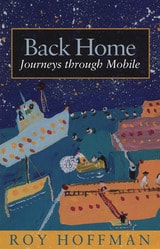
Back Home
Journeys through MobileRoy Hoffman
University of Alabama Press, 2007
After twenty years in New York City, a prize-winning writer takes a "long look back" at his hometown of Mobile, Alabama.
In Back Home: Journeys through Mobile, Roy Hoffman tells stories—through essays, feature articles, and memoir—of one of the South's oldest and most colorful port cities. Many of the pieces here grew out of Hoffman's work as Writer-in-Residence for his hometown newspaper, the Mobile Register, a position he took after working in New York City for twenty years as a journalist, fiction writer, book critic, teacher, and speech writer. Other pieces were first published in the New York Times, Southern Living, Preservation, and other publications. Together, this collection comprises a long, second look at the Mobile of Hoffman's childhood and the city it has since become.
Like a photo album, Back Home presents close-up portraits of everyday places and ordinary people. There are meditations on downtown Mobile, where Hoffman's grandparents arrived as immigrants a century ago; the waterfront where longshoremen labor and shrimpers work their nets; the back roads leading to obscure but intriguing destinations. Hoffman records local people telling their own tales of race relations, sports, agriculture, and Mardi Gras celebrations. Fishermen, baseball players, bakers, authors, political figures--a strikingly diverse population walks across the stage of Back Home.
Throughout, Hoffman is concerned with stories and their enduring nature. As he writes, "When buildings are leveled, when land is developed, when money is spent, when our loved ones pass on, when we take our places a little farther back every year on the historical time-line, what we have still are stories."

Back To Birmingham
Richard Arrington, Jr., and His TimesJimmie Lewis Franklin
University of Alabama Press, 1989
During the 1960s, Birmingham, Alabama was the central battleground in the struggle for human rights in the American South. As one of the most segregated cities in the United States, the city of Birmingham became infamous for its suppression of civil rights and for official and vigilante violence against its African American citizens, most notoriously the use of explosives in the Sixteenth Street Baptist Church bombing and the bombing of the home of Reverend Fred Shuttlesworth.
In October of 1979, Birmingham elected its first Black mayor, Richard Arrington Jr. He was born in the rural town of Livingston, Alabama. His family moved to Birmingham when he was a child. A man of quiet demeanor, he was nevertheless destined to bring to fruition many of the fundamental changes that the Civil Rights Movement had demanded. This is his story. Not a conventional political or Civil Rights history, Back to Birmingham is the story of a man who demonstrated faith in his region and people. The work illuminates Arrington's sense of place, a quality that enables a person to claim sentimentally a portion of the natural and human environment. Franklin passionately underscores the importance of the attachment of Southern Blacks to their land and place.
Back to Birmingham will appeal to both the general reader and the serious student of American society. The book endeavors to bridge the gap between popular and scholarly history. It is guided by the assumption that Americans of whatever description can find satisfaction in comprehending social change and that they are buoyed by the individual triumph of those who beat the odds.
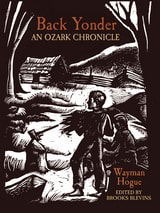
Back Yonder
An Ozark ChronicleCharles Wayman Hogue
University of Arkansas Press, 2016
Wayman Hogue’s stories of growing up in the Ozarks, according to a 1932 review in the New York Times, “brilliantly illuminate mountain life to its very heart and in its most profound aspects.” A standout among the Ozarks literature that was popular during the Great Depression, this memoir of life in rural Arkansas in the decades following the Civil War has since been forgotten by all but a few students of Arkansas history and folklore.
Back Yonder is a special book. Hogue, like his contemporary Laura Ingalls Wilder, weaves a narrative of a family making its way in rugged, impoverished, and sometimes violent places. From one-room schoolhouses to moonshiners, the details in this story capture the essence of a particular time and place, even as the characters reflect a universal quality that will endear them to modern readers.
Historian Brooks Blevins’s new introduction explores the life of Charles Wayman Hogue, analyzes the people and events that inspired the book, and places the volume in the context of America’s discovery of the Ozarks in the years between the World Wars. The University of Arkansas Press is proud to reissue Back Yonder as the first book in the Chronicles of the Ozarks series, making this Arkansas classic available again, ready to be discovered and rediscovered by readers sure to find the book as interesting and entertaining as ever.

Back of the Yards
The Making of a Local DemocracyRobert A. Slayton
University of Chicago Press, 1986

Back to the Breast
Natural Motherhood and Breastfeeding in AmericaJessica Martucci
University of Chicago Press, 2015
That movement—in which the personal and political were inextricably linked—effectively challenged midcentury norms of sexuality, gender, and consumption, and articulated early environmental concerns about chemical and nuclear contamination of foods, bodies, and breast milk. In its groundbreaking chronicle of the breastfeeding movement, Back to the Breast provides a welcome and vital account of what it has meant, and what it means today, to breastfeed in modern America.
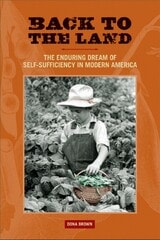
Back to the Land
The Enduring Dream of Self-Sufficiency in Modern AmericaDona Brown
University of Wisconsin Press, 2011
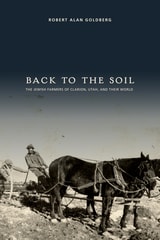
Back to the Soil
The Jewish Farmers of Clarion, Utah, and Their WorldRobert Alan Goldberg
University of Utah Press, 1986
The image of the Jew solely as urbanite may stem from the period of 1880 to 1920, when two million Jews left their homes in Eastern Europe and established themselves in the urban centers of America. Lesser known are the agrarian efforts of Jewish immigrants. In Back to the Soil, Robert Goldberg focuses on the attempt of one such Jewish colony in Clarion, Utah. In 1911, eighty-one families left eastern cities to farm the Clarion tract. Jewish families funded the venture, the governor of Utah en-couraged it, and the Mormon Church financially aided the community. Despite these efforts, Clarion died as an organizational entity in 1916, with the dozen remaining families departing by the mid-1920s.
Goldberg sheds light on the values and ideals of the colonists, the daily rhythm of life, the personalities of the settlers, and the struggle for and eventual collapse of their dream. Of all the attempts to establish a Jewish colony on the land, Clarion was the largest and had the longest existence of any colony west of the Appalachians. The Clarion fragment, lost and forgotten, thus becomes a crucial part of the larger mosaic of Jewish history in the West.
Release of this new paperback edition is timed to coincide with the celebration of the centennial of the founding of the Clarion colony.
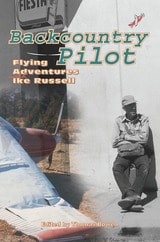
Backcountry Pilot
Flying Adventures with Ike RussellEdited by Thomas Bowen
University of Arizona Press, 2002
This book combines biography and oral history by offering a wide range of anecdotes and remembrances about Ike by friends and family. Many describe the great adventures and gut-wrenching close calls that have become enshrined in local folklore as classic "Ike Russell stories," in all their hair-raising and hilarious splendor.
Russell was an easterner who moved to Arizona for his health and got his pilot's license in 1948—despite suffering from a respiratory disorder that would have kept other men firmly anchored to the ground. Over the years he flew scientists and other scholars to remote field locations in Mexico's Gulf of California and Sierra Madre Occidental that otherwise might not have been investigated. He often landed on short and dangerous airstrips and never seemed to mind running out of gas, getting caught without provisions, or attempting night landings in unlighted terrain. He took along a teapot wherever he went—and wherever he stopped, his first priority was to brew a quick cup.
Backcountry Pilot is the story of a larger-than-life adventurer, with those who knew Ike sharing tales tall and true about his famous exploits, brushes with fate, and sometimes narrow escapes from the jaws of disaster. It includes reminiscences by such scientists and friends as botanist Richard Felger, whom Ike frequently flew down to Seriland; ethnohistorian Bernard Fontana, whom Ike took to Tarahumara country; and paleoecologist Paul Martin, who talked Ike into a nine-month trip through Africa over totally unfamiliar terrain. A concluding chapter by Thomas Bowen offers a brief biographical sketch of Russell.
Ike Russell was a central figure for a generation of people who studied the southwestern desert and who helped others see it as a biological treasure rather than a wasteland. More than a highly skilled bush pilot, he was an extraordinary human being who touched the lives of everyone he met. For those who never got the chance, Backcountry Pilot secures Ike Russell's legacy in the desert skies.
Backcountry War
The Rise of Francis Marion, Banastre Tarleton, and Thomas SumterAndrew Waters
Westholme Publishing, 2026
Over the past several decades, the history of the American Revolution in the South has undergone a transformation to better incorporate regional events into the greater narrative of the war. Among these events was the vicious “backcountry” war from the Georgia border, across the South Carolina wilderness, to the North Carolina Piedmont between rebel Americans and loyalist and British forces. Centered in South Carolina, this running battle saw some of the most intense and continuous fighting of the war, and from its skirmishes, feints, and sieges, three key leaders emerged: American partisans Francis “Swamp Fox” Marion and Thomas “Gamecock” Sumter, and British Legion commander Banastre “Bloody Ban” Tarleton.
For the first time, Backcountry War: The Rise of Francis Marion, Banastre Tarleton, and Thomas Sumter by Andrew Waters frames the history of these three men into in a single narrative, focusing on the events of 1780 in South Carolina that witnessed their collective ascendance from common soldiers to American legends. It was a time when British victories at Charleston and Camden left the Continental Army in tatters and the entire American South vulnerable to British conquest. Yet in those dark hours, Sumter, Marion, and others like them rose in the swamps and hills of the South Carolina wilderness. Fighting a wildly successful partisan war against better trained and better equipped British forces, including Tarleton’s British Legion, with victories at lesser-known places like Hanging Rock and Nelson’s Ferry, they gained precious months for the reorganizing Continental Army. Their collective efforts led to the stunning American victory at Cowpens and a stalemate at Guilford’s Courthouse the following year that finally convinced British general Charles Cornwallis to abandon the Carolinas for Virginia.
With background biographies of its three main protagonists, a thorough sketch of Great Britain’s Southern Strategy, and a sociocultural examination of the South Carolina frontier in the years leading up to the American Revolution, Backcountry War offers a fresh perspective on an extraordinary chapter of American history and a compelling account of the deadly contest between three of the war’s most charismatic leaders.
Backlash Against the ADA
Reinterpreting Disability RightsLinda Hamilton Krieger, Editor
University of Michigan Press, 2003

Backpack Ambassadors
How Youth Travel Integrated EuropeRichard Ivan Jobs
University of Chicago Press, 2017
From the Berlin Wall to the beaches of Spain, the Spanish Steps in Rome to the Pudding Shop in Istanbul, Jobs tells the stories of backpackers whose personal desire for freedom of movement brought the people and places of Europe into ever-closer contact. As greater and greater numbers of young people trekked around the continent, and a truly international youth culture began to emerge, the result was a Europe that, even in the midst of Cold War tensions, found its people more and more connected, their lives more and more integrated. Drawing on archival work in eight countries and five languages, and featuring trenchant commentary on the relevance of this period for contemporary concerns about borders and migration, Backpack Ambassadors brilliantly recreates a movement that was far more influential and important than its footsore travelers could ever have realized.
Backroom Bargaining
Racketeering and Rebellion in New York City's Labor UnionsJane LaTour
University of Illinois Press, 2026
Backstage at the Revolution
How the Royal Paris Opera Survived the End of the Old RegimeVictoria Johnson
University of Chicago Press, 2008
Sifting through royal edicts, private letters, and Revolutionary records of all kinds, Johnson uncovers the roots of the Opera’s survival in its identity as a uniquely privileged icon of French culture—an identity established by the conditions of its founding one hundred years earlier under Louis XIV. Johnson’s rich cultural history moves between both epochs, taking readers backstage to see how a motley crew of singers, dancers, royal ministers, poet entrepreneurs, shady managers, and the king of France all played a part in the creation and preservation of one of the world’s most fabled cultural institutions.
Backstaging Modern Chinese Theatre
Intellectuals, Amateurs, and Cultural Entrepreneurs, 1910s–1940sMan He
University of Michigan Press, 2025

Backtalk
Women Writers Speak OutDonna Perry
Rutgers University Press, 1993
Agents or victims, liberated or oppressed, "bad girls" or "good girls." What do these labels mean and do they further or hinder women's progress? How are today's visions of female sexuality and power like or unlike those of the past? How do younger women define feminism? Isn't the personal still political?
Dismayed by the media's tendency to reduce the feminist enterprise to labels and superstars, Donna Perry and Nan Bauer Maglin decided to find out what a diverse group of feminists think about women, sex, and power in the nineties. The result is a provocative and varied collection of twenty-four essays by second- and third-wave feminists; artists and activists; professors and graduate students; professional journalists and just-published writers; mothers and daughters. By focusing on society's construction, containment, and exploitation of female sexuality, in particular, these essays offer fresh perspectives on women's agency or lack of it.
The contributors focus on the oversimplifications and false dichotomies in current discussions of female sexuality, as well as the privileged perspective and individualism that currently dominate the popularized feminist message. Individual writers--including Emma Amos, bell hooks, Ann Jones, Lisa Jones, Paula Kamen, Matuschka, Marge Piercy, Katha Pollitt, Anna Quindlen, Elayne Rapping, Lillian S. Robinson, and Ellen Willis--reexamine women's empowerment in the light of issues like AIDS, battering, acquaintance rape, narratives of childhood sexual abuse, and pornography. Several draw political conclusions from their personal struggles, while others read stories and texts--from history, the art world, the media, popular culture, and social science research--in new and controversial ways.
Backward Glances
Contemporary Chinese Cultures and the Female Homoerotic ImaginaryFran Martin
Duke University Press, 2010
As Martin explains, memorial schoolgirl love stories are popular throughout contemporary Chinese cultures. The same-sex attracted young woman appears in both openly homophobic and proudly queer-affirmative narratives, as well as in stories whose ideological valence is less immediately clear. Martin demonstrates that the stories, television programs, and films she analyzes are not idiosyncratic depictions of marginal figures, but manifestations of a broader, mainstream cultural preoccupation. Her investigation of representations of same-sex love between women sheds new light on contemporary Chinese understandings of sex, love, gender, marriage, and the cultural ordering of human life.
Bactria
The History of a Forgotten EmpireHugh George Rawlinson
Westholme Publishing, 2013
“If through the Bactrian Empire European ideas were transmitted to the Far East, through that and similar channels Asiatic ideas found their way to Europe.”—Intellectual Development of Europe
Following the Macedonian invasion of Persian in the fourth century B.C., an independent Greek-ruled empire emerged over an area encompassing modern Afghanistan, eastern Iran, and northern Pakistan. This ancient empire, called Bactria, is recorded in texts, both Asian and European, as well as through coins, inscriptions, and architectural remnants. Bactria served as a contact point between Europe, South Asia, and the Far East for more than two hundred years before disappearing under the pressure of a resurgent Persia to the west and Indian states to the east. In Bactria: The History of a Forgotten Empire, historian Hugh G. Rawlinson begins with the early history of Bactria and its subjugation by Persia, and then describes the conquest of Iran by Alexander the Great and the establishment of an independent Bactria ruled by Greeks. The Bactrians adopted Buddhism early on and helped establish the religion throughout the area. The author then follows the history of the empire through its rulers, including Menander, until Greek rule was extinguished around 135 B.C. Finally, the author discusses the effects of Greek occupation on the region. Based on meticulous research in ancient texts from Greece, Persia, and India, and using material evidence of the time, this history, which won the Hare University Prize at Cambridge in 1909, remains relevant today, providing a fascinating portrait of a little-known connection between East and West.

Bad Blood
Freedom and Death in the White MountainsCasey Sherman
University Press of New England, 2012

Bad Boys, Bad Times
The Cleveland Indians and Baseball in the Prewar Years, 1937–1941Scott H. Longert
Ohio University Press, 2019
In 1937, the Great Depression was still lingering, but at baseball parks across the country there was a sense of optimism. Major League attendance was on a sharp rise. Tickets to an Indians game at League Park on Lexington and East 66th were $1.60 for box seats, $1.35 for reserve seats, and $.55 for the bleachers. Cleveland fans were particularly upbeat—Bob Feller, the teenage phenomenon, was a farm boy with a blistering fast ball. Night games were an exciting development. Better days were ahead.
But there were mounting issues facing the Indians. For one thing, it was rumored that the team had illegally signed Feller. Baseball Commissioner Judge Kenesaw Mountain Landis was looking into that matter and one other. Issues with an alcoholic catcher, dugout fights, bats thrown into stands, injuries, and a player revolt kept things lively.
In Bad Boys, Bad Times: The Cleveland Indians and Baseball in the Prewar Years, 1937–1941—the follow-up to his No Money, No Beer, No Pennants: The Cleveland Indians and Baseball in the Great Depression—baseball historian Scott H. Longert writes about an exciting period for the team, with details and anecdotes that will please fans all over.
Bad Chaucer
The Great Poet’s Greatest Mistakes in the Canterbury TalesTison Pugh
University of Michigan Press, 2024
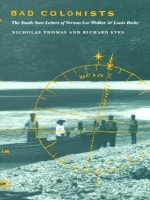
Bad Colonists
The South Seas Letters of Vernon Lee Walker and Louis BeckeNicholas Thomas and Richard Eves
Duke University Press, 1999
An obscure colonial trader, Walker wrote to his mother in England from Australia, the New Hebrides (now Vanuatu), and New Caledonia—and also from ships in between those places—during the 1870s and 1880s. Becke was a trader, too, but he was also a successful author of popular fiction that drew on his experiences in the Pacific. Written from Micronesia in the early 1880s, Becke’s letters are like Walker’s in that they report one setback after another. Both collections vividly evoke the day-to-day experiences of ordinary late-nineteenth-century colonists and open up new questions concerning the making and writing of selves on the colonial periphery.
Exposing insecurities in an epoch normally regarded as one of imperial triumph, Bad Colonists will appeal to students and scholars of anthropology, colonial history, cultural studies, and Pacific history and culture.

Bad Company and Burnt Powder
Justice and Injustice in the Old SouthwestBob Alexander
University of North Texas Press, 2014

Bad Film Histories
Ethnography and the Early ArchiveKatherine Groo
University of Minnesota Press, 2019
A daring, deep investigation into ethnographic cinema that challenges standard ways of writing film history and breaks important new ground in understanding archives
Bad Film Histories is a vital work that unsettles the authority of the archive. Katherine Groo daringly takes readers to the margins of the film record, addressing the undertheorization of film history and offering a rigorous corrective. Taking ethnographic cinema as a crucial case study, Groo challenges standard ways of thinking and writing about film history and questions widespread assumptions about what film artifacts are and what makes them meaningful. Rather than filling holes, Groo endeavors to understand the imprecisions and absences that define film history and its archives.
Bad Film Histories draws on numerous works of ethnographic cinema, from Edward S. Curtis’s In the Land of the Head Hunters, to a Citroën-sponsored “croisière” across Africa, to the extensive archives of the Maison Lumière and the Musée Albert-Kahn, to dozens of expedition films from the 1910s and 1920s. The project is deeply grounded in poststructural approaches to history, and throughout Groo draws on these frameworks to offer innovative and accessible readings that explain ethnographic cinema’s destabilizing energies.
As Groo describes, ethnographic works are mostly untitled, unauthored, seemingly infinite in number, and largely unrestored even in their digital afterlives. Her examination of ethnographic cinema provides necessary new thought for both film scholars and those who are thrilled by cinema’s boundless possibilities. In so doing, she boldly reexamines what early ethnographic cinema is and how these films produce meaning, challenging the foundations of film history and prevailing approaches to the archive.

Bad Girls of the Arab World
Edited by Nadia Yaqub and Rula Quawas
University of Texas Press, 2017
Women’s transgressive behaviors and perspectives are challenging societal norms in the Arab world, giving rise to anxiety and public debate. Simultaneously, however, other Arab women are unwillingly finding themselves labeled “bad” as authority figures attempt to redirect scrutiny from serious social ills such as patriarchy and economic exploitation, or as they impose new restrictions on women’s behavior in response to uncertainty and change in society. Bad Girls of the Arab World elucidates how both intentional and unintentional transgressions make manifest the social and cultural constructs that define proper and improper behavior, as well as the social and political policing of gender, racial, and class divisions.
The works collected here address the experiences of women from a range of ages, classes, and educational backgrounds who live in the Arab world and beyond. They include short pieces in which the women themselves reflect on their experiences with transgression; academic articles about performance, representation, activism, history, and social conditions; an artistic intervention; and afterwords by the acclaimed novelists Laila al-Atrash and Miral al-Tahawy. The book demonstrates that women’s transgression is both an agent and a symptom of change, a site of both resistance and repression. Showing how transnational forces such as media discourses, mobility and confinement, globalization, and neoliberalism, as well as the legacy of colonialism, shape women’s badness, Bad Girls of the Arab World offers a rich portrait of women’s varied experiences at the boundaries of propriety in the twenty-first century.
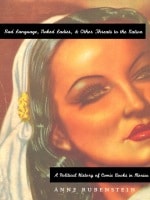
Bad Language, Naked Ladies, and Other Threats to the Nation
A Political History of Comic Books in MexicoAnne Rubenstein
Duke University Press, 1998
Since their first appearance in 1934, comic books enjoyed wide readership, often serving as a practical guide to life in booming new cities. Conservative protest against the so-called immorality of these publications, of mass media generally, and of Mexican modernity itself, however, led the Mexican government to establish a censorship office that, while having little impact on the content of comic books, succeeded in directing conservative ire away from government policies and toward the Mexican media. Bad Language, Naked Ladies, and Other Threats to the Nation examines the complex dynamics of the politics of censorship occasioned by Mexican comic books, including the conservative political campaigns against them, government and industrial responses to such campaigns, and the publishers’ championing of Mexican nationalism and their efforts to preserve their publishing empires through informal influence over government policies. Rubenstein’s analysis suggests a new Mexican history after the revolution, one in which negotiation over cultural questions replaced open conflict and mass-media narrative helped ensure political stability.
This book will engage readers with an interest in Mexican history, Latin American studies, cultural studies, and popular culture.

Bad Medicine
Settler Colonialism and the Institutionalization of American IndiansSarah A. Whitt
Duke University Press, 2025

Bad News Travels Fast
The Telegraph, Libel, and Press Freedom in the Progressive EraPatrick C. File
University of Massachusetts Press, 2019
This largely forgotten era in the development of American libel law provides crucial historical context for contemporary debates about the news media, public discourse, and the role of a free press. File argues that the legal thinking surrounding these cases laid the groundwork for the more friendly libel standards the press now enjoys and helped to establish today's regulations of press freedom amid the promise and peril of high-speed communication technology.
Bad Souls
Madness and Responsibility in Modern GreeceElizabeth Anne Davis
Duke University Press, 2012

Bad Water
Nature, Pollution, and Politics in Japan, 1870-1950Robert Stolz
Duke University Press, 2014

Badanj
Epipaleolithic Excavations in Herzegovina, 1986-1987Robert Whallon
University of Michigan Press, 2025
The purpose of the 1986-1987 excavations was to provide a more detailed picture of the individual occupation and other layers at Badanj, to define the faunal assemblages of these layers as indicators of the changing ecology of the site, and to place the site within its regional cultural context. The excavations exposed a sequence of some ten occupation levels, seven activity or refuse levels, covering a period from approximately 16,000 to 13,000 cal BP, from the latter part of the Oldest Dryas to the end of the Bølling-Allerød late glacial climatic phases.
Over this period, two phases of lithic typology were identified, as well as parallel changes in a specific kind of decorative beads. In terms of ecology, red deer (Cervus elaphus) consistently provided by far the majority of the meat consumed at the site, but secondary fauna shows a clear, gradual replacement of colder-climate species such as ibex and chamois by warmer-climate roe deer and wild pig. Combining both qualitative and quantitative aspects of lithic technology and typology, the reconstruction of the potential foraging areas around Badanj, and estimates of supportable population allows the site to be placed in a clear regional context, which can be extended to suggest a hypothetical regional organization of similar sites over the eastern coast of the Adriatic Sea.
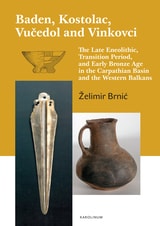
Baden, Kostolac, Vucedol and Vinkovci
The Late Eneolithic, Transition Period, and Early Bronze Age in the Carpathian Basin and the Western BalkansŽelimir Brnic
Karolinum Press, 2024
Baden, Kostolac, Vucedol and Vinkovci uses archaeology and genetics to create a novel cultural and historical interpretation of the Carpathian Basin during the Late Eneolithic period. The author traces the linear development of indigenous cultures from the Baden Culture through the Kostolac Culture to the Vucedol Culture, before positing that certain qualitative and quantitative shifts were driven by the entry of foreign populations—the Pit Grave Culture and the Bell Beaker Culture—into the Carpathian Basin.
The book also analyzes the emergence of the Early Bronze Age, establishing an absolute chronology, and examines the Vucedol Culture’s influence on geographically distant Bronze Age groups. An appendix also includes a discussion of findings that, while outside the Carpathian Basin, are part of its cultural sphere.