668 books match the query 'History & Surveys' and 14 start with b
cover of Badiou and Politics

Badiou and Politics

Bruno Bosteels

Duke University Press, 2011

Badiou and Politics offers a much-anticipated interpretation of the work of the influential French philosopher Alain Badiou. Countering ideas of the philosopher as a dogmatic, absolutist, or even mystical thinker enthralled by the force of the event as a radical break, Bruno Bosteels reveals Badiou’s deep and ongoing investment in the dialectic. Bosteels draws on all of Badiou’s writings, from the philosopher’s student days in the 1960s to the present, as well as on Badiou’s exchanges with other thinkers, from his avowed “masters” Louis Althusser and Jacques Lacan, to interlocutors including Gilles Deleuze, Slavoj Žižek, Daniel Bensaïd, Jacques Derrida, Ernesto Laclau, and Judith Butler. Bosteels tracks the philosopher’s political activities from the events of May 1968 through his embrace of Maoism and the work he has done since the 1980s, helping to mobilize France’s illegal immigrants or sans-papiers. Ultimately, Bosteels argues for understanding Badiou’s thought as a revival of dialectical materialism, and he illuminates the philosopher’s understanding of the task of theory: to define a conceptual space for thinking emancipatory politics in the present.
[more]
cover of Badiou: A Subject To Truth

Badiou

A Subject To Truth

Peter Hallward

University of Minnesota Press, 2003

Alain Badiou is one of the most inventive and compelling philosophers working in France today—a thinker who, in these days of cynical resignation and academic specialization, is exceptional in every sense. Guided by disciplines ranging from mathematics to psychoanalysis, inspired as much by Plato and Cantor as by Mao and Mallarmé, Badiou’s work renews, in the most varied and spectacular terms, a decidedly ancient understanding of philosophy—philosophy as a practice conditioned by truths, understood as militant processes of emancipation or transformation. 

This book is the first comprehensive introduction to Badiou’s thought to appear in any language. Assuming no prior knowledge of his work, it provides a thorough and searching overview of all the main components of his philosophy, from its decisive political orientation through its startling equation of ontology with mathematics to its resolute engagement with its principal competition (from Wittgenstein, Heidegger, and Deleuze, among others). The book draws on all of Badiou’s published work and a wide sampling of his unpublished work in progress, along with six years of correspondence with the author.  

Peter Hallward pays careful attention to the aspect of Badiou’s work most liable to intimidate readers in continental philosophy and critical theory: its crucial reliance on certain key developments in modern mathematics. Eschewing unnecessary technicalities, Hallward provides a highly readable discussion of each of the basic features of Badiou’s ontology, as well as his more recent account of appearance and “being-there.” 

Without evading the difficulties, Peter Hallward demonstrates in detail and in depth why Badiou’s ongoing philosophical project should be recognized as the most resourceful and inspiring of his generation. 
[more]
cover of Beauty and the Good: Recovering the Classical Tradition from Plato to Duns Scotus

Beauty and the Good

Recovering the Classical Tradition from Plato to Duns Scotus

Alice M. Ramos

Catholic University of America Press, 2021
In the past twenty years or more, there has been a growing interest among philosophers and theologians alike in the transcendentals and especially in the beautiful. This seems fortuitous since so much of contemporary culture is fixated in many ways on beauty, on what might be called a superficial or man-made beauty, intent on outward appearance, with little or no concern for the human person’s interiority and distinctive nature. The Ancients and the Medievals, on the contrary, were sensitive not only to the beauty of nature and art but also to beauty as intelligible, that is, to the beauty of moral harmony and of metaphysical splendor. While the question of whether the beautiful is in fact a transcendental aspect of being continues to be a subject of dispute in contemporary scholarship, the relationship between the beautiful and the good has been accepted since ancient times and has been attended to in recent publications. None of these publications, however, offers a systematic treatment of this relationship by drawing from the wisdom of both ancient and medieval thought in such a way as to bring together the work of scholars in this tradition. Beauty and the Good intends therefore to make a singular contribution by presenting a richer alternative to the contemporary cult of beauty and appearance on the one hand, and to the concomitant decline of real beauty on the other hand. In addition to highlighting the centrality of beauty in the Aristotelian account of moral virtue, where virtue is kalon and virtuous actions are done for the sake of kalon—an account which is found echoed in the medieval notion of intrinsic goodness (bonum honestum), understood as intelligible or spiritual beauty—this volume will provide the metaphysical and theological grounding for beauty, as influenced in part by Plato and Neoplatonism, together with a much needed account of how we know and judge beauty, and how for the recognition of true good and real beauty we need to be properly disposed. The integration of philosophical and theological reflection on the nature and relationship of beauty and the good, on our perception and judgment of beauty and of the good as beautiful, and on the motivational role of beauty in human action has as its goal to produce a coherent volume of essays.
[more]
cover of Behemoth or The Long Parliament

Behemoth or The Long Parliament

Thomas Hobbes

University of Chicago Press, 1990

Behemoth, or The Long Parliament is essential to any reader interested in the historical context of the thought of Thomas Hobbes (1588-1679). In De Cive (1642) and Leviathan (1651), the great political philosopher had developed an analytical framework for discussing sedition, rebellion, and the breakdown of authority. Behemoth, completed around 1668 and not published until after Hobbe's death, represents the systematic application of this framework to the English Civil War.

In his insightful and substantial Introduction, Stephen Holmes examines the major themes and implications of Behemoth in Hobbes's system of thought. Holmes notes that a fresh consideration of Behemoth dispels persistent misreadings of Hobbes, including the idea that man is motivated solely by a desire for self-preservation. Behemoth, which is cast as a series of dialogues between a teacher and his pupil, locates the principal cause of the Civil War less in economic interests than in the stubborn irrationality of key actors. It also shows more vividly than any of Hobbe's other works the importance of religion in his theories of human nature and behavior.

[more]
cover of Being Me Being You: Adam Smith and Empathy

Being Me Being You

Adam Smith and Empathy

Samuel Fleischacker

University of Chicago Press, 2019

Modern notions of empathy often celebrate its ability to bridge divides, to unite humankind. But how do we square this with the popular view that we can never truly comprehend the experience of being someone else? In this book, Samuel Fleischacker delves into the work of Adam Smith to draw out an understanding of empathy that respects both personal difference and shared humanity.

After laying out a range of meanings for the concept of empathy, Fleischacker proposes that what Smith called “sympathy” is very much what we today consider empathy. Smith’s version has remarkable value, as his empathy calls for entering into the perspective of another—a uniquely human feat that connects people while still allowing them to define their own distinctive standpoints. After discussing Smith’s views in relation to more recent empirical and philosophical studies, Fleischacker shows how turning back to Smith promises to enrich, clarify, and advance our current debates about the meaning and uses of empathy.
[more]
cover of Being and Predication

Being and Predication

Ralph M. McInerny

Catholic University of America Press, 2018
Brings together articles that influenced the scholarly work of Ralph McInerny.
[more]
cover of Benjamin: Philosophy, Aesthetics, History

Benjamin

Philosophy, Aesthetics, History

Edited by Gary Smith

University of Chicago Press, 1989

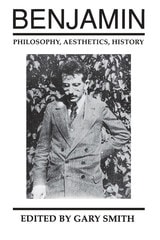
Walter Benjamin (1896-1940) has been called by Hannah Arendt the "greatest critic of the century." While an increasing number of Anglo-American literary critics draw upon Benjamin's writings in their own works, their colleagues in the philosophical community remain relatively unacquainted with his legacy. In the European intellectual world, by contrast, Benjamin's critical epistemological program, his philosophies of history and language, and his aesthetics have long since become part of philosophical discourse. The present collection of articles, many of which were contained in earlier versions in the Winter 1983 special issue of the journal The Philosophical Forum, initiates the project of establishing Benjamin's importance to philosophy.

A balance of original work by Benjamin and important commentary on his works, this volume includes the crucial chapter from Benjamin's magnum opus The Arcades Project, his "Program of the Coming Philosophy," and "Central Park," as well as essays by leading scholars (including Theodor W. Adorno, Leo Lowenthal, and Rolf Tiedemann) that treat single philosophical themes and relate his ideas to those of other thinkers such as Gadamer, Goodmann, and Rosenzweig. Gary Smith's introduction to the volume provides an extremely useful and sophisticated entrée for readers unaccustomed to the breadth of Benjamin's philosophical allusions, as well as an informative summation of the contents of the volume. This book will be of interest to philosophers, literary theorists, art historians, anthropologists, and other social scientists.
[more]
cover of Bertrand Russell

Bertrand Russell

A. J. Ayer

University of Chicago Press, 1988

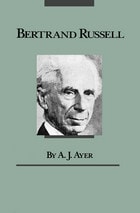
With extraordinary concision and clarity, A. J. Ayer gives an account of the major incidents of Bertrand Russell's life and an exposition of the whole range of his philosophy. "Ayer considers Russell to be, except possibly for Wittgenstein, the most influential philosopher of our time. In this book [he] gives a lucid account of Russell's philosophical achievements."—James Rachels, New York Times Book Review

"I am sure [this] is the best introduction of any length to Russell, and I suspect that it might serve as one of the best introductions to modern philosophy. . . . Ayer begins with a brief, austere, and balanced account of Russell's life: as in Russell's autobiography this means his thought, books, women, and politics. Tacitus (and Russell) would have found the account exemplary. Ayer ends with a sympathetic and surprisingly detailed survey of Russell's social philosophy. But the bulk of this book consists of a chapter on Russell's work in logic and the foundations of mathematics, followed by a chapter on his epistemological views and one on metaphysics. . . . I find it impossible to imagine that this book will not remain indefinitely the very best book of its sort."—Review of Metaphysics

"The confrontation or conjunction of Ayer and Russell is a notable event and has produced a remarkable book—brilliantly argued and written."—Martin Lebowitz, The Nation
[more]
cover of Beyond Nihilism: Nietzsche without Masks

Beyond Nihilism

Nietzsche without Masks

Ofelia Schutte

University of Chicago Press, 1984

[more]
cover of Beyond Prejudice: The Moral Significance of Human and Nonhuman Animals

Beyond Prejudice

The Moral Significance of Human and Nonhuman Animals

Evelyn B. Pluhar

Duke University Press, 1995

In Beyond Prejudice, Evelyn B. Pluhar defends the view that any sentient conative being—one capable of caring about what happens to him or herself—is morally significant, a view that supports the moral status and rights of many nonhuman animals. Confronting traditional and contemporary philosophical arguments, she offers in clear and accessible fashion a thorough examination of theories of moral significance while decisively demonstrating the flaws in the arguments of those who would avoid attributing moral rights to nonhumans.
Exposing the traditional view—which restricts the moral realm to autonomous, fully fledged "persons"—as having horrific implications for the treatment of many humans, Pluhar goes on to argue positively that sentient individuals of any species are no less morally significant than the most automomous human. Her position provides the ultimate justification that is missing from previous defenses of the moral status of nonhuman animals. In the process of advancing her position, Pluhar discusses the implications of determining moral significance for children and "abnormal" humans as well as its relevance to population policies, the raising of animals for food or product testing, decisions on hunting and euthanasia, and the treatment of companion animals. In addition, the author scrutinizes recent assertions by environmental ethicists that all living things or that natural objects and ecosystems be considered highly morally significant. This powerful book of moral theory challenges all defenders of the moral status quo—which decrees that animals decidedly do not count—to reevaluate their convictions.

[more]
cover of Binding Words: Conscience and Rhetoric in Hobbes, Hegel, and Heidegger

Binding Words

Conscience and Rhetoric in Hobbes, Hegel, and Heidegger

Karen Feldman

Northwestern University Press, 2006

In a provactive work that brings new tools to the history of philosophy, Karen S. Feldman offers an elegant account of how philosophical language appears to produce the very thing it claims to describe. She demonstrates that conscience can only be described and understood through tropes and figures of langugae. If description in literal terms is impossible, as Binding Words convincingly argues, perhaps there is no such thing. But if the word "conscience" has no tangible referent, then how can conscience be constructed as binding? Does our conscience move us to do things, or is this yet another figure of speech?

Hobbes's Leviathan, Hegel's Phenomenology of Spirit, and Heidegger's Being and Time dramatize conscience's relation to language and knowledge, morality and duty, and ontology. Feldman investigates how, within these works, conscience is described as binding upon us while at the same time asking how texts themselves may be read as binding. 
[more]
cover of Biopower: Foucault and Beyond

Biopower

Foucault and Beyond

Edited by Vernon W. Cisney and Nicolae Morar

University of Chicago Press, 2015

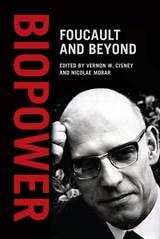
Michel Foucault’s notion of “biopower” has been a highly fertile concept in recent theory, influencing thinkers worldwide across a variety of disciplines and concerns. In The History of Sexuality: An Introduction, Foucault famously employed the term to describe “a power bent on generating forces, making them grow, and ordering them, rather than one dedicated to impeding them, making them submit, or destroying them.” With this volume, Vernon W. Cisney and Nicolae Morar bring together leading contemporary scholars to explore the many theoretical possibilities that the concept of biopower has enabled while at the same time pinpointing their most important shared resonances.
           
Situating biopower as a radical alternative to traditional conceptions of power—what Foucault called “sovereign power”—the contributors examine a host of matters centered on life, the body, and the subject as a living citizen. Altogether, they pay testament to the lasting relevance of biopower in some of our most important contemporary debates on issues ranging from health care rights to immigration laws, HIV prevention discourse, genomics medicine, and many other topics. 
[more]
cover of Boethius and Aquinas

Boethius and Aquinas

Ralph McInerny

Catholic University of America Press, 2012

In this study of the relationship between Boethius and Thomas Aquinas, Ralph McInerny dispels the notion that Aquinas misunderstood the early philosopher and argues instead that he learned from Boethius, assimilated his ideas, and proved to be a reliable interpreter of his thought.
[more]
cover of Books of Secrets: Natural Philosophy in England, 1550-1600

Books of Secrets

Natural Philosophy in England, 1550-1600

Allison Kavey

University of Illinois Press, 2007

How cultural categories shaped--and were shaped by--new ideas about controlling nature Ranging from alchemy to necromancy, "books of secrets" offered medieval readers an affordable and accessible collection of knowledge about the natural world. Allison Kavey's study traces the cultural relevance of these books and also charts their influence on the people who read them. Citing the importance of printers in choosing the books' contents, she points out how these books legitimized manipulating nature, thereby expanding cultural categories, such as masculinity, femininity, gentleman, lady, and midwife, to include the willful command of the natural world.
[more]