Results by title
86 books match the query 'Hope' and 3 start with b

Beginning to See the Light
Sex, Hope, and Rock-and-RollEllen Willis
University of Minnesota Press, 2012
From the New Yorker’s inimitable first pop music critic comes this pioneering collection of essays by a conscientious writer whose political realm is both radical and rational, and whose prime preoccupations are with rock ’n’ roll, sexuality, and above all, freedom. Here Ellen Willis assuredly captures the thrill of music, the disdain of authoritarian culture, and the rebellious spirit of the ’60s and ’70s.
[more]

Bitters in the Honey
Tales of Hope and Disappointment across Divides of Race and TimeBeth Roy
University of Arkansas Press, 1999
he story of what happened at Little Rock's Central High School in September of 1957 is one with which most Americans are familiar. Indeed, the image of Central High's massive double staircase—and of nine black teenagers climbing that staircase, clutching their schoolbooks, surrounded by National Guardsmen with fixed bayonets—has become wedded in the American consciousness to the history of the civil-rights struggle in this country. The world saw the drama at Central High as a cautionary tale about power and race. Drawing on oral histories, Beth Roy tells the story of Central High from a fresh angle. Her interviews with white alumni of Central High investigate the reasons behind their resistance to desegregation. The alumni, now near retirement age, discuss their lives since Central High and their present insecurities and resentments. The stories tell of the shaping of white identities in the latter half of the twentieth century, of dissatisfaction, even anger, that still lingers after forty years. Our country has not moved beyond matters of race: we have not left intolerance behind. To do so, Roy believes, we must stop demonizing people whose actions, historical or current, we do not fully understand. This elegantly written treatment of the Central High crisis is unique among studies done to date. It will help readers to better comprehend the complexity of racism, not only as it was evidenced at Central High in 1957, but as it continues to impact our lives today.
[more]
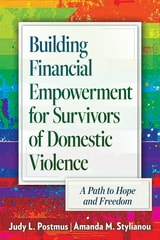
Building Financial Empowerment for Survivors of Domestic Violence
A Path to Hope and FreedomJudy L. Postmus
Rutgers University Press, 2023
Each year, millions of women throughout the world experience violence and abuse at the hands of their intimate partner. Abusers coercively control them by using a variety of tactics ranging from physical or sexual violence to emotional or psychological abuse. An additional tactic often used includes financial abuse in which the abuser controls the money in the family, exploits the victim’s financial standing, and interrupts her efforts to be self-sufficient. The impact of financial abuse can leave women financially trapped in the relationship with limited financial management skills, knowledge, or self-confidence. Indeed, survivors often mention financial barriers as a top reason for keeping them trapped by the abuser in the relationship.
Curiously, little of the research on domestic violence has sought to either fully understand the impact of financial abuse or to determine which intervention strategies are most effective for the financial empowerment of survivors. Building Financial Empowerment for Survivors of Domestic Violence aims to address this critical knowledge gap by providing those who work with survivors of domestic violence with practical knowledge on how to empower the financial well-being and stability of survivors. Specifically, every practitioner, human service provider, criminal justice practitioner, financial manager, and corporate supervisor should be screening the women they encounter for economic abuse, and when such abuse is found, they should work with the women toward developing financial safety plans and refer survivors to financial empowerment programs to assist survivors to become free from abuse.
Curiously, little of the research on domestic violence has sought to either fully understand the impact of financial abuse or to determine which intervention strategies are most effective for the financial empowerment of survivors. Building Financial Empowerment for Survivors of Domestic Violence aims to address this critical knowledge gap by providing those who work with survivors of domestic violence with practical knowledge on how to empower the financial well-being and stability of survivors. Specifically, every practitioner, human service provider, criminal justice practitioner, financial manager, and corporate supervisor should be screening the women they encounter for economic abuse, and when such abuse is found, they should work with the women toward developing financial safety plans and refer survivors to financial empowerment programs to assist survivors to become free from abuse.
[more]