Results by title
57 books match the query 'Horror' and 4 start with b
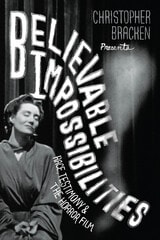
Believable Impossibilities
Race, Testimony, and the Horror FilmChristopher Bracken
University of Chicago Press, 2026
A gripping exploration of belief in the impossible through horror film, informed by philosophy, history, and anthropology.
What if aliens crash-landed at an old mine? What if you discovered your spouse is protecting you from witchcraft? What if you received messages from the dead? You wouldn’t believe it, of course—but you might investigate. As Christopher Bracken shows through this gripping exploration of the horror film, this is the first step toward believing the impossible.
In Believable Impossibilities, Bracken examines the genre in which we are most frequently called on to believe something seemingly impossible has unsettled our ordinary lives—the horror story. Whether on the page or on screen, horror draws us into narratives in which a community of nonbelievers are suddenly confronted with the challenge of believing in events and experiences that radically break with expectation. As Bracken argues, questions of belief often intersect with issues of race and Indigeneity because, historically, belief in the impossible has been racially coded as a trait of “primitive” thought. Drawing on philosophy, anthropology, and psychoanalysis, Bracken explores the fictional spaces in which the paranormal and supernatural challenge and defy our social bonds.
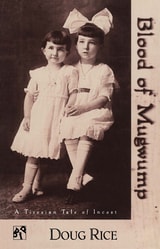
Blood of Mugwump
A Tiresian Tale of IncestDoug Rice
University of Alabama Press, 1996
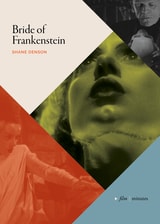
Bride of Frankenstein
Shane Denson
Lever Press, 2025
Volumes in the film|minutes series cut up films into segments of exactly one minute and transform each minute into an innovative tool for thinking with the film. Each volume works rigorously with the concept of “the minute” as a non-cinematic scale/quantity, a means to zoom in on (dis)orderly fragments that do not necessarily respect the confinements of cinematic form or meaning. As a critical practice, the focus on minutes causes disruptions and displacement that create novel connections and perspectives, and uncovers hidden traces, making it possible to watch each film anew.
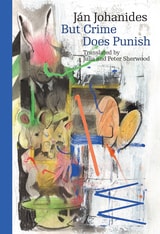
But Crime Does Punish
Ján Johanides
Karolinum Press, 2022
“So, as you see, I am familiar with the case. However, we can’t discuss it unless you learn more about some other court cases, so that you can compare your father’s trial with other, more baffling cases, and see it in the context of the madness that reigned at the time.”
Ján Johanides’ riveting Slovak novel immediately thrusts you into the midst of a bewildering second-person dialogue, bestowing the reader with the role of a silent partner in a one-sided conversation with a mysterious archivist. As the story unfurls piece by piece, it becomes clear that the archivist, who can’t seem to stay on topic, has both a tragic history and the key to unlocking your family’s darkest secret, a secret that may or may not involve the Czechoslovak secret police, American and Soviet intelligence, Israeli politics, and a tire full of dollars.
Set after the fall of the Soviet Union and the dissolution of Czechoslovakia, But Crimes Do Punish is awash with paranoia, revealing how the madness of the Communist era continues to bleed into the instability of the present. Written in 1995, this haunting novel—the first work of Slovak fiction published by Karolinum Press—evokes the spirit of John le Carré and the style of Carlos Fuentes while illuminating issues that still plague post-Communist Europe.