Results by title
47 books match the query 'Periodicals'

A Bibliography of Chinese Language Materials on the People's Communes
Ma Wei-yi
University of Michigan Press, 1982

A Comprehensive Index to Black Mask, 1920-1951
E. R. Hagemann
University of Wisconsin Press, 1982
A Voice Of Their Own
The Woman Suffrage Press, 1840-1910Martha Solomon
University of Alabama Press, 1991
Abolition and the Press
The Moral Struggle Against SlaveryFord Risley
Northwestern University Press, 2008
This examination of nineteenth-century journalism explores the specific actions and practices of the publications that provided a true picture of slavery to the general public. From Boston's strident <i>Liberator</i> to Frederick Douglass' <i>North Star</i>, the decades before the Civil War saw more than forty newspapers founded with the specific aim of promoting emancipation. Not only did these sheets provide a platform for discourse, but they also gave slavery a face for a wider audience. The reach of the abolitionist press only grew as the fiery publications became objects of controversy and targets of violence in both South and North. These works kept the issue of slavery in the public eye even as mainstream publications took up the call for emancipation, as the nation went to war, up to the end of slavery. Their legacy has endured, as dedicated reform writers and editors continue to view the press as a vital tool in the fight for equality.

Annotated World List of Selected Current Geographical Serials
Chauncey D. Harris
University of Chicago Press, 1980
Anti-Book
On the Art and Politics of Radical PublishingNicholas Thoburn
University of Minnesota Press, 2016
No, Anti-Book is not a book about books. Not exactly. And yet it is a must for anyone interested in the future of the book. Presenting what he terms “a communism of textual matter,” Nicholas Thoburn explores the encounter between political thought and experimental writing and publishing, shifting the politics of text from an exclusive concern with content and meaning to the media forms and social relations by which text is produced and consumed. Taking a “post-digital” approach in considering a wide array of textual media forms, Thoburn invites us to challenge the commodity form of books—to stop imagining books as transcendent intellectual, moral, and aesthetic goods unsullied by commerce. His critique is, instead, one immersed in the many materialities of text.
Anti-Book engages with an array of writing and publishing projects, including Antonin Artaud’s paper gris-gris, Valerie Solanas’s SCUM Manifesto, Guy Debord’s sandpaper-bound Mémoires, the collective novelist Wu Ming, and the digital/print hybrid of Mute magazine. Empirically grounded, it is also a major achievement in expressing a political philosophy of writing and publishing, where the materiality of text is interlaced with conceptual production. Each chapter investigates a different form of textual media in concert with a particular concept: the small-press pamphlet as “communist object,” the magazine as “diagrammatic publishing,” political books in the modes of “root” and “rhizome,” the “multiple single” of anonymous authorship, and myth as “unidentified narrative object.”
An absorbingly written contribution to contemporary media theory in all its manifestations, Anti-Book will enrich current debates about radical publishing, artists’ books and other new genre and media forms in alternative media, art publishing, media studies, cultural studies, critical theory, and social and political theory.
Body Love
The Amazing Career of Bernarr MacfaddenWilliam R. Hunt
University of Wisconsin Press, 1989
Bernarr Macfadden (1868–1955) entertained and instructed Americans for decades. He championed physical exercise, fasting, and diet reform and was the relentless scourge of established doctors. He presented his views in Physical Culture, a popular magazine featuring photographs of strong men and healthy women and articles promoting the healthy life. While some critics derided him as a health nut, no one could dispute his genius as a magazine publisher. He established the world’s greatest magazine publishing empire through the innovation of such popular publications as True Story, the first confession magazine; True Detective; and many others.
Catalyst for Controversy
Paul Carus of Open CourtHarold Henderson
Southern Illinois University Press, 2009
"I am not a common atheist; I am an atheist who loves God."—Paul Carus, "The God of Science," 1904
In the summer of 1880, while teaching at the military academy of the Royal Corps of Cadets of Saxony in Dresden, Paul Carus published a brief pamphlet denying the literal truth of scripture and describing the Bible as a great literary work comparable to the Odyssey.
This unremarkable document was Carus’s first step in a wide-ranging intellectual voyage in which he traversed philosophy, science, religion, mathematics, history, music, literature, and social and political issues. The Royal Corps, Carus later reported, found his published views "not in harmony with the Christian spirit, in accordance with which the training and education of the Corps of Cadets should be conducted." And so the corps offered the young teacher the choice of asking "most humbly for forgiveness for daring to have an opinion of my own and to express it, perhaps even promise to publish nothing more on religious matters, or to give up my post. I chose the latter. . . . There was thus no other choice for me but to emigrate and, trusting in my own powers, to establish for myself a new home." His resignation was effective on Easter Sunday, 1881.
Carus toured the Rhine, lived briefly in Belgium, and taught in a military college in England to learn English well enough to "thrive in the United States." By late 1884 or early 1885 he was on his way to the New World. Thriving in the United States proved more difficult than it had in England, but before 1885 ended he had published his first philosophical work in English, Monism and Meliorism. The book was not widely read, but it did reach Edward C. Hegeler, a La Salle, Illinois, zinc processor who became his father-in-law as well as his ideological and financial backer.
Established in La Salle, Carus began the work that would place him among the prominent American philosophers of his day and make the Open Court Publishing Company a leading publisher of philosophical, scientific, and religious books. He edited The Open Court and The Monist, offering the finest view of Oriental thought and religion then available in the West, and sought unsuccessfully to bring about a second World Parliament of Religions. He befriended physicist-philosopher Ernst Mach. For eleven years he employed D. T. Suzuki, who later became a great Zen Buddhist teacher. He published more articles by Charles S. Peirce, now viewed as one of the great world philosophers, in The Monist than appeared in any other publication.
Biographer Harold Henderson concludes his study of this remarkable man: "Whenever anyone is so fired with an idea that he or she can’t wait to write it down, there the spirit of Paul Carus remains, as he would have wished, active in the world."
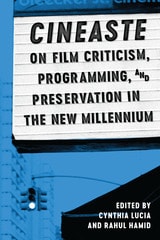
Cineaste on Film Criticism, Programming, and Preservation in the New Millennium
Edited by Cynthia Lucia and Rahul Hamid
University of Texas Press, 2017
Digital technology and the Internet have revolutionized film criticism, programming, and preservation in deeply paradoxical ways. The Internet allows almost everyone to participate in critical discourse, but many print publications and salaried positions for professional film critics have been eliminated. Digital technologies have broadened access to filmmaking capabilities, as well as making thousands of older films available on DVD and electronically. At the same time, however, fewer older films can be viewed in their original celluloid format, and newer, digitally produced films that have no “material” prototype are threatened by ever-changing servers that render them obsolete and inaccessible.
Cineaste, one of the oldest and most influential publications focusing on film, has investigated these trends through a series of symposia with the top film critics, programmers, and preservationists in the United States and beyond. This volume compiles several of these symposia: “Film Criticism in America Today” (2000), “International Film Criticism Today” (2005), “Film Criticism in the Age of the Internet” (2008), “Film Criticism: The Next Generation” (2013), “The Art of Repertory Film Exhibition and Digital Age Challenges” (2010), and “Film Preservation in the Digital Age” (2011). It also includes interviews with the late, celebrated New Yorker film critic Pauline Kael and the critic John Bloom (“Joe Bob Briggs”), as well as interviews with the programmers/curators Peter von Bagh and Mark Cousins and with the film preservationist George Feltenstein. This authoritative collection of primary-source documents will be essential reading for scholars, students, and film enthusiasts.
Crime and Justice, Volume 40
Crime and Justice in ScandinaviaEdited by Michael Tonry and Tapio Lappi-Seppälä
University of Chicago Press Journals, 2012
Since 1979 the Crime and Justice series has presented a review of the latest international research, providing expertise to enhance the work of sociologists, psychologists, criminal lawyers, justice scholars, and political scientists. The series explores a full range of issues concerning crime, its causes, and its cure.
Volume 40, Crime and Justice in Scandinavia, offers the most comprehensive and authoritative look ever available at criminal justice policies, practices, and research in the Nordic countries. Topics range from the history of violence through juvenile delinquency, juvenile justice, and sentencing to controversial contemporary policies on prostitution, victims, and organized crime. Contributors to this volume include Jon-Gunnar Bernburg, Ville Hinkkanen, Cecilie Høigård, Hanns von Hofer, Charlotta Holmström, Janne Kivivuori, Lars Korsell, Tapio Lappi-Seppälä, Paul Larsson, Martti Lehti, Torkild Hovde Lyngstad, Sven-Axel Månsson, Anita Rönneling, Lise-Lotte Rytterbro, Torbjørn Skardhamar, May-Len Skilbrei, and Henrik Tham.
Deadly Excitements
Shadows PhantomsRobert Sampson
University of Wisconsin Press, 1989
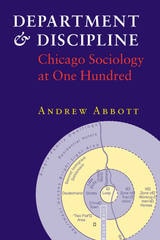
Department and Discipline
Chicago Sociology at One HundredAndrew Abbott
University of Chicago Press, 1999
Abbott analyzes the shifts in social scientific inquiry and discloses the intellectual rivalry and faculty politics that characterized different stages of the Chicago School. Along the way, he traces the rich history of the discipline's main journal, the American Journal of Sociology.
Embedded in this analysis of the school and its practices is a broader theoretical argument, which Abbott uses to redefine social objects as a sequence of interconnected events rather than as fixed entities. Abbott's theories grow directly out of the Chicago School's insistence that social life be located in time and place, a tradition that has been at the heart of the school since its founding one hundred years ago.
Dime Novel Roundup
Annotated Index, 1931–1981Michael L. Cook
University of Wisconsin Press, 1983
This book includes a chronological listing of issues of the Dime Novel Roundup, which was published for over fifty years. It also features an index to the contents of the Dime Novel Roundup.
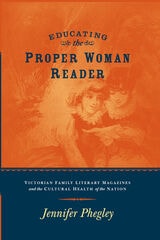
EDUCATING THE PROPER WOMAN READER
VICTORIAN FAMILY LITERARY MAGAZINES & CULTURAL HEALTH OF THE NATIONJennifer Phegley
The Ohio State University Press, 2004
Jennifer Phegley presents an examination of four mid-Victorian magazines that middle-class women read widely. Educating the Proper Woman Reader reevaluates prevailing assumptions about the vexed relationship between nineteenth-century women readers and literary critics.
While many scholars have explored the ways nineteenth-century critics expressed their anxiety about the dangers of women’s unregulated and implicitly uncritical reading practices, which were believed to threaten the sanctity of the home and the cultural status of the nation, Phegley argues that family literary magazines revolutionized the position of women as consumers of print by characterizing them as educated readers and able critics. Her analysis of images of influential women readers (in Harper’s), intellectual women readers (in The Cornhill), independent women readers (in Belgravia), and proto-feminist women readers/critics (in Victoria) indicates that women played a significant role in determining the boundaries of literary culture within these magazines. She argues that these publications supported women’s reading choices, inviting them to define literary culture rather than to consume it passively.
Not only does this book revise our understanding of nineteenth-century attitudes toward women readers, but it also takes a fresh look at the transatlantic context of literary production. Further, Phegley demonstrates the role these publications played in improving cultural literacy among women of the middle classes as well as the interplay between fiction and essays of the time by writers such as Mary Braddon, Charles Dickens, George Eliot, Elizabeth Gaskell, G. H. Lewes, Harriet Martineau, Margaret Oliphant, George Sala, William Thackeray, and Anthony Trollope.
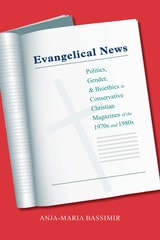
Evangelical News
Politics, Gender, and Bioethics in Conservative Christian Magazines of the 1970s and 1980sAnja-Maria Bassimir
University of Alabama Press, 2022
A comprehensive study of evangelical magazine discourse during the 1970s and 1980s and how it navigated and sustained religious convictions in a time of dramatic social change
The 1970s and 1980s were a tumultuous period in US history. In tandem with a dramatic political shift to the right, evangelicalism also entered the public discourse as a distinct religious movement and was immediately besieged by cultural appropriations and internal fragmentations. Americans in general and evangelicals in particular grappled with issues and ideas such as feminism, abortion, birth control, and restructuring traditional roles for women and the family. During this time, there was a surge in readership for evangelical periodicals such as Christianity Today, Moody Monthly, Eternity, and Post-Americans/Sojourners as well as the feminist newsletter Daughters of Sarah.
While each of these magazines—and other publications and media—contributed to and participated in the overall dissemination of evangelical ideology, they also had their own outlooks and political leanings concerning hot-button issues. In Evangelical News: Politics, Gender, and Bioethics in Conservative Christian Magazines of the 1970s and 1980s, Anja-Maria Bassimir presents a nuanced view of evangelicalism in the late twentieth century through the lens of the movement’s own media.
Bassimir argues that community can be produced in discourse, especially when shared rhetoric, concepts, and perspectives signal belonging. To accomplish this, Evangelical News traces the emergence of evangelical social and political awareness in the 1970s to the height of its power as a political program. The chapters investigate such topics as how evangelicals reenvisioned gender norms and relations in light of the feminist movement, the use of childhood as a symbol of unspoiled innocence, and the place of evangelicals as political actors.
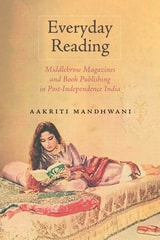
Everyday Reading
Middlebrow Magazines and Book Publishing in Post-Independence IndiaAakriti Mandhwani
University of Massachusetts Press, 2024
Finalist for the 2025 SHARP Book History Book Prize
During the two difficult decades immediately following the 1947 Indian Independence, a new, commercially successful print culture emerged that articulated alternatives to dominant national narratives. Through what Aakriti Mandhwani defines as middlebrow magazines—like Delhi Press’s Saritā—and the first paperbacks in Hindi—Hind Pocket Books—North Indian middle classes cultivated new reading practices that allowed them to reimagine what it meant to be a citizen. Rather than focusing on individual sacrifices and contributions to national growth, this new print culture promoted personal pleasure and other narratives that enabled readers to carve roles outside of official prescriptions of nationalism, austerity, and religion.
Utilizing a wealth of previously unexamined print culture materials, as well as paying careful attention to the production of commercial publishing companies and the reception of ordinary reading practices—particularly those of women—Everyday Reading offers fresh perspectives into book history, South Asian literary studies, and South Asian gender studies.
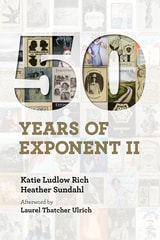
Fifty Years of Exponent II
Katie Ludlow Rich
Signature Books, 2024
On a sweltering day in June 1974, a group of housewives, graduate students, and young professionals gathered in the Boston suburbs. Their mission: to produce the first issue of Exponent II, a “humble yet sincere” newspaper “poised on the dual platforms of Mormonism and Feminism.” They viewed their work as an act of devotion, not rebellion, and were naïve of the cold reception they would soon receive from LDS Church leaders. Nevertheless, the paper became a national platform connecting Mormon feminists. It provided a vital space for them to question and integrate different aspects of their dual—and sometimes dueling—identities. From the Equal Rights Amendment to queer identity, Exponent II has hosted some of the most urgent conversations of its time while also embracing life’s dailiness.
This comprehensive history and anthology celebrate five decades of Exponent II. Through meticulous research and compelling storytelling, the authors chronicle the organization’s evolution from a kitchen-table-style newspaper to a quarterly magazine, blog, and annual retreat. Its transformative impact on the lives of its participants stands as a testament to the power of connection, resilience, and community over ideological purity.
Fighting Fascist Spain
Worker Protest from the Printing PressMontse Feu
University of Illinois Press, 2020
Montse Feu merges España Libre's story with the drama of the Spanish immigrant community's fight against fascism. The periodical emerged as part of a transnational effort to link migrants and new exiles living in the United States to antifascist networks abroad. In addition to showing how workers' culture and politics shaped their antifascism, Feu brings to light creative works that ranged from literature to satire to cartoons to theater. As España Libre opened up radical practices, it encouraged allies to reject violence in favor of social revolution's potential for joy and inclusion.

Gardening for Love
The Market BulletinsElizabeth A. Lawrence
Duke University Press, 1987
It was Eudora Welty who awakened Elizabeth Lawrence's interest in this fascinating topic by putting her name on the mailing list of The Mississippi Market Bulletin, a twice-monthly collection of classified advertisements founded in 1928 and still published today. Lawrence soon discovered market bulletins from the Carolinas and other Southern states, as well as similar bulletins published privately in the North. She began ordering plants from the bulletins, and there ensued a lively exchange of letters wit the women who sold them.
Gardening for Love is Lawrence's exploration of this little-known side of American horticulture and her affectionate tribute to country people who shared her passion for plants. Drawing on the letters she received, sometimes a great many of them from the same persons over many years, she delves into traditional plant lore, herbal remedies, odd and often highly poetic vernacular plant names peculiar to particular regions of the South, and the herb collectors of the mountains of the Carolinas and Georgia. She focuses primarily on the Southeast and the Deep South, but her wide knowledge of both literature and botany gives Gardening for Love a dimension that transcends the category of regional writing.
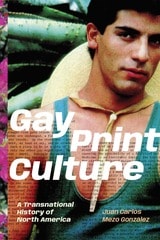
Gay Print Culture
A Transnational History of North AmericaJuan Carlos Mezo González
Duke University Press, 2026
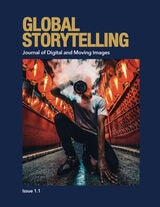
Global Storytelling, vol. 1, no. 1
Journal of Digital and Moving ImagesYing Zhu
Michigan Publishing Services, 2021
In this issue
Letter from the Editor Ying Zhu Hong Kong and Social MovementsHong Kong Unraveled: Social Media and the 2019 Protest Movement
Anonymous
Unleashing the Sounds of Silence: Hong Kong’s Story in Troubled Times
Andrea Riemenschnitter
Tragedy of Errors at Warp Speed
Sam Ho
Imagining a City-Based Democracy: Review of The Appearing Demos: Hong Kong During and After the Umbrella Movement by Laikwan Pang, University of Michigan Press, 2020
Enoch Tam
China and the Film Festival
Richard Peña
Nationalism from Below: State Failures, Nollywood, and Nigerian Pidgin Jonathan Haynes Collective Memory and the Rhetorical Power of the Historical Fiction Film
Carl Plantinga
From Nations to Worlds: Chris Marker’s Si j’avais quatre dromadaires
Michael Walsh
American Factory and the Difficulties of Documenting Neoliberalism
Peter Hitchcock
R.I.P. Soft Power: China’s Story Meets the Reset Button: Review of Soft Power with Chinese Characteristics: China’s Campaign for Hearts and Minds edited by Kingsley Edney, Stanley Rosen, and Ying Zhu, Routledge, 2019
Robert A. Kapp
Review: On Epidemics, Epidemiology, and Global Storytelling
Carlos Rojas

Guide to the Hispanic American Historical Review, 1956–1975
Stanley R. Ross and Wilber Chaffee, eds.
Duke University Press, 1980
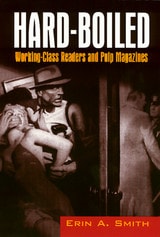
Hard-Boiled
Erin A. Smith
Temple University Press, 2000
Relying on pulp magazine advertising, the memoirs of writers and publishers, Depression-era studies of adult reading habits, social and labor history, Smith offers an innovative account of how these popular stories were generated and read. She shows that although the work of pulp fiction authors like Dashiell Hammett, Raymond Chandler, and Erle Stanley Gardner have become “classics” of popular culture, the hard-boiled genre was dominated by hack writers paid by the word, not self-styled artists. Pulp magazine editors and writers emphasized a gritty realism in the new genre. Unlike the highly rational and respectable British protagonists (Miss Marple and Hercule Poirot, for instance), tough-talking American private eyes relied as much on their fists as their brains as they made their way through tangled plotlines.
Casting working-class readers of pulp fiction as “poachers,” Smith argues that they understood these stories as parables about Taylorism, work, and manhood; as guides to navigating consumer culture; as sites for managing anxieties about working women. Engaged in re-creating white, male privilege for the modern, heterosocial world, pulp detective fiction shaped readers into consumers by selling them what they wanted to hear – stories about manly artisan-heroes who resisted encroaching commodity culture and the female consumers who came with it. Commenting on the genre’s staying power, Smith considers contemporary detective fiction by women, minority, and gay and lesbian writers.
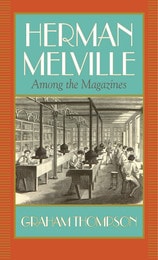
Herman Melville
Among the MagazinesGraham Thompson
University of Massachusetts Press, 2018
What I feel most moved to write, that is banned,—it will not pay. Yet, altogether, write the other way I cannot. Herman Melville wrote these words as he struggled to survive as a failing novelist. Between 1853 and 1856, he did write “the other way,” working exclusively for magazines. He earned more money from his stories than from the combined sales of his most well known novels, Moby-Dick, Pierre, and The Confidence-Man.
In Herman Melville Graham Thompson examines the author's magazine work in its original publication context, including stories that became classics, such as “Bartelby, the Scrivener” and “Benito Cereno,” alongside lesser-known work. Using a concept he calls “embedded authorship,” Thompson explores what it meant to be a magazine writer in the 1850s and discovers a new Melville enmeshed with forgotten materials, editors, writers, and literary traditions. He reveals how Melville responded to the practical demands of magazine writing with dazzling displays of innovation that reinvented magazine traditions and helped create the modern short story.
Making "Nature"
The History of a Scientific JournalMelinda Baldwin
University of Chicago Press, 2015
But how did Nature become such an essential institution? In Making "Nature," Melinda Baldwin charts the rich history of this extraordinary publication from its foundation in 1869 to current debates about online publishing and open access. This pioneering study not only tells Nature's story but also sheds light on much larger questions about the history of science publishing, changes in scientific communication, and shifting notions of "scientific community." Nature, as Baldwin demonstrates, helped define what science is and what it means to be a scientist.
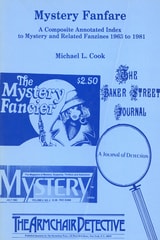
Mystery Fanfare
A Composite Annotated Index to Mystery and Related Fanzines 1963–1981Michael L. Cook
University of Wisconsin Press, 1983
This work is a composite index of the complete runs of all mystery and detective fan magazines that have been published, through 1981. Added to it are indexes of many magazines of related nature. This includes magazines that are primarily oriented to boys' book collecting, the paperbacks, and the pulp magazine hero characters, since these all have a place in the mystery and detective genre.
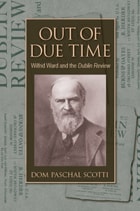
Out of due time
Wilfrid Ward and the Dublin reviewPaschal Scotti
Catholic University of America Press, 2006

Presumption
An Entertainment: A Sequel to Pride and PrejudiceJulia Barrett
University of Chicago Press, 1995
"An elegant emulation and continuation of Pride and Prejudice. . . . Jointly composed by two admirers of Jane Austen, the book often achieves crisp replication of her style. . . . Presumption shows how sequel-writing can, like parody, be a sharp exercise in literary appreciation."—Peter Kemp, Times Literary Supplement
Julia Barrett is a pseudonym for Julia Braun Kessler and Gabrielle Donnelly.
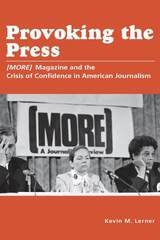
Provoking the Press
(MORE) Magazine and the Crisis of Confidence in American JournalismKevin M. Lerner
University of Missouri Press, 2023
Two of these new journalists, a Pulitzer Prize—winning, Harvard-educated New York Times reporter named J. Anthony Lukas, and a former Newsweek media writer named Richard Pollak, founded a journalism review called (MORE) in 1971, with its pilot issue appearing the same month that the Times began publishing the Pentagon Papers. (MORE) covered the press with a critical attitude that blended seriousness and satire—part New York Review of Books, part underground press. In the eight years that it published, (MORE) brought together nearly every important American journalist of the 1970s, either as a writer, a subject of its critical eye, or as a participant in its series of raucous "A.J. Liebling Counter-Conventions"—meetings named after the outspoken press critic—the first of which convened in 1974. In issue after issue the magazine considered and questioned the mainstream press's coverage of explosive stories of the decade, including the Watergate scandal; the "seven dirty words" obscenity trial; the debate over a reporter's constitutional privilege; the rise of public broadcasting; the struggle for women and minorities to find a voice in mainstream newsrooms; and the U.S. debut of press baron Rupert Murdoch.
In telling the story of (MORE) and its legacy, Kevin Lerner explores the power of criticism to reform and guide the institutions of the press and, in turn, influence public discourse.
Publishing Beyond the Market
Open Access, Care, and the CommonsSamuel A. Moore
University of Michigan Press, 2025
Going forward, Publishing Beyond the Market explores the importance of collectivity and democratic governance within the transition to open access publishing. It suggests that developing a commons-based, scholar-led publishing landscape through a series of presses that are each managed by working academics could offer a productive counterpoint to marketised systems of open access and subscription publishing. In weaving themselves together in order to “scale small” these publishing initiatives would act as a counter-hegemonic project based on mutual reliance and care. By illustrating how these projects build toward a commons-based publishing future, and how they may complement other approaches to publishing within university presses and libraries, the book culminates in an argument for the infrastructures, policies, and forms of governance needed to nurture such a collective vision.
Requirements for Certification of Teachers, Counselors, Librarians, Administrators for Elementary and Secondary Schools, Seventy-fifth edition, 2010-2011
Edited by Elizabeth A. Kaye and Jeffrey J. Makos
University of Chicago Press, 2010
This annual volume offers the most complete and current listings of the requirements for certification of a wide range of educational professionals at the elementary and secondary levels. Requirements for Certification is a valuable resource, making much-needed knowledge available in one straightforward volume.

Requirements for Certification of Teachers, Counselors, Librarians, Administrators for Elementary and Secondary Schools, Seventy-seventh Edition, 2012-2013
Edited by Elizabeth A. Kaye
University of Chicago Press, 2012
This annual volume offers the most complete and current listings of the requirements for certification of a wide range of educational professionals at the elementary and secondary levels. Requirements for Certification is a valuable resource, making much-needed knowledge available in one straightforward volume.
Requirements for Certification of Teachers, Counselors, Librarians, Administrators for Elementary and Secondary Schools, Seventy-sixth Edition, 2011-2012
Edited by Elizabeth A. Kaye
University of Chicago Press, 2011
This annual volume offers the most complete and current listings of the requirements for certification of a wide range of educational professionals at the elementary and secondary levels. Requirements for Certification is a valuable resource, making much-needed knowledge available in one straightforward volume.
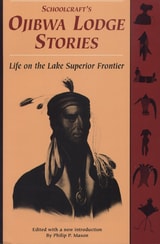
Schoolcraft's Ojibwa Lodge Stories
Life on the Lake Superior FrontierPhilip P. Mason
Michigan State University Press, 1997
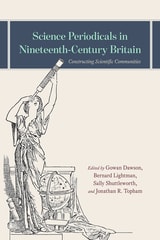
Science Periodicals in Nineteenth-Century Britain
Constructing Scientific CommunitiesEdited by Gowan Dawson, Bernard Lightman, Sally Shuttleworth, and Jonathan R. Topham
University of Chicago Press, 2020
The essays in this volume set the historical exploration of the scientific and medical periodicals of the era on a new footing, examining their precise function and role in the making of nineteenth-century science and enhancing our vision of the shifting communities and practices of science in the period. This radical rethinking of the scientific journal offers a new approach to the reconfiguration of the sciences in nineteenth-century Britain and sheds instructive light on contemporary debates about the purpose, practices, and price of scientific journals.
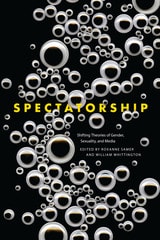
Spectatorship
Shifting Theories of Gender, Sexuality, and MediaEdited by Roxanne Samer and William Whittington
University of Texas Press, 2017
Media platforms continually evolve, but the issues surrounding media representations of gender and sexuality have persisted across decades. Spectator: The University of Southern California Journal of Film and Television Criticism has published groundbreaking articles on gender and sexuality, including some that have become canonical in film studies, since the journal’s founding in 1982. This anthology collects seventeen key articles that will enable readers to revisit foundational concerns about gender in media and discover models of analysis that can be applied to the changing media world today.
Spectatorship begins with articles that consider issues of spectatorship in film and television content and audience reception, noting how media studies has expanded as a field and demonstrating how theories of gender and sexuality have adapted to new media platforms. Subsequent articles show how new theories emerged from that initial scholarship, helping to develop the fields of fandom, transmedia, and queer theory. The most recent work in this volume is particularly timely, as the distinctions between media producers and media spectators grow more fluid and as the transformation of media structures and platforms prompts new understandings of gender, sexuality, and identification. Connecting contemporary approaches to media with critical conversations of the past, Spectatorship thus offers important points of historical and critical departure for discussion in both the classroom and the field.
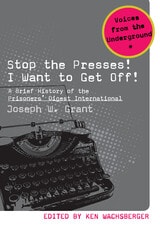
Stop the Presses! I Want to Get Off!
A Brief History of the Prisoners’ Digest InternationalJoseph W. Grant
Michigan State University Press, 2012
The final book in the groundbreaking Voices from the Underground series, Stop the Presses! I Want to Get Off!, is the inspiring, frenetic, funny, sad, always-cash-starved story of Joe Grant, founder and publisher of Prisoners’ Digest International, the most important prisoners’ rights underground newspaper of the Vietnam era. From Grant’s military days in pre-Revolutionary Cuba during the Korean War, to his time as publisher of a pro-union newspaper in Cedar Rapids and his eventual imprisonment in Leavenworth, Kansas, Grant’s personal history is a testament to the power of courage under duress. One of the more notorious federal penitentiaries in the nation, Leavenworth inspired Grant to found PDI in an effort to bring hope to prisoners and their families nationwide.

Technology and the Character of Contemporary Life
A Philosophical InquiryAlbert Borgmann
University of Chicago Press, 1987
The Little Magazine in Contemporary America
Edited by Ian Morris and Joanne Diaz
University of Chicago Press, 2015
In this collection, Ian Morris and Joanne Diaz gather the reflections of twenty-three prominent editors whose little magazines have flourished over the past thirty-five years. Highlighting the creativity and innovation driving this diverse and still vital medium, contributors offer insights into how their publications sometimes succeeded, sometimes reluctantly folded, but mostly how they evolved and persevered. Other topics discussed include the role of little magazines in promoting the work and concerns of minority and women writers, the place of universities in supporting and shaping little magazines, and the online and offline future of these publications.
Selected contributors
Betsy Sussler, BOMB; Lee Gutkind, Creative Nonfiction; Bruce Andrews, L=A=N=G=U=A=G=E; Dave Eggers, McSweeney’s; Keith Gessen, n+1; Don Share, Poetry; Jane Friedman, VQR; Amy Hoffman, Women’s Review of Books; and more.
The Presence of Myth
Leszek Kolakowski
University of Chicago Press, 1989
With The Presence of Myth, Kolakowski demonstrates that no matter how hard man strives for purely rational thought, there has always been-and always will be-a reservoir of mythical images that lend "being" and "consciousness" a specifically human meaning.
"Kolakowski undertakes a philosophy of culture which extends to all realms of human intercourse—intellectual, artistic, scientific, and emotional. . . . [His] book has real significance for today, and may well become a classic in the philosophy of culture."—Anglican Theological Review
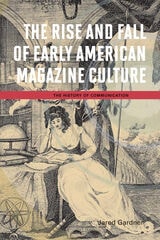
The Rise and Fall of Early American Magazine Culture
Jared Gardner
University of Illinois Press, 2014
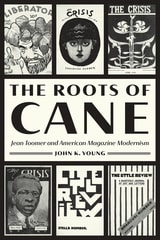
The Roots of Cane
Jean Toomer and American Magazine ModernismJohn K. Young
University of Iowa Press, 2024
Young interweaves a periodical-studies approach to modernism with book history and critical race theory, resituating Toomer’s uneasy place within Black modernism by asking how original readers would have encountered his work. The different contexts in which those audiences were engaging with Toomer’s portraits of racialized identity in the Jim Crow United States, yield often surprising results.
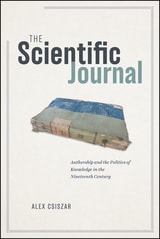
The Scientific Journal
Authorship and the Politics of Knowledge in the Nineteenth CenturyAlex Csiszar
University of Chicago Press, 2018
The Scientific Journal tells the story of how that changed. Alex Csiszar takes readers deep into nineteenth-century London and Paris, where savants struggled to reshape scientific life in the light of rapidly changing political mores and the growing importance of the press in public life. The scientific journal did not arise as a natural solution to the problem of communicating scientific discoveries. Rather, as Csiszar shows, its dominance was a hard-won compromise born of political exigencies, shifting epistemic values, intellectual property debates, and the demands of commerce. Many of the tensions and problems that plague scholarly publishing today are rooted in these tangled beginnings. As we seek to make sense of our own moment of intense experimentation in publishing platforms, peer review, and information curation, Csiszar argues powerfully that a better understanding of the journal’s past will be crucial to imagining future forms for the expression and organization of knowledge.
Transatlantic Central Europe
Contesting Geography and Redifining Culture beyond the NationJessie Labov
Central European University Press, 2019
Writing National Cinema
Film Journals and Film Culture in PeruJeffrey Middents
Dartmouth College Press, 2009
Writing the Caribbean in Magazine Time
Katerina Gonzalez Seligmann
Rutgers University Press, 2021
Yesterday's Faces, Volume 1
Glory FiguresRobert Sampson
University of Wisconsin Press, 1983
This book and its companion volumes are concerned with the slow shaping of many literary conventions over many decades. This volume begins the study with the dime novels and several early series characters who influenced the direction of pulp fiction at its source.