Results by title
517 books match the query 'In literature' and 17 start with b
Bad Land Pastoralism in Great Plains Fiction
Matthew J. C. Cella
University of Iowa Press, 2010
At the core of this nuanced book is the question that ecocritics have been debating for decades: what is the relationship between aesthetics and activism, between art and community? By using a pastoral lens to examine ten fictional narratives that chronicle the dialogue between human culture and nonhuman nature on the Great Plains, Matthew Cella explores literary treatments of a succession of abrupt cultural transitions from the Euroamerican conquest of the “Indian wilderness” in the nineteenth century to the Buffalo Commons phenomenon in the twentieth. By charting the shifting meaning of land use and biocultural change in the region, he posits this bad land—the arid West—as a crucible for the development of the human imagination.
Each chapter deals closely with two novels that chronicle the same crisis within the Plains community. Cella highlights, for example, how Willa Cather reconciles her persistent romanticism with a growing disillusionment about the future of rural Nebraska, how Tillie Olsen and Frederick Manfred approach the tragedy of the Dust Bowl with strikingly similar visions, and how Annie Proulx and Thomas King use the return of the buffalo as the centerpiece of a revised mythology of the Plains as a palimpsest defined by layers of change and response. By illuminating these fictional quests for wholeness on the Great Plains, Cella leads us to understand the intricate interdependency of people and the places they inhabit.
Cella uses the term “pastoralism” in its broadest sense to mean a mode of thinking that probes the relationship between nature and culture: a discourse concerned with human engagement—material and nonmaterial—with the nonhuman community. In all ten novels discussed in this book, pastoral experience—the encounter with the Beautiful—leads to a renewed understanding of the integral connection between human and nonhuman communities. Propelling this tradition of bad land pastoralism are an underlying faith in the beauty of wholeness that comes from inhabiting a continuously changing biocultural landscape and a recognition of the inevitability of change. The power of story and language to shape the direction of that change gives literary pastoralism the potential to support an alternative series of ideals based not on escape but on stewardship: community, continuity, and commitment.
Bandits, Captives, Heroines, and Saints
Cultural Icons of Mexico’s Northwest BorderlandsRobert McKee Irwin
University of Minnesota Press, 2007
Bandits, Captives, Heroines, and Saints investigates cultural icons of the late nineteenth century from Mexico’s largely unstudied northwest borderlands, present-day Sonora, Baja California, and western Chihuahua. Robert McKee Irwin looks at popular figures such as Joaquín Murrieta, the gold rush social bandit; Lola Casanova, the anti-Malinche, whose marriage to a Seri Indian symbolized a forbidden form of mestizaje; and la Santa de Cabora, a young faith healer who inspired armed insurgencies and was exiled to Arizona.
Cultural icons such as Murrieta, Lola Casanova, and la Santa de Cabora are products of intercultural dialogue, Irwin reveals, and their characterizations are unstable. They remain relevant for generations because there is no consensus regarding their meanings, and they are weapons in struggles of representation in the borderlands. The figures studied here are especially malleable, he argues, because they are marginalized from the mainstream of historiography.
A timely analysis, Bandits, Captives, Heroines, and Saints challenges current paradigms of border studies and presents a rich understanding of the ways in which cultural icons influence people’s minds and lives.
Robert McKee Irwin is associate professor of Spanish at the University of California, Davis, and the author of Mexican Masculinities (Minnesota, 2003).
Bareface
A Guide to C.S. Lewis's Last NovelDoris T. Myers
University of Missouri Press, 2004
Beside the Bard
Scottish Lowland Poetry in the Age of BurnsGeorge S. Christian
Bucknell University Press, 2020
Published by Bucknell University Press. Distributed worldwide by Rutgers University Press.
Between Human and Divine
The Catholic Vision in Contemporary LiteratureMary Reichardt
Catholic University of America Press, 2010
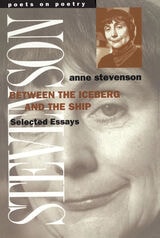
Between the Iceberg and the Ship
Selected EssaysAnne Stevenson
University of Michigan Press, 1998
Feminist critics will find much to invigorate and infuriate them in these essays. Stevenson believes that the "takeover" of poetry by critical theorists has, in recent years, all but brought about its demise in England and America. But she also fears that the media's doctrine of mass marketability may have a detrimental effect on the future of poetry. Her essays on Plath, Bishop, Irish poetry, and other subjects are as witty as they are challenging, upsetting many of the easy assumptions of our putatively "postmodern" era.
Anne Stevenson is the author of numerous books, including Bitter Fame: A Life of Sylvia Plath, The Other House, Four and a Half Dancing Men, and most recently, Collected Poems 1955- 1995.
Biblical Themes in Science Fiction
Nicole L. Tilford
SBL Press, 2023
What does a first-generation female robot have in common with the biblical figure of Eve? Or an intergenerational spaceship with Noah’s ark? If a computer compiles a deceased person’s photographs and digital activities into a virtual avatar, is that a form of resurrection? Such seemingly unlikely scenarios are common in science fiction—and science fiction writers often draw on people, places, and events from biblical texts, assuming that audiences will understand the parallels. Biblical Themes in Science Fiction is a journey from creation to apocalypse where contributors Frank Bosman, Rhonda Burnette-Bletsch, Krista N. Dalton, Tom de Bruin, James F. McGrath, Kelly J. Murphy, Steven J. Schweitzer, Jason A. Staples, Nicole L. Tilford, Christine Wenderoth, and Jackie Wyse-Rhodes trace biblical themes as they appear in contemporary science fiction, including Doctor Who, Lilith’s Brood, The Handmaid’s Tale, Battlestar Galactica, and Fallout 3. Essays are supplemented by images and key science fiction sources for diving deeper into how the Bible influenced writers and creators. An afterword considers the imaginative impulses common to both science fiction and biblical texts.
Black Resonance
Iconic Women Singers and African American LiteratureLordi, Emily J.
Rutgers University Press, 2013
Ever since Bessie Smith’s powerful voice conspired with the “race records” industry to make her a star in the 1920s, African American writers have memorialized the sounds and theorized the politics of black women’s singing. In Black Resonance, Emily J. Lordi analyzes writings by Richard Wright, Ralph Ellison, James Baldwin, Gayl Jones, and Nikki Giovanni that engage such iconic singers as Bessie Smith, Billie Holiday, Mahalia Jackson, and Aretha Franklin.
Focusing on two generations of artists from the 1920s to the 1970s, Black Resonance reveals a musical-literary tradition in which singers and writers, faced with similar challenges and harboring similar aims, developed comparable expressive techniques. Drawing together such seemingly disparate works as Bessie Smith’s blues and Richard Wright’s neglected film of Native Son, Mahalia Jackson’s gospel music and Ralph Ellison’s Invisible Man, each chapter pairs one writer with one singer to crystallize the artistic practice they share: lyricism, sincerity, understatement, haunting, and the creation of a signature voice. In the process, Lordi demonstrates that popular female singers are not passive muses with raw, natural, or ineffable talent. Rather, they are experimental artists who innovate black expressive possibilities right alongside their literary peers.
The first study of black music and literature to centralize the music of black women, Black Resonance offers new ways of reading and hearing some of the twentieth century’s most beloved and challenging voices.
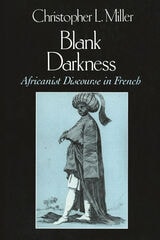
Blank Darkness
Africanist Discourse in FrenchChristopher L. Miller
University of Chicago Press, 1986

Book and Verse
A Guide to Middle English Biblical LiteratureJames H. Morey
University of Illinois Press, 2000
Book and Verse is an indispensable guide to the variety and extent of biblical literature in England, exclusive of drama and the Wycliffite Bible that appeared between the twelfth and the fifteenth centuries. Entries provide detailed information on how much of what parts of the Bible appear in Middle English and where this biblical material can be found. Comprehensive indexing by name, keyword, and biblical verse allows a researcher to find, for example, all the occurrences of the Flood Story or of the encounter between Elijah and the Widow of Sarephta. An invaluable resource, Book and Verse provides the first easy access to the "popular Bible" assembled before and after John Wyclif's translation of the Vulgate into English.

Bookmarks
A Companion Text for Like Water for ChocolateJanet Giannotti
University of Michigan Press, 1999
A Companion TextforLike Water for Chocolate is made up of six units, each covering two chapters in the novel. Every unit contains a preview section, free writing exercises, a short glossary (to help with Spanish words), comprehension quizzes, vocabulary exercises and summarizing exercises, a section devoted to response journals, and topics for discussion. The "Beyond the Novel" section includes facts about U.S. and Mexican history and folk tales. Illustrations throughout the book help to engage students and offer visual support for reading comprehension.
Border Confluences
Borderland Narratives from the Mexican War to the PresentRosemary A. King
University of Arizona Press, 2004
Border Renaissance
The Texas Centennial and the Emergence of Mexican American LiteratureBy John Morán González
University of Texas Press, 2009
The Texas Centennial of 1936, commemorated by statewide celebrations of independence from Mexico, proved to be a powerful catalyst for the formation of a distinctly Mexican American identity. Confronted by a media frenzy that vilified "Meskins" as the antithesis of Texan liberty, Mexican Americans created literary responses that critiqued these racialized representations while forging a new bilingual, bicultural community within the United States. The development of a modern Tejana identity, controversies surrounding bicultural nationalism, and other conflictual aspects of the transformation from mexicano to Mexican American are explored in this study. Capturing this fascinating aesthetic and political rebirth, Border Renaissance presents innovative readings of important novels by María Elena Zamora O'Shea, Américo Paredes, and Jovita González. In addition, the previously overlooked literary texts by members of the League of United Latin American Citizens (LULAC) are given their first detailed consideration in this compelling work of intellectual and literary history.
Drawing on extensive archival research in the English and Spanish languages, John Morán González revisits the 1930s as a crucial decade for the vibrant Mexican American reclamation of Texas history. Border Renaissance pays tribute to this vital turning point in the Mexican American struggle for civil rights.
Border Women
Writing From La FronteraDebra A. Castillo
University of Minnesota Press, 2002
The first study to foreground writing by women who live at the U.S.-Mexico Border.
It is a peculiar fact that U.S.-Mexico border theory is dominated by those who write about, not from, the border. By looking at the work of women writers from both sides of the border, Debra A. Castillo and María-Socorro Tabuenca Córdoba open border studies to a truly transnational analysis while bringing questions of gender to the fore.
Border Women rethinks border theory by emphasizing women writers whose work—in Spanish, English, or a mixture of the two languages—calls into question accepted notions of border identities. These writers include those who are already well recognized internationally (Helena María Viramontes, Sheila and Sandra Ortiz Taylor, and María Novaro); those who have become part of the Chicano canon (Norma Cantú, Alicia Gaspar de Alba, and Demetria Martínez); along with some of the lesser-known, yet most exciting, women’s voices from the Mexican border (Rosario Sanmiguel, Rosina Conde, and Regina Swain).
Borges in Sicily
Journey with a Blind GuideAlejandro Luque
Haus Publishing, 2017
This winding journey features literati both past and present, indigenous and foreign. These characters live alongside Luque’s own comments and observations in a narrative that is rich in historical and personal detail. The writer who inspired this great journey, Borges himself, becomes a character in this narrative that is infused with extracts and reflections from his essays and poetry. Borges in Sicily acts as a travel diary, a guide to the most fascinating places in Sicily, a recounting of Borges’s journey around the island, and a deeply poetic story of Luque’s own adventures. The book also includes twenty-three photographs from the renowned Magnum photographer Ferdinando Scianna, and it won the 1st Premio International del Libros de Viajes.

Breaking Boundaries
Women'S Regional WritingSherrie A. Inness
University of Iowa Press, 1997
These lively essays reveal the generational continuum of women's regional literature, which has always offered a voice to women and their concerns. By exploring the multiplicity of connections between women and regional writing and the subversive potential of regional writing to put forth social criticisms and correctives, Breaking Boundaries charts some of the major ways in which this literary genre is of particular importance to today's writers.
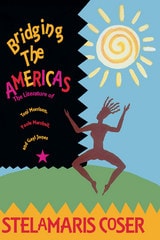
Bridging The Americas
The Literature of Paule Marshall, Toni Morrison, and Gayl JonesStelamaris Coser
Temple University Press, 1994
A literary study of three important black women writers, this book examines the "inter-American" characteristics in the work of Marshall, Morrison, and Jones, including detailed discussions of Morrison's Song of Solomon and Tar Baby, Jones's Corregidora and Song of Anninho, and Marshall's The Chose Place, The Timeless People.
Coser defines the inter-American characteristics in these authors' novels as a connection based on a common African heritage and a shared legacy of colonialism and racism. These three authors redefine the boundaries between the Americas, bridging the "extended Caribbean" that stretches from the U.S. Atlantic coast to Brazil. Their work reinterprets ethnic and sexual identity. Issues of race, class, and nationality overlap. History and identity are reinvented.
To explore the collective forms of resistance and cultural processes in Brazil, the Caribbean, and the United States, Coser also makes provocative connections between the visibility of black women writers and the popularity of male Latin American novelists like Carlos Fuentes and Gabriel Garcia Marquéz.