Results by title
164 books match the query 'Individual Composer & Musician' and 28 start with b
Bach Perspectives, Volume 1
Edited by Russel Stinson
University of Illinois Press, 2025
In Volume One, Bach scholar Russell Stinson edits essays from Stephen A. Crist, Michael Marissen, David Schulenberg, and other experts. Topics range from issues of composition and improvisation to works like the Orgelbüchlein and the First Brandenburg Concerto.
Contributors: James A. Brokaw II, Eric T. Chafe, Stephen A. Crist, Michael Marissen, David Schulenberg, and Russell Stinson

Bach Perspectives, Volume 10
Bach and the OrganMatthew Dirst
University of Illinois Press, 2016

Bach Perspectives, Volume 11
J. S. Bach and His SonsEdited by Mary Oleskiewicz
University of Illinois Press, 2017
Robert L. Marshall traces how each of the sons grappled with—and at times suffocated beneath—their illustrious father’s legacy. Mary Oleskiewicz’s essay investigates the Bach family’s connections to historical keyboard instruments and musical venues at the Prussian court, while David Schulenberg looks at Carl Philipp Emanuel Bach’s diverse and innovative keyboard works. Evan Cortens digs into everything from performance materials to pay stubs to offer a detailed view of the business of Carl Philipp Emanuel Bach’s liturgical music. Finally, Christine Blanken discusses how the rediscovery of Bach family musical manuscripts in the Breitkopf archive opens up new perspectives on familiar topics.
A supplemental companion website is now available for Bach Perspectives 11. This resource features additional images, captions, and short descriptions to provide an essential supplement to the printed text.

Bach Perspectives, Volume 2
J. S. Bach, the Breitkopfs, and Eighteenth-Century Music TradeEdited by George B. Stauffer
University of Illinois Press, 2025
Launched in 1995, Bach Perspectives has become the premier English-language serial book series dedicated to cutting-edge Bach scholarship. The University of Illinois Press now offers the first four volumes in open access editions available for free to all interested readers.
From 1727 to 1787, the Bach and the Breitkopf families enjoyed close professional ties forged by the growing trade between music composers and music printers. The second volume of Bach Perspectives examines the inventive and far-flung activities of the Breitkopf firm from the vantage point of its commerce with J. S. Bach and his relatives.
Contributors: Gregory G. Butler, Robert M. Cammarota, Peggy Daub, Andreas Glöckner, George R. Hill, Yoshitake Kobayashi, Ortrun Landmann, Ernest May, Hans-Joachim Schulze, George B. Stauffer, and Neal Zaslaw
Bach Perspectives, Volume 3
Creative Responses to Bach, from Mozart to HindemithEdited by Michael Marissen.
University of Illinois Press, 2025
Launched in 1995, Bach Perspectives has become the premier English-language serial book series dedicated to cutting-edge Bach scholarship. The University of Illinois Press now offers the first four volumes in open access editions available for free to all interested readers.
The third volume of the acclaimed series features a roster of scholars analyzing the crucial influence of J. S. Bach’s music upon compositions by Mozart, Beethoven, Brahms, Hindemith, and others. Throughout, the contributors highlight Bach’s subtle presence in the history of composition and illuminate the intertwined works of Bach and his successors.
Contributors: Thomas Christensen, Ludwig Finscher, Walter Frisch, Stephen Hinton, William Kinderman, and Robert L. Marshall

Bach Perspectives, Volume 4
The Music of J. S. Bach: Analysis and InterpretationEdited by David Schulenberg
University of Illinois Press, 2025
Launched in 1995, Bach Perspectives has become the premier English-language serial book series dedicated to cutting-edge Bach scholarship. The University of Illinois Press now offers the first four volumes in open access editions available for free to all interested readers.
The fourth volume of Bach Perspectives analyzes J. S. Bach’s orchestral works, especially his concertos, and the interpretation and performance of his music in general. The diverse contributors come from the fields of performance, organology, music theory, and music history, and their expertise across multiple areas provides an interdisciplinary perspective to their chapters.
Contributors: Gregory G. Butler, John Butt, John Koster, Alfred Mann, Mary Oleskiewicz, William Renwick, David Schulenberg, Jeanne Swack, and Paul Walker
Bach Perspectives, Volume 5
Bach in AmericaEdited by Stephen A. Crist
University of Illinois Press, 2002
More than a century passed after Johann Sebastian Bach's death in 1750 before his music found an audience in the United States. Volume Five in the Bach Perspectives series tracks the composer's reputation in America from obscure artist to a cultural mainstay whose music has spread to all parts of the country.
Barbara Owen surveys Bach's early reception in America. Matthew Dirst focuses on John Sullivan Dwight's role in advocating Bach's work. Michael Broyles considers Bach's early impact in Boston while Mary J. Greer offers a counterpoint in her study of Bach's reception in New York. Hans-Joachim Schulze's essay links the American descendants of August Reinhold Bach to the composer. Christoph Wolff also focuses on Bach's descendants in America, particularly Friederica Sophia Bach, the daughter of Bach's eldest son. Peter Wollny evaluates manuscripts not included in Gerhard Herz's study of Bach Sources in America. The volume concludes with Carol K. Baron's comparison of Bach with Charles Ives while Stephen A. Crist measures Bach's influence on the jazz icon Dave Brubeck.
Bach Perspectives, Volume 6
J. S. Bach's Concerted Ensemble Music, The OuvertureEdited by Gregory Butler
University of Illinois Press, 2005
The sixth volume in the Bach Perspectives series opens with Joshua Rifkin's seminal study of the early source history of the B-minor orchestral suite. Rifkin elaborates on his discovery that the work in its present form for solo flute goes back to an earlier version in A minor, ostensibly for solo violin. He also takes the discovery as the point of departure for a wide-ranging discussion of the origins and extent of Bach's output in the area of concerted ensemble music.
In other essays, Jeanne Swack presents an enlightening comparison of Georg Phillip Telemann's and Bach's approach to the French overture as concerted movements in their church cantatas. Steven Zohn views the B-minor orchestral suite from the standpoint of the "concert en ouverture." In addition, Zohn responds to Rifkin by suggesting Bach may have scored the early version of the B-minor orchestral suite for flute.
Bach Perspectives, Volume 7
J. S. Bach's Concerted Ensemble Music: The ConcertoEdited by Gregory Butler
University of Illinois Press, 2007
Gregory Butler focuses on Bach's Concerto for Harpsichord and Strings in E Major (BWV 1053) as a pastiche created by a process of assemblage of three earlier heterogeneous movements. Pieter Dirksen delves into the source history of the Concerto for Harpsichord and Strings in F Minor (BWV 1056) and concludes it represents a transcription of an earlier violin concerto in G minor. David Schulenberg investigates the generic ambiguity of the concerto in the early eighteenth century and how it diverged from the sonata to become a distinct genre. Completing the volume is Christoph Wolff's examination of the ""Siciliano"" as a slow movement in Bach's concertos and its implications for the source history of his Concerto for Harpsichord and Strings in E Major (BWV 1053).
Bach Perspectives, Volume 8
J.S. Bach and the Oratorio TraditionEdited by Daniel R. Melamed
University of Illinois Press, 2011
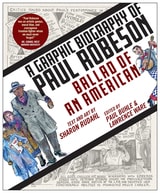
Ballad of an American
A Graphic Biography of Paul RobesonSharon Rudahl
Rutgers University Press, 2021
The first-ever graphic biography of Paul Robeson, Ballad of an American, charts Robeson’s career as a singer, actor, scholar, athlete, and activist who achieved global fame. Through his films, concerts, and records, he became a potent symbol representing the promise of a multicultural, multiracial American democracy at a time when, despite his stardom, he was denied personal access to his many audiences.
Robeson was a major figure in the rise of anti-colonialism in Africa and elsewhere, and a tireless campaigner for internationalism, peace, and human rights. Later in life, he embraced the civil rights and antiwar movements with the hope that new generations would attain his ideals of a peaceful and abundant world. Ballad of an American features beautifully drawn chapters by artist Sharon Rudahl, a compelling narrative about his life, and an afterword on the lasting impact of Robeson’s work in both the arts and politics. This graphic biography will enable all kinds of readers—especially newer generations who may be unfamiliar with him—to understand his life’s story and everlasting global significance.
Ballad of an American: A Graphic Biography of Paul Robeson is published in conjunction with Rutgers University’s centennial commemoration of Robeson’s 1919 graduation from the university.
Study guide for Ballad of an American: A Graphic Biography of Paul Robeson (https://d3tto5i5w9ogdd.cloudfront.net/wp-content/uploads/2021/05/10201015/YA_Adult-Study-Guide-for-A-Graphic-Biography-of-Paul-Robeson.pdf).
View the blad for Ballad of an American.
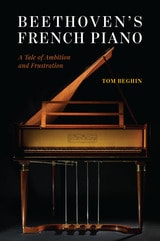
Beethoven's French Piano
A Tale of Ambition and FrustrationTom Beghin
University of Chicago Press, 2022
In 1803 Beethoven acquired a French piano from the Erard Frères workshop in Paris. The composer was “so enchanted with it,” one visitor reported, “that he regards all the pianos made here as rubbish by comparison.” While Beethoven loved its sound, the touch of the French keyboard was much heavier than that of the Viennese pianos he had been used to. Hoping to overcome this drawback, he commissioned a local technician to undertake a series of revisions, with ultimately disappointing results. Beethoven set aside the Erard piano for good in 1810.
Beethoven’s French Piano returns the reader to this period of Beethoven’s enthusiasm for all things French. What traces of the Erard’s presence can be found in piano sonatas like his “Waldstein” and “Appassionata”? To answer this question, Tom Beghin worked with a team of historians and musicians to commission the making of an accurate replica of the Erard piano. As both a scholar and a recording artist, Beghin is uniquely positioned to guide us through this key period of Beethoven’s work. Whether buried in archives, investigating the output of the French pianists who so fascinated Beethoven, or seated at the keyboard of his Erard, Beghin thinks and feels his way into the mind of the composer, bringing startling new insights into some of the best-known piano compositions of all time.

Berlioz and His World
Edited by Francesca Brittan and Sarah Hibberd
University of Chicago Press, 2024
Hector Berlioz (1803–1869) has long been a difficult figure to place and interpret. Famously, in Richard Wagner’s estimation, he hovered as a “transient, marvelous exception,” a composer woefully and willfully isolated. In the assessment of German composer Ferdinand Hiller, he was a fleeting comet who “does not belong in our musical solar system,” the likes of whom would never be seen again. For his contemporaries, as for later critics, Berlioz was simply too strange—and too noisy, too loud, too German, too literary, too cavalier with genre and form, and too difficult to analyze. He was, in many ways, a composer without a world.
Berlioz and His World takes a deep dive into the composer’s complex legacy, tracing lines between his musical and literary output and the scientific, sociological, technological, and political influences that shaped him. Comprising nine essays covering key facets of Berlioz’s contribution and six short “object lessons” meant as conversation starters, the book reveals Berlioz as a richly intersectional figure. His very difficulty, his tendency to straddle the worlds of composer, conductor, and critic, is revealed as a strength, inviting new lines of cross-disciplinary inquiry and a fresh look at his European and American reception.

Bernhard Lang
Critical Guides to Contemporary ComposersChristine Dysers
Intellect Books, 2026
This introduction to a challenging contemporary composer delves into the theory and philosophy of repetition.
The work of Austrian composer Bernhard Lang eludes easy categorization. While rooted simultaneously in DJ culture, free jazz, pop culture, and the Austro-European new music scene, his oeuvre explicitly foregrounds repetition. He is, in his own words, a “repeat offender.”
Bernhard Lang serves as a critical guide to the composer’s music and traces the phenomenon of repetition throughout his oeuvre. To examine Lang’s repetitive aesthetics, Christine Dysers employs various philosophical methods, such as Gilles Deleuze’s differential ontology. Fusing critical musicology, aesthetic theory, poststructuralist thought, and music analysis, Bernhard Lang brings fresh insight to the work of an award-winning contemporary composer.
Beyond Notation
The Music of Earle BrownRebecca Y. Kim, Editor
University of Michigan Press, 2017
Bill Clifton
America's Bluegrass Ambassador to the WorldBill C Malone
University of Illinois Press, 2016
Bird
The Life and Music of Charlie ParkerChuck Haddix
University of Illinois Press, 2013
Blue Guitar Highway
Paul Metsa
University of Minnesota Press, 2011
This is a musician’s tale: the story of a boy growing up on the Iron Range, playing his guitar at family gatherings, coming of age in the psychedelic seventies, and honing his craft as a pro in Minneapolis, ground zero of American popular music in the mid-eighties. “There is a drop of blood behind every note I play and every word I write,” Paul Metsa says. And it’s easy to believe, as he conducts us on a musical journey across time and country, navigating switchbacks, detours, dead ends, and providing us the occasional glimpse of the promised land on the blue guitar highway.
His account captures the thrill of the Twin Cities when acts like the Replacements, Husker Dü, and Prince were remaking pop music. It takes us right onto the stages he shared with stars like Billy Bragg, Pete Seeger, and Bruce Springsteen. And it gives us a close-up, dizzying view of the roller-coaster ride that is the professional musician’s life, played out against the polarizing politics and intimate history of the past few decades of American culture. Written with a songwriter’s sense of detail and ear for poetry, Paul Metsa’s book conveys all the sweet absurdity, dry humor, and passion for the language of music that has made his story sing.
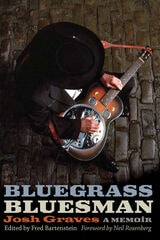
Bluegrass Bluesman
A MemoirJosh Graves; Edited by Fred Bartenstein; Foreword by Neil Rosenberg
University of Illinois Press, 2012
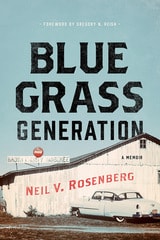
Bluegrass Generation
A MemoirNeil V Rosenberg
University of Illinois Press, 2018
Rosenberg's memoir shines a light on the changing bluegrass scene of the early 1960s. Already a fan and aspiring musician, his appetite for banjo music quickly put him on the Jamboree stage. Rosenberg eventually played with Monroe and spent four months managing the Jamboree. Those heights gave him an eyewitness view of nothing less than bluegrass's emergence from the shadow of country music into its own distinct art form. As the likes of Bill Keith and Del McCoury played, Rosenberg watched Monroe begin to share a personal link to the music that tied audiences to its history and his life--and helped turn him into bluegrass's foundational figure.
An intimate look at a transformative time, Bluegrass Generation tells the inside story of how an American musical tradition came to be.
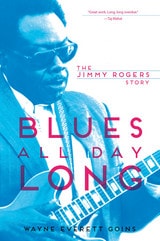
Blues All Day Long
The Jimmy Rogers StoryWayne Everett Goins, foreword by Kim Wilson
University of Illinois Press, 2014
In Blues All Day Long, Wayne Everett Goins mines seventy-five hours of interviews with Rogers' family, collaborators, and peers to follow a life spent in the blues. Goins' account takes Rogers from recording Chess classics and barnstorming across the South to a late-in-life renaissance that included new music, entry into the Blues Hall of Fame, and high profile tours with Eric Clapton and the Rolling Stones. Informed and definitive, Blues All Day Long fills a gap in twentieth century music history with the story of one of the blues' eminent figures and one of the genre's seminal bands.

Blues Legacy
Tradition and Innovation in ChicagoDavid Whiteis
University of Illinois Press, 2019
David Whiteis delves into how the current and upcoming Chicago blues generations carry on this legacy. Drawing on in-person interviews, Whiteis places the artists within the ongoing social and cultural reality their work reflects and helps create. Beginning with James Cotton, Eddie Shaw, and other bequeathers, he moves through an all-star council of elders like Otis Rush and Buddy Guy and on to inheritors and today's heirs apparent like Ronnie Baker Brooks, Shemekia Copeland, and Nellie "Tiger" Travis.
Insightful and wide-ranging, Blues Legacy reveals a constantly adapting art form that, whatever the challenges, maintains its links to a rich musical past.
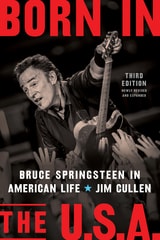
Born in the U.S.A.
Bruce Springsteen in American Life, 3rd edition, Revised and ExpandedJim Cullen
Rutgers University Press, 2024
This third edition of Born in the U.S.A. is fully revised and updated, incorporating discussion of Springsteen’s wide output in the 21st century. While addressing Springsteen’s responses to events like 9/11, it also considers the evolution of his attitudes towards religion, masculinity, and his relationship with his audience. Whether a serious Springsteen fan or simply an observer of American popular culture, Born in the U.S.A. will give you a new appreciation for The Boss.
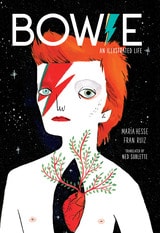
Bowie
An Illustrated LifeBy María Hesse and Fran Ruiz; translated by Ned Sublette
University of Texas Press, 2019
David Bowie was a master of artifice and reinvention. In that same spirit, illustrator María Hesse and writer Fran Ruiz have created a vivid retelling of the life of David Robert Jones, from his working-class childhood to glam rock success to superstardom, concluding with the final recording sessions after his cancer diagnosis.
Narrated from the rock star’s point of view, Bowie colorfully renders both the personal and the professional turning points in a life marked by evolution and innovation. We see Bowie facing the sorrow of his brother’s mental illness, kicking a cocaine habit while other musicians succumbed to deadly overdoses, contending with a tumultuous love life, and radiating joy as a father. Along the way, he describes how he shattered the boundaries of song and society with a counterculture cast that included Iggy Pop, Brian Eno, and Freddie Mercury—as well as his own creations, Ziggy Stardust and the Thin White Duke.
Evocatively illustrated from start to finish, Bowie is a stellar tribute to an inimitable star.
Brian Ferneyhough
Lois Fitch
Intellect Books, 2013
Bruce Songs
The Music of Bruce Springsteen, Album-by-Album, Song-by-SongKenneth Womack
Rutgers University Press, 2024
Bruce Songs is an authoritative guide that offers an in-depth exploration of Bruce Springsteen's musical legacy. Covering Springsteen's entire discography, from Greetings from Asbury Park, N.J. to Only the Strong Survive, this unique book combines historical context, literary analysis, and meticulous research.
Unlike any other resource, it provides detailed analyses of each album, essays on their historical significance, and a chronological examination of every studio song. Discover the stories behind the recordings and gain insight into Springsteen's creative process.
Rich with contemporary reviews, insider accounts, photographs, and special sections highlighting pivotal moments and key figures, Bruce Songs is an indispensable companion for fans and scholars. It offers an immersive journey through the music of the Boss, making it an essential read for anyone captivated by Springsteen's enduring musical legacy.
Buddy Emmons
Steel Guitar IconSteve Fishell
University of Illinois Press, 2022
The acknowledged maestro of the pedal steel guitar, Buddy Emmons lent his unparalleled virtuosity to over five decades of hit recordings and set standards that remain the benchmark for musicians today.
Steve Fishell’s merger of biography and memoir draws extensively on in-depth interviews with Emmons and the artist's autobiographical writings. Emmons went from playing strip clubs to a Grand Ole Opry debut with Little Jimmy Dickens at age 18. His restless experimentation led to work with Ernest Tubb and Ray Price--and established him in a career that saw him play alongside a who’s who of American music. Fishell weaves in stories and anecdotes from Willie Nelson, Brenda Lee, Linda Ronstadt, Pat Martino, and many others to provide a fascinating musical and personal portrait of an innovator whose peerless playing and countless recordings recognized no boundaries.
A one-of-a-kind life story, Buddy Emmons expands our view of a groundbreaking artist and his impact on country music, jazz, and beyond.
Buzz Busby
Father of Washington, DC, BluegrassKip Lornell and Tom Mindte
University of Illinois Press, 2026
Buzz Busby’s move to Washington, D.C., in 1951 helped launch bluegrass in the nation’s capital while the intensity of his mandolin playing drew raves for its unrelenting pace and innovative style. His high lonesome singing rivaled that of Bill Monroe. Kip Lornell and Tom Mindte draw on interviews and some fifty hours of Busby speaking about his life to tell the story of a largely forgotten bluegrass virtuoso.
Busby and his band the Bayou Boys stood front and center on a mid-1950s D.C.-area TV show that, though short-lived, catalyzed the formation of the city’s bluegrass community. Time with the Louisiana Hayride and classic if little-heard bluegrass sides like “Lonesome Wind” seemed to promise a bright future. But a devastating car wreck and a host of legal and personal troubles triggered a long decline into drug and alcohol abuse that undermined Busby’s career and led him to sum up, “I started at the top and diligently worked my way to the bottom.”
Entertaining and vivid, Buzz Busby tells the story of a musician’s musician and his hardscrabble life in bluegrass.