Results by title
110 books match the query 'Individual Photographers' and 9 start with b
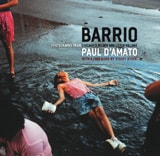
Barrio
Photographs from Chicago's Pilsen and Little VillagePaul D'Amato
University of Chicago Press, 2006
Barrio collects ninety of these striking color images along with D’Amato’s fascinating account of his time photographing Mexican Chicago and his acceptance—often grudging, after threatened violence—into the heart of the city’s Mexican community. Some of the photos here are beautifully composed and startling—visual narratives that are surreal and dreamlike, haunting and mythic. Others, like those D’Amato took while shadowing graffiti artists in the subway, are far more immediate and improvisational. With a foreword by author Stuart Dybek that places D’Amato’s work in the context of the Pilsen and Little Village that Dybek has elsewhere captured so memorably, this book offers a penetrating, evocative, and overall streetwise portrait of two iconic and enduring Hispanic neighborhoods.
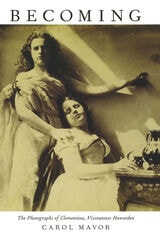
Becoming
The Photographs of Clementina, Viscountess HawardenCarol Mavor
Duke University Press, 1999
With drama, wit, and verve, Lady Hawarden’s girls, becoming women, entwine each other, their mirrored reflections and select feminine objects (an Indian traveling cabinet, a Gothic-style desk, a shell-covered box) as homoerotic partners. The resulting mise-en-scène is secretive, private, delicious, and arguably queer—a girltopia ripe with maternality and adolescent flirtation, as touching as it is erotic. Luxuriating in the photographs’ interpretive possibilities, Mavor makes illuminating connections between Hawarden and other artists and writers, including Vermeer, Christina Rossetti, George Eliot, Lewis Carroll, and twentieth-century photographers Sally Mann and Francesca Woodman. Weaving psychoanalytic theory and other photographic analyses into her work, Mavor contemplates the experience of the photograph and considers the relationship of Hawarden’s works to the concept of the female fetish, to voyeurism, mirrors and lenses, and twins and doubling. Under the spell of Roland Barthes, Mavor’s voice unveils the peculiarities of the erotic in Lady Hawarden’s images through a writerly approach that remembers and rewrites adolescence as sustained desire.
In turn autobiographical, theoretical, historical, and analytical, Mavor’s study caresses these mysteriously ripped and scissored images into fables of sapphic love and the real magic of photography.
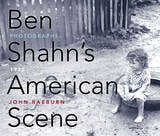
Ben Shahn's American Scene
Photographs, 1938John Raeburn
University of Illinois Press, 2010
The paintings, murals, and graphics of Ben Shahn (1898-1969) have made him one of the most heralded American artists of the twentieth century, but during the 1930s he was also among the nation's premier photographers. Much of his photographic work was sponsored by the New Deal's Farm Security Administration, where his colleagues included Dorothea Lange and Walker Evans.
Ben Shahn's American Scene: Photographs, 1938 presents one hundred superb photographs from his most ambitious FSA project, a survey of small-town life in the Depression. John Raeburn's accompanying text illuminates the thematic and formal significance of individual photographs and reveals how, taken together, they address key cultural and political issues of the years leading up to World War II. Shahn's photographs highlight conflicts between traditional values and the newer ones introduced by modernity as represented by the movies, chain stores, and the tantalizing allure of consumer goods, and they are particularly rich in observation about the changes brought about by Americans' universal reliance on the automobile. They also explore the small town's standing as the nation's symbol of democratic community and expose the discriminatory social and racial practices that subverted this ideal in 1930s America.
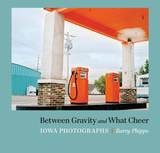
Between Gravity and What Cheer
Iowa PhotographsBarry Phipps
University of Iowa Press, 2018
When Barry Phipps relocated to Iowa City from Chicago in 2012, he knew nothing of Iowa. He began taking day trips across Iowa in the spirit of wonder and discovery. His marked-up road map soon became a work of art in and of itself, covered with spokes, lines, and places both seen and needing to be seen. Along the way he plied his trade, taking photographs.
Inspired by such seminal work as Robert Frank’s The Americans, this is a unique vision of the Midwest and Iowa. Without condescending or overemphasizing the decline of small town America, Phipps documents rural communities as they are now, noting abstract shapes and colors as he photographs business districts with quirky and/or artful signs, streetscapes and landscapes, buildings with ghosts of paint from previous lives, and the occasional resident.
In addition to their startling attention to color and geometry, Phipps’s photos delight because they suggest an author who isn’t on intimate terms with his subject matter, but very much wants to be. Though the photographs in this collection frequently maintain a cautious distance from the houses, water towers, and iconography he captures on film, the pictures feel, at once, eager and shy.
Phipps admires his new home—from afar, by varying degrees—and excitedly introduces himself to it: the first steps of a journey toward claiming Iowa as his.
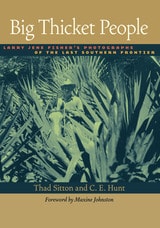
Big Thicket People
Larry Jene Fisher's Photographs of the Last Southern FrontierBy Thad Sitton and C.E. Hunt
University of Texas Press, 2008
Living off the land—hunting, fishing, and farming, along with a range of specialized crafts that provided barter or cash income—was a way of life that persisted well into the twentieth century in the Big Thicket of southeast Texas. Before this way of life ended with World War II, professional photographer Larry Jene Fisher spent a decade between the 1930s and 1940s photographing Big Thicket people living and working in the old ways. His photographs, the only known collection on this subject, constitute an irreplaceable record of lifeways that first took root in the southeastern woodlands of the colonial United States and eventually spread all across the Southern frontier.
Big Thicket People presents Fisher's photographs in suites that document a wide slice of Big Thicket life-people, dogs, camps, deer hunts, farming, syrup mills, rooter hogs and stock raising, railroad tie making, barrel stave making, chimney building, peckerwood sawmills, logging, turpentining, town life, church services and picnics, funerals and golden weddings, and dances and other amusements. Accompanying each suite of images is a cultural essay by Thad Sitton, who also introduces the book with a historical overview of life in the Big Thicket. C. E. Hunt provides an informative biography of Larry Jene Fisher.

Blaze Orange
Whitetail Deer Hunting in WisconsinTravis Dewitz
Wisconsin Historical Society Press, 2014
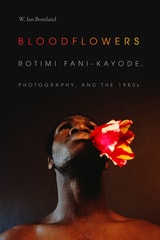
Bloodflowers
Rotimi Fani-Kayode, Photography, and the 1980sW. Ian Bourland
Duke University Press, 2019
Borrowed Time
Photographs by Caroline VaughanCaroline Vaughan
Duke University Press, 1996
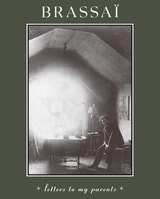
Brassai
Letters to My ParentsBrassaï
University of Chicago Press, 1997
"[Brassaï] is probably the only photographer—at least in France—to have acquired such a vast audience and mastered his material to such a degree that he can express himself with a flexibility and apparent ease that is almost literary in its nature."—Jean Gallien, Photo-Monde
"The letters that Brassaï wrote to his parents between 1920 and 1940 chronicle the sometimes painful stages by which this gifted man hauled himself from penury to celebrity."—Peter Hamilton, Times Literary Supplement
"In these proud, protective, occasionally conscience-stricken missives, the young man full of eager dreams emerges as one of the century's pioneering photographers, revered for his lushly atmospheric portraits of Paris after dark."—Elle
"A fascinating insight into how a bright individual slowly found his calling."—Christine Schwartz Hartley, New York Times Book Review