Results by title
179 books match the query 'Juvenile Fiction' and 8 start with b
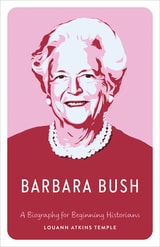
Barbara Bush
A Biography for Beginning HistoriansLouann Atkins Temple
University of Texas Press, 2025
A brief biography of Barbara Bush for young readers.
Louann Temple is a lifelong Texan with a personal passion for arts and education who believes that biography, with its emphasis on personalities, is ideal for introducing young people to history, with its focus on events. Temple is uniquely situated to write this biography for young readers, as she has been personally acquainted with many important people in presidential history, First Lady Barbara Bush included, and she has mentored countless middle and high school students, preparing them for college admission.
Barbara Bush highlights the key events in the life of the First Lady; explores the life lessons afforded by her legacy; and reflects on the broad historical issues during her time in the White House from 1989 to 1993. Married to the forty-first president, George H. W. Bush, Barbara Bush spent her time as First Lady dedicated to charity work and helping the American people, notably supporting Americans during the AIDS crisis. Enhanced with a carefully curated selection of black and white photographs from three presidential libraries, this biography for beginning historians is poised to bring the best of biography and history to a new generation of readers.
Belonging
Virginia Tibbs-Brelje
Gallaudet University Press, 1986
Between Watergate and the Gulag
The French Press and Politics, 1970–1985Charles R. Eisendrath
Michigan Publishing Services, 2022
Also introduced: “surplus freedom” a novel approach for gauging self-censorship by comparing the degree of free expression a legal system permits to what publications actually exercise.
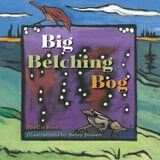
Big Belching Bog
Phyllis Root
University of Minnesota Press, 2010
The biggest bog secret of all, we learn, is the remarkable process of methane gas belching out of the bog. The gas is created by decaying peat moss and forms a bulge in the surface of the moss six inches or taller before breaking through. Does this "belch" make a sound? No one knows, says Root, because no one has ever heard it. In fact, bogs are known as some of the quietest places on earth. Maybe you will be the first to hear the big bog belch!
Illustrated by renowned woodcut artist Betsy Bowen, Big Belching Bog also contains a section of bog facts, including more information about the plants and animals mentioned in the book as well as tips for visiting a bog. Big Belching Bog will stir the imagination of young readers and teach them about the landscape and environment of these mysterious and, ahem, gassy places.
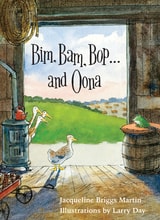
Bim, Bam, Bop . . . and Oona
Jacqueline Briggs Martin
University of Minnesota Press, 2019
An irresistible read-aloud picture book, in which a little odd-duck-out discovers her unique strengths
When these ducks go to the pond, it is Bim, Bam, Bop . . . and Oona, always last. They’re all ducks, but Bim, Bam, and Bop are runners, and Oona’s a waddler. “Last is a blot on my life,” she says to her frog friend, Roy. “I don’t feel as big as a duck should feel.” But she’s good with gizmos, Roy reminds her. So Oona tinkers with things, scraps, and strings, and eventually creates just the right gadget to get her to the pond first.
Spunky Oona will inspire and delight all who see her final triumphant creation. With its fun read-aloud words (from Brrrrrring to OOO-hoolie-hoo!), her story is wonderful to hear. Its charming illustrations invite readers to imagine our own new gizmos, and her victory reminds us to look for our own special gifts. A tale about being true to yourself, building confidence, and finding friendship, Bim, Bam, Bop . . . and Oona is sure to bring smiles to readers and listeners of all ages.
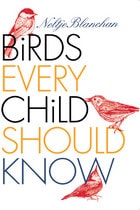
Birds Every Child Should Know
Neltje Blanchan
University of Iowa Press, 2000
Originally published in 1907, Birds Every Child Should Know is a collection of storylike descriptions of more than one hundred birds commonly found in the United States. Neltje Blanchan's detailed descriptions of birds—their physical attributes, calls, nesting and mating habits, and other behaviors—are nothing less than enchanting, and some read almost like fairy tales. Take for instance the mockingbird's call:
“when the moonlight sheds a silvery radiance about every sleeping creature, the mockingbird sings to his mate such delicious music as only the European nightingale can rival. Perhaps the stillness of the hour, the beauty and fragrance of the place where the singer is hidden among the orange blossoms or magnolia, increase the magic of his almost pathetically sweet voice; but surely there is no lovelier sound in nature on this side of the sea.”
or the yellow warbler's nest:
“an exquisite little cradle of silvery plant fiber, usually shreds of milkweed stalk, grass, leaves, and caterpillar's silk, neatly lined with hair, feathers, and downy felt of fern fronds.”
Blanchan includes folk history (how Native Americans and southern slaves thwarted mosquitoes by hanging gourds to attract purple martins) as well as common threats to birds that foreshadow current dangers to avian life (the toll taken on songbirds by lighthouses and electric towers). Such informative details, along with the author's disarming enthusiasm for her subject, will charm adult bird-watchers as well as children.
Cornelia Mutel's informative foreword places Blanchan's writing in the historical context of a turn-of-the-century environmental reawakening and burgeoning activism and research by women on behalf of dwindling bird populations.
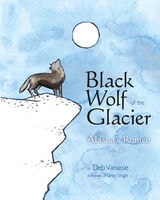
Black Wolf of the Glacier
Alaska's RomeoDeb Vanasse
University of Alaska Press, 2013
Black Wolf of the Glacier tells the story of this beloved legend through the eyes of Shawna, whose dog becomes best friends with Romeo. While initially afraid, Shawna ultimately learns to love the benevolent wolf. When Romeo goes missing, Shawna begins a determined search to find him, bringing readers along for the adventure.
Bones on the Ground
Elizabeth O'Maley
Indiana Historical Society Press, 2014