Results by title
330 books match the query 'Brazil' and 33 start with a
A Beautiful Fight
The Racial Politics of Capoeira in Backland BahiaEsther Viola Kurtz
University of Michigan Press, 2025
2026 Dance Studies Association de la Torre Bueno First Book Award Shortlist Finalist
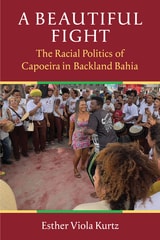
A Beautiful Fight examines the potentials and limits of capoeira Angola to cohere a multiracial community committed to antiracist struggle. Capoeira, a musical fight-game that originated among enslaved Africans in Brazil, holds special significance for Black Brazilian activists as a spiritual and political practice that affirms the value of Black lives, thus countering anti-Black violence sanctioned by the Brazilian state. However, many capoeira groups count more white practitioners than Black, especially groups of the politicized, Afrocentric style capoeira Angola, raising debates about appropriation of Black culture that resonate across the Americas. A Beautiful Fight addresses these tensions. Drawing on ethnographic research with a multiracial capoeira Angola group in Brazil’s Bahian sertão or backlands, Esther Viola Kurtz explores diverse group members’ understandings of capoeira’s spiritual and political meanings and considers how white participation impacts capoeira’s antiracist politics. A Beautiful Fight argues that white practitioners occupying space in capoeira divert attention from Black members’ concerns and reproduce racist and colonialist ideologies, albeit unintentionally. In this way, the book complicates claims that shared music and dance bridge differences and facilitate cross-racial unity, yet Kurtz proposes that capoeira still transmits knowledge and tools that, when used with intention, commitment, and care, can be wielded to collaboratively contest racism and imagine a more just world.
A British Enterprise in Brazil
The St. John d'el Rey Mining Company and the Morro Velho Gold Mine, 1830–1960Marshall Eakin
Duke University Press, 1990
Utilizing company and local archives, Eakin shows that the company was surprisingly ineffective in translating economic success into political influence in Brazil. The most impressive impact of the British operation was at the local level, transforming a small, agrarian community into a sizable industrial city. Virtually a company town, Nova Lima experienced a small-scale industrial revolution as the community made the transition from the largest industrial slave complex in Brazil to a working-class city torn by labor strife and violence between communists and their opponents.
A Century of Brazilian Documentary Film
From Nationalism to ProtestDarlene J. Sadlier
University of Texas Press, 2022
Since the late nineteenth century, Brazilians have turned to documentaries to explain their country to themselves and to the world. In a magisterial history covering one hundred years of cinema, Darlene J. Sadlier identifies Brazilians’ unique contributions to a diverse genre while exploring how that genre has, in turn, contributed to the making and remaking of Brazil.
A Century of Brazilian Documentary Film is a comprehensive tour of feature and short films that have charted the social and political story of modern Brazil. The Amazon appears repeatedly and vividly. Sometimes—as in a prize-winning 1922 feature—the rainforest is a galvanizing site of national pride; at other times, the Amazon has been a focus for land-reform and Indigenous-rights activists. Other key documentary themes include Brazil’s swings from democracy to dictatorship, tensions between cosmopolitanism and rurality, and shifting attitudes toward race and gender. Sadlier also provides critical perspectives on aesthetics and media technology, exploring how documentaries inspired dramatic depictions of poverty and migration in the country’s Northeast and examining Brazilians’ participation in streaming platforms that have suddenly democratized filmmaking.
A Confluence of Transatlantic Networks
Elites, Capitalism, and Confederate Migration to BrazilLaura Jarnagin
University of Alabama Press, 2013
A Confluence of Transatlantic Network demonstrates how portions of interconnected trust-based kinship, business, and ideational transatlantic networks evolved over roughly a century and a half and eventually converged to engender, promote, and facilitate the migration of southern elites to Brazil in the post–Civil War era. Placing that migration in the context of the Atlantic world sharpens our understanding of the transborder dynamic of such mainstream nineteenth-century historical currents as international commerce, liberalism, Protestantism, and Freemasonry. The manifestation of these transatlantic forces as found in Brazil at midcentury provided disaffected Confederates with a propitious environment in which to try to re-create a cherished lifestyle.
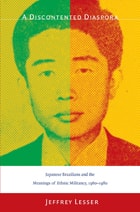
A Discontented Diaspora
Japanese Brazilians and the Meanings of Ethnic Militancy, 1960–1980Jeffrey Lesser
Duke University Press, 2007
Lesser draws on a wide range of sources, including films, oral histories, wanted posters, advertisements, newspapers, photographs, police reports, government records, and diplomatic correspondence. He focuses on two particular cultural arenas—erotic cinema and political militancy—which highlight the ways that Japanese Brazilians imagined themselves to be Brazilian. As he explains, young Nikkei were sure that their participation in these two realms would be recognized for its Brazilianness. They were mistaken. Whether joining banned political movements, training as guerrilla fighters, or acting in erotic films, the subjects of A Discontented Diaspora militantly asserted their Brazilianness only to find that doing so reinforced their minority status.
A Future History of Water
Andrea Ballestero
Duke University Press, 2019

A Grammar of Spoken Brazilian Portuguese
Earl W. Thomas
Vanderbilt University Press, 1987
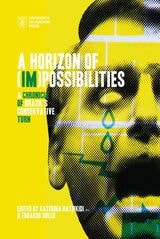
A Horizon of (Im)possibilities
A Chronicle of Brazil’s Conservative TurnEdited by Katerina Hatzikidi and Eduardo Dullo
University of London Press, 2021
Since the shocking 2018 presidential election in Brazil, a growing body of scholarship has attempted to understand the country’s so-called “conservative turn.” A gripping in-depth account of politics and society in Brazil today, this new volume brings together a myriad of different perspectives to help us better understand the political events that have shaken the country in recent years.
Combining ethnographic insights with political science, history, sociology, and anthropology, the interdisciplinary analyses included in A Horizon of (Im)possibilities offer a panoramic view on social and political change in Brazil, spanning temporal and spatial dimensions. Starting with the 2018 presidential election, the contributors discuss the country’s recent—and more distant—past in relation to the present. Pointing to the continuities and disruptions during those years, this volume is an invaluable guide to understanding the limits of political democracy.
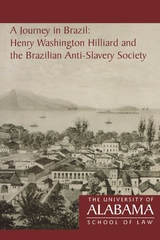
A Journey in Brazil
Henry Washington Hilliard and the Brazilian Anti-Slavery SocietyDavid I. Durham and Paul M. Pruitt Jr.
University of Alabama Press, 2008
Throughout a diverse career that spanned six decades, Hilliard’s personal challenges, moderated by his faith in Divine Providence, eventually allowed him to return to his ideological roots and find a sense of redemption late in life by becoming an unlikely spokesman for the Brazilian emancipation movement through his association with Joaquim Nabuco. In A Journey in Brazil, authors David I. Durham and Paul M. Pruitt Jr. establish context for Hilliard’s beliefs, document his journey in Brazil, and offer a variety of primary documents—selections from newspapers, transcripts of letters, translations of speeches, and other documents that have never before been published.
AboutOccasional Publications of the Bounds Law Library
This collection offers a series of edited documents that contribute to an understanding of the development of legal history, culture, or doctrine. Series editors Paul M. Pruitt Jr. and David I. Durham have selected a variety of materials—a lecture, diaries, letters, speeches, a ledger, commonplace books, a code of ethics, court reports—to illustrate unique examples of legal life and thought.
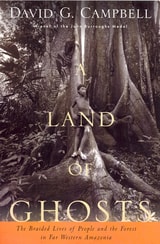
A Land of Ghosts
The Braided Lives of People and the Forest in Far Western AmazoniaCampbell, David G
Rutgers University Press, 2007
For thirty years David G. Campbell has explored the Amazon, an enchanting terrain of forest and river that is home to the greatest diversity of plants and animals to have ever existed, anywhere at any time, during the four-billion-year history of life on Earth.
With great artistic flair, Campbell describes a journey up the Rio Moa, a remote tributary of the Amazon River, 2,800 miles from its mouth. Here he joins three old friends: Arito, a caiman hunter turned paleontologist; Tarzan, a street urchin brought up in a bordello; and Pimentel, a master canoe pilot. They travel together deep into the rainforest and set up camp in order to survey every woody plant on a two-hectare plot of land with about as many tree species as in all of North America.
Campbell introduces us to two remarkable women, Dona Cabocla, a widow who raised six children on that lonely frontier, and Dona Ausira, a Nokini Native American who is the last speaker of her tribe's ages-old language. These pioneers live in a land whose original inhabitants were wiped out by centuries of disease, slavery, and genocide, taking their traditions and languages with them. He explores the intimate relationship between the extinction of native language and the extirpation of biological diversity. "It's hard for a people to love a place that is not defined in words and thus cannot be understood. And it's easy to give away something for which there are no words, something you never knew existed."
In elegant prose that enchants and entrances, Campbell has written an elegy for the Amazon forest and its peoples-for what has become a land of ghosts.
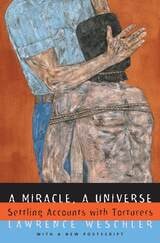
A Miracle, A Universe
Settling Accounts with TorturersLawrence Weschler
University of Chicago Press, 1998
"Disturbing and often enthralling."—New York Times Book Review
"Extraordinarily moving. . . . Weschler writes brilliantly."—Newsday
"Implausible, intricate and dazzling."—Times Literary Supplement
"As Weschler's interviewees told their tales, I paced agitatedly, choked back tears. . . . Weschler narrates these two episodes with skill and tact. . . . An inspiring book."—George Scialabba, Los Angeles Weekly
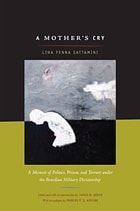
A Mother's Cry
A Memoir of Politics, Prison, and Torture under the Brazilian Military DictatorshipLina Penna Sattamini
Duke University Press, 2010
Lina Penna Sattamini describes her son’s tribulations through letters exchanged among family members, including Marcos, during the year that he was imprisoned. Her narrative is enhanced by Marcos’s account of his arrest, imprisonment, and torture. James N. Green’s introduction provides an overview of the political situation in Brazil, and Latin America more broadly, during that tumultuous era. In the 1990s, some Brazilians began to suggest that it would be best to forget the trauma of that era and move on. Lina Penna Sattamini wrote her memoir as a protest against historical amnesia. First published in Brazil in 2000, A Mother’s Cry is testimonial literature at its best. It conveys the experiences of a family united by love and determination during years of political repression.
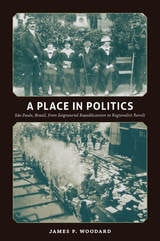
A Place in Politics
São Paulo, Brazil, from Seigneurial Republicanism to Regionalist RevoltJames P. Woodard
Duke University Press, 2009
Woodard’s fine-grained political history proceeds chronologically from the final years of the nineteenth century, when São Paulo’s leaders enjoyed political preeminence within the federal system codified by the Constitution of 1891, through the mass mobilization of 1931–32, in which São Paulo’s people marched, rioted, and eventually took up arms against the national government in what was to be Brazil’s last great regionalist revolt. In taking to the streets in the name of their state, constitutionalism, and the “civilization” that they identified with both, the people of São Paulo were at once expressing their allegiance to elements of a regionally distinct political culture and converging on a broader, more participatory public sphere that had arisen amid the political conflicts of the preceding decades.
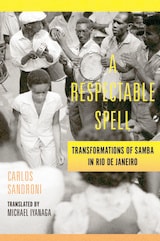
A Respectable Spell
Transformations of Samba in Rio de JaneiroCarlos Sandroni
University of Illinois Press, 2021
Incisive and comprehensive, A Respectable Spell tells the compelling story of an iconic Brazilian musical genre.
Absinthe
World Literature in Translation: Volume 30: Brazil with an SEdited by Julia Irion Martins
Michigan Publishing Services, 2024
The 2024 issue of Absinthe: World Literature in Translation is a celebration of contemporary Brazilian literature, including short fiction and poetry, as well as excerpts from novels and sections from a recently published—but never produced—cinema novo screenplay.
Absinthe 30: Brazil with an ‘S' features English-language translations of work by several acclaimed Brazilian writers, including the likes of Caio Fernando Abreu, Joaquim Pedro de Andrade, Maria Valéria Rezende, and Clarah Averbuck, as well as that of more emergent voices in the Brazilian literary scene, such as Natalia Timerman, Natércia Pontes, and Maria Esther Maciel, among others. Each contribution follows a critical reflection written by its translator, and many of the contributions are accompanied by an original illustration by São Paulo-based artist Thereza Nardelli.
Guest-edited by Júlia Irion Martins, Absinthe 30 sheds light on Brazil’s regional diversity, presenting an image of Brazil beyond samba and soccer. The contents of this issue run the gamut, from deals with the capital-D Devil to encounters with lowercase-d devils on dating apps, from reflections on everyday malaise and COVID-era anxieties to snapshots of life during the AIDS crisis. The issue broadly confronts questions of belonging, mourning, family, gender, and sexuality, with many of its pieces—written between the early-20th century and as recently as 2024—demonstrating a preoccupation with formal experimentation, genre, and literary style.
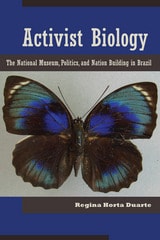
Activist Biology
The National Museum, Politics, and Nation Building in BrazilRegina Horta Duarte
University of Arizona Press, 2016
For the first time in English, Brazil’s leading environmental historian, Regina Horta Duarte, brings us a nuanced analysis of the National Museum of Brazil’s contribution to that country’s formation and history. In Activist Biology, Duarte explores the careers of three of these scientists as they leveraged biology as a strategy for change. Devoted to educational initiatives, they organized exhibits, promoted educational film and radio, wrote books, published science communication magazines, fostered school museums, and authored textbooks for young people. Their approach was transdisciplinary, and their reliance on multimedia formats was pioneering.
Capturing a crucial period in Brazil’s history, this portrait of science as a creative and potentially transformative pathway will intrigue anyone fascinated by environmental history, museums, and the history of science. Duarte skillfully shows how Brazilian science furthered global scientific knowledge in ways that are relevant now more than ever.
African-American Reflections on Brazil's Racial Paradise
David Hellwig
Temple University Press, 1992
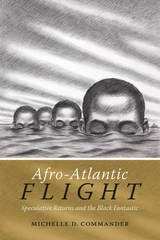
Afro-Atlantic Flight
Speculative Returns and the Black FantasticMichelle D. Commander
Duke University Press, 2017
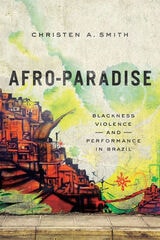
Afro-Paradise
Blackness, Violence, and Performance in BrazilChristen A. Smith
University of Illinois Press, 2016
Christen A. Smith argues that the dialectic of glorified representations of black bodies and subsequent state repression reinforces Brazil's racially hierarchal society. Interpreting the violence as both institutional and performative, Smith follows a grassroots movement and social protest theater troupe in their campaigns against racial violence. As Smith reveals, economies of black pain and suffering form the backdrop for the staged, scripted, and choreographed afro-paradise that dazzles visitors. The work of grassroots organizers exposes this relationship, exploding illusions and asking unwelcome questions about the impact of state violence performed against the still-marginalized mass of Afro-Brazilians.
Based on years of field work, Afro-Paradise is a passionate account of a long-overlooked struggle for life and dignity in contemporary Brazil.
After Life
An Ethnographic NovelTobias Hecht
Duke University Press, 2006
Hecht had originally intended to write a biography of Veríssimo. But with interviews ultimately spanning a decade, he couldn't ignore that much of what he had been told wasn’t, strictly speaking, true. In Veríssimo’s recounting of her life, a sister who had never been born died tragically, while the very same rape that shattered the body and mind of an acquaintance occurred a second time, only with a different victim and several years later. At night, with the anthropologist’s tape recorder in hand, she became her own ethnographer, inventing informants, interviewing herself, and answering in distinct voices.
With truth impossible to disentangle from invention, Hecht followed the lead of Veríssimo, his would-be informant, creating characters, rendering a tale that didn’t happen but that might have, probing at what it means to translate a life into words.
A call and response of truth and invention, mental illness and yearning, After Life is a tribute to and reinterpretation of the Latin American testimonio genre. Desire, melancholy, longing, regret, and the hunger to live beyond the confines of past and future meet in this debut novel by Tobias Hecht.
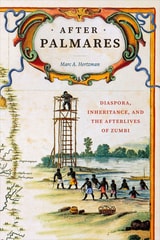
After Palmares
Diaspora, Inheritance, and the Afterlives of ZumbiMarc A. Hertzman
Duke University Press, 2024
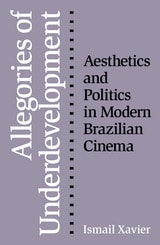
Allegories Of Underdevelopment
Aesthetics and Politics in Modern Brazilian CinemaIsmail Xavier
University of Minnesota Press, 1997
Examines the centrality of Cinema Novo to filmmaking in Brazil.
“A camera in the hand and ideas in the head” was the primary axiom of the young originators of Brazil’s Cinema Novo. This movement of the 1960s and early 1970s overcame technical constraints and produced films on minimal budgets. In Allegories of Underdevelopment, Ismail Xavier examines a number of these films, arguing that they served to represent a nation undergoing a political and social transformation into modernity.
Its best-known voice, filmmaker Glauber Rocha claimed that Cinema Novo was driven by an “aesthetics of hunger.” This scarcity of means demanded new cinematic approaches that eventually gave rise to a legitimate and unique Third World cinema. Xavier stands in the vanguard of scholars presenting and interpreting these revolutionary films—from the masterworks of Rocha to the groundbreaking experiments of Julio Bressane, Rogério Sganzerla, Andrea Tonacci and Arthur Omar—to an English-speaking audience. Focusing on each filmmaker’s use of narrative allegories for the “conservative modernization” Brazil and other nations underwent in the 1960s and 1970s, Xavier asks questions relating to the connection between film and history. He examines the way Cinema Novo transformed Brazil’s cultural memory and charts the controversial roles that Marginal Cinema and Tropicalism played in this process. Among the films he discusses are Black God, White Devil, Land in Anguish, Red Light Bandit, Macunaíma, Antônio das Mortes, The Angel Is Born, and Killed the Family and Went to the Movies.A compelling chronicle of the history of modern Brazilian cinema, Allegories of Underdevelopment brings to light the work of many filmmakers who are virtually unknown in the English-speaking world.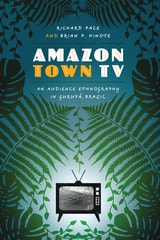
Amazon Town TV
An Audience Ethnography in Gurupá, BrazilBy Richard Pace and Brian P. Hinote
University of Texas Press, 2013
In 1983, anthropologist Richard Pace began his fieldwork in the Amazonian community of Gurupá one year after the first few television sets arrived. On a nightly basis, as the community’s electricity was turned on, he observed crowds of people lining up outside open windows or doors of the few homes possessing TV sets, intent on catching a glimpse of this fascinating novelty. Stoic, mute, and completely absorbed, they stood for hours contemplating every message and image presented. So begins the cultural turning point that is the basis of Amazon Town TV, a rich analysis of Gurupá in the decades during and following the spread of television.
Pace worked with sociologist Brian Hinote to explore the sociocultural implications of television’s introduction in this community long isolated by geographic and communication barriers. They explore how viewers change their daily routines to watch the medium; how viewers accept, miss, ignore, negotiate, and resist media messages; and how television’s influence works within the local cultural context to modify social identities, consumption patterns, and worldviews.
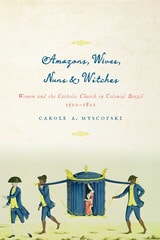
Amazons, Wives, Nuns, and Witches
Women and the Catholic Church in Colonial Brazil, 1500-1822By Carole A. Myscofski
University of Texas Press, 2013
The Roman Catholic church played a dominant role in colonial Brazil, so that women’s lives in the colony were shaped and constrained by the Church’s ideals for pure women, as well as by parallel concepts in the Iberian honor code for women. Records left by Jesuit missionaries, Roman Catholic church officials, and Portuguese Inquisitors make clear that women’s daily lives and their opportunities for marriage, education, and religious practice were sharply circumscribed throughout the colonial period. Yet these same documents also provide evocative glimpses of the religious beliefs and practices that were especially cherished or independently developed by women for their own use, constituting a separate world for wives, mothers, concubines, nuns, and witches.
Drawing on extensive original research in primary manuscript and printed sources from Brazilian libraries and archives, as well as secondary Brazilian historical works, Carole Myscofski proposes to write Brazilian women back into history, to understand how they lived their lives within the society created by the Portuguese imperial government and Luso-Catholic ecclesiastical institutions. Myscofski offers detailed explorations of the Catholic colonial views of the ideal woman, the patterns in women’s education, the religious views on marriage and sexuality, the history of women’s convents and retreat houses, and the development of magical practices among women in that era. One of the few wide-ranging histories of women in colonial Latin America, this book makes a crucial contribution to our knowledge of the early modern Atlantic World.

Amazons
A Love StoryE. J. Levy
University of Missouri Press, 2012
When E.J. Levy arrived in northern Brazil on a fellowship from Yale at the age of 21, she was hoping to help save the Amazon rain forest; she didn’t realize she would soon have to save herself.
Ambiguity and Gender in the New Novel of Brazil and Spanish America
A Comparative AssessmentPayne, Judith A.
University of Iowa Press, 1993
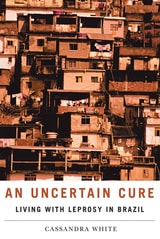
An Uncertain Cure
Living with Leprosy in BrazilWhite, Cassandra
Rutgers University Press, 2008
In An Uncertain Cure, Cassandra White goes deep into the shantytowns of Rio de Janeiro to give a riveting account of the contemporary leprosy experience among poor and working class Brazilians. In this ethnographic treatment of leprosy sufferers, White exposes the web of historical, socioeconomic, religious, and political forces that complicate the path to wellness and perpetuate high rates of infection. Drawing on nearly ten years of research, White shows how anthropological research can contribute to more effective treatment of chronic infectious diseases around the world.
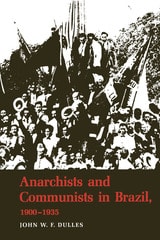
Anarchists and Communists in Brazil, 1900-1935
By John Dulles
University of Texas Press, 1973
In providing a detailed account of the leftist opposition and its bloody repression in Brazil during the Old Republic and the early years of the Vargas regime, John W. F. Dulles gives considerable attention to the labor movement, generally neglected by historians. This study focuses on the formation and activities of anarchists and Communists, the two most important radical groups working within Brazilian labor. Relying on a wide variety of sources, including interviews and personal papers, Dulles supplies information that for the most part is unavailable in English and not easily accessible in Portuguese.
The struggles of Brazilian workers—usually against an alliance of company owners, state and federal troops, and state and federal governments—suffered reverses in 1920 and 1921. These setbacks were cited by Astrogildo Pereira and other admirers of Bolshevism as reasons for the proletariat to forsake anarchism and adhere to the Communist Party, Brazilian Section of the Communist International.
Anarchists and Communists, struggling against each other in the labor unions in the mid 1920’s, joined opposition journalists and politicians in supporting military rebels in a romantic uprising marked by adventure and suffering, jailbreaks and long marches, and death in the backlands.
Slowly, Brazilian Communism gained strength during the latter part of the 1920’s, but 1930 brought the beginnings of failure. Worse for the Party than the government crackdown and the Trotskyite dissidence was the growing attraction of the Aliança Liberal, the oppositionist political movement that brought Getúlio Vargas to power. While workers and Party members flocked to the Aliança in defiance of Party orders, sectarian edicts from Moscow resulted in the expulsion or demotion of the Party’s former leaders and in the condemnation of intellectuals.
Luís Carlos Prestes, “the Cavalier of Hope” who had led the military rebels in the mid-1920’s, turned to Communism—only to find himself not welcome in the Party. Taken to Russia by the Communist International in 1931, he was finally accepted into the Brazilian Party in absentia in 1934. Later that year, misled in Moscow by optimistic reports brought by Brazilian Communists, he agreed to lead a rebellion in Brazil. That decision and its consequences in 1935 were disastrous to Brazilian Communism.
The struggles among anarchists, Stalinists, and Trotskyites in Brazil were reflections of a worldwide struggle. This study discloses and assesses the effects of Moscow policy changes on Communism in Brazil and contributes to an understanding of Moscow’s policies throughout Latin America during this period.
Another Arabesque
Syrian-Lebanese Ethnicity in Neoliberal BrazilJohn Tofik Karam
Temple University Press, 2006

Anxious Pleasures
The Sexual Lives of an Amazonian PeopleThomas Gregor
University of Chicago Press, 1987
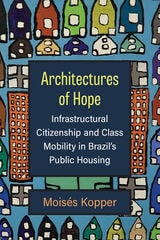
Architectures of Hope
Infrastructural Citizenship and Class Mobility in Brazil's Public HousingMoisés Kopper
University of Michigan Press, 2022
Architectures of Hope examines how communal idealism, electoral politics, and low-income consumer markets made first-time homeownership a reality for millions of low-income Brazilians over the last ten years.
Drawing on a five-year-long ethnography among city planners, architects, street-level bureaucrats, politicians, market and bank representatives, community leaders, and past, present, and future beneficiaries, Moisés Kopper tells the story of how a group of grassroots housing activists rose from oblivion to build a model community. He explores the strategies set forth by housing activists as they waited and hoped for—and eventually secured—homeownership through Minha Casa Minha Vida’s public-private infrastructure. By showing how these efforts coalesced in Porto Alegre—Brazil’s once progressive hotspot—he interrogates the value systems and novel arrangements of power and market that underlie the country’s post-neoliberal project of modern and inclusive development.
By chronicling the making and remaking of material hope in the aftermath of Minha Casa Minha Vida, Architectures of Hope reopens the future as a powerful venue for ethnographic inquiry and urban development.
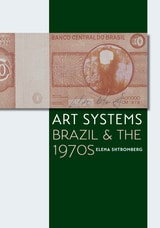
Art Systems
Brazil and the 1970sBy Elena Shtromberg
University of Texas Press, 2016
From currency and maps to heavily censored newspapers and television programming, Art Systems explores visual forms of critique and subversion during the height of Brazilian dictatorship, drawing sometimes surprising connections between artistic production and broader processes of social exchange during a period of authoritarian modernization. Positioning the works beyond the prism of politics, Elena Shtromberg reveals subtle forms of subversion and critique that reinvented the artists’ political terrain.
Analyzing key examples from Cildo Meireles, Antonio Manuel, Artur Barrio, Anna Bella Geiger, Sonia Andrade, Geraldo Mello, and others, the book offers a new framework for theorizing artistic practice. By focusing on the core economic, media, technological, and geographic conditions that circumscribed artistic production during this pivotal era, Shtromberg excavates an array of art systems that played a role in the everyday lives of Brazilians. An examination of the specific historical details of the social systems that were integrated into artistic production, this unique study showcases works that were accessed by audiences far outside the confines of artistic institutions. Proliferating during one of Brazil’s most socially and politically fraught decades, the works—spanning cartography to video art—do not conform to an easily identifiable style, form, material use, or medium. As a result of this breadth, Art Systems gives voice to the multifaceted forces at play in a unique chapter of Latin American cultural history.
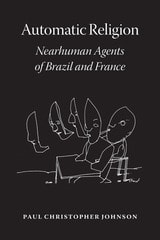
Automatic Religion
Nearhuman Agents of Brazil and FrancePaul Christopher Johnson
University of Chicago Press, 2021
Automatic Religion explores an unlikely series of episodes from the end of the nineteenth century, when crucial ideas related to automatism and, in a different realm, the study of religion were both being born. Paul Christopher Johnson draws on years of archival and ethnographic research in Brazil and France to explore the crucial boundaries being drawn at the time between humans, “nearhumans,” and automata. As agency came to take on a more central place in the philosophical, moral, and legal traditions of the West, certain classes of people were excluded as less-than-human. Tracking the circulation of ideas across the Atlantic, Johnson tests those boundaries, revealing how they were constructed on largely gendered and racial foundations. In the process, he reanimates one of the most mysterious and yet foundational questions in trans-Atlantic thought: what is agency?