74 books match the query 'Kenya' and 5 start with b
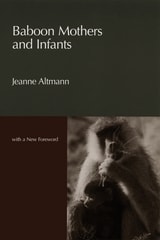
cover of Baboon Mothers and Infants

Baboon Mothers and Infants

Jeanne Altmann

University of Chicago Press, 2001
When it was originally released in 1980, Jeanne Altmann's book transformed the study of maternal primate relationships by focusing on motherhood and infancy within a complex ecological and sociological context. Available again with a new foreword by the author, Baboon Mothers and Infants is a classic book that has been, in its own right, a mother to a generation of influential research and will no doubt provide further inspiration.
[more]
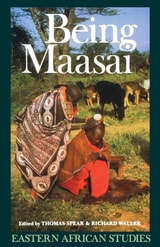
cover of Being Maasai: Ethnicity and Identity In East Africa

Being Maasai

Ethnicity and Identity In East Africa

Thomas Spear

Ohio University Press, 1993

Everyone “knows” the Maasai as proud pastoralists who once dominated the Rift Valley from northern Kenya to central Tanzania.

But many people who identity themselves as Maasai, or who speak Maa, are not pastoralist at all, but farmers and hunters. Over time many different people have “become” something else. And what it means to be Maasai has changed radically over the past several centuries and is still changing today.

This collection by historians, archaeologists, anthropologists and linguists examines how Maasai identity has been created, evoked, contested, and transformed from the time of their earliest settlement in Kenya to the present, as well as raising questions about the nature of ethnicity generally.
[more]
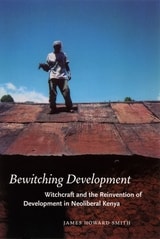
cover of Bewitching Development: Witchcraft and the Reinvention of Development in Neoliberal Kenya

Bewitching Development

Witchcraft and the Reinvention of Development in Neoliberal Kenya

James Howard Smith

University of Chicago Press, 2008

These days, development inspires scant trust in the West. For critics who condemn centralized efforts to plan African societies as latter day imperialism, such plans too closely reflect their roots in colonial rule and neoliberal economics. But proponents of this pessimistic view often ignore how significant this concept has become for Africans themselves. In Bewitching Development, James Howard Smith presents a close ethnographic account of how people in the Taita Hills of Kenya have appropriated and made sense of development thought and practice, focusing on the complex ways that development connects with changing understandings of witchcraft.

Similar to magic, development’s promise of a better world elicits both hope and suspicion from Wataita. Smith shows that the unforeseen changes wrought by development—greater wealth for some, dashed hopes for many more—foster moral debates that Taita people express in occult terms. By carefully chronicling the beliefs and actions of this diverse community—from frustrated youths to nostalgic seniors, duplicitous preachers to thought-provoking witch doctors—BewitchingDevelopment vividly depicts the social life of formerly foreign ideas and practices in postcolonial Africa.

[more]
cover of Black Poachers, White Hunters: A Social History of Hunting in Colonial Kenya

Black Poachers, White Hunters

A Social History of Hunting in Colonial Kenya

Edward I. Steinhart

Ohio University Press, 2006
For centuries, Kenya’s game-laden plains and forests were the rewarding hunting grounds of her native African population. Black Poachers, White Hunters traces the history of hunting there in the colonial era, describing the British attempt to impose the practices and values of nineteenth-century European aristocratic hunts. This both created and enforced an image of African inferiority and subordination. Ultimately conservationists came to claim sovereignty over African wildlife, completing the transformation of indigenous hunters into criminal poachers and seeking to eliminate them altogether from the “sportsman’s paradise” of Kenya.ABOUT THE AUTHOR---Edward I. Steinhart is an associate professor of history at Texas Tech University, Lubbock.
[more]
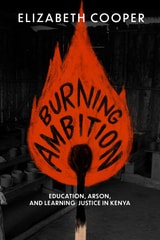
cover of Burning Ambition: Education, Arson, and Learning Justice in Kenya

Burning Ambition

Education, Arson, and Learning Justice in Kenya

Elizabeth Cooper

University of Wisconsin Press, 2022

Burning Ambition explores how young people learn to understand and influence the workings of power and justice in their society. Since 2008, hundreds of secondary schools across Kenya have been targeted with fire by their students. Through an in-depth study of Kenyan secondary students’ use of arson, Elizabeth Cooper asks why. With insightful ethnographic analysis, she shows that these young students deploy arson as moral punishment for perceived injustices and arson proves an effective tactic in their politics from below.
 
Drawing from years of research and a rich array of sources, Cooper accounts for how school fires stoke a national conversation about the limited means for ordinary Kenyans, and especially youth, to peacefully influence the governance of their own lives. Further, Cooper argues that Kenyan students’ actions challenge the existing complacency with the globalized agenda of “education for all,” demonstrating that submissive despondency is not the only possible response to the failed promises of education to transform material and social inequalities.
[more]