Results by title
301 books match the query 'Knowledge' and 8 start with b

Beyond the Veil of Knowledge
Triangulating Security, Democracy, and Academic ScholarshipPiki Ish-Shalom
University of Michigan Press, 2019

Bodies as Evidence
Security, Knowledge, and PowerMark Maguire, Ursula Rao, and Nils Zurawski, editors
Duke University Press, 2018
Contributors. Carolina Alonso-Bejarano, Gregory Feldman, Francisco J. Ferrándiz, Daniel M. Goldstein, Ieva Jusionyte, Amade M’charek, Mark Maguire, Joseph P. Masco, Ursula Rao, Antonius C. G. M. Robben, Joseba Zulaika, Nils Zurawski
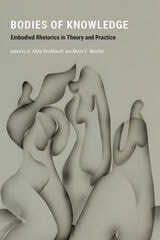
Bodies of Knowledge
Embodied Rhetorics in Theory and PracticeA. Abby Knoblauch
Utah State University Press, 2021
The pieces in Bodies of Knowledge draw explicit attention to the impact of the body on text, the impact of the body in text, the impact of the body as text, and the impact of the body upon textual production. The contributors investigate embodied rhetorics through the lenses of race and ethnicity, gender and sexuality, disability and pain, technologies and ecologies, clothing and performance, and scent, silence, and touch. In doing so, they challenge the (false) notion that academic knowledge—that is, “real” knowledge—is disembodied and therefore presumed white, middle class, cis-het, able-bodied, and male. This collection lays bare how myriad bodies invent, construct, deliver, and experience the processes of knowledge building.
Experts in the field of writing studies provide the necessary theoretical frameworks to better understand productive (and unproductive) uses of embodied rhetorics within the academy and in the larger social realm. To help meet the theoretical and pedagogical needs of the discipline, Bodies of Knowledge addresses embodied rhetorics and embodied writing more broadly though a rich, varied, and intersectional approach. These authors address larger questions around embodiment while considering the various impacts of the body on theories and practices of rhetoric and composition.
Contributors: Scot Barnett, Margaret Booker, Katherine Bridgman, Sara DiCaglio, Kristie S. Fleckenstein, Vyshali Manivannan, Temptaous Mckoy, Julie Myatt, Julie Nelson, Ruth Osorio, Kate Pantelides, Caleb Pendygraft, Nadya Pittendrigh, Kellie Sharp-Hoskins, Anthony Stagliano, Megan Strom

Bodies of Knowledge
Sexuality, Reproduction, and Women's Health in the Second WaveWendy Kline
University of Chicago Press, 2010
Throughout the 1970s and ’80s, women argued that unless they gained access to information about their own bodies, there would be no equality. In Bodies of Knowledge, Wendy Kline considers the ways in which ordinary women worked to position the female body at the center of women’s liberation.
As Kline shows, the struggle to attain this knowledge unified women but also divided them—according to race, class, sexuality, or level of professionalization. Each of the five chapters of Bodies of Knowledge examines a distinct moment or setting of the women’s movement in order to give life to the ideas, expectations, and pitfalls encountered by the advocates of women’s health: the making of Our Bodies, Ourselves (1973); the conflicts surrounding the training and practice of women’s pelvic exams; the emergence of abortion as a feminist issue; the battles over contraceptive regulation at the 1983 Depo-Provera FDA hearings; and the rise of the profession of midwifery. Including an epilogue that considers the experiences of the daughters of 1970s feminists, Bodies of Knowledge is an important contribution to the study of the bodies—that marked the lives—of feminism’s second wave.

Bodies of Knowledge
The Medicalization of Reproduction in GreeceEugenia Georges
Vanderbilt University Press, 2008
Recipient of the 2006 Norman L. and Roselea J. Goldberg Prize for the best project in the area of medicine.
The author, a second-generation Greek American, returned to Greece with her young daughter to do fieldwork over the course of a decade. Focusing on Rhodes, an island that blends continuity with the past and rapid social change in often unexpected ways, she interviewed over a hundred women, doctors, and midwives about issues of reproduction.
The result is a detailed portrait of how a longstanding system of "local" gynecological and obstetrical knowledge under the control of women was rapidly displaced in the the period following World War II, and how the technologically-intensive biomedical model that took its place in turn assumed its own distinctive signature.
Bodies of Knowledge is a vivid ethnographic study of how a presumably globalizing and homogenizing process like medicalization can be reshaped as women and medical experts alike selectively accept or reject new practices and technologies. Georges found, for example, that women in Rhodes have enthusiastically embraced some new technologies, like fetal imaging during pregnancy, but rejected others, like medical contraception. They are also avid consumers of popular childbirth manuals.
This book is the recipient of the 2006 Norman L. and Roselea J. Goldberg Prize for the best project in the area of medicine.

Bridges to Knowledge
Foreign Students in Comparative PerspectiveElinor G. Barber, Philip G. Altbach, and Robert G. Myers
University of Chicago Press, 1984

Broken Nuptials in Shakespeare's Plays
Carol Thomas Neely
University of Illinois Press, 1993

Butterflies & Barbarians
Swiss Missionaries and Systems of Knowledge in South-East AfricaPatrick Harries
Ohio University Press, 2007
Central to this group was Junod, who became a pioneering collector in the fields of entomology and botany. He would later examine African society with the methodology, theories, and confidence of the natural sciences. On the way he came to depend on the skills of African observers and collectors. Out of this work emerged, in three stages between 1898 and 1927, an influential classic in the field of South African anthropology, Life of a South African Tribe.