Results by title
486 books match the query 'LGBTQ+' and 25 start with b
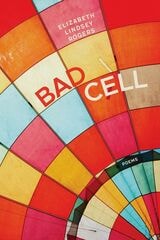
Bad Cell
PoemsElizabeth Lindsey Rogers
Acre Books, 2027
Chronicling reproduction and parenting within a lesbian relationship, this poetry collection reveals both the anxieties and awe inspired by rearing children.
In her frank, vulnerable third book of poetry, Elizabeth Lindsey Rogers considers queer kinship through scientific, cultural, and personal lenses. Bad Cell presents perspectives on family and inheritance that are at once granular and comprehensive. From a pregnant woman being mistaken as a man by a store clerk to some “FAQs Re: Queers & Reproduction” that dispel stereotypes, the collection celebrates the fluidity of gender.
Early in the volume, Rogers addresses the emotional and physical complications of fertility treatment and pregnancy loss, a medical journey that, though harrowing, is gorgeously rendered in taut lyric language. Later, in forms like the abecedarian, definition poem, questionnaire, haibun, and a sonnet crown, the poet looks at how cells themselves—the stuff of life—divide and recombine. As in previous collections, Rogers leans into science-inspired verse, showcasing her talent for turning small-scale mechanics into meaningful metaphors.
The book also supports an openness to neurodivergence in children: “I want to assemble / something that can speak / for everyone,” says the speaker of “Apraxia.” And Rogers does, with the skill of a seasoned poet and essay writer, whose eye for the particularness of the world is encompassing and gives new insight into the experience of parenting: “But I’m not mom, I tell / writers who think I’ve gone soft, given up deeper subjects. As if these wild, / xenogeneic offspring aren’t a full-on wrestle with the deep.”
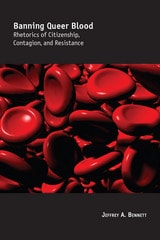
Banning Queer Blood
Rhetorics of Citizenship, Contagion, and ResistanceJeffrey A. Bennett
University of Alabama Press, 2009
In Banning Queer Blood, Jeffrey Bennett frames blood donation as a performance of civic identity closely linked to the meaning of citizenship. However, with the advent of HIV came the notion of blood donation as a potentially dangerous process. Bennett argues that the Food and Drug Administration, by employing images that specifically depict gay men as contagious, has categorized gay men as a menace to the nation. The FDA's ban on blood donation by gay men served to propagate the social misconceptions about gay men that continue to circulate within both the straight and LGBT/Queer communities.
Bennett explores the role of scientific research cited by these banned-blood policies and its disquieting relationship to government agencies, including the FDA. Bennett draws parallels between the FDA's position on homosexuality and the historical precedents of discrimination by government agencies against racial minorities. The author concludes by describing the resistance posed by queer donors, who either lie in order to donate blood or protest discrimination at donation sites, and by calling for these prejudiced policies to be abolished.
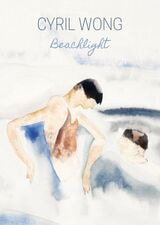
Beachlight
PoemsCyril Wong
Seagull Books, 2023
Beachlight is a sustained poem divided into smaller parts that take on the anonymous voices of those lost and forgotten. A walk along a Singaporean beach transforms into a meditation that bridges an ecological consciousness to the sexual and the homoerotic. The poems in Beachlight expose revelations about the nature of desire, inviting readers to walk beside—and inside—them, reminding us of what we gain when we abandon ourselves to nature and exhorting us to reclaim our primordial connections to the world and to one another.
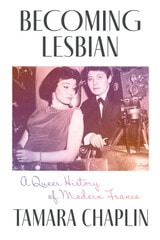
Becoming Lesbian
A Queer History of Modern FranceTamara Chaplin
University of Chicago Press, 2024
In Becoming Lesbian, historian Tamara Chaplin argues that the history of female same-sex intimacy is central to understanding the struggle to control the public sphere. This monumental study draws on undiscovered sources culled from cabaret culture, sexology, police files, radio, TV, photography, the Minitel (an early form of internet), and private letters, as well as over one hundred interviews filmed by the author. Becoming Lesbian demonstrates how women of diverse classes and races came to define themselves as lesbian and used public spaces and public media to exert claims on the world around them in ways that made possible new forms of gendered and sexual citizenship. Chaplin begins in the sapphic cabarets of interwar Paris. These venues, she shows, exploited female same-sex desire for profit while simultaneously launching an incipient queer female counterpublic. Refuting claims that World War II destroyed this female world, Chaplin reveals instead how prewar sapphic subcultures flourished in the postwar period, laying crucial groundwork for the politicization of lesbian identity into the twenty-first century.
Becoming Lesbian is filled with colorful vignettes about female cabaret owners, singers, TV personalities, writers, and activists, all brought to life to make larger points about rights, belonging, and citizenship. As a history of lesbianism, this book represents a major contribution to modern French history, queer studies, and genealogies of the media and its publics.
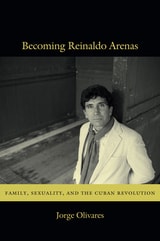
Becoming Reinaldo Arenas
Family, Sexuality, and The Cuban RevolutionJorge Olivares
Duke University Press, 2013
Through insightful close readings of a selection of Arenas's works, including unpublished manuscripts and correspondence, Olivares examines the writer's personal, political, and artistic trajectory, focusing on his portrayals of family, sexuality, exile, and nostalgia. He documents Arenas's critical engagement with cultural and political developments in revolutionary Cuba and investigates the ways in which Arenas challenged literary and national norms. Olivares's analysis shows how Arenas drew on his life experiences to offer revealing perspectives on the Cuban Revolution, the struggles of Cuban exiles, and the politics of sexuality.
Before Intimacy
Asocial Sexuality in Early Modern EnglandDaniel Juan Gil
University of Minnesota Press, 2006
Engaging the poems of Wyatt, Sidney’s Astrophil and Stella, Spenser’s Amoretti and The Faerie Queene, and Shakespeare’s Troilus and Cressida and the Sonnets, Gil demonstrates how sexuality was conceived as a relationship system inhabited by men and women interchangeably—set apart from the “norm” and not institutionalized in a private or domestic realm. Going beyond the sodomy-as-transgression analytic, he asserts the existence of socially inconsequential sexual bonds while recognizing the pleasurable effects of violating the supposed traditional modes of bonding and ideals of universal humanity and social hierarchy.
Celebrating the ability of corporeal emotions to interpret connections between people who share nothing in terms of societal structure, Before Intimacy shows how these works of early modern literature provide a discourse of sexuality that strives to understand status differences in erotic contexts and thereby question key assumptions of modernity.
Daniel Juan Gil is assistant professor of English at TCU.
Beijing
A NovelPhilip Gambone
University of Wisconsin Press, 2003
Escaping his ghosts, AIDS widower David Masiello accepts a one-year position at a Western medical clinic in Beijing. Lonely but excited, he sets out to explore the city—both its bustling street life and its clandestine gay subculture.
David chronicles his adventures in China as he wrestles with cultural dislocation, loneliness, and sexual and spiritual longing. After a series of both comic and poignant encounters with gay Chinese men, he meets Bosheng, a handsome young artist. Though the attraction is strong, a difficult courtship ensues, during which Bosheng returns to his ancestral village to marry the girl his parents have chosen for him. Eventually, and quite unexpectedly, David and Bosheng reconnect and share an idyllic spring together. As the year ends, David must decide whether to say goodbye or face the uncertainties of a long-distance relationship.
Gambone’s novel is peopled with a host of wonderfully memorable characters: Owen, David’s forthright best friend back home; Auntie Chen, the clinic’s office mom, who wants to fix David up with a girlfriend; Stewart, David’s Beijing roommate, a graduate student doing research on Peking opera; Jiantao and Guoyang, two lovers who lecture David on the fleeting quality of American romance; and Tyson, the Australian doctor with a Chinese girlfriend, who hopes to teach David that love doesn’t need any explanations or justifications.
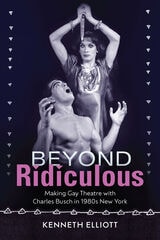
Beyond Ridiculous
Making Gay Theatre with Charles Busch in 1980s New YorkKenneth Elliott
University of Iowa Press, 2023
In Beyond Ridiculous, Elliott narrates in first-person the company’s Cinderella tale of fun, heartbreak, and dishy drama. At the center of the book is a young Charles Busch, an unforgettable personality fighting to be seen, be heard, and express his unique style as a writer-performer in plays such as Psycho Beach Party and The Lady in Question. The tragedy of AIDS among treasured friends in the company, the struggle for mainstream acceptance of LGBTQ+ theatre during the reign of President Ronald Reagan, and the exploration of new ways of being a gay theatre artist make the book a bittersweet and joyous ride.
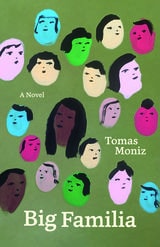
Big Familia
A NovelTomas Moniz
Acre Books, 2019
Upon the unexpected death of one of the bar’s regulars, Juan is sent reeling, and a series of upheavals follow as he both seeks and spurns intimacy, pondering the legacy of distant parents and a failed marriage and grappling with his sexuality—all the while cycling and dating, drinking at Nicks Lounge, and parenting a determined and defiant child-become-woman.
When his incarcerated father dies and Stella reveals she’s pregnant, Juan is forced to examine the emotional bonds that both hold and hinder him, to reassess his ideas of commitment, of friendship, of love. His encounters with various characters—his mother, his ex-wife, a middle-aged punker, an aspiring acupuncturist, a dapper veteran—lead Juan to the realization that he himself must change to thrive.
This is a story of making family and making mistakes, of rending and of mending. As a Latinx queer father with a mixed-race daughter, Juan exemplifies the ways identity connects and divides us. With wit, insight, and tenderness, Big Familia explores the complexities of desire, devotion, and the mysteries of the heart.
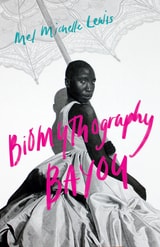
Biomythography Bayou
Mel Michelle Lewis
Bucknell University Press, 2025
Biomythography Bayou is more than just a book of memoir; it is a ritual for conjuring queer embodied knowledges and decolonial perspectives. Blending a rich gumbo of genres—from ingredients such as praise songs, folk tales, recipes, incantations, and invocations—it also includes a multimedia component, with “bayou tableau” images and audio recording links. Inspired by such writers as Audre Lorde, Zora Neale Hurston, and Octavia Butler, Mel Michelle Lewis draws from the well of her ancestors in order to chart a course toward healing Afrofutures. Showcasing the nature, folklore, dialect, foodways, music, and art of the Gulf’s coastal communities, Lewis finds poetic ways to celebrate their power and wisdom.
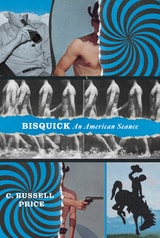
Bisquick
An American SeanceC. Russell Price
Northwestern University Press, 2026
A breathtaking gallop through spectral planes, grief, and ghosts
Grief is a rodeo filled with ghost clowns. In Bisquick: An American Seance, C. Russell Price explores spiritualism and the fetishization of the Midwest cowboy aesthetic, creating a vibrant world inhabited by three unforgettable characters: the speaker, a traumatized eco-anarchist working through grief; Ghost Cowboy, a ghost dream boyfriend hell-bent on hunting predators of the poor; and Bisquick, a blue ghost horse who just wants to dance. This spectral trio boogies, copulates, and fights against a system that ghosted them long before the demise of their physical bodies, determined to stay saddled to their dreams. Price gallops through the widths of time, the geography of the United States, the spectral plane, and the leather BDSM scene as they attempt to answer this provocative collection’s central question: If the dead could talk, wouldn’t they have something better to say?
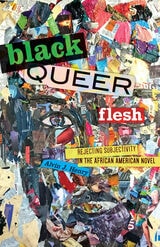
Black Queer Flesh
Rejecting Subjectivity in the African American NovelAlvin J. Henry
University of Minnesota Press, 2021
A groundbreaking examination of how twentieth-century African American writers use queer characters to challenge and ultimately reject subjectivity
Black Queer Flesh reinterprets key African American novels from the Harlem Renaissance to Black Modernism to contemporary literature, showing how authors have imagined a new model of Black queer selfhood. African American authors blame liberal humanism’s model of subjectivity for double consciousness and find that liberal humanism’s celebration of individual autonomy and agency is a way of disciplining Black queer lives. These authors thus reject subjectivity in search of a new mode of the self that Alvin J. Henry names “Black queer flesh”—a model of selfhood that is collective, plural, fluctuating, and deeply connected to the Black queer past.
Henry begins with early twentieth-century authors such as Jessie Redmon Fauset and James Weldon Johnson. These authors adapted the Bildungsroman, the novel of self-formation, to show African Americans gaining freedom and agency by becoming a liberal, autonomous subjects. These authors, however, discovered that the promise of liberal autonomy held out by the Bildungsroman was yet another tool of antiblack racism. As a result, they tentatively experimented with repurposing the Bildungsroman to throw off subjectivity and its attendant double consciousness. In contrast, Nella Larsen, Henry shows, was the first author to fully reject subjectivity. In Quicksand and Passing, Larsen invented a new genre showing her queer characters—characters whose queerness already positioned them on the margins of subjectivity—escaping subjectivity altogether. Using Ralph Ellison’s archival drafts, Henry then powerfully rereads Invisible Man, revealing that the protagonist as a queer, disabled character taught by the novel’s many other queer, disabled characters to likewise seek a selfhood beyond subjectivity. Although Larsen and Ellison sketch glimpses of this selfhood beyond subjectivity, only Saidiya Hartman’s Wayward Lives, Beautiful Experiments shows a protagonist fully inhabiting Black queer flesh—a new mode of selfhood that is collective, plural, always evolving, and no longer alienated from the black past.
Black Queer Flesh is an original and necessary contribution to Black literary studies, offering new ways to understand and appreciate the canonical texts and far more.
Black Queer Freedom
Spaces of Injury and Paths of DesireGerShun Avilez
University of Illinois Press, 2020
Blood Loss
A Love Story of AIDS, Activism, and ArtKeiko Lane
Duke University Press, 2024
Blood of Mugwump
A Tiresian Tale of IncestDoug Rice
University of Alabama Press, 1996

Bloom
A Transgender MemoirShane A. McCammon
University of Utah Press, 2027
Blue Roses
Tennessee Williams, Memory, and the Queer ArchiveDaniel Ciba
University of Iowa Press, 2026
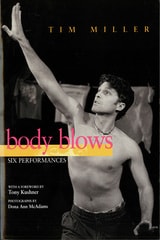
Body Blows
Six PerformancesTim Miller
University of Wisconsin Press, 2002
Hailed for his humor and passion, the internationally acclaimed performance artist Tim Miller has delighted, shocked, and emboldened audiences all over the world. Body Blows gathers six of Miller’s best-known performances that chart the sexual, spiritual, and political topography of his identity as a gay man: Some Golden States, Stretch Marks, My Queer Body, Naked Breath, Fruit Cocktail, and Glory Box. In Body Blows, Tim Miller leaps from the stage to the page, as each performance script is illustrated with striking photographs and accompanied by Miller’s notes and comment.
This book explores the tangible body blows—taken and given—of Miller’s life and times as explored in his performances: the queer-basher’s blow, the sweet blowing breath of a lover, the below-the-belt blow of HIV/AIDS, the psychic blows from a society that disrespects the humanity of lesbian and gay relationships. Miller’s performances are full of the put-up-your-dukes and stand-your-ground of such day-to-day blows that make up being gay in America
Body My House
May Swenson's Work and Lifeedited by Paul Crumbley and Patricia M. Gantt
Utah State University Press, 2000
The first collection of critical essays on May Swenson and her literary universe, Body My House initiates an academic conversation about an unquestionably major poet of the middle and late twentienth century. Includes many previously unpublished Swenson poems.
Essays here address the breadth of Swenson's literary corpus and offer varied scholarly approaches to it. They reference Swenson manuscripts---poems, letters, diaries, and other prose---some of which have not been widely available before. Chapters focus on Swenson's work as a nature writer; the literary and social contexts of her writing; her national and international acclaim; her work as a translator; associations with other poets and writers (Bishop, Moore, and others); her creative process; and her profound explorations of gender and sexuality. The first full volume of scholarship on May Swenson, Body My House suggests an ambitious agenda for further work.
Body Problems
What Intersex Priest Sally Gross Teaches Us About Embodiment, Justice, and BelongingM. Wolff
Duke University Press, 2025
Boyish
PoemsBrody Parrish Craig
Omnidawn, 2021
Each page builds tension that then shatters, bringing us into the interior of a story. Brody Parrish Craig invites us to carve out a space and to find ourselves carried over the gravel along the creek. Moving through the subconscious and embodied desire, these poems are rich with formal play, twisting language in dense sonnets. Landscapes of the city’s dystopia meet the queer pastoral, where conservation often means knowing what must be burned down.
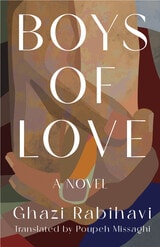
Boys of Love
Ghazi Rabihavi
University of Wisconsin Press, 2024
In Boys of Love, Ghazi Rabihavi offers both a universal story about the ups and downs of all relationships and a clear-eyed portrait of same-sex desire in Iran, where homosexuality remains punishable by death. Banned in Iran, the novel was initially published in Farsi in the UK, then translated into French and shortlisted for the Prix Médicis étranger. Rabihavi avoids both lasciviousness and exoticism in depicting a deep love between male characters living through the Iranian Cultural Revolution. Ultimately, this story challenges preconceived notions about marginalized communities in the Middle East.
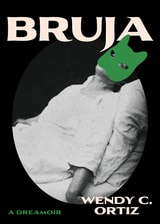
Bruja
A DreamoirWendy C. Ortiz
Northwestern University Press, 2025
Dubbed a “dreamoir,” Bruja is a bold and harrowing journey through the dream worlds of Wendy C. Ortiz. Sister memoir to Hollywood Notebook, it catalogs the happenings of the night: strange visions of the past warped by present-day inklings; animals running loose, never where they should be; familiar nature and architecture made malleable and new. Ortiz’s subconscious is bared in full on these pages as the author interrogates her histories. We bravely adventure into new literary form, walking the parallel plane of Ortiz’s waking life alongside her. Where the self is anchored in the deepest recesses of the mind, Ortiz invites us to push the boundaries of the subconscious and enter into the dreamoir.
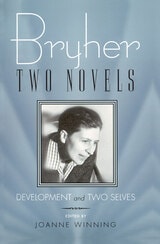
Bryher
Two Novels: Development And Two SelvesUniversity of Wisconsin Press, 2000
Bryher (born Annie Winifred Ellerman) is perhaps best known today as the lifelong partner of the poet H.D. She was, however, a central figure in modernist and avant-garde cultural experimentation in the early twentieth century; a prolific producer of poetry, novels, autobiography, and criticism; and an intimate and patron of such modernist artists as Gertrude Stein, Marianne Moore, and Dorothy Richardson. Bryher’s own path-breaking writing has remained largely neglected, long out of print, and inaccessible to those interested in her oeuvre. Now, for the first time since their original publication in the early 1920s, two of Bryher's pioneering works of fictionalized autobiography, titled Development and Two Selves, are reprinted in one volume for a new audience of readers, scholars, and critics.
Blending poetry, prose, and autobiographical details, Development and Two Selves together constitute a compelling bildungsroman that is among the first ever to follow a young woman's process of coming out. Through the fictionalized character Nancy, the novels trace Bryher’s life through her childhood and young adulthood, giving the reader an account of the development of a unique lesbian, feminist, and modernist consciousness. Development and Two Selves recover significant work by one of the first experimenters of the modernist movement and are a welcome reintroduction of the enigmatic Bryher.
Building the Perfect Animal
New and Selected PoemsC. Dale Young
Four Way Books, 2025