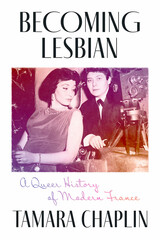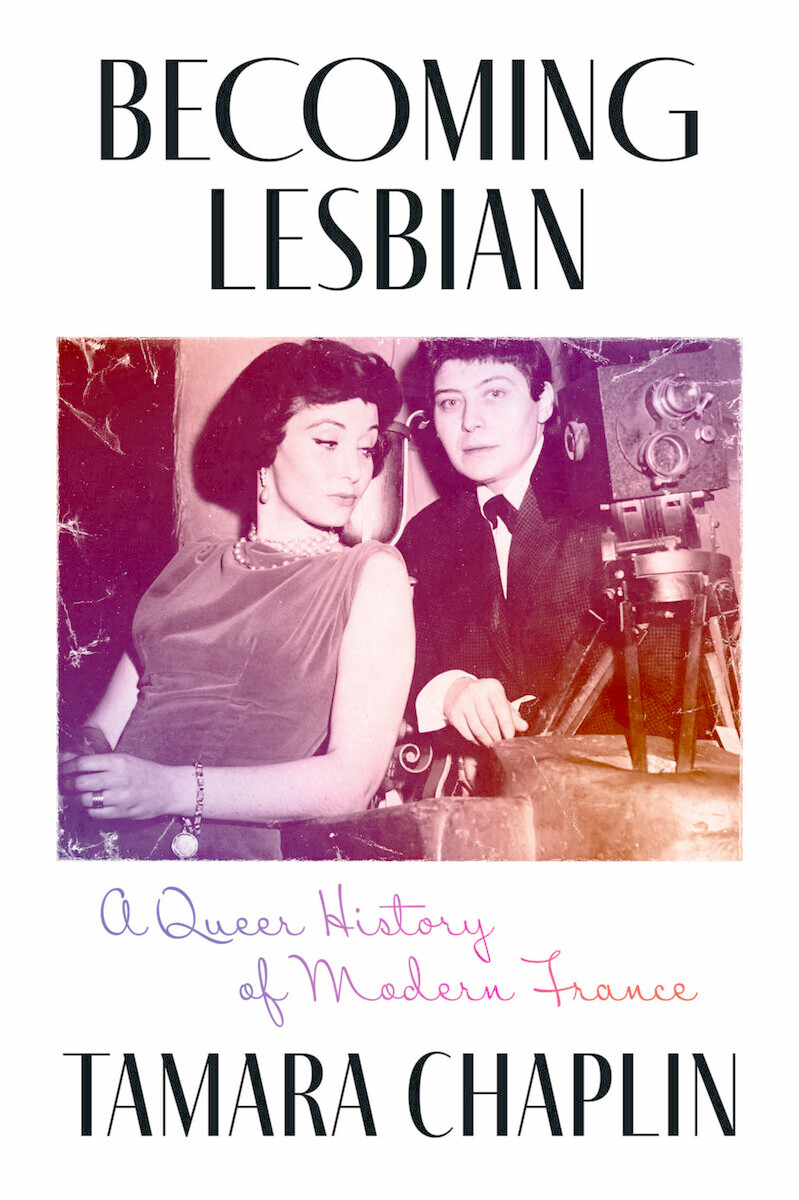
Becoming Lesbian: A Queer History of Modern France
University of Chicago Press, 2024
Cloth: 978-0-226-71098-3 | Paper: 978-0-226-83655-3 | eISBN: 978-0-226-83654-6 (all)
Library of Congress Classification HQ75.6.F82P37 2024
Dewey Decimal Classification 306.766309440904
Cloth: 978-0-226-71098-3 | Paper: 978-0-226-83655-3 | eISBN: 978-0-226-83654-6 (all)
Library of Congress Classification HQ75.6.F82P37 2024
Dewey Decimal Classification 306.766309440904
ABOUT THIS BOOK | AUTHOR BIOGRAPHY | REVIEWS | TOC | REQUEST ACCESSIBLE FILE
ABOUT THIS BOOK
A landmark analysis of how a marginalized subculture used modern media to transform public attitudes toward sexual desire.
In Becoming Lesbian, historian Tamara Chaplin argues that the history of female same-sex intimacy is central to understanding the struggle to control the public sphere. This monumental study draws on undiscovered sources culled from cabaret culture, sexology, police files, radio, TV, photography, the Minitel (an early form of internet), and private letters, as well as over one hundred interviews filmed by the author. Becoming Lesbian demonstrates how women of diverse classes and races came to define themselves as lesbian and used public spaces and public media to exert claims on the world around them in ways that made possible new forms of gendered and sexual citizenship. Chaplin begins in the sapphic cabarets of interwar Paris. These venues, she shows, exploited female same-sex desire for profit while simultaneously launching an incipient queer female counterpublic. Refuting claims that World War II destroyed this female world, Chaplin reveals instead how prewar sapphic subcultures flourished in the postwar period, laying crucial groundwork for the politicization of lesbian identity into the twenty-first century.
Becoming Lesbian is filled with colorful vignettes about female cabaret owners, singers, TV personalities, writers, and activists, all brought to life to make larger points about rights, belonging, and citizenship. As a history of lesbianism, this book represents a major contribution to modern French history, queer studies, and genealogies of the media and its publics.
See other books on: Lesbian feminism | Lesbianism | Lesbians | Modern France | Queer History
See other titles from University of Chicago Press