Results by title
135 books match the query 'Landscape' and 5 start with b
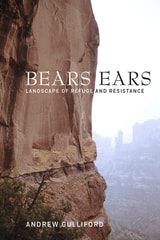
Bears Ears
Landscape of Refuge and ResistanceAndrew Gulliford
University of Utah Press, 2022
Gulliford’s engaging narrative explains prehistoric Pueblo villages and cliff dwellings, Navajo and Ute history, stories of Mormon families who arrived by wagon train in 1880, impacts of the Atomic Age, uranium mining, and the pothunting and looting of Native graves that inspired the passage of the Antiquities Act over a century ago. The book describes how the national monument came about and its deep significance to five native tribes.
Bears Ears National Monument is a bellwether for public land issues in the American West. Its recognition will be relevant for years to come.

Body as Landscape, Love as Intoxication
Conceptual Metaphors in the Song of SongsBrian P. Gault
SBL Press, 2019
Explore metaphors in the exquisite and enigmatic poetry of Song of Songs
One of the chief difficulties in interpreting the Song's lyrics is the unusual imagery used to depict the lovers' bodies. Why is the maiden's hair compared to a flock of goats (4:1), the man’s cheeks likened to garden beds of spice (5:13), and the eyes of both lovers described as doves (4:1; 5:12)? While scholars speculate on the significance of these images, a systematic inquiry into the Song's body metaphors is curiously absent. Based on insights from cognitive linguistics, this study incorporates biblical and comparative data to uncover the meaning of these metaphors surveying literature in the eastern Mediterranean (and beyond) that shares a similar form (poetry) and theme (love). Gault presents an interpretation of the Song's body imagery that sheds light on the perception of beauty in Israel and its relationship to surrounding cultures.
Features
- Exploration of the Song's use of universal themes and culturally specific variations
- Discussion of the Song's literary structure and unity
Brother Is a Street Musician
Viewing the Landscape of Modernity Through Korean Popular MusicZhang Eujeong
Rutgers University Press, 2026
The history of the Korean popular music industry dates back a century before the beginnings of K-Pop, to when the Korean peninsula was still under Japanese rule. Though Koreans didn’t have an independent country, they were still able to use recorded music to assert a distinct cultural identity.
Brother Is a Street Musician chronicles the development of Korean popular music over the first half of the twentieth century, examining both industry trends and talented composers and performers like Nam Insu and Yi Nanyǒng. Drawing from rare archives of gramophone records and lyric books, musicologist Zhang Eujeong shows how Korean musicians drew from folk traditions to create totally new genres, ranging from comic songs to Western-influenced jazz records. She also includes English translations and detailed analyses of lyrics from some of the era’s most popular songs.
A landmark study of Korean music, now available in English for the first time, Brother Is a Street Musician tells the inspiring story of how a colonized people developed their own form of popular music, planting the seeds for an industry that would grow to export Korean culture around the world.
Building Taliesin
Frank Lloyd Wright’s Home of Love and LossRon McCrea
Wisconsin Historical Society Press, 2012
Building Victorian Boston
The Architecture of Gridley J.F. BryantRoger G. Reed
University of Massachusetts Press, 2007
In Building Victorian Boston, Roger Reed focuses on representative projects by Bryant, presenting them in a chronological narrative that both illuminates the trajectory of his career and creates a portrait of the profession of architecture during a defining period of New England history. Bryant designed more major buildings in Boston from 1840 to 1880 than any other architect. He also undertook commissions throughout New
England, especially in towns linked to Boston by newly constructed railroad lines. In many ways, his practice presaged aspects of modern architectural firms. His ability to work with a variety of designers, his expertise in construction management, and his exceptional talent for self-promotion all contributed to his success. Although by the time of his death his work was no longer fashionable, newspaper accounts noted the passing of the "Famed Bostonian" and "Great Builder" whose career had had such a dramatic impact on the face of the city.
For this volume, Reed has tracked down hundreds of Bryant's drawings as well as specifications, letters, newspaper articles, published renderings, and historical photographs. These materials are amply represented in this book, the definitive study of a quintessential Victorian architect.