Results by title
1917 books match the query 'Law' and 62 start with b

BEING PROFILED
COGITAS ERGO SUM: 10 Years of Profiling the European CitizenEmre Bayamlioglu
Amsterdam University Press, 2019
Baby Ninth Amendments
How Americans Embraced Unenumerated Rights and Why It MattersAnthony B. Sanders
University of Michigan Press, 2023
Listing every right that a constitution should protect is hard. American constitution drafters often list a few famous rights such as freedom of speech, protection against unreasonable searches and seizures, and free exercise of religion, plus a handful of others. However, we do not need to enumerate every liberty because there is another way to protect them: an "etcetera clause." It states that there are other rights beyond those specifically listed: "The enumeration in the Constitution, of certain rights, shall not be construed to deny or disparage others retained by the people." Yet scholars are divided on whether the Ninth Amendment itself actually does protect unenumerated rights, and the Supreme Court has almost entirely ignored it. Regardless of what the Ninth Amendment means, two-thirds of state constitutions have equivalent provisions, or "Baby Ninth Amendments," worded similarly to the Ninth Amendment.
This book is the story of how the "Baby Ninths" came to be and what they mean. Unlike the controversy surrounding the Ninth Amendment, the meaning of the Baby Ninths is straightforward: they protect individual rights that are not otherwise enumerated. They are an "etcetera, etcetera" at the end of a bill of rights. This book argues that state judges should do their duty and live up to their own constitutions to protect the rights "retained by the people" that these "etcetera clauses" are designed to guarantee. The fact that Americans have adopted these provisions so many times in so many states demonstrates that unenumerated rights are not only protected by state constitutions, but that they are popular. Unenumerated rights are not a weird exception to American constitutional law. They are at the center of it. We should start treating constitutions accordingly.
Baby Ninth Amendments
How Americans Embraced Unenumerated Rights and Why It MattersAnthony B. Sanders
University of Michigan Press, 2023
Listing every right that a constitution should protect is hard. American constitution drafters often list a few famous rights such as freedom of speech, protection against unreasonable searches and seizures, and free exercise of religion, plus a handful of others. However, we do not need to enumerate every liberty because there is another way to protect them: an "etcetera clause." It states that there are other rights beyond those specifically listed: "The enumeration in the Constitution, of certain rights, shall not be construed to deny or disparage others retained by the people." Yet scholars are divided on whether the Ninth Amendment itself actually does protect unenumerated rights, and the Supreme Court has almost entirely ignored it. Regardless of what the Ninth Amendment means, two-thirds of state constitutions have equivalent provisions, or "Baby Ninth Amendments," worded similarly to the Ninth Amendment.
This book is the story of how the "Baby Ninths" came to be and what they mean. Unlike the controversy surrounding the Ninth Amendment, the meaning of the Baby Ninths is straightforward: they protect individual rights that are not otherwise enumerated. They are an "etcetera, etcetera" at the end of a bill of rights. This book argues that state judges should do their duty and live up to their own constitutions to protect the rights "retained by the people" that these "etcetera clauses" are designed to guarantee. The fact that Americans have adopted these provisions so many times in so many states demonstrates that unenumerated rights are not only protected by state constitutions, but that they are popular. Unenumerated rights are not a weird exception to American constitutional law. They are at the center of it. We should start treating constitutions accordingly.
Baby You're a Rich Man
Suing the Beatles for Fun and ProfitStan Soocher
University Press of New England, 2015
Backlash Against the ADA
Reinterpreting Disability RightsLinda Hamilton Krieger, Editor
University of Michigan Press, 2003
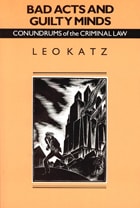
Bad Acts and Guilty Minds
Conundrums of the Criminal LawLeo Katz
University of Chicago Press, 1987
"Bad Acts and Guilty Minds . . . revives the mind, it challenges superficial analyses, it reminds us that underlying the vast body of statutory and case law, there is a rationale founded in basic notions of fairness and reason. . . . It will help lawyers to better serve their clients and the society that permits attorneys to hang out their shingles."—Edward N. Costikyan, New York Times Book Review
Bad Boys
Public Schools in the Making of Black MasculinityAnn Arnett Ferguson
University of Michigan Press, 2020
Bad News Travels Fast
The Telegraph, Libel, and Press Freedom in the Progressive EraPatrick C. File
University of Massachusetts Press, 2019
This largely forgotten era in the development of American libel law provides crucial historical context for contemporary debates about the news media, public discourse, and the role of a free press. File argues that the legal thinking surrounding these cases laid the groundwork for the more friendly libel standards the press now enjoys and helped to establish today's regulations of press freedom amid the promise and peril of high-speed communication technology.
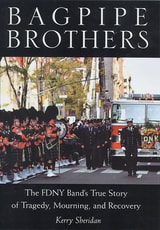
Bagpipe Brothers
The FDNY Band's True Story of Tragedy, Mourning, and RecoveryKerry Sheridan
Rutgers University Press, 2004
Bagpipe Brothers tells the unforgettable story of four firefighters in the band, who struggled to bring peace to their families and themselves while searching for the dead, coping with the endless round of funerals, and rethinking the meaning of faith. Their experiences illustrate the grief and recovery of the nation in the aftermath of the terrorist attacks.
Kerry Sheridan has written the first book to cover the ordeal of the massive number of funerals, the importance of recovering bodies in Irish American culture, and the bagpiping ritual, both traditional and modern.
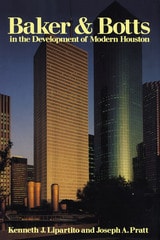
Baker & Botts in the Development of Modern Houston
By Kenneth J. Lipartito and Joseph A. Pratt
University of Texas Press, 1991
As counsel for Pennzoil's successful effort to recover billions of dollars in damages from Texaco over the acquisition of Getty Oil Company, the Baker & Botts law firm of Houston, Texas, achieved wide public recognition in the 1980s. But among its peers in the legal and corporate worlds, Baker & Botts has for more than a century held a preeminent position, handling the legal affairs of such blue-chip clients as the Southern Pacific Railroad, Houston Lighting & Power Company, Rice University, Texas Commerce Bank, and Tenneco. In this study, Kenneth J. Lipartito and Joseph A. Pratt chronicle the history of Baker & Botts, placing particular emphasis on the firm's role in Houston's economic development.
Founded in 1840, Baker & Botts literally grew up with Houston. The authors chart its evolution from a nineteenth-century regional firm that represented eastern-based corporations moving into Texas to a twentieth-century national firm with clients throughout the world. They honestly discuss the criticisms that Baker & Botts has faced as an advocate of big business. But they also identify the important impact that corporate law firms of this type have on business reorganization and government regulation. As the authors demonstrate in this case study, law firms throughout the twentieth century have helped to shape public policy in these critical areas.
Always prominent in the community, and with prominent connections (former Secretary of State James A. Baker III is the great-grandson of the original Baker), the Baker & Botts law firm belongs in any history of the development of Houston and the Southwest.
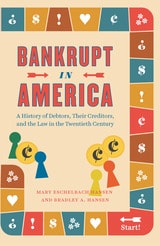
Bankrupt in America
A History of Debtors, Their Creditors, and the Law in the Twentieth CenturyMary Eschelbach Hansen and Bradley A. Hansen
University of Chicago Press, 2020
Interweaving careful legal history and rigorous economic analysis, Bankrupt in America is the first work to trace how bankruptcy was transformed from an intermittently used constitutional provision, to an indispensable tool for business, to a central element of the social safety net for ordinary Americans. To do this, the authors track federal bankruptcy law, as well as related state and federal laws, examining the interaction between changes in the laws and changes in how people in each state used the bankruptcy law. In this thorough investigation, Hansen and Hansen reach novel conclusions about the causes and consequences of bankruptcy, adding nuance to the discussion of the relationship between bankruptcy rates and economic performance.
Bankruptcy's Universal Pragmatist
Festschrift in Honor of Jay WestbrookChristoph G. Paulus and John A. E. Pottow, Editors
Michigan Publishing Services, 2021
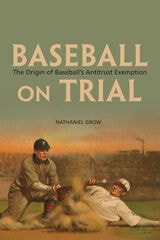
Baseball on Trial
The Origin of Baseball's Antitrust ExemptionNathaniel Grow
University of Illinois Press, 2014
Currently a billion dollar enterprise, professional baseball teams crisscross the country while the games are broadcast via radio, television, and internet coast to coast. The sheer scope of this activity would seem to embody the phrase "interstate commerce." Yet baseball is the only professional sport--indeed the sole industry--in the United States that currently benefits from a judicially constructed antitrust immunity. How could this be?
Drawing upon recently released documents from the National Baseball Hall of Fame, Grow analyzes how the Supreme Court reached this seemingly peculiar result by tracing the Federal Baseball litigation from its roots in 1914 to its resolution in 1922, in the process uncovering significant new details about the proceedings. Grow observes that while interstate commerce was measured at the time by the exchange of tangible goods, baseball teams in the 1910s merely provided live entertainment to their fans, while radio was a fledgling technology that had little impact on the sport. The book ultimately concludes that, despite the frequent criticism of the opinion, the Supreme Court's decision was consistent with the conditions and legal climate of the early twentieth century.
Battering States
The Politics of Domestic Violence in IsraelMadelaine Adelman
Vanderbilt University Press, 2017
The politics of domestic violence create novel entry points to understanding how, although women may be vulnerable to gender-based violence, they do not necessarily share the same kind of belonging to the state. This means that markers of identity and power, such as gender, nationality, ethnicity, religion and religiosity, and socio-economic and geographic location, matter when it comes to safety and pathways to justice.
The study centers on Israel, where a number of factors bring connections between the cultural politics of the state and domestic violence into stark relief: the presence of a contentious multinational and multiethnic population; competing and overlapping sets of religious and civil laws; a growing gap between the wealthy and the poor; and the dominant presence of a security state in people's everyday lives. The exact combination of these factors is unique to Israel, but they are typical of states with a diverse population in a time of globalization. In this way, the example of Israel offers insights wherever the political and personal impinge on one another.
Be Not Afraid
A Southern Journey Through Law, Liberty, and Civil RightsJack Drake
University of Alabama Press, 2026
A civil rights attorney’s unflinching memoir about the fight against segregation and systemic racism through landmark legal battles in Alabama
Be Not Afraid: A Southern Journey Through Law, Liberty, and Civil Rights is a timely and unflinching memoir from civil rights attorney Jack Drake, who has spent decades on the front lines of Alabama’s legal battles for racial justice. Raised in a segregated community in Gardendale, Alabama, Drake came of age during the civil rights movement and became a pivotal figure in cases that reshaped the state’s legal and moral landscape.
Drake helped reform Alabama’s grossly inadequate mental health system and supported voting rights efforts throughout Alabama. His career underscores the crucial role private attorneys and grassroots advocates played in enforcing civil rights laws long after their passage.
Through vivid recollections of courtroom battles, civil rights alliances, and personal transformation, Be Not Afraid offers an intimate view into the persistence and courage required to challenge systemic injustice. At a time when debates over equity and democracy remain pressing, Drake’s story is both a powerful reflection on the past and a call to action for the present. It speaks to the enduring importance of legal advocacy and community solidarity in the fight for a more just society, making it essential reading for those engaged in civil rights history, law, or social change.
Bearing Witness
The Human Rights Case Against Fracking and Climate ChangeThomas A. Kerns
Oregon State University Press, 2021
On May 14, 2018, a respected international human-rights court, the Rome-based Permanent Peoples’ Tribunal, began a week-long hearing on the impacts of fracking and climate change on human and Earth rights. In its advisory opinion, the Tribunal ruled that fracking systematically violates substantive and procedural human rights; that governments are complicit in the rights violations; and that to protect human rights and the climate, the practice of fracking should be banned.
The case makes history. It revokes the social license of extreme-extraction industries by connecting environmental destruction to human-rights violations. It affirms that climate change, and the extraction techniques that fuel it, directly violate deeply and broadly accepted moral norms encoded in the Universal Declaration of Human Rights.
Bearing Witness maps a promising new direction in the ongoing struggle to protect the planet from climate chaos. It tells the story of this landmark case through carefully curated court materials, including searing eye-witness testimony, groundbreaking legal testimony, and the Tribunal’s advisory opinion. Essays by leading climate writers such as Winona LaDuke, Robin Wall Kimmerer, and Sandra Steingraber and legal experts such as John Knox, Mary Wood, and Anna Grear give context to the controversy. Framing essays by the editors, experts on climate ethics and human rights, demonstrate that a human-rights focus is a powerful, transformative new tool to address the climate crisis.

Before the Law
Humans and Other Animals in a Biopolitical FrameCary Wolfe
University of Chicago Press, 2012
Before the Law
The Complete Text of PréjugésJacques Derrida
University of Minnesota Press, 2018
Thinking judgment in relation to the work of Jean-François Lyotard
“How to judge—Jean-François Lyotard?” It is from this initial question that one of France’s most heralded philosophers of the twentieth century begins his essay on the origin of the law, of judgment, and the work of his colleague Jean-François Lyotard. If Jacques Derrida begins with the term préjugés, it is in part because of its impossibility to be rendered properly in other languages and also contain all its meanings: to pre-judge, to judge before judging, to hold prejudices, to know “how to judge,” and more still, to be already prejudged oneself.
Striving to contain that which comes before the law, that is in front of the law and also prior to it, how to judge Jean-François Lyotard then becomes perhaps a beneficial attempt for Derrida to explore humanity’s rapport with judgment, origins, and naming. For how does one come to judge the author of the Differend? How does one abstain from judgment to accept the term préjugés as suspending judgment and at once as taking into account the impossibility of speaking before the law, prior to naming or judging? If this task indeed seems insurmountable, it is the site where Lyotard’s work itself is played out. Hence this sincere and intriguing essay presented by Jacques Derrida, published here for the first time in English.
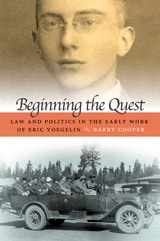
Beginning the Quest
Law and Politics in the Early Work of Eric VoegelinBarry Cooper
University of Missouri Press, 2009

Belonging in an Adopted World
Race, Identity, and Transnational AdoptionBarbara Yngvesson
University of Chicago Press, 2010
Since the early 1990s, transnational adoptions have increased at an astonishing rate, not only in the United States, but worldwide. In Belonging in an Adopted World, Barbara Yngvesson offers a penetrating exploration of the consequences and implications of this unprecedented movement of children, usually from poor nations to the affluent West. Yngvesson illuminates how the politics of adoption policy has profoundly affected the families, nations, and children involved in this new form of social and economic migration.
Starting from the transformation of the abandoned child into an adoptable resource for nations that give and receive children in adoption, this volume examines the ramifications of such gifts, especially for families created through adoption and later, the adopted adults themselves. Bolstered by an account of the author’s own experience as an adoptive parent, and fully attuned to the contradictions of race that shape our complex forms of family, Belonging in an Adopted World explores the fictions that sustain adoptive kinship, ultimately exposing the vulnerability and contingency behind all human identity.
Bending the Law
The Story of the Dalkon Shield BankruptcyRichard B. Sobol
University of Chicago Press, 1991
"Mr. Sobol has produced a readable yet fully researched and detailed study of the operation of the bankruptcy and its effects upon all concerned—the women who were injured, the swarms of lawyers who represented parties in the bankruptcy, and the court which oversaw the bankruptcy in Richmond. . . . This book adds greatly to the current debate about how strong a managerial federal judge our system should have."—Paul D. Rheingold, New York Law Journal
"Bending the Law is polemical and relentless. It is also minutely researched, fluidly written, and persuasive."—Paul Reidinger, ABA Journal
"Bending the Law is a must read for bankruptcy practitioners, and for anyone else concerned about the use of bankruptcy law to deal with mass torts. Although its author is a civil rights lawyer, he details the subtle art of practicing bankruptcy law with a discerning eye, and is a gifted storyteller as well."—Joryn Jenkins, Federal Bar News and Journal
"This is an accessible history of the case by a veteran civil-rights lawyer."—Washington Post Book World
Bending the Rules
Procedural Politicking in the BureaucracyRachel Augustine Potter
University of Chicago Press, 2019
With Bending the Rules, Rachel Augustine Potter shows that rulemaking is not the rote administrative activity it is commonly imagined to be but rather an intensely political activity in its own right. Because rulemaking occurs in a separation of powers system, bureaucrats are not free to implement their preferred policies unimpeded: the president, Congress, and the courts can all get involved in the process, often at the bidding of affected interest groups. However, rather than capitulating to demands, bureaucrats routinely employ “procedural politicking,” using their deep knowledge of the process to strategically insulate their proposals from political scrutiny and interference. Tracing the rulemaking process from when an agency first begins working on a rule to when it completes that regulatory action, Potter shows how bureaucrats use procedures to resist interference from Congress, the President, and the courts at each stage of the process. This exercise reveals that unelected bureaucrats wield considerable influence over the direction of public policy in the United States.
Better Bankers, Better Banks
Promoting Good Business through Contractual CommitmentClaire A. Hill and Richard W. Painter
University of Chicago Press, 2015
In Better Bankers, Better Banks, Claire A. Hill and Richard W. Painter look back at the history of banking and show how the current culture of bad behavior—dramatized by the corrupt, cocaine-snorting bankers of The Wolf of Wall Street—came to be. In the early 1980s, banks went from partnerships whose partners had personal liability to corporations whose managers had no such liability and could take risks with other people’s money. A major reason bankers remain resistant to change, Hill and Painter argue, is that while banks have been faced with large fines, penalties, and legal fees—which have exceeded one hundred billion dollars since the onset of the crisis—the banks (which really means the banks’shareholders) have paid them, not the bankers themselves. The problem also extends well beyond the pursuit of profit to the issue of how success is defined within the banking industry, where highly paid bankers clamor for status and clients may regard as inevitable bankers who prioritize their own self-interest. While many solutions have been proposed, Hill and Painter show that a successful transformation of banker behavior must begin with the bankers themselves. Bankers must be personally liable from their own assets for some portion of the bank’s losses from excessive risk-taking and illegal behavior. This would instill a culture that discourages such behavior and in turn influence the sorts of behavior society celebrates or condemns.
Despite many sensible proposals seeking to reign in excessive risk-taking, the continuing trajectory of scandals suggests that we’re far from ready to avert the next crisis. Better Bankers, Better Banks is a refreshing call for bankers to return to the idea that theirs is a noble profession.
Between the Temple and the Tax Collector
The Intersection of Mormonism and the StateSamuel D. Brunson
University of Illinois Press, 2025
The founding and development of the Church of Jesus Christ of Latter-day Saints run parallel to the rise of the modern tax system and administrative state. Samuel D. Brunson looks at the relationships between the Church and various federal, state, local, and international tax regimes.
The church and its members engage with the state as taxpayers and as members of a faith exempt from taxes. As Brunson shows, LDS members and the Church have at various times enacted, enforced, and collected taxes while also challenging taxes in the courts and politics. Brunson delves into the ways LDS members used their status as taxpayers to affirm themselves as citizens and how outsiders have attacked the Church’s tax-exempt status to delegitimize it. Throughout, Brunson uses the daily interactions between the Latter-day Saints and taxation to explain important and inevitable holes in the wall between church and state.
Enlightening and informed, Between the Temple and the Tax Collector provides general readers and experts alike with a new perspective on a fundamental issue.
Beyond Busing
Reflections on Urban Segregation, the Courts, and Equal OpportunityPaul R. Dimond
University of Michigan Press, 2005
A compelling insider's account of the fight for educational desegregation, from one of its most dedicated and outspoken heroes. A new afterword explains the author's controversial belief that the moment for litigating educational equality has passed, clear-sightedly critiquing his own courtroom strategies and the courts' responses, before closing with an assessment of the economic and social changes that he feels have already moved us "beyond busing."
"An extraordinarily informative and thoughtful book describing the process of bringing Brown [v. Board of Education] North and the impact this process had upon national attitudes toward desegregation."
--Drew S. Days III, Yale Law Journal
"An original analysis of a tough subject. A must-read for all who care about opportunity for all our children."
--Donna E. Shalala, President, University of Miami
"Paul Dimond remains a passionate and caring voice for inner-city students, whether in his advocacy of school desegregation, school choice plans, or school finance reform. He illuminates these issues as one who participated in the major education cases and as a perceptive scholar."
--Mark Yudof, Chancellor, The University of Texas System
"A must-read for anyone who wants to understand America's continued failure to give inner-city children a quality education or to do something about it!"
--Sheryll Cashin, Author of The Failures of Integration: How Race and Class Are Undermining the American Dream
"Dimond is particularly good at relating his slice of legal history to the broader developments of the 1970s, and his occasional remarks about trial tactics are amusing and instructive. Dimond's
honesty about both his successes and failures makes his book required reading for civil rights lawyers."
--Lawrence T. Gresser, Michigan Law Review
"A fascinating first-hand account of 1970s northern school desegregation decisions."
--Neal E. Devins, American Bar Foundation Research Journal
"Dimond reminds the liberal reader of the promise that lies in the empowerment of ordinary families to choose their own schools."
--John E. Coons, Professor of Law, Emeritus, University of California, Berkeley
Paul R. Dimond is counsel to Miller, Canfield, Paddock and Stone, Michigan's largest law firm; chairman of McKinley, a national commercial real estate investment and management firm; and chairman or member of the board of trustees of numerous education, community, and civic organizations. He spent four years as President Clinton's Special Assistant for Economic Policy.
Beyond Complementary Medicine
Legal and Ethical Perspectives on Health Care and Human EvolutionMichael H. Cohen
University of Michigan Press, 2000
Integration of divergent philosophies, paradigms, and practices requires responsible investigation, informed judgment, and open-minded yet critical study and analysis of various systems of healing. Michael H. Cohen offers providers and policymakers vitally important information by addressing questions such as credentialing, malpractice, informed consent, and liability for referrals. He describes both practical strategies for minimizing liability, as well as the necessary future evolution of the legal and regulatory structure.
Cohen also probes uncharted ethical and bioethical issues in complementary medicine and integrative health care. He further explores the connection between law, medicine, and spirituality and the role of this connection in human evolution. The book's range mirrors the integrative process itself, a process of grappling with, and meaningfully assimilating, disparate traditions and unfamiliar ways of thinking about the significance of health, body, and being.
Beyond Complementary Medicine is required reading for anyone involved in health care, including executives, insurers, managed care organizations, attorneys, ethicists, and lawmakers; physicians integrating complementary and alternative therapies; complementary and alternative medicine practitioners; medical schools, law schools, and educational institutions offering programs in health care, public health, and complementary therapies; companies manufacturing herbs and dietary supplements; and most of all, patients and their families.
Michael H. Cohen is President of the Institute for Integrative and Energy Medicine, a nonprofit organization in health care policy, ethics, and legal and regulatory affairs, and an attorney with an international practice in integrative health care.

Beyond Criminology
Taking Harm SeriouslyEdited by Paddy Hillyard, Christina Pantazis, Dave Gordon and Steve Tombs
Pluto Press, 2004

Beyond Monopoly
Lawyers, State Crises, and Professional EmpowermentTerence C. Halliday
University of Chicago Press, 1987
In this pathbreaking study of the legal profession, Terence Halliday raises and addresses these questions combining extensive data from the rich archives o the Chicago Bar Association, one of the nation's largest and wealthiest bar organizations, with data from a national survey of bar legislative and judicial action. Beyond Monopoly demonstrates that the primary commitment of lawyers to economic monopoly has long been complemented by "civic professionalism" as the legal profession takes on more responsibility in the American democratic system when state capabilities diminish.
Through his examination of three types of state crises in the 1950s and 1960s—the challenges to legitimacy in the legal system, the crisis of individual rights during McCarthyism and the civil rights eras, and the fiscal crises of various state governments—Halliday shows that large bar associations can have extensive influence on any institution that is regulated by law. He argues that lawyers have the capability of turning social and political issues into technical legal matters in what he calls an "idiom of legalism." Under technical guise, lawyers come to exercise moral authority.
Halliday maintains that the American legal profession over the past century has gone from a formative stage, when controlling its market in the delivery of legal services was paramount, to an established phase in the past two decades, when it has committed extensive resources to the complex needs of the modern state. A de facto bargain has been struck: if the state leaves the profession's monopoly fairly intact, the profession can use its expert resources to help the state adapt to strain and crisis. It can do so not only in the legal system, where it has been championing "autonomous" law, but in other spheres as well—from the economy to the private sphere of individual rights.
Halliday confirms that the legal profession deploys its expertise not merely to attain professional dominance, to control a market, or to purvey an ideology, but to increase the viability of democratic institutions. Beyond Monopoly introduces a pioneering approach to a historical and comparative sociology of the professions that will be of vital interest not only to sociologists, but to political scientists and lawyers as well.
Beyond Occupation
Apartheid, Colonialism and International Law in the Occupied Palestinian TerritoriesEdited by Virginia Tilley
Pluto Press, 2012
Beyond Occupation looks at three contentious terms that regularly arise in contemporary arguments about Israel's practices towards Palestinians in the occupied territories – occupation, colonialism and apartheid – and considers whether their meanings in international law truly apply to Israel's policies. This analysis is timely and urgent – colonialism and apartheid are serious breaches of human rights law and apartheid is a crime against humanity under the Rome Statute of the International Criminal Court.
The contributors present conclusive evidence that Israel’s administration of the Palestinian territories is consistent with colonialism and apartheid, as these regimes are defined in human rights law. Their analysis further shows that these practices are deliberate Israeli state policies, imposed on the Palestinian civilian population under military occupation.
These findings raise serious implications for the legality and legitimacy of Israel's continuing occupation of the Palestinian territories and the responsibility of the entire international community to challenge practices considered contrary to fundamental values of the international legal order.
Beyond Recognition
Transgender Antidiscrimination Law, Rhetoric, and Ethical ResponsibilityCollins, Laura Jane
University of Alabama Press, 2026
A bold and original analysis of how the complexity of legal struggles over transgender rights is shaped not only by politics but by a deeper cultural anxiety about the meaning of sex itself.
Beyond Recognition: Transgender Antidiscrimination Law, Rhetoric, and Ethical Responsibility is a timely analysis that challenges the idea of transgender antidiscrimination law as a simple matter of inclusion or exclusion. Far from treating the law as a straightforward recognition project, Laura Jane Collins employs a rhetorically responsive approach that reveals how legal systems both reflect and shape our deepest uncertainties about sex, identity, and justice.
Through close readings of Title VII case law, state-level legislation such as California’s Fair Employment and Housing Act, and legislative debates surrounding bathroom access and trans rights, Collins exposes the deep-seated anxieties driving contemporary legal debates. While courts, policymakers, and advocates struggle to construct legal protections, the very act of defining sex within the law exposes law’s limitations.
Rather than condemning the law’s failures or romanticizing its liberatory potential, Collins calls for a more self-reflective, ethically engaged response. She argues that our demand for legal clarity often conceals a broader discomfort with ambiguity—and that the law’s so-called shortcomings may in fact reflect our own refusal to confront the complexity of sex as a category and system of power.
A vital contribution to scholarship in law and rhetoric, gender studies, and critical legal theory, Beyond Recognition invites a deeper reckoning with both legal frameworks and personal responsibility. It offers a compelling perspective on the evolving landscape of transgender rights and the cultural anxieties that continue to shape it.
Beyond Repair?
America's Death PenaltyStephen P. Garvey, ed.
Duke University Press, 2003
A number of the essays scrutinize thinking about capital punishment. They examine why, following almost two decades of strong public support for the death penalty, public opinion in favor of it has recently begun to decline. Beyond Repair? presents some of the findings of the Capital Jury Project, a nationwide research initiative that has interviewed over one thousand people who served as jurors in capital trials. It looks at what goes through the minds of jurors asked to consider imposing the death penalty, how qualified they are to make such an important decision, and how well they understand the judge’s instructions. Contributors also investigate the risk of executing the innocent, the role that race plays in determining which defendants are sentenced to death, and the effect of expanded restrictions on access to federal appellate relief. The postscript contemplates the peculiarities of our contemporary system of capital punishment, including the alarming variance in execution rates from state to state.
Filled with current insights and analysis, Beyond Repair? will provide valuable information to attorneys, political scientists, criminologists, and all those wanting to participate knowledgeably in the debates about the death penalty in America.
Contributors. Ken Armstrong, John H. Blume, Theodore Eisenberg, Phoebe C. Ellsworth, Stephen P. Garvey, Samuel R. Gross, Sheri Lynn Johnson, Steve Mills, William A. Schabas, Larry W. Yackle, Franklin E. Zimring
Biblical Judgments
New Legal Readings in the Hebrew BibleDaphne Barak-Erez
University of Michigan Press, 2024
Rather than offering a historical study, Barak-Erez draws upon famous court decisions from around the world to root her analysis in modern law. Organized by subject matter, Biblical Judgments analyzes how the themes of law and government, judging and judges, human rights and social justice, criminal law, private law, and family and inheritance law are presented through a number of different stories. In recounting the compelling narratives of the Hebrew Bible, Biblical Judgments exposes their inherent legal tensions and what we can learn about legal dilemmas today.
BigLaw
Money and Meaning in the Modern Law FirmMitt Regan and Lisa H. Rohrer
University of Chicago Press, 2021
Biggest Damned Hat
Tales from Alaska's Territorial Lawyers and JudgesPamela Cravez
University of Alaska Press, 2017
The Biggest Damned Hat presents a fascinating collection of stories ranging from the gold rush to the 1950s. Built on interviews and oral histories from more than fifty lawyers who worked in Alaska before 1959, and buttressed by research into legal history, the book offers a brilliantly multifaceted portrait of law in the territory—from laying the groundwork for strong civil and criminal law to helping to secure mining and fishing rights to the Alaska Court-Bar fight, which pitted Alaska’s community of lawyers against its nascent Supreme Court. Bringing to life a time long past—when some of the best lawyers had little formal legal education—The Biggest Damned Hat fills in a crucial part of the story of Alaska’s history.
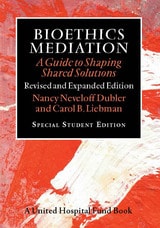
Bioethics Mediation
A Guide to Shaping Shared Solutions, Revised and Expanded EditionNancy Neveloff Dubler
Vanderbilt University Press, 2011
Conflicts come in different guises, and the key to successful resolution is early identification and intervention. Every bioethics mediator needs to be prepared with skills to listen, "level the playing field," identify individual interests, explore options, and help craft a "principled resolution" -- a consensus that identifies a plan aligned with accepted ethical principles, legal stipulations, and moral rules and that charts a clear course of future intervention.
The organization of the book makes it ideal for teaching or as a handbook for the practitioner. It includes actual cases, modified to protect the privacy of patients, providers, and institutions; detailed case analyses; tools for step-by-step mediation; techniques for the mediator; sample chart notes; and a set of actual role plays with expert mediator and bioethics commentaries. The role plays include:
- discharge planning for a dying patient
- an at-risk pregnancy
- HIV and postsurgical complications in the ICU
- treatment for a dying adolescent
- dialysis and multiple systems failure
Expanded by two-thirds from the 2004 edition, the new edition features two new role plays, a new chapter on how to write chart notes, and a discussion of new understandings of the role of the clinical ethics consultant.

Bioethics in the Courts
Analyszing the Bioethical Jurisprudence of International and National CourtsJudit Sandor
Central European University Press, 2027
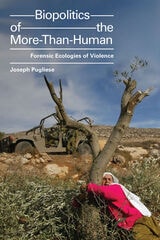
Biopolitics of the More-Than-Human
Forensic Ecologies of ViolenceJoseph Pugliese
Duke University Press, 2020

Black Lawyers, White Courts
The Soul of South African LawKenneth S. Broun
Ohio University Press, 2000
In the struggle against apartheid, one often overlooked group of crusaders was the coterie of black lawyers who overcame the Byzantine system that the government established oftentimes explicitly to block the paths of its black citizens from achieving justice.
Now, in their own voices, we have the narratives of many of those lawyers as recounted in a series of oral interviews. Black Lawyers, White Courts is their story and the anti-apartheid story that has before now gone untold.
Professor Kenneth Broun conducted interviews with twenty-seven black South African lawyers. They were asked to tell about their lives, including their family backgrounds, education, careers, and their visions for the future. In many instances they also discussed their years in prison or exile, or under house arrest. Most told of both education and careers interrupted because of the ongoing struggle.
The story of the professional achievements of black lawyers in South Africa—indeed their very survival—provides an example of the triumph of individuals and, ultimately, of the law. Black Lawyers, White Courts is about South Africa, and about black professionals in that country, but the lessons its protagonists teach extend far beyond circumstances, geography, or race.
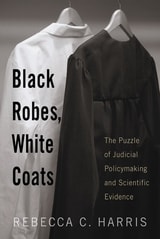
Black Robes, White Coats
The Puzzle of Judicial Policymaking and Scientific EvidenceRebecca C. Harris
Rutgers University Press, 2008
Combining political analysis, scientific reasoning, and an in-depth study of specific state supreme court cases, Black Robes, White Coats is an interdisciplinary examination of the tradition of "gatekeeping," the practice of deciding the admissibility of novel scientific evidence. Rebecca Harris systematically examines judicial policymaking in three areas forensic DNA, polygraphs, and psychological syndrome evidence to answer the question: Why is scientific evidence treated differently among various jurisdictions? These decisions have important implications for evaluating our judicial system and its ability to accurately develop scientific policy.
While the interaction of these professions occurs because the white coats often develop and ascertain knowledge deemed very useful to the black robes, Harris concludes that the black robes are well positioned to render appropriate rulings and determine the acceptability of harnessing a particular science for legal purposes.
First book to systematically gather and analyze judicial decisions on scientific admissibility
Analyzes several key cases including Arizona v. Bible and Kansas v. Marks
Includes examples of evidence in three appendices: forensic DNA, polygraph evidence, and syndrome evidence
Presents an original model of the gatekeeping process
Blackhood Against the Police Power
Punishment and Disavowal in the "Post-Racial" EraTryon P. Woods
Michigan State University Press, 2019
Blue Legalities
The Life and Laws of the SeaIrus Braverman and Elizabeth R. Johnson, editors
Duke University Press, 2019
Contributors. Stacy Alaimo, Amy Braun, Irus Braverman, Holly Jean Buck, Jennifer L. Gaynor, Stefan Helmreich, Elizabeth R. Johnson, Stephanie Jones, Zsofia Korosy, Berit Kristoffersen, Jessica Lehman, Astrida Neimanis, Susan Reid, Alison Rieser, Katherine G. Sammler, Astrid Schrader, Kristen L. Shake, Phil Steinberg
Blueprints for a House Divided
The Constitutional Logic of the Yugoslav ConflictsRobert M. Hayden
University of Michigan Press, 2000
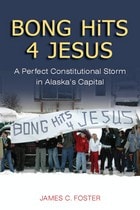
Bong Hits 4 Jesus
A Perfect Constitutional Storm in Alaska's CapitalJames C. Foster
University of Alaska Press, 2010
In January 2002, for the first time, the Olympic Torch Relay visited Alaska on its way to the Winter Games. When the relay runner and accompanying camera cars passed Juneau-Douglas High School, senior Joseph Frederick and several friends unfurled a fourteen-foot banner reading "BONG HiTS 4 JESUS."
An in-depth look at student rights within a public high school, this book chronicles the events that followed: Frederick's suspension, the subsequent suit against the school district, and, ultimately, the escalation of a local conflict into a federal case. Brought to life through interviews with the principal figures in the case, Bong Hits 4 Jesus is a gripping tale of the boundaries of free speech in an American high school.
Book of the Disappeared
The Quest for Transnational JusticeJennifer Heath and Ashraf Zahedi, Editors
University of Michigan Press, 2023
Book of the Disappeared confronts worldwide human rights violations of enforced disappearance and genocide and explores the global quest for justice with forceful, outstanding contributions by respected scholars, expert practitioners, and provocative contemporary artists. This profoundly humane book spotlights our historic inhumanity while offering insights for survival and transformation.
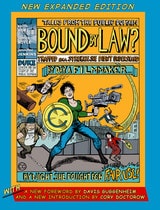
Bound by Law?
Tales from the Public Domain, New Expanded EditionKeith Aoki, James Boyle, and Jennifer Jenkins
Duke University Press, 2008
Braking the Special Interests
Trucking Deregulation and the Politics of Policy ReformDorothy Robyn
University of Chicago Press, 1987
Robyn focuses her analysis on four elements of strategy responsible for the deregulator's victory—elements that are essential, she argues, to any successful policy battle against entrenched special interests: the effective use of economic data and analysis to make a strong case for the merits of reform; the formation and management of a diverse lobbying coalition of firms and interest groups; presidential bargaining to gain political leverage; and transition schemes to reduce uncertainty and cushion the blow to losers.
Drawing on political and economic theory, Braking the Special Interests is an immensely rich and readable study of political strategy and skill, with general insights relevant to current political battles surrounding trade, agriculture, and tax policies. Robyn's interdisciplinary work will be of great value to scholars and practitioners of politics, economics, and public policy.
Brandishing the First Amendment
Commercial Expression in AmericaTamara R. Piety
University of Michigan Press, 2013
Over the past two decades, corporations and other commercial entities have used strategic litigation to win more expansive First Amendment protections for commercial speech—from the regulation of advertising to the role corporate interests play in the political process, most recently debated in the Supreme Court case of Citizens United v. Federal Election Commission. Tamara R. Piety, a nationally known critic of commercial and corporate speech, argues that such an expansion of First Amendment speech rights imperils public health, safety, and welfare; the reliability of commercial and consumer information; the stability of financial markets; and the global environment.
Beginning with an evaluation of commonly evoked philosophical justifications for freedom of expression, Piety determines that, while these are appropriate for the protection of an individual’s rights, they should not be applied too literally to commercial expression because the corporate person is not the moral equivalent of the human person. She then gathers evidence from public relations and marketing, behavioral economics, psychology, and cognitive studies to show how overly permissive extensions of First Amendment protections to commercial expression limit governmental power to address some of the major social, economic, and environmental challenges of our time.
“The timeliness of the topic and the provision of original positions are sure to make the book a valuable contribution that should draw much attention.”
—Kevin W. Saunders, Michigan State University

Break Point
Two Minnesota Athletes and the Road to Title IXSheri Brenden
University of Minnesota Press, 2022
How two teenage girls in Minnesota jump-started a revolution in high school athletics
Peggy Brenden, a senior, played tennis. Toni St. Pierre, a junior, was a cross country runner and skier. All these two talented teenagers wanted was a chance to compete on their high school sports teams. But in Minnesota in 1972 the only way on the field with the boys ran through a federal court—so that was where the girls went. Break Point tells the story, for the first time, of how two teenagers took on the unequal system of high school athletics, setting a legal precedent for schools nationwide before the passage of Title IX.
As Peggy’s younger sister, author Sheri Brenden is uniquely positioned to convey the human drama of the case, the stakes, and the consequences for two young women facing the legal machinery of the state, in court and in school. In an account that begins with Peggy painstakingly typing her appeal to the Minnesota Civil Liberties Union and concludes with a long view of what Brenden v. Independent School District 742 set in motion, Sheri Brenden summons the salient details of this landmark case as it makes its way through the courts. Peggy and Toni, coaches, administrators, and experts testify before Judge Miles Lord, whose decision, upheld in a precedent-setting appeal, would change these girls’ lives and open up athletic opportunities for innumerable others.
Grounded in newspaper coverage, court records, and interviews, Brenden’s deeply researched, scrupulously reported book is at heart the story of two talented teenage girls whose pluck and determination—and, often, heartache—led to a victory much greater than any high school championship.

Brexit and the UK Constitution
John Springford, Catherine Barnard, Joël Reland, and Jonathan Thomas
Haus Publishing, 2026
Essays on Brexit's impact on the UK economy.
With a foreword by renowned political sociologist Katy Hayward, Brexit and the UK Constitution offers a grounded, factual, and authoritative contribution to understanding Brexit’s implications ten years on from the referendum. John Springford considers significant developments in trade, investment, the labor market and immigration, and productivity, and offers a refreshing evidence-based account of how the UK economy has changed outside the EU. Catherine Barnard and Joel Reland examine the legal and regulatory landscape post-Brexit and assess what “taking back control” has meant in practice for the United Kingdom's legal landscape. Finally, Jonathan Thomas looks at immigration since 2016, examining policy and trends since the referendum and considering the impact that Brexit has had on both immigration to, and emigration from, the United Kingdom. He focuses on what has really happened, moving beyond rhetoric and soundbites to provide an unbiased and non-partisan account.
Broken Buildings, Busted Budgets
How to Fix America's Trillion-Dollar Construction IndustryBarry B. LePatner with Robert E. Wright and Timothy C. Jacobson
University of Chicago Press, 2007
With three decades of experience representing clients that include eminent architects and engineers, as well as corporations, institutions, and developers, LePatner has firsthand knowledge of the bad management, ineffective supervision, and insufficient investment in technology that plagues the risk-averse construction industry. In an engaging and direct style, he here pinpoints the issues that underlie the industry’s woes while providing practical tips for anyone in the business of building, including advice on the precise language owners should use during contract negotiations.
Armed with Broken Buildings, Busted Budgets, everyone involved in the purchase or renovation of a building or any structure—from homeowners seeking to remodel to civic developers embarking on large-scale projects—has the information they need to change this antiquated industry, one project at a time.
“LePatner describes what is wrong with the current system and suggests ways that architects can help—by retaking their rightful place as master builders.”—Fred A. Bernstein, Architect Magazine