Results by title
905 books match the query 'Literary' and 38 start with b
Bait
David Albahari
Northwestern University Press, 2001
Ballad of Another Time
A NovelJose Luis Gonzalez; Translated by Asa Zatz
University of Wisconsin Press, 2004
Ballad of Descent
Martin Vopenka
Northwestern University Press, 1995
Barbarian Spring
Jonas Lüscher
Haus Publishing, 2014
So begins Barbarian Spring, the debut novel from Jonas Lüscher, a major emerging voice in European fiction. The timely and unusual novel centers on a culture clash between high finance and the value system of the Maghreb. Provocative and entertaining, Barbarian Spring is a refreshingly original and all-too-believable satire for our times.
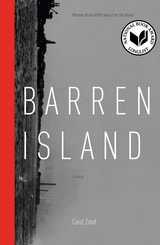
Barren Island
Carol Zoref
New Issues Poetry and Prose, 2017

Be Faithful Unto Death
Zsigmond Móricz
Central European University Press, 1996
Be Faithful unto Death is the moving story of a bright and sensitive schoolboy growing up in an old-established boarding school in the city of Debrecen in eastern Hungary. Misi, a dreamer and would-be writer, is falsely accused of stealing a winning lottery ticket. The torments through which he goes – and grows – are superbly described.
The novel is brimming with vivid detail from the provincial life that Móricz knew so well and shot through with a sense of the tragic fate of a newly truncated Hungary.

Bealport
A Novel of a TownJeffrey Lewis
Haus Publishing, 2018
In Bealport, Jeffrey Lewis takes us inside the town, revealing its secrets, acknowledging its problems, and honoring its ambitions. Brilliantly deploying a large cast from all walks of life, this novel reveals small town America in the early twenty-first century through the interwoven secrets and desires of its residents, and through them delivers a striking portrait of America at a moment of national uncertainty.
Bealport, called “a hugely satisfying read” by the Evening Standard and “deeply appealing” by the Times Literary Supplement, is now available in paperback.
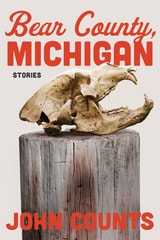
Bear County, Michigan
StoriesJohn Counts
Northwestern University Press, 2025
Following desperate characters in desperate circumstances in the rural Midwest
In these colorful, darkly comic stories, veteran journalist and crime reporter John Counts takes readers to an often-ignored part of the country: a fictional Great Lakes coastal town in northern Michigan defined by beauty and bleakness. The cast of characters in these connected stories ranges from addicts to backwoods misfits to ruined lumber families, all bound together by their desire to obtain something just out of reach. Big Frank breaks out of a rehab facility trying to outrun grief. The women in the village of Brotherhood grapple with sterility resulting from an environmental calamity. A local politician must convince her mother to leave a nudist colony. And in the final, sweeping story, a splinter group from the local tribe attempts to reclaim its ancestral land by force. The people of Bear County and their predicaments encompass the wildly original and yet totally ordinary truths about American life off the beaten track.
Beautiful Women
Giuseppe Antonio Borgese
Northwestern University Press, 2001
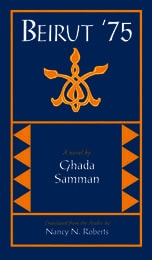
Beirut '75
Ghadah Samman
University of Arkansas Press, 1995
Ghada Samman’s first full-length novel, originally published in Arabic in 1974, is a creative and daring work prophetically depicting the social and political causes of the Lebanese civil war in 1975. The story opens in a taxi in which we meet the five central characters, each seeking something to give life meaning: security, fame, wealth, dignity, recognition, freedom from fear and from tradition-sanctioned, dehumanizing practices. Once they reach the capital city of Beirut, on which they’ve pinned their hopes, they all discover, man and woman alike, that they are victims of forces either partially or completely beyond their control, such as political corruption, class discrimination, economic and sexual exploitation, destruction of the natural environment, and blind allegiance to tradition.
Beirut ’75 addresses struggles of Arab society, particularly the Lebanese, but the message is one of the universal human condition. Thus, in addition to this superb English-language presentation, Samman’s novel has already appeared in German (two editions), French, and Italian versions.
Winner of The University of Arkansas Press Award for Arabic Literature in Translation.
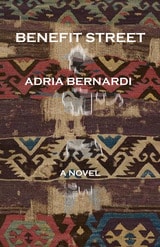
Benefit Street
A NovelAdria Bernardi
University of Alabama Press, 2022
WINNER OF FC2's CATHERINE DOCTOROW INNOVATIVE FICTION PRIZE
A universal story of exile, of the refugee and emigrant, and of all those displaced who can reconstruct a sense of home only by weaving a new fabric of the imagination
For nearly two decades, Şiva has met after work on Tuesdays with four friends at a teahouse called the Kafiye. In interrupted conversations, the women explore what it is to live engaged lives inside and outside the home. Amidst joking and complaints, while drinking too much tea and eating too many sweets, they tell of their days: a son’s ninth birthday, the bruise on the arm of an aging parent, soldiers stationed outside the school, the funeral of an opposition political leader killed in a mysterious car accident.
Set in an unnamed provincial capital of an unnamed country, Benefit Street tells of a wide circle of friends—teachers, lawyers, missionaries, doctors, artisans—in a time of gathering and dispersal. It tells the story of mothers, daughters, sisters, wives, colleagues, and neighbors, as war to the East threatens and constitutional rights are daily eroded by an increasingly authoritarian regime.
The ideals of youth, freedom, and coexistence are severely tested with the shocking revelation that the charismatic leader of their group has sexually abused the women under his care. The limits of reconciliation are tested as Şiva makes an arduous journey into the mountains to meet an estranged mother with a genius for weaving complex rugs.
Berlin Cantata
Jeffrey Lewis
Haus Publishing, 2013
Bhopal Dance
A NovelJennifer Natalya Fink, Foreword by Mary Caponegro
University of Alabama Press, 2018
An imaginative, erotic rethinking of Bhopal’s disaster—and perhaps our own
On the night of December 2, in the midst of the Reaganomic era, an explosion at an American-owned factory in Bhopal, India, released untold amounts of toxic gas on uncounted numbers of people, creating a human and environmental disaster of insurmountable proportions. Known as the Bhopal disaster, it once dominated international headlines, and is now barely remembered.
Yet Bhopal remains emblematic of all the many quickly forgotten disasters that followed, and of the permanent state of globalized disaster in which we now dwell. What does it mean when corporations instead of states control not only the means to create environmental disasters, but also the tools to bury them? How does one revolt against these unelected entities? How do our most private desires get shaped by this stateless horror? Jennifer Natalya Fink’s Bhopal Dance is an epic and epochal tale of such a horror and its buried consequences.
At the center of the novel is Cordelia, an owlish woman with a ménage of lovers, who leads a revolutionary Canadian political movement catalyzed by the Bhopal disaster, only to end up imprisoned with just a toilet to talk to. Who she hallucinates is her father. Who is her father. Who is the State. Who may be her mother. Or her twin/lover. Cordelia is a remarkable bird in her own right, and ‘owlishness’ is a feathery conceit deployed in both the book’s form and content, a way of exploring queer possibilities for altering the terms of one’s imprisonment. For setting corporatized corporeality alight. Ablaze. Pets and punk rock, dentists and dyslexia, Shakespeare and salsa: they all dance together here.

Big City
Marream Krollos
University of Alabama Press, 2018
Marream Krollos’s Big City is astructurally innovative work of prose composed of vignettes, verse, dialogues, monologues, and short stories. Alone, they are fragments, but together they offer a glimpse of the human condition and form a harmonized narrative of desire, loneliness, and beauty. Through language that builds, destroys, and violates, Krollos maps the geography of our contemporary condition, a haunting meditation on human togetherness and isolation.
Krollos plays with the tension between the voice of the lonely “I” produced by the urban experience and the polyphony of the city itself. A city is a chorus and a collection of traces; it is a way of being with others and the concretization of the social divisions that keep people apart. As a lifelong city dweller, Krollos is obsessed with the way that cities shape our experiences of the world, our ideas about inside and outside and self and other.
By mapping the emotional highs and lows of particular (though often anonymous) beings, the book creates a geography of the urban consciousness. The sensation of reading this lyric work of fiction is akin to how one experiences an attentive walk in an unknown city: one becomes attuned to the tenor of its many voices, how the languages lift and flourish, and how the micro and macro became integrally linked.
Billy Budd, Sailor
Herman Melville
University of Chicago Press, 1962
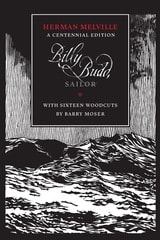
Billy Budd, Sailor (An Inside Narrative)
Herman Melville, Illustrated by Barry Moser
University of Chicago Press, 2025
An illustrated edition of Billy Budd featuring woodcuts by celebrated artist Barry Moser.
This edition of Billy Budd, Sailor presents Herman Melville’s iconic tale of the high seas alongside illustrations by renowned artist, publisher, and printmaker Barry Moser.
Throughout his fifty-year career, Moser has illustrated more than three hundred books ranging from novels to children’s stories to the Bible. Through his Pennyroyal Press, Moser designs and prints fine-press, illustrated, and occasionally oversized books in very limited editions, which are beloved by collectors and bibliophiles. To coincide with the centenary of the novella’s posthumous publication, Moser created sixteen original woodcuts illustrating the scenes and characters of Billy Budd, Sailor, and this trade edition now makes these exquisite illustrations accessible to a wide audience.
This illustrated edition adapts the text of the critical edition of the novella prepared for the Melville Electronic Library by John Bryant, Wyn Kelley, and Christopher Ohge.
Bisbee '17
Robert Houston
University of Arizona Press, 1999
Blood Pact and Other Stories
Mario Benedetti
Northwestern University Press, 1997
Blow Yourself Up
A NovelAnkur Thakkar
Northwestern University Press, 2026
A story of first love across cities spanning the decade that transformed the internet
In the halls of an elite East Coast high school, Arjun and Payal fall in love as the world begins to tilt toward the digital. Over the next eight years, their trajectories diverge as sharply as the fractured internet itself. Payal ascends to the dizzying, dopamine-fueled heights of New York’s influencer economy, finding fame on Boost, a looping video app that is as rewarding as it is demanding. Meanwhile, in a cavernous office in Chicago, Arjun, a musician whose dreams have quieted, now cleans up the same platform’s debris, moderating the internet’s darkest videos. When a brutal act of political violence against a beloved musician goes viral, this rip in reality forces the pair to confront the motivations of the platforms they inhabit. A sharp exploration of creative ambition and the multifarious nature of identity, this is a story of love in the time of infinite scroll and a look at what we sacrifice to be seen.
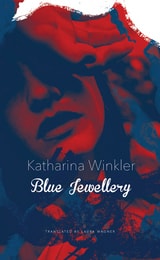
Blue Jewellery
Katharina Winkler
Seagull Books, 2018
Blue jewelry is private property. Not to be seen. Not to be talked about. It is worn like a bracelet around the wrists, on ribs, legs, arms. Blue jewelry is another name for the marks left on women’s bodies, inflicted by the men around them.
This novel tells the story of Filiz and Yunus. When Filiz meets Yunus, he is young and beautiful, and Filiz is proud that he wants her. Against her father’s wishes, they marry when she is thirteen. Yunus is her entire universe, all encompassing, all powerful. Soon after the wedding, Filiz’s dream of living in the West with her husband, of escaping their small village in Anatolia for freedom and autonomy, comes crashing down around her. Yunus, only a few years older than his bride, turns their marriage into a prison of dependency and violence. Trapped in her mother-in-law’s house, Filiz is subjected to physical and mental abuse, forced to veil herself, and treated as a house slave. When she becomes pregnant, Filiz seems to have reached her breaking point. But she endures. When Yunus moves his young family first to Istanbul and then to Austria, the life he had once promised her seems to be within reach. But there is no escaping the spiral of violence and love, which, to Filiz, have become inseparable.
Katharina Winkler’s powerful story of a marriage dominated by violence gives voice to a tenacious young woman whose will to survive is never broken.
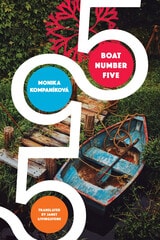
Boat Number Five
Monika Kompaníková
Seagull Books, 2021
A fierce, unapologetic eye captures the universal quest for connection in post-communist Eastern Europe.
Emotionally neglected by her immature, promiscuous mother and forced to care for her cantankerous dying grandmother, twelve-year-old Jarka is left to fend for herself in the social vacuum of a post-communist concrete jungle in Bratislava. She spends her days roaming the streets and daydreaming in the only place she feels truly safe: a small garden inherited from her grandfather. One day, stopping at a suburban railway station, she impulsively abducts twin babies.
Teetering on the edge of disaster, Jarka struggles to care for the children, and in the process, begins to discover herself. Boat Number Five—which was adapted into an award-winning Slovak film—brilliantly captures the ache and emptiness of a fractured society.
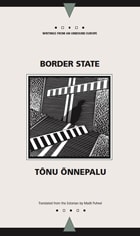
Border State
Tonu Onnepalu
Northwestern University Press, 2000
An immediate sensation upon its 1993 publication in Europe, already translated into more than a dozen languages, Border State is a brilliantly realized account of a man in the grip of Western excess, emotionally crippled by a world that is subsuming his own and inhabiting a West in which "all countries have become imaginary deserts of ruins where crowds of nomads roam from one attraction to the other." His tale, in which disillusion and murder become inextricably linked, is a compelling exploration of scarcity, longing, and madness.
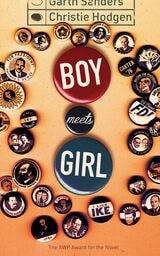
Boy Meets Girl
Christie Hodgen
New Issues Poetry and Prose, 2022
Boy Meets Girl is the story of a twenty-five-year friendship between Sammy Browne (young, idealistic, and broke) and Ben Eisenberg (older, jaded, and almost unimaginably rich)—two characters drawn together, and ultimately torn apart, by their differences. This novel tells the story of their relationship over the decades—from youthful flirtation to unrequited love, to long-term friendship that flourishes in middle age, to estrangement and then reunion. The novel unfolds in alternating chapters, toggling back and forth between Ben and Sammy as young people and in middle age, showing everything the characters hoped to become and how things turned out for them. Boy Meets Girl unfolds against the political and social backdrop of the last three decades, with Bill Clinton’s election, the events of September 11, the wars in Iraq and Afghanistan, and even the Trump era providing context and contrast for the personal stories of the main characters.
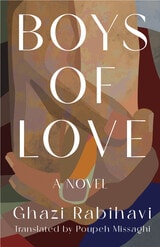
Boys of Love
Ghazi Rabihavi
University of Wisconsin Press, 2024
In Boys of Love, Ghazi Rabihavi offers both a universal story about the ups and downs of all relationships and a clear-eyed portrait of same-sex desire in Iran, where homosexuality remains punishable by death. Banned in Iran, the novel was initially published in Farsi in the UK, then translated into French and shortlisted for the Prix Médicis étranger. Rabihavi avoids both lasciviousness and exoticism in depicting a deep love between male characters living through the Iranian Cultural Revolution. Ultimately, this story challenges preconceived notions about marginalized communities in the Middle East.
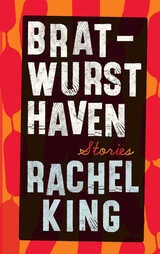
Bratwurst Haven
StoriesRachel King
West Virginia University Press, 2022
“An excellent collection that’s likely to appeal to fans of Alice Munro and Tobias Wolff.” —Kirkus Reviews
It’s almost a decade after the Great Recession, and in Colorado, St. Anthony Sausage has not recovered. Neither have its employees: a laid-off railway engineer, an exiled computer whiz, a young woman estranged from her infant daughter, an older man with cancer who lacks health care. As these low-wage workers interact under the supervision of the factory’s owner and his quietly rebellious daughter, they come to understand that in America’s postindustrial landscape, although they may help or comfort each other, they also have to do what’s best for themselves.
Over the course of these twelve interrelated stories, Rachel King gives life to diverse, complex, and authentic characters who are linked through the sausage factory and through their daily lives in a vividly rendered small town in Boulder County. The internal and external struggles of Bratwurst Haven’s population are immediately and intimately relatable and resonant: these people seek answers within the world they inhabit while questioning what it means to want more from their lives.
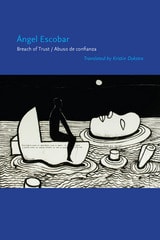
Breach of Trust/Abuso de confianza
Ángel Escobar with Translation by Kristin Dykstra
University of Alabama Press, 2016
The best-known work by acclaimed Cuban poet Ángel Escobar
Ángel Escobar’s Breach of Trust / Abuso de confianza is known by many as the most devastating book of his poetic generation. It is his first to be offered to an English-speaking audience. Merging personal and collective meditations, these twenty-three poems perform an indictment of violence. Escobar’s poetry delineates lacerations etched on bodies and minds by the sanguinary twentieth century, which unfolded out of a longer modernity spanning the Americas.
Breach of Trust / Abuso de confianza outlived its author, who took his own life in 1997. Brief and implicit appeals for justice and love offset the book’s abject theatricality. Escobar’s tragic masterpiece deftly interweaves themes into a striking synthesis offered in the spirit of survival.
Award-winning translator Kristin Dykstra introduces this collection with a comprehensive examination of Escobar’s life, work, and the times within which he wrote. Dykstra situates Escobar’s poetic abjection as his drive to confront thingification face to (non)face.
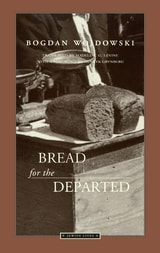
Bread for the Departed
Bogdan Wojdowski
Northwestern University Press, 1997

Brezhat
A NovellaMichael Holt
University of Alabama Press, 2027
Three Sams, one impossible building, and a mystery echoing across worlds, lifetimes, and dreams.
Brezhat is a thrilling, puzzle-like novella that unfolds across three overlapping worlds, all occurring within the same haunted building. In one timeline, the building is a school where children's dreams are recorded. In another, an orphanage tied to a glass factory. In the third, a postapocalyptic ruin inhabited by a community of eccentric survivors.
Within its shifting halls live three versions of the same person, all named Sam. Though separated by time and circumstance, the Sams share dreams, sensations, and fleeting encounters that bind their lives together in unsettling ways. As they wander through forgotten corridors and forbidden rooms, the Sams undertake tasks both ordinary and uncanny. They deliver life-saving serum, reassemble the body of a broken friend, talk with the dead, and bury dead mice. Along the way, they are guided, taught, and sometimes misled by an unforgettable cast of adults: teachers, nuns, scientists, artists, a librarian, and the inscrutable Mr. Jones, a janitor who seems to exist outside of time altogether. Threaded through each timeline is the shadow of a former friend whose acts of violence echo across worlds, causing old wounds to recur in new forms. Blending speculative fiction, psychological insight, and gothic atmosphere, Brezhat is a mesmerizing novella steeped in mystery, unraveling the stories we inherit, the selves we might have been, and the strange ways pain reverberates across a lifetime.
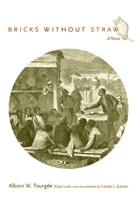
Bricks Without Straw
A NovelAlbion W. Tourgée
Duke University Press, 2009
Bricks Without Straw is Tourgée’s fictionalized account of how Reconstruction was sabotaged. It is a chilling picture of violence against African Americans condoned, civil rights abrogated, constitutional amendments subverted, and electoral fraud institutionalized. Its plot revolves around a group of North Carolina freedpeople who strive to build new lives for themselves by buying land, marketing their own crops, setting up a church and school, and voting for politicians sympathetic to their interests, until Klan terrorism and the ascendancy of a white supremacist government reduce them to neo-slavery. This edition of Bricks Without Straw is enhanced by Carolyn L. Karcher’s introduction, which sets the novel in historical context and provides an overview of Albion W. Tourgée’s career, a chronology of the significant events of both the Reconstruction era and Tourgée’s life, and explanatory notes identifying actual events fictionalized in the novel.
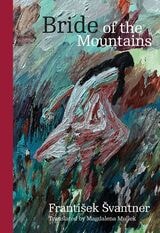
Bride of the Mountains
František Švantner
Karolinum Press, 2026
A classic work of twentieth-century Slovak literature that blends naturalism and depictions of rural life with the supernatural.
After many years, Libor returns to his native village, where he has been appointed gamekeeper. His childhood sweetheart, Zuna, is waiting for him there. But his homecoming is far from idyllic. He has “tasted city life” and soon becomes an outsider to the villagers. According to them, Zuna has become a local prostitute who sleeps with anyone who pays her. Zuna’s father, an old miller, has gone blind because he made a pact with the devil. The mill where Libor and Zuna used to play as children has fallen into disrepair and ruin. The more Libor gets to know the world that he has returned to, the more confused he becomes. The village is full of superstitions, secrets, and hostility. He meets the charcoal burner Tavo, who lives high in the mountains, and learns from him the mysterious and bloody story of Zuna’s birth. He also learns what matters most to him: Zuna is pure and innocent. Libor starts a relationship with her from scratch. But just when their forgotten love might finally come to fruition, He appears—a vagabond who can transform into a wolf—and Libor discovers that Zuna is meeting with him. Is it a monster that gouges people’s eyes out? The devil, or our immaterial, dark alter ego? Reality, dreams, and fantasy blend in Libor’s mind as his hopes seem crushed beyond redemption.
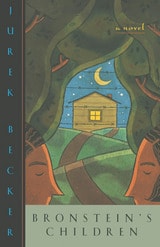
Bronstein's Children
Jurek Becker
University of Chicago Press, 1999
"[A] chilly, disquieting novel about historical slippage; about the seemingly inevitable decline of horror into a vague and generic recollection. The East German writer has devised something between story and allegory to evoke the cold generational millennium that separates a father, with his concentration-camp memories, from a son, adrift in a society with no memories whatsoever."—Richard Eder, Los Angeles Times Book Review
"Mr. Becker, writing simply and clearly in an unstrained narrative, speaks with the voice of knowledge, and we do well to listen to him."—Eva Figes, New York Times Book Review
Jurek Becker (1937-1998) is the author of Jacob the Liar, Sleepless Days, The Boxer, and Amanda Herzlos.
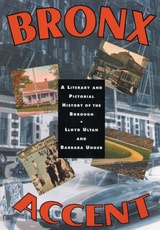
Bronx Accent
A Literary and Pictorial History of the BoroughUltan, Lloyd
Rutgers University Press, 2000
Bringing together a variety of past literary figures as well as emerging talents, this comprehensive book captures the Zeitgeist of the neighborhood through the eyes of its writers. Included are selections from the writings of Jack Kerouac, Mark Twain, James Baldwin, James Fenimore Cooper, Tom Wolfe, Herman Wouk, Theodore Dreiser, Washington Irving, Clifford Odets, Cynthia Ozick, Grace Paley, Edgar Allan Poe, Chaim Potok, Kate Simon, Leon Trotsky, and Sholem Aleichem.
Lloyd Ultan and Barbara Unger place the literature of these and other writers in historical context and reproduce one hundred vintage photographs that bring the writings to life. Filtered through the imaginations of authors of different times, ethnic groups, social classes, and literary styles, the borough of The Bronx emerges not only as a shaper of destinies and lives, but as an important literary mecca.
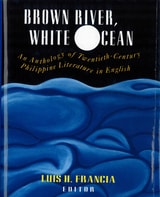
Brown River, White Ocean
An Anthology of Twentieth-Century Philippine Literature in EnglishFrancia, Luis H
Rutgers University Press, 1993
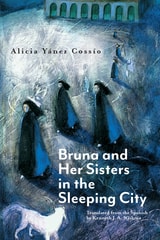
Bruna and Her Sisters in the Sleeping City
Alicia Yánez Cossío, Translated from the Spanish by Kenneth J. A. Wishnia
Northwestern University Press, 1999
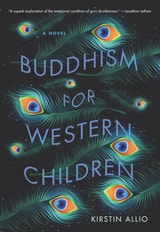
Buddhism for Western Children
Kirstin Allio
University of Iowa Press, 2018
In search of community and transcendence, ten-year-old Daniel’s family is swept into the thrall of a potent and manipulative guru. To his followers, Avadhoot Master King Ivanovich is a living god, a charismatic leader who may reveal enlightenment as he mesmerizes, and alchemizes, Eastern and Western spiritual traditions.
Daniel’s family plunges into a world with different rules and rhythms—and with no apparent exit. They join other devotees in shunning the outside world, and fall under the absolutist authority of the guru and his lieutenants. Daniel bears witness to the relentless competition for the guru’s favor, even as he begins to recognize the perversion of his spirituality. Soon, Daniel himself is chosen to play a role. As tensions simmer and roil, darkness intrudes. Devotees overstep, placing even the children in jeopardy. Daniel struggles with conflicting desires to resist and to belong, until finally he must decide who to save and who to abandon.
With spiraling, spellbinding language, Allio reveals a cast of vivid, often darkly funny characters, and propels us toward a shocking climax where Daniel’s story cracks open like a kaleidoscope, revealing the costs of submitting to a tyrant and the shimmering resilience of the human spirit.
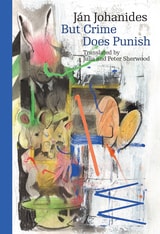
But Crime Does Punish
Ján Johanides
Karolinum Press, 2022
“So, as you see, I am familiar with the case. However, we can’t discuss it unless you learn more about some other court cases, so that you can compare your father’s trial with other, more baffling cases, and see it in the context of the madness that reigned at the time.”
Ján Johanides’ riveting Slovak novel immediately thrusts you into the midst of a bewildering second-person dialogue, bestowing the reader with the role of a silent partner in a one-sided conversation with a mysterious archivist. As the story unfurls piece by piece, it becomes clear that the archivist, who can’t seem to stay on topic, has both a tragic history and the key to unlocking your family’s darkest secret, a secret that may or may not involve the Czechoslovak secret police, American and Soviet intelligence, Israeli politics, and a tire full of dollars.
Set after the fall of the Soviet Union and the dissolution of Czechoslovakia, But Crimes Do Punish is awash with paranoia, revealing how the madness of the Communist era continues to bleed into the instability of the present. Written in 1995, this haunting novel—the first work of Slovak fiction published by Karolinum Press—evokes the spirit of John le Carré and the style of Carlos Fuentes while illuminating issues that still plague post-Communist Europe.
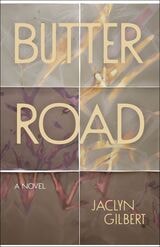
Butter Road
A NovelJaclyn Gilbert
Acre Books, 2026
A searing novel about a community irrevocably transformed by gun violence.
In 2006, a gunman entered a one-room Amish schoolhouse in Lancaster County, Pennsylvania, taking the students hostage and shooting ten girls before turning his weapon on himself. Set twelve years after this event, largely in the village of Nickel Mines, Butter Road explores the long-reaching ramifications of tragedy through the imagined lives of three women: Emma Walsh, an eighteen-year-old survivor of the shooting; her mother, Ruth, who lost her eldest daughter to the violence; and Sara Caldwell, an “English” outsider and wife of a doctor researching genetic disorders in the Amish population.
At the novel's outset, Sara enlists young Emma for housework and gardening to help the Walshes alleviate the debt they’ve accumulated caring for Emma’s disabled brother, who has the rare condition Sara’s husband is studying. Over the course of several months, Sara and Emma form a bond, and as Emma explores Sara's library, she begins writing fragments of memory on the backs of old feed calendars—a process that leads her to grapple with the devastating deaths of her sister and friends, and the insularity of Amish forgiveness. The more Emma writes, the more she questions her upbringing and ingrained beliefs, ultimately seeing her relationship to Isaac Ames, the man she is destined to marry, in a new light. The story culminates with the characters making breathtaking, self-searching decisions that alter the lives of others as well as their own.
Emotionally acute and lyrically spare, Butter Road centers on living with what we can’t control, on understanding trauma and collective grief, and on following one’s heart.
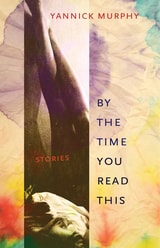
By the Time You Read This
StoriesYannick Murphy
University of Alabama Press, 2021
WINNER OF FC2’s CATHERINE DOCTOROW INNOVATIVE FICTION PRIZE
A gathering of luminescent stories that illustrates how fraught and contingent the simplest of lives can be, and the often unexpected means available to each of us for our own salvation
The truths revealed and the lives upended in the 13 stories that make up Yannick Murphy’s By the Time You Read This are at once singularly foreign and uncannily familiar. A wife pens a series of suicide notes to her family that verge on the comic, hovering between the tyrannical and the absurd. A mother obsesses over what her child eats. A young girl left with caretakers in New York draws on her potent imagination with consequences in real life that are both liberating and disastrous. In a college application essay a young woman finally begins to make sense of the troubling vicissitudes of her existence. A young French girl departs for America with her reprehensible beau to find she’s as much a stranger to herself abroad as she was at home. As with her previous novels and story collections, Murphy’s keen rendering of these disparate, complex lives illuminate in ways both quiet and startling our capacity for deliverance and devastation through daring acts of self-invention.