85 books match the query 'Men's Studies' and 7 start with b
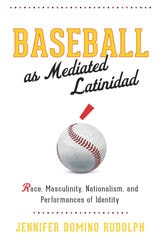
cover of Baseball as Mediated Latinidad: Race, Masculinity, Nationalism, and Performances of Identity

Baseball as Mediated Latinidad

Race, Masculinity, Nationalism, and Performances of Identity

Jennifer Domino Rudolph

The Ohio State University Press, 2020

In her incisive study Baseball as Mediated Latinidad: Race, Masculinity, Nationalism, and Performances of Identity, Jennifer Domino Rudolph analyzes major league baseball’s Latin/o American players—who now make up more than twenty-five percent of MLB—as sites of undesirable surveillance due to the historical, political, and sociological weight placed on them via stereotypes around immigration, crime, masculinity, aggression, and violence. Rudolph examines the perception by media and fans of Latino baseball players and the consumption of these athletes as both social and political stand-ins for an entire culture, showing how these participants in the nationalist game of baseball exemplify tensions over race, nation, and language for some while simultaneously revealing baseball as a practice of latinidad, or pan-Latina/o/x identity, for others. By simultaneously exploring the ways in which Latino baseball players can appear both as threats to American values and the embodiment of the American Dream, and engaging with both archival research and new media representations of MLB players, Rudolph sheds new light on the current ambivalence of mainstream American media and fans towards Latin/o culture.
[more]
cover of Been a Heavy Life: Stories of Violent Men

Been a Heavy Life

Stories of Violent Men

Lois Presser

University of Illinois Press, 2007
In this groundbreaking work, Lois Presser investigates the life stories of men who have perpetrated violence. She applies insights from across the academy to in-depth interviews with men who shared their accounts of how they became the people we most fear--those who rape, murder, assault, and rob, often repeatedly. Been a Heavy Life provides the discipline of criminology with two crucial frameworks: one for critically evaluating the construction of offenders’ own stories, and one for grasping the cultural meta-narratives that legitimize violence. For social scientists generally, this book offers a vivid demonstration of just how dynamic and contingent self-narratives are.
[more]
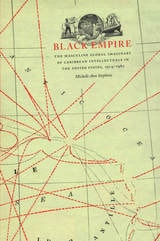
cover of Black Empire: The Masculine Global Imaginary of Caribbean Intellectuals in the United States, 1914–1962

Black Empire

The Masculine Global Imaginary of Caribbean Intellectuals in the United States, 1914–1962

Michelle Ann Stephens

Duke University Press, 2005

In Black Empire, Michelle Ann Stephens examines the ideal of “transnational blackness” that emerged in the work of radical black intellectuals from the British West Indies in the early twentieth century. Focusing on the writings of Marcus Garvey, Claude McKay, and C. L. R. James, Stephens shows how these thinkers developed ideas of a worldwide racial movement and federated global black political community that transcended the boundaries of nation-states. Stephens highlights key geopolitical and historical events that gave rise to these writers’ intellectual investment in new modes of black political self-determination. She describes their engagement with the fate of African Americans within the burgeoning U.S. empire, their disillusionment with the potential of post–World War I international organizations such as the League of Nations to acknowledge, let alone improve, the material conditions of people of color around the world, and the inspiration they took from the Bolshevik Revolution, which offered models of revolution and community not based on nationality.

Stephens argues that the global black political consciousness she identifies was constituted by both radical and reactionary impulses. On the one hand, Garvey, McKay, and James saw freedom of movement as the basis of black transnationalism. The Caribbean archipelago—a geographic space ideally suited to the free movement of black subjects across national boundaries—became the metaphoric heart of their vision. On the other hand, these three writers were deeply influenced by the ideas of militarism, empire, and male sovereignty that shaped global political discourse in the early twentieth century. As such, their vision of transnational blackness excluded women’s political subjectivities. Drawing together insights from American, African American, Caribbean, and gender studies, Black Empire is a major contribution to ongoing conversations about nation and diaspora.
[more]
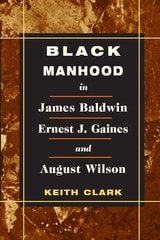
cover of Black Manhood in James Baldwin, Ernest J. Gaines, and August Wilson

Black Manhood in James Baldwin, Ernest J. Gaines, and August Wilson

Keith Clark

University of Illinois Press, 2002

Challenging the standard portrayals of Black men in African American literature

From Frederick Douglass to the present, the preoccupation of black writers with manhood and masculinity is a constant. Black Manhood in James Baldwin, Ernest J. Gaines, and August Wilson explores how in their own work three major African American writers contest classic portrayals of black men in earlier literature, from slave narratives through the great novels of Richard Wright and Ralph Ellison.

Keith Clark examines short stories, novels, and plays by Baldwin, Gaines, and Wilson, arguing that since the 1950s the three have interrupted and radically dismantled the constricting literary depictions of black men who equate selfhood with victimization, isolation, and patriarchy. Instead, they have reimagined black men whose identity is grounded in community, camaraderie, and intimacy.

Delivering original and startling insights, this book will appeal to scholars and students of African American literature, gender studies, and narratology.
[more]
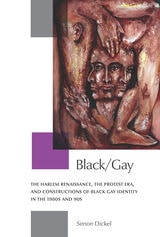
cover of Black/Gay: The Harlem Renaissance, the Protest Era, and the Constructions of Black Gay Identity in the 1980s and 90s

Black/Gay

The Harlem Renaissance, the Protest Era, and the Constructions of Black Gay Identity in the 1980s and 90s

Simon Dickel

Michigan State University Press, 2011

This book explores key texts of the black gay culture of the 1980s and ’90s. Starting with an analysis of the political discourse in anthologies such as In the Life and Brother to Brother, it identifies the references to the Harlem Renaissance and the Protest Era as common elements of black gay discourse. This connection to African American cultural and political traditions legitimizes black gay identity and criticizes the construction of gay identity as white. Readings of Isaac Julien’s Looking for Langston, Samuel R. Delany’s “Atlantis: Model 1924” and The Motion of Light in Water, Melvin Dixon’s Vanishing Rooms, Randall Kenan’s A Visitation of Spirits, and Steven Corbin’s No Easy Place to Be demonstrate how these strategies of signifying are used in affirmative, humorous, and ironic ways.
[more]
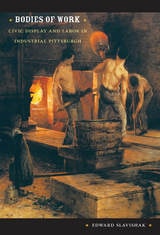
cover of Bodies of Work: Civic Display and Labor in Industrial Pittsburgh

Bodies of Work

Civic Display and Labor in Industrial Pittsburgh

Edward Slavishak

Duke University Press, 2008

By the end of the nineteenth century, Pittsburgh emerged as a major manufacturing center in the United States. Its rise as a leading producer of steel, glass, and coal was fueled by machine technology and mass immigration, developments that fundamentally changed the industrial workplace. Because Pittsburgh’s major industries were almost exclusively male and renowned for their physical demands, the male working body came to symbolize multiple often contradictory narratives about strength and vulnerability, mastery and exploitation. In Bodies of Work, Edward Slavishak explores how Pittsburgh and the working body were symbolically linked in civic celebrations, the research of social scientists, the criticisms of labor reformers, advertisements, and workers’ self-representations. Combining labor and cultural history with visual culture studies, he chronicles a heated contest to define Pittsburgh’s essential character at the turn of the twentieth century, and he describes how that contest was conducted largely through the production of competing images.

Slavishak focuses on the workers whose bodies came to epitomize Pittsburgh, the men engaged in the arduous physical labor demanded by the city’s metals, glass, and coal industries. At the same time, he emphasizes how conceptions of Pittsburgh as quintessentially male limited representations of women in the industrial workplace. The threat of injury or violence loomed large for industrial workers at the turn of the twentieth century, and it recurs throughout Bodies of Work: in the marketing of artificial limbs, statistical assessments of the physical toll of industrial capitalism, clashes between labor and management, the introduction of workplace safety procedures, and the development of a statewide workmen’s compensation system.
[more]
cover of Brotherhood University: Black Men's Friendships and the Transition to Adulthood

Brotherhood University

Black Men's Friendships and the Transition to Adulthood

Brandon A. Jackson

Rutgers University Press, 2024

How do young Black men navigate the transition to adulthood in an era of labor market precarity, an increasing emphasis on personal independence, and gendered racism? In Brotherhood University, Brandon A. Jackson utilizes longitudinal qualitative data to examine the role of emotions and social support among a group of young Black men as they navigate a “structural double bind” as college students and into early adulthood. While prevailing stereotypes portray young Black men as emotionally aloof, Jackson finds that the men invested in an emotion culture characterized by vulnerability, loyalty, and trust, which created a system of mutual social support, or brotherhood, among the group as they navigated college, prepared for the labor market, and experienced romantic relationships. Ten years later, as they managed the early stages of their careers and considered marriage and child-rearing, the men continued to depend on the emotional vulnerability and close relationships they forged in their college years.
 
[more]