Results by title
2817 books match the query 'Nature' and 134 start with b

BLACK SWAMP FARM
Howard E. Good
The Ohio State University Press, 1997
Good remembers playing shinny with clamp-on skates and a tin can that had been stomped until it could whiz across the ice given just the right combination of speed and accuracy. He tells of the boom of the steam engine as it pulled the threshing machine to a neighboring farm on a hot summer day, and of the excitement of riding high on a wagonload of hay, gazing down on the horses’ broad, shining backs. He describes the springtime task of making soap, the ritual of the shivaree, and the pleasure of the church ice-cream social. He remembers well—and chronicles for the reader—the unproclaimed achievements of men and women whose courage and grueling toil brought them rich rewards.
First published in 1967, this reprint makes available once again a faithful portrayal of Black Swamp—a place that no longer exists—and provides a treasure trove of history for Ohioans.
Back Cast
Fly-Fishing and Other Such MattersJeff Metcalf
University of Utah Press, 2018
These essays are much more than fish stories; they reveal the community and communion of fishing and the bonds to place the author nurtured through it. Whether he recalls carousing and tale-swapping with friends or excellence found through the challenge of the cast, Metcalf’s words, sometimes roiling and turbulent, sometimes calm and reflective, like a western river, vividly convey the pull of the steelhead and the fight for survival. Whether or not you fish, Metcalf’s sharp-eyed, open and honest look at life will draw you in.
"These waters have been my home, and I fish them more than most. In truth, they have saved my life on more than a few occasions. I seek refuge in the quiet solitude of rivers, and in dark hours of my life—including this particular year—I need desperately to be fly-fishing." —From the book
Back to Earth
Tomorrow's EnvironmentalismAnthony Weston
Temple University Press, 1994
Back to the Land
The Enduring Dream of Self-Sufficiency in Modern AmericaDona Brown
University of Wisconsin Press, 2011
Backcasts
A Global History of Fly Fishing and ConservationEdited by Samuel Snyder, Bryon Borgelt, and Elizabeth Tobey
University of Chicago Press, 2016
Though Maclean writes of an age-old focus of all anglers—the day’s catch—he may as well be speaking to another, deeper accomplishment of the best fishermen and fisherwomen: the preservation of natural resources.
Backcasts celebrates this centuries-old confluence of fly fishing and conservation. However religious, however patiently spiritual the tying and casting of the fly may be, no angler wishes to wade into rivers of industrial runoff or cast into waters devoid of fish or full of invasive species like the Asian carp. So it comes as no surprise that those who fish have long played an active, foundational role in the preservation, management, and restoration of the world’s coldwater fisheries. With sections covering the history of fly fishing; the sport’s global evolution, from the rivers of South Africa to Japan; the journeys of both native and nonnative trout; and the work of conservation organizations such as the Federation of Fly Fishers and Trout Unlimited, Backcasts casts wide.
Highlighting the historical significance of outdoor recreation and sports to conservation in a collection important for fly anglers and scholars of fisheries ecology, conservation history, and environmental ethics, Backcasts explores both the problems anglers and their organizations face and how they might serve as models of conservation—in the individual trout streams, watersheds, and landscapes through which these waters flow.
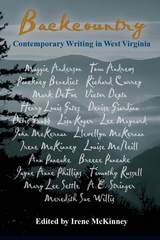
Backcountry
Contemporary Writing in West VirginiaIRENE MCKINNEY
West Virginia University Press, 2002
This is as closely-knit an anthology as you are ever likely to see. It is as though a large, extended family were drawing on the same store of family stories, jokes, symbols, landscapes, animals, trees, language, and vernacular. How many snakes are in this book? How many foxes, possums? Fossils? And how very many coal mines? But it is not merely local references that unites these writers. There is a larger vision that ties these works together.
"The connection is not so much in mutual influence, though there is some of that, but in each writer’s total immersion in place. Even those writers who no longer live in the state remember the feel, the physical texture, the overwhelming and enfolding vegetal surround of the place." Editor, Irene McKinney
Bacula of North American Mammals
William Henry Burt
University of Michigan Press, 1960
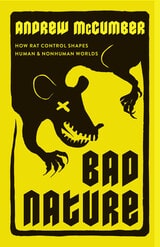
Bad Nature
How Rat Control Shapes Human and Nonhuman WorldsAndrew McCumber
University of Chicago Press, 2025
Apart from the occasional pet owner who has rats, most people regard rats as disease-carrying nocturnal pests, scurrying around dumpsters and dragging slices of pizza through New York City subways. Since rats are seemingly omnipresent in human life, why do we harbor such negative feelings about them, and why are they among the creatures most frequently targeted for systematic extermination?
In Bad Nature, sociologist Andrew McCumber draws out the cultural underpinnings of rat extermination across three countries and two continents. Drawing from ethnographic, interview, and textual data from the frigid prairie of Alberta, Canada; the heart of downtown Los Angeles, California; and the iconic Galápagos Islands of Ecuador, McCumber studies how humans have sought to suppress and exterminate rat populations in a variety of environmental, social, and political situations. He shows how, in these disparate locations, rat control is a social practice that draws and clarifies the spatial and symbolic boundaries between “good” and “bad” forms of nature. Rats are near the bottom of a symbolic hierarchy of species that places human life at the top, companion animals and majestic wildlife just below them, and the “invasive species” that call for systematic extermination at the very bottom. This hierarchy of living things that places rats at the bottom, McCumber argues, mirrors human systems of social inequalities and power dynamics.
Both original and engaging, Bad Nature urges readers to consider, when charting a just and sustainable future, where will the rats be placed in the worlds we envision?
Bad Nature
How Rat Control Shapes Human and Nonhuman WorldsAndrew McCumber
University of Chicago Press, 2025
Offers insights into the social and cultural implications of humans’ relationships with rats and the natural world.
Apart from the occasional pet owner who has rats, most people regard rats as disease-carrying nocturnal pests, scurrying around dumpsters and dragging slices of pizza through New York City subways. Since rats are seemingly omnipresent in human life, why do we harbor such negative feelings about them, and why are they among the creatures most frequently targeted for systematic extermination?
In Bad Nature, sociologist Andrew McCumber draws out the cultural underpinnings of rat extermination across three countries and two continents. Drawing from ethnographic, interview, and textual data from the frigid prairie of Alberta, Canada; the heart of downtown Los Angeles, California; and the iconic Galápagos Islands of Ecuador, McCumber studies how humans have sought to suppress and exterminate rat populations in a variety of environmental, social, and political situations. He shows how, in these disparate locations, rat control is a social practice that draws and clarifies the spatial and symbolic boundaries between “good” and “bad” forms of nature. Rats are near the bottom of a symbolic hierarchy of species that places human life at the top, companion animals and majestic wildlife just below them, and the “invasive species” that call for systematic extermination at the very bottom. This hierarchy of living things that places rats at the bottom, McCumber argues, mirrors human systems of social inequalities and power dynamics.
Both original and engaging, Bad Nature urges readers to consider, when charting a just and sustainable future, where will the rats be placed in the worlds we envision?
Bad Water
Nature, Pollution, and Politics in Japan, 1870-1950Robert Stolz
Duke University Press, 2014
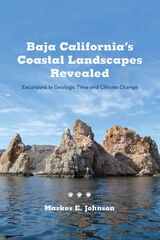
Baja California's Coastal Landscapes Revealed
Excursions in Geologic Time and Climate ChangeMarkes E. Johnson
University of Arizona Press, 2021
Johnson reveals a geologic history that is outside the temporal framework of a human lifetime and scored by violent storms. We see how hurricanes have shaped coastal landscapes all along the peninsula’s inner coast, a fascinating story only possible by disassembling the rocks that on first appraisal seem incomprehensible.
Looking closely, Johnson shows us how geology not only helps us look backward but also forward toward an uncertain future. The landscape Johnson describes may be apart from the rest of Mexico, but his expert eye reveals how it is influenced by the unfolding drama of Planet Earth’s global warming.
Banning DDT
How Citizen Activists in Wisconsin Led the WayBill Berry
Wisconsin Historical Society Press, 2014
On a December day in 1968, DDT went on trial in Madison, Wisconsin. In Banning DDT: How Citizen Activists in Wisconsin Led the Way, Bill Berry details how the citizens, scientists, reporters, and traditional conservationists drew attention to the harmful effects of “the miracle pesticide” DDT, which was being used to control Dutch elm disease.
Berry tells of the hunters and fishers, bird-watchers, and garden-club ladies like Lorrie Otto, who dropped off twenty-eight dead robins at the Bayside village offices. He tells of university professors and scientists like Joseph Hickey, a professor and researcher in the Department of Wildlife Management in at the University of Wisconsin–Madison, who, years after the fact, wept about the suppression of some of his early DDT research. And he tells of activists like Senator Gaylord Nelson and members of the state’s Citizens Natural Resources who rallied the cause.
The Madison trial was one of the first for the Environmental Defense Fund. The National Audubon Society helped secure the more than $52,000 in donations that offset the environmentalists’ costs associated with the hearing. Today, virtually every reference to the history of DDT mentions the impact of Wisconsin’s battles.
The six-month-long DDT hearing was one of the first chapters in citizen activism in the modern environmental era. Banning DDT is a compelling story of how citizen activism, science, and law merged in Wisconsin’s DDT battles to forge a new way to accomplish public policy. These citizen activists were motivated by the belief that we all deserve a voice on the health of the land and water that sustain us.
Bark Beetles in North American Conifers
A System for the Study of Evolutionary BiologyEdited by Jeffry B. Mitton and Kareen B. Sturgeon
University of Texas Press, 1982
Because they prey upon a wide variety of conifers, bark beetles have a major impact upon western forests. In most of the western states, for example, we have witnessed bark beetles in epidemic outbreaks, attacking and damaging ponderosa pine, limber pine, and other hosts.
The ecosystem of bark beetle and host tree is a highly coevolved community of organisms in which the evolution of one member of the community significantly influences the evolution of the other. Largely because of the enormous economic impact these insects exert on the management of our forests, few other such communities have been studied so extensively. Bark Beetles in North American Conifers brings together in one volume both theory and a wealth of empirical data gathered by researchers from all the fields in which bark beetles are studied: ecology, evolutionary biology, population genetics, entomology, and forestry.
Topics covered include the life cycle of bark beetles and their population dynamics, their genetic variation and evolutionary mechanisms, the evolution and systematics of the major groups of bark beetles, pheromone production and its implications for coevolution among these organisms, the interaction between bark beetles and their predators, host resistance and susceptibility, the relationship of parasites and symbiotic micro-organisms in general, and management and control of bark beetles based on sound ecological and evolutionary concepts. The concluding section of the book summarizes the dynamics of the coevolved system of bark beetle and host tree and discusses controversial issues for which this system may provide important answers.
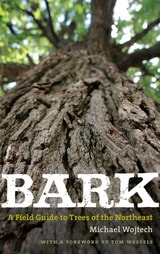
Bark
A Field Guide to Trees of the NortheastMichael Wojtech
Brandeis University Press, 2020
What kind of tree is that? Whether you’re hiking in the woods or simply sitting in your backyard, from Maine to New York you’ll never be without an answer to that question, thanks to this handy companion to the trees of the Northeast. Featuring detailed information and illustrations covering each phase of a tree’s lifecycle, this indispensable guidebook explains how to identify trees by their bark alone—no more need to wait for leaf season. Chapters on the structure and ecology of tree bark, descriptions of bark appearance, an easy-to-use identification key, and supplemental information on non-bark characteristics—all enhanced by more than 450 photographs, illustrations, and maps—will show you how to distinguish the textures, shapes, and colors of bark to recognize various tree species, and also understand why these traits evolved.
Whether you’re a professional naturalist or a parent leading a family hike, this new edition of Bark: A Field Guide to Trees of the Northeast is your essential guide to the region’s 67 native and naturalized tree species.
Barren, Wild, and Worthless
Living in the Chihuahuan DesertSusan J. Tweit
University of Arizona Press, 2003
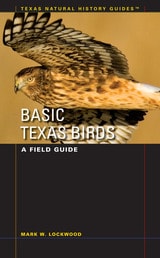
Basic Texas Birds
A Field GuideBy Mark W. Lockwood
University of Texas Press, 2007
Finding all the birds in Texas can be a lifetime pursuit. Basic Texas Birds, an easy-to-use field guide, will help you identify over 180 species of birds that are found across the state, including a selection of the rarer "Texas specialties" that draw birders to Texas from around the world. These are the birds that form the basis of a birder's life list for Texas.
Basic Texas Birds is organized by bird families to aid in identifying any bird you see in the wild. It is loaded with resources, including:
- 200 full-color, close-up photos of the birds
- State-of-the-art range maps—the most accurate of any currently available—that show each species' distribution within the state
- Up-to-date species accounts that provide a wealth of current and historical information, including each bird's appearance, habitat, status, and distribution, and that also identify similar species
- A glossary of terms used in bird identification
- A list of selected readings for learning more about birds found in Texas
- The Texas Ornithological Society's list of birds documented in Texas
Much more convenient for identifying common birds than a comprehensive state or national field guide, Basic Texas Birds is a must-have resource for both beginning and experienced birders.
Basking with Humpbacks
Tracking Threatened Marine Life in New England WatersTodd McLeish
University Press of New England, 2016
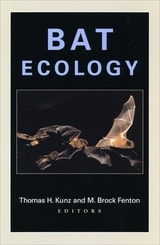
Bat Ecology
Edited by Thomas H. Kunz and M. Brock Fenton
University of Chicago Press, 2003
The first part of the book covers the life history and behavioral ecology of bats, from migration to sperm competition and natural selection. The next section focuses on functional ecology, including ecomorphology, feeding, and physiology. In the third section, contributors explore macroecological issues such as the evolution of ecological diversity, range size, and infectious diseases (including rabies) in bats. A final chapter discusses conservation challenges facing these fascinating flying mammals.
Bat Ecology is the most comprehensive state-of-the-field collection for scientists and researchers.
Contributors:
John D. Altringham, Robert M. R. Barclay, Tenley M. Conway, Elizabeth R. Dumont, Peggy Eby, Abigail C. Entwistle, Theodore H. Fleming, Patricia W. Freeman, Lawrence D. Harder, Gareth Jones, Linda F. Lumsden, Gary F. McCracken, Sharon L. Messenger, Bruce D. Patterson, Paul A. Racey, Jens Rydell, Charles E. Rupprecht, Nancy B. Simmons, Jean S. Smith, John R. Speakman, Richard D. Stevens, Elizabeth F. Stockwell, Sharon M. Swartz, Donald W. Thomas, Otto von Helversen, Gerald S. Wilkinson, Michael R. Willig, York Winter
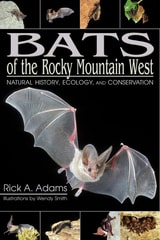
Bats of the Rocky Mountain West
Natural History, Ecology, and ConservationRick A. Adams
University Press of Colorado, 2003
Bats of the Rocky Mountain West begins with a general discussion of bat biology and evolution as well as regional physiography and zoogeography. In addition, Adams describes - based on the results of extensive research - the behavior and ecology of the 31 species of bats found in Montana, Idaho, Wyoming, Utah, Colorado, New Mexico, and Arizona. Naturalists and biologists alike will benefit from the detailed species descriptions, color photographs and illustrations, distribution maps, and echolocation sonograms. Bats of the Rocky Mountain West is a unique and valuable reference for professional bat biologists, naturalists, and wildlife enthusiasts interested in the conservation and ecology of bats in the region.
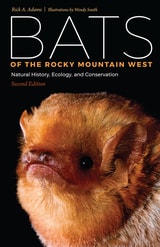
Bats of the Rocky Mountain West
Natural History, Ecology, and ConservationRick A. Adams
University Press of Colorado, 2025
In the twenty years since the original publication of Bats of the Rocky Mountain West, chiropterology (bat science) has exploded, significantly altering our understanding of the ecology, behavior, distribution, and conservation of one of the world's most enigmatic mammals. This notably updated second edition further brings to life the wonderful world of bats with beautiful illustrations and photography that grip the imagination and reveal the magnificent natural history of the only true flying mammal. In addition, thirty-two accounts of regional species with photographs, range maps, and echolocation sonograms report informative and thoroughly revised findings on bats now living in the Rocky Mountain West. Leave any preconceived notions behind and learn the real-life biology of bats, which eclipses the fabled tales of the crypt and macabre.
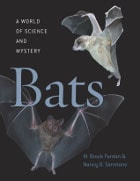
Bats
A World of Science and MysteryM. Brock Fenton and Nancy B. Simmons
University of Chicago Press, 2015
Bats: A World of Science and Mystery presents these fascinating nocturnal creatures in a new light. Lush, full-color photographs portray bats in flight, feeding, and mating in views that show them in exceptional detail. The photos also take the reader into the roosts of bats, from caves and mines to the tents some bats build out of leaves. A comprehensive guide to what scientists know about the world of bats, the book begins with a look at bats’ origins and evolution. The book goes on to address a host of questions related to flight, diet, habitat, reproduction, and social structure: Why do some bats live alone and others in large colonies? When do bats reproduce and care for their young? How has the ability to fly—unique among mammals—influenced bats’ mating behavior? A chapter on biosonar, or echolocation, takes readers through the system of high-pitched calls bats emit to navigate and catch prey. More than half of the world’s bat species are either in decline or already considered endangered, and the book concludes with suggestions for what we can do to protect these species for future generations to benefit from and enjoy.
From the tiny “bumblebee bat”—the world’s smallest mammal—to the Giant Golden-Crowned Flying Fox, whose wingspan exceeds five feet, A Battery of Bats presents a panoramic view of one of the world’s most fascinating yet least-understood species.
Battle
The Nature and Consequences of Civil War CombatEdited by Kent Gramm
University of Alabama Press, 2008
A critical, multidisciplinary examination of Civil War combat that interrogates the technological, medical, psychological, and cultural forces shaping battlefield experience and its enduring national legacy.
“In our youth, our hearts were touched with fire,” wrote Oliver Wendell Holmes of his generation’s Civil War days. Through the ages, war stories have gleamed with romantic glory, and American memories of the cataclysmic Civil War inspire pageantry and poetry even today.
The essays in Battle form a corrective to such celebratory histories by examining the lethal realities of Civil War combat—Enlightenment science applied to the creation of weapons that maimed and killed, which far outpaced advances in diet, sanitation, and medical treatment. The book reveals that behind the drums and trumpets, sashes and swords, the armies of the Union and Confederacy alike were haunted by fear, pain, and death.
The collection includes an introduction and afterword by editor Kent Gramm, who also contributes an essay titled “Numbers” that reveals the war in statistics. Paul Fussell contributes a powerful essay titled “The Culture of War.” D. Scott Hartwig examines the face of battle at Gettysburg. Bruce A. Evans discusses medical technology in “Wounds, Death, and Medical Care in the Civil War.” Eric T. Dean challenges the meanings and consequences of combat in “The Awful Shock and Rage of Battle.” The collection is rounded out by Alan T. Nolan’s masterful review of the national consequences of battle and the resultant myth of the Confederacy’s Lost Cause.
Battles of the North Country
Wilderness Politics and Recreational Development in the Adirondack State Park, 1920-1980Jonathan D. Anzalone
University of Massachusetts Press, 2018
Through a series of case studies, historian Jonathan D. Anzalone highlights the role of public and private interests in the region and shows how partnerships frayed and realigned in the course of several key developments: the rise of camping in the 1920s and 1930s; the 1932 Lake Placid Olympics; the construction of a highway to the top of Whiteface Mountain; the postwar rise of downhill skiing; the completion of I-87 and the resulting demand for second homes; and the 1980 Lake Placid Olympics. Battles of the North Country reveals how class, economic self-interest, state power, and a wide range of environmental concerns have shaped modern politics in the Adirondacks and beyond.
Beaches, Bays, and Barrens
A Natural History of the Jersey ShoreEric G. Bolen
Rutgers University Press, 2024
Beaches, Bays, and Barrens introduces readers to the natural wonders of the Jersey Shore, revealing its unique ecology and fascinating history. The journey begins with the contributions and discoveries of early naturalists who visited the region and an overview of endangered species and natural history, followed by chapters that explore different facets of the shore’s environments. These start with sandy beaches and dunes and culminate in the engaging Pine Barrens, the vital watershed for much of the state’s varied coastline. Along the way, readers will also learn about whaling, decoy carvers, an extinct duck, and the cultivation of wild blueberries.
Including over seventy color photographs, the book also features twenty-three infoboxes that go deep into areas of ecological or historical interest, such as the Forsythe National Wildlife Refuge or the Jaws-like shark attacks of 1916. From Cape May to Sandy Hook, biologist Eric G. Bolen takes you on a guided tour of the Jersey Shore’s rich ecological heritage.
Bear Man of Admiralty Island
A Biography of Allen E. HasselborgJohn Howe
University of Alaska Press, 1996
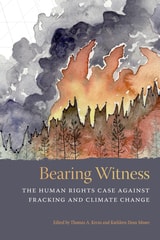
Bearing Witness
The Human Rights Case Against Fracking and Climate ChangeThomas A. Kerns
Oregon State University Press, 2021
On May 14, 2018, a respected international human-rights court, the Rome-based Permanent Peoples’ Tribunal, began a week-long hearing on the impacts of fracking and climate change on human and Earth rights. In its advisory opinion, the Tribunal ruled that fracking systematically violates substantive and procedural human rights; that governments are complicit in the rights violations; and that to protect human rights and the climate, the practice of fracking should be banned.
The case makes history. It revokes the social license of extreme-extraction industries by connecting environmental destruction to human-rights violations. It affirms that climate change, and the extraction techniques that fuel it, directly violate deeply and broadly accepted moral norms encoded in the Universal Declaration of Human Rights.
Bearing Witness maps a promising new direction in the ongoing struggle to protect the planet from climate chaos. It tells the story of this landmark case through carefully curated court materials, including searing eye-witness testimony, groundbreaking legal testimony, and the Tribunal’s advisory opinion. Essays by leading climate writers such as Winona LaDuke, Robin Wall Kimmerer, and Sandra Steingraber and legal experts such as John Knox, Mary Wood, and Anna Grear give context to the controversy. Framing essays by the editors, experts on climate ethics and human rights, demonstrate that a human-rights focus is a powerful, transformative new tool to address the climate crisis.
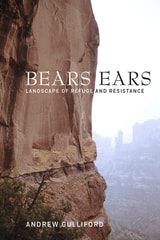
Bears Ears
Landscape of Refuge and ResistanceAndrew Gulliford
University of Utah Press, 2022
Gulliford’s engaging narrative explains prehistoric Pueblo villages and cliff dwellings, Navajo and Ute history, stories of Mormon families who arrived by wagon train in 1880, impacts of the Atomic Age, uranium mining, and the pothunting and looting of Native graves that inspired the passage of the Antiquities Act over a century ago. The book describes how the national monument came about and its deep significance to five native tribes.
Bears Ears National Monument is a bellwether for public land issues in the American West. Its recognition will be relevant for years to come.
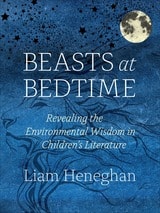
Beasts at Bedtime
Revealing the Environmental Wisdom in Children’s LiteratureLiam Heneghan
University of Chicago Press, 2018
In Beasts at Bedtime, scientist (and father) Liam Heneghan examines the environmental underpinnings of children’s stories. From Beatrix Potter to Harry Potter, Heneghan unearths the universal insights into our inextricable relationship with nature that underlie so many classic children’s stories. Some of the largest environmental challenges in coming years—from climate instability, the extinction crisis, freshwater depletion, and deforestation—are likely to become even more severe as this generation of children grows up. Though today’s young readers will bear the brunt of these environmental calamities, they will also be able to contribute to environmental solutions if prepared properly. And all it takes is an attentive eye: Heneghan shows how the nature curriculum is already embedded in bedtime stories, from the earliest board books like The Rainbow Fish to contemporary young adult classics like The Hunger Games.
Beasts at Bedtime is an awakening to the vital environmental education children’s stories can provide—from the misadventures of The Runaway Bunny to more overt tales like The Lorax. Heneghan serves as our guide, drawing richly upon his own adolescent and parental experiences, as well as his travels in landscapes both experienced and imagined. Organized into thematic sections, the work winds its way through literary forests, colorful characters, and global environments.
This book enthralls as it engages. Heneghan as a guide is as charming as he is insightful, showing how kids (and adults) can start to experience the natural world in incredible ways from the comfort of their own rooms. Beasts at Bedtime will help parents, teachers, and guardians extend those cozy times curled up together with a good book into a lifetime of caring for our planet.
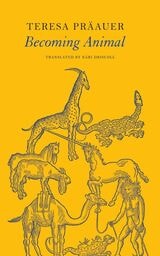
Becoming Animal
Teresa Präauer
Seagull Books, 2024
In this gripping philosophical and cultural exploration, Teresa Präauer sets out to investigate figures of transformation, transmission, and translation—across languages, cultures, genres, media, species, and spaces. Hybrids, chimeras, monsters, and liminal creatures of all sorts inhabit these pages, as indeed they do the pages of the cultural archive from Antiquity and the Middle Ages to the present day: everything from the harpies, ape-men, and cynocephali that inhabit the edges of medieval maps and taxonomies to the Krampuses and Furries that roam through Alpine villages and convention centers today. Yet these chimeras are not aberrations; rather, they reveal an essential truth about culture and artistic expression.
What emerges in Becoming Animal is a kaleidoscopic image of culture as the constant probing of the limits of the sayable, as an unending process of attempting to capture in words and symbols that which cannot be pinned down.
Becoming Creole
Nature and Race in BelizeJohnson, Melissa A.
Rutgers University Press, 2019
Becoming a Place of Unrest
Environmental Crisis and Ecophenomenological PraxisRobert Booth
Ohio University Press, 2021
Before and After an Oil Spill
The Arthur KillBurger, Joanna
Rutgers University Press, 1994
In January 1990, the New York Harbor suffered a major oil spill when an underwater pipe at an Exxon refinery leaked into the Arthur Kill, the fifteen-mile strait that runs between New Jersey and Staten Island. The waterway is home to herons and egrets, fiddler crabs and sea turtles, and a favorite place for recreational fishing, bird-watching, hiking, and boating. It is also lined with refineries and a busy corridor for oil tankers. Because this industrial activity posed such an imposing threat to the fragile ecosystem, biologists had been monitoring the region’s water, soil, vegetation, and wildlife for some time before the oil spill. Thus, we have before -and-after data about the habitat—the only oil spill anywhere for which this is true.
This unique book discusses the human consequences of the oil spill as well as providing detailed studies of its effects on the plants and animals of the Arthur Kill. Biologists, environmentalists, lawyers, and officials worldwide will find this book an essential guide to dealing with—and possibly preventing—future environmental disasters.
The contributors areJohn Brzorad, Angela Christini, Keith Cooper, Lynn Frink, Michael Gochfeld, Paul Hauge, Gordon Johnson, Alan D. Maccarone, Katherine Parsons, Carolyn Summers, Robert Tucker.
Before the Echo
Essays on NatureBy Pete Dunne
University of Texas Press, 1995
"The natural world is a lot like a game of musical chairs," observes Pete Dunne. "Everywhere you turn, everywhere you go, there are places where living things sit down, niches that support their specific needs. But just as in musical chairs, there aren't enough places to go around. Our species keeps removing them—forcing other creatures to leave the game."
In these twenty-nine essays, one of America's top nature writers trains his sights on the beauties and the vulnerabilities of the natural world. Writing to infuse others with a sense of the richness and diversity that nature holds, Pete Dunne ranges over topics from the wonder of the year's first snowfall to the lost art of stargazing to the mysterious forces that impel people to hunt—and not to hunt. Running like a thread through all the essays is Dunne's desire to preserve all that is "natural" in nature, to stop our unthinking destruction of wild places and wild creatures before we humans find ourselves with "the last chair, in an empty room" on an impoverished earth.
Before the Law
Humans and Other Animals in a Biopolitical FrameCary Wolfe
University of Chicago Press, 2012
Believing In Place
A Spiritual Geography Of The Great BasinRichard V. Francaviglia
University of Nevada Press, 2016
The austere landscape of the Great Basin has inspired diverse responses from the people who have moved through or settled in it. Author Richard V. Francaviglia is interested in the connection between environment and spirituality in the Great Basin, for here, he says, "faith and landscape conspire to resurrect old myths and create new ones." As a geographer, Francaviglia knows that place means more than physical space. Human perceptions and interpretations are what give place its meaning. In Believing in Place, he examines the varying human perceptions of and relationships with the Great Basin landscape, from the region's Native American groups to contemporary tourists and politicians, to determine the spiritual issues that have shaped our connections with this place. In doing so, he considers the creation and flood myths of several cultures, the impact of the Judeo-Christian tradition and individualism, Native American animism and shamanist traditions, the Mormon landscape, the spiritual dimensions of gambling, the religious foundations of Cold War ideology, stories of UFOs and alien presence, and the convergence of science and spirituality.
Believing in Place is a profound and totally engaging reflection on the ways that human needs and spiritual traditions can shape our perceptions of the land. That the Great Basin has inspired such a complex variety of responses is partly due to its enigmatic vastness and isolation, partly to the remarkable range of peoples who have found themselves in the region. Using not only the materials of traditional geography but folklore, anthropology, Native American and Euro-American religion, contemporary politics, and New Age philosophies, Francaviglia has produced a fascinating and timely investigation of the role of human conceptions of place in that space we call the Great Basin.
Beneath the Surface
Understanding Nature in the Mullica Valley EstuaryKenneth W. Able
Rutgers University Press, 2020
The Mullica Valley estuary and its watershed, formed over the last 10,000 years, are among the cleanest estuaries along the east coast of the United States. This 365,000-acre ecosystem benefits from a combination of protected watershed, low human population density, and general lack of extensive development. In Beneath the Surface, marine scientist Ken Able helps the reader penetrate the surface and gain insights into the kinds of habitats, animals, and plants that live there. Readers will gain a better understanding of the importance of these shallow waters; how the amount of salt in the water determines where animals and plants are found in estuaries; the day-night, seasonal, and annual variation in their occurrence; and how change is occurring as the result of climate variation. Throughout the book are insightful sidebars telling intimate stories of where various animals came from and where they are going as they travel through the estuary on their way to and from other portions of the east coast. Beneath the Surface emphasizes the kinds and importance of the animals and plants that live beneath the surface of this unique ecosystem.
Best Backpacking Trips in California and Nevada
Mike White
University of Nevada Press, 2015
The guide includes thirteen detailed trail descriptions, along with information on additional resources, governing agencies, and permits and fees. It also provides listings of the nearest airports, outdoor retailers, campgrounds, transportation, and amenities and attractions. Accompanying the specific information on each trip are captivating historical vignettes and entertaining personal essays, enhancing the reader’s understanding of the area. Whether journeying from near or far, Best Backpacking Trips of California and Nevada is the most complete resource for turning a dream trip into reality.
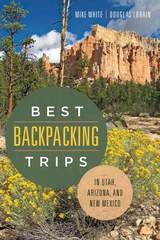
Best Backpacking Trips in Utah, Arizona, and New Mexico
Mike White
University of Nevada Press, 2016
This is the second book in a series of detailed guidebooks covering all the best “life-list” backpacking vacations in the spectacular backcountry of the American West. This new volume specifically covers the best such adventures in the states of Utah, Arizona, and New Mexico. Every conceivable aspect of trip planning is covered in the guide, including maps and descriptions of the trail, where to locate the nearest airport, other area attractions that shouldn’t be missed, and guide services that are available. A noteworthy feature of the book is the individual vignettes that give insight into the historical significance of many of the trails. Also unique are the interesting and humorous personal accounts that the authors share from their personal experiences hiking these routes. Backpackers will find a wide range of outstanding trips, from high mountain adventures to some of the world’s best lower-elevation canyon hikes. Best Backpacking Trips in Utah, Arizona, and New Mexico provides an extensive choice of terrific expeditions.

Best of Companions
Henry Ford and the Protection of Birdlife in AmericaRick Simek
University of Michigan Press, 2027
Immediately following the success of the Model T, Henry Ford turned to how he could apply his newfound wealth toward protecting birdlife on his new rural acreage in Dearborn, Michigan. Best of Companions weaves Henry Ford’s personal and very public participation in bird protection into the overall national push to save disappearing North American birdlife in the early twentieth century.
Acting on his love of birds, Ford formed acquaintances and friendships with some of the most prominent North American wildlife conservation activists of the time. Michigan Audubon Society President Jefferson Butler was recruited to plan, establish, and promote an expansive, visionary bird protection project known as Henry Ford’s Bird Farm. Highlighting the economic benefit of birds, the farm modeled how farmers could use both natural and artificial means to boost populations of native insectivorous bird species on their land, reducing crop damage from insects and increasing agricultural productivity. Best of Companions takes readers on an exciting journey through Ford’s ambitious efforts to secure passage of the first federal bird protection law in the United States, to support the Migratory Bird Treaty with Canada, and to improve the lives of farmers.
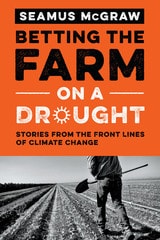
Betting the Farm on a Drought
Stories from the Front Lines of Climate ChangeBy Seamus McGraw
University of Texas Press, 2015
Climate change has become one of the most polarizing issues of our time. Extremists on the left regularly issue hyperbolic jeremiads about the impending destruction of the environment, while extremists on the right counter with crass, tortured denials. But out in the vast middle are ordinary people dealing with stronger storms and more intense droughts than they’ve ever known. This middle ground is the focus of Betting the Farm on a Drought, a lively, thought-provoking book that lays out the whole story of climate change—the science, the math, and most importantly, the human stories of people fighting both the climate and their own deeply held beliefs to find creative solutions to a host of environmental challenges.
Seamus McGraw takes us on a trip along America’s culturally fractured back roads and listens to farmers and ranchers and fishermen, many of them people who are not ideologically, politically, or in some cases even religiously inclined to believe in man-made global climate change. He shows us how they are already being affected and the risks they are already taking on a personal level to deal with extreme weather and its very real consequences for their livelihoods. McGraw also speaks to scientists and policymakers who are trying to harness that most renewable of American resources, a sense of hope and self-reliance that remains strong in the face of daunting challenges. By bringing these voices together, Betting the Farm on a Drought ultimately becomes a model for how we all might have a pragmatic, reasoned conversation about our changing climate.
Between Grass And Sky
Where I Live And WorkLinda M. Hasselstrom
University of Nevada Press, 2005
An important collection of personal essays from one of the most widely published American environmental writers addresses the effects of ranching on the environment. Acclaimed nature writer Linda M. Hasselstrom sees herself as a rancher who writes—a definition that shapes the tone and content of her writing. Now owner of the South Dakota cattle ranch where she grew up, Hasselstrom lives in intimate contact with the natural world. "Nature is to me both home and office. Nature is my boss, manager of the branch office—or ranch office—where I toil to convert native grass into meat. . . . If I want to keep my job as well as my home, I pay attention not only to Nature's orders, but to her moods and whims." She writes knowingly of the rancher's toil and of the intelligence and dignity of the wild and domesticated creatures that share the prairie grassland she calls home. As one who knows and loves the land, Hasselstrom appreciates the concerns of environmental activists and understands that responsible ranchers can play a role in nurturing a healthy rural ecosystem. Rich in detail, humor, and pathos, these essays offer wry commentary on the scope of human folly and the even greater human potential for community and empathy. "Only people who live in the country," she writes, "could form a relationship with nature so intimate that they feel concern for one lonely duck. People who live in cities . . . only glimpse nature from high windows or speeding vehicles. Even wilderness lovers who probe deeply are only passing through. We who live on the land truly live within the land, each of our lives only one among the other inhabitants of the place." These are essays to read with wonder and delight, to relish and ponder. Available in hardcover and paperback.
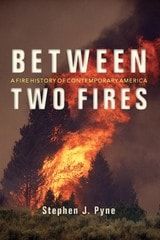
Between Two Fires
A Fire History of Contemporary AmericaStephen J. Pyne
University of Arizona Press, 2015
Pyne is uniquely qualified to tell America’s fire story. The author of more than a score of books, he has told fire’s history in the United States, Australia, Canada, Europe, and the Earth overall. In his earlier life, he spent fifteen seasons with the North Rim Longshots at Grand Canyon National Park.
In Between Two Fires, Pyne recounts how, after the Great Fires of 1910, a policy of fire suppression spread from America’s founding corps of foresters into a national policy that manifested itself as a costly all-out war on fire. After fifty years of attempted fire suppression, a revolution in thinking led to a more pluralistic strategy for fire’s restoration. The revolution succeeded in displacing suppression as a sole strategy, but it has failed to fully integrate fire and land management and has fallen short of its goals.
Today, the nation’s backcountry and increasingly its exurban fringe are threatened by larger and more damaging burns, fire agencies are scrambling for funds, firefighters continue to die, and the country seems unable to come to grips with the fundamentals behind a rising tide of megafires. Pyne has once again constructed a history of record that will shape our next century of fire management. Between Two Fires is a story of ideas, institutions, and fires. It’s America’s story told through the nation’s flames.
Between Two Pines
Ushering in a Sustainable Future Through an Art-Science PracticeEdgar Cardenas
Michigan Publishing Services, 2019
“I am truly thankful that Dr. Edgar Cardenas’s thoughtful research is now available in this beautiful book. I have recommended his work to more people, both in my personal and professional spheres of my life, than I can count, and I’m glad to have this provocative and elegant publication to put into people’s hands. Cardenas shows us how each of us really can make a difference.”
“Between Two Pines anticipates and leads the discussion of scholarship around questions of land and landscape. This work brilliantly and ethically refocuses our vision, from distanced scrutiny to connection and proximity, rooted in daily care-taking and ecological efforts. Thoughtfully imaged, the photographs offer an aesthetic that is based in balanced, enduring reflection, rather than on the grand view. These beautiful images reveal discoveries that bridge the arts, ecology, and sociology, and will serve to reconnect every reader with the world in their backyard and beyond.”
“Drawing from a long photographic tradition of examining the relationship between humans and their environment, Edgar Cardenas has found a voice that is as compassionate as it is poignant. Yet he is not content for his photographs to be mere observations, recording the relationship. Between Two Pines is a call to action – a platform by which we might imagine together, with all of the tools in our tool kit, a sustainable future.”
Between Urban and Wild
Reflections from ColoradoAndrea M. Jones
University of Iowa Press, 2013
Although not intended as a manual for landowners, Between Urban and Wild nonetheless offers useful and engaging perspectives on the realities of settling and living in a partially wild environment. Throughout her ongoing journey of being home, Jones’s close observations of the land and its native inhabitants are paired with the suggestion that even small landholders can act to protect the health of their properties. Her brief meditations capture and honor the subtleties of the natural world while illuminating the importance of working to safeguard it.
Probing the contradictions of a lifestyle that burdens the health of the land that she loves, Jones’s writing is permeated by her gentle, earnest conviction that living at the urban-wild interface requires us to set aside self-interest, consider compromise, and adjust our expectations and habits—to accommodate our surroundings rather than force them to accommodate us.
Between the Rocks and the Stars
Narratives in Natural HistoryStephen Daubert
Vanderbilt University Press, 2020
These stories take readers where they cannot go, be it out into space, back in time, deep under the ocean, down to microscopic scales, or out onto the geologic overview.
Squid turn themselves inside-out when disturbed by predators hunting through the darkness with sonar. Beneficial microbes spend their summer living in nectar and being transferred between blooms by the bees, then spend the winter living within those bees. Ecological stories are seen through the eyes of squirrels, birds, fish, ants, butterflies, and beetles.
Between the Rocks and the Stars dives deep into the relationships that shape the natural world. The book presents a collection of vignettes from the wild, each of which describes the natural advantage of a particular organism. These true-to-life accounts are then posed in particular circumstances that illustrate the principles—commensalism, speciation—that shape the place of these organisms in their living environment. Some stories cover topics in geology and cosmology, describing the physical world context in which natural history progresses across the eons.
Underlying themes in the book include the network of connections that link all these organisms together and the adaptations they make to the physical world in which they must find themselves a home.
Beyond Desert Walls
Essays from PrisonKen Lamberton
University of Arizona Press, 2005
For some people, even prison cannot shut out the natural world.
A teacher and family man incarcerated in Arizona State Prison—the result of a transgression that would cost him a dozen years of his life—Ken Lamberton can see beyond his desert walls. In essays that focus on the natural history of the region and on his own personal experiences with desert places, the author of the Burroughs Medal-winning book Wilderness and Razor Wire takes readers along as he revisits the Southwest he knew when he was free, and as he makes an inner journey toward self-awareness. Whether considering the seemingly eternal cacti or the desolate beauty of the Pinacate, he draws on sharp powers of observation to re-create what lies beyond his six-by-eight cell and to contemplate the thoughts that haunt his mind as tenaciously as the kissing bugs that haunt his sleep.
Ranging from prehistoric ruins on the Colorado Plateau to the shores of the Sea of Cortez, these writings were begun before Wilderness and Razor Wire and serve as a prequel to it. They seamlessly interweave natural and personal history as Lamberton explores caves, canyons, and dry ponds, evoking the mysteries and rhythms of desert life that elude even the most careful observers. He offers new ways of thinking about how we relate to the natural world, and about the links between those relationships and the ones we forge with other people. With the assurance of a gifted writer, he seeks to make sense of his own place in life, crafting words to come to terms with an insanity of his own making, to look inside himself and understand his passions and flaws.
Whether considering rattlesnakes of the hellish summer desert or the fellow inmates of his own personal hell, Lamberton finds meaningful connections—to his crime and his place, to the people who remained in his life and those who didn’t. But what he reveals in Beyond Desert Walls ultimately arises from language itself: a deep, and perhaps even frightening, understanding of a singular human nature.
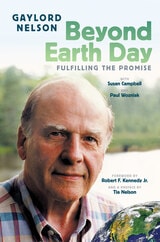
Beyond Earth Day
Fulfilling the PromiseGaylord Nelson; With Susan Campbell and Paul Wozniak; Foreword by Robert F. Kennedy Jr.; Preface by Tia Nelson
University of Wisconsin Press, 2002
Gaylord Nelson’s legacy is known and respected throughout the world. He was a founding father of the modern environmental movement and creator of one of the most influential public awareness campaigns ever undertaken on behalf of global environmental stewardship: Earth Day.
Nelson died in 2005, but his message in this book is still timely and urgent, delivered with the same eloquence with which he articulated the nation’s environmental ills throughout the decades. He details the planet’s most critical concerns—from species and habitat losses to global climate change and population growth. In outlining strategies for planetary health, Nelson inspires citizens to reassert environmentalism as a national priority. Included in this reprint is a new preface by Gaylord Nelson’s daughter, Tia Nelson.
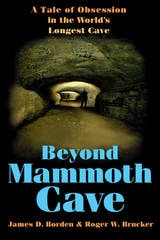
Beyond Mammoth Cave
A Tale of Obsession in the World's Longest CaveJames D. Borden and Roger W. Brucker
Southern Illinois University Press, 2000
In Beyond Mammoth Cave: A Tale of Obsession in the World’s Longest Cave, James D. Borden and Roger W. Brucker provide gripping first-person accounts of the discoveries, including Roppel Cave, that made Kentucky’s Mammoth Cave three times longer than any other cave in the world.
Borden, a relative newcomer, and Brucker, a veteran explorer, bring a personal and sometimes conflicting view of their roles as adversaries in a race that lasted from 1972 through 1983 to find “big cave.” They describe hazardous adventures, precarious climbs, and close calls from falling rocks. The perils are many and the trek arduous as they squirm through muddy tubes, wade in neck-deep cold water, and crawl over sharp rocks and gritty sand. Theirs is a tale of agonizing endurance spiced by spectacular discoveries.
But the cave was not the sole obstacle. The explorations were complicated by political intrigue and the rivalry between the Kentucky-based Cave Research Foundation and the Central Kentucky Karst Coalition, each seeking to make discoveries and hide secrets. Extreme stress, of course, evoked extreme behavior, ranging from selfishness to sacrifice, from outrageous humor to the deadly serious response.
Beyond Mammoth Cave includes maps by Patricia Kambesis that show the progression of cave discoveries in relation to the topography. Original line drawings by well-known illustrator Linda Heslop capture the dark mystery of the exploration. The book features five black and white photographs as a color gallery of photographs.
A sequel to The Longest Cave by Brucker and Richard A. Watson, this book is a comprehensive update of the speleological investigations in the Mammoth Cave region. Brucker’s involvement provides continuity to the investigation.
Beyond Prejudice
The Moral Significance of Human and Nonhuman AnimalsEvelyn B. Pluhar
Duke University Press, 1995
Exposing the traditional view—which restricts the moral realm to autonomous, fully fledged "persons"—as having horrific implications for the treatment of many humans, Pluhar goes on to argue positively that sentient individuals of any species are no less morally significant than the most automomous human. Her position provides the ultimate justification that is missing from previous defenses of the moral status of nonhuman animals. In the process of advancing her position, Pluhar discusses the implications of determining moral significance for children and "abnormal" humans as well as its relevance to population policies, the raising of animals for food or product testing, decisions on hunting and euthanasia, and the treatment of companion animals. In addition, the author scrutinizes recent assertions by environmental ethicists that all living things or that natural objects and ecosystems be considered highly morally significant. This powerful book of moral theory challenges all defenders of the moral status quo—which decrees that animals decidedly do not count—to reevaluate their convictions.
Beyond Preservation
Restoring and Inventing LandscapesDwight Baldwin
University of Minnesota Press, 1994
Beyond Preservation was first published in 1993. Minnesota Archive Editions uses digital technology to make long-unavailable books once again accessible, and are published unaltered from the original University of Minnesota Press editions.
Addressing current ecological issues, from the philosophical to the practical, Frederick Turner and William R. Jordan III Here offer a new paradigm for understanding the relationship between the humans and nature. Challenging the idea that preserving nature is the only solution to environmental problems, they advocate going beyond preservation to restoration and actual construction of our landscape. Fifteen respondents reflect on the implications and consequences of Turner’s and Jordan’s bold proposals.“Ecological restoration is the most helpful and provocative contribution to our thinking about nature to come along in many years, and Beyond Preservation is without a doubt the best book on the subject to date.” Michael Polan, Harper’sContributors include Gary W. Barrett, Ann Cline, David L. Gorchov, William Jordan III, G. Stanley Kane, Jack Temple Kirby, Dora G. Lodwick, Orie L. Loucks, Kimberly E. Medley, Constance Pierce, Ellen Price, Frederick Turner, John E. Wierwille, and Gene E. Willeke.