Results by title
195 books match the query 'Pennsylvania' and 11 start with b
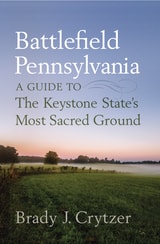
Battlefield Pennsylvania
A Guide to the Keystone State's Most Sacred GroundBrady J. Crytzer
Westholme Publishing, 2018
Pennsylvania is a battlefield. Fort Necessity. Brandywine. Gettysburg. The Homestead Strike. Flight 93. In many ways battlefields are like scars on the landscape. They remind us that history is real, and their effects stay with us forever. In Battlefield Pennsylvania: A Guide to the Keystone State’s Most Sacred Ground, award-winning historian Brady J. Crytzer takes the reader on a fascinating tour of over three hundred years of Pennsylvania history through twenty-nine of the state’s most significant battlegrounds, based on his popular Pennsylvania Cable Network television program. The author shows that debates and neighborly disputes have been present throughout the history of William Penn’s “Peaceable Kingdom,” but that battles are not the natural resolution of these conflicts; they are a failure of the system. Understanding how these systems break down and descend into violence and chaos is one of the most important purposes of this book. When the forces of Britain and France met on the battleground of North America, they each waged war in the name of a vision—a defense of the future, not merely the present. The same can be said for the Indian warriors and settlers of the backcountry, and the striking workers of the industrial age. When the young men of the American Civil War era donned the Butternut and Blue, they were not just fighting over a hill or a railroad junction, but for an American future. Illustrated with maps and period and contemporary images, Battlefield Pennsylvania presents each event through background information, a description of the battle itself, the legacy of the battle, and what a visitor can see today. Rather than viewing preserved battlefields as a hollow tribute to days gone by, the author demonstrates that these sites are a great inheritance provided by past generations, and just as they entrusted them to us, we will entrust them to future generations as well.
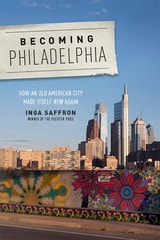
Becoming Philadelphia
How an Old American City Made Itself New AgainInga Saffron
Rutgers University Press, 2020
Becoming Philadelphia collects the best of Saffron’s work, plus a new introduction reflecting on the stunning changes the city has undergone. A fearless crusader who is also a seasoned reporter, Saffron ranges beyond the usual boundaries of architectural criticism to explore how big money and politics intersect with design, profoundly shaping our everyday experience of city life. Even as she celebrates Philadelphia’s resurgence, she considers how it finds itself grappling with the problems of success: gentrification, poverty, privatization, and the unequal distribution of public services.
What emerges in these 80 pieces is a remarkable narrative of a remarkable time. The proverbial first draft of history, these columns tell the story of how a great city shape-shifted before our very eyes.
Before Roe
Abortion Policy in the StatesRosemary Nossiff
Temple University Press, 2000
In this groundbreaking book, Rosemary Nossiff examines the force that shaped abortion policy during those years, and the ways in which states responded to them. To provide in-depth analysis while still looking broadly at the picture, she studies New York, which passed the most permissive abortion bill in the country, and Pennsylvania, which passed one of the most restrictive. That these two states, which share similar demographic, political, and economic characteristics, should reach two such different outcomes provides a perfect case study for observing political dynamics at the state level.
Nossiff examines the medical, religious, and legal discourses employed on both sides of the debate, as well as the role played by feminist discourse. She looks at the role of the political parties in the campaigns, as well as such interest groups as the National Council of Catholic Bishops, the Clergy Consultation Service, the National Organization for Women, and the National Association for the Repeal of Abortion Laws. In addition, she analyzes the strategies used by both sides, as well as partisan and institutionalized developments that facilitated success or failure. Finally, in the Epilogue, she assesses the Roe decision and its aftermath, including an analysis of the pro-life movement in Pennsylvania.
As the author remarks, "Without question people's positions on abortion are shaped by a myriad of social, moral, and economic factors. But ultimately abortion policy is shaped in the political arena. This book examines how one of the most intimate decisions a woman makes, whether to continue or terminate a pregnancy, has become one of the most politicized issues in contemporary American politics.
Benjamin Franklin, Pennsylvania, and the First Nations
The Treaties of 1736-62Edited by Susan Kalter
University of Illinois Press, 2006
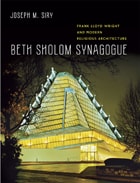
Beth Sholom Synagogue
Frank Lloyd Wright and Modern Religious ArchitectureJoseph M. Siry
University of Chicago Press, 2011
In a suburb just north of Philadelphia stands Beth Sholom Synagogue, Frank Lloyd Wright’s only synagogue and among his finest religious buildings. Designated a National Historic Landmark in 2007, Beth Sholom was one of Wright’s last completed projects, and for years it has been considered one of his greatest masterpieces.
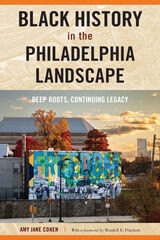
Black History in the Philadelphia Landscape
Deep Roots, Continuing LegacyAmy Jane Cohen
Temple University Press, 2024
Cohen also describes the path to erecting a statue of civil rights activist Octavius Catto at Philadelphia’s City Hall and profiles international celebrities Marian Anderson and Paul Robeson who are honored in the city. At the end of each chapter, she includes suggestions to continue readers’ exploration of this important cultural heritage.
Showing how increased attention to the role of African Americans in local and national history has resulted in numerous, sometimes controversial, alterations to the landscape, Cohen guides readers to Black history’s significance and its connections with today’s spotlight on racial justice.
Black Men Can't Shoot
Scott N. Brooks
University of Chicago Press, 2009
The myth of the natural black athlete is widespread, though it’s usually talked about only when a sports commentator or celebrity embarrasses himself by bringing it up in public. Those gaffes are swiftly decried as racist, but apart from their link to the long history of ugly racial stereotypes about black people—especially men—they are also harmful because they obscure very real, hard-fought accomplishments. As Black Men Can’t Shoot demonstrates, such successes on the basketball court don’t happen just because of natural gifts—instead, they grow out of the long, tough, and unpredictable process of becoming a known player.
Scott Norman Brooks spent four years coaching summer league basketball in Philadelphia. And what he saw, heard, and felt working with the young black men on his team tells us much about how some kids are able to make the extraordinary journey from the ghetto to the NCAA. He tells the story of two young men, Jermaine and Ray, following them through their high school years and chronicling their breakthroughs and frustrations on the court as well as their troubles at home. Black Men Can’t Shoot is a moving coming-of-age story that counters the belief that basketball only exploits kids and lures them into following empty dreams—and shows us that by playing ball, some of these young black men have already begun their education even before they get to college.
Black Students in the Ivory Tower
African American Student Activism at the University of Pennsylvania, 1967-1990Wayne C. Glasker
University of Massachusetts Press, 2002
Glasker begins his study in the late 1960s, when the university's expansion into a predominantly black Philadelphia neighborhood precipitated a massive sit-in and protest. In response, Penn accelerated the process of admitting more black students, doubling the number of black matriculants by September 1969. Many came from inner city public high schools with backgrounds, ideas, and interests far different from those of the affluent middle- and upper-class white students who constituted the majority of the undergraduate population. As a result, the next decade was marked by recurrent tension and conflict, as black students at Penn rejected assimilation and agitated successfully for the creation of a variety of institutions that recognized their needs. These included an Afro-American studies program, a residence for students interested in black culture, and a Black Student League. Following a 1978 sit-in, they won a demand for an Inter-cultural Center and formed the United Minorities Council, and in 1986 they joined with white activists to press the university to divest its holdings from companies doing business in South Africa.
Throughout the book Glasker interweaves two parallel stories: that of an Ivy League university wrestling with questions of diversity, compensatory education, and the meaning of merit and qualification; and that of black students grappling with issues of assimilation, separatism, and cultural pluralism. In the end, he argues, the students sought to preserve their own distinctive ethnic culture, identity, and heritage while pursuing economic upward mobility. Rather than separatism, they aspired to a form of biculturalism that involved economic empowerment without cultural assimilation.
Boathouse Row
Waves of Change in the Birthplace of American RowingDotty Brown
Temple University Press, 2016
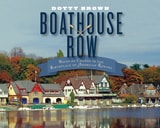
The history of Philadelphia’s Boathouse Row is both wide and deep.Dotty Brown, an avid rower and former editor at the Philadelphia Inquirer, immersed herself in boathouse archives to provide a comprehensive history of rowing in Philadelphia. She takes readers behind the scenes to recount the era when rowing was the spectator sport of its time—and the subject of Thomas Eakins’ early artwork—through the heyday of the famed Kelly dynasty, and the fight for women to get the right to row. (Yes, it really was a fight, and it took generations to win.)
With more than 160 photographs, a third of them in full color, Boathouse Row chronicles the “waves of change” as various groups of different races, classes, and genders fought for access to water and the sport. Chapters also discuss the architectural one-upmanship that defined Boathouse Row after Frank Furness designed the stunning and eclectic Undine Barge Club, and the regattas that continue to take place today on the Schuylkill River, including the forgotten forces that propelled high school rowing.
Beautifully written and illustrated, Boathouse Row will be a keepsake for rowers and spectators alike.
Bodies of Work
Civic Display and Labor in Industrial PittsburghEdward Slavishak
Duke University Press, 2008
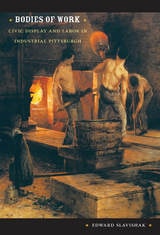
Slavishak focuses on the workers whose bodies came to epitomize Pittsburgh, the men engaged in the arduous physical labor demanded by the city’s metals, glass, and coal industries. At the same time, he emphasizes how conceptions of Pittsburgh as quintessentially male limited representations of women in the industrial workplace. The threat of injury or violence loomed large for industrial workers at the turn of the twentieth century, and it recurs throughout Bodies of Work: in the marketing of artificial limbs, statistical assessments of the physical toll of industrial capitalism, clashes between labor and management, the introduction of workplace safety procedures, and the development of a statewide workmen’s compensation system.
Building Ghosts
Past Lives and Lost Places in a Changing CityWritten by Molly Lester, Photographs by Michael Bixler
Temple University Press, 2024
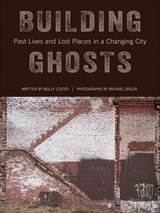
Building Ghosts features more than 100 striking contemporary color photographs and a deeply researched narrative about Philadelphia’s buildings, neighborhoods, and the ghosts that reveal new truths and provocations about the changing city. The text and images in this lavish volume illuminate these lost buildings and found ghosts. Building Ghosts is an invitation to see the city differently, with the past clinging visibly to the present.