Results by title
194 books match the query 'People' and 5 start with b
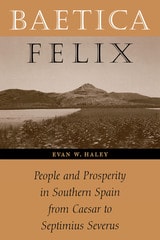
Baetica Felix
People and Prosperity in Southern Spain from Caesar to Septimius SeverusBy Evan W. Haley
University of Texas Press, 2003
Baetica, the present-day region of Andalusia in southern Spain, was the wealthiest province of the Roman Empire. Its society was dynamic and marked by upward social and economic mobility, as the imperial peace allowed the emergence of a substantial middle social and economic stratum. Indeed, so mutually beneficial was the imposition of Roman rule on the local population of Baetica that it demands a new understanding of the relationship between Imperial Rome and its provinces.
Baetica Felix builds a new model of Roman-provincial relations through a socio-economic history of the province from Julius Caesar to the end of the second century A.D. Describing and analyzing the impact of Roman rule on a core province, Evan Haley addresses two broad questions: what effect did Roman rule have on patterns of settlement and production in Baetica, and how did it contribute to wealth generation and social mobility? His findings conclusively demonstrate that meeting the multiple demands of the Roman state created a substantial freeborn and ex-slave "middle stratum" of the population that outnumbered both the super-rich elite and the destitute poor.
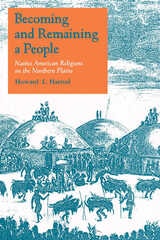
Becoming and Remaining a People
Native American Religions on the Northern PlainsHoward L. Harrod
University of Arizona Press, 1995
This book offers a bold new interpretation of anthropological studies, demonstrating how religious traditions and ritual processes became sources of group and individual identity for many people. Harrod reconstructs the long religious development of two village peoples, the Mandans and the Hidatsas, describing how their oral traditions enabled them to reinterpret their experiences as circumstances changed. He then shows how these and other groups on the Northern Plains remained distinct peoples in the face of increased interactions with Euro-Americans, other Indians,.and the new religion of Christianity.
Harrod proposes that other interpretations of culture change may fail to come to terms with the role that religion plays in motivating both cultural conservatism and social change. For Northern Plains peoples, religion was at the heart of social identity and thus resisted change, but religion was also the source of creative reinterpretation, which produced culture change. Viewed from within the group, such change often seemed natural and was understood as an elaboration of traditions having roots in a deeper shared past. In addition to demonstrating religious continuity and change among the Mandans and the Hidatsas, he also describes instances of religious and social transformation among the peoples who became the Crows and the Cheyennes.
Becoming and Remaining a People adopts a challenging analytical approach that draws on the author's creative interpretations of rituals and oral traditions. By enabling us to understand the relation of religion both to the construction of social identity and to the interpretation of social change, it reveals the richness, depth, and cultural complexity of both past Native American people and their contemporary successors.

Big Game in Alaska
A History of Wildlife and PeopleMorgan Sherwood
University of Alaska Press, 2008
In concise and clear prose, Sherwood charts the history of this environmental and political conflict, examining the creation of the Alaska Game Commission in the early 1930s, the use of distorted science and menacing technologies, the antipathy of farmers and fishermen toward animals, and the prevailing belief in man’s right to shoot wild animals at will. An incisive historical study of the flawed attempts to govern big game predation, Big Game in Alaska will be essential reading for historians and environmentalists alike.
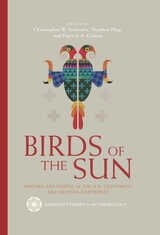
Birds of the Sun
Macaws and People in the U.S. Southwest and Mexican NorthwestEdited by Christopher W. Schwartz, Stephen Plog, and Patricia A. Gilman
University of Arizona Press, 2022
Scarlet macaws are native to tropical forests ranging from the Gulf Coast and southern regions of Mexico to Bolivia, but they are present at numerous archaeological sites in the U.S. Southwest and Mexican Northwest. Although these birds have been noted and marveled at through the decades, new syntheses of early excavations, new analytical methods, and new approaches to understanding the past now allow us to explore the significance and distribution of scarlet macaws to a degree that was previously impossible.
Birds of the Sun explores the many aspects of macaws, especially scarlet macaws, that have made them important to Native peoples living in this region for thousands of years. Leading experts discuss the significance of these birds, including perspectives from a Zuni author, a cultural anthropologist specializing in historic Pueblo societies, and archaeologists who have studied pre-Hispanic societies in Mesoamerica and the U.S. Southwest and Mexican Northwest. Chapters examine the highly variable distribution and frequency of macaws in the past, their presence on rock art and kiva murals, the human experience of living with and transporting macaws, macaw biology and life history, and what skeletal remains suggest about the health of macaws in the past. Experts provide an extensive, region-by-region analysis, from early to late periods, of what we know about the presence, health, and depositional contexts of macaws and parrots, with specific case studies from the Hohokam, Chaco, Mimbres, Mogollon Highlands, Northern Sinagua, and Casas Grandes regions, where these birds are most abundant.
The expertise offered in this stunning new volume, which includes eight full color pages, will lay the groundwork for future research for years to come.
Contributors
Katelyn J. Bishop
Patricia L. Crown
Samantha Fladd
Randee Fladeboe
Patricia A. Gilman
Thomas K. Harper
Michelle Hegmon
Douglas J. Kennett
Patrick D. Lyons
Charmion R. McKusick
Ben A. Nelson
Stephen Plog
José Luis Punzo Díaz
Polly Schaafsma
Christopher W. Schwartz
Octavius Seowtewa
Christine R. Szuter
Kelley L. M. Taylor
Michael E. Whalen
Peter M. Whiteley

Bribes, People, and Politics
How Everyday Corruption Shapes Governance in EurasiaWilliam M. Reisinger & Marina Zaloznaya
University of Michigan Press, 2027
Everyday bureaucratic corruption is not the domain of oligarchs or powerful elites, but of informal exchanges between bureaucrats and ordinary citizens seeking to move paperwork, secure benefits, or avoid penalties. Despite extensive research on the economic, legal, and social consequences of corruption, this mundane form has rarely been treated as a political phenomenon.
Drawing on original, nationally representative surveys conducted in Russia, Ukraine, Georgia, and China, Bribes, People, and Politics analyzes how citizens’ encounters with corrupt bureaucratic practices influence popular political trust, perceptions of elite corruption, legal attitudes, voting behavior, and political activism. After each interaction with public bureaucracy, citizens subtly revise their views about what role people like themselves play within the political system. As a result, corrupt bureaucratic encounters can significantly shape popular attitudes and behavior toward the political order. By linking the microdynamics of bureaucratic encounters to macro-level questions of political legitimacy and regime durability, this book bridges the literature on corruption, political sociology, and comparative politics, offering a new framework for understanding the persistent phenomenon of public sector corruption in Eurasia.