Results by title
557 books match the query 'Poems' and 26 start with b
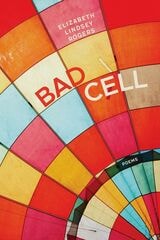
Bad Cell
PoemsElizabeth Lindsey Rogers
Acre Books, 2027
Chronicling reproduction and parenting within a lesbian relationship, this poetry collection reveals both the anxieties and awe inspired by rearing children.
In her frank, vulnerable third book of poetry, Elizabeth Lindsey Rogers considers queer kinship through scientific, cultural, and personal lenses. Bad Cell presents perspectives on family and inheritance that are at once granular and comprehensive. From a pregnant woman being mistaken as a man by a store clerk to some “FAQs Re: Queers & Reproduction” that dispel stereotypes, the collection celebrates the fluidity of gender.
Early in the volume, Rogers addresses the emotional and physical complications of fertility treatment and pregnancy loss, a medical journey that, though harrowing, is gorgeously rendered in taut lyric language. Later, in forms like the abecedarian, definition poem, questionnaire, haibun, and a sonnet crown, the poet looks at how cells themselves—the stuff of life—divide and recombine. As in previous collections, Rogers leans into science-inspired verse, showcasing her talent for turning small-scale mechanics into meaningful metaphors.
The book also supports an openness to neurodivergence in children: “I want to assemble / something that can speak / for everyone,” says the speaker of “Apraxia.” And Rogers does, with the skill of a seasoned poet and essay writer, whose eye for the particularness of the world is encompassing and gives new insight into the experience of parenting: “But I’m not mom, I tell / writers who think I’ve gone soft, given up deeper subjects. As if these wild, / xenogeneic offspring aren’t a full-on wrestle with the deep.”
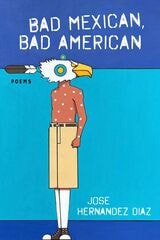
Bad Mexican, Bad American
PoemsJose Hernandez Diaz
Acre Books, 2024
In Bad Mexican, Bad American, the minimalist, working-class aesthetic of a “disadvantaged Brown kid” takes wing in prose poems that recall and celebrate that form’s ties to Surrealism. With influences like Alberto Ríos and Ray Gonzalez on one hand, and James Tate and Charles Baudelaire on the other, the collection spectacularly combines “high” art and folk art in a way that collapses those distinctions, as in the poem “My Date with Frida Kahlo”: “Frida and I had Cuban coffee and then vegetarian tacos. We sipped on mescal and black tea. At the end of the night, following an awkward silence during a conversation on Cubism, we kissed for about thirty minutes beneath a protest mural by David Alfaro Siqueiros.”
Bad Mexican, Bad American demonstrates how having roots in more than one culture can be both unsettling and rich: van Gogh and Beethoven share the page with tattoos, graffiti, and rancheras; Quetzalcoatl shows up at Panda Express; a Mexican American child who has never had a Mexican American teacher may become that teacher; a parent’s “broken” English is beautiful and masterful. Blending reality with dream and humility with hope, Hernandez Diaz contributes a singing strand to the complex cultural weave that is twenty-first-century poetry.
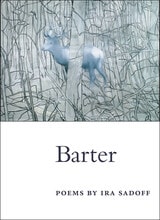
Barter
POEMSIra Sadoff
University of Illinois Press, 2003
Rooted firmly in the “fleeting world,” Sadoff’s poems find epiphanies of meaning in unexpected and even unpleasant experiences and emotions. The poems in Barter delve deeply into the past, the personal past of regret, travel, love, divorce, and bereavement, as well as the global past of Beethoven, Vietnam, and the fall of communism. Each poem is offered up by Sadoff as a barter, something to be traded for a little more time, a little more understanding.
The poems in Barter comment on the power of culture to interject itself into our desire for an idealized self, the way our inner and outer lives lack correspondence, harmony, and integration. They also talk about commerce, the trading of bodies, the way we as a nation “use” and exchange and appropriate -- and like Tolstoy’s Ivan Ilyich, try to bargain with and evade the urgency of our time on earth.
In the poem “Self-Portrait with a Critic,” Sadoff makes what could be a succinct statement of purpose: “And inside, let’s not make it pretty, / let’s save the off-rhyme and onomatopoeia / / for the concert hall, let’s go to the wormy place / where the problematic stirs inside his head.”
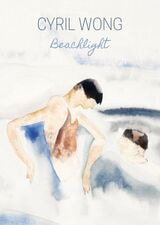
Beachlight
PoemsCyril Wong
Seagull Books, 2023
Beachlight is a sustained poem divided into smaller parts that take on the anonymous voices of those lost and forgotten. A walk along a Singaporean beach transforms into a meditation that bridges an ecological consciousness to the sexual and the homoerotic. The poems in Beachlight expose revelations about the nature of desire, inviting readers to walk beside—and inside—them, reminding us of what we gain when we abandon ourselves to nature and exhorting us to reclaim our primordial connections to the world and to one another.
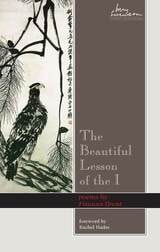
Beautiful Lesson of the I
poemsFrances Brent
Utah State University Press, 2005
The Beautiful Lesson of the I is a collection of finely made poems by an accomplished poet. It will reward the scholar and the student of poetry, as well as the reader looking for the simple pleasures of poetic insight authentically felt. Winner of the Swenson Poetry Award 2005. Now in paperback.
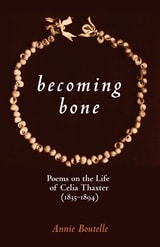
Becoming Bone
Poems on the Life of Celia Thaxter (1836-1894)Annie Boutelle
University of Arkansas Press, 2005
In the tradition of such outstanding biography-in-poetry collections as Maurice Manning’s A Companion of Owls about Daniel Boone and Sharon Chmielarz’s The Other Mozart, Annie Boutelle’s first collection probes the layered life of one of nineteenth-century America’s most popular poets, who is now almost forgotten. The Celia Thaxter who speaks these poems disturbs the placid myth created around her public persona, and focuses on the fierce mysteries and ironies that frame her. Boutelle carefully reveals Thaxter’s childhood on the stark Isles of Shoals off the New Hampshire coast; the trap of a Victorian marriage; the struggle to invent herself as a writer and painter; her celebrated circle of friends, which included Nathaniel Hawthorne, John Greenleaf Whittier, Sarah Orne Jewett, and Childe Hassam; and the hard-won serenity of her last decade. At the fringes of Thaxter’s life a wider world clamors, particularly with the onset of the Civil War. At the center rests a quiet, almost elliptical silence.
Like fine champagne, these poems ravish. Clear, airy, crystalline, they move us into an elemental world where “nothing is left but water, / air, and the uncertain space between.” The spare language resonates. With restraint and lyric tenderness, Boutelle leads us toward a woman who shifts from pose to necessary pose, who survives in these pages with intelligence and grace: “The grave / flesh melts. What’s left / is light as bone.”

Beginning with Plato
PoemsJoseph Warren Beach
University of Minnesota Press, 1944
Beginning with Plato was first published in 1944. Minnesota Archive Editions uses digital technology to make long-unavailable books once again accessible, and are published unaltered from the original University of Minnesota Press editions.
These selected poems of Joseph Warren Beach range in time from the present year to the age of Pericles; in place from California to Shangri-La, from Paris to the Middle West; in theme from current political issues to the timeless problems of Greek philosophy; in mood from tender love to trenchant satire. In these fifty-odd poems is a rich variety—Anthony Eden and Cordell Hull, the French capital in the summer preceding the first World War, the skylines of the American West, the skylines of Minneapolis, soldier and swan maiden, and the inner life of man wherever lived. Mr. Beach can tell home truths without bitterness, and handle nostalgic emotion without sentimentality.
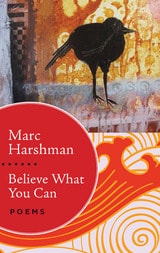
Believe What You Can
PoemsMarc Harshman
West Virginia University Press, 2016
These difficulties come “not quite haphazardly” and not without a “last light”—something “beyond” and as “sweet as apples.” With these moments of grace, Harshman taps into the satisfying richness that comes from unexpected revelations, helping us rise above the fragile recesses of life and death, all while portraying the lost rural worlds of the Midwest and Appalachia in ways untouched by sentiment or nostalgia.
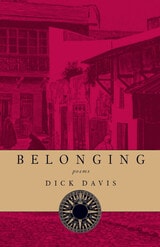
Belonging
PoemsDick Davis
Ohio University Press, 2002
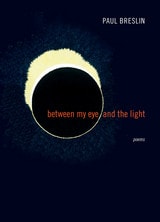
Between My Eye and the Light
PoemsPaul Breslin
Northwestern University Press, 2015
“Hole torn in the language, / How shall we speak?” The first lines of the first poem in Paul Breslin’s artful second collection of poetry demand an answer, of both poet and reader, to the seemingly unspeakable tragedies of modern life. Between My Eye and the Light forms a beautifully insistent exercise in the power of language to engage experiences both mundane and profound. Breslin queries far-flung corners of experience for answers, engaging childhood, his longtime home of Chicago, small moments of life, and encounters with artists such Rainer Maria Rilke and Derek Walcott. The poems even query the volume’s opening question, How shall we speak? While pat answers elude us, poetry acts as a bulwark against cliché and cynicism, strengthening those who have the courage to question and explore.
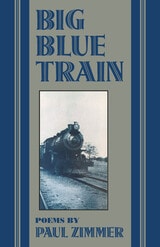
Big Blue Train
PoemsPaul Zimmer
University of Arkansas Press, 1993
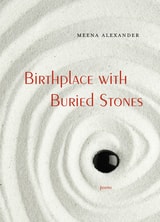
Birthplace with Buried Stones
PoemsMeena Alexander
Northwestern University Press, 2013
With their intense lyricism, Meena Alexander’s poems convey the fragmented experience of the traveler, for whom home is both nowhere and everywhere. The landscapes she evokes, whether reading Bashō in the Himalayas, or walking a city street, hold echoes of otherness. Place becomes a palimpsest, composed of layer upon layer of memory, dream, and desire. There are poems of love and poems of war—we see the rippling effects of violence and dislocation, of love and its aftermath. The poems in Birthplace with Buried Stones range widely over time and place, from Alexander’s native India to New York City. We see traces of mythology, ritual, and other languages. Uniquely attuned to life in a globalized world, Alexander’s poetry is an apt guide, bringing us face to face with the power of a single moment and its capacity to evoke the unseen and unheard.
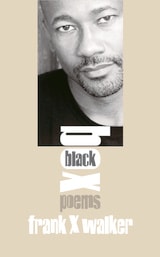
Black Box
PoemsFrank X Walker
Ohio University Press, 2005
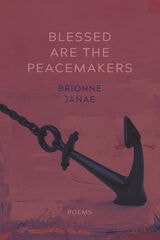
Blessed Are the Peacemakers
PoemsBrionne Janae
Northwestern University Press, 2022
Winner of the 2020 Cave Canem Northwestern University Press Poetry Prize
At once interested in the cyclical nature of domestic dysfunction and what we do when secrets of buried harm come to light, Blessed Are the Peacemakers asks what it means to make peace in the wake of intrafamilial violence and child sexual assault. These poems explore the ways the truth is often hidden behind layers of bleach and shame, and the ways we fail survivors by dismissing their stories and tolerating their abusers.
Filled with elegies to the people who have been murdered by state violence, racism, and anti-Blackness in the United States, Blessed Are the Peacemakers interrogates the lengths and limitations of grace. Brionne Janae examines what it means to survive—particularly as a Black girl, woman, queer person, or human—and uses self-portraiture to explore how familial and communal trauma plague our mental health. How do we survive the grief of the past and present without becoming numb to or consumed by it? How do we remember, despite our pain, to enjoy our bodies and our lives while we still have them?
Blood of the Air
PoemsAma Codjoe
Northwestern University Press, 2020
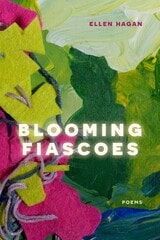
Blooming Fiascoes
PoemsEllen Hagan
Northwestern University Press, 2021
Blooming Fiascoes is a collective of verse that deconstructs identity. We are beautiful and monstrous. We live in a beautiful and monstrous world. Ellen Hagan poetically mirrors these metaphoric adversaries, drawing on her experiences as a woman, an artist, a mother, a transplanted southerner, and above all, a human being. She plumbs origins in history, body, and living to question how we reckon our whole selves in the catacombs of a world gone mad:
We mourn, we bless, / we blow, we wail, we / wind—down, we sip, / we spin, we blind, we / bend, bow & hem. We / hip, we blend, we bind, / we shake, we shine, / shine. We lips & we / teeth, we praise & protest.
In these poems, Assyrian, Italian, and Irish lines seep deeper into a body that is growing older but remains engaged with unruly encounters: the experience of raising daughters, sexual freedom, and squaring body image against the body’s prohibitions. This is a work where the legacy is still evolving and always asking questions in real time. Blooming Fiascos spindles poetry that is not afraid to see itself and the lives it inhabits.
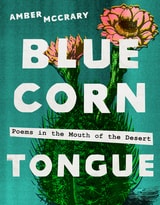
Blue Corn Tongue
Poems in the Mouth of the DesertAmber McCrary
University of Arizona Press, 2025
In a voice that is jubilant, irreverent, sometimes scouring, sometimes heartfelt, and always unmistakably her own, Amber McCrary remaps the deserts of Arizona through the blue corn story of a young Diné woman figuring out love and life with an O’odham man. Reflecting experiences of Indigenous joy, pain, and family, these shapeshifting poems celebrate the love between two Native partners, a love that flourishes alongside the traumas they face in the present and the past. From her ethereal connection with her saguaro muse, Hosh, to the intricate tapestry of her relationships with Diné relatives and her awakening to the complex world of toxic masculinity, McCrary brings together DIY zine aesthetics, life forms of juniper and mountains, and the beauty of Diné Bizaad to tell of the enduring bonds between people and place.
Journeying from the Colorado Plateau to the Sonoran Desert and back again, Blue Corn Tongue invokes the places, plants, and people of Diné Bikéyah and O’odham jeweḍ in a deeply honest exploration of love, memory, and intimacy confronting the legacy of land violence in these desert homelands.
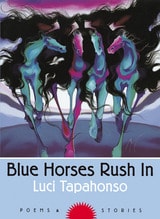
Blue Horses Rush In
Poems and StoriesLuci Tapahonso
University of Arizona Press, 1997
Blue Horses Rush In takes its title from a poem about the birth of her granddaughter Chamisa, whose heart "pounded quickly and we recognized / the sound of horses running: / the thundering of hooves on the desert floor." Through such personal insights, this collection follows the cycle of a woman's life and underlines what it means to be Navajo in the late twentieth century. The book marks a major accomplishment in American literature for its successful blending of Navajo cultural values and forms with the English language, while at the same time retaining the Navajo character. Here, Luci Tapahonso walks slowly through an ancient Hohokam village, recalling stories passed down from generation to generation. Later in the book, she may tell a funny story about a friend, then, within a few pages, describe family rituals like roasting green chiles or baking bread in an outside oven. Throughout, Tapahonso shares with readers her belief in the power of pollen and prayer feathers and sacred songs.
Many of these stories were originally told in Navajo, taking no longer than ten minutes in the telling. "Yet, in recreating them, it is necessary to describe the land, the sky, the light, and other details of time and place," writes Tapahonso. "In this way, I attempt to create and convey the setting for the oral text. In writing, I revisit the place or places concerned and try to bring the reader to them, thereby enabling myself and other Navajos to sojourn mentally and emotionally in our home, Dinétah."

Boat
PoemsChristopher Merrill
Tupelo Press, 2013
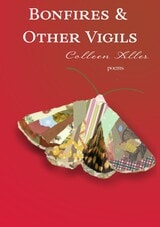
Bonfires & Other Vigils
PoemsColleen Alles
University of Alabama Press, 2024
Any event can be a vigil: a walk by a river, a flu shot at Walgreens, an hour spent by a bird feeder attracting mostly cardinals. A vigil means you are keeping watch, and these poems are watching the world around them—and the worlds beneath those worlds, too. The poems in this collection pull from dreams and apparitions as much as they do reality: a woman in a house, a coffee mug, a book of matches, a load of unfolded laundry, a goldfish won at a county fair. All is fair game. Bonfires & Other Vigils celebrates the watching in unconventional ways. Readers can expect to revel in the elusive wonder of haziness, otherworldliness, and wildness of examining life through lenses of vigilant dreaming.
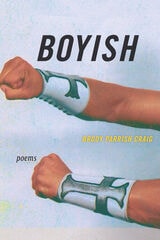
Boyish
PoemsBrody Parrish Craig
Omnidawn, 2021
Each page builds tension that then shatters, bringing us into the interior of a story. Brody Parrish Craig invites us to carve out a space and to find ourselves carried over the gravel along the creek. Moving through the subconscious and embodied desire, these poems are rich with formal play, twisting language in dense sonnets. Landscapes of the city’s dystopia meet the queer pastoral, where conservation often means knowing what must be burned down.
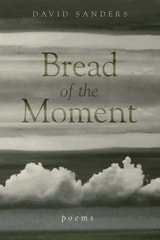
Bread of the Moment
PoemsDavid Sanders
Ohio University Press, 2021
A collection of poems about time, solitude, and wisdom that leads readers to hover between acceptance of and alienation from our fragility.
Bread of the Moment, the follow-up to David Sanders' Compass and Clock (Swallow Press, 2016), devotes keen attention to the porous nature of the past and how the unbidden evidence of ordinary life pervades the world, provoking a spectrum of moments from which to draw meaning and find solace. These poems, characterized by a mix of free and formal verse, depict quiet days at home or in nature, as well as close calls and brushes with death: chronic illness, a house fire, a car crushed by a boulder.
In this way, these poems amplify the fragility of the commonplace, a mystery from which we are, amid the noise of our everyday lives, sometimes estranged. Through this exploration, Sanders constructs a precarious balance between alienation and acceptance, striking a note at once recognizable and new.
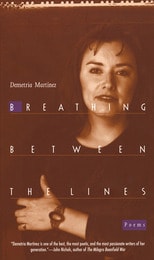
Breathing Between the Lines
PoemsDemetria Martínez
University of Arizona Press, 1997
Weaving together threads of love and family, social conviction and activism, loss and renewal, Breathing between the Lines carries the reader deep inside the head and heart of a talented Chicana writer. Page by page, the journey is an exhilarating one. What we find at the end is up to us.
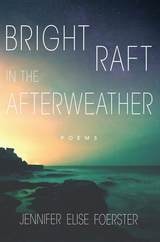
Bright Raft in the Afterweather
PoemsJennifer Elise Foerster
University of Arizona Press, 2018
Featuring recurring characters, settings, and motifs from her previous book, Leaving Tulsa, Foerster takes the reader on a solitary journey to the edges of the continents of mind and time to discover what makes us human. Along the way, the author surveys the intersection between natural landscapes and the urban world, baring parallels to the conflicts between Native American peoples and Western colonizers, and considering how imagination and representation can both destroy and remake our worlds.
Foerster’s captivating language and evocative imagery immerse the reader in a narrative of disorientation and reintegration. Each poem blends Foerster’s refined use of language with a mythic and environmental lyricism as she explores themes of destruction, spirituality, loss, and remembrance.
In a world wrought with ecological imbalance and grief, Foerster shows how from the devastated land of our alienation there is potential to reconnect to our origins and redefine the terms by which we inhabit humanity and the earth.
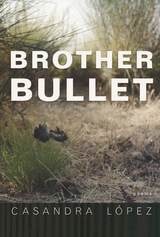
Brother Bullet
PoemsCasandra López
University of Arizona Press, 2019
Drawing on migratory experiences, López transports the reader to the Inland Empire, Baja California, New Mexico, and Arizona to create a frame for memory, filled with imagery, through the cyclical but changing essence of sorrow. This is paralleled with surrounding environments, our sense of belonging—on her family’s porch, or in her grandfather’s orange grove, or in the darkest desert. López’s landscapes are geographical markers and borders, connecting shared experiences and memories.
Brother Bullet tugs and pulls, drawing us into a consciousness—a story—we all bear.
Brownwood
PoemsLawrence Bridges
Tupelo Press, 2016