Results by title
22 books match the query 'Revival'

A Future for Marxism?
Althusser, the Analytical Turn and the Revival of Socialist TheoryAndrew Levine
Pluto Press, 2003
To do this, Andrew Levine examines two recent departures in Marxist thought -- Althusserian and Analytical Marxism. The former is currently defunct; the latter, very nearly so. He assesses the shortcomings of each, while emphasising their considerable, and still timely, merits. The discussion is framed against an analysis of socialism's place in the political life of the past two centuries. Levine assesses the apparent historical defeat of the Left generally since the consolidation of the Reagan-Thatcher era and speculates on current signs of renewal.
He argues that both Althusserian and analytical Marxism represent new and deeply important philosophical departures within the Marxist tradition as they force a rethinking of Marxism's scientific and political project. For all their differences in style and substance, these strains of Marxist thought share important thematic and sociological features and Levine concludes that both traditions provide a legacy upon which a revived Left can build.
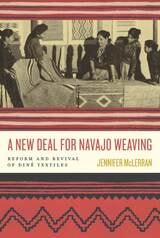
A New Deal for Navajo Weaving
Reform and Revival of Diné TextilesJennifer McLerran
University of Arizona Press, 2022
By the 1920s the durability and market value of Diné weavings had declined dramatically. Indian welfare advocates established projects aimed at improving the materials and techniques. Private efforts served as models for federal programs instituted by New Deal administrators. Historian Jennifer McLerran details how federal officials developed programs such as the Southwest Range and Sheep Breeding Laboratory at Fort Wingate in New Mexico and the Navajo Arts and Crafts Guild. Other federal efforts included the publication of Native natural dye recipes; the publication of portfolios of weaving designs to guide artisans; and the education of consumers through the exhibition of weavings, aiding them in their purchases and cultivating an upscale market. McLerran details how government officials sought to use these programs to bring the Diné into the national economy; instead, these federal tactics were ineffective because they marginalized Navajo women and ignored the important role weaving plays in the resilience and endurance of wider Diné culture.

Fiddling for Norway
Revival and IdentityChris Goertzen
University of Chicago Press, 1997
The book begins with an investigation of the people and events important to Norwegian folk fiddling, tracing the history of Norwegian folk music and the growth and diversification of the folk music revival. The narrative takes us to fiddle clubs, concerts and competitions on the local, regional, and national levels, and shows how conflicting emphases—local vs. national identity, tradition vs. aesthetic qualities—continue to transform Norwegian folk music. Goertzen utilizes a large anthology of meticulously transcribed tunes to illustrate personal and regional repertoires, aspects of performance practice, melodic gesture and form, and tune relationships. Ethnomusicologists and readers who fiddle will enjoy both the music and the stories it tells.

I Believe I'll Go Back Home
Roots and Revival in New England Folk MusicThomas S. Curren
University of Massachusetts Press, 2021
Fueled by interviews with key players from the folk music scene, I Believe I'll Go Back Home traces a direct line from Yankee revolutionaries, up-country dancers, and nineteenth-century pacifists to the emergence of blues and rock 'n' roll, ultimately landing at the period of the folk revival. Thomas S. Curren presents the richness and diversity of the New England folk tradition, which continues to provide perspective, inspiration, and healing in the present day.

In the Mood for Texture
The Revival of Bangkok as a Chinese CityArnika Fuhrmann
Duke University Press, 2026
Jewish Renaissance and Revival in America
Edited by Eitan P. Fishbane and Jonathan D. Sarna
Brandeis University Press, 2011
Language, Resistance and Revival
Republican Prisoners and the Irish Language in the North of IrelandFeargal Mac Ionnrachtaigh
Pluto Press, 2013
Language, Resistance and Revival tells the untold story of the truly groundbreaking linguistic and educational developments that took place among Republican prisoners in Long Kesh prison from 1972-2000.
During a period of bitter struggle between Republican prisoners and the British state, the Irish language was taught and spoken as a form of resistance during incarceration. The book unearths this story for the first time and analyses the rejuvenating impact it had on the cultural revival in the nationalist community beyond the prison walls.
Based on unprecedented interviews, Feargal Mac Ionnrachtaigh explores a key period in Irish history through the original and 'insider' accounts of key protagonists in the contemporary Irish language revival.

Modern Moonshine
The Revival of White Whiskey in the Twenty-First CenturyCameron D. Lippard
West Virginia University Press, 2019
The craft of making moonshine—an unaged white whiskey, often made and consumed outside legal parameters—nearly went extinct in the late twentieth century as law enforcement cracked down on illicit producers, and cheaper, lawful alcohol became readily available. Yet the twenty-first century has witnessed a resurgence of artisanal distilling, as both connoisseurs and those reconnecting with their heritage have created a vibrant new culture of moonshine. While not limited to Appalachia, moonshine is often entwined with the region in popular understandings.
The first interdisciplinary examination of the legal moonshine industry, Modern Moonshine probes the causes and impact of the so-called moonshine revival. What does the moonshine revival tell us about our national culture? How does it shape the image of Appalachia and rural America? Focusing mostly on southern Appalachia, the book’s eleven essays chronicle such popular figures as Popcorn Sutton and explore how and why distillers promote their product as “traditional” and “authentic.” This edited collection draws from scholars across the disciplines of anthropology, history, geography, and sociology to make sense of the legal, social, and historical shifts behind contemporary production and consumption of moonshine, and offers a fresh perspective on an enduring topic of Appalachian myth and reality.

No Minor Accomplishment
The Revival of New Jersey Professional BaseballGolon, Bob
Rutgers University Press, 2008
In No Minor Accomplishment, sports historian and New Jersey native Bob Golon tells the story of the state's baseball scene since the Trenton Thunder arrived in 1994. Drawing on interviews with team owners and employees, industry executives and fans, Golon goes behind the scenes to show how maintaining a minor league ball club can be a risky business venture. Stadiums cost millions to build, and a team full of talented players does not immediately guarantee success. Instead, each of the eight minor league and independent professional teams in the state must tailor themselves to the communities in which they are situated. Shrewd marketing is necessary to attract fans, but Golon also explains how, unlike Major League Baseball, the business aspect of the minor and independent leagues is not something the average spectator notices. For the fans, baseball in New Jersey is wholesome, exciting family entertainment.
Paper, Ink, and Achievement
Gabriel Hornstein and the Revival of Eighteenth-Century ScholarshipKevin L. Cope
Bucknell University Press, 2021
Published by Bucknell University Press. Distributed worldwide by Rutgers University Press.
Rainforest Radio
Language Reclamation and Community Media in the Ecuadorian AmazonGeorgia C. Ennis
University of Arizona Press, 2025
Napo Kichwa communities in the Upper Ecuadorian Amazon find themselves doubly marginalized by settler colonialism and well-intentioned language revitalization projects.
In Rainforest Radio Georgia C. Ennis provides a comprehensive ethnographic exploration of Amazonian Kichwa community media, offering a unique look at how Indigenous broadcast and performance media facilitate linguistic and cultural reclamation in the Ecuadorian Amazon.
This work offers a critical analysis of how standardized language revitalization efforts, like the imposition of Unified Kichwa, can inadvertently perpetuate linguistic oppression. Ennis follows producers, performers, and consumers to understand the role of media in language reclamation. Through extensive fieldwork, she provides vivid portrayals of community efforts to sustain the language and cultural practices of their elders amid environmental and social upheaval.
Meticulously researched and beautifully written, Rainforest Radio is an essential work for anthropologists, linguists, and social scientists interested in language revitalization, Indigenous media, and environmental justice. This book showcases the transformative potential of community-driven media initiatives, highlighting the innovative responses of Napo Kichwa activists to the unique challenges they face. It serves as a powerful model for those working on similar issues worldwide, demonstrating the critical role of community media in language reclamation and cultural sustainability.

Revival and Awakening
American Evangelical Missionaries in Iran and the Origins of Assyrian NationalismAdam H. Becker
University of Chicago Press, 2015
American evangelicals arrived in Iran in the 1830s. Becker examines how these missionaries, working with the “Nestorian” Church of the East—an Aramaic-speaking Christian community in the borderlands between Qajar Iran and the Ottoman Empire—catalyzed, over the span of sixty years, a new national identity. Instructed at missionary schools in both Protestant piety and Western science, this indigenous group eventually used its newfound scriptural and archaeological knowledge to link itself to the history of the ancient Assyrians, which in time led to demands for national autonomy. Exploring the unintended results of this American attempt to reform the Orient, Becker paints a larger picture of religion, nationalism, and ethnic identity in the modern era.
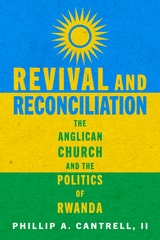
Revival and Reconciliation
The Anglican Church and the Politics of RwandaPhillip A. Cantrell II
University of Wisconsin Press, 2022
Drawing from new archival materials as well as on-the-ground field research, Revival and Reconciliation is a Rwanda-centered account of the country's ecclesiastical and national historiography. Cantrell calls attention to the harms the postgenocide church risks doing should it continue to support false narratives about Rwanda's colonial and postcolonial past—with dangerous consequences for the future.
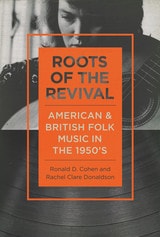
Roots of the Revival
American and British Folk Music in the 1950sRonald D. Cohen and Rachel Clare Donaldson
University of Illinois Press, 2014
After setting the stage with the work of music collectors in the nineteenth century, the authors explore the so-called recovery of folk music practices and performers by Alan Lomax and others, including journeys to and within the British Isles that allowed artists and folk music advocates to absorb native forms and facilitate the music's transatlantic exchange. Cohen and Donaldson place the musical and cultural connections of the twin revivals within the decade's social and musical milieu and grapple with the performers' leftist political agendas and artistic challenges, including the fierce debates over "authenticity" in practice and repertoire that erupted when artists like Harry Belafonte and the Kingston Trio carried folk into the popular music mainstream.
From work songs to skiffle, from the Weavers in Greenwich Village to Burl Ives on the BBC, Roots of the Revival offers a frank and wide-ranging consideration of a time, a movement, and a transformative period in American and British pop culture.

Sentimental Readers
The Rise, Fall, and Revival of a Disparaged RhetoricFaye Halpern
University of Iowa Press, 2013
Halpern examines these novels with a fresh eye by positioning sentimentality as a rhetorical strategy on the part of these novels’ (mostly) female authors, who used it to answer a question that plagued the male-dominated world of nineteenth-century American rhetoric and oratory: how could listeners be sure an eloquent speaker wasn’t unscrupulously persuading them of an untruth? The authors of sentimental novels managed to solve this problem even as the professional male rhetoricians and orators could not, because sentimental rhetoric, filled with tears and other physical cues of earnestness, ensured that an audience could trust the heroes and heroines of these novels. However, as a wider range of authors began wielding sentimental rhetoric later in the nineteenth century, readers found themselves less and less convinced by this strategy.
In her final discussion, Halpern steps beyond a purely historical analysis to interrogate contemporary rhetoric and reading practices among literature professors and their students, particularly first-year students new to the “close reading” method advocated and taught in most college English classrooms. Doing so allows her to investigate how sentimental novels are understood today by both groups and how these contemporary reading strategies compare to those of Americans more than a century ago. Clearly, sentimental novels still have something to teach us about how and why we read.
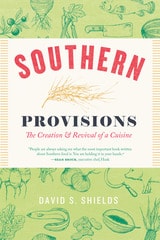
Southern Provisions
The Creation and Revival of a CuisineDavid S. Shields
University of Chicago Press, 2015
Shields’s turf is the southern Lowcountry, from the peanut patches of Wilmington, North Carolina to the sugarcane fields of the Georgia Sea Islands and the citrus groves of Amelia Island, Florida. He takes us on a historical excursion to this region, drawing connections among plants, farms, growers, seed brokers, vendors, cooks, and consumers over time. Shields begins by looking at how professional chefs during the nineteenth century set standards of taste that elevated southern cooking to the level of cuisine. He then turns to the role of food markets in creating demand for ingredients and enabling conversation between producers and preparers. Next, his focus shifts to the field, showing how the key ingredients—rice, sugarcane, sorghum, benne, cottonseed, peanuts, and citrus—emerged and went on to play a significant role in commerce and consumption. Shields concludes with a look at the challenges of reclaiming both farming and cooking traditions.
From Carolina Gold rice to white flint corn, the ingredients of authentic southern cooking are returning to fields and dinner plates, and with Shields as our guide, we can satisfy our hunger both for the most flavorful regional dishes and their history.

The Lost Region
Toward a Revival of Midwestern HistoryJon K. Lauck
University of Iowa Press, 2013
In addition to outlining the centrality of the Midwest to crucial moments in American history, Jon K. Lauck resurrects the long-forgotten stories of the institutions founded by an earlier generation of midwestern historians, from state historical societies to the Mississippi Valley Historical Association. Their strong commitment to local and regional communities rooted their work in place and gave it an audience outside the academy. He also explores the works of these scholars, showing that they researched a broad range of themes and topics, often pioneering fields that remain vital today.
The Lost Region demonstrates the importance of the Midwest, the depth of historical work once written about the region, the continuing insights that can be gleaned from this body of knowledge, and the lessons that can be learned from some of its prominent historians, all with the intent of once again finding the forgotten center of the nation and developing a robust historiography of the Midwest.
The Revival of Labor Liberalism
Andrew Battista
University of Illinois Press, 2008
The Revival of Labor Liberalism is a careful analysis of the twentieth-century decline of the labor-liberal coalition and the important efforts to revive their political fortunes. Andrew Battista chronicles the efforts of several new political organizations that arose in the 1970s and 1980s with the goal of reuniting unions and liberals. Drawing from extensive documentary research and in-depth interviews with union leaders and political activists, Battista shows that the new organizations such as the Progressive Alliance, Citizen Labor Energy Coalition, and National Labor Committee made limited but real progress in reconstructing and strengthening the labor-liberal coalition. Although the labor-liberal alliance remained far weaker than the rival business-conservative alliance, Battista illuminates that it held a crucial role in labor and political history after 1968. Focuses on a fraught but evolving partnership, Battista provides a broad analysis of factional divisions among both unions and liberals and considers the future of unionism and the labor-liberal coalition in America.

The Revival of Metaphysical Poetry
The History of Style, 1800 to the PresentJoseph E. Duncan
University of Minnesota Press, 1959
The Revival of Metaphysical Poetry was first published in 1959. Minnesota Archive Editions uses digital technology to make long-unavailable books once again accessible, and are published unaltered from the original University of Minnesota Press editions.
The metaphysical style, as expressed in its most distinguished and distinguishable form by the seventeenth-century poet John Donne, has had an increasing influence on latterday critics and poets. Thus it is important to an understanding of literary history to examine this revival. Professor Duncan traces the movement and analyzes changing interpretations of the style in the work of British and American poets and critics. He shows that much of the "new criticism" and the metaphysical poetry of T. S. Eliot and that of the metaphysical style has thrived on fresh critical interpretation and vital poetic experimentation.
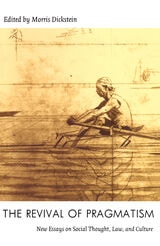
The Revival of Pragmatism
New Essays on Social Thought, Law, and CultureMorris Dickstein, ed.
Duke University Press, 1998
As the twenty-five intellectuals who take part in this discussion show, pragmatism has become a complex terrain on which a rich variety of contemporary debates have been played out. Contributors such as Richard Rorty, Stanley Cavell, Nancy Fraser, Robert Westbrook, Hilary Putnam, and Morris Dickstein trace pragmatism’s cultural and intellectual evolution, consider its connection to democracy, and discuss its complex relationship to the work of Emerson, Nietzsche, and Wittgenstein. They show the influence of pragmatism on black intellectuals such as W. E. B. Du Bois, explore its view of poetic language, and debate its effects on social science, history, and jurisprudence. Also including essays by critics of the revival such as Alan Wolfe and John Patrick Diggins, the volume concludes with a response to the whole collection from Stanley Fish.
Including an extensive bibliography, this interdisciplinary work provides an in-depth and broadly gauged introduction to pragmatism, one that will be crucial for understanding the shape of the transformations taking place in the American social and philosophical scene at the end of the twentieth century.
Contributors. Richard Bernstein, David Bromwich, Ray Carney, Stanley Cavell, Morris Dickstein, John Patrick Diggins, Stanley Fish, Nancy Fraser, Thomas C. Grey, Giles Gunn, Hans Joas, James T. Kloppenberg, David Luban, Louis Menand, Sidney Morgenbesser, Richard Poirier, Richard A. Posner, Ross Posnock, Hilary Putnam, Ruth Anna Putnam, Richard Rorty, Michel Rosenfeld, Richard H. Weisberg, Robert B. Westbrook, Alan Wolfe
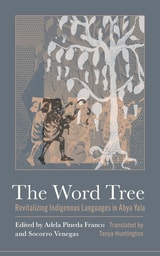
The Word Tree
Revitalizing Indigenous Languages in Abya YalaEdited by Adela Pineda Franco and Socorro VenegasTranslated by Tanya Huntington
University of Texas Press, 2025
A collaborative effort to address some of the chronic issues affecting the preservation and revitalization of indigenous languages.
What does it mean to "revitalize" an indigenous language when approximately 6,700 of the nearly 7,000 left in the world need protection? Where to begin? Each language offers a sense of history, identity, and belonging within society to the people actively using it. The Word Tree begins by hearing directly from those still communicating in some of these less dominant languages, from Achi'es to Zapotec, and offers the metaphor of a tree whose political roots sustain the trunk of education that will bear the fruit of learning languages anew. Whether describing the tension between indigenous and state-recognized languages; the process of linguistics displacement resulting from migration; or the value of locally focused efforts in a cultural cooperative, these nine essays offer fresh and useful perspectives.
The Word Tree is the result of a collaboration between the National Autonomous University of Mexico and the University of Texas at Austin. Gathering diverse concerns, experiences, explorations, proposals, and perspectives on the revitalization of some of the continent's most imperiled indigenous languages, the contributors aim to introduce their struggle for existence to a modern world. From south to north, the Quecha or Runasimi, Maya, Zapotec or Diidxazá, Chatino, Mè'pháá or Tlapaneco, Mixteco, Mixe or Auukj, and Nahuatl languages exist in all their vast complexities and contexts. At its most fundamental level, this book is a call to develop alternative paths for human existence in which caring for one another is the consensus.
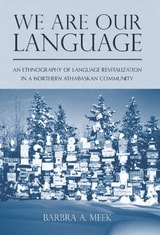
We Are Our Language
An Ethnography of Language Revitalization in a Northern Athabaskan CommunityBarbra A. Meek
University of Arizona Press, 2012
In presenting the case of Kaska, an endangered language in an Athabascan community in the Yukon, Barbra A. Meek asserts that language revitalization requires more than just linguistic rehabilitation; it demands a social transformation. The process must mend rips and tears in the social fabric of the language community that result from an enduring colonial history focused on termination. These “disjunctures” include government policies conflicting with community goals, widely varying teaching methods and generational viewpoints, and even clashing ideologies within the language community.
This book provides a detailed investigation of language revitalization based on more than two years of active participation in local language renewal efforts. Each chapter focuses on a different dimension, such as spelling and expertise, conversation and social status, family practices, and bureaucratic involvement in local language choices. Each situation illustrates the balance between the desire for linguistic continuity and the reality of disruption.
We Are Our Language reveals the subtle ways in which different conceptions and practices—historical, material, and interactional—can variably affect the state of an indigenous language, and it offers a critical step toward redefining success and achieving revitalization.