Results by title
1668 books match the query 'Popular culture' and 87 start with b
Baby You're a Rich Man
Suing the Beatles for Fun and ProfitStan Soocher
University Press of New England, 2015
Baby, Let Me Follow You Down
The Illustrated Story of the Cambridge Folk YearsEric von Schmidt
University of Massachusetts Press, 1979
Compiled by two musicians who were active participants in the Cambridge folk scene, the volume documents a special time in United States culture when the honesty and vitality of traditional folk music were combined with the raw power of urban blues and the high energy of electric rock and roll to create a new American popular music.
Babylon East
Performing Dancehall, Roots Reggae, and Rastafari in JapanMarvin D. Sterling
Duke University Press, 2010
Sterling provides a nuanced ethnographic analysis of the ways that many Japanese involved in reggae as musicians and dancers, and those deeply engaged with Rastafari as a spiritual practice, seek to reimagine their lives through Jamaican culture. He considers Japanese performances and representations of Jamaican culture in clubs, competitions, and festivals; on websites; and in song lyrics, music videos, reggae magazines, travel writing, and fiction. He illuminates issues of race, ethnicity, gender, sexuality, and class as he discusses topics ranging from the cultural capital that Japanese dancehall artists amass by immersing themselves in dancehall culture in Jamaica, New York, and England, to the use of Rastafari as a means of critiquing class difference, consumerism, and the colonial pasts of the West and Japan. Encompassing the reactions of Jamaica’s artists to Japanese appropriations of Jamaican culture, as well as the relative positions of Jamaica and Japan in the world economy, Babylon East is a rare ethnographic account of Afro-Asian cultural exchange and global discourses of blackness beyond the African diaspora.
Back to Black
Jules Feiffer’s Noir TrilogyFabrice Leroy
Rutgers University Press, 2025
Named the Best Academic Work of 2025 by The Comics Journal
The legendary American cartoonist and author Jules Feiffer has enjoyed a long and varied career, working on everything from illustrating The Phantom Tollbooth to writing the screenplay for the film Popeye. But some of his most innovative work came very late in his career, with a trio of graphic novels he composed in his eighties: Kill My Mother (2014), Cousin Joseph (2016), and The Ghost Script (2018).
Back to Black provides the first full-length critical analysis of this trilogy, exploring how it pays homage to the iconography and themes of film noir through constant graphic experimentation and a striking reinvention of Feiffer’s distinctive style. Fabrice Leroy shows how Feiffer deftly alternates between dramatic and satirical tones as he plays with the conventions of noir to provide a caustic yet moving commentary on mid-twentieth-century American life. Through close readings of each novel in the trilogy, he examines Feiffer’s singular depiction of the central political issues in the United States from the Great Depression to the 1950s, which still resonate today: unionization struggles, cinematic propaganda, McCarthyism, the American Dream, immigration, antisemitism, civil rights, and gender discrimination. Placing the noir trilogy into the context of Feiffer’s long career, Back to Black demonstrates how he offers a loving pastiche of the genre without losing his unique voice or critical edge.
Backlash Against the ADA
Reinterpreting Disability RightsLinda Hamilton Krieger, Editor
University of Michigan Press, 2003
Backward Glances
Contemporary Chinese Cultures and the Female Homoerotic ImaginaryFran Martin
Duke University Press, 2010
As Martin explains, memorial schoolgirl love stories are popular throughout contemporary Chinese cultures. The same-sex attracted young woman appears in both openly homophobic and proudly queer-affirmative narratives, as well as in stories whose ideological valence is less immediately clear. Martin demonstrates that the stories, television programs, and films she analyzes are not idiosyncratic depictions of marginal figures, but manifestations of a broader, mainstream cultural preoccupation. Her investigation of representations of same-sex love between women sheds new light on contemporary Chinese understandings of sex, love, gender, marriage, and the cultural ordering of human life.

Bad Environmentalism
Irony and Irreverence in the Ecological AgeNicole Seymour
University of Minnesota Press, 2018
Traces a tradition of ironic and irreverent environmentalism, asking us to rethink the movement’s reputation for gloom and doom
Activists today strive to educate the public about climate change, but sociologists have found that the more we know about alarming issues, the less likely we are to act. Meanwhile, environmentalists have acquired a reputation as gloom-and-doom killjoys. Bad Environmentalism identifies contemporary texts that respond to these absurdities and ironies through absurdity and irony—as well as camp, frivolity, irreverence, perversity, and playfulness.
Nicole Seymour develops the concept of “bad environmentalism”: cultural thought that employs dissident affects and sensibilities to reflect critically on our current moment and on mainstream environmental activism. From the television show Wildboyz to the short film series Green Porno, Seymour shows that this tradition of thought is widespread—spanning animation, documentary, fiction film, performance art, poetry, prose fiction, social media, and stand-up comedy since at least 1975. Seymour argues that these texts reject self-righteousness and sentimentality, undercutting public negativity toward activism and questioning basic environmentalist assumptions: that love and reverence are required for ethical relationships with the nonhuman and that knowledge is key to addressing problems like climate change.
Funny and original, Bad Environmentalism champions the practice of alternative green politics. From drag performance to Indigenous comedy, Seymour expands our understanding of how environmental art and activism can be pleasurable, even in a time of undeniable crisis.
Badass Feminist Politics
Exploring Radical Edges of Feminist Theory, Communication, and ActivismSarah Jane Blithe
Rutgers University Press, 2022
Badass Feminist Politics includes a diverse range of engaging feminist political projects to not only analyze the work being done on the ground but provide an overview for action that can be taken on by those seeking to engage in feminist activism in their own communities. Contributors included here are working for equality and equity and resisting violent, racist, homophobic, transphobic, xenophobic, and sexist language and action during this tension-filled political moment. Collectively, the book explores what it means to live and communicate feminist politics in everyday choices and actions, and how we can facilitate learning by analyzing these examples. Taking up current issues and new theoretical perspectives, the authors offer novel perspectives into what it means to live feminist politics. This book is a testament to resilience, resistance, communication, and forward thinking about what these themes all mean for new feminist agendas. Learning how to resist oppressive structures through words and actions is particularly important for students. Badass Feminist Politics features scholars from non-dominant groups taking up issues of marginalization and oppression, which can help people accomplish their social justice goals of inclusivity on the ground and in the classroom.
Bandits, Captives, Heroines, and Saints
Cultural Icons of Mexico’s Northwest BorderlandsRobert McKee Irwin
University of Minnesota Press, 2007
Bandits, Captives, Heroines, and Saints investigates cultural icons of the late nineteenth century from Mexico’s largely unstudied northwest borderlands, present-day Sonora, Baja California, and western Chihuahua. Robert McKee Irwin looks at popular figures such as Joaquín Murrieta, the gold rush social bandit; Lola Casanova, the anti-Malinche, whose marriage to a Seri Indian symbolized a forbidden form of mestizaje; and la Santa de Cabora, a young faith healer who inspired armed insurgencies and was exiled to Arizona.
Cultural icons such as Murrieta, Lola Casanova, and la Santa de Cabora are products of intercultural dialogue, Irwin reveals, and their characterizations are unstable. They remain relevant for generations because there is no consensus regarding their meanings, and they are weapons in struggles of representation in the borderlands. The figures studied here are especially malleable, he argues, because they are marginalized from the mainstream of historiography.
A timely analysis, Bandits, Captives, Heroines, and Saints challenges current paradigms of border studies and presents a rich understanding of the ways in which cultural icons influence people’s minds and lives.
Robert McKee Irwin is associate professor of Spanish at the University of California, Davis, and the author of Mexican Masculinities (Minnesota, 2003).
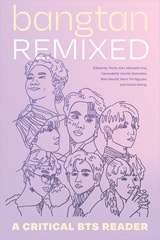
Bangtan Remixed
A Critical BTS ReaderPatty Ahn, Michelle Cho, Vernadette Vicuña Gonzalez, Rani Neutill, Mimi Thi Nguyen, and Yutian Wong, editors
Duke University Press, 2024
Contributors. Andrea Acosta, Patty Ahn, Carolina Alves, Inez Amihan Anderson, Allison Anne Gray Atis, Kaina “Kai” Bernal, Mutlu Binark, Jheanelle Brown, Sophia Cai, Michelle Cho, Mariam Elba, Ameena Fareeda, Vernadette Vicuña Gonzalez, Rosanna Hall, Dal Yong Jin, JIN Youngsun, Despina Kakoudaki, Yuni Kartika, Alptekin Keskin, Rachel Kuo, Marci Kwon, Courtney Lazore, Regina Yung Lee, S. Heijin Lee, Wonseok Lee, Amanda Lovely, Melody Lynch-Kimery, Maria Mison, Noel Sajid I. Murad, Sara Murphy, UyenThi Tran Myhre, Rani Neutill, Johnny Huy Nguyễn, Mimi Thi Nguyen, Karlina Octaviany, Nykeah Parham, Stefania Piccialli, Raymond San Diego, Hannah Ruth L. Sison, Prerna Subramanian, Havannah Tran, Andrew Ty, Gracelynne West, Yutian Wong, Jaclyn Zhou

Bar Yarns and Manic-Depressive Mixtapes
Jim Walsh on Music from Minneapolis to the Outer LimitsJim Walsh
University of Minnesota Press, 2016
Bar Yarns and Manic Depressive Mix Tapes distills thirty delirious, jam-packed years of some of the best music writing ever to come out of the Twin Cities. As a writer and musician, the ever-curious Jim Walsh has lived a life immersed in music, and it all makes its way into his columns and feature articles, interviews and reviews, including personal essays on life, love, music, family, death, and, yes, the manic-depressive highs and lows that come with being an obsessive music lover and listener.
From Minneapolis’s own Prince to such far-flung acts as David Bowie, the Waterboys, Lucinda Williams, Parliament-Funkadelic, L7, the Rolling Stones, the Ramones, U2, Hank Williams, Britney Spears, Elvis Presley and Nirvana, Walsh’s work treats us to a chorus of the voices and sounds that have made the music scene over the past three decades. The big names are here, from Rosanne Cash to Bruce Springsteen to Bob Marley and Jackson Browne, but so are those a little shy of superstardom, like the Tin Star Sisters and Uncle Tupelo, Son Volt, the Gear Daddies, Semisonic, and The Belfast Cowboys.
The book is also a tour (de force) of the Twin Cities' most celebrated music venues past and present, from the Prom Ballroom to Paisley Park to Duffy's. When Walsh isn't celebrating the sheer magic of live music or dreaming to tunes blasting from the car console, he might be surveying the scene with the Hamm's Bear at Grumpy's or the Double Deuce or singing the last night at the Uptown Bar blues. Whether he's dishing dirt with Yoko Ono or digging the Replacements' roots, giving an old rocker a spin or offering a mic to the latest upstart, Jim Walsh reminds us that in the land of a thousand lakes there are a thousand dances, and the music never dies.
Capturing the pure notes and character of the sound of the Twin Cities and beyond, with a keen eye for trends and the telling detail, his book truly is a mix tape of thirty years of unforgettable music.

Barbie's Queer Accessories
Erica Rand
Duke University Press, 1995
Rand begins by focusing on the production and marketing of Barbie, starting in 1959, including Mattel’s numerous tie-ins and spin-offs. These variations, which include the much-promoted multiethnic Barbies and the controversial Earring Magic Ken, helped make the doll one of the most profitable toys on the market. In lively chapters based on extensive interviews, the author discusses adult testimony from both Barbie "survivors" and enthusiasts and explores how memories of the doll fit into women’s lives. Finally, Rand looks at cultural reappropriations of Barbie by artists, collectors, and especially lesbians and gay men, and considers resistance to Barbie as a form of social and political activism.
Illustrated with photographs of various interpretations and alterations of Barbie, this book encompasses both Barbie glorification and abjection as it testifies to the irrefutably compelling qualities of this bestselling toy. Anyone who has played with Barbie—or, more importantly, thought or worried about playing with Barbie—will find this book fascinating.
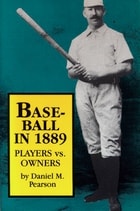
Baseball In 1889
Players vs. OwnersDaniel M. Pearson
University of Wisconsin Press, 1993

Baseball and Country Music
Don Cusic
University of Wisconsin Press, 2003

Baseball and Rhetorics of Purity
The National Pastime and American Identity During the War on TerrorMichael L. Butterworth
University of Alabama Press, 2010
An investigation into the culture and mythology of baseball, a study of its limits and failures, and an invitation to remake the game in a more democratic way.
Baseball has long been considered America’s “national pastime,” touted variously as a healthy diversion, a symbol of national unity, and a model of democratic inclusion. But, according to Michael Butterworth, such favorable rhetoric belies baseball’s complicity in the rhetorical construction of a world defined by good and evil.
Baseball and Rhetorics of Purity is an investigation into the culture and mythology of baseball, a study of its limits and failures, and an invitation to remake the game in a more democratic way. It pays special attention to baseball’s role in the reconstruction of American identity after September 11, 2001. This study is framed by a discussion that links the development of baseball to the discourses of innocence and purity in 19th-century America. From there, it examines ritual performances at baseball games; a traveling museum exhibit sponsored by the National Baseball Hall of Fame and Museum; the recent debate about the use of performance-enhancing drugs; the return of Major League Baseball to Washington, D.C., in 2005; and the advent of the World Baseball Classic in 2006.
Butterworth argues that by promoting myths of citizenship and purity, post-9/11 discourse concerning baseball ironically threatens the health of the democratic system and that baseball cannot be viewed as an innocent diversion or escape. Instead, Butterworth highlights how the game on the field reflects a more complex and diverse worldview, and makes a plea for the game’s recovery, both as a national pastime and as a site for celebrating the best of who we are and who we can be.
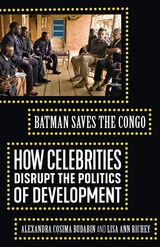
Batman Saves the Congo
How Celebrities Disrupt the Politics of DevelopmentAlexandra Cosima Budabin
University of Minnesota Press, 2021
How celebrity strategic partnerships are disrupting humanitarian space
Can a celebrity be a “disrupter,” promoting strategic partnerships to bring new ideas and funding to revitalize the development field—or are celebrities just charismatic ambassadors for big business? Examining the role of the rich and famous in development and humanitarianism, Batman Saves the Congo argues that celebrities do both, and that understanding why and how yields insight into the realities of neoliberal development.
In 2010, entertainer Ben Affleck, known for his superhero performance as Batman, launched the Eastern Congo Initiative to bring a new approach to the region’s development. This case study is central to Batman Saves the Congo. Affleck’s organization operates with special access, diversified funding, and significant support of elites within political, philanthropic, development, and humanitarian circuits. This sets it apart from other development organizations. With his convening power, Affleck has built partnerships with those inside and outside development, staking bipartisan political ground that is neither charity nor aid but “good business.” Such visible and recognizable celebrity humanitarians are occupying the public domain yet not engaging meaningfully with any public, argues Batman Saves the Congo. They are an unruly bunch of new players in development who amplify business solutions.
As elite political participants, celebrities shape development practices through strategic partnerships that are both an innovative way to raise awareness and funding for neglected causes and a troubling trend of unaccountable elite leadership in North–South relations. Batman Saves the Congo helps illuminate the power of celebritized business solutions and the development contexts they create.
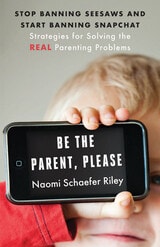
Be the Parent, Please
Stop Banning Seesaws and Start Banning Snapchat: Strategies for Solving the Real Parenting ProblemsNaomi Schaefer Riley
Templeton Press, 2018
Silicon Valley tech giants design their products to hook even the most sophisticated adults. Imagine, then, the influence these devices have on the developing minds of young people. Touted as tools of the future that kids must master to ensure a job in the new economy, they are, in reality, the culprits, stealing our children’s attention, making them anxious, agitated, and depressed.
What’s worse, schools across the country are going digital under the assumption that a tablet with a wi-fi connection is what’s lacking in our education system. Add to that the legion of dangers invited by unregulated access to the internet, and it becomes clear that our screen-saturated culture is eroding some of the essential aspects of childhood.
In Be the Parent, Please, former New York Post and Wall Street Journal writer Naomi Schaefer Riley draws from her experience as a mother of three and delves into the latest research on the harmful effects that excessive technology usage has on a child’s intellectual, social, and moral formation. Throughout each chapter, she backs up her discussion with “tough mommy tips”—realistic advice for parents who want to take back control from tech.
With the alluring array of gadgets, apps, and utopian promises expanding by the day, engulfing more and more of our lives, Be the Parent, Please is both a wake-up call and an indispensable guide for parents who care about the healthy development of their children.
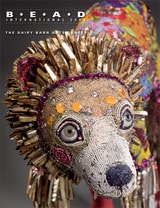
Bead International 2008 and Beyond Basketry
Andrew R. Lewis
Ohio University Press, 2008
Beatrice of Bayou Têche
Alice Ilgenfritz Jones
University of Wisconsin Press, 2001
Beatrice of Bayou Têche is a work of great historical and artistic interest: a late-nineteenth-century novel by a white woman about a black woman artist-protagonist. As the introduction for this reprint edition shows, Alice Ilgenfritz Jones was the first white woman to take an extended interest in the intersection of creativity, race, and gender. In Beatrice, Jones seeks to unveil the relationships between white and African Americans during the twenty years before the Civil War by following her mixed-race protagonist from her childhood as a slave in New Orleans through her career as a free woman and inspired painter and opera singer. Beatrice renders the white author’s effort to find a place for the mixed-race woman in relation to paradigms of creativity that are not only gendered but racialized. In the process, it exposes the fault lines of ideology and literary convention that underlie attempts to negotiate issues of race, gender, and creativity in late nineteenth-century America.

Beautiful Fighting Girl
Saito Tamaki
University of Minnesota Press, 2010
In Beautiful Fighting Girl, Saito Tamaki offers a far more sophisticated and convincing interpretation of this alluring and capable figure. For Saito, the beautiful fighting girl is a complex sexual fantasy that paradoxically lends reality to the fictional spaces she inhabits. As an object of desire for male otaku (obsessive fans of anime and manga), she saturates these worlds with meaning even as her fictional status demands her ceaseless proliferation and reproduction. Rejecting simplistic moralizing, Saito understands the otaku’s ability to eroticize and even fall in love with the beautiful fighting girl not as a sign of immaturity or maladaptation but as a result of a heightened sensitivity to the multiple layers of mediation and fictional context that constitute life in our hypermediated world—a logical outcome of the media they consume.
Featuring extensive interviews with Japanese and American otaku, a comprehensive genealogy of the beautiful fighting girl, and an analysis of the American outsider artist Henry Darger, whose baroque imagination Saito sees as an important antecedent of otaku culture, Beautiful Fighting Girl was hugely influential when first published in Japan, and it remains a key text in the study of manga, anime, and otaku culture. Now available in English for the first time, this book will spark new debates about the role played by desire in the production and consumption of popular culture.
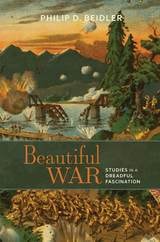
Beautiful War
Studies in a Dreadful FascinationPhilip D. Beidler
University of Alabama Press, 2016
Beautiful War: Studies in a Dreadful Fascination is a wide-ranging exploration of armed conflict as depicted in art that illustrates the constant presence of war in our everyday lives. Philip D. Beidler investigates the unending assimilation and pervasive presence of the idea of war in popular culture, the impulses behind the making of art out of war, and the unending and debatably aimless trajectories of war itself.
Beidler’s critical scope spans from Shakespeare’s plays, through the Victorian battle paintings of Lady Butler, into the post-World War I writings of F. Scott Fitzgerald and Virginia Woolf, and up to twenty-first-century films such as The Hurt Locker and Extremely Loud and Incredibly Close. As these works of art have become ubiquitous in contemporary culture, the many faces of war clearly spill over into our art and media, and Beidler argues that these portrayals in turn shift the perception of war from a savage truth to a concept.
Beautiful War argues that the representation of war in the arts has always been, and continues to be, an incredibly powerful force. Incorporating painting, music, photography, literature, and film, Beidler traces a disturbing but fundamental truth: that war has always provided an aesthetic inspiration while serving ends as various and complex as ideological or geopolitical history, public memory, and mass entertainment.
Beautiful War is a bold and vivid account of the role of war and military conflict as a subject of art that offers much of value to literary and cultural critics, historians, veterans, students of art history and communication studies, and those interested in expanding their understanding of art and media’s influence on contemporary values and memories of the past.

Beautiful Wasteland
The Rise of Detroit as America's Postindustrial FrontierRebecca J. Kinney
University of Minnesota Press, 2016
According to popular media and scholarship, Detroit, the once-vibrant city that crumbled with the departure of the auto industry, is where dreams can be reborn. It is a place that, like America itself, is gritty and determined. It has faced the worst kind of adversity, and supposedly now it’s back. But what does this narrative of “new Detroit” leave out? Beautiful Wasteland reveals that the contemporary story of Detroit’s rebirth is an upcycled version of the American Dream, which has long imagined access to work, home, and upward mobility as race-neutral projects. They’re not. As Rebecca J. Kinney shows, the narratives of Detroit’s rise, decline, and potential to rise again are deeply steeped in material and ideological investments in whiteness.
By remapping the narratives of contemporary Detroit through an extension of America’s frontier mythology, Kinney analyzes a cross-section of twentieth and twenty-first century cultural locations—an Internet forum, ruin photography, advertising, documentary film, and print and online media. She illuminates how the stories we tell about Detroit as a frontier of possibility enable the erasure of white privilege and systemic racism. By situating Detroit as a “beautiful wasteland,” both desirable and distressed, this shows how the narrative of ruin and possibility form a mutually constituted relationship: the city is possible precisely because of its perceived ruin.
Beautiful Wasteland tackles the key questions about the future of postindustrial America. As cities around the country reckon with their own postindustrial landscapes, Rebecca Kinney cautions that development that elides considerations of race and class will only continue to replicate uneven access to the city for the poor, working class, and people of color.
Befriending
The American SamaritansMonica Dickens
University of Wisconsin Press, 1996
Beginning to See the Light
Sex, Hope, and Rock-and-RollEllen Willis
University of Minnesota Press, 2012
From the New Yorker’s inimitable first pop music critic comes this pioneering collection of essays by a conscientious writer whose political realm is both radical and rational, and whose prime preoccupations are with rock ’n’ roll, sexuality, and above all, freedom. Here Ellen Willis assuredly captures the thrill of music, the disdain of authoritarian culture, and the rebellious spirit of the ’60s and ’70s.

Behind the Burnt Cork Mask
Early Blackface Minstrelsy and Antebellum American Popular CultureWilliam J. Mahar
University of Illinois Press, 1999
The songs, dances, jokes, parodies, spoofs, and skits of blackface groups such as the Virginia Minstrels and Buckley's Serenaders became wildly popular in antebellum America. Drawing on an unprecedented archival study of playbills, newspapers, sketches, monologues, and music, William J. Mahar explores the racist practices of minstrel entertainers and considers their performances as troubled representations of ethnicity, class, gender, and culture in the nineteenth century.
Mahar investigates the relationships between blackface comedy and other Western genres and traditions; between the music of minstrel shows and its European sources; and between "popular" and "elite" constructions of culture. Locating minstrel performances within their complex sites of production, Mahar reassesses the historiography of the field.
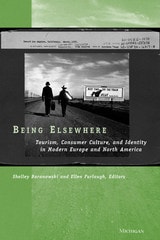
Being Elsewhere
Tourism, Consumer Culture, and Identity in Modern Europe and North AmericaShelley Baranowski and Ellen Furlough, Editors
University of Michigan Press, 2001
The essays focus on the ways in which tourism and vacations have been historically constitutive of class, social status, and collective identities. Explorations into the history of tourism and vacations reveal their importance for constructing modern cultural meanings of experience, desire, visuality, mobility, and the care of the self, as well as for representing the "good life" and the benefits of consumerism. A major contribution of this book is to demonstrate tourism's importance for nation-building, whether by mobilizing mass consent through state-sponsored leisure organizations, granting paid vacations as a right of citizenship, or creating new tourist sites meant to signify the "essence" of the nation.
Providing historical context and geographical specificity to a subject that has long engaged sociologists, anthropologists, geographers, and literary theorists, but rarely historians, Being Elsewhere is exactly the collection to interest historians, social scientists, and scholars of literary and cultural studies.
Shelley Baranowski is Professor of History, University of Akron. Ellen Furlough is Associate Professor of History, University of Kentucky.
Being Miss America
Behind the Rhinestone CurtainBy Kate Shindle
University of Texas Press, 2014
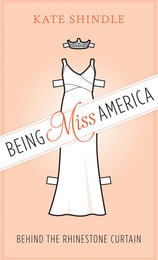
For nearly a hundred years, young women have competed for the title of Miss America—although what it means to wear the crown and be our “ideal” has changed dramatically over time. The Miss America Pageant began as a bathing beauty contest in 1920s Atlantic City, New Jersey, sponsored by businessmen trying to extend the tourist season beyond Labor Day. In the post–World War II years, the pageant evolved into a national coronation of an idealized “girl next door,” as pretty and decorous as she was rarely likely to speak her mind on issues of substance. Since the cultural upheavals of the 1960s, the pageant has struggled to find a balance between beauty and brains as it tries to remain relevant to women who aspire to become leaders in the community, not hot babes in swimsuits.
In Being Miss America, Kate Shindle interweaves an engrossing, witty memoir of her year as Miss America 1998 with a fascinating and insightful history of the pageant. She explores what it means to take on the mantle of America’s “ideal,” especially considering the evolution of the American female identity since the pageant’s inception. Shindle profiles winners and organization leaders and recounts important moments in the pageant’s story, with a special focus on Miss America’s iconoclasts, including Bess Myerson (1945), the only Jewish Miss America; Yolande Betbeze (1951), who crusaded against the pageant’s pinup image; and Kaye Lani Rae Rafko (1987), a working-class woman from Michigan who wanted to merge her famous title with her work as an oncology nurse. Shindle’s own account of her work as an AIDS activist—and finding ways to circumvent the “gown and crown” stereotypes of Miss America in order to talk honestly with high school students about safer sex—illuminates both the challenges and the opportunities that keep young women competing to become Miss America.

Bergson and Russian Modernism
1900-1930Hilary L. Fink
Northwestern University Press, 2012
Best Actress
The History of Oscar®-Winning WomenStephen Tapert
Rutgers University Press, 2020
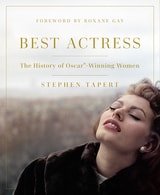
This lavishly illustrated coffee table book offers a vital examination of the first 75 women to have won the Best Actress Oscar over the span of 90 years. From inaugural recipient Janet Gaynor to Frances McDormand’s 2018 acceptance speech that assertively brought women to the forefront, Best Actress: The History of Oscar®-Winning Women serves to promote a new appreciation for the cinematic roles these women won for, as well as the real-life roles many of them played – and still play – in advancing women’s rights and equality. Stories range from Bette Davis’ groundbreaking battle against the studio system; to the cutting-edge wardrobes of Katharine Hepburn, Diane Keaton and Cher; to the historical significance of Halle Berry’s victory; to the awareness raised around sexual violence by the performances of Jodie Foster, Brie Larson, and others.
Showcasing a dazzling collection of 200 photographs, many of which have never before been seen or published, Best Actress honors the legacies of these revered and extraordinary women while scrutinizing the roadblocks that they continue to overcome.
Between Hollywood and Moscow
The Italian Communists and the Challenge of Mass Culture, 1943-1991Stephen Gundle
Duke University Press, 2000
Gundle focuses on the theme of cultural policy, examining how the PCI’s political strategies incorporated cultural policies and activities that were intended to respond to the Americanization of daily life in Italy. In formulating this policy, Gundle contends, the Italian Communists were torn between loyalty to the alternative values generated by the Communist tradition and adaptation to the dominant influences of Italian modernization. This equilibrium eventually faltered because the attractive aspects of Americanization and pop culture proved more influential than the PCI’s intellectual and political traditions.
The first analysis in English of the cultural policies and activities of the PCI, this book will appeal to readers with an interest in modern Italy, the European left, political science, and media studies.
Beyond Cheering and Bashing
New Perspectives on The Closing of the American MindWilliam K. Buckley
University of Wisconsin Press, 1992
The debate over the central issue confronted in The Closing of the American Mind—the role of the university and the liberal arts in the United States—has become increasingly urgent and contentious. The goal of this collection of essays is to see what we can learn about the dilemmas confronting American culture through consideration of both The Closing of the American Mind and the debate it aroused.
Beyond Cuban Waters
Africa, La Yuma, and the Island's Global ImaginationPaul Ryer
Vanderbilt University Press, 2016
This pursuit of Western status symbols represents a uniquely Cuban experience, set apart from other cultures pursuing the same things. In the Cuban case, this represents neither an acceptance nor rejection of the American cultural influence, but rather a co-opting or "Yumanizing" of these influences.
Beyond Rosie
A Documentary History of Women and World War IIJulia Brock
University of Arkansas Press, 2015
Beyond Rosie offers readers an opportunity to see the numerous contributions they made to the fight against the Axis powers and how American women’s roles changed during the war. The primary documents (newspapers, propaganda posters, cartoons, excerpts from oral histories and memoirs, speeches, photographs, and editorials) collected here represent cultural, political, economic, and social perspectives on the diverse roles women played during World War II.
Beyond The Mafia
Italian Americans And The Development Of Las VegasAlan Balboni
University of Nevada Press, 2006
When Beyond the Mafia first appeared in 1996 it was hailed as a significant contribution to the history of Las Vegas and of ethnic minorities in America. Author Alan Balboni traces the history of Italians in Las Vegas from the founding of the city in 1905, recording their activities in the fledgling settlement. As Las Vegas grew, Italian Americans participated in every aspect of the city’s society and economy, including construction, retail establishments, hotels, and—after the statewide legalization of gambling in 1931—the casino industry. Basing his research on well over a hundred interviews, as well as the records of Italian American organizations, public agencies, and other sources, Balboni has produced a sparkling and thoroughly documented account of the history of one of Las Vegas’s most progressive and productive ethnic minorities. This new paperback edition includes an afterword by the author that brings the story of Las Vegas’s Italian Americans up to the present.

Beyond the Dance Floor
Female DJs, Technology and Electronic Dance Music CultureRebekah Farrugia
Intellect Books, 2012
Beyond the Stars 3
The Material World in American Popular FilmPaul Loukides
University of Wisconsin Press, 0
This anthology deals with such diverse conventions as the treatment of food, the iconography of weapons, the paraphernalia of baseball, the uses of clothing, tools, and technologies, and the representation of art and print media within the world of film. The essays within this collection help to reveal how the objects in American movies reflect both the fixed and changeable cultural assumptions of film makers and film audiences.
Beyond the Stars 4
Locales in American Popular FilmPaul Loukides
University of Wisconsin Press, 1990
In this volume of the Beyond the Stars series, the subject of the various individual essays are discrete conventions of movie locales, but the subject of the volume as a whole—as with the other books in the series—is the viability of film convention studies as a tool for the study of film and American culture.
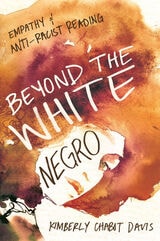
Beyond the White Negro
Empathy and Anti-Racist ReadingKimberly Chabot Davis
University of Illinois Press, 2014
Davis analyzes how white engagement with African American novels, film narratives, and hip-hop can help form anti-racist attitudes that may catalyze social change and racial justice. Though acknowledging past failures to establish cross-racial empathy, she focuses on examples that show avenues for future progress and change. Her study of ethnographic data from book clubs and college classrooms shows how engagement with African American culture and pedagogical support can lead to the kinds of white self-examination that make empathy possible. The result is a groundbreaking text that challenges the trend of focusing on society's failures in achieving cross-racial empathy and instead explores possible avenues for change.
Bible in/and Popular Culture
Philip Culbertson
SBL Press, 2010
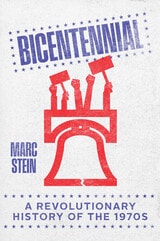
Bicentennial
A Revolutionary History of the 1970sMarc Stein
University of Chicago Press, 2026
“Utterly illuminating. . . . Just a really revelatory book.”—Jill Lepore, The New York Times, The “Book Review” Podcast • “As historian Stein traces in Bicentennial, a national birthday can launch a much broader, more inclusive, and ambitious national project.”—Rebecca Brenner Graham, The New Republic • “A comprehensive and critical look at the Spirit of 1976.”—Library Journal
As the United States marks its semiquincentennial in 2026, renowned historian Marc Stein looks back at the politics of another landmark celebration during a time of striking similarities and surprising differences: the US bicentennial in 1976.
In the aftermath of Vietnam and Watergate, the bicentennial sparked an extraordinary national conversation about the country’s past, present, and future. As patriots, planners, profiteers, and protesters argued about how to commemorate the national birthday, they collectively reimagined the promises and perils of democracy during a transformational decade.
From award-winning historian Marc Stein, Bicentennial: A Revolutionary History of the 1970s is an original, illuminating, and insightful study of that era. While focusing on festivities and fights in Philadelphia, the nation’s birthplace, the book also explores the many proposed and abandoned celebrations that percolated up around the country. It tells a broadly democratic story of both the “official” bicentennial and counter-bicentennial activism, offering revolutionary perspectives on national politics, social movements, and popular culture. From the queer courtship of President Richard Nixon and Philadelphia Mayor Frank Rizzo to parades and protests with millions of participants, and from a deadly outbreak of Legionnaires’ disease at Philadelphia’s most prestigious hotel to the establishment of groundbreaking African American, ethnic, and Jewish museums, the bicentennial reveals a kaleidoscope of American peculiarities, problems, and possibilities.
The lasting influence of 1976 on one of the nation’s great urban centers and the United States as a whole is undeniable. As the nation—once again enmeshed in political and social upheaval—marks its two-hundred-fiftieth birthday in 2026, there is no better time to look back at its two-hundredth and marvel at what has changed, and what has not.
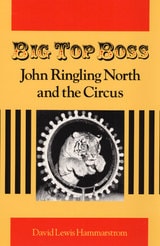
Big Top Boss
JOHN RINGLING NORTH AND THE CIRCUSDavid Lewis Hammarstrom
University of Illinois Press, 1992
king John Ringling North explored the remarkable career of the man who ran Ringling
Bros. and Barnum & Baily for thirty years. David Lewis Hammarstrom details
how North guided the circus through adversities ranging from depressions and
wars to crippling labor strikes and rapidly changing trends in American entertainment.
Hammarstrom interviewed a host of circus figures including North himself; his
formers, directors, and department heads who were involved with the circus when
North owned and operated it.
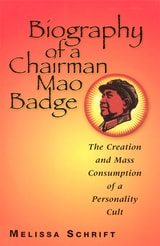
Biography of a Chairman Mao Badge
The Creation and Mass Consumption of a Personality CultMelissa Schrift
Rutgers University Press, 2001
As China now enters an era in which people can more openly express their views about the Cultural Revolution, these icons have taken on new meanings, and people are wearing and talking about them in subversive ways. Melissa Schrift suggests that the badges developed "lives" that far surpass the intentions of their creators, as the Chinese ironically commodified them, both during the Cultural Revolution and today. During the Mao years, people wore the objects to symbolize their unquestioned loyalty to Mao. Yet even then many Chinese subverted the badges' symbolic meaning. Using them in socially approved rituals, they gained a measure of political credibility that masked their practice of prohibited customary rites.
Biography of a Chairman Mao Badge is a work of cultural history that contributes to our understanding not only of Chinese society but, more generally, of strategies people employ in responding to and transforming the meaning of propaganda campaigns and symbols.
Black Camelot
African-American Culture Heroes in Their Times, 1960-1980William L. Van Deburg
University of Chicago Press, 1997
In Black Camelot, William Van Deburg examines the dynamic rise of these new black champions, the social and historical contexts in which they flourished, and their powerful impact on the African-American community.
"Van Deburg manages the enviable feat of writing with flair within a standardized academic framework, covering politics, social issues and entertainment with equal aplomb."—Jonathan Pearl, Jazz Times
"[A] fascinating, thorough account of how African-American icons of the 1960s and '70s have changed the course of American history. . . . An in-depth, even-tempered analysis. . . . Van Deburg's witty, lively and always grounded style entertains while it instructs."—Publishers Weekly
Black Cultural Life in South Africa
Reception, Apartheid, and EthicsLily Saint
University of Michigan Press, 2018
This study provocatively posits that states of oppression, including colonial and postcolonial rule, can elicit ethical responses to imaginative identification through encounters with popular culture, and it asks whether and how they carry over into ethical action. Its consideration of how globalized popular culture “travels” not just in material form, but also through the circuits of the imaginary, opens a new window for exploring the ethical and liberatory stakes of popular culture. Each chapter focuses on a separate genre, yet the overall interdisciplinary approach to the study of genre and argument for an expansion of ethical theory that draws on texts beyond the Western canon speak to growing concerns about studying genres and disciplines in isolation. Freed from oversimplified treatments of popular forms—common to cultural studies and ethical theory alike—this book demonstrates that people can do things with mass culture that reinvigorate ethical life.
Lily Saint’s new volume will interest Africanists across the humanities and the social sciences, and scholars of Anglophone literary, globalization, and cultural studies; race; ethical theories and philosophies; film studies; book history and material cultures; and the burgeoning field of comics and graphic novels.
Black Cultural Traffic
Crossroads in Global Performance and Popular CultureEdited by Harry J. Elam, Jr. and Kennell Jackson
University of Michigan Press, 2005
"A shrewdly designed, generously expansive, timely contribution to our understanding of how 'black' expression continues to define and defy the contours of global (post)modernity. The essays argue persuasively for a transnational ethos binding disparate African and diasporic enactments, and together provide a robust conversation about the nature, history, future, and even possibility of 'blackness' as a distinctive mode of cultural practice."
--Kimberly Benston, author of Performing Blackness
"Black Cultural Traffic is nothing less than our generation's manifesto on black performance and popular culture. With a distinguished roster of contributors and topics ranging across academic disciplines and the arts (including commentary on film, music, literature, theater, television, and visual cultures), this volume is not only required reading for scholars serious about the various dimensions of black performance, it is also a timely and necessary teaching tool. It captures the excitement and intellectual innovation of a field that has come of age. Kudos!"
--Dwight A. McBride, author of Why I Hate Abercrombie & Fitch
"The explosion of interest in black popular culture studies in the past fifteen years has left a significant need for a reader that reflects this new scholarly energy. Black Cultural Traffic answers that need."
--Mark Anthony Neal, author of Songs in the Key of Black Life
"A revolutionary anthology that will be widely read and taught. It crisscrosses continents and cultures and examines confluences and influences of black popular culture -- music, dance, theatre, television, fashion and film. It also adds a new dimension to current discussions of racial, ethnic, and national identity."
--Horace Porter, author of The Making of a Black Scholar
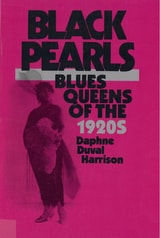
Black Pearls
Blues Queens of the 1920sDaphne Duval Harrison
Rutgers University Press, 1990
Blues music spawned legendary performers whose influence has been felt in many musical forms here and around the world. Until now the important role of the great women blues singers has largely gone unexplored. This book tells of the cultural and social impact of the blues during the 1920s when the genre was dominated by women, both on stage and on record. Harrison (Afro-American Studies Department, University of Maryland) writes with authority, focusing particularly on Sippie Wallace, Edith Wilson, Victoria Spivey, and Alberta Hunter as she analyzes the music and the collective black experience out of which it grew. A significant book, particularly for collections of music history, black studies, and women's studies. -- Library Journal
Black Sexual Economies
Race and Sex in a Culture of CapitalEdited by Adrienne D. Davis and the BSE Collective
University of Illinois Press, 2019
Black Studies, Rap, and the Academy
Houston A. Baker Jr.
University of Chicago Press, 1993
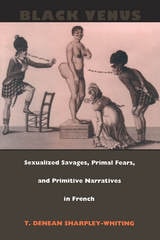
Black Venus
Sexualized Savages, Primal Fears, and Primitive Narratives in FrenchT. Denean Sharpley-Whiting
Duke University Press, 1999
The book opens with an exploration of scientific discourse on black females, using Sarah Bartmann, the so-called Hottentot Venus, and natural scientist Georges Cuvier as points of departure. To further show how the image of a savage was projected onto the bodies of black women, Sharpley-Whiting moves into popular culture with an analysis of an 1814 vaudeville caricature of Bartmann, then shifts onto the terrain of canonical French literature and colonial cinema, exploring the representation of black women by Baudelaire, Balzac, Zola, Maupassant, and Loti. After venturing into twentieth-century film with an analysis of Josephine Baker’s popular Princesse Tam Tam, the study concludes with a discussion of how black Francophone women writers and activists countered stereotypical representations of black female bodies during this period. A first-time translation of the vaudeville show The Hottentot Venus, or Hatred of Frenchwomen supplements this critique of the French male gaze of the nineteenth and early twentieth centuries.
Both intellectually rigorous and culturally intriguing, this study will appeal to students and scholars in the fields of nineteenth- and twentieth-century French literature, feminist and gender studies, black studies, and cultural studies.

Blood is the Life
Vampires in LiteratureLeonard G. Heldreth
University of Wisconsin Press, 1999