Results by title
97 books match the query 'Race discrimination' and 7 start with b
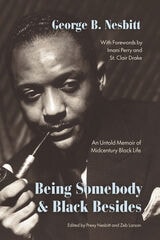
Being Somebody and Black Besides
An Untold Memoir of Midcentury Black LifeGeorge B. Nesbitt
University of Chicago Press, 2021
The late Chicagoan George Nesbitt could perhaps best be described as an ordinary man with an extraordinary gift for storytelling. In his newly uncovered memoir—written fifty years ago, yet never published—he chronicles in vivid and captivating detail the story of how his upwardly mobile Midwestern Black family lived through the tumultuous twentieth century.
Spanning three generations, Nesbitt’s tale starts in 1906 with the Great Migration and ends with the Freedom Struggle in the 1960s. He describes his parents’ journey out of the South, his struggle against racist military authorities in World War II, the promise and peril of Cold War America, the educational and professional accomplishments he strove for and achieved, the lost faith in integration, and, despite every hardship, the unwavering commitment by three generations of Black Americans to fight for a better world. Through all of it—with his sharp insights, nuance, and often humor—we see a family striving to lift themselves up in a country that is working to hold them down.
Nesbitt’s memoir includes two insightful forewords: one by John Gibbs St. Clair Drake (1911–90), a pioneer in the study of African American life, the other a contemporary rumination by noted Black studies scholar Imani Perry. A rare first-person, long-form narrative about Black life in the twentieth century, Being Somebody and Black Besides is a remarkable literary-historical time capsule that will delight modern readers.
Beyond Busing
Reflections on Urban Segregation, the Courts, and Equal OpportunityPaul R. Dimond
University of Michigan Press, 2005
A compelling insider's account of the fight for educational desegregation, from one of its most dedicated and outspoken heroes. A new afterword explains the author's controversial belief that the moment for litigating educational equality has passed, clear-sightedly critiquing his own courtroom strategies and the courts' responses, before closing with an assessment of the economic and social changes that he feels have already moved us "beyond busing."
"An extraordinarily informative and thoughtful book describing the process of bringing Brown [v. Board of Education] North and the impact this process had upon national attitudes toward desegregation."
--Drew S. Days III, Yale Law Journal
"An original analysis of a tough subject. A must-read for all who care about opportunity for all our children."
--Donna E. Shalala, President, University of Miami
"Paul Dimond remains a passionate and caring voice for inner-city students, whether in his advocacy of school desegregation, school choice plans, or school finance reform. He illuminates these issues as one who participated in the major education cases and as a perceptive scholar."
--Mark Yudof, Chancellor, The University of Texas System
"A must-read for anyone who wants to understand America's continued failure to give inner-city children a quality education or to do something about it!"
--Sheryll Cashin, Author of The Failures of Integration: How Race and Class Are Undermining the American Dream
"Dimond is particularly good at relating his slice of legal history to the broader developments of the 1970s, and his occasional remarks about trial tactics are amusing and instructive. Dimond's
honesty about both his successes and failures makes his book required reading for civil rights lawyers."
--Lawrence T. Gresser, Michigan Law Review
"A fascinating first-hand account of 1970s northern school desegregation decisions."
--Neal E. Devins, American Bar Foundation Research Journal
"Dimond reminds the liberal reader of the promise that lies in the empowerment of ordinary families to choose their own schools."
--John E. Coons, Professor of Law, Emeritus, University of California, Berkeley
Paul R. Dimond is counsel to Miller, Canfield, Paddock and Stone, Michigan's largest law firm; chairman of McKinley, a national commercial real estate investment and management firm; and chairman or member of the board of trustees of numerous education, community, and civic organizations. He spent four years as President Clinton's Special Assistant for Economic Policy.

Beyond Sanctuary
The Humanism of a World in MotionAnanya Roy and Veronika Zablotsky, editors
Duke University Press, 2025
Contributors. Leisy Abrego, Damon Azali-Rojas, Amy Sara Carroll, Sharad Chari, Nicholas De Genova, Ricardo Dominguez, Lorgia García-Peña, Sarah Haley, Gaye Theresa Johnson, Moon-Kie Jung, Maria Kaika, Saree Makdisi, Kyle T. Mays, Ananya Roy, Charles Sepulveda, SA Smythe, Vanessa E. Thompson, Charalampos Tsavdaroglou, João H. Costa Vargas, Rinaldo Walcott, Veronika Zablotsky, Maite Zubiaurre
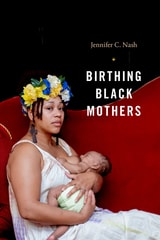
Birthing Black Mothers
Jennifer C. Nash
Duke University Press, 2021
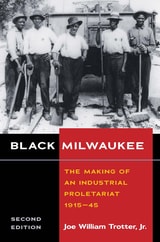
Black Milwaukee
The Making of an Industrial Proletariat, 1915-45Joe William Trotter, Jr.
University of Illinois Press, 2006
Praise for the first edition: “Trotter has written a valuable, provocative book that opens new areas for certain--and heated--debate.”--Journal of American Ethnic History
Other historians have tended to treat black urban life mainly in relation to the ghetto experience, but in Black Milwaukee, Joe William Trotter Jr. offers a new perspective that complements yet also goes well beyond that approach. The blacks in Black Milwaukee were not only ghetto dwellers; they were also industrial workers. The process by which they achieved this status is the subject of Trotter’s ground-breaking study.
This second edition features a new preface and acknowledgments, an essay on African American urban history since 1985, a prologue on the antebellum and Civil War roots of Milwaukee’s black community, and an epilogue on the post-World War II years and the impact of deindustrialization, all by the author. Brief essays by four of Trotter’s colleagues--William P. Jones, Earl Lewis, Alison Isenberg, and Kimberly L. Phillips--assess the impact of the original Black Milwaukee on the study of African American urban history over the past twenty years.
Blacks and Whites in Sao Paulo, Brazil, 1888-1988
George Reid Andrews
University of Wisconsin Press, 1991
For much of the twentieth century Brazil enjoyed an international reputation as a “racial democracy,” but that image has been largely undermined in recent decades by research suggesting the existence of widespread racial inequality. George Reid Andrews provides the first thoroughly documented history of Brazilian racial inequality from the abolition of slavery in 1888 up to the late 1980s, showing how economic, social, and political changes in Brazil during the last one hundred years have shaped race relations.
No laws of segregation or apartheid exist in Brazil, but by looking carefully at government policies, data on employment, mainstream and Afro-Brazilian newspapers, and a variety of other sources, Andrews traces pervasive discrimination against Afro-Brazilians over time. He draws his evidence from the country’s largest and most economically important state, São Paulo, showing how race relations were affected by its transformation from a plantation-based economy to South America’s most urban, industrialized society.
The book focuses first on Afro-Brazilians' entry into the agricultural and urban working class after the abolition of slavery. This transition, Andrews argues, was seriously hampered by state policies giving the many European immigrants of the period preference over black workers. As immigration declined and these policies were overturned in the late 1920s, black laborers began to be employed in agriculture and industry on nearly equal terms with whites. Andrews then surveys efforts of blacks to move into the middle class during the 1900s. He finds that informal racial solidarity among middle-class whites has tended to exclude Afro-Brazilians from the professions and other white-collar jobs.
Andrews traces how discrimination throughout the century led Afro-Brazilians to mobilize, first through the antislavery movement of the 1880s, then through such social and political organizations of the 1920s and 1930s as the Brazilian Black Front, and finally through the anti-racism movements of the 1970s and 1980s. These recent movements have provoked much debate among Brazilians over their national image as a racial democracy. It remains to be seen, Andrews concludes, whether that debate will result in increased opportunities for black Brazilians.
Winner of the 1993 Arthur P. Whitaker Prize
Body and Soul
The Black Panther Party and the Fight against Medical DiscriminationAlondra Nelson
University of Minnesota Press, 2013
Between its founding in 1966 and its formal end in 1980, the Black Panther Party blazed a distinctive trail in American political culture. The Black Panthers are most often remembered for their revolutionary rhetoric and militant action. Here Alondra Nelson deftly recovers an indispensable but lesser-known aspect of the organization’s broader struggle for social justice: health care. The Black Panther Party’s health activism—its network of free health clinics, its campaign to raise awareness about genetic disease, and its challenges to medical discrimination—was an expression of its founding political philosophy and also a recognition that poor blacks were both underserved by mainstream medicine and overexposed to its harms.
Drawing on extensive historical research as well as interviews with former members of the Black Panther Party, Nelson argues that the Party’s focus on health care was both practical and ideological. Building on a long tradition of medical self-sufficiency among African Americans, the Panthers’ People’s Free Medical Clinics administered basic preventive care, tested for lead poisoning and hypertension, and helped with housing, employment, and social services. In 1971, the party launched a campaign to address sickle-cell anemia. In addition to establishing screening programs and educational outreach efforts, it exposed the racial biases of the medical system that had largely ignored sickle-cell anemia, a disease that predominantly affected people of African descent.
The Black Panther Party’s understanding of health as a basic human right and its engagement with the social implications of genetics anticipated current debates about the politics of health and race. That legacy—and that struggle—continues today in the commitment of health activists and the fight for universal health care.