Results by title
376 books match the query 'Racism' and 28 start with b
Babylost
Racism, Survival, and the Quiet Politics of Infant Mortality, from A to ZMonica J. Casper
Rutgers University Press, 2021
Bankers and Empire
How Wall Street Colonized the CaribbeanPeter James Hudson
University of Chicago Press, 2017

Barbaric Others
A Manifesto on Western RacismZiauddin Sardar
Pluto Press, 1993
Becoming St. Louis
Family, Faith, and the Politics of Citizenship, 1820-1920Sharon Hartman Strom
University of Illinois Press, 2025
Beneath the Surface
A Transnational History of Skin LightenersLynn M. Thomas
Duke University Press, 2020
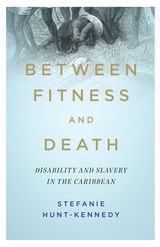
Between Fitness and Death
Disability and Slavery in the CaribbeanStefanie Hunt-Kennedy
University of Illinois Press, 2020
Stefanie Hunt-Kennedy provides a three-pronged analysis of disability in the context of Atlantic slavery. First, she examines the connections of enslavement and representations of disability and the parallel development of English anti-black racism. From there, she moves from realms of representation to reality in order to illuminate the physical, emotional, and psychological impairments inflicted by slavery and endured by the enslaved. Finally, she looks at slave law as a system of enforced disablement.
Audacious and powerful, Between Fitness and Death is a groundbreaking journey into the entwined histories of racism and ableism.
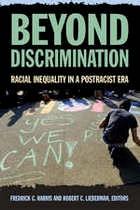
Beyond Discrimination
Racial Inequality in a Post-Racist EraFredrick C. Harris
Russell Sage Foundation, 2013
Beyond Man
Race, Coloniality, and Philosophy of ReligionYountae An and Eleanor Craig, editors
Duke University Press, 2021
Contributors. An Yountae, Ellen Armour, J. Kameron Carter, Eleanor Craig, Amy Hollywood, Vincent Lloyd, Filipe Maia, Mayra Rivera, Devin Singh, Joseph R. Winters

Bio-Imperialism
Disease, Terror, and the Construction of National FragilityGwen Shuni D'Arcangelis
Rutgers University Press, 2021
Black Enlightenment
Surya Parekh
Duke University Press, 2023
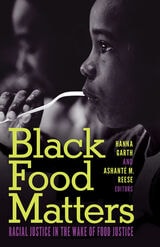
Black Food Matters
Racial Justice in the Wake of Food JusticeHanna Garth
University of Minnesota Press, 2020
An in-depth look at Black food and the challenges it faces today
For Black Americans, the food system is broken. When it comes to nutrition, Black consumers experience an unjust and inequitable distribution of resources. Black Food Matters examines these issues through in-depth essays that analyze how Blackness is contested through food, differing ideas of what makes our sustenance “healthy,” and Black individuals’ own beliefs about what their cuisine should be.
Primarily written by nonwhite scholars, and framed through a focus on Black agency instead of deprivation, the essays here showcase Black communities fighting for the survival of their food culture. The book takes readers into the real world of Black sustenance, examining animal husbandry practices in South Carolina, the work done by the Black Panthers to ensure food equality, and Black women who are pioneering urban agriculture. These essays also explore individual and community values, the influence of history, and the ongoing struggle to meet needs and affirm Black life.
A comprehensive look at Black food culture and the various forms of violence that threaten the future of this cuisine, Black Food Matters centers Blackness in a field that has too often framed Black issues through a white-centric lens, offering new ways to think about access, privilege, equity, and justice.
Contributors: Adam Bledsoe, U of Minnesota; Billy Hall; Analena Hope Hassberg, California State Polytechnic U, Pomona; Yuson Jung, Wayne State U; Kimberly Kasper, Rhodes College; Tyler McCreary, Florida State U; Andrew Newman, Wayne State U; Gillian Richards-Greaves, Coastal Carolina U; Monica M. White, U of Wisconsin–Madison; Brian Williams, Mississippi State U; Judith Williams, Florida International U; Psyche Williams-Forson, U of Maryland, College Park; Willie J. Wright, Rutgers U.
Black Georgia in the Progressive Era, 1900-1920
John Dittmer
University of Illinois Press, 1977
have of black life in a southern state at the beginning of the twentieth century."
-- Howard N. Rabinowitz,
Journal of American History
"The author shows clearly and forcefully
the ways in which this [white] system abused and controlled the black lower
caste in Georgia." -- Lester C. Lamon, American Historical Review.
"Dittmer has a faculty for lucid exposition of complicated subjects. This is
especially true of the sections on segregation, racial politics, disfranchisement,
woman's suffrage and prohitibion, the neo-slavery in agriculture, and the racial
violence whose threat and reality hung like a pall over all of Georgia throughout
the period." -- Donald L. Grant, Georgia Historical Quarterly.

Black Hunger
Soul Food And AmericaDoris Witt
University of Minnesota Press, 2004
Explores the complex relationship between food and African American history
In 1889, the owners of a pancake mix witnessed the vaudeville performance of a white man in blackface and drag playing a character called Aunt Jemima. This character went on to become one of the most pervasive stereotypes of black women in the United States, embodying not only the pancakes she was appropriated to market but also post–Civil War race and gender hierarchies—including the subordination of African American women as servants and white fantasies of the nurturing mammy.
Using the history of Aunt Jemima as a springboard for exploring the relationship between food and African Americans, Black Hunger focuses on debates over soul food since the 1960s to illuminate a complex web of political, economic, religious, sexual, and racial tensions between whites and blacks and within the black community itself. Celebrated by many African Americans as a sacramental emblem of slavery and protest, soul food was simultaneously rejected by others as a manifestation of middle-class black “slumming.”
Highlighting the importance of food for men as well as women, Doris Witt traces the promotion of soul food by New York Times food writer Craig Claiborne and its prohibition by Nation of Islam leader Elijah Muhammad and comedian-turned-diet guru Dick Gregory. A discussion of cookbook author Vertamae Grosvenor, who distanced herself from the myth of plantation mammy by reimagining soul food as "vibration cooking," sets the stage for Witt's concluding argument that the bodies and appetites of African American women should be viewed as central to contemporary conversations about eating disorders and reproductive rights.
Witt draws on vaudeville, literature, film, visual art, and cookbooks to explore how food has been used both to perpetuate and to challenge racial stereotypes. Raising her fist in a Black Power salute, wielding her spatula like a sword, Aunt Jemima steps off the pancake box in a righteous fury.

Black Life Matter
Blackness, Religion, and the SubjectBiko Mandela Gray
Duke University Press, 2022

Black Power White Blood
Lori Andrews
Temple University Press, 1999
At six years old, already the target of name-calling children and threatening adults, he could not attend school with his older brother. Only decades later would he be told why the Armstrongs sent him to live with a black family in Los Angeles. As Johnny came of age, he thought of himself as having been rejected by his white family as well as by his black peers. His erratic, destructive behavior put him on a collision course with the penal system; he was only seventeen when convicted of murder and sent to Soledad.
Drawn into the black power movement and the Black Panther Party by fellow inmate, the charismatic George Jackson, Spain became a dynamic force for uniting prisoners once divided by racial hatred. He committed himself to the cause of prisoners' rights, impressing inmates, prison officials, and politicians with his intelligence and passion. Nevertheless, among the San Quentin Six, only he was convicted of conspiracy after Jackson's failed escape attempt.
Lori Andrews, a professor of law, vividly portrays the dehumanizing conditions in the prisons, the pervasive abuses in the criminal justice system, and the case for overturning Spain's conspiracy conviction. Spain's personal transformation is the heart of the book, but Andrews frames it within an indictment of intolerance and injustice that gives this individual's story broad significance.
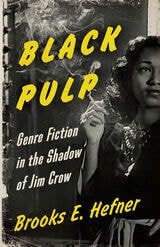
Black Pulp
Genre Fiction in the Shadow of Jim CrowBrooks E. Hefner
University of Minnesota Press, 2021
A deep dive into mid-century African American newspapers, exploring how Black pulp fiction reassembled genre formulas in the service of racial justice
In recent years, Jordan Peele’s Get Out, Marvel’s Black Panther, and HBO’s Watchmen have been lauded for the innovative ways they repurpose genre conventions to criticize white supremacy, celebrate Black resistance, and imagine a more racially just world—important progressive messages widely spread precisely because they are packaged in popular genres. But it turns out, such generic retooling for antiracist purposes is nothing new.
As Brooks E. Hefner’s Black Pulp shows, this tradition of antiracist genre revision begins even earlier than recent studies of Black superhero comics of the 1960s have revealed. Hefner traces it back to a phenomenon that began in the 1920s, to serialized (and sometimes syndicated) genre stories written by Black authors in Black newspapers with large circulations among middle- and working-class Black readers. From the pages of the Pittsburgh Courier and the Baltimore Afro-American, Hefner recovers a rich archive of African American genre fiction from the 1920s through the mid-1950s—spanning everything from romance, hero-adventure, and crime stories to westerns and science fiction. Reading these stories, Hefner explores how their authors deployed, critiqued, and reassembled genre formulas—and the pleasures they offer to readers—in the service of racial justice: to criticize Jim Crow segregation, racial capitalism, and the sexual exploitation of Black women; to imagine successful interracial romance and collective sociopolitical progress; and to cheer Black agency, even retributive violence in the face of white supremacy.
These popular stories differ significantly from contemporaneous, now-canonized African American protest novels that tend to represent Jim Crow America as a deterministic machine and its Black inhabitants as doomed victims. Widely consumed but since forgotten, these genre stories—and Hefner’s incisive analysis of them—offer a more vibrant understanding of African American literary history.
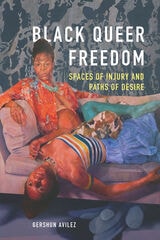
Black Queer Freedom
Spaces of Injury and Paths of DesireGerShun Avilez
University of Illinois Press, 2020
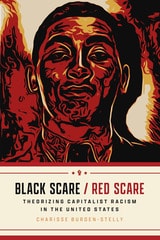
Black Scare / Red Scare
Theorizing Capitalist Racism in the United StatesCharisse Burden-Stelly
University of Chicago Press, 2023
In the early twentieth century, two panics emerged in the United States. The Black Scare was rooted in white Americans’ fear of Black Nationalism and dread at what social, economic, and political equality of Black people might entail. The Red Scare, sparked by communist uprisings abroad and subversion at home, established anticapitalism as a force capable of infiltrating and disrupting the American order. In Black Scare / Red Scare, Charisse Burden-Stelly meticulously outlines the conjoined nature of these state-sanctioned panics, revealing how they unfolded together as the United States pursued capitalist domination. Antiradical repression, she shows, is inseparable from anti-Black oppression, and vice versa.
Beginning her account in 1917—the year of the Bolshevik Revolution, the East St. Louis Race Riot, and the Espionage Act—Burden-Stelly traces the long duration of these intertwined and mutually reinforcing phenomena. She theorizes two bases of the Black Scare / Red Scare: US Capitalist Racist Society, a racially hierarchical political economy built on exploitative labor relationships, and Wall Street Imperialism, the violent processes by which businesses and the US government structured domestic and foreign policies to consolidate capital and racial domination. In opposition, Radical Blackness embodied the government’s fear of both Black insurrection and Red instigation. The state’s actions and rhetoric therefore characterized Black anticapitalists as foreign, alien, and undesirable. This reactionary response led to an ideology that Burden-Stelly calls True Americanism, the belief that the best things about America were absolutely not Red and not Black, which were interchangeable threats.
Black Scare / Red Scare illuminates the anticommunist nature of the US and its governance, but also shines a light on a misunderstood tradition of struggle for Black liberation. Burden-Stelly highlights the Black anticapitalist organizers working within and alongside the international communist movement and analyzes the ways the Black Scare/Red Scare reverberates through ongoing suppression of Black radical activism today. Drawing on a range of administrative, legal, and archival sources, Burden-Stelly incorporates emancipatory ideas from several disciplines to uncover novel insights into Black political minorities and their legacy.
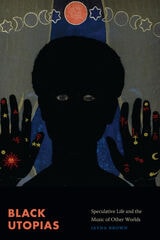
Black Utopias
Speculative Life and the Music of Other WorldsJayna Brown
Duke University Press, 2021

Black in White Space
The Enduring Impact of Color in Everyday LifeElijah Anderson
University of Chicago Press, 2021
A birder strolling in Central Park. A college student lounging on a university quad. Two men sitting in a coffee shop. Perfectly ordinary actions in ordinary settings—and yet, they sparked jarring and inflammatory responses that involved the police and attracted national media coverage. Why? In essence, Elijah Anderson would argue, because these were Black people existing in white spaces.
In Black in White Space, Anderson brings his immense knowledge and ethnography to bear in this timely study of the racial barriers that are still firmly entrenched in our society at every class level. He focuses in on symbolic racism, a new form of racism in America caused by the stubbornly powerful stereotype of the ghetto embedded in the white imagination, which subconsciously connects all Black people with crime and poverty regardless of their social or economic position. White people typically avoid Black space, but Black people are required to navigate the “white space” as a condition of their existence. From Philadelphia street-corner conversations to Anderson’s own morning jogs through a Cape Cod vacation town, he probes a wealth of experiences to shed new light on how symbolic racism makes all Black people uniquely vulnerable to implicit bias in police stops and racial discrimination in our country.
An unwavering truthteller in our national conversation on race, Anderson has shared intimate and sharp insights into Black life for decades. Vital and eye-opening, Black in White Space will be a must-read for anyone hoping to understand the lived realities of Black people and the structural underpinnings of racism in America.
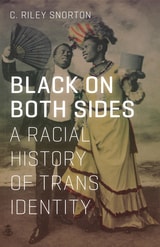
Black on Both Sides
A Racial History of Trans IdentityC. Riley Snorton
University of Minnesota Press, 2017
Winner of the John Boswell Prize from the American Historical Association 2018
Winner of the William Sanders Scarborough Prize from the Modern Language Association 2018
Winner of an American Library Association Stonewall Honor 2018
Winner of Lambda Literary Award for Transgender Nonfiction 2018
Winner of the Sylvia Rivera Award in Transgender Studies from the Center for Lesbian and Gay Studies
The story of Christine Jorgensen, America’s first prominent transsexual, famously narrated trans embodiment in the postwar era. Her celebrity, however, has obscured other mid-century trans narratives—ones lived by African Americans such as Lucy Hicks Anderson and James McHarris. Their erasure from trans history masks the profound ways race has figured prominently in the construction and representation of transgender subjects. In Black on Both Sides, C. Riley Snorton identifies multiple intersections between blackness and transness from the mid-nineteenth century to present-day anti-black and anti-trans legislation and violence.
Drawing on a deep and varied archive of materials—early sexological texts, fugitive slave narratives, Afro-modernist literature, sensationalist journalism, Hollywood films—Snorton attends to how slavery and the production of racialized gender provided the foundations for an understanding of gender as mutable. In tracing the twinned genealogies of blackness and transness, Snorton follows multiple trajectories, from the medical experiments conducted on enslaved black women by J. Marion Sims, the “father of American gynecology,” to the negation of blackness that makes transnormativity possible.
Revealing instances of personal sovereignty among blacks living in the antebellum North that were mapped in terms of “cross dressing” and canonical black literary works that express black men’s access to the “female within,” Black on Both Sides concludes with a reading of the fate of Phillip DeVine, who was murdered alongside Brandon Teena in 1993, a fact omitted from the film Boys Don’t Cry out of narrative convenience. Reconstructing these theoretical and historical trajectories furthers our imaginative capacities to conceive more livable black and trans worlds.

Blood and Homeland
Eugenics and Racial Nationalism in Central and Southeast Europe, 1900-1940Paul J. Weindling
Central European University Press, 2007
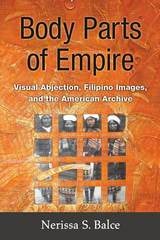
Body Parts of Empire
Visual Abjection, Filipino Images, and the American ArchiveNerissa S. Balce
University of Michigan Press, 2016
Rather than focusing on canonical American authors who wrote at the time of U.S. imperialism, this book examines abject texts—images of naked savages, corpses, clothed native elites, and uniformed American soldiers—as well as bodies of writing that document the goodwill and violence of American expansion in the Philippine colony. Contributing to the fields of American studies, Asian American studies, and gender studies, the book analyzes the actual archive of the Philippine-American War and how the racialization and sexualization of the Filipino colonial native have always been part of the cultures of America and U.S. imperialism. By focusing on the Filipino native as an abject body of the American imperial imaginary, this study offers a historical materialist optic for reading the cultures of Filipino America.

Borders of Visibility
Haitian Migrant Women and the Dominican Nation-Stateby Jennifer L. Shoaff
University of Alabama Press, 2018
An anthropological study of Haitian migrant women in the Dominican Republic.
Borders of Visibility offers extremely timely insight into the Dominican Republic’s racist treatment of Haitian descendants within its borders. Jennifer L. Shoaff employs multisited feminist research to focus on the geographies of power that intersect to inform the opportunities and constraints that migrant women must navigate to labor and live within a context that largely denies their human rights, access to citizenship, and a sense of security and belonging.
Paradoxically, these women are both hypervisible because of the blackness that they embody and invisible because they are marginalized by intersecting power inequalities. Haitian women must contend with diffuse legal, bureaucratic and discursive state-local practices across “border” sites that situate them as a specific kind of threat that must be contained. Shoaff examines this dialectic of mobility and containment across various sites in the northwest Dominican Republic, including the official border crossing, transborder and regional used-clothing markets, migrant settlements (bateyes), and other rural-urban contexts.
Shoaff combines ethnographic interviews, participant observation, institutional analyses of state structures and nongovernmental agencies, and archival documentation to bring this human rights issue to the fore. Although primarily grounded in critical ethnographic practice, this work contributes to the larger fields of transnational feminism, black studies, migration and border studies, political economy, and cultural geography. Borders of Visibility brings much needed attention to Haitian migrant women’s economic ingenuity and entrepreneurial savvy, their ability to survive and thrive, their often impossible choices whether to move or to stay, returning them to a place of visibility, while exposing the very structures that continue to render them invisible and, thus, expendable over time.
Born to Belonging
Writings on Spirit and JusticeMab Segrest
Rutgers University Press, 2002

Bringing the Empire Home
Race, Class, and Gender in Britain and Colonial South AfricaZine Magubane
University of Chicago Press, 2003
Bringing the Empire Home tracks colonial images of blackness from South Africa to England and back again to answer questions such as these. Before the mid-1800s, black Africans were considered savage to the extent that their plight mirrored England's internal Others—women, the poor, and the Irish. By the 1900s, England's minority groups were being defined in relation to stereotypes of black South Africans. These stereotypes, in turn, were used to justify both new capitalist class and gender hierarchies in England and the subhuman treatment of blacks in South Africa. Bearing this in mind, Zine Magubane considers how marginalized groups in both countries responded to these racialized representations.
Revealing the often overlooked links among ideologies of race, class, and gender, Bringing the Empire Home demonstrates how much black Africans taught the English about what it meant to be white, poor, or female.
Broken Brotherhood
The Rise and Fall of the National Afro-American CouncilBenjamin R. Justesen
Southern Illinois University Press, 2008
Broken Brotherhood: The Rise and Fall of the National Afro-American Council gives a comprehensive account of the National Afro-American Council, the first truly nationwide U.S. civil rights organization, which existed from 1898 to 1908. Based on exhaustive research, the volume chronicles the Council’s achievements and its annual meetings and provides portraits of its key leaders.
Led by four of the most notable African American leaders of the time—journalist T. Thomas Fortune, Bishop Alexander Walters, educator Booker T. Washington, and Congressman George Henry White—the Council persevered for a decade despite structural flaws and external pressures that eventually led to its demise in 1908.
Author Benjamin R. Justesen provides historical context for the Council’s development during an era of unprecedented growth in African American organizations. Justesen establishes the National Afro-American Council as the earliest national arena for discussions of critical social and political issues affecting African Americans and the single most important united voice lobbying for protection of the nation’s largest minority. In a period marked by racial segregation, widespread disfranchisement, and lynching violence, the nonpartisan council helped establish two more enduring successor organizations, providing core leadership for both the National Association for the Advancement of Colored People and the National Urban League.
Broken Brotherhood traces the history of the Council and the complicated relationships among key leaders from its creation in Rochester in 1898 to its last gathering in Baltimore in 1907, drawing on both private correspondence and contemporary journalism to create a balanced historical portrait. Enhanced by thirteen illustrations, the volume also provides intriguing details about the ten national gatherings, describes the Council’s unsuccessful attempt to challenge disfranchisement before the U.S. Supreme Court, and sheds light on the gradual breakdown of Republican solidarity among African American leaders in the first decade of the twentieth century.

Brown Threat
Identification in the Security StateKumarini Silva
University of Minnesota Press, 2016
What is “brown” in—and beyond—the context of American identity politics? How has the concept changed since 9/11? In the most sustained examination of these questions to date, Kumarini Silva argues that “brown” is no longer conceived of solely as a cultural, ethnic, or political identity. Instead, after 9/11, the Patriot Act, and the wars in Iran, Iraq, and Afghanistan, it has also become a concept and, indeed, a strategy of identification—one rooted in xenophobic, imperialistic, and racist ideologies to target those who do not neatly fit or subscribe to ideas of nationhood.
Interweaving personal narratives, ethnographic research, analyses of popular events like the Miss America pageant, and films and TV shows such as the Harold and Kumar franchise and Black-ish, Silva maps junctures where the ideological, political, and mediated terrain intersect, resulting in an appetite for all things “brown” (especially South Asian brown) by U.S. consumers, while political and nationalist discourses and legal structures (immigration, emigration, migration, outsourcing, incarceration) conspire to control brown bodies both within and outside the United States.
Silva explores this contradictory relationship between representation and reality, arguing that the representation mediates and manages the anxieties that come from contemporary global realities, in which brown spaces, like India, Pakistan, and the Middle East pose key economic, security, and political challenges to the United States. While racism is hardly new, what makes this iteration of brown new is that anyone or any group, at any time, can be branded as deviant, as a threat.