Results by title
150 books match the query 'Rural' and 6 start with b
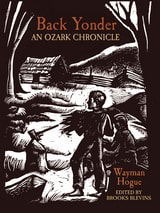
Back Yonder
An Ozark ChronicleCharles Wayman Hogue
University of Arkansas Press, 2016
Wayman Hogue’s stories of growing up in the Ozarks, according to a 1932 review in the New York Times, “brilliantly illuminate mountain life to its very heart and in its most profound aspects.” A standout among the Ozarks literature that was popular during the Great Depression, this memoir of life in rural Arkansas in the decades following the Civil War has since been forgotten by all but a few students of Arkansas history and folklore.
Back Yonder is a special book. Hogue, like his contemporary Laura Ingalls Wilder, weaves a narrative of a family making its way in rugged, impoverished, and sometimes violent places. From one-room schoolhouses to moonshiners, the details in this story capture the essence of a particular time and place, even as the characters reflect a universal quality that will endear them to modern readers.
Historian Brooks Blevins’s new introduction explores the life of Charles Wayman Hogue, analyzes the people and events that inspired the book, and places the volume in the context of America’s discovery of the Ozarks in the years between the World Wars. The University of Arkansas Press is proud to reissue Back Yonder as the first book in the Chronicles of the Ozarks series, making this Arkansas classic available again, ready to be discovered and rediscovered by readers sure to find the book as interesting and entertaining as ever.
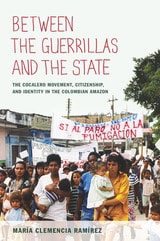
Between the Guerrillas and the State
The Cocalero Movement, Citizenship, and Identity in the Colombian AmazonMaría Clemencia Ramírez
Duke University Press, 2011

Bibb County, Alabama
The First Hundred YearsRhoda C. Ellison
University of Alabama Press, 1984
This model county history chronicles one hundred years in the life of a representative Deep South county
The history of Bibb County between 1818 and 1918 is in many ways representative of the experience of central Alabama during that period. Bibb County shares physical characteristics with the areas both to its north and to its south. In its northern section is a mineral district and in its southern valleys fertile farming country; therefore, its citizens have sometimes allied themselves with the hill counties and sometimes with their Black Belt neighbors.
Both sections of the county developed in step with the surrounding counties. Bibb's foundries were established during the same time and by the same iron masters as Shelby County, and its coal mines in the same decade as Jefferson County. Its farmers planted the same crops and faced the same problems as those in Perry, Autauga, and Tuscaloosa counties. Like Tuscaloosa, Bibb endeavored to promote river transportation for both its industrial and its agricultural products.
This carefully documented history is based on a variety of original sources, from personal letters to government records. It is generously illustrated with early maps and with old pictures of Bibb landmarks, many of which have now vanished.
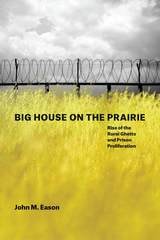
Big House on the Prairie
Rise of the Rural Ghetto and Prison ProliferationJohn M. Eason
University of Chicago Press, 2017
In 2007, John M. Eason moved his family to Forrest City, Arkansas, in search of answers to key questions about this trend: Why is America building so many prisons? Why now? And why in rural areas? Eason quickly learned that rural demand for prisons is complicated. Towns like Forrest City choose to build prisons not simply in hopes of landing jobs or economic wellbeing, but also to protect and improve their reputations. For some rural leaders, fostering a prison in their town is a means of achieving order in a rapidly changing world. Taking us into the decision-making meetings and tracking the impact of prisons on economic development, poverty, and race, Eason demonstrates how groups of elite whites and black leaders share power. Situating prisons within dynamic shifts that rural economies are undergoing and showing how racially diverse communities lobby for prison construction, Big House on the Prairie is a remarkable glimpse into the ways a prison economy takes shape and operates.

Broker, Mediator, Patron, and Kinsman
An Historical Analysis of Key Leadership Roles in a Rural Malaysian DistrictConner Bailey
Ohio University Press, 1976
This study attempts to relate questions of rural leadership to the constantly changing social and economic environment of a rural district in Malaysia during the twentieth century. The study itself began as an effort to analyze a single instance of structural change in Malay village leadership which occurred while the author worked in Sik District as a Peace Corps Volunteer (1968–1971). A research proposal was developed positing a traditional pattern of behavior which could be identified as traditional leadership, the better to contrast this with the bureaucratic style of the district’s new penghulus (headmen of a mukim, or subdistrict).
As research progressed, it became obvious that there was in fact no single traditional leadership pattern to be discovered, but rather that over time adaptations were regularly made whenever a significant change in Sik’s social and economic environment occurred. Although the study has retained rural leadership as a primary concern, it has been found necessary to relate it to Sik’s social and economic history.
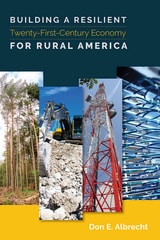
Building a Resilient Twenty-First-Century Economy for Rural America
Don E. Albrecht
Utah State University Press, 2020
Trump’s promises to restore rural industrial jobs simply cannot be fulfilled because his policies do not address the base cause for this job loss—technological change, the most significant factor being the machine replacement of human labor in the production process. Bringing a personal understanding of the effects on rural communities and residents, Albrecht focuses each chapter on a community that has traditionally been economically dependent on a single industry—manufacturing, coal mining, agriculture, logging, oil and gas production, and tourism—and the consequences of losing that industry. He also lays out a plan for rebuilding America’s rural areas and creating an economically vibrant country with a more sustainable future.
The rural economy cannot return to the past as it was structured and instead must look to a new future. Building a Resilient Twenty-First-Century Economy for Rural America describes the source of economic concerns in rural America and offers real ways to address them. It will be vital to students, scholars, practitioners, community leaders, politicians, and policy makers concerned with rural community development.