Results by title
26 books match the query 'Algeria'

Abduction
Anouar Benmalek
Haus Publishing, 2011

Algerian Diary
Frank Kearns and the "Impossible Assignment" for CBS NewsGerald Davis
West Virginia University Press, 2016
Frank Kearns was the go-to guy at CBS News for danger- ous stories in Africa and the Middle East in the 1950s, ‘60s, and early ‘70s. By his own account, he was nearly killed 114 times. He took stories that nobody else wanted to cover and was challenged to get them on the air when nobody cared about this part of the world. But his stories were warning shots for conflicts that play out in the headlines today.
In 1957, Senator John Kennedy described America’s view of the Algerian war for independence as the Eisenhower Administration’s “head in the sand policy.” So CBS News decided to find out what was really happening there and to determine where Algeria’s war for independence fit into the game plan for the Cold War. They sent Frank Kearns to find out.
Kearns took with him cameraman Yousef (“Joe”) Masraff and 400 pounds of gear, some of which they shed, and they hiked with FLN escorts from Tunisia, across a wide “no-man’s land,” and into the Aures Mountains of eastern Algeria, where the war was bloodiest. They carried no passports or visas. They dressed as Algerians. They refused to bear weapons. And they knew that if captured, they would be executed and left in unmarked graves. But their job as journalists was to seek the truth whatever it might turn out to be.
This is Frank Kearns’s diary.
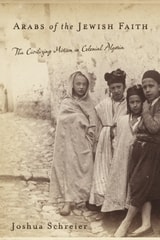
Arabs of the Jewish Faith
The Civilizing Mission in Colonial AlgeriaSchreier, Joshua
Rutgers University Press, 2010

Between Sea and Sahara
An Algerian JournalEugene Fromentin
Ohio University Press, 1999
Between Sea and Sahara gives us Algeria in the third decade of colonization. Written in the 1850s by the gifted painter and extraordinary writer Eugene Fromentin, the many-faceted work is travelogue, fiction, stylized memoir, and essay on art. Fromentin paints a compelling word picture of Algeria and its people, questioning France’s—and his own—role there. He shows French dynamism tending to arrogance, tinged with malaise, as well as the complexity of the Algerians and their canny survival tactics. In his efforts to capture the non-Western world on paper as well as on canvas, Fromentin reveals much about the roots of a colonial relationship that continues to affect the Algeria of today. He also reveals his own development as painter, writer—and human being.
Now available for the first time in English, Between Sea and Sahara appeals to today’s reader on many levels—as a story of color, romance, and dramatic tension; as an eywitness account of the colonial experience in Algeria; as a study in trans-genre text, foreshadowing Fromentin’s psychological masterpiece, the novel Dominique. And, as Valérie Orlando points out in her introduction, Fromentin opens a window on the ethos informing the fashion of Orientalism that flourished with colonialism.
Cervantes in Algiers
A Captive's TaleMaria Antonia Garces
Vanderbilt University Press, 2005
No work has documented in such vivid and illuminating detail the socio-political world of sixteenth-century Algiers, Cervantes's life in the prison-house, his four escape attempts, and the conditions of his final ransom. Garces's portrait of a sophisticated multi-ethnic culture in Algiers, moreover, is likely to open up new discussions about early modern encounters between Christians and Muslims. By bringing together evidence from many different sources, historical and literary, Garces reconstructs the relations between Christians, Muslims, and renegades in a number of Cervantes's writings.
The idea that survivors of captivity need to repeat their story in order to survive (an insight invoked from Coleridge to Primo Levi to Dori Laub) explains not only Cervantes's storytelling but also the book that theorizes it so compellingly. As a former captive herself (a hostage of Colombian guerrillas), the author reads and listens to Cervantes with another ear.
Colonial Harem
Malek Alloula
University of Minnesota Press, 1986
A collection of picture postcards of Algerian women exploited by the French, this “album” illustrates a powerful analysis of the distorting, denigrating effects of their presence on Algerian Society.
Decolonizing Memory
Algeria and the Politics of TestimonyJill Jarvis
Duke University Press, 2021
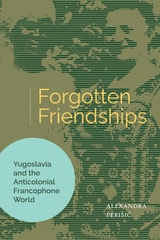
Forgotten Friendships
Yugoslavia and the Anticolonial Francophone WorldAlexandra Perišic
Amherst College Press, 2025
Forgotten Friendships: Yugoslavia and the Anticolonial Francophone World examines transnational friendships and alliances between intellectuals from Yugoslavia and the Francophone African and Caribbean world during the mid-twentieth century. The book argues that transnational political friendships helped shape major intellectual movements like Négritude, African socialism, and global socialist feminisms, which surged beyond national, regional, and even diasporic spaces. Blending archival research, literary analysis, and biography, the book fills a significant gap in our understanding of how intellectuals from the Global South and the socialist world collaborated on shared goals of decolonization, anti-racism, and socialist worldmaking.
Forgotten Friendships emphasizes the ways in which writers, intellectuals, and activists envisioned alternative futures rooted in collaboration across peripheries. Personal bonds of friendship were not mere footnotes to the anti-colonial struggle, but vital political tools for rethinking global solidarity.
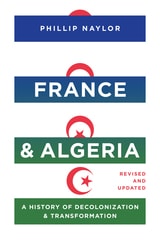
France and Algeria
A History of Decolonization and TransformationPhillip Naylor
University of Texas Press, 2024
An examination of the complicated history between France and Algeria since the latter’s independence.
While most related studies concentrate on the colonial era and Algeria's War of Independence, France and Algeria details the nations' postcolonial relationship. Phillip Naylor provides a philosophical approach, contending that France reformulated, rather than repudiated, “essential” strategic values during decolonization. It thus continued to pursue grandeur and independence, especially with regard to the Third World and Algeria, an essentialism that expedited France’s postcolonial transformation. But as a new nation, Algeria needed to pursue the “existential” project of self-definition. It became involved in state-building while also promulgating socialism, and it recognized how French oil concessions in the Sahara impeded its independence, leading to the industry's postcolonial decolonization. Finally, the postcolonial relationship has featured a human dimension involving immigrants, pieds-noirs (colonial settlers), and harkis (Algerian soldiers loyal to France), all of them central to bilateral relations.
In this revised and updated edition of his seminal work, first published over twenty years ago, Naylor expands his coverage of the decolonization era, drawing on new information while continuing to study the ever-evolving relationship between the two countries. These new additions expose the continually shifting relations of power, perception, and identity between the two states.

Frantz Fanon
Philosopher of the BarricadesPeter Hudis
Pluto Press, 2015
With FranzFanon, Peter Hudis presents a penetrating critical biography of the activist’s life and work. Countering the prevailing belief that Fanon’s contributions to modern thought can be wholly defined by an advocacy of violence, Hudis presents his work instead as an integrated whole, showing that its nuances—and thus its importance—can only be appreciated in light of Fanon’s efforts to fuse philosophical theory and actual practice. By taking seriously Fanon’s philosophical and psychological contributions, as well as his political activism, Hudis presents a powerful and perceptive new view of the man and his achievement.
This brief, richly perceptive introduction to Fanon will give new force to his ideas, his life, and his example for people engaged in radical political theory and taking action against oppression around the world today.
Letters, Volume 6 (1*–29*)
Saint Augustine
Catholic University of America Press, 1989
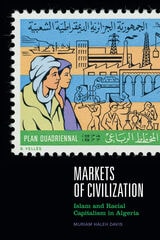
Markets of Civilization
Islam and Racial Capitalism in AlgeriaMuriam Haleh Davis
Duke University Press, 2022
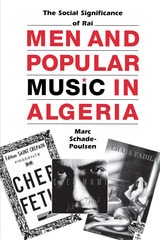
Men and Popular Music in Algeria
The Social Significance of RaïBy Marc Schade-Poulsen
University of Texas Press, 1999
Raï music is often called the voice of the voiceless in Algeria, a society currently swept by tragic conflict. Raï is the voice of Algerian men, young men caught between generations and classes, in political strife, and in economic inequality. In a ground-breaking study, anthropologist Marc Schade-Poulsen uses this popular music genre as a lens through which he views Algerian society, particularly male society. He situates raï within Algerian family life, moral codes, and broader power relations.
Schade-Poulsen did his research in the 1990s, in clubs, recording studios, at weddings, and with street musicians. He describes the history of raï, which emerged in the late 1970s and spread throughout North Africa at the same time the Islamist movement was growing to become the most potent socio-political movement in Algeria.
Outsiders consider raï to be Western in origin, but Schade-Poulsen shows its Islamic roots as well. The musicians do use Western instruments, but the music itself mixes Algerian popular songs and rhythms with the beat of American disco, Egyptian modalities, Moroccan wedding tunes, and the songs of Julio Iglesias. The lyrics deal with male-female relationships but also with generational relationships and the problems of youth, as they struggle to find a place in a conflicted society.
The study, in its innovative approach to music as a template of society, helps the reader understand the two major movements among today's Algerian youth: one toward the mosque and the other toward the West.
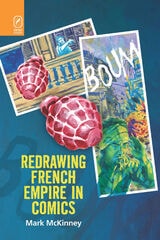
Redrawing French Empire in Comics
Mark McKinney
The Ohio State University Press, 2020

Reveries of the Wild Woman
Primal ScenesHelene Cixous
Northwestern University Press, 2006
I dreamt of one day arriving in Algeria.
Born in Oran, Algeria, Hélène Cixous spent her childhood in France's former colony. Reveries of the Wild Woman is her visceral memoir of a preadolescence that shaped her with intense feelings of alienation, yet also contributed, in a paradoxically essential way, to her development as a writer and philosopher.
Born to a French father and an Austro-German mother, both Jews, Cixous experienced a childhood fraught with racial and gender crisis. In her moving story she recounts how small events--a new dog, the gift of a bicycle--reverberate decades later as symbols filled with social and psychological meaning. She and her family endure a double alienation, by Algerians for being French and by the French for being Jewish, and Cixous builds her story on the themes of isolation and exclusion she felt in particular under the Vichy government and during the Algerian Civil War. Yet she also concedes that memories of Algeria awaken in her a longing for her home country, and ponders how that stormy relationship has influenced her life and thought.
A meditation on postcolonial identity and gender, Reveries of the Wild Woman is also a poignant recollection of how a girl's childhood is, indeed, author to the woman.
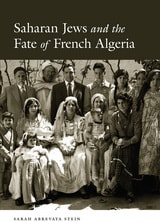
Saharan Jews and the Fate of French Algeria
Sarah Abrevaya Stein
University of Chicago Press, 2014
Drawing on materials from thirty archives across six countries, Stein tells the story of colonial imposition on a desert community that had lived and traveled in the Sahara for centuries. She paints an intriguing historical picture—of an ancient community, trans-Saharan commerce, desert labor camps during World War II, anthropologist spies, battles over oil, and the struggle for Algerian sovereignty. Writing colonialism and decolonization into Jewish history and Jews into the French Saharan one, Saharan Jews and the Fate of French Algeria is a fascinating exploration not of Jewish exceptionalism but of colonial power and its religious and cultural differentiations, which have indelibly shaped the modern world.
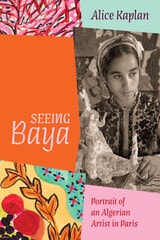
Seeing Baya
Portrait of an Algerian Artist in ParisAlice Kaplan
University of Chicago Press, 2024
On a flower farm in colonial Algeria, a servant and field worker known as Baya escaped the drudgery of her labor by coloring the skirts in fashion magazines. Three years later, in November 1947, her paintings and fanciful clay beasts were featured in a solo show in Paris. She wasn’t yet sixteen years old. In this first biography of Baya, Alice Kaplan tells the story of a young woman seemingly trapped in subsistence who becomes a sensation in the French capital, then mysteriously fades from the history of modern art—only to reemerge after independence as an icon of Algerian artistic heritage.
The toast of Paris for the 1947 season, Baya inspired colonialist fantasies about her “primitive” genius as well as genuine appreciation. She was featured in newspapers, on the radio, and in a newsreel; her art was praised by Breton and Camus, Marchand and Braque. At the dawn of Algerian liberation, her appearance in Paris was used to stage the illusion of French-Algerian friendship, while horrific French massacres in Algeria were still fresh in memory.
Kaplan uncovers the central figures in Baya’s life and the role they played in her artistic career. Among the most poignant was Marguerite Caminat-McEwen-Benhoura, who took Baya from her sister’s farm to Algiers, where Baya worked as Marguerite’s maid and was given paint and brushes. A complex and endearing character, Marguerite—and her Pygmalion ambitions—was decisive in shaping Baya’s destiny. Kaplan also looks closely at Baya’s earliest paintings with an eye to their themes, their palette and design, and their enduring influence.
In vivid prose that brings Baya’s story into the present, Kaplan’s book, the fruit of scrupulous research in Algiers, Blida, Paris, and Provence, allows us to see in a whole new light the beloved artist who signed her paintings simply “Baya.”

Sex, France, and Arab Men, 1962–1979
Todd Shepard
University of Chicago Press, 2017
Sex, France, and Arab Men is a history of how and why—from the upheavals of French Algeria in 1962 through the 1970s—highly sexualized claims about Arabs were omnipresent in important public French discussions, both those that dealt with sex and those that spoke of Arabs. Shepard explores how the so-called sexual revolution took shape in a France profoundly influenced by the ongoing effects of the Algerian revolution. Shepard’s analysis of both events alongside one another provides a frame that renders visible the ways that the fight for sexual liberation, usually explained as an American and European invention, developed out of the worldwide anticolonial movement of the mid-twentieth century.
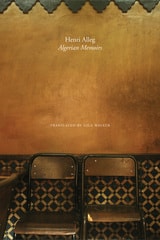
The Algerian Memoirs
Days of Hope and CombatHenri Alleg
Seagull Books, 2011
The personal history of journalist Henri Alleg is tied inextricably to the history of the French-Algerian Conflict. Best known for his book The Question, a first-hand account of his torture by French troops during the Algerian war for independence, Alleg is famous both for having brought the issue of French torture to the public eye and for his passionate work as a writer, a newspaperman, and a communist activist.
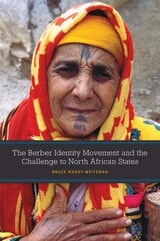
The Berber Identity Movement and the Challenge to North African States
By Bruce Maddy-Weitzman
University of Texas Press, 2011
Like many indigenous groups that have endured centuries of subordination, the Berber/Amazigh peoples of North Africa are demanding linguistic and cultural recognition and the redressing of injustices. Indeed, the movement seeks nothing less than a refashioning of the identity of North African states, a rewriting of their history, and a fundamental change in the basis of collective life. In so doing, it poses a challenge to the existing political and sociocultural orders in Morocco and Algeria, while serving as an important counterpoint to the oppositionist Islamist current.
This is the first book-length study to analyze the rise of the modern ethnocultural Berber/Amazigh movement in North Africa and the Berber diaspora. Bruce Maddy-Weitzman begins by tracing North African history from the perspective of its indigenous Berber inhabitants and their interactions with more powerful societies, from Hellenic and Roman times, through a millennium of Islam, to the era of Western colonialism. He then concentrates on the marginalization and eventual reemergence of the Berber question in independent Algeria and Morocco, against a background of the growing crisis of regime legitimacy in each country. His investigation illuminates many issues, including the fashioning of official national narratives and policies aimed at subordinating Berbers in an Arab nationalist and Islamic-centered universe; the emergence of a counter-movement promoting an expansive Berber "imagining" that emphasizes the rights of minority groups and indigenous peoples; and the international aspects of modern Berberism.
The Gallant Spaniard
Miguel de Cervantes; Translated by Philip Krummrich
Vanderbilt University Press, 2023
This edition, translated by Philip Krummrich, consists of a critical introduction and a full verse translation of the play with notes.

The Harkis
The Wound That Never HealsVincent Crapanzano
University of Chicago Press, 2011
In this haunting chronicle of betrayal and abandonment, ostracism and exile, racism and humiliation, Vincent Crapanzano examines the story of the Harkis, the quarter of a million Algerian auxiliary troops who fought for the French in Algeria’s war of independence. After tens of thousands of Harkis were massacred by other Algerians at the end of the war, the survivors fled to France where they were placed in camps, some for as long as sixteen years. Condemned as traitors by other Algerians and scorned by the French, the Harkis became a population apart, and their children still suffer from their parents’ wounds. Many have become activists, lobbying for recognition of their parents’ sacrifices, compensation, and an apology.
More than just a retelling of the Harkis’ grim past and troubling present, The Harkis is a resonant reflection on how children bear responsibility for the choices their parents make, how personal identity is shaped by the impersonal forces of history, and how violence insinuates itself into every facet of human life.
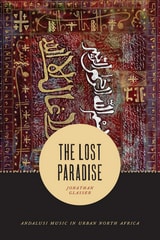
The Lost Paradise
Andalusi Music in Urban North AfricaJonathan Glasser
University of Chicago Press, 2016
Through a historical and ethnographic account of the Andalusi music of Algiers, Tlemcen, and their Algerian and Moroccan borderlands since the end of the nineteenth century, Glasser shows how anxiety about Andalusi music’s disappearance has emerged from within the practice itself and come to be central to its ethos. The result is a sophisticated examination of musical survival and transformation that is also a meditation on temporality, labor, colonialism and nationalism, and the relationship of the living to the dead.

The Visual Afterlife of Abdelkader Bennahar
Robert Desjarlais
Duke University Press, 2025
Theater, War, and Memory in Crisis
Vichy, Algeria, the AftermathJohn Ireland
University of Michigan Press, 2025

Transition & Development in Algeria
Economic, Social and Cultural ChallengesMohammed Saad
Intellect Books, 2013
The contributors represent a range of expertise in economics, business management, sociology, linguistics, political science and cultural studies. Their diverse backgrounds and perspectives permit this publication to explore new avenues of debate, which represent a significant contribution to the understanding of the present problems and solutions.