Results by title
254 books match the query 'Sex' and 12 start with b
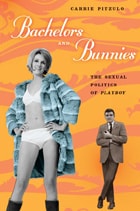
Bachelors and Bunnies
The Sexual Politics of PlayboyCarrie Pitzulo
University of Chicago Press, 2011
For a lot of people, thoughts about the sexual politics of Playboy run along the lines of what Gloria Steinem reportedly once told Hugh Hefner: “A woman reading Playboy feels a little like a Jew reading a Nazi manual.” Hefner’s magazine celebrates men as swinging bachelors and women as objects of desire; ergo, it’s sexist.
Not so fast, says Carrie Pitzulo. With Bachelors and Bunnies, she delves into the history of the magazine to reveal its surprisingly strong record of support for women’s rights and the modernization of sexual and gender roles. Taking readers behind the scenes of Playboy’s heyday, Pitzulo shows how Hefner’s own complicated but thoughtful perspective on modern manhood, sexual liberation, and feminism played into debates—both in the editorial offices and on the magazine’s pages—about how Playboy’s trademark “girl next door” appeal could accommodate, acknowledge, and even honor the changing roles and new aspirations of women in postwar America. Revealing interviews with Hugh Hefner and his daughter (and later Playboy CEO) Christie Hefner, as well as with a number of editors and even Playmates, show that even as the magazine continued to present a romanticized notion of gender difference, it again and again demonstrated a commitment to equality and expanded opportunities for women.
Offering a surprising new take on a twentieth-century icon, Bachelors and Bunnies goes beyond the smoking jacket and the centerfold to uncover an unlikely ally for the feminist cause.
Baring Witness
36 Mormon Women Talk Candidly about Love, Sex, and MarriageEdited by Holly Welker
University of Illinois Press, 2016
Beginning to See the Light
Sex, Hope, and Rock-and-RollEllen Willis
University of Minnesota Press, 2012
From the New Yorker’s inimitable first pop music critic comes this pioneering collection of essays by a conscientious writer whose political realm is both radical and rational, and whose prime preoccupations are with rock ’n’ roll, sexuality, and above all, freedom. Here Ellen Willis assuredly captures the thrill of music, the disdain of authoritarian culture, and the rebellious spirit of the ’60s and ’70s.
Between Banat
Queer Arab Critique and Transnational Arab ArchivesMejdulene Bernard Shomali
Duke University Press, 2023
Beyond the Flesh
Alexander Blok, Zinaida Gippius, and the Symbolist Sublimation of SexJenifer Presto
University of Wisconsin Press, 2008
Black Bourgeois
Class and Sex in the FleshCandice M. Jenkins
University of Minnesota Press, 2019
Exploring the forces that keep black people vulnerable even amid economically privileged lives
At a moment in U.S. history with repeated reminders of the vulnerability of African Americans to state and extralegal violence, Black Bourgeois is the first book to consider the contradiction of privileged, presumably protected black bodies that nonetheless remain racially vulnerable. Examining disruptions around race and class status in literary texts, Candice M. Jenkins reminds us that the conflicted relation of the black subject to privilege is not, solely, a recent phenomenon.
Focusing on works by Toni Morrison, Spike Lee, Danzy Senna, Rebecca Walker, Reginald McKnight, Percival Everett, Colson Whitehead, and Michael Thomas, Jenkins shows that the seemingly abrupt discursive shift from post–Civil Rights to Black Lives Matter, from an emphasis on privilege and progress to an emphasis on vulnerability and precariousness, suggests a pendulum swing between two interrelated positions still in tension. By analyzing how these narratives stage the fraught interaction between the black and the bourgeois, Jenkins offers renewed attention to class as a framework for the study of black life—a necessary shift in an age of rapidly increasing income inequality and societal stratification.
Black Bourgeois thus challenges the assumed link between blackness and poverty that has become so ingrained in the United States, reminding us that privileged subjects, too, are “classed.” This book offers, finally, a rigorous and nuanced grasp of how African Americans live within complex, intersecting identities.
Black Sexual Economies
Race and Sex in a Culture of CapitalEdited by Adrienne D. Davis and the BSE Collective
University of Illinois Press, 2019

Blind Date
Sex and PhilosophyAnne Dufourmantelle. Translated by Catherine Porter.
University of Illinois Press, 2007
Bringing sex and philosophy together on a blind date, Anne Dufourmantelle’s provocative study uses this analogy to uncover and examine philosophy’s blind spot. Delightful and startling comparisons spring from the date: both sex and philosophy are dangerous, both are socially subversive, and both are obsessions. Although sex and philosophy have much in common, however, they have scarcely known one another until now.
Socrates and Diogenes had little to say about sex, and although it was notoriously explored by the Marquis de Sade, this study explains why philosophy has never been fully sexualized nor sex really philosophized. Blind Date highlights the marked deletion of sexual topics and themes from philosophical works, while also opening doors for their union. Inviting readers to remember that thought does not require repressed desire, Dufourmantelle argues that sex is everywhere, and it affects all kinds of thinking.

Blood Ties
Sex, Scandal, and Serial Murder at the Turn of the Twentieth CenturyHarold Schechter
University of Iowa Press, 2027
Body Parts of Empire
Visual Abjection, Filipino Images, and the American ArchiveNerissa S. Balce
University of Michigan Press, 2016
Rather than focusing on canonical American authors who wrote at the time of U.S. imperialism, this book examines abject texts—images of naked savages, corpses, clothed native elites, and uniformed American soldiers—as well as bodies of writing that document the goodwill and violence of American expansion in the Philippine colony. Contributing to the fields of American studies, Asian American studies, and gender studies, the book analyzes the actual archive of the Philippine-American War and how the racialization and sexualization of the Filipino colonial native have always been part of the cultures of America and U.S. imperialism. By focusing on the Filipino native as an abject body of the American imperial imaginary, this study offers a historical materialist optic for reading the cultures of Filipino America.
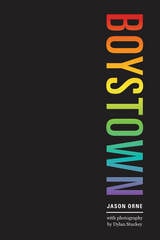
Boystown
Sex and Community in ChicagoJason Orne
University of Chicago Press, 2017
In Boystown, Orne takes readers on a detailed, lively journey through Chicago’s Boystown, which serves as a model for gayborhoods around the country. The neighborhood, he argues, has become an entertainment district—a gay Disneyland—where people get lost in the magic of the night and where straight white women can “go on safari.” In their original form, though, gayborhoods like this one don’t celebrate differences; they create them. By fostering a space outside the mainstream, gay spaces allow people to develop an alternative culture—a queer culture that celebrates sex.
Orne spent three years doing fieldwork in Boystown, searching for ways to ask new questions about the connective power of sex and about what it means to be not just gay, but queer. The result is the striking Boystown, illustrated throughout with street photography by Dylan Stuckey. In the dark backrooms of raunchy clubs where bachelorettes wouldn’t dare tread, people are hooking up and forging “naked intimacy.” Orne is your tour guide to the real Boystown, then, where sex functions as a vital center and an antidote to assimilation.
Brokered Subjects
Sex, Trafficking, and the Politics of FreedomElizabeth Bernstein
University of Chicago Press, 2018