Results by title
279 books match the query 'Slavery' and 21 start with b
Banking on Slavery
Financing Southern Expansion in the Antebellum United StatesSharon Ann Murphy
University of Chicago Press, 2023
It’s now widely understood that the fullest expression of nineteenth-century American capitalism was found in the structures of chattel slavery. It’s also understood that almost every other institution and aspect of life then was at least entangled with—and often profited from—slavery’s perpetuation. Yet as Sharon Ann Murphy shows in her powerful and unprecedented book, the centrality of enslaved labor to banking in the antebellum United States is far greater than previously thought.
Banking on Slavery sheds light on precisely how the financial relationships between banks and slaveholders worked across the nineteenth-century South. Murphy argues that the rapid spread of slavery in the South during the 1820s and ’30s depended significantly upon southern banks’ willingness to financialize enslaved lives, with the use of enslaved individuals as loan collateral proving central to these financial relationships. She makes clear how southern banks were ready—and, in some cases, even eager—to alter time-honored banking practices to meet the needs of slaveholders. In the end, many of these banks sacrificed themselves in their efforts to stabilize the slave economy. Murphy also details how banks and slaveholders transformed enslaved lives from physical bodies into abstract capital assets. Her book provides an essential examination of how our nation’s financial history is more intimately intertwined with the dehumanizing institution of slavery than scholars have previously thought.
Banking on Slavery
Financing Southern Expansion in the Antebellum United StatesSharon Ann Murphy
University of Chicago Press, 2023
A sobering excavation of how deeply nineteenth-century American banks were entwined with the institution of slavery.
It’s now widely understood that the fullest expression of nineteenth-century American capitalism was found in the structures of chattel slavery. It’s also understood that almost every other institution and aspect of life then was at least entangled with—and often profited from—slavery’s perpetuation. Yet as Sharon Ann Murphy shows in her powerful and unprecedented book, the centrality of enslaved labor to banking in the antebellum United States is far greater than previously thought.
Banking on Slavery sheds light on precisely how the financial relationships between banks and slaveholders worked across the nineteenth-century South. Murphy argues that the rapid spread of slavery in the South during the 1820s and ’30s depended significantly upon southern banks’ willingness to financialize enslaved lives, with the use of enslaved individuals as loan collateral proving central to these financial relationships. She makes clear how southern banks were ready—and, in some cases, even eager—to alter time-honored banking practices to meet the needs of slaveholders. In the end, many of these banks sacrificed themselves in their efforts to stabilize the slave economy. Murphy also details how banks and slaveholders transformed enslaved lives from physical bodies into abstract capital assets. Her book provides an essential examination of how our nation’s financial history is more intimately intertwined with the dehumanizing institution of slavery than scholars have previously thought.
Bartolomé de las Casas and the Defense of Amerindian Rights
A Brief History with DocumentsEdited by Lawrence A. Clayton and David M. Lantigua
University of Alabama Press, 2020
The writings of a sixteenth-century advocate who challenged empire in defense of Indigenous peoples.
With the exception of Christopher Columbus, Bartolomé de las Casas is arguably the most notable figure of the Encounter Age. He is remembered principally as the creator of the Black Legend, as well as the protector of American Indians. He was one of the pioneers of the human rights movement, and a Christian activist who invoked law and Biblical scripture to challenge European colonialism in the great age of the Encounter. He was also one of the first and most thorough chroniclers of the conquest, and a biographer who saved the diary of Columbus’s first voyage for posterity by transcribing it in his History of the Indies before the diary was lost.
Bartolomé de las Casas and the Defense of Amerindian Rights: A Brief History with Documents provides the most wide-ranging and concise anthology of Las Casas’s writings, in translation, ever made available. It contains not only excerpts from his most well-known texts, but also his largely unavailable writings on political philosophy and law, and addresses the underappreciated aspects of his thought. Fifteen of the twenty-six documents are entirely new translations of Las Casas’s writings, a number of them appearing in English for the first time.
This volume focuses on his historical, political, and legal writings that address the deeply conflicted and violent sixteenth-century encounter between Europeans and indigenous peoples of the Americas. It also presents Las Casas as a more comprehensive and systematic philosophical and legal thinker than he is typically given credit for. The introduction by Lawrence A. Clayton and David M. Lantigua places these writings into a synthetic whole, tracing his advocacy for indigenous peoples throughout his career. By considering Las Casas’s ideas, actions, and even regrets in tandem, readers will understand the historical dynamics of Spanish imperialism more acutely within the social-political context of the times.

Behind the Big House
Reconciling Slavery, Race, and Heritage in the U.S. SouthJodi Skipper
University of Iowa Press, 2022
When residents and tourists visit sites of slavery, whose stories are told? All too often the lives of slaveowners are centered, obscuring the lives of enslaved people. Behind the Big House gives readers a candid, behind-the-scenes look at what it really takes to interpret the difficult history of slavery in the U.S. South. The book explores Jodi Skipper’s eight-year collaboration with the Behind the Big House program, a community-based model used at local historic sites to address slavery in the collective narrative of U.S. history and culture.
In laying out her experiences through an autoethnographic approach, Skipper seeks to help other activist scholars of color negotiate the nuances of place, the academic public sphere, and its ambiguous systems of reward, recognition, and evaluation.
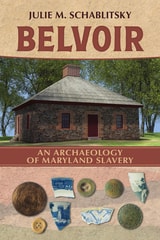
Belvoir
An Archaeology of Maryland SlaveryJulie M. Schablitsky
University of Alabama Press, 2025
Unearthed truths, buried lives: Belvoir reveals the pain, resilience, and reckoning found beneath the soil of a Maryland plantation.
Near Annapolis, Maryland, a former tobacco plantation dating to the 1730s holds centuries of untold history. In Belvoir: An Archaeology of Maryland Slavery, Julie M. Schablitsky leads readers on an archaeological narrative to unearth the lives and stories still buried there.The book begins with an introduction to the estate’s history, detailing its ownership by prominent families such as the Rosses, Scotts, Worthingtons, and Welshes. Schablitsky highlights the landscape of the estate, including the unique thirty-two-square-foot stone quarter built for enslaved people.
With sensitivity and scientific rigor, Schablitsky shifts focus to the enslaved people who lived and labored at Belvoir for more than eighty years. Through detailed excavation of the stone quarter and analysis of everyday artifacts—buttons, tobacco pipes, food remains, ceramics—she reconstructs the daily life, acts of resistance, and the cultural endurance of a community forced to navigate brutality.
Yet what makes Belvoir especially vital is its ethical compass. Schablitsky centers the voices of descendants, allowing their questions, memories, and presence to shape the narrative. The result is a groundbreaking archaeological case study and a blueprint for restorative justice at sites of enslavement. Scholars, archaeologists, and general readers alike will find Belvoir a deeply human, profoundly necessary book, one that confronts the past with clarity, care, and the hope of reconciliation.
Between Fitness and Death
Disability and Slavery in the CaribbeanStefanie Hunt-Kennedy
University of Illinois Press, 2020
Stefanie Hunt-Kennedy provides a three-pronged analysis of disability in the context of Atlantic slavery. First, she examines the connections of enslavement and representations of disability and the parallel development of English anti-black racism. From there, she moves from realms of representation to reality in order to illuminate the physical, emotional, and psychological impairments inflicted by slavery and endured by the enslaved. Finally, she looks at slave law as a system of enforced disablement.
Audacious and powerful, Between Fitness and Death is a groundbreaking journey into the entwined histories of racism and ableism.
Beyond Bondage
Free Women of Color in the AmericasEdited by David Barry Gaspar and Darlene Clark Hine
University of Illinois Press, 2004
Beyond Constraint
Middle/Passages of Blackness and Indigeneity in the Radical TraditionShona N. Jackson
Duke University Press, 2024

Black Bodies, White Gold
Art, Cotton, and Commerce in the Atlantic WorldAnna Arabindan-Kesson
Duke University Press, 2021
Black Lives, Native Lands, White Worlds
A History of Slavery in New EnglandJared Ross Hardesty
University of Massachusetts Press, 2019
In this concise yet comprehensive history, Jared Ross Hardesty focuses on the individual stories of enslaved people, bringing their experiences to life. He also explores larger issues such as the importance of slavery to the colonization of the region and to agriculture and industry, New England's deep connections to Caribbean plantation societies, and the significance of emancipation movements in the era of the American Revolution. Thoroughly researched and engagingly written, Black Lives, Native Lands, White Worlds is a must-read for anyone interested in the history of New England.
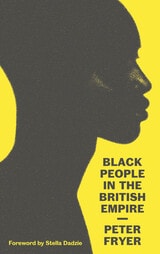
Black People in the British Empire
Peter Fryer
Pluto Press, 2021
Black People in the British Empire is a challenge to the official version of British history. It tells the story of Britain's exploitation and oppression of its subject peoples in its colonies, and in particular the people of Africa, Asia and Australasia
Peter Fryer reveals how the ideology of racism was used as justification for acquiring and expanding the Empire; how the British Industrial Revolution developed out of profits from the slave trade; and how the colonies were deliberately de-industrialised to create a market for British manufacturers.
In describing the frequency and the scale of revolts by subject peoples against slavery and foreign domination - and the brutality used in crushing them - Peter Fryer exposes the true history of colonialism, and restores to Black people their central role in Britain's past.

Black People in the British Empire
Peter Fryer
Pluto Press, 2021
'Fantastic … the most important book on Black British history’ - Akala
Black People in the British Empire is a challenge to the official version of British history. It tells the story of Britain's exploitation and oppression of its subject peoples in its colonies, and in particular the people of Africa, Asia and Australasia
Peter Fryer reveals how the ideology of racism was used as justification for acquiring and expanding the Empire; how the British Industrial Revolution developed out of profits from the slave trade; and how the colonies were deliberately de-industrialised to create a market for British manufacturers.
In describing the frequency and the scale of revolts by subject peoples against slavery and foreign domination - and the brutality used in crushing them - Peter Fryer exposes the true history of colonialism, and restores to Black people their central role in Britain's past.

Black Society in Spanish Florida
Jane Landers
University of Illinois Press, 1999
Blacks under Spanish rule in Florida lived in a more complex and international world that linked the Caribbean, Africa, and Europe with a powerful and diverse Indian hinterland. Jane Landers’s pioneering study of people of the African diaspora under Spain’s colonial rule rewrites Florida history and enriches our understanding of the powerful links between race relations and cultural custom.
As Landers shows, Spanish Florida was a sanctuary to Blacks fleeing enslavement on plantations. Castilian law, meanwhile, offered many avenues out of slavery. In St. Augustine and elsewhere, society accepted European-African unions, with families developing community connections through marriage, concubinage, and godparents. Assisted by Spanish traditions and ever-present geopolitical threats, people of African descent leveraged linguistic, military, diplomatic, and artisanal skills into citizenship and property rights. Landers details how Blacks became homesteaders, property owners, and entrepreneurs, and in the process enjoyed greater legal and social protection than in the two hundred years of Anglo history that followed.
Black Undertow
Hugo ka Canham
Duke University Press, 2026
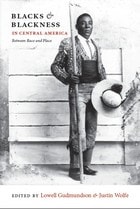
Blacks and Blackness in Central America
Between Race and PlaceLowell Gudmundson and Justin Wolfe, eds.
Duke University Press, 2010
Contributors. Rina Cáceres Gómez, Lowell Gudmundson, Ronald Harpelle, Juliet Hooker, Catherine Komisaruk, Russell Lohse, Paul Lokken, Mauricio Meléndez Obando, Karl H. Offen, Lara Putnam, Justin Wolfe
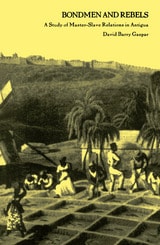
Bondmen and Rebels
A Study of Master-Slave Relations in AntiguaDavid Barry Gaspar
Duke University Press, 1985
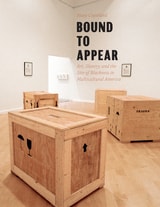
Bound to Appear
Art, Slavery, and the Site of Blackness in Multicultural AmericaHuey Copeland
University of Chicago Press, 2013
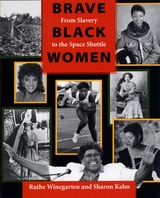
Brave Black Women
From Slavery to the Space ShuttleBy Ruthe Winegarten and Sharon Kahn
University of Texas Press, 1997
Brave black women have played important roles in American history. Before the Emancipation Proclamation in 1863, black women bore the bonds of slavery with courage and strength. Since Emancipation, black women have supported schools, churches, and civic organizations, entered many professions, and helped to build strong communities. This book dramatizes their impressive story and celebrates their achievements.
Writing especially for students in grades four through eight, Ruthe Winegarten and Sharon Kahn trace the history of black women from slavery until today. Their story includes many heroines, from Emily Morgan, "the Yellow Rose of Texas," to pioneer aviator Bessie Coleman, astronaut Mae Jemison, opera singer Barbara Conrad, actresses Phylicia Rashad and Debbie Allen, and Congresswoman Barbara Jordan, whose life story forms the final chapter.
In addition to these famous black women, the book also profiles teachers, businesswomen, civil rights leaders, community activists, doctors, nurses, athletes, musicians, artists, and political leaders. Adapted from the award-winning Black Texas Women: 150 Years of Trial and Triumph, it will be fascinating reading for children and their parents and grandparents, teachers, and librarians.

Brazil and the World System
Edited and with an introduction by Richard Graham; with chapters by Fernando A. Novais, John R. Hall, and Luís Carlos Soares
University of Texas Press, 1991
Has the world economy shaped and defined Brazil’s economic and political history and, if so, to what extent? Is Brazil’s past to be explained principally by its insertion in a single world capitalist system? The authors of the three essays in this volume reflect critically on these questions along with the following: Should the determining factors be understood as sociological-cultural (as in a heritage of patrimonial rule) or were they based on material reality? What was the connection between the presence of slavery in the Americas and the emergence of capitalism in Europe? What accounts for Brazil’s centuries-long reliance on exports and the slow development of its industry?
The chapters in this book draw contrasting judgments on virtually every major issue in Brazilian history because they begin from divergent premises. In arguing their cause, noted scholars John R. Hall, Fernando A. Novais, and Luís Carlos Soares provide a formidable intellectual point and counterpoint whose theoretical assumptions bear heavily on all social scientists engaged in exploring colonialism, imperialism, capitalism, dependency, and relative international poverty.
Brazil and the World System provides provocative insights not only about Brazil but also about the nature of colonialism in general and its relationship to the rise of capitalism in Europe. It should appeal to Latin Americanists of all disciplinary persuasions as well as to general readers curious about great patterns of change in history. Stuart Schwartz, director of the Center for Early Modern History at the University of Minnesota, says, “ . . . an excellent collection . . . North American scholarship will find these essays an eye-opener.
Breaking Chains
Slavery on Trial in the Oregon TerritoryR. Gregory Nokes
Oregon State University Press, 2013
In Breaking Chains, R. Gregory Nokes tells the story of the only slavery case adjudicated in Oregon’s pre-Civil War courts—Holmes v. Ford. Through the lens of this landmark case, Nokes explores the historical context of racism in Oregon and the West, reminding readers that there actually were slaves in Oregon, though relatively few in number.
Drawing on the court record, Nokes offers an intimate account of the relationship between a slave and his master from the slave’s point of view. He also explores the experiences of other slaves in early Oregon, examining attitudes toward race and revealing contradictions in the state’s history. Oregon was the only free state admitted to the union with a voter-approved constitutional clause banning African Americans and, despite the prohibition of slavery in the state, many in Oregon tolerated it and supported politicians who advocated for slavery, including Oregon’s first territorial governor.
Breaking Chains sheds light on a somber part of Oregon’s history, bringing the story of slavery in Oregon to a broader audience. The book will appeal to readers interested in Pacific Northwest history and in the history of slavery in the United States.
Breaking the Chains
Slavery, Bondage, and Emancipation in Modern Africa and AsiaMartin A. Klein
University of Wisconsin Press, 1993
“Martin Klein has brought together recent work on the abolition of slavery, from Ottoman Turkey to Thailand and from South India to West Africa. This anthology builds on the recent scholarship on both slavery in Asia and Africa and the end of slavery as a world-wide historical phenomenon. Whereas other anthologies have tended to focus on either Africa or Asia, this project brings together in one volume case studies and methodological approaches concerning both regions. Breaking the Chains will be an important part of the relatively sparse literature on emancipation in comparative and global context.”—Richard Roberts, Stanford University
Because the American history of slavery and emancipation tends to be foremost in Western minds, few realize that traditional forms of servitude still exist in a variety of places around the world: children are sold on the streets of Bangkok, bondage persists in India despite official efforts to abolish it, and until 1980 slavery was legal in Mauritania.
Breaking the Chains deals with emancipation in African and Asian societies which were either colonized or came under the domination of European powers in the nineteenth century. In these societies, emancipation involved the imposition on non-European societies of an explicitly European discourse on slavery, and, in most cases, a free labor ideology. Most of the slave masters described in these essays were not European and found European ideas on emancipation difficult to accept.
Against this backdrop, the essayists (many of whom contribute their own non-Western perspective) focus on the transition from slavery (or other forms of bondage) to emancipation. They show that in each case the process involved pressure from European abolition movements, the extension of capitalist relations of production, the concerns and perceptions of the colonial state, and the efforts of non-Western elites to modernize their cultures.
Martin A. Klein argues that the Asian and African experience has much in common with the American experience, particularly in efforts to control labor and family life. The struggle to control the labor of former slaves has often been intense and, he suggests, has had a continuing impact on the social order in former slave societies.