Results by title
100 books match the query 'Sociolinguistics' and 6 start with b

Babel
Adventures in TranslationDennis Duncan, Stephen Harrison, Katrin Kohl, and Matthew Reynolds
Bodleian Library Publishing, 2019
Starting with the concept of Babel itself, which illustrates the early cultural prominence of multilingualism, the book examines a Mediterranean language of four millennia ago called Linear A, which still resists deciphering today. Going on to explore how languages have interacted with each other in different contexts, the book also sheds light on the multilingual transmission of key texts in religion, science, fables and fairy-tales, and epic literature. Lavishly illustrated with a diverse range of material, from papyrus fragments found at Oxyrhynchus in Egypt to Esperanto handbooks to Asterix cartoons, Babel opens up a world of adventures into translation.
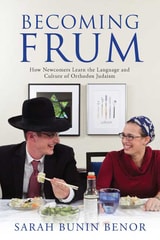
Becoming Frum
How Newcomers Learn the Language and Culture of Orthodox JudaismSarah Bunin Benor
Rutgers University Press, 2012
Winner, 2013 Sami Rohr Choice Award for Jewish Literature
When non-Orthodox Jews become frum (religious), they encounter much more than dietary laws and Sabbath prohibitions. They find themselves in the midst of a whole new culture, involving matchmakers, homemade gefilte fish, and Yiddish-influenced grammar. Becoming Frum explains how these newcomers learn Orthodox language and culture through their interactions with community veterans and other newcomers. Some take on as much as they can as quickly as they can, going beyond the norms of those raised in the community. Others maintain aspects of their pre-Orthodox selves, yielding unique combinations, like Matisyahu’s reggae music or Hebrew words and sing-song intonation used with American slang, as in “mamish (really) keepin’ it real.”
Sarah Bunin Benor brings insight into the phenomenon of adopting a new identity based on ethnographic and sociolinguistic research among men and women in an American Orthodox community. Her analysis is applicable to other situations of adult language socialization, such as students learning medical jargon or Canadians moving to Australia. Becoming Frum offers a scholarly and accessible look at the linguistic and cultural process of “becoming.”

Between the Andes and the Amazon
Language and Social Meaning in BoliviaAnna M. Babel
University of Arizona Press, 2018
Between the Andes and the Amazon is ethnography in storytelling form, a rigorous yet sensitive exploration of how people understand themselves and others as members of social groups through the words and languages they use.
Drawing on fifteen years of ethnographic research, Babel offers a close examination of how people produce oppositions, even as they might position themselves “in between” those categories. These oppositions form the raw material of the social system that people accept as “normal” or “the way things are.” Meaning-making happens through language use and language play, Babel explains, and the practice of using Spanish versus Quechua is a claim to an identity or a social position. Babel gives personal perspectives on what it is like to live in this community, focusing on her own experiences and those of her key consultants. Between the Andes and the Amazon opens new ways of thinking about what it means to be a speaker of an indigenous or colonial language—or a mix of both.
Bilingualism and Identity in Deaf Communities
Melanie Metzger
Gallaudet University Press, 2000
Is perception reality? Editor Melanie Metzger investigates the cultural perceptions by and of deaf people around the world in Bilingualism and Identity in Deaf Communities.
“All sociocultural groups offer possible solutions to the dilemma that a deaf child presents to the larger group,” write Claire Ramsey and Jose Antonio Noriega in their essay, “Ninos Milagrizados: Language Attitudes, Deaf Education, and Miracle Cures in Mexico.” In this case, Ramsey and Noriega analyze cultural attempts to “unify” deaf children with the rest of the community. Other contributors report similar phenomena in deaf communities in New Zealand, Nicaragua, and Spain, paying particular attention to how society’s view of deaf people affects how deaf people view themselves.
A second theme pervasive in this collection, akin to the questions of perception and identity, is the impact of bilingualism in deaf communities. Peter C. Hauser offers a study of an American child proficient in both ASL and Cued English while Annica Detthow analyzes “transliteration” between Spoken Swedish and Swedish Sign Language. Like its predecessors, this sixth volume of the Sociolinguistics in Deaf Communities series distinguishes itself by the depth and diversity of its research, making it a welcome addition to any scholar’s library.
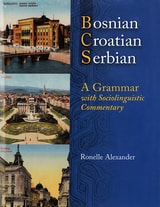
Bosnian, Croatian, Serbian, a Grammar
With Sociolinguistic CommentaryRonelle Alexander
University of Wisconsin Press, 2006
Bosnian, Croatian, Serbian, a Grammar analyzes and clarifies the complex, dynamic language situation in the former Yugoslavia. Addressing squarely the issues connected with the splintering of Serbo-Croatian into component languages, this volume provides teachers and learners with practical solutions and highlights the differences among the languages as well as the communicative core that they all share. The first book to cover all three components of the post-Yugoslav linguistic environment, this reference manual features:
· Thorough presentation of the grammar common to Bosnian, Croatian, and Serbian, with explication of all the major differences
· Examples from a broad range of spoken language and literature
· New approaches to accent and clitic ordering, two of the most difficult points in BCS grammar
· Order of grammar presentation in chapters 1–16 keyed to corresponding lessons in Bosnian, Croatian, Serbian, a Textbook
· "Sociolinguistic commentary" explicating the cultural and political context within which Bosnian, Croatian, and Serbian function and have been defined
· Separate indexes of the grammar and sociolinguistic commentary, and of all words discussed in both
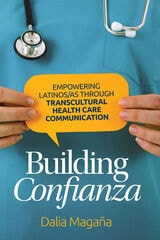
Building Confianza
Empowering Latinos/as Through Transcultural Health Care CommunicationDalia Magaña
The Ohio State University Press, 2021