Results by title
3027 books match the query 'Sociology' and 145 start with b

Back Yonder
An Ozark ChronicleCharles Wayman Hogue
University of Arkansas Press, 2016
Wayman Hogue’s stories of growing up in the Ozarks, according to a 1932 review in the New York Times, “brilliantly illuminate mountain life to its very heart and in its most profound aspects.” A standout among the Ozarks literature that was popular during the Great Depression, this memoir of life in rural Arkansas in the decades following the Civil War has since been forgotten by all but a few students of Arkansas history and folklore.
Back Yonder is a special book. Hogue, like his contemporary Laura Ingalls Wilder, weaves a narrative of a family making its way in rugged, impoverished, and sometimes violent places. From one-room schoolhouses to moonshiners, the details in this story capture the essence of a particular time and place, even as the characters reflect a universal quality that will endear them to modern readers.
Historian Brooks Blevins’s new introduction explores the life of Charles Wayman Hogue, analyzes the people and events that inspired the book, and places the volume in the context of America’s discovery of the Ozarks in the years between the World Wars. The University of Arkansas Press is proud to reissue Back Yonder as the first book in the Chronicles of the Ozarks series, making this Arkansas classic available again, ready to be discovered and rediscovered by readers sure to find the book as interesting and entertaining as ever.
Back of the Yards
The Making of a Local DemocracyRobert A. Slayton
University of Chicago Press, 1986
Back to the Roots
Memory, Inequality, and Urban AgricultureSara Shostak
Rutgers University Press, 2021
Backstage at the Revolution
How the Royal Paris Opera Survived the End of the Old RegimeVictoria Johnson
University of Chicago Press, 2008
Sifting through royal edicts, private letters, and Revolutionary records of all kinds, Johnson uncovers the roots of the Opera’s survival in its identity as a uniquely privileged icon of French culture—an identity established by the conditions of its founding one hundred years earlier under Louis XIV. Johnson’s rich cultural history moves between both epochs, taking readers backstage to see how a motley crew of singers, dancers, royal ministers, poet entrepreneurs, shady managers, and the king of France all played a part in the creation and preservation of one of the world’s most fabled cultural institutions.

Bad Nature
How Rat Control Shapes Human and Nonhuman WorldsAndrew McCumber
University of Chicago Press, 2025
Apart from the occasional pet owner who has rats, most people regard rats as disease-carrying nocturnal pests, scurrying around dumpsters and dragging slices of pizza through New York City subways. Since rats are seemingly omnipresent in human life, why do we harbor such negative feelings about them, and why are they among the creatures most frequently targeted for systematic extermination?
In Bad Nature, sociologist Andrew McCumber draws out the cultural underpinnings of rat extermination across three countries and two continents. Drawing from ethnographic, interview, and textual data from the frigid prairie of Alberta, Canada; the heart of downtown Los Angeles, California; and the iconic Galápagos Islands of Ecuador, McCumber studies how humans have sought to suppress and exterminate rat populations in a variety of environmental, social, and political situations. He shows how, in these disparate locations, rat control is a social practice that draws and clarifies the spatial and symbolic boundaries between “good” and “bad” forms of nature. Rats are near the bottom of a symbolic hierarchy of species that places human life at the top, companion animals and majestic wildlife just below them, and the “invasive species” that call for systematic extermination at the very bottom. This hierarchy of living things that places rats at the bottom, McCumber argues, mirrors human systems of social inequalities and power dynamics.
Both original and engaging, Bad Nature urges readers to consider, when charting a just and sustainable future, where will the rats be placed in the worlds we envision?

Bad Nature
How Rat Control Shapes Human and Nonhuman WorldsAndrew McCumber
University of Chicago Press, 2025
Offers insights into the social and cultural implications of humans’ relationships with rats and the natural world.
Apart from the occasional pet owner who has rats, most people regard rats as disease-carrying nocturnal pests, scurrying around dumpsters and dragging slices of pizza through New York City subways. Since rats are seemingly omnipresent in human life, why do we harbor such negative feelings about them, and why are they among the creatures most frequently targeted for systematic extermination?
In Bad Nature, sociologist Andrew McCumber draws out the cultural underpinnings of rat extermination across three countries and two continents. Drawing from ethnographic, interview, and textual data from the frigid prairie of Alberta, Canada; the heart of downtown Los Angeles, California; and the iconic Galápagos Islands of Ecuador, McCumber studies how humans have sought to suppress and exterminate rat populations in a variety of environmental, social, and political situations. He shows how, in these disparate locations, rat control is a social practice that draws and clarifies the spatial and symbolic boundaries between “good” and “bad” forms of nature. Rats are near the bottom of a symbolic hierarchy of species that places human life at the top, companion animals and majestic wildlife just below them, and the “invasive species” that call for systematic extermination at the very bottom. This hierarchy of living things that places rats at the bottom, McCumber argues, mirrors human systems of social inequalities and power dynamics.
Both original and engaging, Bad Nature urges readers to consider, when charting a just and sustainable future, where will the rats be placed in the worlds we envision?

Bad News, Good News
Conversational Order in Everyday Talk and Clinical SettingsDouglas W. Maynard
University of Chicago Press, 2003
Uncovering vocal and nonvocal patterns in everyday conversations, clinics, and other organizations, Maynard shows practices by which people give and receive good or bad news, how they come to realize the news and their new world, how they suppress or express their emotions, and how they construct social relationships through the sharing of news. He also reveals the implications of his study for understanding public affairs in which transmitting news may influence society at large, and he provides recommendations for professionals and others on how to deliver bad or good tidings more effectively.
For anyone who wants to understand the interactional facets of news delivery and receipt and their social implications, Bad News, Good News offers a wealth of scholarly insights and practical advice.

Bad Water
Nature, Pollution, and Politics in Japan, 1870-1950Robert Stolz
Duke University Press, 2014
Balancing Act
Motherhood, Marriage, and Employment Among American WomenDaphne Spain
Russell Sage Foundation, 1996

Balkan Family Structure and the European Pattern
Demographic Developments in Ottoman BulgariaMaria Todorova
Central European University Press, 2006
Ball Don't Lie
Myth, Genealogy, and Invention in the Cultures of BasketballYago Colás
Temple University Press, 2016
Pro basketball player Rasheed Wallace often exclaimed the pragmatic truth “Ball don’t lie!” during a game. It is a protest against a referee’s bad calls. But the slogan, which originated in pickup games, brings the reality of a racialized urban playground into mainstream American popular culture.
In Ball Don’t Lie!, Yago Colás traces the various forms of power at work in the intersections between basketball and language from the game’s invention to the present day. He critiques existing popular myths concerning the history of basketball, contextualizes them, and presents an alternative history of the sport inspired by innovations. Colás emphasizes the creative prerogative of players and the ways in which their innovations shape—and are shaped by—broader cultural and social phenomena.
Ball Don't Lie! shows that basketball cannot be reduced to a single, fixed or timeless essence but instead is a continually evolving exhibition of physical culture that flexibly adapts to and sparks changes in American society.
Baltimore Revisited
Stories of Inequality and Resistance in a U.S. CityEdited by P. Nicole King, Kate Drabinski, and Joshua Clark Davis
Rutgers University Press, 2019
To help untangle these apparent paradoxes, the editors of Baltimore Revisited have assembled a collection of over thirty experts from inside and outside academia. Together, they reveal that Baltimore has been ground zero for a slew of neoliberal policies, a place where inequality has increased as corporate interests have eagerly privatized public goods and services to maximize profits. But they also uncover how community members resist and reveal a long tradition of Baltimoreans who have fought for social justice.
The essays in this collection take readers on a tour through the city’s diverse neighborhoods, from the Lumbee Indian community in East Baltimore to the crusade for environmental justice in South Baltimore. Baltimore Revisited examines the city’s past, reflects upon the city’s present, and envisions the city’s future.

Baltimore Sports
Stories from Charm CityDaniel A. Nathan
University of Arkansas Press, 2016
To read a sample chapter, visit www.uapress.com.
Baltimore is the birthplace of Francis Scott Key’s “The Star-Spangled Banner,” the incomparable Babe Ruth, and the gold medalist Michael Phelps. It’s a one-of-a-kind town with singular stories, well-publicized challenges, and also a rich sporting history. Baltimore Sports: Stories from Charm City chronicles the many ways that sports are an integral part of Baltimore’s history and identity and part of what makes the city unique, interesting, and, for some people, loveable.
Wide ranging and eclectic, the essays included here cover not only the Orioles and the Ravens, but also lesser-known Baltimore athletes and teams. Toots Barger, known as the “Queen of the Duckpins,” makes an appearance. So do the Dunbar Poets, considered by some to be the greatest high-school basketball team ever.
Bringing together the work of both historians and journalists, including Michael Olesker, former Baltimore Sun columnist, and Rafael Alvarez, who was named Baltimore’s Best Writer by Baltimore Magazine in 2014, Baltimore Sports illuminates Charm City through this fascinating exploration of its teams, fans, and athletes.
Banking on Words
The Failure of Language in the Age of Derivative FinanceArjun Appadurai
University of Chicago Press, 2015
Appadurai moves in four steps through his analysis. In the first, he highlights the importance of derivatives in contemporary finance, isolating them as the core technical innovation that markets have produced. In the second, he shows that derivatives are essentially written contracts about the future prices of assets—they are, crucially, a promise. Drawing on Mauss’s The Gift and Austin’s theories on linguistic performatives, Appadurai, in his third step, shows how the derivative exploits the linguistic power of the promise through the special form that money takes in finance as the most abstract form of commodity value. Finally, he pinpoints one crucial feature of derivatives (as seen in the housing market especially): that they can make promises that other promises will be broken. He then details how this feature spread contagiously through the market, snowballing into the systemic liquidity crisis that we are all too familiar with now.
With his characteristic clarity, Appadurai explains one of the most complicated—and yet absolutely central—aspects of our modern economy. He makes the critical link we have long needed to make: between the numerical force of money and the linguistic force of what we say we will do with it.
Barack Obama's America
How New Conceptions of Race, Family, and Religion Ended the Reagan EraJohn Kenneth White
University of Michigan Press, 2009
"White's Barack Obama's America eloquently captures both the important nuances of the current political scene and its long-term consequences."
---Richard Wirthlin, former pollster for Ronald Reagan
"This delightfully written and accessible book is the best available account of the changes in culture, society, and politics that have given us Barack Obama's America."
---Stan Greenberg, pollster for Bill Clinton and Chairman and CEO of Greenberg Quinlan Rosner Research
"From one of the nation's foremost experts on how values shape our politics, a clear and compelling account of the dramatic shifts in social attitudes that are transforming American political culture. White's masterful blend of narrative and data illuminates the arc of electoral history from Reagan to Obama, making a powerful case for why we are entering a new progressive political era."
---Matthew R. Kerbel, Professor of Political Science, Villanova University, and author of Netroots
"John Kenneth White is bold. He asks the big questions . . . Who are we? What do we claim to believe? How do we actually live? What are our politics? John Kenneth White writes compellingly about religion and the role it played in making Barack Obama president. White's keen insight into America's many faiths clarifies why Barack Obama succeeded against all odds. It is a fascinating description of religion and politics in twenty-first-century America---a must-read."
---Kathleen Kennedy Townsend, former Lieutenant Governor of Maryland and author of Failing America's Faithful
"In Barack Obama's America, John Kenneth White has written the political equivalent of Baedeker or Michelin, the definitive guide to and through the new, uncharted political landscape of our world. White captures and explains what America means---and what it means to be an American---in the twenty-first century."
---Mark Shields, nationally syndicated columnist and political commentator for PBS NewsHour
"John White has always caught important trends in American politics that others missed. With his shrewd analysis of why Barack Obama won, he's done it again."
---E. J. Dionne, Jr., Senior Fellow, Brookings Institution, and University Professor in the Foundations of Democracy and Culture at Georgetown University
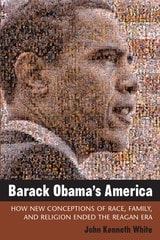
The election of Barack Obama to the presidency marks a conclusive end to the Reagan era, writes John Kenneth White in Barack Obama's America. Reagan symbolized a 1950s and 1960s America, largely white and suburban, with married couples and kids at home, who attended church more often than not.
Obama's election marks a new era, the author writes. Whites will be a minority by 2042. Marriage is at an all-time low. Cohabitation has increased from a half-million couples in 1960 to more than 5 million in 2000 to even more this year. Gay marriages and civil unions are redefining what it means to be a family. And organized religions are suffering, even as Americans continue to think of themselves as a religious people. Obama's inauguration was a defining moment in the political destiny of this country, based largely on demographic shifts, as described in Barack Obama's America.
John Kenneth White is Professor of Politics at the Catholic University of America in Washington, D.C.
Cover image: "Out of many, we are one: Dare to Hope: Faces from 2008 Obama Rallies" by Anne C. Savage, view and buy full image at http://revolutionaryviews.com/obama_poster.html.
Bargaining for Brooklyn
Community Organizations in the Entrepreneurial CityNicole P. Marwell
University of Chicago Press, 2007
Through ethnographic fieldwork at eight CBOs in the Brooklyn neighborhoods of Williamsburg and Bushwick, Nicole P. Marwell discovered that the complex and contentious relationships these groups form with larger economic and political institutions outside the neighborhood have a huge and unexamined impact on the lives of the poor. Most studies of urban poverty focus on individuals or families, but Bargaining for Brooklyn widens the lens, examining the organizations whose actions and decisions collectively drive urban life.
Battleground Chicago
The Police and the 1968 Democratic National ConventionFrank Kusch
University of Chicago Press, 2008
Working from interviews with eighty former Chicago police officers who were on the scene, Frank Kusch uncovers the other side of the story of ’68, deepening our understanding of a turbulent decade.
“Frank Kusch’s compelling account of the clash between Mayor Richard Daley’s men in blue and anti-war rebels reveals why the 1960s was such a painful era for many Americans. . . . to his great credit, [Kusch] allows ‘the pigs’ to speak up for themselves.”—Michael Kazin
“Kusch’s history of white Chicago policemen and the 1968 Democratic National Convention is a solid addition to a growing literature on the cultural sensibility and political perspective of the conservative white working class in the last third of the twentieth century.”—David Farber, Journal of American History
Be Not Deceived
The Sacred and Sexual Struggles of Gay and Ex-gay Christian MenWolkomir, Michelle
Rutgers University Press, 2006
Homosexuality has become increasingly accepted in mainstream America over the past two decades. Yet despite indications of progress that can be found everywhere from academia to popular culture, gay men and women remain the target of much discrimination and stigma, particularly within conservative Christianity.
In Be Not Deceived, Michelle Wolkomir explores the difficult dilemma that gay Christians face in their attempts to reconcile their religious and sexual identities. She introduces the ideologies and practices of two alternative and competing ministries that offer solutions for Christians who experience homosexual desire.
One organization—the Universal Fellowship of Metropolitan Community Churches—believes that God made people gay to suit divine purposes. Changing one’s sexuality is therefore impossible and a defiance of God. In contrast, Exodus International preaches that homosexuality is a sin and a symptom of disordered psychological development—one that can be cured through redemptive prayer. By comparing participant experiences in these ministries, Wolkomir explores the paths and processes by which members learn to become gay or ex-gay Christians.
Through careful analysis of the groups’ ideologies, interactions, and symbolic resources, Be Not Deceived goes far beyond the obvious differences between the ministries to uncover their similarities, namely that both continue to define heterosexuality as the normative and dominant lifestyle.
Beautiful Terrible Ruins
Detroit and the Anxiety of DeclineApel, Dora
Rutgers University Press, 2015
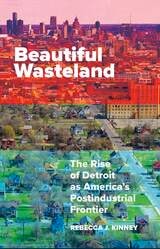
Beautiful Wasteland
The Rise of Detroit as America's Postindustrial FrontierRebecca J. Kinney
University of Minnesota Press, 2016
According to popular media and scholarship, Detroit, the once-vibrant city that crumbled with the departure of the auto industry, is where dreams can be reborn. It is a place that, like America itself, is gritty and determined. It has faced the worst kind of adversity, and supposedly now it’s back. But what does this narrative of “new Detroit” leave out? Beautiful Wasteland reveals that the contemporary story of Detroit’s rebirth is an upcycled version of the American Dream, which has long imagined access to work, home, and upward mobility as race-neutral projects. They’re not. As Rebecca J. Kinney shows, the narratives of Detroit’s rise, decline, and potential to rise again are deeply steeped in material and ideological investments in whiteness.
By remapping the narratives of contemporary Detroit through an extension of America’s frontier mythology, Kinney analyzes a cross-section of twentieth and twenty-first century cultural locations—an Internet forum, ruin photography, advertising, documentary film, and print and online media. She illuminates how the stories we tell about Detroit as a frontier of possibility enable the erasure of white privilege and systemic racism. By situating Detroit as a “beautiful wasteland,” both desirable and distressed, this shows how the narrative of ruin and possibility form a mutually constituted relationship: the city is possible precisely because of its perceived ruin.
Beautiful Wasteland tackles the key questions about the future of postindustrial America. As cities around the country reckon with their own postindustrial landscapes, Rebecca Kinney cautions that development that elides considerations of race and class will only continue to replicate uneven access to the city for the poor, working class, and people of color.
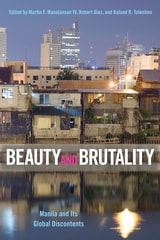
Beauty and Brutality
Manila and Its Global DiscontentsEdited by Martin F. Manalansan IV, Robert Diaz, and Roland B. Tolentino
Temple University Press, 2023
Beauty and Brutality provides an exciting, original, and critical encounter with this labyrinthine city’s imagined and material landscape. The authors and contributors investigate the “messy, fleshy, recalcitrant, mercurial, and immeasurable qualities of the city,” examining its urban space and smell: how it is represented in films, literature, music, and urban streetart; how it has endured the politics of colonialism, U.S. imperialism, neoliberalism, and globalization; as well as how its queer citizens engage with digital media platforms to communicate and connect with each other.
The first volume to offer a cultural and urban studies approach to Manila, Beauty and Brutality considers the tensions of the Filipino diaspora as they migrate and “re-turn,” as well as the citizens’ responses to the Marcos (and post-Marcos) dictatorship, President Duterte’s authoritarianism, and “Drug War.” Essays also map out of geographies of repression and resistance in the urban war of classes, genders and sexualities, ethnicities and races, and generations, along with the violence of urban life and growth. Ultimately, Beauty and Brutality frames Manila as a vibrant and ever-evolving metropolis that, even in the face of its difficulties, instills hope.
Contributors: Paul Michael Leonardo Atienza, Christine Bacareza Balance, Vanessa Banta, Rosa Cordillera A. Castillo, Roland Sintos Coloma, Gary C. Devilles, Faith R. Kares, John B. Labella, Raffy Lerma, Bliss Cua Lim, Ferdinand M. Lopez, Paul Nadal, Jema M. Pamintuan, Oscar Tantoco Serquiña, Jr., Louise Jashil R. Sonido, and the editors.
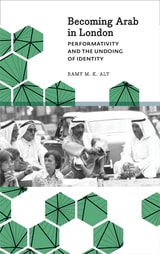
Becoming Arab in London
Performativity and the Undoing of IdentityRamy M. K. Aly
Pluto Press, 2015
Drawing on the work of Judith Butler, Aly emphasizes the need to move away from the concept of identity and toward the idea of race, gender, and class as performance. Based on seven years of fieldwork, during which time the author immersed himself in London’s Arab community, Becoming Arab in London is an innovative and necessary contribution to the study of diaspora and difference in contemporary Britain.
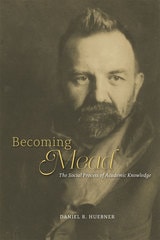
Becoming Mead
The Social Process of Academic KnowledgeDaniel R. Huebner
University of Chicago Press, 2014
In Becoming Mead, Daniel R. Huebner traces the ways in which knowledge has been produced by and about the famed American philosopher. Instead of treating Mead’s problematic reputation as a separate topic of study from his intellectual biography, Huebner considers both biography and reputation as social processes of knowledge production. He uses Mead as a case study and provides fresh new answers to critical questions in the social sciences, such as how authors come to be considered canonical in particular disciplines, how academics understand and use others’ works in their research, and how claims to authority and knowledge are made in scholarship. Becoming Mead provides a novel take on the history of sociology, placing it in critical dialogue with cultural sociology and the sociology of knowledge and intellectuals.
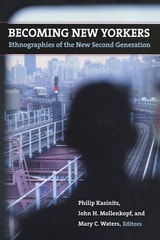
Becoming New Yorkers
Ethnographies of the New Second GenerationPhilip Kasinitz
Russell Sage Foundation, 2004
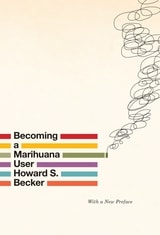
Becoming a Marihuana User
Howard S. Becker
University of Chicago Press, 2015
Becker doesn’t judge, but neither does he holler for legalization, tell you how to grow it in a hollowed-out dresser, or anything else like that for which there are plenty of other books you can buy. Instead, he looks at marijuana with a clear sociological lens—as a substance that some people enjoy, and that some others have decided none of us should. From there he asks: so how do people decide to get high, and what kind of experience do they have as a result of being part of the marijuana world? What he discovers will bother some, especially those who proselytize the irrefutably stunning effects of the latest strain: chemistry isn’t everything—the important thing about pot is how we interact with it. We learn to be high. We learn to like it. And from there, we teach others, passing the pipe in a circle that begins to resemble a bona fide community, defined by shared norms, values, and definitions just like any other community.
All throughout this book, you’ll see the intimate moments when this transformation takes place. You’ll see people doing it for the first time and those with considerable experience. You’ll see the early signs of the truths that have come to define the marijuana experience: that you probably won’t get high at first, that you have to hold the hit in, and that there are other people here who are going to smoke that, too.
Becoming a Marihuana User
Howard S. Becker
University of Chicago Press, 2015
OG Kush. Sour Diesel. Wax, shatter, and vapes. Marijuana has come a long way since its seedy days in the back parking lots of our culture. So has Howard S. Becker, the eminent sociologist, jazz musician, expert on “deviant” culture, and founding NORML board member. When he published Becoming a Marihuana User more than sixty years ago, hardly anyone paid attention—because few people smoked pot. Decades of Cheech and Chong films, Grateful Dead shows, and Cannabis Cups later, and it’s clear—marijuana isn’t just an established commodity, it’s an entire culture. And that’s just the thing—Becker totally called it: pot has everything to do with culture. It’s not a blight on culture, but a culture itself—in fact, you’ll see in this book the first use of the term “users,” rather than “abusers” or “addicts.” Come along on this short little study—now a famous timestamp in weed studies—and you will be astonished at how relevant it is to us today.
Becker doesn’t judge, but neither does he holler for legalization, tell you how to grow it in a hollowed-out dresser, or anything else like that for which there are plenty of other books you can buy. Instead, he looks at marijuana with a clear sociological lens—as a substance that some people enjoy, and that some others have decided none of us should. From there he asks: so how do people decide to get high, and what kind of experience do they have as a result of being part of the marijuana world? What he discovers will bother some, especially those who proselytize the irrefutably stunning effects of the latest strain: chemistry isn’t everything—the important thing about pot is how we interact with it. We learn to be high. We learn to like it. And from there, we teach others, passing the pipe in a circle that begins to resemble a bona fide community, defined by shared norms, values, and definitions just like any other community.
All throughout this book, you’ll see the intimate moments when this transformation takes place. You’ll see people doing it for the first time and those with considerable experience. You’ll see the early signs of the truths that have come to define the marijuana experience: that you probably won’t get high at first, that you have to hold the hit in, and that there are other people here who are going to smoke that, too.
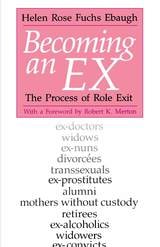
Becoming an Ex
The Process of Role ExitHelen Rose Fuchs Ebaugh
University of Chicago Press, 1988
Ebaugh is herself an ex, having left the life of a Catholic nun to become a wife, mother, and professor of sociology. Drawing on interviews with 185 people, Ebaugh explores a wide range of role changes, including ex-convicts, ex-alcoholics, divorced people, mothers without custody of their children, ex-doctors, ex-cops, retirees, ex-nuns, and—perhaps most dramatically—transsexuals. As this diverse sample reveals, Ebaugh focuses on voluntary exits from significant roles. What emerges are common stages of the role exit process—from disillusionment with a particular identity, to searching for alternative roles, to turning points that trigger a final decision to exit, and finally to the creation of an identify as an ex.
Becoming an Ex is a challenging and influential study that will be of great interest to sociologists, mental health counselors, members of self-help groups such as Alcoholics Anonymous and Parents Without Partners, those in corporate settings where turnover has widespread implications for the organization, and for anyone struggling through a role exit who is trying to establish a new sense of self.
Becoming the Second City
Chicago's Mass News Media, 1833-1898Richard Junger
University of Illinois Press, 2010
Before Crips
Fussin', Cussin', and Discussin' among South Los Angeles Juvenile GangsJohn C. Quicker and Akil S. Batani-Khalfani
Temple University Press, 2022
This groundbreaking book opens the door on the missing record of South Los Angeles juvenile gangs. It is the result of the unique friendship that developed between John Quicker and Akil Batani-Khalfani, aka Bird, who collaborated to show how structural marginality transformed hang-out street groups of non-White juveniles into gangs, paving the way for the rise of the infamous Crips and Bloods. Before Crips uses a macro historical analysis to sort through political and economic factors to explain the nature of gang creation.
The authors mine a critical archive, using direct interviews with original gang members as well as theory and literature reviews, to contextualize gang life and gang formation. They discuss (and fuss and cuss about) topics ranging from the criminal economy and conceptions of masculinity to racial and gendered politics and views of violence. Their insider/outsider approach not only illuminates gang values and organization, but what they did and why, and how they grew in a backdrop of inequality and police brutality that came to a head with the 1965 Watts Rebellion.
Providing an essential understanding of early South Los Angeles gang life, Before Crips explains what has remained constant, what has changed, and the roots of the violence that continues.
Before Norms
Institutions and Civic CultureRobert W. Jackman and Ross A. Miller
University of Michigan Press, 2005
Before Their Time
Mary Stimming
Temple University Press, 1998
Each of these survivors faces the common difficulties associated with losing a loved one by suicide. They also experience difficulties specific to their status as both adult and child. Topics such as the impact of the parent's suicide on adult children's personal and professional choices, marriages and parenting, sibling and surviving parent relationships are explored with sensitivity and insight. Various coping skills, including humor, are described.
The writers describe feelings of regret and responsibility related to their parent's suicide. They express concern about other family members' vulnerability to suicide. They speak openly about the fears and stresses they face and how they cope with them.
The authors ranged in age from nineteen to thirty-six at the time of the parent's death. Between one and twenty-five years have passed since that tragedy.
In addition to the first-person narratives, the book includes a resource section with a national listing of suicide survivor support groups; an overview of existing research on survivors of suicide by John L. McIntosh, past president of the American Association of Suicidology; and an essay on elderly suicide by David C. Clark, secretary-general, International Association for Suicide, and editor-in-chief of Crisis. The book is introduced with a Foreword by Rev. Charles Rubey, founder and director of Loving Outreach to Survivors of Suicide.
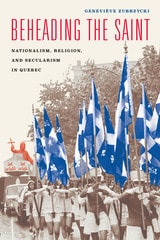
Beheading the Saint
Nationalism, Religion, and Secularism in QuebecGeneviève Zubrzycki
University of Chicago Press, 2016
In Beheading the Saint, Geneviève Zubrzycki studies that transformation through a close investigation of the annual Feast of St. John the Baptist of June 24. The celebrations of that national holiday, she shows, provided a venue for a public contesting of the dominant ethno-Catholic conception of French Canadian identity and, via the violent rejection of Catholic symbols, the articulation of a new, secular Québécois identity. From there, Zubrzycki extends her analysis to the present, looking at the role of Québécois identity in recent debates over immigration, the place of religious symbols in the public sphere, and the politics of cultural heritage—issues that also offer insight on similar debates elsewhere in the world.
Behind Closed Doors
IRBs and the Making of Ethical ResearchLaura Stark
University of Chicago Press, 2011
Being Human during COVID
Kristin Ann Hass, Editor
University of Michigan Press, 2021
Being Human during COVID documents the first year of the pandemic in real time, bringing together humanities scholars from the University of Michigan to address what it feels like to be human during the COVID-19 crisis. Over the course of the pandemic, the questions that occupy the humanities—about grieving and publics, the social contract and individual rights, racial formation and xenophobia, ideas of home and conceptions of gender, narrative and representations and power—have become shared life-or-death questions about how human societies work and how culture determines our collective fate. The contributors in this collection draw on scholarly expertise and lived experience to try to make sense of the unfamiliar present in works that range from traditional scholarly essays, to personal essays, to visual art projects. The resulting book is shot through with fear, dread, frustration, and prejudice, and, on a few occasions, with a thrilling sense of hope.

Belfast
Segregation, Violence and the CityPeter Shirlow and Brendan Murtagh
Pluto Press, 2006
The book offers a vivid portrait of the human drama and brutality of the conflict in Belfast. The authors argue that the control of place remains the most important weapon in the politicization of communities and the reproduction of political violence. Segregation provides the laboratory within which sectarianism continues to grow. Examining the implications of these social divisions, the authors draw upon a wide international literature and provide insights that will be useful to students of geography, planning, politics, sociology and peace studies.
Believing in South Central
Everyday Islam in the City of AngelsPamela J. Prickett
University of Chicago Press, 2021
Prickett offers deep insights into the day-to-day lived religion of the Muslims who call this community home, showing how the mosque provides a system of social support and how believers deepen their spiritual practice not in spite of, but through, conditions of poverty. Prickett breaks past the stigmas of urban poverty, revealing a complex and vibrant community by telling the stories of longstanding residents of South Central—like Sister Ava, who offers food to the local unhoused people and finds the sacred in her extensive DVD collection. In addition to her portraits of everyday life among Muslims in South Central, Prickett also provides vivid and accessible descriptions of Ramadan and histories of the mosque, situates this community within the larger story of the Nation of Islam, explores gender issues, and unpacks the interaction between African American Muslims and South Asian and Arab American Muslims, revealing both the global and local significance of this religious tradition.
Bereft of Reason
On the Decline of Social Thought and Prospects for Its RenewalEugene Halton
University of Chicago Press, 1995
Claiming that human beings should be understood as far more than simply a form of knowledge, social construction, or contingent difference, Halton argues that contemporary thought has lost touch with the spontaneous passions—or enchantment—of life. Exploring neglected works in twentieth century social thought and philosophy—particularly the writings of Lewis Mumford and Charles Peirce—as well as the work of contemporary writers such as Vaclav Havel, Maya Angelou, Milan Kundera, Doris Lessing, and Victor Turner, Halton argues that reason is dependent upon nonrational forces—including sentiment, instinct, conjecture, imagination, and experience. We must, he argues, frame our questions in a way which encompasses both enchantment and critical reason, and he offers an outline here for doing so.
A passionate plea for a fundamental reexamination of the entrenched assumptions of the modern era, this book deals with issues of vital concern to modern societies and should be read by scholars across disciplines.
"Bereft of Reason is a thoughtful critique informed by a passionate commitment to the renewal of critical concerns. For this reason alone it should be widely read and inform current debates."—Lauren Langman, Sociological Inquiry
"Halton takes the 'ghost in the machine' as a dominant defining metaphor for modern thought and life, and criticizes it with gusto, wit, wide reading, and philosophical acumen."—Robert J. Mulvaney, Review of Metaphysics
Best Laid Plans
Cultural Entropy and the Unraveling of AIDS Media CampaignsTerence E. McDonnell
University of Chicago Press, 2016
McDonnell argues that these well-designed campaigns are undergoing “cultural entropy”: the process through which the intended meanings and uses of cultural objects fracture into alternative meanings, new practices, failed interactions, and blatant disregard. Using AIDS media campaigns in Accra, Ghana, as its central case study, the book walks readers through best-practice, evidence-based media campaigns that fall totally flat. Female condoms are turned into bracelets, AIDS posters become home decorations, red ribbons fade into pink under the sun—to name a few failures. These damaging cultural misfires are not random. Rather, McDonnell makes the case that these disruptions are patterned, widespread, and inevitable—indicative of a broader process of cultural entropy.

Betrayals
The Unpredictability of Human RelationsGabriella Turnaturi
University of Chicago Press, 2007
While most attempts to study betrayal only consider its moral or psychological dimensions, Gabriella Turnaturi here examines betrayal as an act embedded in social relationships whose meanings change over time. For example, adultery is one of the most recognizable forms of betrayal, but a wide gulf exists between its role in Madame Bovary and in The Ice Storm. Therefore, Turnaturi contends, in order to examine the many meanings of betrayal we need to understand its context in a specific time and place. Born from the unpredictable possibilities of human interaction, betrayal emerges as a sociological event in this thought-provoking meditation on the stab in the back.
Better Times Than This
Youth Homelessness in BritainTom Hall
Pluto Press, 2003
Betting on Ideas
Wars, Invention, InflationReuven Brenner
University of Chicago Press, 1986
Betting on Macau
Casino Capitalism and China's Consumer RevolutionTim Simpson
University of Minnesota Press, 2023
A comprehensive look into how Macau’s recent decades of gambling-related growth produced one of the wealthiest territories on the planet
Betting on Macau delves into the radical transformation of what was formerly the last remaining European territory in Asia, returned to the People’s Republic of China in 1999 after nearly half a millennium of Portuguese rule. Examining the unprecedented scale of its development and its key role in China’s economic revolution, Tim Simpson follows Macau’s emergence from historical obscurity to become the most profitable casino gaming locale in the world.
Identified as a UNESCO World Heritage Site and renowned for its unique blend of Chinese and Portuguese colonial-era architecture, contemporary Macau has metamorphosed into a surreal, hypermodern urban landscape augmented by massive casino megaresorts, including two of the world’s largest buildings. Simpson situates Macau’s origins as a strategic trading port and its ensuing history alongside the emergence of the global capitalist system, charting the massive influx of foreign investment, construction, and tourism in the past two decades that helped generate the territory’s enormous wealth.
Presented through a cross section of postcolonial studies and social theory with extensive insight into the global gambling industry, Betting on Macau uncovers the various roots of the territory’s lucrative casino capitalism. In turn, its trenchant analysis provides a distinctive view into China’s broader project of urbanization, its post-Mao economic reforms, and the continued rise of its consumer culture.
Between Care and Criminality
Marriage, Citizenship, and Family in Australian Social WelfareHelena Zeweri
Rutgers University Press, 2024
Between City and Country
Brookline, Massachusetts, and the Origins of SuburbiaRonald Dale Karr
University of Massachusetts Press, 2018
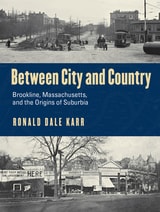
Already a fashionable retreat for wealthy Bostonians, Brookline began to suburbanize in the 1840s with the arrival of hundreds of commuter families—and significant numbers of Irish Catholic immigrants drawn by opportunities to work as laborers and servants. In Brookline the poor were segregated but not excluded altogether, as they would be from twentieth-century elite suburbs. A half century later, a distinct suburban way of life developed that combined rural activities with urban pastimes, and a political consensus emerged that sought efficient government and large expenditures on education and public works. Brookline had created the template for the concept of suburbia, not just in wealthy communities but in the less affluent communities of postwar America.

Between Feminism and Islam
Human Rights and Sharia Law in MoroccoZakia Salime
University of Minnesota Press, 2011
There are two major women’s movements in Morocco: the Islamists who hold shari’a as the platform for building a culture of women’s rights, and the feminists who use the United Nations’ framework to amend shari’a law. Between Feminism and Islam shows how the interactions of these movements over the past two decades have transformed the debates, the organization, and the strategies of each other.
In Between Feminism and Islam, Zakia Salime looks at three key movement moments: the 1992 feminist One Million Signature Campaign, the 2000 Islamist mass rally opposing the reform of family law, and the 2003 Casablanca attacks by a group of Islamist radicals. At the core of these moments are disputes over legitimacy, national identity, gender representations, and political negotiations for shaping state gender policies. Located at the intersection of feminism and Islam, these conflicts have led to the Islamization of feminists on the one hand and the feminization of Islamists on the other.
Documenting the synergistic relationship between these movements, Salime reveals how the boundaries of feminism and Islamism have been radically reconfigured. She offers a new conceptual framework for studying social movements, one that allows us to understand how Islamic feminism is influencing global debates on human rights.
Between Good and Ghetto
African American Girls and Inner-City ViolenceNikki Jones
Rutgers University Press, 2009
Drawing on personal encounters, traditions of urban ethnography, Black feminist thought, gender studies, and feminist criminology, Nikki Jones gives readers a richly descriptive and compassionate account of how African American girls negotiate schools and neighborhoods governed by the so-called "code of the street"ùthe form of street justice that governs violence in distressed urban areas. She reveals the multiple strategies they use to navigate interpersonal and gender-specific violence and how they reconcile the gendered dilemmas of their adolescence. Illuminating struggles for survival within this group, Between Good and Ghetto encourages others to move African American girls toward the center of discussions of "the crisis" in poor, urban neighborhoods.
Between Jesus and the Market
The Emotions that Matter in Right-Wing AmericaLinda Kintz
Duke University Press, 1997
With texts from such organizations as the Christian Coalition, the Heritage Foundation, and Concerned Women for America, and writings by Elizabeth Dole, Newt Gingrich, Pat Robertson, and Rush Limbaugh, Kintz traces the usefulness of this activism for the secular claim that conservative political economy is, in fact, simply an expression of the deepest and most admirable elements of human nature itself. The discussion of Limbaugh shows how he draws on the skepticism of contemporary culture to create a sense of absolute truth within his own media performance—its truth guaranteed by the market. Kintz also describes how conservative interpretations of the Holy Scriptures, the U.S. Constitution, and the Declaration of Independence have been used to challenge causes such as feminism, women’s reproductive rights, and gay and lesbian rights. In addition to critiquing the intellectual and political left for underestimating the power of right-wing grassroots organizing, corporate interests, and postmodern media sophistication, Between Jesus and the Market discusses the proliferation of militia groups, Christian entrepreneurship, and the explosive growth and "selling" of the Promise Keepers.
Between Us
Healing Ourselves and Changing the World Through SociologyEdited by Marika Lindholm and Elizabeth Anne Wood
University of Chicago Press, 2024
The world is a tough place right now. Climate change, income inequality, racist violence, and the erosion of democracy have exposed the vulnerability of our individual and collective futures. But as the sociologists gathered here by Marika Lindholm and Elizabeth Wood show, no matter how helpless we might feel, it’s vital that we discover new paths toward healing and change. The short, accessible, emotionally and intellectually powerful essays in Between Us offer a transformative new way to think about sociology and its ability to fuel personal and social change. These forty-five essays reflect a diverse range of experiences. Whether taking an adult son with autism grocery shopping or fighting fires in Barcelona, contending with sexism at the beach or facing racism at a fertility clinic, celebrating one’s immigrant heritage, or acknowledging one’s KKK ancestors, this book shows students that sociology is deeply rooted in everyday life and can be used to help us process and understand it. A perfect introduction to the discipline and why it matters, Between Us will resonate with students from all backgrounds as they embark on their academic journey.

Between the Eagle and the Sun
Traces of JapanIhab Hassan
University of Alabama Press, 1996
A fascinating memoir by Egypt-born American literary theorist and writer Ihab Hassan about his life in Japan. Part recollection, part cultural perception, Between the Eagle and the Sun records his journey, living and seeing himself sometimes as another, assaying always to read the hieroglyphs of his past in the scripts of Japan. As lucid as it is intensely felt, at once lyrical and critical, the work offers a beguiling vision of Japan and, by tacit contrast, of America. For writing, the author says, is more than praise or blame, it is also knowledge, empathy, and delight. These attributes are evident in Hassan's treatment of Japanese culture, its people and scenes. Indeed, the people, rendered in vibrant portraits throughout the book, abide when all the shadows of romance and exasperation have fled.
True to its moment, the work also reinvests the forms of memoir, travel, and quest. Cultural essays, travel anecdotes, autobiographical meditations, portraits of Japanese friends, a section titled "Entries, A to Z," fit into a tight frame, with clear transitions from one section to another. The style, however, alters subtly to suit topic, occasion, and mood.
Japan may not hold the key to this planet's future; no single nation does. Yet the continuing interest in its history, society, and people and the incresed awareness of its recent trends and growing global impact engage an expanding audience. Avoiding cliches, sympathetic to its subject yet analytical, unflinching in judgment, and withal highly personal, Between the Eagle and the Sun offers a unique image of its subject by a distinguished and well-traveled critic, at home in several cultures.
Between the Guerrillas and the State
The Cocalero Movement, Citizenship, and Identity in the Colombian AmazonMaría Clemencia Ramírez
Duke University Press, 2011