Results by title
260 books match the query 'Soviet Union' and 9 start with b
Bazhanov and the Damnation of Stalin
Boris Bazhanov
Ohio University Press, 1990
Between Exile and Asylum
An Eastern EpistolaryPredrag Matvejevic
Central European University Press, 2004

Beyond Memory
Soviet Nonconformist Photography and Photo-Related Works of ArtEdited by Diane Neumaier
Rutgers University Press, 2004
Photography possesses a powerful ability to bear witness, aid remembrance, shape, and even alter recollection. In Beyond Memory: Soviet Nonconformist Photography and Photo-Related Works of Art, the general editor, Diane Neumaier, and twenty-three contributors offer a rigorous examination of the medium's role in late Soviet unofficial art. Focusing on the period between the mid-1950s and the late 1980s, they explore artists' unusually inventive and resourceful uses of photography within a highly developed Soviet dissident culture.
During this time, lack of high-quality photographic materials, complimented by tremendous creative impulses, prompted artists to explore experimental photo-processes such as camera and darkroom manipulations, photomontage, and hand-coloring. Photography also took on a provocative array of forms including photo installation, artist-made samizdat (self-published) books, photo-realist painting, and many other surprising applications of the flexible medium.
Beyond Memory shows how innovative conceptual moves and approaches to form and content-echoes of Soviet society's coded communication and a Russian sense of absurdity-were common in the Soviet cultural underground. Collectively, the works in this anthology demonstrate how late-Soviet artists employed irony and invention to make positive use of difficult circumstances. In the process, the volume illuminates the multiple characters of photography itself and highlights the leading role that the medium has come to play in the international art world today.
Beyond Memory stands on its own as a rigorous examination of photography's place in late Soviet unofficial art, while also serving as a supplement to the traveling exhibition of the same title.
Beyond the Color Line and the Iron Curtain
Reading Encounters between Black and Red, 1922-1963Kate A. Baldwin
Duke University Press, 2002
Langston Hughes, W. E. B. Du Bois, Claude McKay, and Paul Robeson each lived or traveled extensively in the Soviet Union between the 1920s and the 1960s, and each reflected on Communism and Soviet life in works that have been largely unavailable, overlooked, or understudied. Kate A. Baldwin takes up these writings, as well as considerable material from Soviet sources—including articles in Pravda and Ogonek, political cartoons, Russian translations of unpublished manuscripts now lost, and mistranslations of major texts—to consider how these writers influenced and were influenced by both Soviet and American culture. Her work demonstrates how the construction of a new Soviet citizen attracted African Americans to the Soviet Union, where they could explore a national identity putatively free of class, gender, and racial biases. While Hughes and McKay later renounced their affiliations with the Soviet Union, Baldwin shows how, in different ways, both Hughes and McKay, as well as Du Bois and Robeson, used their encounters with the U. S. S. R. and Soviet models to rethink the exclusionary practices of citizenship and national belonging in the United States, and to move toward an internationalism that was a dynamic mix of antiracism, anticolonialism, social democracy, and international socialism.
Recovering what Baldwin terms the "Soviet archive of Black America," this book forces a rereading of some of the most important African American writers and of the transnational circuits of black modernism.
Beyond the Siege of Leningrad
One Woman’s Life during and after the Occupation: The Recollections of Evdokiia Vasil’evna Baskakova-BogachevaPavel Gavrilov
Central European University Press, 2024
This memoir about the experiences of German occupation during the siege of Leningrad (now Saint Petersburg) was written by Moscow-born Evdokiia Vasil’evna Baskakova-Bogacheva (1888–1976), an émigré in Australia, at the age of eighty-one. The text had been forgotten in the Museum of Russian Culture in San Francisco since 1970 until the editors of this volume discovered it.
In the memoirs, after accounting on her youth spent against the background of the First World War and of the two Russian revolutions of 1917, Evdokiia describes the inferno of the Nazi occupation as experienced in a suburb of Leningrad in 1941-43. She survived for nearly two years almost on the front line, within a few kilometers of the blockade ring. As a medical practitioner, she became useful for the occupational authorities and the ever-shrinking town population, until her family was evacuated to the west in October 1943. Besides hunger, discord, disease, the hunt for food and firewood, along with violence and death, Evdokiia’s account deals with various forms of cooperation between Soviet citizens and the new authorities.
All the events she recalls can be confirmed through other sources. The introduction and the detailed notes to the text help the reader to locate Evdokiia’s recollections in time and place, and situate them in their historical context.

Black Earth, White Bread
A Technopolitical History of Russian Agriculture and FoodSusanne A. Wengle
University of Wisconsin Press, 2023
Examining governance, production, consumption, nature, and the ensuing vulnerabilities of the agrifood system, Wengle reveals the intended and unintended consequences of Russian agricultural policies since 1917. Ultimately, Black Earth, White Bread calls attention to Russian technopolitics and how macro systems of government impact life on a daily, quotidian level.
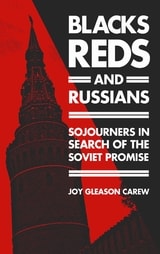
Blacks, Reds, and Russians
Sojourners in Search of the Soviet PromiseJoy Gleason Carew
Rutgers University Press, 2010
In Blacks, Reds, and Russians, Joy Gleason Carew offers insight into the political strategies that often underlie relationships between different peoples and countries. She draws on the autobiographies of key sojourners, including Harry Haywood and Robert Robinson, in addition to the writings of Claude McKay, W.E.B. Du Bois, and Langston Hughes. Interviews with the descendents of figures such as Paul Robeson and Oliver Golden offer rare personal insights into the story of a group of emigrants who, confronted by the daunting challenges of making a life for themselves in a racist United States, found unprecedented opportunities in communist Russia.
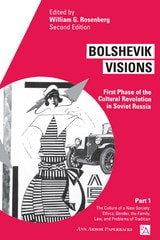
Bolshevik Visions
First Phase of the Cultural Revolution in Soviet Russia, Part 1William G. Rosenberg, Editor
University of Michigan Press, 1990
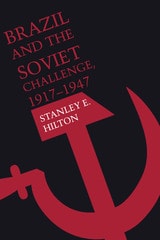
Brazil and the Soviet Challenge, 1917–1947
By Stanley E. Hilton
University of Texas Press, 1991
Between 1918 and 1961, Brazil and the USSR maintained formal diplomatic ties for only thirty-one months, at the end of World War II. Yet, despite the official distance, the USSR is the only external actor whose behavior, real or imagined, influenced the structure of the Brazilian state in the twentieth century. In Brazil and the Soviet Challenge, 1917–1947, Stanley Hilton provides the first analysis in any language of Brazilian policy toward the Soviet Union during this period.
Drawing on American, British, and German diplomatic archives and unprecedented access to official and private Brazilian records, Hilton elucidates the connection between the Brazilian elite’s perception of a communist threat and the creation of the authoritarian Estado Novo (1937–1945), the forerunner of the post-1964 national security state. He shows how the 1935 communist revolt, prepared by Comintern agents, was a pivotal event in Brazilian history, making prophets of conservative alarmists and generating irresistible pressure for an authoritarian government to contain the Soviet threat. He details the Brazilian government’s secret cooperation with the Gestapo during the 1930s and its concomitant efforts to forge an anti-Soviet front in the Southern Cone. And he uncovers an unexplored aspect of Brazil’s national security policy, namely, the attempt to build counterintelligence capabilities not only within Brazil but also in neighboring countries.
While the history of the Brazilian communist movement has been extensively studied, this is the first work to explore how images of the Soviet Union and its policies influenced the Brazilian foreign policy elite. It will be important reading for all students of twentieth-century political history.