Results by title
870 books match the query 'Sports & Recreation' and 78 start with b
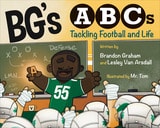
BG's ABCs
Tackling Football and LifeWritten by Brandon Graham and Lesley Van Arsdall; Illustrated by Mr. Tom
Temple University Press, 2025
BG’s ABCs emphasizes a never give up mindset while also teaching lessons of kindness and respect. Using BG’s ABCs as a guide, young readers are sure to achieve victory while also developing a zest for life!

BULLFIGHT
Garry Marvin
University of Illinois Press, 1994
public celebration, describing and analyzing the corrida in a way not previously attempted in English.
Babe
The Life and Legend of Babe Didrikson ZahariasSusan E. Cayleff
University of Illinois Press, 1995
An extraordinarily gifted athlete, Babe Didrikson Zaharias starred in track and field and won three Olympic medals in 1932. She picked up golf late yet quickly dominated the women's sport. She also competed in baseball, bowling, basketball, and tennis.
Interviews with members of Babe's family, peers, and others inform Susan E. Cayleff’s story of the athlete and the difficulties she faced as a woman trying to be her own person. The American public was smitten with Babe’s wit, frankness, and "unladylike" bravado. But members of the press insinuated that her femininity, even her femaleness, were suspect. Cayleff looks at how Babe used her androgyny and athleticism to promote herself before crafting a more marketable female persona for golf. She also explores Babe’s role as a cofounder of the Ladies Professional Golf Association (LPGA); her marriage to George Zaharias and their partnership in shaping her career; her romantic relationship with fellow golfer Betty Dodd; and her courageous public fight against cancer.
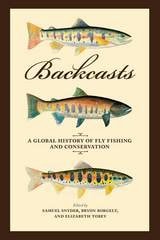
Backcasts
A Global History of Fly Fishing and ConservationEdited by Samuel Snyder, Bryon Borgelt, and Elizabeth Tobey
University of Chicago Press, 2016
Though Maclean writes of an age-old focus of all anglers—the day’s catch—he may as well be speaking to another, deeper accomplishment of the best fishermen and fisherwomen: the preservation of natural resources.
Backcasts celebrates this centuries-old confluence of fly fishing and conservation. However religious, however patiently spiritual the tying and casting of the fly may be, no angler wishes to wade into rivers of industrial runoff or cast into waters devoid of fish or full of invasive species like the Asian carp. So it comes as no surprise that those who fish have long played an active, foundational role in the preservation, management, and restoration of the world’s coldwater fisheries. With sections covering the history of fly fishing; the sport’s global evolution, from the rivers of South Africa to Japan; the journeys of both native and nonnative trout; and the work of conservation organizations such as the Federation of Fly Fishers and Trout Unlimited, Backcasts casts wide.
Highlighting the historical significance of outdoor recreation and sports to conservation in a collection important for fly anglers and scholars of fisheries ecology, conservation history, and environmental ethics, Backcasts explores both the problems anglers and their organizations face and how they might serve as models of conservation—in the individual trout streams, watersheds, and landscapes through which these waters flow.

Backpacking Wisconsin
Elizabeth D. Hailman
University of Wisconsin Press, 2000
Wisconsin is a premier backpacking state, with outstanding opportunities for weekend trips. With its Great Lakes and river boundaries, national and state parks and forests, and stunning geological diversity, it offers a variety of experiences for both novice and experienced backpackers. In Backpacking Wisconsin Jack and Liz Hailman, drawing on years of personal experience, provide first-hand information for trails in every corner of the state—from the wooded Apostle Islands National Lakeshore, inhabited by whitetailed deer and black bears, to picturesque Newport State Park in Door County, set upon Silurian-age limestone laid down over 100 million years ago.
For each backpacking site you’ll find:
• information on entrance fees and permits, campsites, & contact sources
• directions to the location
• detailed trail maps with keys that pinpoint roads, parking, trail shelters, water supplies, outhouses
• ratings for trails, scenery, quiet, solitude, and interest
• background information on history, geology, and terrain
• trail notes describing trees, shrubs, wildflowers, birds, and animals you may encounter.
Backpacking Wisconsin also provides an overview of the backpacking experience, tips for the beginner and the expert, hints on how to choose equipment (boots, packs, tents, sleeping bags, rain gear, stoves), notes on troublesome plants and animals, a list of state areas that no longer offer backpacking, schedules of fees, a checklist for backpacks, and a list of trail, outdoor, and conservation organizations. For those hesitant to venture deep into wilderness, the Hailmans spotlight “quasi-backpacking” sites. All you have to do is pick a trail!
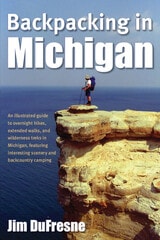
Backpacking in Michigan
Jim DuFresne
University of Michigan Press, 2007
With 65 photographs and 77 detailed maps, this indispensable guide to the state's hiking trails gives beginners to advanced hikers all the information they need to plan their next Michigan overnight or weekend backpacking trip. Featuring 50 trails---27 in the Lower Peninsula---ranging from one-hour to multiple-day treks in both the Upper and Lower Peninsulas, Backpacking in Michigan has something for every hiker.
Information on hike length and difficulty, elevation gain, the amount of time needed to complete the hike, camping facilities, and nearby towns accompanies each of the trail listings. The author also provides extensive reference maps along with a description of scenic highlights. In addition to backcountry explorations of remote trails, Backpacking in Michigan includes classic Michigan adventures such as the Lakeshore Trail in Pictured Rocks National Lakeshore, the Greenstone Ridge Trail in Isle Royale National Park, North Manitou Island in Sleeping Bear Dunes National Lakeshore, and Jordan River Pathway in the Mackinaw State Forest.
While Backpacking in Michigan focuses primarily on the trails themselves, it also makes planning your Michigan adventure as easy as possible by providing important information on routes to and from the trailhead, as well as park fees and reservation information for shelters, walk-in cabins, rental yurts, and overnight camping.
Jim DuFresne is a Michigan native and author of more than a dozen wilderness, travel, and hiking guidebooks. He is author of Isle Royale National Park: Foot Trails and Water Routes; 50 Hikes in Michigan: The Best Walks, Hikes, and Backpacks in the Lower Peninsula; Best Hikes with Children: Michigan; Porcupine Mountains Wilderness State Park: A Backcountry Guide for Hikers, Campers, Backpackers, and Skiers; as well as The Complete Guide to Michigan Sand Dunes, copublished by the University of Michigan Press and Petoskey Publishing.
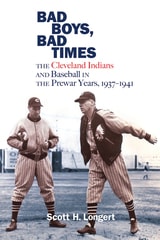
Bad Boys, Bad Times
The Cleveland Indians and Baseball in the Prewar Years, 1937–1941Scott H. Longert
Ohio University Press, 2019
In 1937, the Great Depression was still lingering, but at baseball parks across the country there was a sense of optimism. Major League attendance was on a sharp rise. Tickets to an Indians game at League Park on Lexington and East 66th were $1.60 for box seats, $1.35 for reserve seats, and $.55 for the bleachers. Cleveland fans were particularly upbeat—Bob Feller, the teenage phenomenon, was a farm boy with a blistering fast ball. Night games were an exciting development. Better days were ahead.
But there were mounting issues facing the Indians. For one thing, it was rumored that the team had illegally signed Feller. Baseball Commissioner Judge Kenesaw Mountain Landis was looking into that matter and one other. Issues with an alcoholic catcher, dugout fights, bats thrown into stands, injuries, and a player revolt kept things lively.
In Bad Boys, Bad Times: The Cleveland Indians and Baseball in the Prewar Years, 1937–1941—the follow-up to his No Money, No Beer, No Pennants: The Cleveland Indians and Baseball in the Great Depression—baseball historian Scott H. Longert writes about an exciting period for the team, with details and anecdotes that will please fans all over.
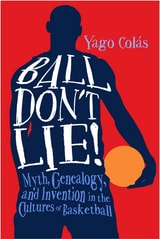
Ball Don't Lie
Myth, Genealogy, and Invention in the Cultures of BasketballYago Colás
Temple University Press, 2016
Pro basketball player Rasheed Wallace often exclaimed the pragmatic truth “Ball don’t lie!” during a game. It is a protest against a referee’s bad calls. But the slogan, which originated in pickup games, brings the reality of a racialized urban playground into mainstream American popular culture.
In Ball Don’t Lie!, Yago Colás traces the various forms of power at work in the intersections between basketball and language from the game’s invention to the present day. He critiques existing popular myths concerning the history of basketball, contextualizes them, and presents an alternative history of the sport inspired by innovations. Colás emphasizes the creative prerogative of players and the ways in which their innovations shape—and are shaped by—broader cultural and social phenomena.
Ball Don't Lie! shows that basketball cannot be reduced to a single, fixed or timeless essence but instead is a continually evolving exhibition of physical culture that flexibly adapts to and sparks changes in American society.
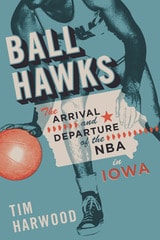
Ball Hawks
The Arrival and Departure of the NBA in IowaTim Harwood
University of Iowa Press, 2018
Believe it or not, Waterloo, Iowa, had an NBA team during the league’s first season, 1949 to 1950. Broadcaster and independent sports historian Tim Harwood uncovers the fascinating story of the Waterloo Hawks and the Midwest’s influence on professional basketball. Beginning with the professional leagues that led up to the creation of the National Basketball Association, Harwood recounts big games and dramatic buzzer-beaters, and the players who made them.
The first season of the NBA was far from a success. Teams had a hard time attracting fans, with games often played in half-empty arenas. When Waterloo residents learned that the team was struggling financially, they rallied behind the Hawks and purchased shares of the team in a bid to keep it afloat. Unfortunately, that community-based effort was not enough; owners of teams in larger markets pressured the league to push Waterloo—and other smaller towns like Anderson, Indiana, and Sheboygan, Wisconsin—out of the league.
Though the Hawks disappeared after their lone NBA campaign, Waterloo and other midwestern teams were nonetheless integral to getting the NBA off the ground, and their legacy continues today through some of the current franchises that relocated to larger markets. Combining newspaper accounts and personal interviews with surviving players, Harwood weaves a fascinating story of the underdog team, in the unlikeliest of places, that helped make professional basketball the worldwide success it is today.
Ball, Bat and Bishop
THE ORIGIN OF BALL GAMESRobert W. Henderson
University of Illinois Press, 1947
Henderson traces the origins of ball sports to religious rites in ancient Egypt, where the ball (perhaps a shrunken head) represented a fertility symbol and opposing teams engaged in mock combat signifying the struggle of good against evil. Centuries later, pagan fertility rites featuring the ball were adapted by the Christian church as rituals symbolic of Easter and the Resurrection. Court tennis was also firmly rooted in the church, the earliest players being the bishops, canons, and clerics who played it in their cloistered courtyards.
Henderson overturns the popular belief that the game of racquets originated in the debtors' prison on Fleet Street in the early nineteenth century. He also notes that polo, the most ancient of games played with stick and ball, originated in Persia and migrated to China and India, where it was eventually embraced by English imperialists. Other sports discussed include football, lawn tennis, cricket, and golf.
The most substantial portion of Henderson's study is devoted to the game of baseball. Providing copious evidence of early forms of baseball played in England and the United States before 1829, he offers a meticulous account of the legerdemain by which Abner Doubleday, the famous Civil War general, came to be identified as the inventor in 1839 of a game that was already at least two centuries old.
The new foreword by Leonard Koppett affirms the significance of this classic work of sports history, which was the first to dismantle the Doubleday/Cooperstown myth.
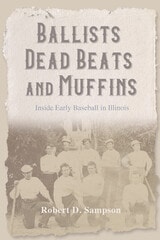
Ballists, Dead Beats, and Muffins
Inside Early Baseball in IllinoisRobert D. Sampson
University of Illinois Press, 2023
Baseball’s spread across Illinois paralleled the sport’s explosive growth in other parts of the country.Robert D. Sampson taps a wealth of archival research to transport readers to an era when an epidemic of “base ball on the brain” raged from Alton to Woodstock. Focusing on the years 1865 to 1869, Sampson offers a vivid portrait of a game where local teams and civic ambition went hand in hand and teams of paid professionals displaced gentlemen’s clubs devoted to sporting fair play. This preoccupation with competition sparked rules disputes and controversies over imported players while the game itself mirrored society by excluding Black Americans and women. The new era nonetheless brought out paying crowds to watch the Rock Island Lively Turtles, Fairfield Snails, and other teams take the field up and down the state.
A first-ever history of early baseball in Illinois, Ballists, Dead Beats, and Muffins adds the Prairie State game’s unique shadings and colorful stories to the history of the national pastime.
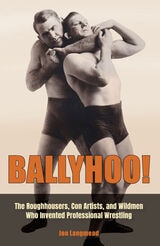
Ballyhoo!
The Roughhousers, Con Artists, and Wildmen Who Invented Professional WrestlingJon Langmead
University of Missouri Press, 2024
Ballyhoo! The Roughhousers, Con Artists, and Wildmen Who Invented Professional Wrestling is a history of professional wrestling’s formative period in the U.S., from roughly 1874 to 1941, and the contested interplay of wrestlers and promoters who built the “sport” as we know it. During this period, the major conventions that would define wrestling to the present day were perfected and codified, as wrestling morphed from a rough sport practiced on farms and at town gatherings to melodramatic mass entertainment that reliably drew large crowds in cities across the nation.
The narrative uses the life and career of Jack Curley—a boxing promoter whose fortune took a turn for the better when he began promoting wrestling matches—as a compass as it charts the development of wrestling. By the late 1910s, Curley’s shows were selling out Madison Square Garden monthly. Ballyhoo chronicles his competition with the other promoters, as well as the lives of colorful athletes like “Strangler” Ed Lewis, Frank Gotch, the “Masked Marvel,” Jim Londos, “Gorgeous George” Wagner, “Farmer” Martin Burns, and “Dynamite” Gus Sonnenberg.

Baltimore Sports
Stories from Charm CityDaniel A. Nathan
University of Arkansas Press, 2016
To read a sample chapter, visit www.uapress.com.
Baltimore is the birthplace of Francis Scott Key’s “The Star-Spangled Banner,” the incomparable Babe Ruth, and the gold medalist Michael Phelps. It’s a one-of-a-kind town with singular stories, well-publicized challenges, and also a rich sporting history. Baltimore Sports: Stories from Charm City chronicles the many ways that sports are an integral part of Baltimore’s history and identity and part of what makes the city unique, interesting, and, for some people, loveable.
Wide ranging and eclectic, the essays included here cover not only the Orioles and the Ravens, but also lesser-known Baltimore athletes and teams. Toots Barger, known as the “Queen of the Duckpins,” makes an appearance. So do the Dunbar Poets, considered by some to be the greatest high-school basketball team ever.
Bringing together the work of both historians and journalists, including Michael Olesker, former Baltimore Sun columnist, and Rafael Alvarez, who was named Baltimore’s Best Writer by Baltimore Magazine in 2014, Baltimore Sports illuminates Charm City through this fascinating exploration of its teams, fans, and athletes.

Banking On It
Inside Baseball, Hardball Politics, and Building the Best Era in Phillies HistoryPaul Hagen with Kevin Cooney
Temple University Press, 2027
When Citizens Bank Park opened on April 3, 2024, it was the result of twelve years (and many false starts) of maneuvering for the venue to replace Veterans Stadium as the home to the Philadelphia Phillies. Banking On It describes the politicking that took place, from conflicts between the Phillies and the Philadelphia Eagles resulting from sharing a venue, to decisions about where to build the new ballpark, who would pay for it, and where the outfield fences would be placed.
Paul Hagen and Kevin Cooney recount the setbacks, frustrations, missteps, political machinations, and angst the team surmounted as the process played out. But Banking On It also details the benefits of all these efforts—the Phillies became a powerhouse franchise after settling into their new home. The new stadium helped the team elevate its game by generating money to attract and keep better players, including Jim Thome, Ryan Howard, and Kyle Schwarber taking advantage of groundwork laid by scouts and managers. The Phillies have had their most successful two decades in franchise history playing at Citizens Bank Park.
Banking On It celebrates the game, the team, and the stadium that helped create a championship era.
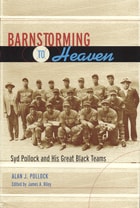
Barnstorming to Heaven
Syd Pollock and His Great Black TeamsAlan J. Pollock
University of Alabama Press, 2006
The Indianapolis Clowns were a black touring baseball team that featured an entertaining mix of comedy, showmanship, and skill. Sometimes referred to as the Harlem Globetrotters of baseball—though many of the Globetrotters’ routines were borrowed directly from the Clowns—they captured the affection of Americans of all ethnicities and classes. Author Alan Pollock was the son of the Clowns' owner Syd Pollock, who owned a series of black barnstorming teams that crisscrossed the country from the late 1920s until the mid-1960s. They played every venue imaginable, from little league fields to Yankee Stadium, and toured the South, the Northeast, the Midwest, the Canadian Rockies, the Dakotas, the Southwest, the Far West—anywhere there was a crowd willing to shell out a few dollars for an unforgettable evening.
Alan grew up around the team and describes in vivid detail the comedy routines of Richard “King Tut” King, “Spec Bebob” Bell, Reece “Goose” Tatum; the “warpaint” and outlandish costumes worn by players in the early days; and the crowd-pleasing displays of amazing skill known as pepperball and shadowball. These men were entertainers, but they were also among the most gifted athletes of their day, making a living in sports the only way a black man could. They played to win.
More than just a baseball story, these recollections tell the story of great societal changes in America from the roaring twenties, through the years of the Great Depression and World War II, and into the Civil Rights era.
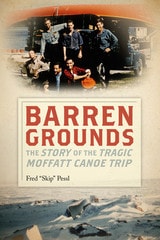
Barren Grounds
The Story of the Tragic Moffatt Canoe TripSkip Pessl
Dartmouth College Press, 2014
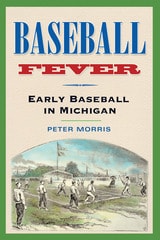
Baseball Fever
Early Baseball in MichiganPeter Morris
University of Michigan Press, 2003
Baseball seems tailor-made for the historian, yet even today, after almost a century and a half of organized play, baseball's origins remain unclear. Most accounts focus on Eastern teams and the advent of professionals, but how the game spread across a predominantly rural America to become our national pastime is a question still largely unresolved.
In this well-researched study of Michigan baseball from the 1830s to the 1870s, baseball scholar Peter Morris offers many answers. Drawing on such sources as personal memoirs, period photographs, and an extensive, often hilarious variety of newspaper accounts, he paints a vivid portrait of a game that was widely---if erratically---played well before the Civil War and gradually evolved from an informal amusement into an activity for local groups of young men and finally into a serious, organized sport.
Baseball began with pick-up "raisin'" games---so called because they took place after rural roof-raisings---played purely for fun by any number of participants, with myriad local variations. The first amateur clubs appeared in the 1850s and were often ridiculed for playing a child's game---"baseball fever" was then a term of mockery---but as they persevered and issued challenges to other teams from nearby towns, rivalries developed, rules began to conform, and a tradition started to take shape.
Tournaments, often connected with county fairs, and increased newspaper coverage gave the game new momentum after the Civil War, and what had been sociable matches became serious contests, sometimes marred by bad blood. Enclosed grounds changed the nature of the game--most notably with respect to home runs--and allowed teams to charge admission, which introduced a new element of commercialism, community involvement, and a heightened sense of competition. Ultimately, it brought about a level of play that made the best "amateur" clubs able to challenge professional teams from the East when they toured the country.
As he traces the exploits of clubs like the Excelsiors, the Wahoos, and the Unknowns, season by season and often game by game, Morris adds a wealth of new detail to the story of baseball's early days, showing how decades of at least nominally amateur play prepared the way for the advent of the National League in the 1870s, and with it the true beginnings of the professional sport we know today. In the process, he also paints a fascinating portrait of the attitudes, values, and lives of rural Americans in the mid-nineteenth century.
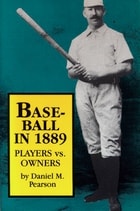
Baseball In 1889
Players vs. OwnersDaniel M. Pearson
University of Wisconsin Press, 1993
Baseball and Memory
Winning, Losing, and the Remembrance of Things PastLee Congdon
St. Augustine's Press, 2011
Baseball and Rhetorics of Purity
The National Pastime and American Identity During the War on TerrorMichael L. Butterworth
University of Alabama Press, 2010
An investigation into the culture and mythology of baseball, a study of its limits and failures, and an invitation to remake the game in a more democratic way.
Baseball has long been considered America’s “national pastime,” touted variously as a healthy diversion, a symbol of national unity, and a model of democratic inclusion. But, according to Michael Butterworth, such favorable rhetoric belies baseball’s complicity in the rhetorical construction of a world defined by good and evil.
Baseball and Rhetorics of Purity is an investigation into the culture and mythology of baseball, a study of its limits and failures, and an invitation to remake the game in a more democratic way. It pays special attention to baseball’s role in the reconstruction of American identity after September 11, 2001. This study is framed by a discussion that links the development of baseball to the discourses of innocence and purity in 19th-century America. From there, it examines ritual performances at baseball games; a traveling museum exhibit sponsored by the National Baseball Hall of Fame and Museum; the recent debate about the use of performance-enhancing drugs; the return of Major League Baseball to Washington, D.C., in 2005; and the advent of the World Baseball Classic in 2006.
Butterworth argues that by promoting myths of citizenship and purity, post-9/11 discourse concerning baseball ironically threatens the health of the democratic system and that baseball cannot be viewed as an innocent diversion or escape. Instead, Butterworth highlights how the game on the field reflects a more complex and diverse worldview, and makes a plea for the game’s recovery, both as a national pastime and as a site for celebrating the best of who we are and who we can be.
Baseball as Mediated Latinidad
Race, Masculinity, Nationalism, and Performances of IdentityJennifer Domino Rudolph
The Ohio State University Press, 2020
Baseball on Trial
The Origin of Baseball's Antitrust ExemptionNathaniel Grow
University of Illinois Press, 2014
Currently a billion dollar enterprise, professional baseball teams crisscross the country while the games are broadcast via radio, television, and internet coast to coast. The sheer scope of this activity would seem to embody the phrase "interstate commerce." Yet baseball is the only professional sport--indeed the sole industry--in the United States that currently benefits from a judicially constructed antitrust immunity. How could this be?
Drawing upon recently released documents from the National Baseball Hall of Fame, Grow analyzes how the Supreme Court reached this seemingly peculiar result by tracing the Federal Baseball litigation from its roots in 1914 to its resolution in 1922, in the process uncovering significant new details about the proceedings. Grow observes that while interstate commerce was measured at the time by the exchange of tangible goods, baseball teams in the 1910s merely provided live entertainment to their fans, while radio was a fledgling technology that had little impact on the sport. The book ultimately concludes that, despite the frequent criticism of the opinion, the Supreme Court's decision was consistent with the conditions and legal climate of the early twentieth century.
Baseball's Greatest Season, 1924
Reed Browning
University of Massachusetts Press, 2003
On the eve of the return of major league baseball to Washington, D.C., Baseball's Greatest Season recovers the memory of the one and only time when the championship of the national pastime resided in the nation's capital.

Baseball's Greatest Series
Yankees, Mariners, and the 1995 Matchup That Changed HistoryDonnelly, Chris
Rutgers University Press, 2010
This division series was not simply about two teams playing five postseason games. It was about Ken Griffey Jr., Lou Piniella, Buck Showalter, Gene Michael, Jim Leyritz, Randy Johnson, Wade Boggs, Tony Fernandez, Pat Kelly, Dion James, Darryl Strawberryùand many others who changed the course of baseball history . . .
A team playing to keep baseball alive in the Pacific Northwest
A manager who was literally managing for his job
A New York sports icon who for one week reminded everybody of the dominating player he had been a decade earlier
Chris Donnelly's replay of this entire season reminds readers that it was a time when grown men cried their eyes out after defeat, and others, just a few hundred feet away, poured beer and champagne over one another while 57,000 people in Seattle's Kingdome celebrated. Five games they were. Five games that reminded people, after the devastating players' strike in 1994, how great a game baseball is because comebacks are always possible, no matter how great the obstacles may seem.
From Don Mattingly's only postseason home run, which caused a near riot, to Edgar Martinez's legendary eleventh inning series-clinching double, Donnelly chronicles the earlier struggles of both teams during the 1980s, their mid-1990s resurgence, all five heart-stopping games of the series, and the dramatic and long-lasting effects of Seattle's victory. Simply stated, Baseball's Greatest Series hits a home run.
Baseball's Natural
The Story of Eddie WaitkusJohn Theodore. Foreword by Ira Berkow
Southern Illinois University Press, 2002
Baseball’s Natural: The Story of Eddie Waitkus is John Theodore’s true account of the slick-fielding first baseman who played for the Cubs and Phillies in the 1940s and became an immortalized figure in baseball lore as the inspiration for Roy Hobbs in Bernard Malamud’s The Natural.
The son of Lithuanian immigrants, Edward Stephen Waitkus (1919–1972) grew up in Boston and served in the Pacific during World War II. His army service in some of the war’s bloodiest combat earned him four Bronze Stars. Following the war, Waitkus became one of the most popular players of his era. As a rookie he led the Cubs in hitting in 1946 and quickly established himself as one of the best first basemen in the National League. To the disappointment of fans, the Cubs traded Waitkus to the Phillies in December of 1948. When he returned to Chicago in a Philadelphia uniform in June of the following year, he was hitting .306 and seemed destined for the All Star team.
On the night of June 14 at the Edgewater Beach Hotel, Waitkus’s bright career took an infamously tragic turn. He received a cryptic note summoning him to meet a young fan, Ruth Steinhagen. When Waitkus entered her hotel room, she proclaimed, “I have a surprise for you,” and then she just as quickly shot him in the chest. Steinhagen, then only nineteen, was one of the many young women—called “Baseball Annies”–who were fanatic about the game and its players, though her obsession proved more dangerous than most. A criminal court indicted Steinhagen and confined her to a state mental hospital for nearly three years.
Waitkus survived the shooting, made an inspirational return to baseball in 1950, and led the Phillies to the World Series. While Waitkus triumphed over his assault, he could not conquer his private demons. Depression stemming from the attack led to a severe problem with alcohol, a failed marriage, and a nervous breakdown. Waitkus found some happiness in his final summers working with youngsters at the Ted Williams baseball camp. Cancer claimed him in 1972, just days after his fifty-third birthday.
Through interviews with Waitkus’s family, fellow servicemen, former ballplayers, and childhood friends, and aided by fifteen photographs, Theodore chronicles Waitkus’s remarkable comeback as well as the difficult years following his eleven-year major league career.
Baseball
A HIstory of America's GameBenjamin G. Rader
University of Illinois Press, 2025
Analytics, technology, and the most ambitious rewrite of the rulebook in fifty years have reshaped baseball. Benjamin G. Rader’s account of the American pastime moves from diamonds scratched out of commons and corn fields to the multimedia theme parks doubling as today’s baseball stadiums. The fifth edition follows the long arc of the game’s history into the third decade of the twenty-first century, an era rich in innovation but even richer from revenue streams undreamt-of by the plutocrats of old. Rader brings readers up to date with looks at the Astros cheating scandal, on-the-field changes from power pitchers to ghost runners, data-driven player development and career rebirth, and the one-of-a-kind Shohei Ohtani.
Engrossing and complete, Baseball, Fifth Edition, offers a comprehensive tour of the game and its place within American society and culture.
Baseball
A History of America's GameBenjamin G. Rader
University of Illinois Press, 2007
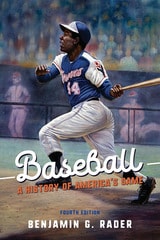
Baseball
A History of America's GameBenjamin G. Rader
University of Illinois Press, 2018
Basketball Trafficking
Stolen Black Panamanian DreamsJavier Wallace
Duke University Press, 2025
Battling Siki
A Tale of Ring Fixes, Race, and Murder in the 1920sPeter Benson
University of Arkansas Press, 2008
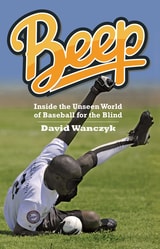
Beep
Inside the Unseen World of Baseball for the BlindDavid Wanczyk
Ohio University Press, 2018
In Beep, David Wanczyk illuminates the sport of blind baseball to show us a remarkable version of America’s pastime. With balls tricked out to squeal three times per second, and with bases that buzz, this game of baseball for the blind is both innovative and intense. And when the best beep baseball team in America, the Austin Blackhawks, takes on its international rival, Taiwan Homerun, no one’s thinking about disability. What we find are athletes playing their hearts out for a championship.
Wanczyk follows teams around the world and even joins them on the field to produce a riveting inside narrative about the game and its players. Can Ethan Johnston, kidnapped and intentionally blinded as a child in Ethiopia, find a new home in beep baseball, and a spot on the all-star team? Will Taiwan’s rookie MVP Ching-kai Chen—whose superhuman feats on the field have left some veterans suspicious—keep up his incredible play? And can Austin’s Lupe Perez harness his competitive fire and lead his team to a long-awaited victory in the beep baseball world series?
Beep is the first book about blind baseball.
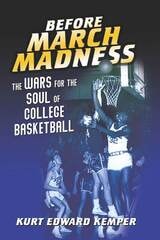
Before March Madness
The Wars for the Soul of College BasketballKurt Edward Kemper
University of Illinois Press, 2020
Kurt Edward Kemper tells the dramatic story of the clashes that shook college basketball at mid-century—and how the repercussions continue to influence college sports to the present day. Taking readers inside the competing factions, he details why historically black colleges and regional schools came to embrace commercialization. As he shows, the NCAA's strategy of co-opting its opponents gave each group just enough just enough to play along—while the victory of the big-time athletics model handed the organization the power to seize control of college sports.
An innovative history of an overlooked era, Before March Madness looks at how promises, power, and money laid the groundwork for an American sports institution.
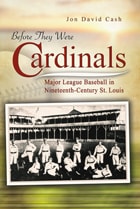
Before They Were Cardinals
Major League Baseball in Nineteenth-Century St. LouisJon David Cash
University of Missouri Press, 2002
Mark McGwire, Ozzie Smith, Lou Brock. These famous Cardinals are known by baseball fans around the world. But who and what were the predecessors of these modern-day players and their team? In Before They Were Cardinals, Jon David Cash examines the infancy of major-league baseball in St. Louis during the last quarter of the nineteenth century. His in-depth analysis begins with an exploration of the factors that motivated civic leaders to form the city's first major-league ball club. Cash delves into the economic trade rivalry between Chicago and St. Louis and examines how St. Louis's attempt to compete with Chicago led to the formation of the St. Louis Brown Stockings in 1875. He then explains why, three years later, despite its initial success, St. Louis baseball quickly vanished from the big-league map.
St. Louis baseball was revived with the arrival of German immigrant saloon owner Chris Von der Ahe. Cash explains how Von der Ahe, originally only interested in concession rights, purchased a controlling interest in the Brown Stockings. His riveting account follows the team after Von der Ahe's purchase, from the formation of the American Association, to its merger in 1891 with the rival National League. He chronicles Von der Ahe's monetary downturn, and the club's decline as well, following the merger.
Before They Were Cardinals provides vivid portraits of the ball players and the participants involved in the baseball war between the National League and the American Association. Cash points out significant differences, such as Sunday games and beer sales, between the two Leagues. In addition, excerpts taken from Chicago and St. Louis newspapers make the on-field contests and off-field rivalries come alive. Cash concludes this lively historical narrative with an appendix that traces the issue of race in baseball during this period.
The excesses of modern-day baseball—players jumping contracts or holding out for more money, gambling on games, and drinking to excess; owners stealing players and breaking agreements—were all present in the nineteenth-century sport. Players were seen then, as they are now, as an embodiment of their community. This timely treatment of a fascinating period in St. Louis baseball history will appeal to both baseball aficionados and those who want to understand the history of baseball itself.
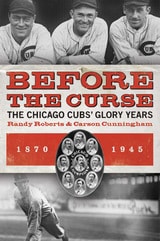
Before the Curse
The Chicago Cubs' Glory Years, 1870-1945Edited by Randy Roberts and Carson Cunningham
University of Illinois Press, 2012
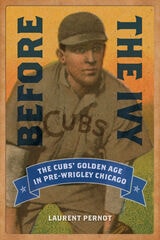
Before the Ivy
The Cubs' Golden Age in Pre-Wrigley ChicagoLaurent Pernot
University of Illinois Press, 2015
BEHOLD the 1871 team as it plays for the title in nine different borrowed uniforms after losing everything in the Great Chicago Fire
ATTEND West Side Grounds at Polk and Wolcott with its barbershop quartet
MARVEL as superstar Cap Anson hits .399, makes extra cash running a ballpark ice rink, and strikes out as an elected official
WONDER at experiments with square bats and corked balls, the scandal of Sunday games and pre-game booze-ups, the brazen spitters and park dimensions changed to foil Ty Cobb
RAZZ Charles Comiskey as he adopts a Cubs hand-me-down moniker for his team's name
THRILL to the poetic double-play combo of Tinker, Evers, and Chance even as they throw tantrums at umpires and punches at each other
CHEER as Merkle's Boner and the Cubs' ensuing theatrics send the team to the 1908 World Series
Rich with Hall of Fame personalities and oddball stories, Before the Ivy opens a door to Chicago's own field of dreams and serves as every Cub fan's guide to a time when thoughts of "next year" filled rival teams with dread.

Being Mindful in Sport and Exercise Psychology
Pathways for Practitioners and StudentsSamuel J. Zizzi
FiT Publishing, 2017
Being Mindful in Sport and Exercise Psychology: Pathways for Practitioners and Students is a comprehensive resource of the many facets of mindfulness, which is interwoven with many techniques of applied sport and exercise psychology. The book expands upon the fundamentals of mindfulness theory and practice, reviews evidence of its effectiveness, and features numerous case studies that offer readers a fresh perspective of how mindfulness can be applied in diverse, real-world situations.
Benching Jim Crow
The Rise and Fall of the Color Line in Southern College Sports, 1890-1980Charles H. Martin
University of Illinois Press, 2010
Berlin Sports
Spectacle, Recreation, and Media in Germany’s MetropolisHeather L. Dichter
University of Arkansas Press, 2024
This book begins with a long-distance equestrian race in the 1890s and continues with the role of media in spectacle, celebrity, urban life, and gender from the 1890s to the 1920s.It then turns to grassroots sport participation and spectatorship as well as sport diplomacy at the elite international level during the postwar period and the years of German division. Next, it explores recreational sport associations within the context of immigration and youth counterculture. It concludes with the 2015 European Maccabi Games, an international Jewish sports festival through which Berlin sought to grapple with the infamous 1936 Olympics and showcase Berlin as a cosmopolitan and multicultural city. Taken together, the book’s scholarly essays on all of these sporting endeavors reveal the rich and varied sporting culture in Berlin and yield fresh insights into spectacle, recreation, and media in the city.
Best Backpacking Trips in California and Nevada
Mike White
University of Nevada Press, 2015
The guide includes thirteen detailed trail descriptions, along with information on additional resources, governing agencies, and permits and fees. It also provides listings of the nearest airports, outdoor retailers, campgrounds, transportation, and amenities and attractions. Accompanying the specific information on each trip are captivating historical vignettes and entertaining personal essays, enhancing the reader’s understanding of the area. Whether journeying from near or far, Best Backpacking Trips of California and Nevada is the most complete resource for turning a dream trip into reality.

Best Backpacking Trips in Montana, Wyoming, and Colorado
Mike White
University Press of Colorado, 2019
Best Backpacking Trips in Montana, Wyoming, and Colorado provides everything you need to know to organize and execute the best backpacking trips in the Mountain West. Mike White and Douglas Lorain, who have walked every mile of the trails described inside, take readers and hikers into some of the wildest and most scenic backcountry landscapes in the nation and help them design the ultimate trip.
Focusing on one-week excursions, the book offers details on all the aspects of trip planning—trail narratives, technical data, maps, gear, food, information on regulations and permits, and more. But it is more than a basic guidebook. Trip information is enriched by valuable and interesting sidebars on history and ecology that will increase appreciation for these natural areas and the people who were instrumental in their discovery or protection.
In Best Backpacking Trips in Montana, Wyoming, and Colorado, White and Lorain pass on their knowledge of quality hikes, planning and preparation, and the unique satisfaction of multi-day backpacking. This guide, put into practice, will result in the trip of a lifetime.

Best Backpacking Trips in Utah, Arizona, and New Mexico
Mike White
University of Nevada Press, 2016
This is the second book in a series of detailed guidebooks covering all the best “life-list” backpacking vacations in the spectacular backcountry of the American West. This new volume specifically covers the best such adventures in the states of Utah, Arizona, and New Mexico. Every conceivable aspect of trip planning is covered in the guide, including maps and descriptions of the trail, where to locate the nearest airport, other area attractions that shouldn’t be missed, and guide services that are available. A noteworthy feature of the book is the individual vignettes that give insight into the historical significance of many of the trails. Also unique are the interesting and humorous personal accounts that the authors share from their personal experiences hiking these routes. Backpackers will find a wide range of outstanding trips, from high mountain adventures to some of the world’s best lower-elevation canyon hikes. Best Backpacking Trips in Utah, Arizona, and New Mexico provides an extensive choice of terrific expeditions.
Between the Ears
How to Think Like a ChampionGreg Hatcher
Parkhurst Brothers, Inc., 2006

Beyond A Boundary
C. L. R. James
Duke University Press, 1993
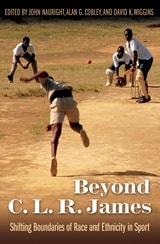
Beyond C. L. R. James
Shifting Boundaries of Race and Ethnicity in SportsJohn Nauright
University of Arkansas Press, 2014
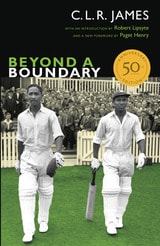
Beyond a Boundary
50th Anniversary EditionC. L .R. James
Duke University Press, 2013
Named one of the Top 50 Sports Books of All Time by Sports Illustrated
"Beyond a Boundary . . . should find its place on the team with Izaak Walton, Ivan Turgenev, A. J. Liebling, and Ernest Hemingway."—Derek Walcott, The New York Times Book Review
"As a player, James the writer was able to see in cricket a metaphor for art and politics, the collective experience providing a focus for group effort and individual performance. . . . [In] his scintillating memoir of his life in cricket, Beyond a Boundary (1963), James devoted some of his finest pages to this theme."—Edward Said, The Washington Post
"A work of double reverence—for the resilient, elegant ritualism of cricket and for the black people of the world."—Whitney Balliett, The New Yorker
"Beyond a Boundary is a book of remarkable richness and force, which vastly expands our understanding of sports as an element of popular culture in the Western and colonial world."—Mark Naison, The Nation
"Everything James has done has had the mark of originality, of his own flexible, sensitive, and deeply cultured intelligence. He conveys not a rigid doctrine but a delight and curiosity in all the manifestations of life, and the clue to everything lies in his proper appreciation of the game of cricket."—E. P. Thompson, author of The Making of the English Working Class
"Beyond a Boundary is . . . first and foremost an autobiography of a living legend—probably the greatest social theorist of our times."—Manning Marable, Journal of Sport & Social Issues
"The great triumph of Beyond a Boundary is its ability to rise above genre and in its very form explore the complex nature of colonial West Indian society."—Caryl Phillips, The New Republic
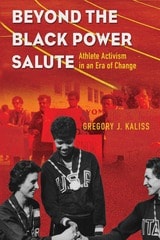
Beyond the Black Power Salute
Athlete Activism in an Era of ChangeGregory J. Kaliss
University of Illinois Press, 2023

Beyond the Booth
Merrill's Fifty Years with the EaglesCindy Reese and Merrill Reese
Temple University Press, 2027
Merrill Reese is the longest tenured radio play-by-play announcer in the history of the NFL. He has been with the Philadelphia Eagles since 1977, covering the team’s players, coaches, and owners in locker rooms, on the sidelines, and on road trips.
Beyond the Booth is a heartfelt history of the Eagles as recounted by Reese in conversation with the interviewer who knows him best—his wife, Cindy. Reese shares his memories and recollections of the team from the Dick Vermeil years through the Nick Sirianni era. (Spoiler alert: he was no Chip Kelly fan.) Cindy draws out her husband’s observations on the authenticity of the team’s personalities and leaders and how they make it successful. Merrill also describes his relationships with his broadcast colleagues and players, including Jalen Hurts.
With her insider perspective, Cindy knows what to ask for Merrill to share his thoughts on his connection with the fans and success as a broadcaster, such as how performing in TV commercials as a child helped him develop his keen memorization skills. (She uses flashcards to test Merrill on players.)
Reese’s passion for the game, shared by his wife, is infectious. Beyond the Booth will excite every Eagles fan.
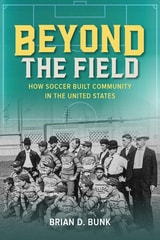
Beyond the Field
How Soccer Built Community in the United StatesBrian D. Bunk
University of Illinois Press, 2025
Played by both migrants and native-born Americans, soccer created communities across the United States. Brian D. Bunk ranges from Pawtucket to Honolulu as he illuminates the deep and diverse origins of the American sport.
Soccer took root as immigration, urbanization, and industrialization triggered immense changes across society. Matches built local pride as teams battled rival neighborhoods and towns. Teammates and supporters shared meals, raised money for fallen players, and attended each other’s weddings and funerals. If sometimes damaged by economic depression or shattered by war, clubs often bounced back to provide a steadying, resilient force in their towns. Bunk follows the story from the 1880s through World War I by profiling the struggles and joys of players while also tracing the overlooked impact of people of African, Chinese, Hawaiian, Jewish, and Filipino descent on American soccer culture.
Engaging and rich in detail, Beyond the Field draws on extensive original research to expand our idea of the people and places that formed the American game.
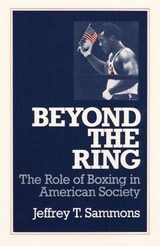
Beyond the Ring
The Role of Boxing in American SocietyJeffrey T. Sammons
University of Illinois Press, 1988
Primitive, dangerous, low-paying, crooked, exploitive--boxing, in all but a few cases, offered its athletes very little while taking everything. Why does boxing exist? What accounted for its decades-long popularity? What does its presence on the sport history landscape say about America?
Jeffrey T. Sammons looks at how boxing reflected the society that fostered it at different points in history. In the time of John L. Sullivan, the sport provided an arena for testing law, order, and social growth. Jack Johnson's career reflected the racism, nationalism, and xenophobia of the Progressive era. At its popular peak in the 1920s, boxing expressed tensions as disparate as the tug-of-war between modernism and tradition and the women's rights movement. From there, Sammons traces how the sport intertwined with Nazi antisemitism, reflected the hopes of the New Deal, produced the seminal figure Joe Louis, and stood at the nexus of the union of organized crime with business and television. Finally, he shows how Muhammad Ali and reactions to him exposed the shifting tides of racial issues and American involvement in Vietnam.
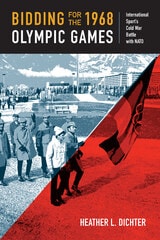
Bidding for the 1968 Olympic Games
International Sport's Cold War Battle with NATOHeather L. Dichter
University of Massachusetts Press, 2021
During the Cold War, political tensions associated with the division of Germany came to influence the world of competitive sport. In the 1950s, West Germany and its NATO allies refused to recognize the communist East German state and barred its national teams from sporting competitions. The construction of the Berlin Wall in 1961 further exacerbated these pressures, with East German teams denied travel to several world championships. These tensions would only intensify in the run-up to the 1968 Olympics.
In Bidding for the 1968 Olympic Games, Heather L. Dichter considers how NATO and its member states used sport as a diplomatic arena during the height of the Cold War, and how international sport responded to political interference. Drawing on archival materials from NATO, foreign ministries, domestic and international sport functionaries, and newspapers, Dichter examines controversies surrounding the 1968 Summer and Winter Olympic Games, particularly the bidding process between countries to host the events. As she demonstrates, during the Cold War sport and politics became so intertwined that they had the power to fundamentally transform each other.