Results by title
828 books match the query 'Study and teaching' and 23 start with b

Bad Marxism
Capitalism and Cultural StudiesJohn Hutnyk
Pluto Press, 2004
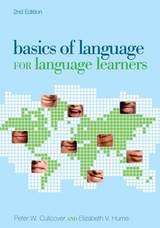
Basics of Language for Language Learners, 2nd Edition
Peter W. Culicover and Elizabeth V. Hume
The Ohio State University Press, 2017
Learning a language involves so much more than just rote memorization of rules. Basics of Language for Language Learners, 2nd edition, by Peter W. Culicover and Elizabeth V. Hume, systematically explores all the aspects of language central to second language learning: the sounds of language, the different grammatical structures, the social functions of communication, and the psychology of language learning and use.
Unlike books specific to one single language, Basics of Language will help students of all languages. Readers will gain insight into the structure and use of their own language and will therefore see more clearly how the language they are learning differs from their first language. Language instructors will find the approach provocative, and the book will stimulate many new and effective ideas for teaching. Both a textbook and a reference work, Basics of Language will enhance the learning experience for anyone taking a foreign language course as well as the do-it-yourself learner.
A new section, “Tools and Strategies for Language Learning,” has been added to this second edition. It comprises three chapters that focus on brain training, memory and using a dictionary. In addition, the section “Thinking Like a Native Speaker” has been substantially updated to include more discussion of errors made by language learners.
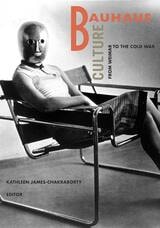
Bauhaus Culture
From Weimar To The Cold WarKathleen James-Chakraborty
University of Minnesota Press, 2006
In this book, editor Kathleen James-Chakraborty and seven other scholars analyze the accomplishments and dispel the myths of the Bauhaus, placing it firmly in a historical context from before the formation of the Weimar Republic through Nazi ascendancy and World War II into the cold war. Together, they investigate its professors’ and students’ interactions with mass culture; establish the complexity of its relationship with Wilhelmine, Nazi, and postwar German politics; and challenge the claim that its architects greatly influenced American architecture in the 1930s.
Their most explosive conclusions address the degree to which some aspects of Bauhaus design continued to flourish during the Third Reich before becoming one of the cold war’s most enduring emblems of artistic freedom. In doing so, Bauhaus Culture calls into question the degree to which this influential school should continue to symbolize an uncomplicated relationship between art, modern technology, and progressive politics.
Contributors: Greg Castillo, Juliet Koss, Rose-Carol Washton Long, John V. Maciuika, Wallis Miller, Winifried Nerdinger, Frederic J. Schwartz.
Kathleen James-Chakraborty is associate professor of architecture at the University of California, Berkeley, and author of German Architecture for a Mass Audience and Erich Mendelsohn and the Architecture of German Modernism.

Becoming Designers
Education and InfluenceStuart Mealing
Intellect Books, 2000
Design Research is an area that is both current and growing, but texts on the subjects are in short supply. This book is a response to the vitality of discussion within journals and at conferences, and it intends to place Design Research in its rightful place at the heart of studio-based education and practice.
Offering a valuable context within which to understand the educational needs and aspirations of the designer, Becoming Designers is also a vital resource for students in this field, whose access to books on the subject is currently very limited.

Becoming a Media Mentor
A Guide for Working with Children and FamiliesCen Campbell
American Library Association, 2016

Behind the Big House
Reconciling Slavery, Race, and Heritage in the U.S. SouthJodi Skipper
University of Iowa Press, 2022
When residents and tourists visit sites of slavery, whose stories are told? All too often the lives of slaveowners are centered, obscuring the lives of enslaved people. Behind the Big House gives readers a candid, behind-the-scenes look at what it really takes to interpret the difficult history of slavery in the U.S. South. The book explores Jodi Skipper’s eight-year collaboration with the Behind the Big House program, a community-based model used at local historic sites to address slavery in the collective narrative of U.S. history and culture.
In laying out her experiences through an autoethnographic approach, Skipper seeks to help other activist scholars of color negotiate the nuances of place, the academic public sphere, and its ambiguous systems of reward, recognition, and evaluation.
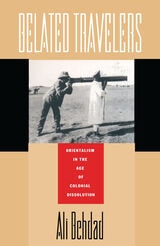
Belated Travelers
Orientalism in the Age of Colonial DissolutionAli Behdad
Duke University Press, 1994
Through readings of Flaubert, Nerval, Kipling, Blunt, and Eberhardt, and following the transition in travel literature from travelog to tourist guide, Belated Travelers addresses the specific historical conditions of late nineteenth-century orientalism implicated in the discourses of desire and power. Behdad also views a broad range of issues in addition to nostalgia and tourism, including transvestism and melancholia, to specifically demonstrate the ways in which the heterogeneity of orientalism and the plurality of its practice is an enabling force in the production and transformation of colonial power.
An exceptional work that provides an important critique of issues at the forefront of critical practice today, Belated Travelers will be eagerly awaited by specialists in nineteenth-century British and French literatures, and all concerned with colonial and postcolonial discourse.
Between Politics and Ethics
Toward a Vocative History of English StudiesJames N. Comas
Southern Illinois University Press, 2006
For nearly twenty-five years, English studies has been focused on two terms: politics and ethics. However, the institutional emergence, development, and relationship of these two concepts have yet to be examined. Between Politics and Ethics: Toward a Vocative History of English Studies traces the development of politics and ethics in contemporary English studies, questions the current political orientation of the discipline, and proposes a rethinking of the history of English studies based on a “vocative” dimension of writing—the idea that writers form a virtual community by “calling to” and listening to other writers.
In a series of interrelated discussions, James Comas examines the historical trends leading to recent confusion regarding ethics and its relation to the politics of English studies. Through close, rhetorical readings of texts by Judith Butler, Stephen Greenblatt, Edward Said, and others, Comas argues that this confusion is largely the result of a “political turn” that resists theorizing itself. In addition, he argues that work on ethics by Wayne Booth, Geoffrey Harpham, and J. Hillis Miller reflects an uneasy dialectic between the ethics and politics of reading and writing. In response to this discord, Comas turns to the theories of Emmanuel Levinas and Maurice Blanchot, as well as to the examples of Georges Bataille and Kenneth Burke, and proposes a vocative approach to assessing English studies and its history. In doing so, this volume offers a thoughtful reassessment of English studies that affects our understanding of the rhetoric of disciplinary histories.
Between Talk And Teaching
Reconsidering the Writing ConferenceLaurel Johnson Black
Utah State University Press, 1998
The teacher-student conference is standard in the repertoire of teachers at all levels. Because it's a one-to-one encounter, teachers work hard to make it comfortable; but because it's a pedagogical moment, they hope that learning occurs in the encounter, too. The literature in this area often suggests that a conference is a conversation, but this doesn't account for a teacher's need to use it pedagogically. Laurel Johnson Black's new book explores the conflicting meanings and relations embedded in conferencing and offers a new theoretical understanding of the conference along with practical approaches to conferencing more effectively with students.
Analyzing taped conferences of several different teachers and students, Black considers the influence that power, gender, and culture can have on a conference. She draws on sociolinguistic theory, as well as critical theory in composition and rhetoric, to build an understanding of the writing conference as an encounter somewhere between conversation and the classroom. She finds neither the conversation model nor versions of the master-apprentice model satisfactory. Her approach is humane, student-centered, and progressive, but it does not ignore the valid pedagogical purposes a teacher might have in conferencing. Between Talk and Teaching will be a valuable addition to the professional library of writing teachers and writing program administrators.
Beyond Convention
Genre Innovation in Academic WritingChristine M. Tardy
University of Michigan Press, 2016
---Foreword by Dana R. Ferris, author of Treatment of Error and Teaching College Writing to Diverse Student Populations
This book attempts to engage directly with the complexities and tensions in genre from both theoretical and pedagogical perspectives. While struggling with questions of why, when, and how different writers can manipulate conventions, Tardy became interested in related research into voice and identity in academic writing and then began to consider the ways that genre can be a valuable tool that allows writing students and teachers to explore expected conventions and transformative innovations. For Tardy, genres aren’t “fixed,” and she argues also that neither genre constraints nor innovations are objective—that they can be accepted or rejected depending on the context.
Beyond Convention considers a range of learning and teaching settings, including first-year undergraduate writing, undergraduate writing in the disciplines, and the advanced academic writing of graduate students and professionals. It is intended for those interested in the complexities of written communication, whether their interests are grounded in genre theory, academic discourse, discourse analysis, or writing instruction. With its attentiveness to context, discipline, and community, it offers a resource for those interested in English for Academic Purposes, English for Specific Purposes, and Writing in the Disciplines. At its heart, this is a book for teachers and teacher educators.
Beyond Postprocess
Sidney I. Dobrin, J.A. Rice, and Michael Vastola
Utah State University Press, 2011
Beyond Postprocess offers a vigorous, provocative discussion of postprocess theory in its contemporary profile. Fueled by something like a fundamental refusal to see writing as self-evident, reducible, and easily explicable, the contributors rethink postprocess, suggesting that there is no easily defined moment or method that could be called postprocess. Instead, each contribution to this collection provides a unique and important example of what work beyond postprocess could be.
Since postprocess theory in writing studies first challenged traditional conceptions of writing and the subject who writes, developments there have continued to push theorists of writing in a number of promising theoretical directions. Spaces for writing have arisen that radically alter ideological notions of space, rational thinking, intellectual property and politics, and epistemologies; and new media, digital, and visual rhetorics have increasingly complicated the scene, as well.
Contributors to Beyond Postprocess reconsider writing and writing studies through posthumanism, ecology, new media, materiality, multimodal and digital writing, institutional critique, and postpedagogy. Through the lively and provocative character of these essays, Beyond Postprocess aims to provide a critical site for nothing less than the broad reevaluation of what it means to study writing today. Its polyvocal considerations and conclusions invest the volume with a unique potential to describe not what that field of study should be, but what it has the capacity to create. The central purpose of Beyond Postprocess is to unleash this creative potential.
Beyond the Moment
Connecting Histories of Latinx Performance and ResistanceIrene Mata
University of Texas Press, 2026
Exploring cultural resistance by creating and archiving Latinx performance art
Performance is often seen as ephemeral, a condition that seemingly reduces its activist possibilities. After all, not everyone can take part or bear witness. Beyond the Moment shows how Latinx artists have responded with a theater of dissent that endures—performance art that also documents and can itself be archived, creating opportunities for sustained solidarity and resistance.
Through close readings of works such as Coco Fusco’s multi-genre performance A Field Guide for Female Interrogators, Irene Mata theorizes what she calls “textual mentoring.” This method involves tracing previous moments of resistance, archiving the creative process itself, and transforming the performance into a pedagogical tool. By means of textual mentoring, a work like The Panza Monologues becomes a lesson in confronting systemic oppression through collaborative storytelling. Mata also shows how the 2012 No Papers, No Fear Ride for Justice, a multistate immigrant-rights action, relies on a vocabulary of refusal of movements of the past—like the Freedom Rides of the Civil Rights era—and continues its activism beyond its immediate performance context by digitally archiving its process. With an emphasis on intersectional critique, Beyond the Moment positions performance as a radical form of resistance that educates and inspires across generations and movements.
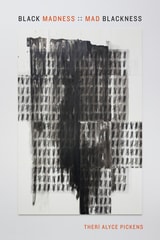
Black Madness
: Mad BlacknessTherí Alyce Pickens
Duke University Press, 2019
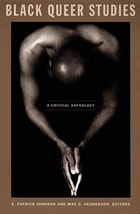
Black Queer Studies
A Critical AnthologyE. Patrick Johnson and Mae G. Henderson, eds.
Duke University Press, 2005
The contributors consider representations of the black queer body, black queer literature, the pedagogical implications of black queer studies, and the ways that gender and sexuality have been glossed over in black studies and race and class marginalized in queer studies. Whether exploring the closet as a racially loaded metaphor, arguing for the inclusion of diaspora studies in black queer studies, considering how the black lesbian voice that was so expressive in the 1970s and 1980s is all but inaudible today, or investigating how the social sciences have solidified racial and sexual exclusionary practices, these insightful essays signal an important and necessary expansion of queer studies.
Contributors. Bryant K. Alexander, Devon Carbado, Faedra Chatard Carpenter, Keith Clark, Cathy Cohen, Roderick A. Ferguson, Jewelle Gomez, Phillip Brian Harper, Mae G. Henderson, Sharon P. Holland, E. Patrick Johnson, Kara Keeling, Dwight A. McBride, Charles I. Nero, Marlon B. Ross, Rinaldo Walcott, Maurice O. Wallace
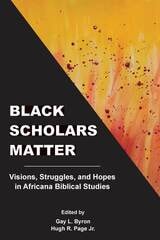
Black Scholars Matter
Visions, Struggles, and Hopes in Africana Biblical StudiesGay L. Byron
SBL Press, 2022
Distinctive, Powerful, Transformational
This book collects the presentations of twelve leading Africana scholars who participated in the groundbreaking #Black Scholars Matter virtual symposium held in August 2020 that was organized by the Society of Biblical Literature's Black Scholars Matter Task Force in coordination with the SBL’s Committee on Underrepresented Racial and Ethnic Minorities in the Profession. These scholars share their perspectives on biblical studies and their experiences in the discipline on a range of topics, including blatant and subtle forms of bias and racism; mentoring; lessons of struggle, sacrifice, and lack of support; reflections on the obstacles of national tragedies, geographical locations, and academic disciplines; and the challenges of creating a more welcoming environment for the next generation of Black biblical scholars. Eight additional contributors and stakeholders that have administrative and decision-making responsibilities within theological and other settings address the need for institutional and personal accountability. Contributors include Efraín Agosto, Cheryl B. Anderson, Randall C. Bailey, Gay L. Byron, Ronald Charles, Stephanie Buckhanon Crowder, Steed Vernyl Davidson, Sharon Watson Fluker, John F. Kutsko, Vanessa Lovelace, Madipoane Masenya (Ngwan'a Mphahlele), Raj Nadella, Hugh R. Page Jr., Adele Reinhartz, Kimberly D. Russaw, Abraham Smith, Shively T. J. Smith, Mai-Anh Le Tran, Renita J. Weems, and Vincent L. Wimbush.
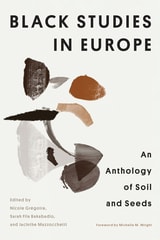
Black Studies in Europe
An Anthology of Soil and SeedsNicole Grégoire, Sarah Fila-Bakabadio, and Jacinthe Mazzocchetti (eds.)
Northwestern University Press, 2025
Long absent from research in the humanities and social sciences, Black people in continental Europe have become the focus of a growing body of literature in the past two decades that addresses their unique history and social positioning. Black Studies in Europe: An Anthology of Soil and Seeds brings together essays and case studies by a collective of scholars, writers, and activists to offer a critical overview of the emerging field of Black European studies and a vital reflection on contemporary epistemologies of European Blackness. This collection addresses key questions: What is Blackness from a European standpoint? Which epistemologies and theoretical tools have been used to offer a better understanding of Black experiences in Europe? How is this knowledge being produced and by whom? Can we define a common European conceptual framework for Black studies? Related to this work is an even more urgent enterprise: forging an epistemological distinction between the study of Black people and “Black studies” as an emancipatory project.
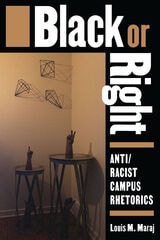
Black or Right
Anti/Racist Campus RhetoricsLouis M. Maraj
Utah State University Press, 2020
Offering four Black rhetorics as antiracist means for rhetorical reclamation—autoethnography, hashtagging, inter(con)textual reading, and reconceptualized disruption—the book uses Black feminist relationality via an African indigenous approach. Maraj examines fluid, quotidian ways Black folk engage anti/racism at historically white institutions in the United States in response to violent campus spaces, educational structures, protest movements, and policy practice. Black or Right’s experimental, creative style strives to undiscipline knowledge from academic confinement. Exercising different vantage points in each chapter—autoethnographer, digital media scholar/pedagogue, cultural rhetorician, and critical discourse analyst—Maraj challenges readers to ecologically understand shifting, multiple meanings of Blackness in knowledge-making. Black or Right’s expressive form, organization, narratives, and poetics intimately interweave with its argument that Black folk must continuously invent “otherwise” in reiterative escape from oppressive white spaces.
In centering Black experiences, Black theory, and diasporic Blackness, Black or Right mobilizes generative approaches to destabilizing institutional whiteness, as opposed to reparative attempts to “fix racism,” which often paradoxically center whiteness. It will be of interest to both academic and general readers and significant for specialists in cultural rhetorics, Black studies, and critical theory.
Blueprints
Bringing Poetry into CommunitiesKatharine Coles
University of Utah Press, 2011
How does one bring poetry to a community? And who is going to make it happen? In response to these questions posed by the Harriet Monroe Poetry Institute, Katharine Coles and a cadre of poets and artists provide this essential guide and inspiration. Blueprints creates for poets and arts organizers the sense that they are part of a larger, noble endeavor based in shared values and commitment to poetry. The first three sections include essays by a dozen poets and artists about the ways they have brought poetry into different kinds of communities. These essays demonstrate what has been done and what can be done and will inspire others to bring poetry into their own communities. The final section provides a practical "toolkit" loaded with experience-based advice and the tools and strategies necessary to acocmplish those endeavors.
Essayists:
Elizabeth Alexander
Sherwin Bitsui
Lee Briccetti
Alison Hawthorne Deming
Dana Gioia
Robert Hass
Bas Kwakman
Thomas Lux
Christopher Merrill
Luis Rodriguez
Anna Deavere Smith
Patricia Smith
Contributors to the Toolkit:
Elizabeth Allen
Susan Boskoff
Katharine Coles
Tree Swenson
Orlando White
Bodies of Knowledge
Embodied Rhetorics in Theory and PracticeA. Abby Knoblauch
Utah State University Press, 2021
The pieces in Bodies of Knowledge draw explicit attention to the impact of the body on text, the impact of the body in text, the impact of the body as text, and the impact of the body upon textual production. The contributors investigate embodied rhetorics through the lenses of race and ethnicity, gender and sexuality, disability and pain, technologies and ecologies, clothing and performance, and scent, silence, and touch. In doing so, they challenge the (false) notion that academic knowledge—that is, “real” knowledge—is disembodied and therefore presumed white, middle class, cis-het, able-bodied, and male. This collection lays bare how myriad bodies invent, construct, deliver, and experience the processes of knowledge building.
Experts in the field of writing studies provide the necessary theoretical frameworks to better understand productive (and unproductive) uses of embodied rhetorics within the academy and in the larger social realm. To help meet the theoretical and pedagogical needs of the discipline, Bodies of Knowledge addresses embodied rhetorics and embodied writing more broadly though a rich, varied, and intersectional approach. These authors address larger questions around embodiment while considering the various impacts of the body on theories and practices of rhetoric and composition.
Contributors: Scot Barnett, Margaret Booker, Katherine Bridgman, Sara DiCaglio, Kristie S. Fleckenstein, Vyshali Manivannan, Temptaous Mckoy, Julie Myatt, Julie Nelson, Ruth Osorio, Kate Pantelides, Caleb Pendygraft, Nadya Pittendrigh, Kellie Sharp-Hoskins, Anthony Stagliano, Megan Strom
Bosnian Studies
Perspectives from an Emerging FieldDzeneta Karabegovic
University of Missouri Press, 2023
Diaspora communities have formed in North America (especially in St. Louis), Europe, and Australia because of war and displacement, and have themselves become a considerable topic of study spanning the disciplines of anthropology, migration studies, political science, memory studies, conflict and security studies, psychology, and geography.
This volume seeks to illuminate how Bosnian migrant and diaspora scholars are contributing to the development of Bosnian Studies. The authors included in this volume are either writing from their (new) home bases in Australia, Austria, Canada, Switzerland, the United Kingdom, and the United States, among others, or they have returned to Bosnia after a period of migration. Their chapters have distinct entry points of inquiry, demonstrating how scholars have integrated Bosnia as a theme across the range of disciplines in which they are situated. The selections included in the volume range from literary analysis to personal memoirs of the conflict, from studies of heritage and identity to political science analysis of diaspora voting, to genocide studies and questions of (or lack of) ethics in the growing field of Bosnian Studies.
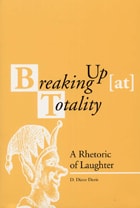
Breaking Up (at) Totality
A Rhetoric of LaughterD. Diane Davis
Southern Illinois University Press, 2000
Rhetoric and composition theory has shown a renewed interest in sophistic countertraditions, as seen in the work of such "postphilosophers" as Jacques Derrida, Michel Foucault, and Hélène Cixous, and of such rhetoricians as Susan Jarratt and Steven Mailloux. As D. Diane Davis traces today’s theoretical interest to those countertraditions, she also sets her sights beyond them.
Davis takes a “third sophistics” approach, one that focuses on the play of language that perpetually disrupts the “either/or” binary construction of dialectic. She concentrates on the nonsequential third—excess—that overflows language’s dichotomies. In this work, laughter operates as a trope for disruption or breaking up, which is, from Davis’s perspective, a joyfully destructive shattering of our confining conceptual frameworks.
Bridging Liberalism and Multiculturalism in American Education
Rob Reich
University of Chicago Press, 2002
Linking political theory with educational history and policy, Rob Reich offers provocative new answers to these questions. He develops a liberal theory of multicultural education in which the leading goal is the cultivation of individual autonomy in children. Reich draws out the policy implications of his theory through one of the first sustained considerations of homeschooling in American education. He also evaluates three of the most prominent trends in contemporary school reform—vouchers, charter schools, and the small school movement—and provides pedagogical recommendations that sharply challenge the reigning wisdom of many multicultural educators.
Written in clear and accessible language, this book will be of interest to political theorists, philosophers, educators, educational policymakers, and teachers.

Bringing It All Back Home
Essays on Cultural StudiesLawrence Grossberg
Duke University Press, 1997
The essays collected here recognize both the specificity of cultural studies, by locating it in a range of alternative critical perspectives and practices, and its breadth, by mapping the extent of its diversity. By discussing American scholars’ initial reception of cultural studies, its relation to communication studies, and its origins in leftist politics, Grossberg grounds the development of cultural studies in the United States in specific historical and theoretical context. His criticism of "easy" identification of cultural studies with the theories, models, and issues of communications and his challenge to some of cultural studies’ current directions and preoccupations indicates what may lie ahead for this dynamic field of study. Bringing together the Gramscian tradition of British cultural studies with the antimodernist philosophical positions of Foucault, Deleuze, and Guattari, Grossberg articulates an original and important vision of the role of the political intellectual in the contemporary world and offers an essential overview of the emerging field of cultural studies by one of its leading practitioners and theorists.