Results by title
1214 books match the query 'Subjects & Themes' and 69 start with b
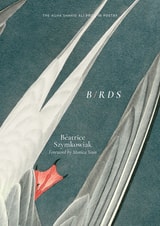
B/RDS
Béatrice Szymkowiak
University of Utah Press, 2023
B/RDS endeavors to dismantle discourses that create an artificial distinction between nature and humanity through a subversive erasure of an iconic work of natural history: John James Audubon’s Birds of America (1827-1838). This process of erasure considers the text of Birds of America as an archival cage. The author selectively erases words from the textual cage to reveal its ambiguity and the complex relationship between humanity and the other-than-human world. As the cage disappears, leaving a space for scarce, lyrical poems, birds break free, their voices inextricably entangled with ours.
Prose poems written in the author’s own words and prompted by the erasure process are also interspersed throughout the collection. These migratory poems, like ripples, trace the link between past and present and reveal the human-nature disconnect at the root cause of environmental and social problems, including the COVID-19 pandemic.
Along its five movements, B/RDS also explores how we can reimagine our relationship to environment through language within new frameworks of interconnectedness. Thus, as the collection resists the distinction between nature and culture on which traditional nature poetry relies, it also acts as an ecopoetic manifesto. It suggests that a critical, lyrical poetry could contribute to ecological awareness by singing humanity back within nature.
BLUE HIGHWAYS Revisited
Edgar I. Ailor III, Photography by Edgar I. Ailor III and Edgar I. Ailor IV, Foreword by William Least Heat-Moon
University of Missouri Press, 2012
Through illustrative photography and text, Ailor and his son capture once more the local color and beauty of the back roads, cafes, taverns, and people of Heat-Moon’s original trek. Almost every photograph in Blue Highways Revisited is referenced to a page in the original work. With side-by-side photographic comparisons of eleven of Heat-Moon’s characters, this new volume reflects upon and develops the memoir of Heat-Moon’s cross-country study of American culture and spirit. Photographs of Heat-Moon’s logbook entries, original manuscript pages, Olympia typewriter, Ford van, and other artifacts also give readers insight into Heat-Moon’s approach to his trip. Discussions with Heat-Moon about these archival images provide the reader insight into the travels and the writing of Blue Highways that only the perspective of the author could provide.
Blue Highways Revisited reaffirms that the "blue highway" serves as a romantic symbol of the free and restless American spirit, as the Ailors lose themselves to the open road as Heat-Moon did thirty years previously. This book reminds readers of the insatiable attraction of the “blue highway”—“But in those brevities just before dawn and a little after dusk—times neither day or night—the old roads return to the sky some of its color. Then, in truth, they carry a mysterious cast of blue, and it's that time when the pull of the blue highway is strongest, when the open road is a beckoning, a strangeness, a place where a man can lose himself” (Introduction to Blue Highways).
Back to the Woods
Cynthia Cruz
Four Way Books, 0
National Book Critics Circle Award Winner Cynthia Cruz reevaluates the paradox of the death drive in her eighth collection of poetry, Back to the Woods. Could it be that in ceaselessly snuffing ourselves out we are, in fact, trying to survive? In “Shine,” Cruz’s speaker attests that “if [she] had a home, it would be // a still in a film / where the sound / got jammed.” This book inhabits the silence of the empty orchestra pit, facing “dread, and its many / instruments of sorrow.” The quiet asks, “Did you love this world / and did this world / not love you?” We return to the site of our suffering, we perform the symphony of all our old injuries, to master what has broken us. To make possible the future, we retreat into the past. “I don’t know / the ending. // I don’t know anything,” our speaker insists, but she follows the wind’s off-kilter song of “winter / in the pines” and “the dissonance / of siskins.” Cruz heeds the urgency of our wandering, the mandate that we must get back to the woods, not simply for the forest to devour us — she recognizes in the oblivion “flooding out / from its spiral branches” an impossible promise. At the tree line, we might vanish to begin again.
Backcountry
Contemporary Writing in West VirginiaIRENE MCKINNEY
West Virginia University Press, 2002
This is as closely-knit an anthology as you are ever likely to see. It is as though a large, extended family were drawing on the same store of family stories, jokes, symbols, landscapes, animals, trees, language, and vernacular. How many snakes are in this book? How many foxes, possums? Fossils? And how very many coal mines? But it is not merely local references that unites these writers. There is a larger vision that ties these works together.
"The connection is not so much in mutual influence, though there is some of that, but in each writer’s total immersion in place. Even those writers who no longer live in the state remember the feel, the physical texture, the overwhelming and enfolding vegetal surround of the place." Editor, Irene McKinney
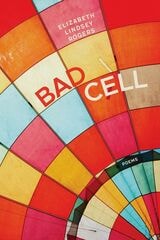
Bad Cell
PoemsElizabeth Lindsey Rogers
Acre Books, 2027
Chronicling reproduction and parenting within a lesbian relationship, this poetry collection reveals both the anxieties and awe inspired by rearing children.
In her frank, vulnerable third book of poetry, Elizabeth Lindsey Rogers considers queer kinship through scientific, cultural, and personal lenses. Bad Cell presents perspectives on family and inheritance that are at once granular and comprehensive. From a pregnant woman being mistaken as a man by a store clerk to some “FAQs Re: Queers & Reproduction” that dispel stereotypes, the collection celebrates the fluidity of gender.
Early in the volume, Rogers addresses the emotional and physical complications of fertility treatment and pregnancy loss, a medical journey that, though harrowing, is gorgeously rendered in taut lyric language. Later, in forms like the abecedarian, definition poem, questionnaire, haibun, and a sonnet crown, the poet looks at how cells themselves—the stuff of life—divide and recombine. As in previous collections, Rogers leans into science-inspired verse, showcasing her talent for turning small-scale mechanics into meaningful metaphors.
The book also supports an openness to neurodivergence in children: “I want to assemble / something that can speak / for everyone,” says the speaker of “Apraxia.” And Rogers does, with the skill of a seasoned poet and essay writer, whose eye for the particularness of the world is encompassing and gives new insight into the experience of parenting: “But I’m not mom, I tell / writers who think I’ve gone soft, given up deeper subjects. As if these wild, / xenogeneic offspring aren’t a full-on wrestle with the deep.”
Balkan Blues
Writing Out of YugoslaviaJoanna Labon
Northwestern University Press, 1995
Contributors: Dubravka Ugrešić, Bogdan Bogdanović, Dragan Velikić, Danilo Kiš, Drago Jančar, Mirko Kovač, Goran Stefanovski, Dževad Karahasan, and Slobodan Blagojević.
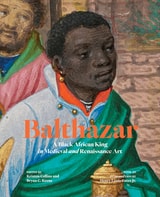
Balthazar
A Black African King in Medieval and Renaissance ArtKristen Collins
J. Paul Getty Trust, The, 0
According to the Gospel of Matthew, magi from the East, following a star, traveled to Jerusalem bearing precious gifts for the infant Jesus. The magi were revered as wise men and later as kings. Over time, one of the three came to be known as Balthazar and to be depicted as a Black man.
Balthazar was familiar to medieval Europeans, appearing in paintings, manuscript illuminations, mosaics, carved ivories, and jewelry. But the origin story of this fascinating character uncovers intricate ties between Europe and Africa, including trade and diplomacy as well as colonization and enslavement.
In this book, experts in the fields of Ethiopian, West African, Nubian, and Western European art explore the representation of Balthazar as a Black African king. They examine exceptional art that portrays the European fantasy of the Black magus while offering clues about the very real Africans who may have inspired these images. Along the way, the authors chronicle the Black presence in premodern Europe, where free and enslaved Black people moved through public spaces and courtly circles. The volume’s lavish illustrations include selected works by contemporary artists who creatively challenge traditional depictions of Black history.

Baltimore Portraits
Amos Badertscher
Duke University Press, 1999
The photographer’s focus on content rather than on elaborate technique reveals the intensely personal—and, indeed, autobiographical—nature of his portraits. Their simplicity along with the text’s intimacy affects the viewer in ways not easily forgotten. An introduction by Tyler Curtain contextualizes the photographs both within the history of Baltimore and its queer subculture and in relationship to contemporaneous work by photographers Nan Goldin, Robert Mapplethorpe, Cindy Sherman, Duane Michaels, and others. Curtain also positions the underlying concerns of Bardertscher’s art in relation to gay and lesbian cultural politics.
This striking collection of portraits, along with the photographer’s moving text, will impact not only a general audience of photographers and enthusiasts of the art but also those engaged with gay and lesbian studies, queer theory, and cultural studies in general. It is published in association with the Duke University Museum of Art.
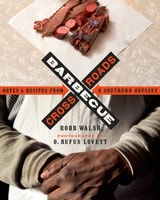
Barbecue Crossroads
Notes and Recipes from a Southern OdysseyBy Robb Walsh
University of Texas Press, 2013
In stories, recipes, and photographs, James Beard Award–winning writer Robb Walsh and acclaimed documentary photographer O. Rufus Lovett take us on a barbecue odyssey from East Texas to the Carolinas and back. In Barbecue Crossroads, we meet the pitmasters who still use old-fashioned wood-fired pits, and we sample some of their succulent pork shoulders, whole hogs, savory beef, sausage, mutton, and even some barbecued baloney. Recipes for these and the side dishes, sauces, and desserts that come with them are painstakingly recorded and tested.
But Barbecue Crossroads is more than a cookbook; it is a trip back to the roots of our oldest artisan food tradition and a look at how Southern culture is changing. Walsh and Lovett trace the lineage of Southern barbecue backwards through time as they travel across a part of the country where slow-cooked meat has long been part of everyday life. What they find is not one story, but many. They visit legendary joints that don’t live up to their reputations—and discover unknown places that deserve more attention. They tell us why the corporatizing of agriculture is making it difficult for pitmasters to afford hickory wood or find whole hogs that fit on a pit.
Walsh and Lovett also remind us of myriad ways that race weaves in and out of the barbecue story, from African American cooking techniques and recipes to the tastes of migrant farmworkers who ate their barbecue in meat markets, gas stations, and convenience stores because they weren’t welcome in restaurants. The authors also expose the ways that barbecue competitions and TV shows are undermining traditional barbecue culture. And they predict that the revival of the community barbecue tradition may well be its salvation.
Barley Child
Greg Rappleye
University of Arkansas Press, 2025
Winner, 2026 Society of Midland Authors Book Award
Finalist, 2026 Kingsley Tufts Poetry Award
Finalist, 2026 Griffin Poetry Prize
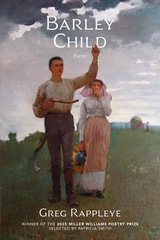
Barley Child, Greg Rappleye’s fifth collection, draws from family legends, whispered stories, and sworn denials across four generations of Irish American lives—recalled, imagined, and reconstructed from census records, old letters, church registries, yellowed newspaper clippings, and a few odd photographs in which the human figures are often unnamed. The sum of these affidavits, arrayed across the lyric and narrative lines of these poems, is an electrifying human choir—male and female, child and adult, Irish and American—their voices rising out of shame, poverty, absurdity, violence, a strained Catholic faith, and a virulent legacy of madness and alcoholism.
Free of nostalgia and cant, with a sharp Irish wit that often braves nearly monstrous subject matter, and reported with eyes that seldom mist over, Barley Child is a volume that once again confirms Greg Rappleye as a poet of witness.
Becoming Animal
Teresa Präauer
Seagull Books, 2024
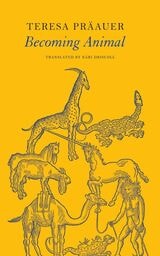
In this gripping philosophical and cultural exploration, Teresa Präauer sets out to investigate figures of transformation, transmission, and translation—across languages, cultures, genres, media, species, and spaces. Hybrids, chimeras, monsters, and liminal creatures of all sorts inhabit these pages, as indeed they do the pages of the cultural archive from Antiquity and the Middle Ages to the present day: everything from the harpies, ape-men, and cynocephali that inhabit the edges of medieval maps and taxonomies to the Krampuses and Furries that roam through Alpine villages and convention centers today. Yet these chimeras are not aberrations; rather, they reveal an essential truth about culture and artistic expression.
What emerges in Becoming Animal is a kaleidoscopic image of culture as the constant probing of the limits of the sayable, as an unending process of attempting to capture in words and symbols that which cannot be pinned down.
Behind the Angel of History
The "Angelus Novus" and Its InterleafAnnie Bourneuf
University of Chicago Press, 2022
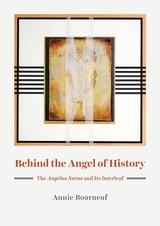
This book begins with artist R. H. Quaytman uncovering something startling about a picture by Paul Klee. Pasted beneath Klee’s 1920 Angelus Novus—famous for its role in the writings of its first owner, Walter Benjamin—Quaytman found that Klee had interleaved a nineteenth-century engraving of Martin Luther, leaving just enough visible to provoke questions.
Behind the Angel of History reveals why this hidden face matters, delving into the intertwined artistic, political, and theological issues consuming Germany in the wake of the Great War. With the Angelus Novus, Klee responded to a growing call for a new religious art. For Benjamin, Klee’s Angelus became bound up with the prospect of meaningful dialogue among religions in Germany.
Reflecting on Klee’s, Benjamin’s, and Quaytman’s strategies of superimposing conflicting images, Annie Bourneuf reveals new dimensions of complexity in this iconic work and the writing it inspired.
Behold an Animal
Four Exorbitant ReadingsThangam Ravindranathan
Northwestern University Press, 2019
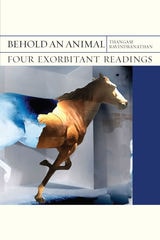
As animals recede from our world, what tale is being told by literature’s creatures? Behold an Animal: Four Exorbitant Readings examines incongruous animals in the works of four major contemporary French writers: an airborne horse in a novel by Jean-Philippe Toussaint, extinct orangutans in Éric Chevillard, stray dogs in Marie NDiaye, vanishing (bits of) hedgehogs in Marie Darrieussecq. Resisting naturalist assumptions that an animal in a story is simply—literally or metaphorically—an animal, Thangam Ravindranathan understands it rather as the location of something missing. The animal is a lure: an unfinished figure fleeing the frame, crossing bounds of period, genre, even medium and language. Its flight traces an exorbitant (self-)portrait in which thinking admits to its commerce with life and flesh. It is in its animals, at the same time unbearably real and exquisitely unreal, that literature may today be closest to philosophy.
This book’s primary focus is the contemporary French novel and continental philosophy. In addition to Toussaint, Chevillard, NDiaye, and Darrieussecq, it engages the work of Jean de La Fontaine, Eadweard Muybridge, Edgar Allan Poe, Lewis Carroll, Samuel Beckett, and Francis Ponge.
Being Human
Political Modernity and Hospitality in Kurdistan-IraqFazil Moradi
Rutgers University Press, 2024
Beleaguered Poets and Leftist Critics
Stevens, Cummings, Frost, and Williams in the 1930sMilton A. Cohen
University of Alabama Press, 2011
A critical examination of modernist poetry and the demands of leftist literary theory.
Different as they were as poets, Wallace Stevens, E. E. Cummings, Robert Frost, and William Carlos Williams grappled with the highly charged literary politics of the 1930s in comparable ways. As other writers moved sharply to the Left, and as leftist critics promulgated a proletarian aesthetics, these modernist poets keenly felt the pressure of the times and politicized literary scene. All four poets saw their reputations critically challenged in these years and felt compelled to respond to the new politics, literary and national, in distinct ways, ranging from rejection to involvement.
Beleaguered Poets and Leftist Critics closely examines the dynamics of these responses: what these four poets wrote—in letters, essays, lectures, fiction (for Williams), and most importantly, in their poems; what they believed politically and aesthetically; how critics, particularly leftist critics, reviewed their work; how these poets reacted to that criticism and to the broader milieu of leftism. Each poet’s response and its subsequent impact on his poetic output is a unique case study of the conflicting demands of art and politics in a time of great social change.
Believe What You Can
PoemsMarc Harshman
West Virginia University Press, 2016
These difficulties come “not quite haphazardly” and not without a “last light”—something “beyond” and as “sweet as apples.” With these moments of grace, Harshman taps into the satisfying richness that comes from unexpected revelations, helping us rise above the fragile recesses of life and death, all while portraying the lost rural worlds of the Midwest and Appalachia in ways untouched by sentiment or nostalgia.
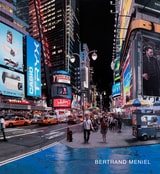
Bertrand Meniel
Paintings, 1996-2024Bertrand Meniel
The Artist Book Foundation, 2024
Using composite digital photography, self-taught artist Bertrand Meniel incorporates more detail into each of his cityscapes than any other Photorealist to date.
Photorealism is a genre of painting that developed in the United States and Europe using high-resolution photography as its primary source material. Embracing digital photography perhaps more than any other artist working in this genre, Bertrand Meniel is able to incorporate an astonishing amount of detail into his renderings of cityscapes in New York City, Miami, and Paris. Using a variety of photographs of his chosen subject, he manipulates an image to perfection, focusing simultaneously on the foreground and background by combining hundreds of shots on a computer screen.
His choice to depict iconic American scenes in his paintings, particularly those associated with the “American Way of Life,” reflects not just a technical mastery of Photorealism but a deep emotional connection to the culture that captivated him during his youth. His unique perspective, influenced by French artistic traditions and shaped by exposure to American pop culture, allows him to capture in his art the essence of what may be best described as the “New York State of Mind."
Between Lakes
Jeffrey Harrison
Four Way Books, 2020
Bewilderment
New Poems and TranslationsDavid Ferry
University of Chicago Press, 2012
Winner of the 2012 National Book Award for Poetry.
To read David Ferry’s Bewilderment is to be reminded that poetry of the highest order can be made by the subtlest of means. The passionate nature and originality of Ferry’s prosodic daring works astonishing transformations that take your breath away. In poem after poem, his diction modulates beautifully between plainspoken high eloquence and colloquial vigor, making his distinctive speech one of the most interesting and ravishing achievements of the past half century. Ferry has fully realized both the potential for vocal expressiveness in his phrasing and the way his phrasing plays against—and with—his genius for metrical variation. His vocal phrasing thus becomes an amazingly flexible instrument of psychological and spiritual inquiry. Most poets write inside a very narrow range of experience and feeling, whether in free or metered verse. But Ferry’s use of meter tends to enhance the colloquial nature of his writing, while giving him access to an immense variety of feeling. Sometimes that feeling is so powerful it’s like witnessing a volcanologist taking measurements in the midst of an eruption.
From Bewilderment:
October
The day was hot, and entirely breathless, so
The remarkably quiet remarkably steady leaf fall
Seemed as if it had no cause at all.
The ticking sound of falling leaves was like
The ticking sound of gentle rainfall as
They gently fell on leaves already fallen,
Or as, when as they passed them in their falling,
Now and again it happened that one of them touched
One or another leaf as yet not falling,
Still clinging to the idea of being summer:
As if the leaves that were falling, but not the day,
Had read, and understood, the calendar.
Beyond Hill and Hollow
Original Readings in Appalachian Women’s StudiesElizabeth S. D. Engelhardt
Ohio University Press, 2004
Women’s studies unites with Appalachian studies in Beyond Hill and Hollow, the first book to focus exclusively on studies of Appalachia’s women. Featuring the work of historians, linguists, sociologists, performance artists, literary critics, theater scholars, and others, the collection portrays the diverse cultures of Appalachian women.
The chapters in Beyond Hill and Hollow examine the hidden lives of Appalachian prostitutes, urban Appalachian women in the 1800s, rural women in company towns, and an African American Appalachian poet from the 1900s. Contributors look at Appalachian opera houses, Jewish women in the coalfields, the writings of Wilma Dykeman and Sharyn McCrumb, and activists in out-migrant communities like Cincinnati. With an introduction by editor Elizabeth S. D. Engelhardt, Beyond Hill and Hollow firmly establishes the field of Appalachian Women’s Studies.
Appropriate both as a reference and as a classroom text, Beyond Hill and Hollow expands our understanding of Appalachian women’s lives. Readers, whether from the region or beyond, may recognize themselves or women they know in its pages.
Beyond the Reach of Time and Change
Native American Reflections on the Frank A. Rinehart Photograph CollectionEdited by Simon J. Ortiz
University of Arizona Press, 2004
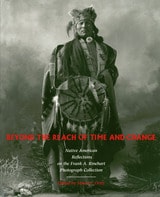
This book provides an unusual perspective on the Rinehart collection. It features one hundred outstanding images printed from the original negatives made by Rinehart and Muhr at the Congress and over the course of the next two years. It also includes 14 essays by modern Native American writers, artists, and educators—some of them descendants of the individuals photographed—reflecting on the place of these images in their heritage.
Beyond the Reach of Time and Change is not another coffee-table book of historical Indian photographs but rather a conversation between Indian people of a century ago and today. Just as the Rinehart collection offers today's Native Americans a unique connection to the past, this book offers all readers a positive understanding of continuity and endurance within the American Indian community.
Bianca
Eugenia Leigh
Four Way Books, 2023
“I thought I forgave you,” Eugenia Leigh tells the specter of her father in Bianca. “Then I took root and became / someone’s mother.” Leigh’s gripping second collection introduces us to a woman managing marriage, motherhood, and mental illness as her childhood abuse resurfaces in the light of “this honeyed life.” Leigh strives to reconcile the disconnect between her past and her present as she confronts the inherited violence mired in the body’s history. As she “choose[s] to be tender to [her] child—a choice / [her] mangled brain makes each day,” memories arise, asking the mother in her to tend, also, to the girl she once was. Thus, we meet her manic alter ego, whose history becomes the gospel of Bianca: “We all called her Bianca. My fever, my havoc, my tilt.” These poems recover and reconsider Leigh’s girlhood and young adulthood with the added context of PTSD and Bipolar Disorder. They document the labyrinth of a woman breaking free from the cycle of abuse, moving from anger to grief, from self-doubt to self-acceptance. Bianca is ultimately the testimony of one woman’s daily recommitment to this life. To living. “I expected to die much younger than I am now,” Leigh writes, in awe of the strangeness of now, of “every quiet and colossal joy.”
Biblical Themes in Science Fiction
Nicole L. Tilford
SBL Press, 2023
What does a first-generation female robot have in common with the biblical figure of Eve? Or an intergenerational spaceship with Noah’s ark? If a computer compiles a deceased person’s photographs and digital activities into a virtual avatar, is that a form of resurrection? Such seemingly unlikely scenarios are common in science fiction—and science fiction writers often draw on people, places, and events from biblical texts, assuming that audiences will understand the parallels. Biblical Themes in Science Fiction is a journey from creation to apocalypse where contributors Frank Bosman, Rhonda Burnette-Bletsch, Krista N. Dalton, Tom de Bruin, James F. McGrath, Kelly J. Murphy, Steven J. Schweitzer, Jason A. Staples, Nicole L. Tilford, Christine Wenderoth, and Jackie Wyse-Rhodes trace biblical themes as they appear in contemporary science fiction, including Doctor Who, Lilith’s Brood, The Handmaid’s Tale, Battlestar Galactica, and Fallout 3. Essays are supplemented by images and key science fiction sources for diving deeper into how the Bible influenced writers and creators. An afterword considers the imaginative impulses common to both science fiction and biblical texts.
Bicycle Cowboy
And Other Poems About Growing UpRon Helmboldt
Parkhurst Brothers, Inc., 2016

Bicycles
Vintage People on Photo PostcardsTom Phillips
Bodleian Library Publishing, 2011
Birches
Carl Adamshick
Four Way Books, 2019
Birth Figures
Early Modern Prints and the Pregnant BodyRebecca Whiteley
University of Chicago Press, 2023
Birth figures are printed images of the pregnant womb, always shown in series, that depict the variety of ways in which a fetus can present for birth. Historian Rebecca Whiteley coined the term and here offers the first systematic analysis of the images’ creation, use, and impact. Whiteley reveals their origins in ancient medicine and explores their inclusion in many medieval gynecological manuscripts, focusing on their explosion in printed midwifery and surgical books in Western Europe from the mid-sixteenth to the mid-eighteenth century. During this period, birth figures formed a key part of the visual culture of medicine and midwifery and were widely produced. They reflected and shaped how the pregnant body was known and treated. And by providing crucial bodily knowledge to midwives and surgeons, birth figures were also deeply entangled with wider cultural preoccupations with generation and creativity, female power and agency, knowledge and its dissemination, and even the condition of the human in the universe.
Birth Figures studies how different kinds of people understood childbirth and engaged with midwifery manuals, from learned physicians to midwives to illiterate listeners. Rich and detailed, this vital history reveals the importance of birth figures in how midwifery was practiced and in how people, both medical professionals and lay readers, envisioned and understood the mysterious state of pregnancy.
Bisquick
An American SeanceC. Russell Price
Northwestern University Press, 2026
A breathtaking gallop through spectral planes, grief, and ghosts
Grief is a rodeo filled with ghost clowns. In Bisquick: An American Seance, C. Russell Price explores spiritualism and the fetishization of the Midwest cowboy aesthetic, creating a vibrant world inhabited by three unforgettable characters: the speaker, a traumatized eco-anarchist working through grief; Ghost Cowboy, a ghost dream boyfriend hell-bent on hunting predators of the poor; and Bisquick, a blue ghost horse who just wants to dance. This spectral trio boogies, copulates, and fights against a system that ghosted them long before the demise of their physical bodies, determined to stay saddled to their dreams. Price gallops through the widths of time, the geography of the United States, the spectral plane, and the leather BDSM scene as they attempt to answer this provocative collection’s central question: If the dead could talk, wouldn’t they have something better to say?
Bits and Pieces
Screening Animal Life and DeathSarah O'Brien
University of Michigan Press, 2023
Black Aliens
Kinship in the Cosmic DiasporaJoanna Davis-McElligatt
The Ohio State University Press, 2026
Analyzing prose, poetry, film, record albums, comic books, illustrations, art installations, and exhibition catalogues, Davis-McElligatt traces how Octavia E. Butler, Maisy Card, Sun Ra, and Dwayne McDuffie and M. D. Bright visualize aliens whose bodies and beings are subject to interpellation as Black on Earth. She argues that these creators intentionally locate the Black alien as a subject whose galactic bonds are constructed in and as narrative form itself, made manifest in plot, characterization, and narrativization. In recasting narrative spacetime, they reimagine Black entanglements, kinship systems, and histories as a cosmic diaspora.
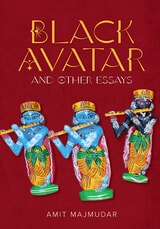
Black Avatar
and Other EssaysAmit Majmudar
Acre Books, 2023
The eight pieces in this deeply engaging volume reflect author Amit Majmudar’s comprehensive studies of American, European, and Indian traditions, as well as his experiences in both suburban Ohio and the western Indian state of Gujarat. The volume begins with the title piece, a fifteen-part examination of “How Colorism Came to India.” Tracing the evolution of India’s bias in favor of light skin, Majmudar reflects on the effects of colonialism, drawing upon sources ranging from early Sanskrit texts to contemporary film and television.
Other essays illuminate subjects both timely and timeless. “The Ramayana and the Birth of Poetry” discusses how suffering is portrayed in art and literature (“The spectrum of suffering: slapstick on one end, scripture on the other, with fiction and poetry . . . in the vastness between them”), while in “Five Famous Asian War Photographs”—a 2018 Best American Essays selection—Majmudar analyzes why these iconic images of atrocity have such emotional resonance. In “Nature/Worship,” another multi-part piece, the author turns his attention to climate change, linking notions of environmentalism to his ancestral tradition of finding divinity within the natural world, connections that form the basis of religious belief.
Perhaps the greatest achievement of these wide-ranging essays is the prose itself—learned yet lively, erudite yet accessible—nimbly revealing the workings of a wonderfully original mind.
Black Box Syndrome
Jose-Luis Moctezuma
Omnidawn, 2023
Jose-Luis Moctezuma’s Black Box Syndrome is a series of poems—or “black boxes”—based on black hexagrams in the I Ching, an ancient Chinese divination text. Following the aleatoric tradition popularized by the surrealists and extended by the work of John Cage and Jackson Maclow, these poems cast their lenses on the hazards of the incessant financialization of everyday life. Synthesizing chance-operational aesthetics with Aztec anatomical science, conspiracy theory with systems theory, and the black box model with the concept of the “influencing machine,” Black Box Syndrome explores tensions between lyric excess and digital compaction in the age of pandemic. Over and against the corrosive world-shrinking effects of Wall Street risk management and futures trading, the black boxes in this book propose a counter-divination that distorts, deranges, and decolonizes the logic of empire.
Black Box
PoemsFrank X Walker
Ohio University Press, 2005
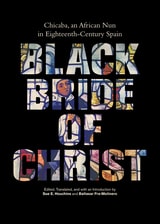
Black Bride of Christ
Chicaba, an African Nun in Eighteenth-Century SpainSue E. Houchins
Vanderbilt University Press, 2018
This volume, the first English translation of the Compendio, is a hagiography, an example of a biographical genre that recounts the lives and describes the spiritual practices of saints officially canonized by the Church, respected ecclesiastical leaders, or holy people informally recognized by local devotees. The effort to have Chicaba canonized continues today, as Fra-Molinero and Houchins explore in their introduction to the volume.
Black California Gold
Wendy M. Thompson
Bucknell University Press, 2025
In this arresting debut poetry collection, Thompson traces the past and present of California’s Bay Area, exploring themes of family, migration, girlhood, and identity against a backdrop of urban redevelopment, advanced gentrification, and the erasure of Black communities. Traveling down both familiar highways and obscure side streets, her poems map a region where race, class, and language are just some of the fault lines that divide communities and produce periodic tremors of violence and resistance.
Confronting assimilationist myths of the American Dream, Black California Gold depicts a setting that is less a melting pot than a smelting pot, subjecting different ethnic groups to searing trials and extreme pressures that threaten to break them down entirely. Yet, it also celebrates the Black residents of the Bay Area who have struggled to sustain home and hope amid increasingly desperate conditions.

Black Flights
The Flying African Myth in Postplantation LiteratureBruno Enrico
University of Iowa Press, 2027
Black Knights
Arabic Epic and the Making of Medieval RaceRachel Schine
University of Chicago Press, 2024
In Black Knights, Rachel Schine reveals how the Arabic-speaking world developed a different form of racial knowledge than their European neighbors during the Middle Ages. Unlike in European vernaculars, Arabic-language ideas about ethnic difference emerged from conversations extending beyond the Mediterranean, from the Sahara to the Indian Ocean. In these discourses, Schine argues, racialized blackness became central to ideas about a global, ethnically inclusive Muslim world.
Schine traces the emergence of these new racial logics through popular Islamic epics, drawing on legal, medical, and religious literatures from the period to excavate a diverse and ever-changing conception of blackness and race. The result is a theoretically nuanced case for the existence and malleability of racial logics in premodern Islamic contexts across a variety of social and literary formations.
Blaze Orange
Whitetail Deer Hunting in WisconsinTravis Dewitz
Wisconsin Historical Society Press, 2014
Bloodletting
Kimberly Reyes
Omnidawn, 2025
This is a collection of poems about how we find and cultivate love amid wars, including wars that often go ignored. Throughout Bloodletting, Kimberly Reyes considers how we define love and who gets to experience it, paying special attention to the ways that race and sex influence how we are perceived and valued by society. Through the voice of a Black woman coming to terms with her own perspectives on relationship-building, Reyes shows the damage that contemporary culture can do to women, and Black women in particular. Resisting passivity, Reyes’s poetry cuts through pervasive doom scrolling, virtue signaling, and parasocial relationships, inviting readers to remember what care is really supposed to feel like.
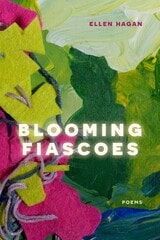
Blooming Fiascoes
PoemsEllen Hagan
Northwestern University Press, 2021
Blooming Fiascoes is a collective of verse that deconstructs identity. We are beautiful and monstrous. We live in a beautiful and monstrous world. Ellen Hagan poetically mirrors these metaphoric adversaries, drawing on her experiences as a woman, an artist, a mother, a transplanted southerner, and above all, a human being. She plumbs origins in history, body, and living to question how we reckon our whole selves in the catacombs of a world gone mad:
We mourn, we bless, / we blow, we wail, we / wind—down, we sip, / we spin, we blind, we / bend, bow & hem. We / hip, we blend, we bind, / we shake, we shine, / shine. We lips & we / teeth, we praise & protest.
In these poems, Assyrian, Italian, and Irish lines seep deeper into a body that is growing older but remains engaged with unruly encounters: the experience of raising daughters, sexual freedom, and squaring body image against the body’s prohibitions. This is a work where the legacy is still evolving and always asking questions in real time. Blooming Fiascos spindles poetry that is not afraid to see itself and the lives it inhabits.
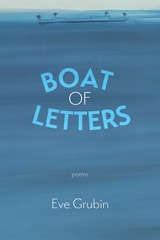
Boat of Letters
Eve Grubin
Four Way Books, 2025
In her much anticipated second full-length collection of poems, Eve Grubin conjures an "inky swamp, wild and warm, / where leaves hang down like muted lamps." Grubin navigates wild waters in a "boat of letters" she constructs, with poems narrating a daughter in mourning for her mother in adulthood's half-light; a wife in the middle of life's existential marathon; a mother raising two children in the terrifying present; an American living in London; a Jewish woman following religious tradition in what can feel like a faithless world. Grubin shapes language and silences into a bridge that holds us between longing and understanding, between effort and the holy ground of that unattainable destination. "The Poetics of Reticence" describes hovering above the waters where "there is no vessel; there are no oars," just the "sounds of a boat creaking," a material contradiction in the hushed void. "Silence is praise: words cannot touch glory," Grubin writes, but she also demonstrates what wonders our speech makes possible. In one poem, the narrator looks back at her wedding and considers how little she knew about marriage, and thinking in the context of her husband's area of expertise, palaeography, she reflects, "I didn't know that when two graphemes join / in a single glyph there is potential for stylistic re-imaginings, / for inventive, elegant variations." All is preordained, she seems to say, while paradoxically, we re-imagine and invent. And even as we create our future, we embrace the beauty of all that we cannot know: "Yesterday, we talked about the shade / of a certain blue mentioned in the Torah. / Was it the blue of our son's lips after a bath? // Or the blue of redemption? // Or the dark blue of the sky / the night we walked across the sands, the seas all around us."

Boat
PoemsChristopher Merrill
Tupelo Press, 2013
Boaz Vaadia
SculptureBoaz Vaadia
The Artist Book Foundation, 2016
Boaz Vaadia (1951–2017), the internationally acclaimed sculptor, amassed a prodigious body of work over his 40-year artistic career. With Boaz Vaadia: Sculpture, Grounds For Sculpture in Hamilton, New Jersey, presented the first retrospective exhibition of his indoor and outdoor works in 2016 in a comprehensive survey of the artist's journey from abstraction to figuration. Detailing 125 works installed in two buildings and throughout the 42-acre sculpture park, the exhibition's color catalogue presents Vaadia's ritualistic and highly personal early works, his later sculptures in stone, slate, and bronze, and his explorations of the ancient genre of bas-relief. With the global recognition his art has received, he continued working at the edge, discovering new possibilities in the constantly shifting grounds of his sculpture. Boaz Vaadia: Sculpture is a celebration of the artist's long and prolific career, and his unwavering advancement of his art.
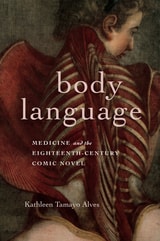
Body Language
Medicine and the Eighteenth-Century Comic NovelKathleen Tamayo Alves
Bucknell University Press, 2026
Body Language examines the complex intersections of British eighteenth-century comic fiction and medical discourse. By engaging medical writings of renowned and widely-read physicians of the Enlightenment such as John Freind, Thomas Sydenham, Albrecht von Haller, John Whytt, and William Cullen, with novels of humor by Henry Fielding, Tobias Smollett, Laurence Sterne, and Charlotte Lennox, Alves explains how medicine shaped comic language by dramatizing female-specific phenomena like menstruation, hysteria, nervous disorders, and pregnancy. In these novels, the medical belief that women are incapable of bodily self-regulation becomes an imperative for policing women’s bodies and highlights the enduring shortcomings of patriarchal systems. Ultimately, these comic representations offer a counternarrative of women’s bodies, agency, and selfhood, exposing masculine anxieties about the effectiveness of marriage to regulate women’s sexuality.
Published by Bucknell University Press. Distributed worldwide by Rutgers University Press.
Bombay Modern
Arun Kolatkar and Bilingual Literary CultureAnjali Nerlekar
Northwestern University Press, 2016
Bombay Modern uncovers an alternative and provincial modernism through poetry, a genre that is marginal to postcolonial studies, and through bilingual scholarship across English and Marathi texts, a methodology that is currently peripheral at best to both modernist studies and postcolonial literary criticism in India. Eschewing any attempt to define an overarching or universal modernism, Bombay Modern delimits its sphere of study to "Bombay" and to the "post-1960" (the sathottari period) in an attempt to examine at close range the specific way in which this poetry redeployed the regional, the national, and the international to create a very tangible yet transient local.
Bonfires & Other Vigils
PoemsColleen Alles
University of Alabama Press, 2024
Any event can be a vigil: a walk by a river, a flu shot at Walgreens, an hour spent by a bird feeder attracting mostly cardinals. A vigil means you are keeping watch, and these poems are watching the world around them—and the worlds beneath those worlds, too. The poems in this collection pull from dreams and apparitions as much as they do reality: a woman in a house, a coffee mug, a book of matches, a load of unfolded laundry, a goldfish won at a county fair. All is fair game. Bonfires & Other Vigils celebrates the watching in unconventional ways. Readers can expect to revel in the elusive wonder of haziness, otherworldliness, and wildness of examining life through lenses of vigilant dreaming.
Book Anatomy
Body Politics and the Materiality of Indigenous Book HistoryAmy Gore
University of Massachusetts Press, 2023
Winner of the Beatrice Medicine Award for Scholarship in American Indian Studies
From the marginalia of their readers to the social and cultural means of their production, books bear the imprint of our humanity. Embodying the marks, traces, and scars of colonial survival, Indigenous books are contested spaces. A constellation of nontextual components surrounded Native American–authored publications of the long nineteenth century, shaping how these books were read and understood—including illustrations, typefaces, explanatory prefaces, appendices, copyright statements, author portraits, and more.
Centering Indigenous writers, Book Anatomy explores works from John Rollin Ridge, Sarah Winnemucca Hopkins, Pretty Shield, and D’Arcy McNickle published between 1854 and 1936. In examining critical moments of junction between Indigenous books and a mainstream literary marketplace, Amy Gore argues that the reprints, editions, and paratextual elements of Indigenous books matter: they embody a frontline of colonization in which Native authors battle the public perception and reception of Indigenous books, negotiate representations of Indigenous bodies, and fight for authority and ownership over their literary work.
Borderland Apocrypha
Anthony Cody
Omnidawn, 2019
Rather than a proposal for re-imagining the US/Mexico border, Cody’s collection is an avant-garde examination of how borderlands have remained occupied spaces, and of the necessity of liberation to usher the earth and its people toward healing. Part auto-historia, part docu-poetic, part visual monument, part myth-making, Borderland Apocrypha unearths history in order to work toward survival, reckoning, and the building of a future that both acknowledges and moves on from tragedies of the past.
Borderland Apocrypha won Omnidawn's 2018 1st/2nd Book Prize.
Borgo Of The Holy Ghost
Stephen McLeod foreword by Richard Howard
Utah State University Press, 2002
Boston
Voices and VisionsShaun O'Connell
University of Massachusetts Press, 2010
“New England was founded consciously, and in no fit of absence of mind,” observed historian Samuel Eliot Morison on the establishment of the Bay Colony in 1630 on the narrow, mountainous Shawmut peninsula of what became Massachusetts. That self-conscious presence of mind has endured for four centuries. Boston has been shaped and sustained by observation, imagination, and interpretation. As a result, the evolving vision of Boston has yielded a compelling literary record.
In this wide-ranging anthology, Shaun O'Connell includes a generous sampling of those who have recorded, revised, and redefined the vision of Boston. Anne Bradstreet, Nathaniel Hawthorne, Henry James, W. E. B. Du Bois, Mary Antin, Edwin O'Connor, John Updike, and many others eloquently evoke and explain Boston in these pages.
From John Winthrop's “city upon a hill” sermon, delivered aboard the Arbella before his followers landed in 1630 in the place they would call Boston, to Robert Lowell's “For the Union Dead,” a poem delivered in Boston's Public Garden in 1960, writers have continued to invoke the high purposes for which the city was founded, sometimes in praise of the city, but often in what Robert Frost named a “lover's quarrel,” in works that called attention to the city's failures to fulfill its promises. In the twenty-first century some writers continue to celebrate or to castigate the city, while others look back to Boston's origins to reassess its founders and renew its covenant of high purpose.
This is an interpretive anthology—one that includes commentary as well as writings. Section introductions provide historical and biographical context, offer analysis that stresses the thematic relevance of each selection, and explore the pattern of their relations. Rather than present a random array of writers who happen to have been Greater Bostonians, O'Connell focuses on those authors who possessed a commitment to the sense of place, those who addressed Boston not only as a geographical, social, and political entity but as an image, idea, and site of symbolic values.