Results by title
91 books match the query 'West Virginia' and 4 start with b
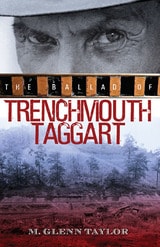
BALLAD OF TRENCHMOUTHT TAGGART
M. GLENN TAYLOR
West Virginia University Press, 2008
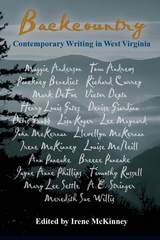
Backcountry
Contemporary Writing in West VirginiaIRENE MCKINNEY
West Virginia University Press, 2002
This is as closely-knit an anthology as you are ever likely to see. It is as though a large, extended family were drawing on the same store of family stories, jokes, symbols, landscapes, animals, trees, language, and vernacular. How many snakes are in this book? How many foxes, possums? Fossils? And how very many coal mines? But it is not merely local references that unites these writers. There is a larger vision that ties these works together.
"The connection is not so much in mutual influence, though there is some of that, but in each writer’s total immersion in place. Even those writers who no longer live in the state remember the feel, the physical texture, the overwhelming and enfolding vegetal surround of the place." Editor, Irene McKinney
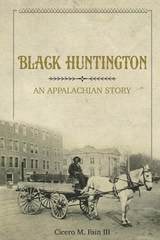
Black Huntington
An Appalachian StoryCicero M. Fain III
University of Illinois Press, 2019
How African Americans thrived in a West Virginia city
By 1930, Huntington had become West Virginia's largest city. Its booming economy and relatively tolerant racial climate attracted African Americans from across Appalachia and the South. Prosperity gave these migrants political clout and spurred the formation of communities that defined black Huntington--factors that empowered blacks to confront institutionalized and industrial racism on the one hand and the white embrace of Jim Crow on the other. Cicero M. Fain III illuminates the unique cultural identity and dynamic sense of accomplishment and purpose that transformed African American life in Huntington. Using interviews and untapped archival materials, Fain details the rise and consolidation of the black working class as it pursued, then fulfilled, its aspirations. He also reveals how African Americans developed a host of strategies--strong kin and social networks, institutional development, property ownership, and legal challenges--to defend their gains in the face of the white status quo. Eye-opening and eloquent, Black Huntington makes visible another facet of the African American experience in Appalachia.
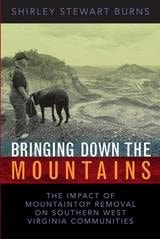
Bringing Down the Mountains
The Impact of Mountainttop Removal on Southern West Virginia CommunitiesShirley Stewart Burns
West Virginia University Press, 2007
Coal is West Virginia’s bread and butter. For more than a century, West Virginia has answered the energy call of the nation—and the world—by mining and exporting its coal. In 2004, West Virginia’s coal industry provided almost forty thousand jobs directly related to coal, and it contributed $3.5 billion to the state’s gross annual product. And in the same year, West Virginia led the nation in coal exports, shipping over 50 million tons of coal to twenty-three countries. Coal has made millionaires of some and paupers of many. For generations of honest, hard-working West Virginians, coal has put food on tables, built homes, and sent students to college. But coal has also maimed, debilitated, and killed.
Bringing Down the Mountains provides insight into how mountaintop removal has affected the people and the land of southern West Virginia. It examines the mechanization of the mining industry and the power relationships between coal interests, politicians, and the average citizen. Shirley Stewart Burns holds a BS in news-editorial journalism, a master’s degree in social work, and a PhD in history with an Appalachian focus, from West Virginia University. A native of Wyoming County in the southern West Virginia coalfields and the daughter of an underground coal miner, she has a passionate interest in the communities, environment, and histories of the southern West Virginia coalfields. She lives in Charleston, West Virginia.