Results by title
453 books match the query 'Wisconsin' and 25 start with b
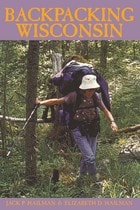
Backpacking Wisconsin
Elizabeth D. Hailman
University of Wisconsin Press, 2000
Wisconsin is a premier backpacking state, with outstanding opportunities for weekend trips. With its Great Lakes and river boundaries, national and state parks and forests, and stunning geological diversity, it offers a variety of experiences for both novice and experienced backpackers. In Backpacking Wisconsin Jack and Liz Hailman, drawing on years of personal experience, provide first-hand information for trails in every corner of the state—from the wooded Apostle Islands National Lakeshore, inhabited by whitetailed deer and black bears, to picturesque Newport State Park in Door County, set upon Silurian-age limestone laid down over 100 million years ago.
For each backpacking site you’ll find:
• information on entrance fees and permits, campsites, & contact sources
• directions to the location
• detailed trail maps with keys that pinpoint roads, parking, trail shelters, water supplies, outhouses
• ratings for trails, scenery, quiet, solitude, and interest
• background information on history, geology, and terrain
• trail notes describing trees, shrubs, wildflowers, birds, and animals you may encounter.
Backpacking Wisconsin also provides an overview of the backpacking experience, tips for the beginner and the expert, hints on how to choose equipment (boots, packs, tents, sleeping bags, rain gear, stoves), notes on troublesome plants and animals, a list of state areas that no longer offer backpacking, schedules of fees, a checklist for backpacks, and a list of trail, outdoor, and conservation organizations. For those hesitant to venture deep into wilderness, the Hailmans spotlight “quasi-backpacking” sites. All you have to do is pick a trail!

Badger Boneyards
The Eternal Rest of the StoryDennis McCann
Wisconsin Historical Society Press, 2010

Bamboo Son
A Hmong Refugee’s Search for Identity and the American DreamPao Lor
Wisconsin Historical Society Press, 2026
“In Hmong, the word bamboo or ntsuag has two meanings. It refers to the bamboo plant, which has many significant cultural and practical uses in Hmong life. The word also means orphan. Therefore, bamboo son, in Hmong, means tub ntsuag or orphan son. To survive and succeed as a Hmong orphan, like bamboo, one must be resilient and adaptable, bend without breaking, and stand tall against enormous odds.”
In this follow-up to his acclaimed memoir, Modern Jungles, Pao Lor picks up his story as a young Hmong immigrant building a new life in a new home and shares the narrative of his ensuing journey into adulthood. Lor emerged from war and tragedies in the jungles of Laos and refugee camps of Thailand in the 1970s to pursue a vision of the American dream in Green Bay, Wisconsin, in the 1980s. The distance between his humble beginnings and that dream life was littered with challenges as well as possibilities.
Lor’s transformation from an insecure but determined high school student to a husband, father, teacher, administrator, and author is marked by triumph and defeat, trauma and joy, and always hope and optimism. As he navigates school, first loves, family relationships, and a career, Lor must contend with language barriers, discrimination, and his own inner demons stemming from feelings of inferiority. Threads of his identity—Hmong, American, and Wisconsinite—intersect and occasionally come into conflict.
Lor’s search for belonging comes full circle when he travels to Laos and Thailand with his wife, Maya, in 2022. Seeing his birthplace for the first time in forty-five years, he revisits the isolated mountain villages where he spent his early childhood; the places where his parents and sister died as the family fled the region in the violent aftermath of the Vietnam War; and the two refugee camps where Pao and his siblings lived before being relocated to the United States when he was seven. As he reexamines these memories and reconciles his past, Lor finds peace and the freedom to move forward with his soul renewed.
Lor’s story is an uplifting journey of resilience, adaptation, love, and forgiveness, inspiring readers to reflect on the meaning and accessibility of the American dream.
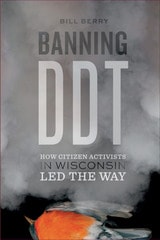
Banning DDT
How Citizen Activists in Wisconsin Led the WayBill Berry
Wisconsin Historical Society Press, 2014
On a December day in 1968, DDT went on trial in Madison, Wisconsin. In Banning DDT: How Citizen Activists in Wisconsin Led the Way, Bill Berry details how the citizens, scientists, reporters, and traditional conservationists drew attention to the harmful effects of “the miracle pesticide” DDT, which was being used to control Dutch elm disease.
Berry tells of the hunters and fishers, bird-watchers, and garden-club ladies like Lorrie Otto, who dropped off twenty-eight dead robins at the Bayside village offices. He tells of university professors and scientists like Joseph Hickey, a professor and researcher in the Department of Wildlife Management in at the University of Wisconsin–Madison, who, years after the fact, wept about the suppression of some of his early DDT research. And he tells of activists like Senator Gaylord Nelson and members of the state’s Citizens Natural Resources who rallied the cause.
The Madison trial was one of the first for the Environmental Defense Fund. The National Audubon Society helped secure the more than $52,000 in donations that offset the environmentalists’ costs associated with the hearing. Today, virtually every reference to the history of DDT mentions the impact of Wisconsin’s battles.
The six-month-long DDT hearing was one of the first chapters in citizen activism in the modern environmental era. Banning DDT is a compelling story of how citizen activism, science, and law merged in Wisconsin’s DDT battles to forge a new way to accomplish public policy. These citizen activists were motivated by the belief that we all deserve a voice on the health of the land and water that sustain us.
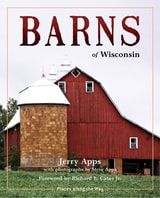
Barns of Wisconsin (Revised Edition)
Jerry Apps
Wisconsin Historical Society Press, 2010
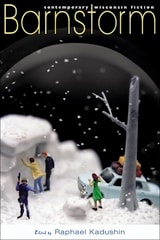
Barnstorm
Contemporary Wisconsin FictionEdited by Raphael Kadushin
University of Wisconsin Press, 2005
Not for sale in the United Kingdom.
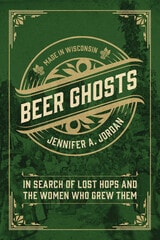
Beer Ghosts
In Search of Lost Hops and the Women Who Grew ThemJennifer A. Jordan
University of Chicago Press, 2026
The little-known story of the young women who played a vital role in the rise of America’s great breweries.
Water, malt, yeast, and hops: these are essential ingredients of beer. Hops, specifically, play an outsized role in determining its flavor and aroma. In Beer Ghosts, Jennifer Jordan takes us back to a brief but pivotal moment in the nineteenth century when Wisconsin produced much of the hops grown in the United States. Yet those long-ago hops are not the only ghosts in Jordan’s story. Haunting the pages of this book are the young women whose work at harvest time was key to the rise of the American beer industry.
Until the early twentieth century, the work of picking hops was a time-consuming process that could only be done by hand, one cone at a time. In nineteenth-century Wisconsin, that work was performed almost exclusively by women and girls, who traveled to hop farms in droves as summer came to a close and the harvest began. At the height of the hop boom in the 1860s, farmers and their families laid out beds and prepared food for tens of thousands of seasonal laborers, and hosted parties and dances well into the night. Despite the scale of Wisconsin’s hop boom (and subsequent crash), the industry left behind little trace aside from local records and archives. And it is that barely discernible trace that lures Jordan to dig deeper.
Jordan’s vivid prose takes us back to this era by drawing on a rich trove of archival sources, from the thousands of hop farmers in the agricultural census to the extraordinary diary of a single hop picker, a young woman named Ella. The history of beer is incomplete without the history of Ella and the others who labored in the hop fields and in the houses that hosted them. In this book, Jordan gives life and voice to these beer ghosts who call to us from the past, showing the rich connections between a nation’s beer and the lives that made it possible.
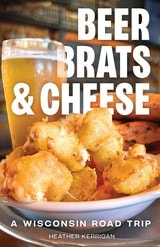
Beer, Brats, and Cheese
A Wisconsin Road TripHeather Kerrigan
University of Wisconsin Press, 2025
To thoroughly research this book, Heather Kerrigan undertook a twenty-six-hundred-mile road trip crisscrossing the Badger State, seeking the hidden gems that locals frequent. She visited Wisconsin’s best restaurants, creameries, breweries, butcher shops, and cheesemongers. In Beer, Brats, and Cheese, Kerrigan highlights the innovative flavors and unexpected delights found in these spots. Great beer isn’t made only in Milwaukee, Sheboygan doesn’t have a lock on the best bratwurst, and excellent cheeses don’t just come from Monroe County. In fact, there are towns large and small, from the far north to the Illinois border, from Door County to the Mississippi River, that contribute to the state’s amazing culinary experiences.
Whether you’re planning a bite-by-bite day trip or simply looking for a great place to eat or drink near home, this guide has you covered.
Belle and Bob La Follette
Partners in PoliticsBob Kann
Wisconsin Historical Society Press, 2008
The most famous couple in Wisconsin politics, "Fighting Bob" La Follette and his wife, Belle Case La Follette, come to life in the pages of the newest addition to the Badger Biographies series for young readers. In an accessible format that includes historic images, a glossary of terms, and sidebars explaining political concepts, students learn about Progressive politics and reform in the early 20th century through the experiences of this pioneering couple.
The father of "Progressive politics," Bob La Follette was famous for digging in his heels when it came to reforming government corruption. He also gained a reputation for fiery speeches on the campaign trail and on the Senate floor. Belle La Follette was political in her own right. The first woman to graduate from the University of Wisconsin's Law School, she was an advocate for world peace and an agitator for the women's vote. She was also Bob's most trusted political advisor. Together, the couple raised a family and fought for the changes they believed would make the world a better place.

Best of the Wurst
Weird and Wonderful Stories of Wisconsin SausageJesse Brookstein
Wisconsin Historical Society Press, 2026
Sink your teeth into a big, bold, and unabashed celebration of a quintessential Wisconsin food.
Wisconsin is famous for its world-class cheeses and its “beer state” moniker. But every Wisconsinite knows that no tailgate party or backyard barbecue is complete without a grill full of sizzling hot brats. Or Polish sausages. Or good ol’ Oscar Mayer wieners. From charcuterie boards to chorizo, sausage is an essential ingredient in the state’s cultural identity. In this lively, comprehensive ode to the link, writer and storyteller Jesse Brookstein embarks on a quest to show why Wisconsin is the sausage maker to the world.
Best of the Wurst traces the long arc of sausage making in the state, starting with First Nations communities who used pemmican as a staple food source. It features subsequent immigrant groups—German, Polish, Italian, Thai, Mexican, and more—who brought their own sausage recipes and traditions, and lands squarely on today’s bustling sausage scene. A final chapter, “The Future of Sausage,” explores emerging trends, tastes, and technologies—offering a peek at what’s next for Wisconsin’s revered food.
Brookstein travels the state to meet the people behind the links and captures the culture, craft, and quirks that make Wisconsin sausages unlike those found anywhere else. Profiles of standout producers are threaded throughout, from household names like Usinger’s and Johnsonville to family-run shops that have fed communities for generations. Brookstein also highlights the professionals shaping the field today, including graduates of UW–Madison’s Master Meat Crafter Program and chefs who feature local sausage in their menus with pride.
Readers will get insights from master butchers, small-town sausage savants, big-name producers, and superfans reflecting on hotly debated topics like seasonings, casings, and the eternal question: “Should you parboil?” And memorable traditions—such as Sheboygan’s double brat on a hard roll, the ceremonial slicing of La Crosse’s Golden Brat, Madison’s world’s largest Brat Fest, and the show-stealing Milwaukee Brewers’ Famous Racing Sausages—showcase the sausage’s indelible mark on the state.
Featuring 150 color photos and packed with humor and an insider’s appreciation for the art of stuffing a perfect link, Best of the Wurst encases these stories, people, and places in a perfect blend of history and heart. Wisconsinites love eating sausages—and now you can enjoy reading about them too.
Between Memory and Reality
Family and Community in Rural Wisconsin, 1870–1970Jane Marie Pederson
University of Wisconsin Press, 1992
An Osseo native looks at the enduring power of immigrant traditions in rural Trempealeau County, from its pioneer days to recent decades.
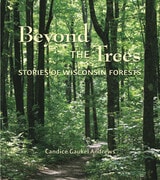
Beyond the Trees
Stories of Wisconsin ForestsCandice Gaukel Andrews
Wisconsin Historical Society Press, 2011
Nature writer Candice Andrews weaves together contemporary observations and historical reminisces in Beyond the Trees: Stories of Wisconsin Forests. Readers will journey to some of the most pristine and notable places in the Upper Midwest—Wisconsin’s state and national forests.
The diversity of landscapes evoked in Beyond the Trees is matched only by the characters who inhabit them. Traverse the footsteps of Ojibwe hunters and early explorers in the remote woods of Brule River State Forest. Trek past the remains of bygone logging and CCC camps in the Chequamegon-Nicolet National Forest. Glimpse into the world of Great Lakes shipping in Point Beach State Forest. Walk on trails named after John Muir and Increase Lapham in the Kettle Moraine State Forest, and experience urban green space at Milwaukee’s Havenwoods State Forest. From orchids to oak savanna, beaver to brook trout, and white-tailed deer to timber wolves, discover Wisconsin’s wildlife and flora and fauna. Archival images, informative sidebars, locator maps, and contact information for Wisconsin state and national forests round out this unique book.
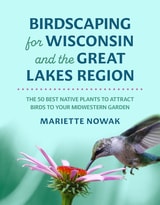
Birdscaping for Wisconsin and the Great Lakes Region
The 50 Best Native Plants to Attract Birds to Your Midwestern GardenMariette Nowak
University of Wisconsin Press, 2025
The book explains the value of particular plants for birds and other wildlife, not only as food sources but as nesting sites and cover. Each plant is described in depth, with details on color, height, blooming time, light requirements, and soil preferences, along with planting tips and suggested companion plants. Nowak offers closer looks at the intriguing features of these diverse plant species and their intertwined relationships with birds, complemented by more than 150 color photos that showcase the beauty of the plants and birds together. Novice gardeners will also find essential information on birdscaping basics, site preparation, management guidelines, and safeguarding songbirds.
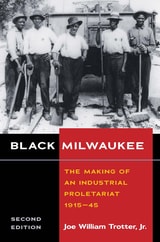
Black Milwaukee
The Making of an Industrial Proletariat, 1915-45Joe William Trotter, Jr.
University of Illinois Press, 2006
Praise for the first edition: “Trotter has written a valuable, provocative book that opens new areas for certain--and heated--debate.”--Journal of American Ethnic History
Other historians have tended to treat black urban life mainly in relation to the ghetto experience, but in Black Milwaukee, Joe William Trotter Jr. offers a new perspective that complements yet also goes well beyond that approach. The blacks in Black Milwaukee were not only ghetto dwellers; they were also industrial workers. The process by which they achieved this status is the subject of Trotter’s ground-breaking study.
This second edition features a new preface and acknowledgments, an essay on African American urban history since 1985, a prologue on the antebellum and Civil War roots of Milwaukee’s black community, and an epilogue on the post-World War II years and the impact of deindustrialization, all by the author. Brief essays by four of Trotter’s colleagues--William P. Jones, Earl Lewis, Alison Isenberg, and Kimberly L. Phillips--assess the impact of the original Black Milwaukee on the study of African American urban history over the past twenty years.
Blaze Orange
Whitetail Deer Hunting in WisconsinTravis Dewitz
Wisconsin Historical Society Press, 2014
Blue Jenkins
Working for WorkersJulia Pferdehirt
Wisconsin Historical Society Press, 2011
Blue Men and River Monsters
Folklore of the NorthJohn Zimm
Wisconsin Historical Society Press, 2014

Blue Shadows Farm
A NovelJerry Apps
University of Wisconsin Press, 2009
Silas Starkweather, a Civil War veteran, is drawn to Wisconsin and homesteads 160 acres in Ames County, where he is known as the mysterious farmer forever digging holes. After years of hardship and toil, however, Silas develops a commitment to farming his land and respect for his new community. When Silas’s son Abe inherits Blue Shadows Farm he chooses to keep the land out of reluctant necessity, distilling and distributing “purified corn water” throughout Prohibition and the Great Depression in order to stay solvent. Abe’s daughter, Emma, willingly takes over the farm after her mother’s death. Emma’s love for this place inspires her to open the farm to school-children and families who share her respect for it. As she considers selling the land, Emma is confronted with a difficult question—who, through thick and thin, will care for Blue Shadows Farm as her family has done for over a century? In the midst of a controversy that disrupts the entire community, Emma looks into her family’s past to help her make crucial decisions about the future of its land.
Through the story of the Starkweather family’s changing fortunes, and each generation’s very different relationship with the farm and the land, Blue Shadows Farm is in some ways the narrative of all farmers and the increasingly difficult challenges they face as committed stewards of the land.

Boojoo!
An Introduction to Wisconsin WalloonKelly Biers
University of Wisconsin Press, 2026
Walloon is a language still spoken by a minority population in its home country of Belgium. It can also still be found among a few sparse communities descended from Belgian immigrants in northeastern Wisconsin. Although spoken by a small number of people, the language plays a vital role in the ethnic heritage of the state and is audible in local words like “booyah” and “trippe.”
This book is the first to introduce the language without recourse to French, of which Walloon is sometimes mistakenly described as a variant or dialect. With this text, English-language speakers will need nothing more than interest to pick up basic conversational Walloon, thanks to Kelly Biers’s clear guidance for pronunciation, vocabulary, and grammar. Additionally, readers will learn about how this minority language arrived in the Upper Midwest, the history of Belgian American immigration and settlement, and the language’s linguistic features.
Boojoo and welcome to Wisconsin Walloon!
Borchert Field
Stories from Milwaukee’s Legendary BallparkBob Buege
Wisconsin Historical Society Press, 2017
Someone lucky enough to live on Milwaukee’s near north side between 1888 and 1952 could experience the world without ever leaving the neighborhood. Nestled between North Seventh and Eighth Streets and West Chambers and Burleigh, Borchert Field was Milwaukee’s major sports venue for 64 years. In this rickety wooden stadium (originally called Athletic Park), Wisconsin residents had a close-up view of sports history in the making, along with rodeos, thrill shows, and even multiple eruptions of Mount Vesuvius. In Borchert Field, baseball historian Bob Buege introduces the famous and fascinating athletes who dazzled audiences in Milwaukee’s venerable ballpark. All the legendary baseball figures—the Bambino, Satchel Paige, Ty Cobb, Joltin’ Joe, Jackie Robinson, the Say Hey Kid—played there. Olympic heroes Jim Thorpe, Babe Didrikson, and Jesse Owens displayed their amazing talents in Borchert. Knute Rockne’s Fighting Irish competed there, and Curly Lambeau’s Green Bay Packers took the field 10 times. Buege tells stories of other monumental moments at Borchert as well, including a presidential visit, women ballplayers, the arrival of television broadcasting, the 1922 national balloon race, and an appearance by scat-singing bandleader Cab Calloway. Borchert Field is long gone, but every page of this book takes readers back to the sights, sounds, and spectacle of its heyday.
Bottoms Up
A Toast to Wisconsin's Historic Bars and BreweriesJim Draeger
Wisconsin Historical Society Press, 2017
Bottoms Up celebrates Wisconsin’s taverns and the breweries that fueled them. Beginning with inns and saloons, the book explores the rise of taverns and breweries, the effects of temperance and Prohibition, and attitudes about gender, ethnicity, and morality. It traces the development of the megabreweries, dominance of the giants, and the emergence of microbreweries. Contemporary photographs of unusual and distinctive bars and breweries of all eras, historical photos, postcards, advertisements, and breweriana illustrate the story of how Wisconsin came to dominate brewing—and the place that bars and beer hold in our social and cultural history.
Seventy featured taverns and breweries represent diverse architectural styles, from the open-air Tom’s Burned Down Cafe on Madeline Island to the Art Moderne Casino in La Crosse, and from Club 10, a 1930s roadhouse in Stevens Point, to the well-known Wolski’s Tavern in Milwaukee. There are bars in barns and basements and brewpubs in former ice cream factories and railroad depots. Bottoms Up also includes a heady mix of such beer-related topics as ice harvesting, barrel making, bar games, Old-Fashioneds, bar fixtures, and the queen of the bootleggers. Now in paperback for the first time!
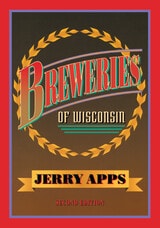
Breweries of Wisconsin
Jerry Apps
University of Wisconsin Press, 2005
The story of the Dairy State’s other major industry—beer! From the immigrants who started brewing here during territorial days to the modern industrial giants, this is the history, the folklore, the architecture, the advertising, and the characters that made Wisconsin the nation’s brewing leader. Updated with the latest trends on the Wisconsin brewing scene.
"Apps adeptly combines diligent scholarship with fascinating anecdotes, vividly portraying brewmasters, beer barons, saloonkeepers, and corporate raiders. All this plus color reproductions of popular beer labels and a detailed recipe for home brew."—Wisconsin Magazine of History
"In a highly readable style Apps links together ethnic influence, agriculture, geography, natural resources, meteorology, changing technology, and transportation to explore some of the mystique, romance and folklore associated with beer from antiquity to the present day in Wisconsin."—The Brewers Bulletin

Brownie the War Dog
Veterans’ Best FriendKelly Nelson
Wisconsin Historical Society Press, 2024
During World War II, families all over the country volunteered their pet dogs to serve in the Dogs for Defense Program. This beautifully illustrated picture book tells the true story of a family and their beloved dog, Brownie, who served alongside the troops and returned home to become a companion to wounded vets.
At first Brownie's boy, Oren, isn’t sure he wants to send his boisterous best friend to war. But with the help of his parents, Oren decides that Brownie could do a lot of good. Brownie serves faithfully on the frontlines until an injury sends him home from the Pacific islands. His family welcomes him back with open arms. But Brownie is not content sitting around at home—he needs a job. He begins to accompany Oren's mother to the Veterans Home in King, Wisconsin, where she works. There, Brownie finds a way to serve his fellow veterans just as he served his fellow soldiers.
Lovingly illustrated by Aaron Boyd, this heartwarming story gives poignant new meaning to the phrase "man's best friend" and will be a favorite for children and their grownups.
Building Taliesin
Frank Lloyd Wright’s Home of Love and LossRon McCrea
Wisconsin Historical Society Press, 2012
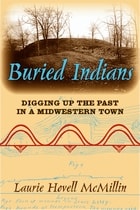
Buried Indians
Digging Up the Past in a Midwestern TownLaurie Hovell McMillin
University of Wisconsin Press, 2006
In Buried Indians, Laurie Hovell McMillin presents the struggle of her hometown, Trempealeau, Wisconsin, to determine whether platform mounds atop Trempealeau Mountain constitute authentic Indian mounds. This dispute, as McMillin subtly demonstrates, reveals much about the attitude and interaction-past and present-between the white and Indian inhabitants of this Midwestern town.
McMillin's account, rich in detail and sensitive to current political issues of American Indian interactions with the dominant European American culture, locates two opposing views: one that denies a Native American presence outright and one that asserts its long history and ruthless destruction. The highly reflective oral histories McMillin includes turn Buried Indians into an accessible, readable portrait of a uniquely American culture clash and a dramatic narrative grounded in people's genuine perceptions of what the platform mounds mean.