Results by title
2194 books match the query 'Women's Studies' and 117 start with b
BODIES OF TECHNOLOGY
Women’s Involvement with Reproductive MedicineEdited by Ann R. Saetnan, Nelly Oudshoorn, and Marta Kirejczyk
The Ohio State University Press, 2000
Bodies of Technology is based on the premise that technology and society mutually shape one another, and on a concern for women’s health and autonomy. A basic question is one of cultural appropriation: Do technologies take on different shapes, different practices, and have different impacts as they spread from one place to another? By juxtaposing a number of culturally and historically contextualized studies of similar technologies, the editors demonstrate that although technologies globalize by spreading among cultures, they are also localized by the cultures they encounter.
The first part of the book investigates how potential users of hormone-based contraceptives are represented as these technologies are developed in laboratories and field tests. The next section explores the political and economic processes that regulate access to and practices of assisted fertilization. The final section focuses on individual users engaging with fetal diagnostic technologies in clinical practice. Taken as a whole, the book points out the need and the possibilities for women to become directly involved in the shaping of technologies that so strongly affect their health and their daily lives.

Babe
The Life and Legend of Babe Didrikson ZahariasSusan E. Cayleff
University of Illinois Press, 1995
An extraordinarily gifted athlete, Babe Didrikson Zaharias starred in track and field and won three Olympic medals in 1932. She picked up golf late yet quickly dominated the women's sport. She also competed in baseball, bowling, basketball, and tennis.
Interviews with members of Babe's family, peers, and others inform Susan E. Cayleff’s story of the athlete and the difficulties she faced as a woman trying to be her own person. The American public was smitten with Babe’s wit, frankness, and "unladylike" bravado. But members of the press insinuated that her femininity, even her femaleness, were suspect. Cayleff looks at how Babe used her androgyny and athleticism to promote herself before crafting a more marketable female persona for golf. She also explores Babe’s role as a cofounder of the Ladies Professional Golf Association (LPGA); her marriage to George Zaharias and their partnership in shaping her career; her romantic relationship with fellow golfer Betty Dodd; and her courageous public fight against cancer.
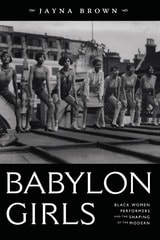
Babylon Girls
Black Women Performers and the Shaping of the ModernJayna Brown
Duke University Press, 2008
Investigating both well-known performers such as Ada Overton Walker and Josephine Baker and lesser-known artists such as Belle Davis and Valaida Snow, Brown weaves the histories of specific singers and dancers together with incisive theoretical insights. She describes the strange phenomenon of blackface performances by women, both black and white, and she considers how black expressive artists navigated racial segregation. Fronting the “picaninny choruses” of African American child performers who toured Britain and the Continent in the early 1900s, and singing and dancing in The Creole Show (1890), Darktown Follies (1913), and Shuffle Along (1921), black women variety-show performers of the early twentieth century paved the way for later generations of African American performers. Brown shows not only how these artists influenced transnational ideas of the modern woman but also how their artistry was an essential element in the development of jazz.

Back to the Breast
Natural Motherhood and Breastfeeding in AmericaJessica Martucci
University of Chicago Press, 2015
That movement—in which the personal and political were inextricably linked—effectively challenged midcentury norms of sexuality, gender, and consumption, and articulated early environmental concerns about chemical and nuclear contamination of foods, bodies, and breast milk. In its groundbreaking chronicle of the breastfeeding movement, Back to the Breast provides a welcome and vital account of what it has meant, and what it means today, to breastfeed in modern America.
Badass Feminist Politics
Exploring Radical Edges of Feminist Theory, Communication, and ActivismSarah Jane Blithe
Rutgers University Press, 2022
Badass Feminist Politics includes a diverse range of engaging feminist political projects to not only analyze the work being done on the ground but provide an overview for action that can be taken on by those seeking to engage in feminist activism in their own communities. Contributors included here are working for equality and equity and resisting violent, racist, homophobic, transphobic, xenophobic, and sexist language and action during this tension-filled political moment. Collectively, the book explores what it means to live and communicate feminist politics in everyday choices and actions, and how we can facilitate learning by analyzing these examples. Taking up current issues and new theoretical perspectives, the authors offer novel perspectives into what it means to live feminist politics. This book is a testament to resilience, resistance, communication, and forward thinking about what these themes all mean for new feminist agendas. Learning how to resist oppressive structures through words and actions is particularly important for students. Badass Feminist Politics features scholars from non-dominant groups taking up issues of marginalization and oppression, which can help people accomplish their social justice goals of inclusivity on the ground and in the classroom.
Baring Witness
36 Mormon Women Talk Candidly about Love, Sex, and MarriageEdited by Holly Welker
University of Illinois Press, 2016
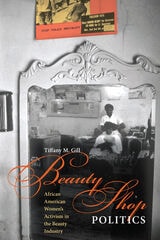
Beauty Shop Politics
African American Women's Activism in the Beauty IndustryTiffany M. Gill
University of Illinois Press, 2010
Looking through the lens of black business history, Beauty Shop Politics shows how black beauticians in the Jim Crow era parlayed their economic independence and access to a public community space into platforms for activism. Tiffany M. Gill argues that the beauty industry played a crucial role in the creation of the modern black female identity and that the seemingly frivolous space of a beauty salon actually has stimulated social, political, and economic change.
From the founding of the National Negro Business League in 1900 and onward, African Americans have embraced the entrepreneurial spirit by starting their own businesses, but black women's forays into the business world were overshadowed by those of black men. With a broad scope that encompasses the role of gossip in salons, ethnic beauty products, and the social meanings of African American hair textures, Gill shows how African American beauty entrepreneurs built and sustained a vibrant culture of activism in beauty salons and schools. Enhanced by lucid portrayals of black beauticians and drawing on archival research and oral histories, Beauty Shop Politics conveys the everyday operations and rich culture of black beauty salons as well as their role in building community.
Beauvoir and Her Sisters
The Politics of Women's Bodies in FranceSandra Reineke
University of Illinois Press, 2011
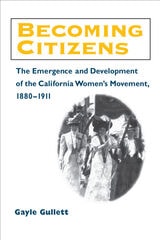
Becoming Citizens
The Emergence and Development of the California Women's Movement, 1880-1911Gayle Gullett
University of Illinois Press, 2000
In 1880, Californians believed a woman safeguarded the Republic by maintaining a morally sound home. Scarcely forty years later, women in the state won full-fledged citizenship and voting rights by stepping outside the home to engage in robust activism.
Gayle Gullett reveals how this enormous transformation came about and the ways women's search for a larger public life led to a flourishing women's movement in California. Though voters rejected women's radical demand for citizenship in 1896, women rebuilt the movement in the early years of the twentieth century and forged critical bonds between activist women and the men involved in the urban Good Government movement. This alliance formed the basis of progressivism, with male Progressives helping to legitimize women's new public work by supporting their civic campaigns, appointing women to public office, and placing a suffrage referendum before the male electorate in 1911.
Placing local developments in a national context, Becoming Citizens illuminates the links between women's reform movements and progressivism in the American West.
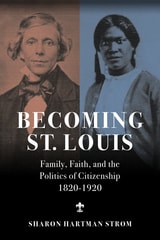
Becoming St. Louis
Family, Faith, and the Politics of Citizenship, 1820-1920Sharon Hartman Strom
University of Illinois Press, 2025
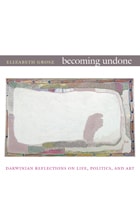
Becoming Undone
Darwinian Reflections on Life, Politics, and ArtElizabeth Grosz
Duke University Press, 2011

Becoming a Poet
Elizabeth Bishop with Marianne Moore and Robert LowellDavid Kalstone
University of Michigan Press, 2001
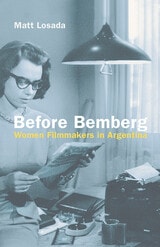
Before Bemberg
Women Filmmakers in ArgentinaMatt Losada
Rutgers University Press, 2020
Watch some of the films discussed in the book with English subtitles (https://www.youtube.com/channel/UCF_6F4am5024rklIWwExUVA?view_as=subscriber).
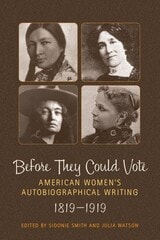
Before They Could Vote
American Women's Autobiographical Writing, 1819–1919Edited by Sidonie A. Smith and Julia Watson
University of Wisconsin Press, 2006
"This rich new anthology sets in motion an inter-textual conversation of remarkable vitality that will change the ways we understand gender, class, ethnicity, culture, and nation in nineteenth-century America."—Susanna Egan, author of Mirror-Talk
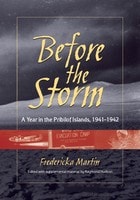
Before the Storm
A Year in the Pribilof Islands, 1941-1942Fredericka Martin
University of Alaska Press, 2010
From June of 1941 through the following summer, Fredericka Martin lived with her husband, Dr. Samuel Berenberg, on remote St. Paul Island in Alaska. During that time, Martin delved into the complex history of the Unangan people, and Before the Storm draws from her personal accounts of that year and her research to present a fascinating portrait of a time and a people facing radical change. A government-ordered evacuation of all Aleuts from the island in the face of World War II, which Martin recounts in her journal, proved but the first step in a long struggle by native peoples to gain independence, and, as editor Raymond L. Hudson explains, Martin came to play a significant role in the effort.

Beginning to See the Light
Sex, Hope, and Rock-and-RollEllen Willis
University of Minnesota Press, 2012
From the New Yorker’s inimitable first pop music critic comes this pioneering collection of essays by a conscientious writer whose political realm is both radical and rational, and whose prime preoccupations are with rock ’n’ roll, sexuality, and above all, freedom. Here Ellen Willis assuredly captures the thrill of music, the disdain of authoritarian culture, and the rebellious spirit of the ’60s and ’70s.
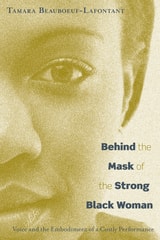
Behind the Mask of the Strong Black Woman
Voice and the Embodiment of a Costly PerformanceTamara Beauboeuf-Lafontant
Temple University Press, 2009
The author, a noted sociologist, interviews 58 Black women about being strong and proud, to illustrate their “performance” of invulnerability. Beauboeuf-Lafontant explains how such behavior leads to serious symptoms for these women, many of whom suffer from eating disorders and depression.
Drawing on Black feminist scholarship, cultural studies, and women’s history, Behind the Mask of the Strong Black Woman traces the historical and social influences of normative Black femininity, looking at how notions of self-image and strength create a distraction from broader forces of discrimination and power.
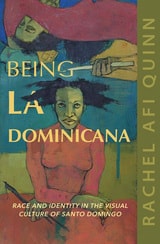
Being La Dominicana
Race and Identity in the Visual Culture of Santo DomingoRachel Afi Quinn
University of Illinois Press, 2021
Engaging and astute, Being La Dominicana reveals the little-studied world of today's young Dominican women and what their personal stories and transnational experiences can tell us about the larger neoliberal world.
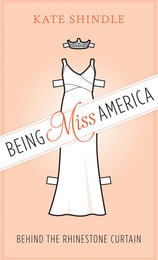
Being Miss America
Behind the Rhinestone CurtainBy Kate Shindle
University of Texas Press, 2014
For nearly a hundred years, young women have competed for the title of Miss America—although what it means to wear the crown and be our “ideal” has changed dramatically over time. The Miss America Pageant began as a bathing beauty contest in 1920s Atlantic City, New Jersey, sponsored by businessmen trying to extend the tourist season beyond Labor Day. In the post–World War II years, the pageant evolved into a national coronation of an idealized “girl next door,” as pretty and decorous as she was rarely likely to speak her mind on issues of substance. Since the cultural upheavals of the 1960s, the pageant has struggled to find a balance between beauty and brains as it tries to remain relevant to women who aspire to become leaders in the community, not hot babes in swimsuits.
In Being Miss America, Kate Shindle interweaves an engrossing, witty memoir of her year as Miss America 1998 with a fascinating and insightful history of the pageant. She explores what it means to take on the mantle of America’s “ideal,” especially considering the evolution of the American female identity since the pageant’s inception. Shindle profiles winners and organization leaders and recounts important moments in the pageant’s story, with a special focus on Miss America’s iconoclasts, including Bess Myerson (1945), the only Jewish Miss America; Yolande Betbeze (1951), who crusaded against the pageant’s pinup image; and Kaye Lani Rae Rafko (1987), a working-class woman from Michigan who wanted to merge her famous title with her work as an oncology nurse. Shindle’s own account of her work as an AIDS activist—and finding ways to circumvent the “gown and crown” stereotypes of Miss America in order to talk honestly with high school students about safer sex—illuminates both the challenges and the opportunities that keep young women competing to become Miss America.
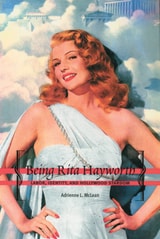
Being Rita Hayworth
Labor, Identity, and Hollywood StardomMcLean, Adrienne L
Rutgers University Press, 2004
Who was Rita Hayworth? Born Margarita Carmen Cansino, she spent her life subjected to others' definitions of her, no matter how hard she worked to claim her own identity. Although there have been many "revelations" about her life and career, Adrienne McLean's book is the first to show that such disclosures were part of a constructed image from the outset.
McLean explores Hayworth's participation in the creation of her star persona, particularly through her work as a dancer-a subject ignored by most film scholars. The passive love goddess, as it turns out, had a unique appeal to other women who, like her, found it extraordinarily difficult to negotiate the competing demands of family, domesticity, and professional work outside the home. Being Rita Hayworth also considers the ways in which the actress has been treated by film scholarship over the years to accomplish its own goals, sometimes at her expense. Several of Hayworth's best-known star vehicles-among them Gilda (1946), Down to Earth (1947), The Lady from Shanghai (1948), and Affair in Trinidad (1952)- are discussed in depth.
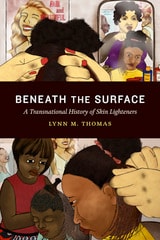
Beneath the Surface
A Transnational History of Skin LightenersLynn M. Thomas
Duke University Press, 2020
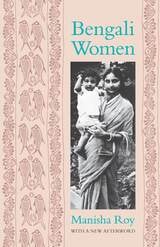
Bengali Women
Manisha Roy
University of Chicago Press, 1992
In a new Afterword, Roy discusses changes in Bengali society and culture over the last two decades which have direct bearings on women's lives: divorce and the breakup of the joint family, education, increasing Westernization via television and women's magazines, and the erosion of traditional religious practices.
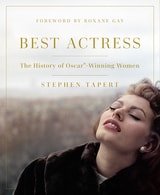
Best Actress
The History of Oscar®-Winning WomenStephen Tapert
Rutgers University Press, 2020
This lavishly illustrated coffee table book offers a vital examination of the first 75 women to have won the Best Actress Oscar over the span of 90 years. From inaugural recipient Janet Gaynor to Frances McDormand’s 2018 acceptance speech that assertively brought women to the forefront, Best Actress: The History of Oscar®-Winning Women serves to promote a new appreciation for the cinematic roles these women won for, as well as the real-life roles many of them played – and still play – in advancing women’s rights and equality. Stories range from Bette Davis’ groundbreaking battle against the studio system; to the cutting-edge wardrobes of Katharine Hepburn, Diane Keaton and Cher; to the historical significance of Halle Berry’s victory; to the awareness raised around sexual violence by the performances of Jodie Foster, Brie Larson, and others.
Showcasing a dazzling collection of 200 photographs, many of which have never before been seen or published, Best Actress honors the legacies of these revered and extraordinary women while scrutinizing the roadblocks that they continue to overcome.
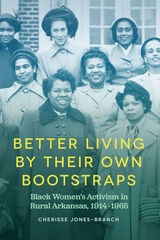
Better Living by Their Own Bootstraps
Black Women's Activism in Rural Arkansas, 1914-1965Cherisse Jones-Branch
University of Arkansas Press, 2021
The first major study to consider Black women’s activism in rural Arkansas, Better Living by Their Own Bootstraps foregrounds activists’ quest to improve Black communities through language and foodways as well as politics and community organizing. In reexamining these efforts, Cherisse Jones-Branch lifts many important figures out of obscurity, positioning them squarely within Arkansas’s agrarian history.
The Black women activists highlighted here include home demonstration agents employed by the Arkansas Agricultural Cooperative Extension Service and Jeanes Supervising Industrial Teachers, all of whom possessed an acute understanding of the difficulties that African Americans faced in rural spaces. Examining these activists through a historical lens, Jones-Branch reveals how educated, middle-class Black women worked with their less-educated rural sisters to create all-female spaces where they confronted economic, educational, public health, political, and theological concerns free from white regulation and interference.
Centered on the period between 1914 and 1965, Better Living by Their Own Bootstraps brings long-overdue attention to an important chapter in Arkansas history, spotlighting a group of Black women activists who uplifted their communities while subverting the formidable structures of white supremacy.
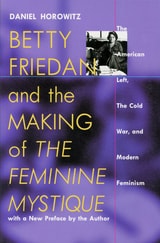
Betty Friedan and the Making of "The Feminine Mystique"
The American Left, the Cold War, and Modern FeminismDaniel Horowitz
University of Massachusetts Press, 1998
Ever since the 1963 publication of her landmark book, The Feminine Mystique, Betty Friedan has insisted that her commitment to women's rights grew out of her experiences as an alienated suburban housewife. Yet as Daniel Horowitz persuasively demonstrates in this illuminating and provocative biography, the roots of Friedan's feminism run much deeper than she has led us to believe. Drawing on an impressive body of new research—including Friedan's own papers—Horowitz traces the development of Friedan's feminist outlook from her childhood in Peoria, Illinois, through her wartime years at Smith College and Berkeley, to her decade-long career as a writer for two of the period's most radical labor journals, the Federated Press and the United Electrical Workers' UE News. He further shows that even after she married and began to raise a family, Friedan continued during the 1950s to write and work on behalf of a wide range of progressive social causes. By resituating Friedan within a broader cultural context, and by offering a fresh reading of The Feminine Mystique against that background, Horowitz not only overturns conventional ideas about “second wave” feminism but also reveals long submerged links to its past.

Between Feminism and Islam
Human Rights and Sharia Law in MoroccoZakia Salime
University of Minnesota Press, 2011
There are two major women’s movements in Morocco: the Islamists who hold shari’a as the platform for building a culture of women’s rights, and the feminists who use the United Nations’ framework to amend shari’a law. Between Feminism and Islam shows how the interactions of these movements over the past two decades have transformed the debates, the organization, and the strategies of each other.
In Between Feminism and Islam, Zakia Salime looks at three key movement moments: the 1992 feminist One Million Signature Campaign, the 2000 Islamist mass rally opposing the reform of family law, and the 2003 Casablanca attacks by a group of Islamist radicals. At the core of these moments are disputes over legitimacy, national identity, gender representations, and political negotiations for shaping state gender policies. Located at the intersection of feminism and Islam, these conflicts have led to the Islamization of feminists on the one hand and the feminization of Islamists on the other.
Documenting the synergistic relationship between these movements, Salime reveals how the boundaries of feminism and Islamism have been radically reconfigured. She offers a new conceptual framework for studying social movements, one that allows us to understand how Islamic feminism is influencing global debates on human rights.
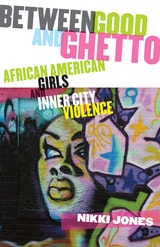
Between Good and Ghetto
African American Girls and Inner-City ViolenceNikki Jones
Rutgers University Press, 2009
Drawing on personal encounters, traditions of urban ethnography, Black feminist thought, gender studies, and feminist criminology, Nikki Jones gives readers a richly descriptive and compassionate account of how African American girls negotiate schools and neighborhoods governed by the so-called "code of the street"ùthe form of street justice that governs violence in distressed urban areas. She reveals the multiple strategies they use to navigate interpersonal and gender-specific violence and how they reconcile the gendered dilemmas of their adolescence. Illuminating struggles for survival within this group, Between Good and Ghetto encourages others to move African American girls toward the center of discussions of "the crisis" in poor, urban neighborhoods.

Between Woman and Nation
Nationalisms, Transnational Feminisms, and the StateCaren Kaplan, Norma Alarcón, and Minoo Moallem, eds.
Duke University Press, 1999
This interdisciplinarily collection investigates women in diverse locales—ranging from Quebec to Beirut. The contributors consider such subjects as Yucatan feminism, Islamic fundamentalisms, Canadian gender formations, historic Chicana/o struggles, and Israeli/Palestinian conflicts. Divided into three parts, the collection first examines constructions of nationalism and communities whose practices complicate these constructions. The second section discusses regulations of particular nation-states and how they affect the lives of women, while the third presents studies of transnational identity formation, in which contributors critique ideas such as “multicultural nationalism” and “global feminism.” Arguing provocatively that such movements and concepts inadequately represent women’s interests, contributors examine how such beliefs and their attendant organizations may actually bolster the very formations they ought to subvert.
In its demonstration of the critical possibilities of feminist alliances across discrepant and distinct material conditions, Between Woman and Nation will make a unique contribution to women’s studies, feminist theory, studies of globalization and transnationalism, ethnic studies, and cultural studies.
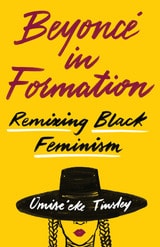
Beyoncé in Formation
Remixing Black FeminismBy Omise'eke Tinsley
University of Texas Press, 2018
Making headlines when it was launched in 2015, Omise’eke Tinsley’s undergraduate course “Beyoncé Feminism, Rihanna Womanism” has inspired students from all walks of life. In Beyoncé in Formation, Tinsley now takes her rich observations beyond the classroom, using the blockbuster album and video Lemonade as a soundtrack for vital new-millennium narratives.
Woven with candid observations about her life as a feminist scholar of African studies and a cisgender femme married to a trans spouse, Tinsley’s “Femme-onade” mixtape explores myriad facets of black women’s sexuality and gender. Turning to Beyoncé’s “Don’t Hurt Yourself,” Tinsley assesses black feminist critiques of marriage and then considers the models of motherhood offered in “Daddy Lessons,” interspersing these passages with memories from Tinsley’s multiracial family history. Her chapters on nontraditional bonds culminate in a discussion of contemporary LGBT politics through the lens of the internet-breaking video “Formation,” underscoring why Beyoncé’s black femme-inism isn’t only for ciswomen. From pleasure politics and the struggle for black women’s reproductive justice to the subtext of blues and country music traditions, the landscape in this tour is populated by activists and artists (including Loretta Lynn) and infused with vibrant interpretations of Queen Bey’s provocative, peerless imagery and lyrics.
In the tradition of Roxanne Gay’s Bad Feminist and Jill Lepore’s best-selling cultural histories, Beyoncé in Formation is the work of a daring intellectual who is poised to spark a new conversation about freedom and identity in America.
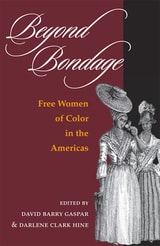
Beyond Bondage
Free Women of Color in the AmericasEdited by David Barry Gaspar and Darlene Clark Hine
University of Illinois Press, 2004
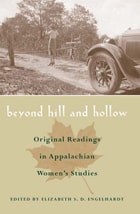
Beyond Hill and Hollow
Original Readings in Appalachian Women’s StudiesElizabeth S. D. Engelhardt
Ohio University Press, 2004
Women’s studies unites with Appalachian studies in Beyond Hill and Hollow, the first book to focus exclusively on studies of Appalachia’s women. Featuring the work of historians, linguists, sociologists, performance artists, literary critics, theater scholars, and others, the collection portrays the diverse cultures of Appalachian women.
The chapters in Beyond Hill and Hollow examine the hidden lives of Appalachian prostitutes, urban Appalachian women in the 1800s, rural women in company towns, and an African American Appalachian poet from the 1900s. Contributors look at Appalachian opera houses, Jewish women in the coalfields, the writings of Wilma Dykeman and Sharyn McCrumb, and activists in out-migrant communities like Cincinnati. With an introduction by editor Elizabeth S. D. Engelhardt, Beyond Hill and Hollow firmly establishes the field of Appalachian Women’s Studies.
Appropriate both as a reference and as a classroom text, Beyond Hill and Hollow expands our understanding of Appalachian women’s lives. Readers, whether from the region or beyond, may recognize themselves or women they know in its pages.
Beyond Image and Convention
Explorations in Southern Women's HistoryEdited by Janet L. Coryell, Martha H. Swain, Sandra Goioa Treadway, & ElizabethHayes Turner
University of Missouri Press, 1998
Despite their prevailing image and stereotype, southern women have often gone "beyond convention," living on their own terms within a society that revered tradition and compliance. Spanning the colonial era to the mid-twentieth century, Beyond Image and Convention documents women from widely varied social, economic, religious, and ethnic backgrounds who acted outside the accepted gender boundaries of their day.
Reflecting the quality and breadth of current scholarship in the field of southern women's history, this collection of essays relies upon previously untapped documentary evidence and, in the process, crafts provocative new interpretations of our collective past. The essays explore the historical experience of black and white southern women across nearly three centuries, including a white woman's sexual misconduct in colonial North Carolina, one slave woman's successful attempt to carve out an autonomous existence in southwestern Virginia, an ex-slave's fight for freedom in postbellum Missouri, and the civil rights activism of two white southern women—Sarah Patton Boyle of Virginia and Alice Norwood Spearman of South Carolina.
Breaking new ground in the study of women's history, Beyond Image and Convention provides valuable insights for both specialists and general readers.
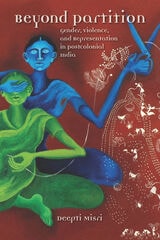
Beyond Partition
Gender, Violence and Representation in Postcolonial IndiaDeepti Misri
University of Illinois Press, 2014
Deepti Misri shows how Partition began a history of politicized animosity associated with the differing ideas of ""India"" held by communities and in regions on one hand, and by the political-military Indian state on the other. She moves beyond that formative national event, however, in order to examine other forms of gendered violence in the postcolonial life of the nation, including custodial rape, public stripping, deturbanning, and enforced disappearances. Assembling literary, historiographic, performative, and visual representations of gendered violence against women and men, Misri establishes that cultural expressions do not just follow violence but determine its very contours, and interrogates the gendered scripts underwriting the violence originating in the contested visions of what ""India"" means.
Ambitious and ranging across disciplines, Beyond Partition offers both an overview of and nuanced new perspectives on the ways caste, identity, and class complicate representations of violence, and how such representations shape our understandings of both violence and India.
Beyond Repair?
Mayan Women’s Protagonism in the Aftermath of Genocidal HarmAlison Crosby
Rutgers University Press, 2019
Honorable Mention, 2020 CALACS Book Prize
Beyond Repair? explores Mayan women’s agency in the search for redress for harm suffered during the genocidal violence perpetrated by the Guatemalan state in the early 1980s at the height of the thirty-six-year armed conflict. The book draws on eight years of feminist participatory action research conducted with fifty-four Q’eqchi’, Kaqchikel, Chuj, and Mam women who are seeking truth, justice, and reparation for the violence they experienced during the war, and the women’s rights activists, lawyers, psychologists, Mayan rights activists, and researchers who have accompanied them as intermediaries for over a decade. Alison Crosby and M. Brinton Lykes use the concept of “protagonism” to deconstruct dominant psychological discursive constructions of women as “victims,” “survivors,” “selves,” “individuals,” and/or “subjects.” They argue that at different moments Mayan women have been actively engaged as protagonists in constructivist and discursive performances through which they have narrated new, mobile meanings of “Mayan woman,” repositioning themselves at the interstices of multiple communities and in their pursuit of redress for harm suffered.
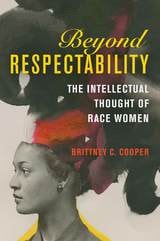
Beyond Respectability
The Intellectual Thought of Race WomenBrittney C. Cooper
University of Illinois Press, 2017
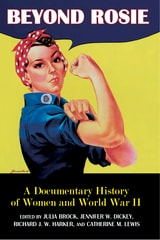
Beyond Rosie
A Documentary History of Women and World War IIJulia Brock
University of Arkansas Press, 2015
Beyond Rosie offers readers an opportunity to see the numerous contributions they made to the fight against the Axis powers and how American women’s roles changed during the war. The primary documents (newspapers, propaganda posters, cartoons, excerpts from oral histories and memoirs, speeches, photographs, and editorials) collected here represent cultural, political, economic, and social perspectives on the diverse roles women played during World War II.
Beyond Slash, Burn, and Poison
Transforming Breast Cancer Stories into ActionMarcy Jane Knopf-Newman
Rutgers University Press, 2004
Depending on one’s vantage point, breast cancer can be a very different experience, and indeed, a very different concern. It is, for some, a personal struggle; for others, it is a disease posing scientific and environmental challenges; and for others it is a highly charged and politicized issue around which policy wars rage. Beyond Slash, Burn, and Poison brings a unique perspective to breast cancer by recognizing the overlapping relationship of all these realities.
Drawing on the writings of Rachel Carson, Betty Ford, Rose Kushner, and Audre Lorde, this book explores the various ways in which patient-centered texts continue to leave their mark on the political realm of breast cancer and, ultimately, the disease itself. Ordered chronologically, the selections trace the progression of discussions about breast cancer from a time when the subject was kept private and silent to when it became part of public discourse. The texts included are personal accounts, written by women struggling to play an active role in their healing process and, at the same time, hoping to help others do the same.
Knopf-Newman also shows us how these writings eventually changed public opinion and the underlying tendency to blame women for their illness. She argues that changes in medical practice and public policy are linked to textual interventions, and makes a case for the politicization of cultural studies of disease through personal and literary expression.
Passionately written and well-researched, Beyond Slash, Burn, and Poison transforms how we think about breast cancer. Rather than facilitating forums for separate discussions, this book brings conversations into dialog with each other. It is essential reading for anyone concerned with breast cancer and its history, as well as for those interested in the effect of the environment on public health and the role that literature plays in public policy and medicine.
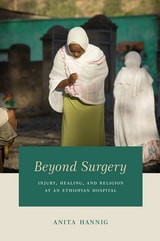
Beyond Surgery
Injury, Healing, and Religion at an Ethiopian HospitalAnita Hannig
University of Chicago Press, 2017
Through her in-depth ethnography of two repair and rehabilitation centers operating in Ethiopia, Hannig takes the reader deep into a world inside hospital walls, where women recount stories of loss and belonging, shame and delight. As she chronicles the lived experiences of fistula patients in clinical treatment, Hannig explores the danger of labeling “culture” the culprit, showing how this common argument ignores the larger problem of insufficient medical access in rural Africa. Beyond Surgery portrays the complex social outcomes of surgery in an effort to deepen our understanding of medical missions in Africa, expose cultural biases, and clear the path toward more effective ways of delivering care to those who need it most.
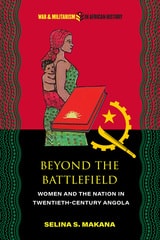
Beyond the Battlefield
Women and the Nation in Twentieth-Century AngolaSelina S. Makana
Ohio University Press, 0
Beyond the Battlefield offers a critical reappraisal of Angola’s nationalist history by centering the experiences and political agency of women during the country’s transition from Portuguese colonial rule to independence. Challenging dominant masculinist narratives that equate anticolonial resistance with armed combat, this study introduces maternalist nationalism as a theoretical framework to illuminate how women engaged in nation building through often-overlooked forms of labor and activism.
While men were largely visible on the battlefield, women fought a parallel struggle on the home front—mobilizing care work, reproductive labor, and political engagement in ways that were essential to the liberation movement and the postindependence state. Drawing on archival sources and women’s testimonies, Makana explores how patriotic motherhood—a concept defined as the fusion of nationalist politics with gendered expectations of women’s roles—enabled women to see themselves as vital contributors to the nation’s future.
This study contributes to scholarship in African history, gender studies, and postcolonial theory by offering a nuanced account of the intersections among militarism, nationalism, and gender. It invites readers to reconsider the frameworks through which political subjectivity and historical memory are constructed. Beyond the Battlefield is an essential resource for scholars and students interested in the gendered dimensions of colonialism, war, and state formation in modern Africa.
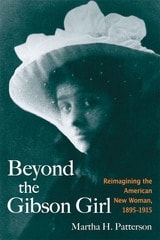
Beyond the Gibson Girl
Reimagining the American New Woman, 1895-1915Martha H. Patterson
University of Illinois Press, 2005
Challenging monolithic images of the New Woman as white, well-educated, and politically progressive, this study focuses on important regional, ethnic, and sociopolitical differences in the use of the New Woman trope at the turn of the twentieth century. Using Charles Dana Gibson's "Gibson Girls" as a point of departure, Martha H. Patterson explores how writers such as Pauline Hopkins, Margaret Murray Washington, Sui Sin Far, Mary Johnston, Edith Wharton, Ellen Glasgow, and Willa Cather challenged and redeployed the New Woman image in light of other “new” conceptions: the "New Negro Woman," the "New Ethics," the "New South," and the "New China."
As she appears in these writers' works, the New Woman both promises and threatens to effect sociopolitical change as a consumer, an instigator of evolutionary and economic development, and (for writers of color) an icon of successful assimilation into dominant Anglo-American culture. Examining a diverse array of cultural products, Patterson shows how the seemingly celebratory term of the New Woman becomes a trope not only of progressive reform, consumer power, transgressive femininity, modern energy, and modern cure, but also of racial and ethnic taxonomies, social Darwinist struggle, imperialist ambition, assimilationist pressures, and modern decay.
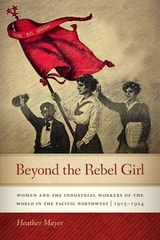
Beyond the Rebel Girl
Women and the Industrial Workers of the World in the Pacific Northwest, 1905-1924Heather Mayer
Oregon State University Press, 2018
In Beyond the Rebel Girl, historian Heather Mayer questions the well-worn vision of Wobblies as young, single, male, itinerant workers. While such workers formed a large portion of the membership, they weren’t the whole picture. In small towns across the Northwest, and in the larger cities of Seattle, Portland, and Spokane, women played an integral role in Wobbly life. Single women, but also families—husband and wife Wobbly teams—played important roles in some of the biggest fights for justice. IWW halls in these Northwest cities often functioned as community centers, with family-friendly events and entertainment.
Women were drawn to the IWW for its radical vision, inclusionary policies, birth control advocacy, and emphasis on freedom of choice in marriage. The IWW also offered women an avenue for activism that wasn’t focused primarily on the fight for suffrage. Beyond the Rebel Girl deepens our understanding of how the IWW functioned and how the union supported women in their fight for birth control, sexual emancipation, and better labor conditions, all while facing persecution at the local, state, and federal levels.
Beyond the Whiteness of Whiteness
Memoir of a White Mother of Black SonsJane Lazarre
Duke University Press, 1996
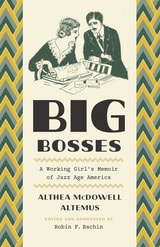
Big Bosses
A Working Girl’s Memoir of Jazz Age AmericaAlthea McDowell Altemus
University of Chicago Press, 2016
Beginning with her employment as a private secretary to James Deering of International Harvester, whom she describes as “probably the world’s oldest and wealthiest bachelor playboy,” Altemus tells us much about high society during the time, taking us inside Deering’s glamorous Miami estate, Vizcaya, an Italianate mansion worthy of Gatsby himself. Later, we meet her other notable employers, including Samuel Insull, president of Chicago Edison; New York banker S. W. Straus; and real estate developer Fred F. French. We cinch up our trenchcoats and head out sleuthing in Chicago, hired by the wife of a big boss to find out how he spends his evenings (with, it turns out, a mistress hidden in an apartment within his office, no less). Altemus was also a struggling single mother, a fact she had to keep secret from her employers, and she reveals the difficulties of being a working woman at the time through glimpses into women’s apartments, their friendships, and the dangers—sexual and otherwise—that she and others faced. Throughout, Altemus entertains with a tart and self-aware voice that combines the knowledge of an insider with the wit and clarity of someone on the fringe.
Anchored by extensive annotation and an afterword from historian Robin F. Bachin, which contextualizes Altemus’s narrative, Big Bosses provides a one-of-a-kind peek inside the excitement, extravagances, and the challenges of being a working woman roaring through the ’20s.
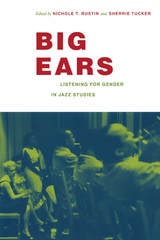
Big Ears
Listening for Gender in Jazz StudiesNichole T. Rustin and Sherrie Tucker, eds.
Duke University Press, 2008
Scholars of music, ethnomusicology, American studies, literature, anthropology, and cultural studies approach the question of gender in jazz from multiple perspectives. One contributor scrutinizes the tendency of jazz historiography to treat singing as subordinate to the predominantly male domain of instrumental music, while another reflects on her doubly inappropriate position as a female trumpet player and a white jazz musician and scholar. Other essays explore the composer George Russell’s Lydian Chromatic Concept as a critique of mid-twentieth-century discourses of embodiment, madness, and black masculinity; performances of “female hysteria” by Les Diaboliques, a feminist improvising trio; and the BBC radio broadcasts of Ivy Benson and Her Ladies’ Dance Orchestra during the Second World War. By incorporating gender analysis into jazz studies, Big Ears transforms ideas of who counts as a subject of study and even of what counts as jazz.
Contributors: Christina Baade, Jayna Brown, Farah Jasmine Griffin, Monica Hairston, Kristin McGee, Tracy McMullen, Ingrid Monson, Lara Pellegrinelli, Eric Porter, Nichole T. Rustin, Ursel Schlicht, Julie Dawn Smith, Jeffrey Taylor, Sherrie Tucker, João H. Costa Vargas
Big Sister
Feminism, Conservatism, and Conspiracy in the HeartlandErin M. Kempker
University of Illinois Press, 2018

Bike Lust
Harleys, Women, And American SocietyBarbara Joans
University of Wisconsin Press, 2001
Bike Lust roars straight into the world of women bikers and offers us a ride. In this adventure story that is also an insider’s study of an American subculture, Barbara Joans enters as a passenger on the back of a bike, but soon learns to ride her own. As an anthropologist she untangles the rules, rituals, and rites of passage of the biker culture. As a new member of that culture, she struggles to overcome fear, physical weakness, and a tendency to shoot her mouth off—a tendency that very nearly gets her killed.
Bike Lust travels a landscape of contradictions. Outlaws still chase freedom on the highway, but so do thousands of riders of all classes, races, and colors. Joans introduces us to the women who ride the rear—the biker chick, the calendar slut straddling the hot engine, the back-seat Betty at the latest rally, or the underage groupie at the local run. But she also gives us the first close look at women who ride in their own right, on their own bikes, as well as a new understanding of changing world of male bikers. These are ordinary women’s lives made extraordinary, adding a dimension of courage to the sport not experienced by males, risking life and limb for a glimpse of the very edge of existence. This community of riders exists as a primal tribute to humanity's lust for freedom.

Bio-Imperialism
Disease, Terror, and the Construction of National FragilityGwen Shuni D'Arcangelis
Rutgers University Press, 2021
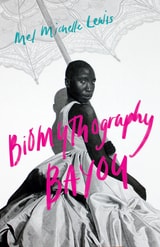
Biomythography Bayou
Mel Michelle Lewis
Bucknell University Press, 2025
Biomythography Bayou is more than just a book of memoir; it is a ritual for conjuring queer embodied knowledges and decolonial perspectives. Blending a rich gumbo of genres—from ingredients such as praise songs, folk tales, recipes, incantations, and invocations—it also includes a multimedia component, with “bayou tableau” images and audio recording links. Inspired by such writers as Audre Lorde, Zora Neale Hurston, and Octavia Butler, Mel Michelle Lewis draws from the well of her ancestors in order to chart a course toward healing Afrofutures. Showcasing the nature, folklore, dialect, foodways, music, and art of the Gulf’s coastal communities, Lewis finds poetic ways to celebrate their power and wisdom.
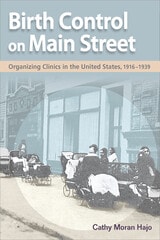
Birth Control on Main Street
Organizing Clinics in the United States, 1916-1939Cathy Moran Hajo
University of Illinois Press, 2010
Unearthing individual stories and statistical records from previously overlooked birth control clinics, Cathy Moran Hajo looks past the rhetoric of the birth control movement to show the relationships, politics, and issues that defined the movement in neighborhoods and cities across the United States. Whereas previous histories have emphasized national trends and glossed over the majority of clinics, Birth Control on Main Street contextualizes individual case studies to add powerful new layers to the existing narratives on abortion, racism, eugenics, and sterilization.
Hajo draws on an original database of more than 600 clinics run by birth control leagues, hospitals, settlement houses, and public health groups to isolate the birth control clinic from the larger narrative of the moment. By revealing how clinics tested, treated, and educated women regarding contraceptives, she shows how clinic operation differed according to the needs and concerns of the districts it served.
Moving thematically through the politicized issues of the birth control movement, Hajo infuses her analysis of the practical and medical issues of the clinics with unique stories of activists who negotiated with community groups to obey local laws and navigated the swirling debates about how birth control centers should be controlled, who should receive care, and how patients should be treated.
Birthing Black Mothers
Jennifer C. Nash
Duke University Press, 2021