Results by title
295 books match the query 'Zoology' and 18 start with b
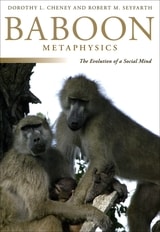
Baboon Metaphysics
The Evolution of a Social MindDorothy L. Cheney and Robert M. Seyfarth
University of Chicago Press, 2007
“The vivid narrative is like a bush detective story.”—Steven Poole, Guardian
“Baboon Metaphysics is a distillation of a big chunk of academic lives. . . . It is exactly what such a book should be—full of imaginative experiments, meticulous scholarship, limpid literary style, and above all, truly important questions.”—Alison Jolly, Science
“Cheney and Seyfarth found that for a baboon to get on in life involves a complicated blend of short-term relationships, friendships, and careful status calculations. . . . Needless to say, the ensuing political machinations and convenient romantic dalliances in the quest to become numero uno rival the bard himself.”—Science News
“Through ingenious playback experiments . . . Cheney and Seyfarth have worked out many aspects of what baboons used their minds for, along with their limitations. Reading a baboon’s mind affords an excellent grasp of the dynamics of baboon society. But more than that, it bears on the evolution of the human mind and the nature of human existence.”—Nicholas Wade, New York Times
Baboon Mothers and Infants
Jeanne Altmann
University of Chicago Press, 2001
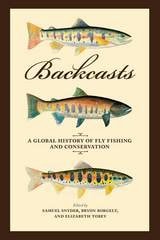
Backcasts
A Global History of Fly Fishing and ConservationEdited by Samuel Snyder, Bryon Borgelt, and Elizabeth Tobey
University of Chicago Press, 2016
Though Maclean writes of an age-old focus of all anglers—the day’s catch—he may as well be speaking to another, deeper accomplishment of the best fishermen and fisherwomen: the preservation of natural resources.
Backcasts celebrates this centuries-old confluence of fly fishing and conservation. However religious, however patiently spiritual the tying and casting of the fly may be, no angler wishes to wade into rivers of industrial runoff or cast into waters devoid of fish or full of invasive species like the Asian carp. So it comes as no surprise that those who fish have long played an active, foundational role in the preservation, management, and restoration of the world’s coldwater fisheries. With sections covering the history of fly fishing; the sport’s global evolution, from the rivers of South Africa to Japan; the journeys of both native and nonnative trout; and the work of conservation organizations such as the Federation of Fly Fishers and Trout Unlimited, Backcasts casts wide.
Highlighting the historical significance of outdoor recreation and sports to conservation in a collection important for fly anglers and scholars of fisheries ecology, conservation history, and environmental ethics, Backcasts explores both the problems anglers and their organizations face and how they might serve as models of conservation—in the individual trout streams, watersheds, and landscapes through which these waters flow.
Bats
A World of Science and MysteryM. Brock Fenton and Nancy B. Simmons
University of Chicago Press, 2015
Bats: A World of Science and Mystery presents these fascinating nocturnal creatures in a new light. Lush, full-color photographs portray bats in flight, feeding, and mating in views that show them in exceptional detail. The photos also take the reader into the roosts of bats, from caves and mines to the tents some bats build out of leaves. A comprehensive guide to what scientists know about the world of bats, the book begins with a look at bats’ origins and evolution. The book goes on to address a host of questions related to flight, diet, habitat, reproduction, and social structure: Why do some bats live alone and others in large colonies? When do bats reproduce and care for their young? How has the ability to fly—unique among mammals—influenced bats’ mating behavior? A chapter on biosonar, or echolocation, takes readers through the system of high-pitched calls bats emit to navigate and catch prey. More than half of the world’s bat species are either in decline or already considered endangered, and the book concludes with suggestions for what we can do to protect these species for future generations to benefit from and enjoy.
From the tiny “bumblebee bat”—the world’s smallest mammal—to the Giant Golden-Crowned Flying Fox, whose wingspan exceeds five feet, A Battery of Bats presents a panoramic view of one of the world’s most fascinating yet least-understood species.
Battle Against Extinction
Native Fish Management in the American WestEdited by W. L. Minckley and James E. Deacon; Foreword by Stewart L. Udall
University of Arizona Press, 1991
Nearly a third of the native fish fauna of North America lives in the arid West; this book traces their decline toward extinction as a result of human interference and the threat to their genetic diversity posed by decreases in their populations. What can be done to slow or end this tragedy? As the most comprehensive treatment ever attempted on the subject, Battle Against Extinction shows how conservation efforts have been or can be used to reverse these trends.
In covering fishes in arid lands west of the Mississippi Valley, the contributors provide a species-by-species appraisal of their status and potential for recovery, bringing together in one volume nearly all of the scattered literature on western fishes to produce a monumental work in conservation biology. They also ponder ethical considerations related to the issue, ask why conservation efforts have not proceeded at a proper pace, and suggest how native fish protection relates to other aspects of biodiversity planetwide. Their insights will allow scientific and public agencies to evaluate future management of these animal populations and will offer additional guidance for those active in water rights and conservation biology.
First published in 1991, Battle Against Extinction is now back in print and available as an open-access e-book thanks to the Desert Fishes Council.

Battle Against Extinction
Native Fish Management in the American WestEdited by W. L. Minckley and James E. Deacon; Foreword by Stewart L. Udall
University of Arizona Press, 1991
Nearly a third of the native fish fauna of North America lives in the arid West; this book traces their decline toward extinction as a result of human interference and the threat to their genetic diversity posed by decreases in their populations. What can be done to slow or end this tragedy? As the most comprehensive treatment ever attempted on the subject, Battle Against Extinction shows how conservation efforts have been or can be used to reverse these trends.
In covering fishes in arid lands west of the Mississippi Valley, the contributors provide a species-by-species appraisal of their status and potential for recovery, bringing together in one volume nearly all of the scattered literature on western fishes to produce a monumental work in conservation biology. They also ponder ethical considerations related to the issue, ask why conservation efforts have not proceeded at a proper pace, and suggest how native fish protection relates to other aspects of biodiversity planetwide. Their insights will allow scientific and public agencies to evaluate future management of these animal populations and will offer additional guidance for those active in water rights and conservation biology.
Behavioral Mechanisms in Evolutionary Ecology
Leslie A. Real
University of Chicago Press, 1994
With studies of species ranging from insects to primates, the contributors examine how various animals identify and use environmental resources and deal with ecological constraints, as well as the roles of learning, communication, and cognitive aspects of social interaction in behavioral evolution. Taken together, the chapters demonstrate how the study of internal mechanistic foundations of behavior in relation to their ecological and evolutionary contexts and outcomes provides valuable insight into such behaviors as predation, mating, and dispersal.
Behavioral Mechanisms in Evolutionary Ecology shows how a mechanistic approach unites various levels of biological organization to provide a broader understanding of the biological bases of behavioral evolution.
Binocular Vision
The Politics of Representation in Birdwatching Field GuidesSpencer Schaffner
University of Massachusetts Press, 2011
From meadows to marshlands, seashores to suburbs, field guides help us identify many of the things we find outdoors: plants, insects, mammals, birds. In these texts, nature is typically represented, both in words and images, as ordered, clean, and untouched by human technology and development. This preoccupation with species identification, however, has produced an increasingly narrow view of nature, a “binocular vision,” that separates the study of individual elements from a range of larger, interconnected environmental issues. In this book, Spencer Schaffner reconsiders this approach to nature study by focusing on how birds are presented in field guides.
Starting with popular books from the late nineteenth century and moving ultimately to the electronic guides of the current day, Binocular Vision contextualizes birdwatching field guides historically, culturally, and in terms of a wide range of important environmental issues. Schaffner questions the assumptions found in field guides to tease out their ideological workings. He argues that the sanitized world represented in these guides misleads readers by omitting industrial landscapes and so-called nuisance birds, leaving users of the guides disconnected from environmental degradation and its impact on bird populations.
By putting field guides into direct conversation with concerns about species conservation, environmental management, the human alteration of the environment, and the problem of toxic pollution, Binocular Vision is a field guide to field guides that takes a novel perspective on how we think about and interact with the world around us.
Biology Takes Form
Animal Morphology and the German Universities, 1800-1900Lynn K. Nyhart
University of Chicago Press, 1995
Although there were neither professors of morphology nor a morphologists' society, morphologists achieved influence by "colonizing" niches in a variety of disciplines. Scientists in anatomy, zoology, natural history, and physiology considered their work morphological, and the term encompassed research that today might be classified as embryology, systematics, functional morphology, comparative physiology, ecology, behavior, evolutionary theory, or histology. Nyhart draws on research notes, correspondence, and other archival material to examine how these scientists responded to new ideas and to the work of colleagues. She examines the intertwined histories of morphology and the broader biological enterprise, demonstrating that the study of form was central to investigations of such issues as the relationships between an animal's structure and function, between an organism and its environment, and between living species and their ancestors.
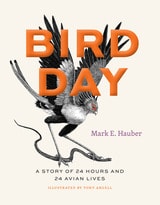
Bird Day
A Story of 24 Hours and 24 Avian LivesMark E. Hauber
University of Chicago Press, 2023
From morning to night and from the Antarctic to the equator, birds have busy days. In this short book, ornithologist Mark E. Hauber shows readers exactly how birds spend their time. Each chapter covers a single bird during a single hour, highlighting twenty-four different bird species from around the globe, from the tropics through the temperate zones to the polar regions. We encounter owls and nightjars hunting at night and kiwis and petrels finding their way in the dark. As the sun rises, we witness the beautiful songs of the “dawn chorus.” At eleven o’clock in the morning, we float alongside a common pochard, a duck resting with one eye open to avoid predators. At eight that evening, we spot a hawk swallowing bats whole, gorging on up to fifteen in rapid succession before retreating into the darkness.
For each chapter, award-winning artist Tony Angell has depicted these scenes with his signature pen and ink illustrations, which grow increasingly light and then dark as our bird day passes. Working closely together to narrate and illustrate these unique moments in time, Hauber and Angell have created an engaging read that is a perfect way to spend an hour or two—and a true gift for readers, amateur scientists, and birdwatchers.
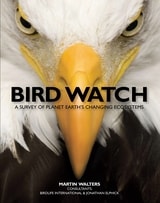
Bird Watch
A Survey of Planet Earth's Changing EcosystemsMartin Walters
University of Chicago Press, 2011
From the tufted puffin in the Pacific Northwest to the hook-billed hermit in the Brazilian rainforest, birds suffer from the effects of climate change in every corner of the globe. Scientists have found declines of up to 90 percent in some troubled bird populations and unprecedented reproductive failure in others. The most recent studies suggest dire prospects: 1,227 avian species are threatened with extinction and an additional 838 near-threatened species are urgent priorities for conservation action.
As much an indispensable guide as a timely call to action, Bird Watch is an illustrated tour of these endangered birds and their habitats. Encyclopedic in scope, this book features all 1,227 species on the International Union for Conservation of Nature (IUCN) Red List, thoroughly detailing the environmental pressures and conservation prescriptions that hold their futures in the balance. After introducing readers to the main threats to birds and regions at high risk, Bird Watch presents a visually stunning and scientifically accurate flight over the major bird habitats, including tropical forests; temperate and northern forests; deserts; mountains; grasslands; and Mediterranean, marine, freshwater, and oceanic islands. The volume concludes with an overview of bird species by region—categorized by family within each region, and a guide to the world’s best birding sites. Produced in cooperation with BirdLife International, Bird Watch is a celebration of the beauty and diversity of birds and their habitats—and a warning of the dangers they face around the world.
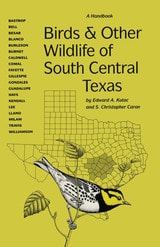
Birds and Other Wildlife of South Central Texas
A HandbookBy Edward A. Kutac and S. Christopher Caran
University of Texas Press, 1993
Nature takes a surprising turn in the heart of Texas. The flat Gulf Coastal Plains, which become the fertile Blackland Prairies in Central Texas, end abruptly at the Balcones Escarpment, one of the state’s most dramatic geological features, and the rolling, more sparsely vegetated Hill Country begins. The animal life varies as dramatically as the land. More than 400 species of birds alone, nearly three-fourths of all Texas birds, can be spotted in the region.
This handbook offers a concise natural history of Central Texas and a complete checklist of all native and naturalized vertebrate animals, including birds, mammals, reptiles, amphibians, and fish, as well as invertebrates that include butterflies and land snails. The listings cite both scientific and common names for each species, relative abundance in the region, and preferred habitats.
A distinguishing feature of the handbook is its list of parks and recreational areas in the region, which includes the counties of Bastrop, Bell, Bexar, Blanco, Burleson, Burnet, Caldwell, Comal, Fayette, Gillespie, Gonzales, Guadalupe, Hays, Kendall, Lee, Llano, Milam, Travis, and Williamson. The authors describe the recreational facilities available in each park and list the animal species likely to be encountered there.
For birdwatchers, naturalists, visitors, and residents alike, this popular handbook will be the essential "where-to-find-it" reference.
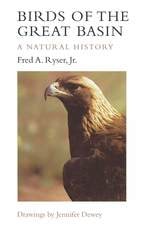
Birds of the Great Basin
A Natural HistoryFred A. Ryser
University of Nevada Press, 1985
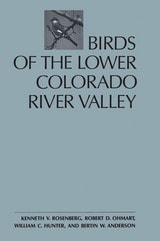
Birds of the Lower Colorado River Valley
Kenneth V. Rosenberg, Robert D. Ohmart, William C. Hunter, and Bertin W. Anderson
University of Arizona Press, 1991
"A tremendous amount of information is included in this book for banders, birders, and people working to restore the 'Nile of the American Southwest.'" —North American Bird Bander
"A report on several years of scientific research undertaken to investigate the ecological relationships among desert riparian wildlife. . . . Well writen and very informative book." —The Canadian Field Naturalist
"This work is a great achievment." —Birding
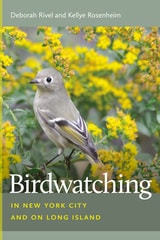
Birdwatching in New York City and on Long Island
Deborah Rivel and Kellye Rosenheim
University Press of New England, 2016
This easy-to-use guide gives seasonal information for both popular birding sites and those off the beaten path. Precise directions to the best viewing locations within the region’s diverse habitats enable birdwatchers to efficiently explore urban and wild birding hotspots. Over 500 species of birds can be seen in New York City’s five boroughs and on Long Island, one of the most densely populated and urbanized regions in North America, which also happens to be situated directly on the Atlantic Flyway. In this fragmented environment of scarce resources, birds concentrate on what’s available. This means that high numbers of birds are found in small spaces. In fact, Central Park alone attracts over 225 species of birds, which birders from around the world flock to see during spring and fall migration. Beyond Central Park, the five boroughs and Long Island have numerous wildlife refuges of extraordinary scenic beauty where resident and migratory birds inhabit forests, wetlands, grasslands, and beaches. These special places present an opportunity to see a wide array of songbirds, endangered nesting shorebirds, raptors, and an unprecedented number and variety of waterfowl. Including the latest information on the seasonal status and distribution of more than 400 species, with 39 maps and over 50 photographs, this full-color guide features information essential to planning a birding visit. It will become the go-to book for both the region’s longtime birders and those exploring the area for the first time.
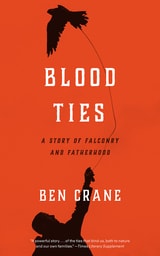
Blood Ties
A Story of Falconry and FatherhoodBen Crane
University of Chicago Press, 2020
In this artful and moving memoir, we follow Crane on his remarkable journey of flight and return. Traveling from the United Kingdom to Pakistan, we learn first about the history and practice of falconry, a beautiful and brutal partnership between humans and birds that has persisted for thousands of years. And as Crane’s personal story unfolds, we come to understand how he found solace and insight through his relationships with these animals. “I saw that my feelings toward nature, and birds of prey in particular, ran in parallel with my feelings for my son,” Crane writes. “I worked out that they were, in fact, two sides of the same coin—the deep love of one could, with gentle observation, inform and unlock the deep love for the other. . . . Perhaps this then is the central theme of my story.”
Many of us rely upon animal companions to provide a sense of joy, compassion, and empathy. But as Blood Ties teaches us, our relationships with the creatures among us can also transform us, illuminating what it means both to be human and to be part of the greater wild—what it means to be alive.
Bones, Clones, and Biomes
The History and Geography of Recent Neotropical MammalsEdited by Bruce D. Patterson and Leonora P. Costa
University of Chicago Press, 2012
As explorers and scientists have known for decades, the Neotropics harbor a fantastic array of our planet’s mammalian diversity, from capybaras and capuchins to maned wolves and mouse opossums to sloths and sakis. This biological bounty can be attributed partly to the striking diversity of Neotropical landscapes and climates and partly to a series of continental connections that permitted intermittent faunal exchanges with Africa, Antarctica, Australia, and North America. Thus, to comprehend the development of modern Neotropical mammal faunas requires not only mastery of the Neotropics’ substantial diversity, but also knowledge of mammalian lineages and landscapes dating back to the Mesozoic.
Bones, Clones, and Biomes offers just that—an exploration of the development and relationships of the modern mammal fauna through a series of studies that encompass the last 100 million years and both Central and South America. This work serves as a complement to more taxonomically driven works, providing for readers the long geologic and biogeographic contexts that undergird the abundance and diversity of Neotropical mammals. Rather than documenting diversity or distribution, this collection traverses the patterns that the distributions and relationships across mammal species convey, bringing together for the first time geology, paleobiology, systematics, mammalogy, and biogeography. Of critical importance is the book’s utility for current conservation and management programs, part of a rapidly rising conservation paleobiology initiative.
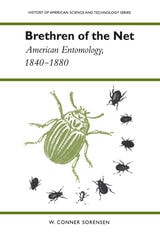
Brethren of the Net
American Entomology, 1840-1880W. Conner Sorensen
University of Alabama Press, 1995
Draws together information from diverse sources to illuminate an important chapter in the history of American science
Sorensen asks how it came about that, within the span of forty years, the American entomological community developed from a few gentlemen naturalists with primary links to Europe to a thriving scientific community exercising world leadership in entomological science. He investigates the relationship between American and European entomology, the background of American entomologists, the implications of entomological theory, and the specific links between 19th-century American society and the rapid institutional growth and advances in theoretical and applied entomology.
By the 1880s the entomologists constituted the largest single group of American zoologists and the largest group of ecologists in the world. While rooted in the British natural history tradition, these individuals developed a distinctive American style of entomological investigation. Inspired by the concept of the balance of nature, they excelled in field investigations of North American insects with special emphasis on insect pests that threatened crop production in a market-oriented agriculture. During this period, entomologists described over ten times as many North American insect species as had been previously named, and they consolidated their findings in definitive collections. Employing evolutionary theory, they contributed to the growing understanding of insect migration, mimicry, seasonal dimorphism, and the symbiotic relationship of plant and animal species. Americans also led in the revision of insect taxonomy according to the new principles. Their employment of entomological findings in the practical control of agricultural pests set new standards worldwide. Initially ridiculed as eccentric bug hunters, American entomologists eventually achieved stature as agricultural advisers and as investigators into the origin and nature of life.
Based primarily on the correspondence of American entomologists, Brethren of the Net draws together information from diverse sources to illuminate an important chapter in the history of American science.