Results by title
31 books match the query 'Forest'
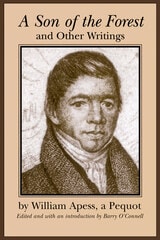
"A Son of the Forest" and Other Writings
William Apess
University of Massachusetts Press, 1997

A Clearing in the Forest
Law, Life, and MindSteven L. Winter
University of Chicago Press, 2001
Drawing on work in philosophy, psychology, anthropology, linguistics, and literary theory, Steven L. Winter has created nothing less than a tour de force of interdisciplinary analysis. A Clearing in the Forest rests on the simple notion that the better we understand the workings of the mind, the better we will understand all its products-especially law. Legal studies today focus on analytic skills and grand normative theories. But, to understand how real-world, legal actors reason and decide, we need a different set of tools. Cognitive science provides those tools, opening a window on the imaginative, yet orderly mental processes that animate thinking and decisionmaking among lawyers, judges, and lay persons alike. Recent findings about how humans actually categorize and reason make it possible to explain legal reasoning in new, more cogent, more productive ways.
A Clearing in the Forest is a compelling meditation on both how the law works and what it all means. In uncovering the irrepressibly imaginative, creative quality of human reason, Winter shows how what we are learning about the mind changes not only our understanding of law, but ultimately of ourselves. He charts a unique course to understanding the world we inhabit, showing us the way to the clearing in the forest.
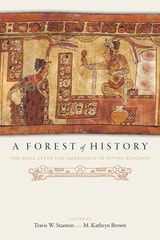
A Forest of History
The Maya after the Emergence of Divine KingshipTravis W. Stanton
University Press of Colorado, 2020
These original papers present new, cutting-edge research focusing on the social changes leading up to the spread of divine kingship across the lowlands in the first part of the Early Classic. The contributors continue avenues of inquiry such as the timing of the Classic Maya collapse across the southern lowlands, the nature of Maya warfare, the notion of usurpation and “stranger-kings” in the Classic period, the social relationships between the ruler and elite of the Classic period Yaxchilán polity, and struggles for sociopolitical dominance among the later Classic period polities of Chichén Itzá, Cobá, and the Puuc kingdoms.
Many of the interpretations and approaches in A Forest of Kings have withstood the test of time, while others have not; a complete understanding of the Classic Maya world is still developing. In A Forest of History recent discoveries are considered in the context of prior scholarship, illustrating both the progress the field has made in the past quarter century and the myriad questions that remain. The volume will be a significant contribution to the literature for students, scholars, and general readers interested in Mesoamerican and Maya archaeology.
Contributors:
Wendy Ashmore, Arlen F. Chase, Diane Z. Chase, Wilberth Cruz Alvarado, Arthur A. Demarest, Keith Eppich, David A. Freidel, Charles W. Golden, Stanley P. Guenter, Annabeth Headrick, Aline Magnoni, Joyce Marcus, Marilyn A. Masson, Damaris Menéndez, Susan Milbrath, Olivia C. Navarro-Farr, José Osorio León, Carlos Peraza Lope, Juan Carlos Pérez Calderón, Griselda Pérez Robles, Francisco Pérez Ruíz, Michelle Rich, Jeremy A. Sabloff, Andrew K. Scherer, Karl A. Taube
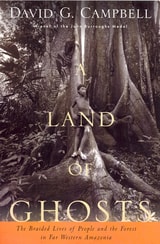
A Land of Ghosts
The Braided Lives of People and the Forest in Far Western AmazoniaCampbell, David G
Rutgers University Press, 2007
For thirty years David G. Campbell has explored the Amazon, an enchanting terrain of forest and river that is home to the greatest diversity of plants and animals to have ever existed, anywhere at any time, during the four-billion-year history of life on Earth.
With great artistic flair, Campbell describes a journey up the Rio Moa, a remote tributary of the Amazon River, 2,800 miles from its mouth. Here he joins three old friends: Arito, a caiman hunter turned paleontologist; Tarzan, a street urchin brought up in a bordello; and Pimentel, a master canoe pilot. They travel together deep into the rainforest and set up camp in order to survey every woody plant on a two-hectare plot of land with about as many tree species as in all of North America.
Campbell introduces us to two remarkable women, Dona Cabocla, a widow who raised six children on that lonely frontier, and Dona Ausira, a Nokini Native American who is the last speaker of her tribe's ages-old language. These pioneers live in a land whose original inhabitants were wiped out by centuries of disease, slavery, and genocide, taking their traditions and languages with them. He explores the intimate relationship between the extinction of native language and the extirpation of biological diversity. "It's hard for a people to love a place that is not defined in words and thus cannot be understood. And it's easy to give away something for which there are no words, something you never knew existed."
In elegant prose that enchants and entrances, Campbell has written an elegy for the Amazon forest and its peoples-for what has become a land of ghosts.
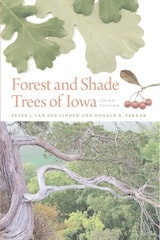
Forest and Shade Trees of Iowa
Peter J. van der Linden
University of Iowa Press, 2011
@font-face { font-family: "Times";}@font-face { font-family: "Palatino";}p.MsoNormal, li.MsoNormal, div.MsoNormal { margin: 0in 0in 0.0001pt; font-size: 12pt; font-family: "Times New Roman"; }div.Section1 { page: Section1; }
Back in print at last in a third edition, the classic Forest and Shade Trees of Iowa now has a wealth of full-color photographs and updated, reorganized information that will please both new and returning readers.
Part 1 of this guide focuses on identification, with user-friendly keys to both summer and winter trees and illustrated descriptions of more than one hundred common species. The trees are arranged according to similarities in foliage; each entry includes a large scan of a leafy branch along with two or three smaller photos of buds, flowers, fruits, and winter twigs. The text contains a description of the species, its geographical distribution, and notes on how to distinguish it from similar species. Part 2 is divided into conifers and flowering trees and includes all trees native to Iowa, trees that are widely planted, invasive species, some less commonly planted trees, and tall native shrubs that might be mistaken for trees. The authors provide information about the natural history of individual trees, their ecological requirements, pests and diseases that affect them, and their usefulness for such different purposes as windbreaks, landscaping, wildlife plantings, fuel, lumber, and food. Following these two main parts, three shorter sections describe the planting and care of trees, Iowa’s forest communities, and good places to see trees in the state; a glossary and a bibliography are also included.
A complete guide to Iowa’s trees, both native and introduced, full of hundreds of color photos, this new edition of Forest and Shade Trees of Iowa will be immensely useful to arborists, foresters, horticulturists, landscape architects, gardeners, and all Iowans and midwesterners who appreciate the beauty and value of trees and want to learn more about them.

Forest of Pressure
Ogawa Shinsuke and Postwar Japanese DocumentaryAbe Mark Nornes
University of Minnesota Press, 2007
“Extraordinarily valuable, illuminating, and even entertaining, Forest of Pressure brims with the types of information that only a key insider can get his hands on.” —Mitsuhiro Yoshimoto, New York University
Ogawa Productions—known in Asia as Ogawa Pro—was an influential filmmaking collective that started in the 1960s under the direction of Ogawa Shinsuke (1936–1992). Between 1968 and the mid-1970s, Ogawa Pro electrified the Japanese student movement with its Sanrizuka documentary series—eight films chronicling the massive protests over the construction of the Narita airport—which has since become the standard against which documentaries are measured in Japan.
A critical biography of a collective, Forest of Pressure explores the emergence of socially committed documentary filmmaking in postwar Japan. Analyzing Ogawa Pro’s films and works by other Japanese filmmakers, Abé Mark Nornes addresses key issues in documentary theory and practice, including individual and collective cinema production modes and the relationship between subject and object. Benefiting from unprecedented access to Ogawa Pro’s archives and interviews with former members, Forest of Pressure is an innovative look at the fate of political filmmaking in the wake of the movement’s demise.
Abé Mark Nornes is associate professor of screen arts and cultures and Asian languages and cultures at the University of Michigan. He is a coordinator at the Yamagata International Documentary Film Festival and the author of Japanese Documentary Film: The Meiji Era through Hiroshima (Minnesota, 2003).

Forest of Time
A Century of Science at Wind River Experimental ForestMargaret Herring
Oregon State University Press, 2007
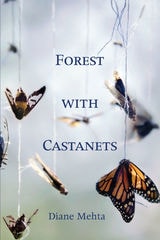
Forest with Castanets
Diane Mehta
Four Way Books, 2019

From Forest to Steppe
The Russian Art of Building in WoodWilliam Craft Brumfield
Duke University Press, 2025
In From Forest to Steppe, renowned scholar and photographer William Craft Brumfield offers a panoramic survey of Russia’s centuries-long heritage of wooden architecture. Lavishly illustrated with more than 400 color photographs, the volume links log-built barns, windmills, houses, and churches in the Far North; Buddhist shrines in the Transbaikal region; and eighteenth-century palaces on the outskirts of Moscow. Brumfield also takes readers to the estate houses of many Russian literary giants, from Chekhov and Tolstoy to Dostoevsky and Pushkin. Spanning thousands of photographed sites, five decades of field work, and seven time zones, Brumfield’s photographs offer compelling evidence of the adaptability of log construction and its ability to transcend class, cultural, and aesthetic boundaries.
In the decades since Brumfield began photographing Russian architecture, many of the buildings he has documented have been demolished or abandoned and left to rot at alarming rates. Brumfield observes a contradiction in contemporary Russia: It acknowledges the cultural importance of wooden buildings yet struggles to find and dedicate the resources and solutions needed to save them. A hymn and elegy to the long Russian practice of building with wood, From Forest to Steppe is an unparalleled look into one of the world’s most singular architectural traditions.
From the Forest to the Shore
Julia Glassman
Michigan Publishing Services, 2022
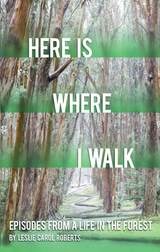
Here is Where I Walk
Episodes From a Life in the ForestLeslie Carol Roberts
University of Nevada Press, 2019
In layered stories of her life and travels, Leslie turns her daily walks into revelations of deeper meaning. From Maryland to Iowa to Tasmania, we follow a fierce and keenly observant walker through places of exquisite beauty and complexity. Her daily walks inspire Leslie to accept the invitation of the beckoning trees where she finds herself colliding with the urban coyote, the peculiar banana slug, and the manzanita. She also notes both ridiculous and poignant aspects of human ecosystems in pursuit of what it means to live a life of creativity and creation from scientist-activists battling to save environments to the tragic realities of ordinary life.
In this finely crafted eco-memoir, each place provides Leslie with exactly the scaffolding needed to survive, with nature serving as the tonic. Here is Where I Walk provides a vivid answer to how we can find our place, not only in nature but within ourselves and the world we walk.
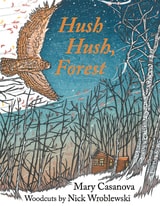
Hush Hush, Forest
Mary Casanova
University of Minnesota Press, 2018
Lyrical words and elegant woodcuts capture the quiet beauty of the forest as day fades to night and autumn gives way to the North Woods winter
While we are tucked in, snug in warm blankets as we listen to bedtime stories, the woods around us whisper another tale. As the golden leaves waft through the lengthening shadows, the loon sings one last lullaby, the whirring hummingbird takes one last sip, the industrious beaver saws one last branch for her lodge. Here, in enchanting words and woodcuts, is the magic of night falling and winter approaching in the North Woods. Hush Hush, Forest peers through twilight’s window at the raccoon preening, the doe and fawn bedding down, the last bat of the season flitting away. The owl surveys, the rabbit scurries, the bear hunkers, readying her den.
Marking the rhythm between the falling leaf and the falling snowflake, picturing the rituals of creatures big and small as they prepare for the long winter’s sleep, this charming book captures a time of surpassing wonder for readers of all ages—and bids everyone in the hushed forest a peaceful good night.
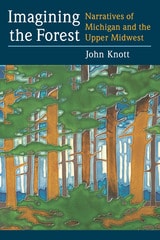
Imagining the Forest
Narratives of Michigan and the Upper MidwestJohn Knott
University of Michigan Press, 2011
Forests have always been more than just their trees. The forests in Michigan (and similar forests in other Great Lakes states such as Wisconsin and Minnesota) played a role in the American cultural imagination from the beginnings of European settlement in the early nineteenth century to the present. Our relationships with those forests have been shaped by the cultural attitudes of the times, and people have invested in them both moral and spiritual meanings.
Author John Knott draws upon such works as Simon Schama's Landscape and Memory and Robert Pogue Harrison's Forests: The Shadow of Civilization in exploring ways in which our
relationships with forests have been shaped, using Michigan---its history of settlement, popular literature, and forest management controversies---as an exemplary case. Knott looks at such well-known figures as William Bradford, James Fenimore Cooper, John Muir, John Burroughs, and Teddy Roosevelt; Ojibwa conceptions of the forest and natural world (including how Longfellow mythologized them); early explorer accounts; and contemporary literature set in the Upper Peninsula, including Jim Harrison's True North and Philip Caputo's Indian Country.
Two competing metaphors evolved over time, Knott shows: the forest as howling wilderness, impeding the progress of civilization and in need of subjugation, and the forest as temple or cathedral, worthy of reverence and protection. Imagining the Forestshows the origin and development of both.
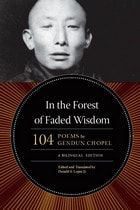
In the Forest of Faded Wisdom
104 Poems by Gendun Chopel, a Bilingual EditionGendun Chopel
University of Chicago Press, 2009
In a culture where poetry is considered the highest form of human language, Gendun Chopel is revered as Tibet’s greatest modern poet. Born in 1903 as British troops were preparing to invade his homeland, Gendun Chopel was identified at any early age as the incarnation of a famous lama and became a Buddhist monk, excelling in the debating courtyards of the great monasteries of Tibet. At the age of thirty-one, he gave up his monk’s vows and set off for India, where he would wander, often alone and impoverished, for over a decade. Returning to Tibet, he was arrested by the government of the young Dalai Lama on trumped-up charges of treason, emerging from prison three years later a broken man. He died in 1951 as troops of the People’s Liberation Army marched into Lhasa.
Throughout his life, from his childhood to his time in prison, Gendun Chopel wrote poetry that conveyed the events of his remarkable life. In the Forest of Faded Wisdom is the first comprehensive collection of his oeuvre in any language, assembling poems in both the original Tibetan and in English translation. A master of many forms of Tibetan verse, Gendun Chopel composed heartfelt hymns to the Buddha, pithy instructions for the practice of the dharma, stirring tributes to the Tibetan warrior-kings, cynical reflections on the ways of the world, and laments of a wanderer, forgotten in a foreign land. These poems exhibit the technical skill—wordplay, puns, the ability to evoke moods of pathos and irony—for which Gendun Chopel was known and reveal the poet to be a consummate craftsman, skilled in both Tibetan and Indian poetics. With a directness and force often at odds with the conventions of belles lettres, this is a poetry that is at once elegant and earthy. In the Forest of Faded Wisdom is a remarkable introduction to Tibet’s sophisticated poetic tradition and its most intriguing twentieth-century writer.

In the Forest of Metropoles
Karl-Markus Gauß
Seagull Books, 2024
A Herodotus of Mitteleuropa, cultural historian Karl-Markus Gauß is essential reading for anyone trying to understand the breadth and complexities of cultures and societies in Europe before, during, and after its decades of division in the twentieth century.
In this book, Gauß takes his readers on a thirteen-station journey across Europe. From Brussels to Istanbul and from Naples to Opole, Gauß weaves a Sebaldian web of connection and coincidence into a hybrid cultural history. Significantly, Gauß’s metropoles are not the well-trodden, thoroughly explored, and minutely documented megalopolises and cultural capitals that have been mythologized by writers great and small. There are no visits to Berlin, Paris, Rome, or Madrid, although he does make time for Vienna, where he looks not for imperial remnants, but for traces of genius unrecognized by most. Gauß’s lodestars are small but cosmopolitan towns on the periphery, such as Slaghenaufi, Vacaresti, Fontevraud, Dragatus, Vrzdenec, and Sélestat. In these far-flung towns, Gauß assembles a canon of overlooked humanists, expelled or extinguished by political and historical forces that swept the continent.

Lights in the Forest
Rabbis Respond to Twelve Essential Jewish QuestionsRabbi Paul Citrin
Central Conference of American Rabbis, 2014
Perfect for self-study, group study, adult learning, and conversion, the collection strives to encourage further study and ongoing discussion through presenting Judaism's intellectual and spiritual tools as means for leading a life full of purpose and commitment.
Questions addressed by the anthology can found below:
-Questions about God
-Questions about Our Humanity
-Questions about the Jewish People
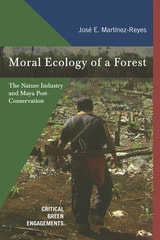
Moral Ecology of a Forest
The Nature Industry and Maya Post-ConservationJosé E. Martínez-Reyes
University of Arizona Press, 2016
Moral Ecology of a Forest provides an ethnographic account of conservation politics, particularly the conflict between Western conservation and Mayan ontological ecology. The difficult interactions of the Maya of central Quintana Roo, Mexico, for example, or the Mayan communities of the Sain Ka’an Biosphere, demonstrate the clashing interests with Western biodiversity conservation initiatives. The conflicts within the forest of Quintana Roo represent the outcome of nature in this global era, where the forces of land grabbing, conservation promotion and organizations, and capitalism vie for control of forests and land.
Forests pose living questions. In addition to the ever-thrilling biology of interdependent species, forests raise questions in the sphere of political economy, and thus raise cultural and moral questions. The economic aspects focus on the power dynamics and ideological perspectives over who controls, uses, exploits, or preserves those life forms and landscapes. The cultural and moral issues focus on the symbolic meanings, forms of knowledge, and obligations that people of different backgrounds, ethnicities, and classes have constructed in relation to their lands. The Maya Forest of Quintana Roo is a historically disputed place in which these three questions come together.
Science in the Forest, Science in the Past
Edited by Geoffrey E. R. Lloyd and Aparecida Vilaça
HAU, 2020
Science in the Forest, Science in the Past is a pioneering interdisciplinary exploration that will challenge the way readers interested in sciences, mathematics, humanities, social research, computer sciences, and education think about deeply held notions of what constitutes reality, how it is apprehended, and how to investigate it.
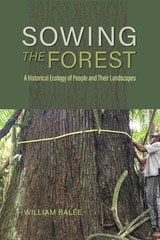
Sowing the Forest
A Historical Ecology of People and Their LandscapesWilliam Balée
University of Alabama Press, 2023
Explores how, over centuries, Amazonian people and their cultures have interacted with rainforests
William Balée is a world-renowned expert on the cultural and historical ecology of the Amazon basin. His new collection, Sowing the Forest, is a companion volume to the award-winning Cultural Forests of the Amazon, published in 2013. Sowing the Forest engages in depth with how, over centuries, Amazonian people and their cultures have interacted with rainforests, making the landscapes of palm forests and other kinds of forests, and how these and related forests have fed back into the vocabulary and behavior of current indigenous occupants of the remotest parts of the vast hinterlands.
The book is divided into two parts. Part 1, “Substrate of Intentionality,” comprises chapters on historical ecology, indigenous palm forests, plant names in Amazonia, the origins of the Amazonian plantain, and the unknown “Dark Earth people” of thousands of years ago and their landscaping. Together these chapters illustrate the phenomenon of feedback between culture and environment.
In Part 2, “Scope of Transformation,” Balée lays out his theory of landscape transformation, which he divides into two rubrics—primary landscape transformation and secondary landscape transformation—and for which he provides examples and various specific effects. One chapter compares environmental and social interrelationships in an Orang Asli group in Malaysia and the Ka’apor people of eastern Amazonian Brazil, and another chapter covers loss of language and culture in the Bolivian Amazon. A final chapter addresses the controversial topic of monumentality in the rainforest. Balée concludes by emphasizing the common thread in Amazonian historical ecology: the long-term phenomenon of encouraging diversity for its own sake, not just for economic reasons.
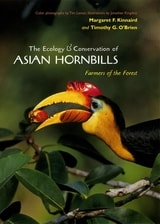
The Ecology and Conservation of Asian Hornbills
Farmers of the ForestMargaret F. Kinnaird and Timothy G. O'Brien
University of Chicago Press, 2008
Building on fourteen years of research, Margaret F. Kinnaird and Timothy G. O’Brien offer in Ecology and Conservation of Asian Hornbills the most up-to-date information on the evolution, reproduction, feeding ecology, and movement patterns of thirty-one species of Asian hornbills. The authors address questions of ecological functionality, ecosystem services, and keystone relationships, as well as the disturbing influence of forest loss and fragmentation on hornbills. Complemented by superb full-color images by renowned photographer Tim Laman that provide rare glimpses of hornbills in their native habitat and black-and-white illustrations by Jonathan Kingdon that highlight the intriguing aspects of hornbill behavior, Ecology and Conservation of Asian Hornbills will stand tall in the pantheon of natural history studies for years to come.
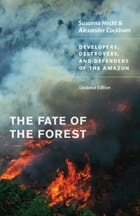
The Fate of the Forest
Developers, Destroyers, and Defenders of the Amazon, Updated EditionSusanna B. Hecht and Alexander Cockburn
University of Chicago Press, 2010
The Amazon rain forest covers more than five million square kilometers, amid the territories of nine different nations. It represents over half of the planet’s remaining rain forest. Is it truly in peril? What steps are necessary to save it? To understand the future of Amazonia, one must know how its history was forged: in the eras of large pre-Columbian populations, in the gold rush of conquistadors, in centuries of slavery, in the schemes of Brazil’s military dictators in the 1960s and 1970s, and in new globalized economies where Brazilian soy and beef now dominate, while the market in carbon credits raises the value of standing forest.
Susanna Hecht and Alexander Cockburn show in compelling detail the panorama of destruction as it unfolded, and also reveal the extraordinary turnaround that is now taking place, thanks to both the social movements, and the emergence of new environmental markets. Exploring the role of human hands in destroying—and saving—this vast forested region, The Fate of the Forest pivots on the murder of Chico Mendes, the legendary labor and environmental organizer assassinated after successful confrontations with big ranchers. A multifaceted portrait of Eden under siege, complete with a new preface and afterword by the authors, this book demonstrates that those who would hold a mirror up to nature must first learn the lessons offered by some of their own people.

The Forest
Susan Stewart
University of Chicago Press, 1995
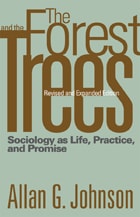
The Forest and the Trees
Sociology as Life, Practice, and PromiseAllan Johnson
Temple University Press, 2008
If sociology could teach everyone just one thing, what would it be? The Forest and the Trees is one sociologist's response to the hypothetical—the core insight with the greatest potential to change how people see the world and themselves in relation to it.
This revised and updated edition features:
• A new chapter that brings together the various aspects of the sociological model described in previous chapters with a detailed application to the origins of racism in the United States
•A discussion of how individuals can participate in social change by stepping off paths of least resistance
•The addition of graphics to illustrate the sociological model of systems and individuals
The Forest and the Trees
Sociology as Life, Practice, and PromiseAllan Johnson
Temple University Press, 2014
If sociology could teach everyone just one thing, what would it be? The Forest and the Trees is one sociologist's response to the hypothetical-the core insight with the greatest potential to change how people see the world and themselves in relation to it.
This Third Edition features:
• Updated key references, data, resources, and examples, from global warming, Obama's election, and gay marriage to transgender/cisgender and the Occupy Movement
• A glossary of terms
• The short essays in Chapter 6, framed around the power of sociology, dig beneath easy and popular understandings to reveal what lies beneath
• An additional analysis of how men's violence is made invisible even though most violence is perpetrated by men
• Chapter 7's focus on sociology as a worldview with an analysis of the origins of white privilege

The Forest of Sure Things
Megan Snyder-Camp
Tupelo Press, 2010
The Forest of Sure Things is a layered sequence of poems set in a remote, historic village at the tip of a peninsula on the Northwest Coast, near where Lewis and Clark encountered the Pacific. A pair of newlywed drifters has arrived and settled there, starting the town’s first new family in a hundred years. When their second child is stillborn, the bereft family unravels and un-roots themselves. Megan Snyder-Camp’s poems reveal — like the shoreline exposed by a neap tide — an emotional landscape pressed upon and buckling under the complications of grief and the difficulties of language.
With hypnotic, incantatory phrasing and imagery and an innovative approach to chronology, Snyder-Camp tells the story of the grieving couple, then dramatizes the impact of this enigmatic story on her imagination, her artistic practice, and her own new beginnings in married life and parenthood.
Based in part upon a brief, true story she was told, Snyder-Camp’s mysterious yet uncommonly compelling poetic sequence will draw the reader as if along a current pulling through the book. Acknowledging the importance of Anne Carson’s Autobiography of Red and Italo Calvino’s Invisible Cities, Snyder-Camp has spoken of her fascination with where language frays, as we try and use “story” to create what we remember and see where we are. What happens in a place, or a family, or a body, when time catches, or stops?
The Forest of Taboos
Morality, Hunting, and Identity among the Huaulu of the MoluccasValerio Valeri
University of Wisconsin Press, 2000
“The Forest of Taboos may be considered among the most important books ever written by an anthropologist. Valeri writes superbly, and this book makes a fundamental contribution to one of the most central lines of thought in twentieth-century anthropology. He shows that taboo is finally comprehensible.”—John Stephen Lansing, University of Michigan
“The Forest of Taboos is no conventional ethnography, more an extended meditative essay on its subject, erudite, rich in ideas and data, wide-ranging in its theoretical inspiration, and self-consciously literary in form. It is a fitting memorial to an author whose life was so tragically cut short.”—Roy Ellen, University of Kent at Canterbury
This eloquent and profound book, completed by Valerio Valeri shortly before his death in 1998, contends that the ambivalence felt by all humans about sex, death, and eating other animals can be explained by a set of coordinated principles that are expressed in taboos. In elegant prose, Valeri evokes the world of the Huaulu, forest hunters of Indonesia. The hidden attractions of the animal world, which invades the human world in perilous ways, he shows, also delineate that which the Huaulu regard as most human about themselves.

The Ground at My Feet
Sustaining a Family and a ForestAnn Stinson
Oregon State University Press, 2021
The Ground at My Feet is a memoir about loss and grief as well as a portrait of a family, a region, and an industry. Combining personal story and research, Stinson weaves essays, poems, history, and science into a rich and layered account of life in a family forest in the Pacific Northwest. She maps interactions between the land and its people over two centuries: the Cowlitz peoples, homesteaders, and several generations of logging families who have worked the property. She follows her family’s logs as they become lumber for fence boards and suburban homes, touring a local cedar mill and traveling with her father to visit mills in Japan.
Stinson adds a landowner’s voice to conversations about the human tendency to demand more of the land than it can sustain. With its uniquely personal view of the Pacific Northwest’s timber and forestry heritage, The Ground at My Feet is an engaging addition to the literature of the landscape and ecology of the West.
The Mahabharata, Volume 2
Book 2: The Book of Assembly; Book 3: The Book of the ForestEdited by J. A. B. van Buitenen
University of Chicago Press, 1975

Trouble in the Forest
California’s Redwood Timber WarsRichard Widick
University of Minnesota Press, 2009
Wars over natural resources have been fiercely fought in the Humboldt Bay redwood region of Northern California, a situation made devastatingly urgent in recent decades of timber war that raised questions of economic sustainability and ecological preservation. In Trouble in the Forest, Richard Widick narrates the long and bloody history of this hostility and demonstrates how it exemplifies the key contemporary challenge facing the modern societies-the collision of capitalism, ecology, and social justice.
An innovative blend of social history, cultural theory, and ethnography, Trouble in the Forest traces the origins of the redwood conflict to the same engines of modernity that drove the region's colonial violence against American Indians and its labor struggles during the industrial revolution. Widick describes in vivid detail the infamous fight that ensued when Maxxam Inc. started clearing ancient forests in Humboldt after acquiring the Pacific Lumber Company in 1985, but he also reaches further back and investigates the local Indian clashes and labor troubles that set the conditions of the timber wars. Seizing on public flash points of each confrontation-including the massacre of Wiyot on Indian Island in 1860, the machine-gunning of redwood strikers by police and company thugs during the great lumber strike of 1935, and the car bombing of forest defenders in 1990-Widick maps how the landscape has registered the impact of this epochal struggle, and how the timber wars embody the forces of market capitalism, free speech, and liberal government.
Showing how events such as an Indian massacre and the death of a protester at the hands of a logger create the social memory and culture of timber production and environmental resistance now emblematic of Northern California's redwood region, Trouble in the Forest ultimately argues that the modern social imaginary produced a perpetual conflict over property that fueled the timber wars as it pushed toward the western frontier: first property in land, then in labor, and now in environment.

Walking the Forest with Chico Mendes
Struggle for Justice in the AmazonBy Gomercindo Rodrigues, Edited and translated by Linda Rabben
University of Texas Press, 2007
A close associate of Chico Mendes, Gomercindo Rodrigues witnessed the struggle between Brazil's rubber tappers and local ranchers—a struggle that led to the murder of Mendes. Rodrigues's memoir of his years with Mendes has never before been translated into English from the Portuguese. Now, Walking the Forest with Chico Mendes makes this important work available to new audiences, capturing the events and trends that shaped the lives of both men and the fragile system of public security and justice within which they lived and worked.
In a rare primary account of the celebrated labor organizer, Rodrigues chronicles Mendes's innovative proposals as the Amazon faced wholesale deforestation. As a labor unionist and an environmentalist, Mendes believed that rain forests could be preserved without ruining the lives of workers, and that destroying forests to make way for cattle pastures threatened humanity in the long run. Walking the Forest with Chico Mendes also brings to light the unexplained and uninvestigated events surrounding Mendes's murder.
Although many historians have written about the plantation systems of nineteenth-century Brazil, few eyewitnesses have captured the rich rural history of the twentieth century with such an intricate knowledge of history and folklore as Rodrigues.
Years Of The Forest
Helen Hoover
University of Minnesota Press, 1999