Results by title
22291 books match the query 'Social Science' and 1147 start with b

Beyond the Visual
Multisensory Modes of Beholding ArtEdited by Ken Wilder and Aaron McPeake
University College London, 2025
In what ways can visual art be enjoyed beyond sight? Bringing together leading international scholars and artists in the emerging field of “blindness arts”—including blind and partially blind artists, curators, advocates for inclusive practices and models of audio description, cognitive psychologists, and theorists of installation, performance, and sound art—Beyond the Visual seeks to broaden the discussion of multisensory ways of beholding contemporary art, with a particular emphasis on modes that transcend a dependency upon sight. Through diverse examples of multisensory engagement, it contributes to ongoing conversations around accessibility and blindness in art while also challenging and expanding our understanding of how art is experienced.

Beyond the Wall
Writing a Path through PalestineBidisha
Seagull Books, 2012

Beyond the Wall
Writing a Path through PalestineBidisha
Seagull Books, 2025
Their voices come from Bethlehem and Hebron. You can hear them from Jerusalem to Nazareth, and witness their protests in Gaza and Ramallah. From the refugee camps in the West Bank, you can hear the voices of the Palestinian people call out to demand self-determination and a better quality of life. But outside of Israel and the occupied territories, these individual voices are rarely heard—until now.
In Beyond the Wall: Writing a Path through Palestine, internationally renowned feminist critic and writer Bidisha collects the testimonies of an occupied people—ordinary citizens, activists, and children—alongside those of international aid workers and foreign visitors for a revelatory look at a population on the margins.
Called “beautifully belligerent, [and] fiercely intelligent” by The Independent and a “dazzlingly creative writer” by the London Times, Bidisha amplifies the voices of the Palestinian people in this book and lends them her own considerable strength.

Beyond the White Negro
Empathy and Anti-Racist ReadingKimberly Chabot Davis
University of Illinois Press, 2014
Davis analyzes how white engagement with African American novels, film narratives, and hip-hop can help form anti-racist attitudes that may catalyze social change and racial justice. Though acknowledging past failures to establish cross-racial empathy, she focuses on examples that show avenues for future progress and change. Her study of ethnographic data from book clubs and college classrooms shows how engagement with African American culture and pedagogical support can lead to the kinds of white self-examination that make empathy possible. The result is a groundbreaking text that challenges the trend of focusing on society's failures in achieving cross-racial empathy and instead explores possible avenues for change.
Beyond the Whiteness of Whiteness
Memoir of a White Mother of Black SonsJane Lazarre
Duke University Press, 1996

Beyond the World's End
Arts of Living at the CrossingT. J. Demos
Duke University Press, 2020

Bhangra and Asian Underground
South Asian Music and the Politics of Belonging in BritainFalu Bakrania
Duke University Press, 2013

Bibb County, Alabama
The First Hundred YearsRhoda C. Ellison
University of Alabama Press, 1984
This model county history chronicles one hundred years in the life of a representative Deep South county
The history of Bibb County between 1818 and 1918 is in many ways representative of the experience of central Alabama during that period. Bibb County shares physical characteristics with the areas both to its north and to its south. In its northern section is a mineral district and in its southern valleys fertile farming country; therefore, its citizens have sometimes allied themselves with the hill counties and sometimes with their Black Belt neighbors.
Both sections of the county developed in step with the surrounding counties. Bibb's foundries were established during the same time and by the same iron masters as Shelby County, and its coal mines in the same decade as Jefferson County. Its farmers planted the same crops and faced the same problems as those in Perry, Autauga, and Tuscaloosa counties. Like Tuscaloosa, Bibb endeavored to promote river transportation for both its industrial and its agricultural products.
This carefully documented history is based on a variety of original sources, from personal letters to government records. It is generously illustrated with early maps and with old pictures of Bibb landmarks, many of which have now vanished.
Bible Trouble
Queer Reading at the Boundaries of Biblical ScholarshipTeresa J. Hornsby
SBL Press, 2011
The essays in Bible Trouble all engage queer theories for purposes of biblical interpretation, a rare effort to date within biblical scholarship. The title phrase “Bible Trouble” plays on Judith Butler's Gender Trouble, gesturing toward a primary text for contemporary queer theory. The essays consider, among others, the Lazarus story, the Ethiopian eunuch, “gender trouble” in Judges 4 and 5, the Song of Songs, and an unorthodox coupling of the books of Samuel and the film Paris Is Burning. This volume “troubles” not only the boundaries between biblical scholarship and queer theory but also the boundaries between different frameworks currently used in the analysis of biblical literature, including sexuality, gender, race, class, history, and literature. The contributors are Ellen T. Armour, Michael Joseph Brown, Sean D. Burke, Heidi Epstein, Deryn Guest, Jione Havea, Teresa J. Hornsby, Lynn R. Huber, S. Tamar Kamionkowski, Joseph A. Marchal, Jeremy Punt, Erin Runions, Ken Stone, Gillian Townsley, Jay Twomey, and Manuel Villalobos.

Biblical Porn
Affect, Labor, and Pastor Mark Driscoll's Evangelical EmpireJessica Johnson
Duke University Press, 2018

Bibliography of Michigan Archaeology
Alexis A. Praus
University of Michigan Press, 1964
Bicentennial
A Revolutionary History of the 1970sMarc Stein
University of Chicago Press, 2026
“Utterly illuminating. . . . Just a really revelatory book.”—Jill Lepore, The New York Times, The “Book Review” Podcast • “As historian Stein traces in Bicentennial, a national birthday can launch a much broader, more inclusive, and ambitious national project.”—Rebecca Brenner Graham, The New Republic • “A comprehensive and critical look at the Spirit of 1976.”—Library Journal
As the United States marks its semiquincentennial in 2026, renowned historian Marc Stein looks back at the politics of another landmark celebration during a time of striking similarities and surprising differences: the US bicentennial in 1976.
In the aftermath of Vietnam and Watergate, the bicentennial sparked an extraordinary national conversation about the country’s past, present, and future. As patriots, planners, profiteers, and protesters argued about how to commemorate the national birthday, they collectively reimagined the promises and perils of democracy during a transformational decade.
From award-winning historian Marc Stein, Bicentennial: A Revolutionary History of the 1970s is an original, illuminating, and insightful study of that era. While focusing on festivities and fights in Philadelphia, the nation’s birthplace, the book also explores the many proposed and abandoned celebrations that percolated up around the country. It tells a broadly democratic story of both the “official” bicentennial and counter-bicentennial activism, offering revolutionary perspectives on national politics, social movements, and popular culture. From the queer courtship of President Richard Nixon and Philadelphia Mayor Frank Rizzo to parades and protests with millions of participants, and from a deadly outbreak of Legionnaires’ disease at Philadelphia’s most prestigious hotel to the establishment of groundbreaking African American, ethnic, and Jewish museums, the bicentennial reveals a kaleidoscope of American peculiarities, problems, and possibilities.
The lasting influence of 1976 on one of the nation’s great urban centers and the United States as a whole is undeniable. As the nation—once again enmeshed in political and social upheaval—marks its two-hundred-fiftieth birthday in 2026, there is no better time to look back at its two-hundredth and marvel at what has changed, and what has not.
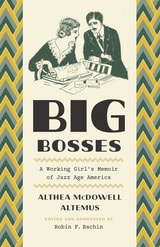
Big Bosses
A Working Girl’s Memoir of Jazz Age AmericaAlthea McDowell Altemus
University of Chicago Press, 2016
Beginning with her employment as a private secretary to James Deering of International Harvester, whom she describes as “probably the world’s oldest and wealthiest bachelor playboy,” Altemus tells us much about high society during the time, taking us inside Deering’s glamorous Miami estate, Vizcaya, an Italianate mansion worthy of Gatsby himself. Later, we meet her other notable employers, including Samuel Insull, president of Chicago Edison; New York banker S. W. Straus; and real estate developer Fred F. French. We cinch up our trenchcoats and head out sleuthing in Chicago, hired by the wife of a big boss to find out how he spends his evenings (with, it turns out, a mistress hidden in an apartment within his office, no less). Altemus was also a struggling single mother, a fact she had to keep secret from her employers, and she reveals the difficulties of being a working woman at the time through glimpses into women’s apartments, their friendships, and the dangers—sexual and otherwise—that she and others faced. Throughout, Altemus entertains with a tart and self-aware voice that combines the knowledge of an insider with the wit and clarity of someone on the fringe.
Anchored by extensive annotation and an afterword from historian Robin F. Bachin, which contextualizes Altemus’s narrative, Big Bosses provides a one-of-a-kind peek inside the excitement, extravagances, and the challenges of being a working woman roaring through the ’20s.
Big Brother and the Grim Reaper
Political Life After DeathBenjamin Ginsberg
Michigan State University Press, 2024

Big Digital Humanities
Imagining a Meeting Place for the Humanities and the DigitalPatrik Svensson
University of Michigan Press, 2016
Svensson’s own unique perspective and special stake in the Digital Humanities conversation comes from his role as director of the HUMlab at Umeå University. HUMlab is a unique collaborative space and Digital Humanities center, which officially opened its doors in 2000. According to its own official description, the HUMlab is an open, creative studio environment where “students, researchers, artists, entrepreneurs and international guests come together to engage in dialogue, experiment with technology, take on challenges and move scholarship forward.” It is this last element “moving scholarship forward” that Svensson argues is the real opportunity in what he terms the “big digital humanities,” or digital humanities as practiced in collaborative spaces like the HUMlab, and he is uniquely positioned to take an account of this evolving dimension of Digital Humanities practice.
Big Ears
Listening for Gender in Jazz StudiesNichole T. Rustin and Sherrie Tucker, eds.
Duke University Press, 2008
Scholars of music, ethnomusicology, American studies, literature, anthropology, and cultural studies approach the question of gender in jazz from multiple perspectives. One contributor scrutinizes the tendency of jazz historiography to treat singing as subordinate to the predominantly male domain of instrumental music, while another reflects on her doubly inappropriate position as a female trumpet player and a white jazz musician and scholar. Other essays explore the composer George Russell’s Lydian Chromatic Concept as a critique of mid-twentieth-century discourses of embodiment, madness, and black masculinity; performances of “female hysteria” by Les Diaboliques, a feminist improvising trio; and the BBC radio broadcasts of Ivy Benson and Her Ladies’ Dance Orchestra during the Second World War. By incorporating gender analysis into jazz studies, Big Ears transforms ideas of who counts as a subject of study and even of what counts as jazz.
Contributors: Christina Baade, Jayna Brown, Farah Jasmine Griffin, Monica Hairston, Kristin McGee, Tracy McMullen, Ingrid Monson, Lara Pellegrinelli, Eric Porter, Nichole T. Rustin, Ursel Schlicht, Julie Dawn Smith, Jeffrey Taylor, Sherrie Tucker, João H. Costa Vargas
Big Feelings
Queer and Feminist Indie Rock After Riot GrrrlDan DiPiero
University of Michigan Press, 2025
By bringing listeners’ experiences into the analysis, DiPiero shows how indie rock feminisms have shifted since the 1990s, rejecting overt political messages in favor of sonic catharsis, and reflecting the complex, ambivalent feeling of being young while the world burns. In reprising the sounds of an alt-rock associated in public consciousness with white male pain, Big Feelings doubles down on the stereotypical association between femininity and emotionality to perform whole spectrums of feeling in varied states of overwhelm. In doing so, these artists draw attention to overlooked histories of women and queer musicians who have been forging indie rock all along, while also remaking how the music matters in the present.

Big Game, Small World
A Basketball AdventureAlexander Wolff
Duke University Press, 2022
During the late 1990s, eminent basketball journalist Alexander Wolff traveled the globe to determine how a game invented by a Canadian clergyman became an international phenomenon. Big Game, Small World presents Wolff’s dispatches from sixteen countries spread across five continents and multiple US states. In them, he asks: What can the game tell us about the world? And what can the world tell us about the game? Whether traveling to Bhutan to challenge its king to a pickup game, exploring the women’s game in Brazil, or covering the Afrobasket tournament in Luanda, Angola, during a civil war, Wolff shows how basketball has the power to define an individual, a culture, and even a country.
This updated twentieth anniversary edition features a new preface in which Wolff outlines the contemporary rise of athlete-activists while discussing the increasing dominance within the NBA of marquee international players like Luka Dončić and Giannis Antetokounmpo. A loving celebration of basketball, Big Game, Small World is one of the most insightful books ever written about the game.
Big House on the Prairie
Rise of the Rural Ghetto and Prison ProliferationJohn M. Eason
University of Chicago Press, 2017
In 2007, John M. Eason moved his family to Forrest City, Arkansas, in search of answers to key questions about this trend: Why is America building so many prisons? Why now? And why in rural areas? Eason quickly learned that rural demand for prisons is complicated. Towns like Forrest City choose to build prisons not simply in hopes of landing jobs or economic wellbeing, but also to protect and improve their reputations. For some rural leaders, fostering a prison in their town is a means of achieving order in a rapidly changing world. Taking us into the decision-making meetings and tracking the impact of prisons on economic development, poverty, and race, Eason demonstrates how groups of elite whites and black leaders share power. Situating prisons within dynamic shifts that rural economies are undergoing and showing how racially diverse communities lobby for prison construction, Big House on the Prairie is a remarkable glimpse into the ways a prison economy takes shape and operates.

Big Med
Megaproviders and the High Cost of Health Care in AmericaDavid Dranove and Lawton Robert Burns
University of Chicago Press, 2021
Drawing on decades of combined expertise in health care consolidation, Dranove and Burns trace Big Med’s emergence in the 1990s, followed by its swift rise amid false promises of scale economies and organizational collaboration. In the decades since, megaproviders have gobbled up market share and turned independent physicians into salaried employees of big bureaucracies, while delivering on none of their early promises. For patients this means higher costs and lesser care. Meanwhile, physicians report increasingly low morale, making it all but impossible for most systems to implement meaningful reforms.
In Big Med, Dranove and Burns combine their respective skills in economics and management to provide a nuanced explanation of how the provision of health care has been corrupted and submerged under consolidation. They offer practical recommendations for improving competition policies that would reform megaproviders to actually achieve the efficiencies and quality improvements they have long promised.
This is an essential read for understanding the current state of the health care system in America—and the steps urgently needed to create an environment of better care for all of us.

Big Med
Megaproviders and the High Cost of Health Care in AmericaDavid Dranove and Lawton Robert Burns
University of Chicago Press, 2021
This is an auto-narrated audiobook edition of this book.
There is little debate that health care in the United States is in need of reform. But where should those improvements begin? With insurers? Drug makers? The doctors themselves? In Big Med, David Dranove and Lawton Robert Burns argue that we’re overlooking the most ubiquitous cause of our costly and underperforming system: megaproviders, the expansive health care organizations that have become the face of American medicine. Your local hospital is likely part of one. Your doctors, too. And the megaproviders are bad news for your health and your wallet.
Drawing on decades of combined expertise in health care consolidation, Dranove and Burns trace Big Med’s emergence in the 1990s, followed by its swift rise amid false promises of scale economies and organizational collaboration. In the decades since, megaproviders have gobbled up market share and turned independent physicians into salaried employees of big bureaucracies, while delivering on none of their early promises. For patients this means higher costs and lesser care. Meanwhile, physicians report increasingly low morale, making it all but impossible for most systems to implement meaningful reforms.
In Big Med, Dranove and Burns combine their respective skills in economics and management to provide a nuanced explanation of how the provision of health care has been corrupted and submerged under consolidation. They offer practical recommendations for improving competition policies that would reform megaproviders to actually achieve the efficiencies and quality improvements they have long promised.
This is an essential read for understanding the current state of the health care system in America—and the steps urgently needed to create an environment of better care for all of us.

Big Prisons, Big Dreams
Crime and the Failure of America's Penal SystemMichael J. Lynch
Rutgers University Press, 2007
The American prison system has grown tenfold since the 1970s, but crime rates in the United States have not decreased. This doesn't surprise Michael J. Lynch, a critical criminologist, who argues that our oversized prison system is a product of our consumer culture, the public's inaccurate beliefs about controlling crime, and the government's criminalizing of the poor.
While deterrence and incapacitation theories suggest that imprisoning more criminals and punishing them leads to a reduction in crime, case studies, such as one focusing on the New York City jail system between 1993 and 2003, show that a reduction in crime is unrelated to the size of jail populations. Although we are locking away more people, Lynch explains that we are not targeting the worst offenders. Prison populations are comprised of the poor, and many are incarcerated for relatively minor robberies and violence. America's prison expansion focused on this group to the exclusion of corporate and white collar offenders who create hazardous workplace and environmental conditions that lead to deaths and injuries, and enormous economic crimes. If America truly wants to reduce crime, Lynch urges readers to rethink cultural values that equate bigger with better.
Big Sister
Feminism, Conservatism, and Conspiracy in the HeartlandErin M. Kempker
University of Illinois Press, 2018

Big Structures, Large Processes, Huge Comparisons
Charles Tilly
Russell Sage Foundation, 1984

Big Top Boss
JOHN RINGLING NORTH AND THE CIRCUSDavid Lewis Hammarstrom
University of Illinois Press, 1992
king John Ringling North explored the remarkable career of the man who ran Ringling
Bros. and Barnum & Baily for thirty years. David Lewis Hammarstrom details
how North guided the circus through adversities ranging from depressions and
wars to crippling labor strikes and rapidly changing trends in American entertainment.
Hammarstrom interviewed a host of circus figures including North himself; his
formers, directors, and department heads who were involved with the circus when
North owned and operated it.

Big Water
The Making of the Borderlands Between Brazil, Argentina, and ParaguayEdited by Jacob Blanc and Frederico Freitas; Foreword by Zephyr Frank
University of Arizona Press, 2018
From the Jesuit reductions in the seventeenth century to the flows of capital and goods accelerated by contemporary trade agreements, the Triple Frontier region has proven fundamental to the development of Brazil, Argentina, and Paraguay, as well as to the Southern Cone and South America itself. Although historians from each of these three countries have tended to construct narratives that stop at their respective borders, the contributors call for a reinterpretation that goes beyond the material and conceptual boundaries of the Triple Frontier. In offering a transnational approach, Big Water helps transcend nation-centered blind spots and approach new understandings of how space and society have developed throughout Latin America.
These essays complicate traditional frontier histories and balance the excessive weight previously given to empires, nations, and territorial expansion. Overcoming stagnant comparisons between national cases, the research explores regional identity beyond border and geopolitical divides. Thus, Big Water focuses on the uniquely overlapping character of the Triple Frontier and emphasizes a perspective usually left at the periphery of national histories.
Contributors
Shawn Michael Austin
Jacob Blanc
Bridget María Chesterton
Christine Folch
Zephyr Frank
Frederico Freitas
Michael Kenneth Huner
Evaldo Mendes da Silva
Eunice Sueli Nodari
Graciela Silvestri
Guillermo Wilde
Daryle Williams

BigLaw
Money and Meaning in the Modern Law FirmMitt Regan and Lisa H. Rohrer
University of Chicago Press, 2021
Bigger Than Life
The Close-Up and Scale in the CinemaMary Ann Doane
Duke University Press, 2021

Bighorse the Warrior
Tiana Bighorse; Edited by Noël Bennett
University of Arizona Press, 1994
When the Navajos were taken from their land by the federal government in the 1860s, thousands lost their lives on the infamous Long Walk, while those who eluded capture lived in constant fear. These men and women are now dead, but their story lives on in the collective memory of their tribe.
Gus Bighorse lived through that period of his people's history, and his account of it—recalled by his daughter Tiana and retold in her father's voice—provides authentic glimpses into Navajo life and values of a century ago. Born around 1846, Gus was orphaned at sixteen when his parents were killed by soldiers, and he went into hiding with other Navajos banded together under chiefs like Manuelito. Over the coming years, he was to see members of his tribe take refuge in Canyon de Chelly, endure the Long Walk from Fort Defiance to Bosque Redondo in 1864, and go into hiding at Navajo Mountain. Gus himself was the leader of one of Manuelito's bands who fought against Kit Carson's troops.
After the Navajos were allowed to return to their land, Gus took up the life of a horseman, only to see his beloved animals decimated in a government stock reduction program.
"I know some people died of their tragic story," says Gus. "They think about it and think about how many relatives they lost. Their parents got shot. They get into shock. That is what kills them. That is why we warriors have to talk to each other. We wake ourselves up, get out of the shock. And that is why I tell my kids what happened, so it won't be forgot." Throughout his narrative, he makes clear those human qualities that for the Navajos define what it is to be a warrior: vision, compassion, courage, and endurance.
Befitting the oral tradition of her people, Tiana Bighorse draws on her memory to tell her father's story. In doing so, she ensures that a new generation of Navajos will know how the courage of their ancestors enabled their people to have their reservation today: "They paid for our land with their lives." Following the text is a chronology of Navajo history, with highlights of Gus Bighorse's life placed in the context of historical events.

Bike Lanes Are the End of Us
Alexander S. Dawson
Vanderbilt University Press, 2027
Bike lanes are aspirational projects. They speak to a series of dreams about what North American cities could be, especially in and around an environmentalist and Europhilic vision (the latter having a very long history in the Americas). And yet, cycling infrastructure is built on or alongside the roads and modes of transport that came before it and maps onto preexisting forms of racial and spatial inequality. In many North American communities where social ties have long been fraying, efforts to build bike lanes have replicated the social crises that we see in other spaces.
Amsterdam’s oft-cited bike lanes are integrated within a system of regional trains, buses, and subways, allowing riders to park their bikes and engage in multimodal commuting, and are in turn the product of a social safety net that is among the most robust on the planet. However, in American settings, these projects have been slow to launch and their results have been uneven, in part due to spatial inequality in our cities, and in part because suburbanites and people with means have grown more attached to their private cars, rather than less so, in recent decades.
Recent controversial bike lane initiatives in Mexico City and Vancouver show how such projects not only create uproar among monied urbanites but may actually displace entire modes of transportation used primarily by marginalized residents (especially in the case of Mexico City), when the wish to imitate European models defeats efforts to see a North American city for what it is. In comparing Mexico City and Vancouver, Bike Lanes Are the End of Us traces how bike lane politics collide with distinct racial, spatial, and infrastructural realities to produce “green” reforms that can reinforce existing inequalities just as readily as they promise greater mobility.

Bike Lust
Harleys, Women, And American SocietyBarbara Joans
University of Wisconsin Press, 2001
Bike Lust roars straight into the world of women bikers and offers us a ride. In this adventure story that is also an insider’s study of an American subculture, Barbara Joans enters as a passenger on the back of a bike, but soon learns to ride her own. As an anthropologist she untangles the rules, rituals, and rites of passage of the biker culture. As a new member of that culture, she struggles to overcome fear, physical weakness, and a tendency to shoot her mouth off—a tendency that very nearly gets her killed.
Bike Lust travels a landscape of contradictions. Outlaws still chase freedom on the highway, but so do thousands of riders of all classes, races, and colors. Joans introduces us to the women who ride the rear—the biker chick, the calendar slut straddling the hot engine, the back-seat Betty at the latest rally, or the underage groupie at the local run. But she also gives us the first close look at women who ride in their own right, on their own bikes, as well as a new understanding of changing world of male bikers. These are ordinary women’s lives made extraordinary, adding a dimension of courage to the sport not experienced by males, risking life and limb for a glimpse of the very edge of existence. This community of riders exists as a primal tribute to humanity's lust for freedom.
Binational Commons
Institutional Development and Governance on the U.S.-Mexico BorderEdited by Tony Payan and Pamela L. Cruz
University of Arizona Press, 2020
This volume addresses the most pertinent binational issues and how they are dealt with by both countries. In this important and timely volume, experts tackle the important problem of cross-border governance by an examination of formal and informal institutions, networks, processes, and mechanisms. Contributors also discuss various social, political, and economic actors and agencies that make up the increasingly complex governance space that is the U.S.-Mexico border.
Binational Commons focuses on whether the institutions that presently govern the U.S.-Mexico transborder space are effective in providing solutions to difficult binational problems as they manifest themselves in the borderlands. Critical for policy-making now and into the future, this volume addresses key binational issues. It explores where there are strong levels of institutional governance development, where it is failing, how governance mechanisms have evolved over time, and what can be done to improve it to meet the needs of the U.S.-Mexico borderlands in the next decades.
Contributors
Silvia M. Chavez-Baray
Kimberly Collins
Irasema Coronado
Guadalupe Correa-Cabrera
Pamela L. Cruz
Adrián Duhalt
James Gerber
Manuel A. Gutiérrez
Víctor Daniel Jurado Flores
Evan D. McCormick
Jorge Eduardo Mendoza Cota
Miriam S. Monroy
Eva M. Moya
Stephen Mumme
Tony Payan
Carla Pederzini Villarreal
Sergio Peña
Octavio Rodríguez Ferreira
Cecilia Sarabia Ríos
Kathleen Staudt
Binocular Vision
The Politics of Representation in Birdwatching Field GuidesSpencer Schaffner
University of Massachusetts Press, 2011
From meadows to marshlands, seashores to suburbs, field guides help us identify many of the things we find outdoors: plants, insects, mammals, birds. In these texts, nature is typically represented, both in words and images, as ordered, clean, and untouched by human technology and development. This preoccupation with species identification, however, has produced an increasingly narrow view of nature, a “binocular vision,” that separates the study of individual elements from a range of larger, interconnected environmental issues. In this book, Spencer Schaffner reconsiders this approach to nature study by focusing on how birds are presented in field guides.
Starting with popular books from the late nineteenth century and moving ultimately to the electronic guides of the current day, Binocular Vision contextualizes birdwatching field guides historically, culturally, and in terms of a wide range of important environmental issues. Schaffner questions the assumptions found in field guides to tease out their ideological workings. He argues that the sanitized world represented in these guides misleads readers by omitting industrial landscapes and so-called nuisance birds, leaving users of the guides disconnected from environmental degradation and its impact on bird populations.
By putting field guides into direct conversation with concerns about species conservation, environmental management, the human alteration of the environment, and the problem of toxic pollution, Binocular Vision is a field guide to field guides that takes a novel perspective on how we think about and interact with the world around us.

Bio-Imperialism
Disease, Terror, and the Construction of National FragilityGwen Shuni D'Arcangelis
Rutgers University Press, 2021
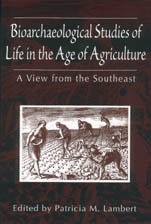
Bioarchaeological Studies of Life in the Age of Agriculture
A View from the SoutheastEdited by Patricia M. Lambert
University of Alabama Press, 2000
Investigations of skeletal remains from key archaeological sites reveal new data and offer insights on prehistoric life and health in the Southeast.
The shift from foraging to farming had important health consequences for prehistoric peoples, but variations in health existed within communities that had made this transition. This new collection draws on the rich bioarchaeological record of the Southeastern United States to explore variability in health and behavior within the age of agriculture. It offers new perspectives on human adaptation to various geographic and cultural landscapes across the entire Southeast, from Texas to Virginia, and presents new data from both classic and little-known sites.
The contributors question the reliance on simple cause-and-effect relationships in human health and behavior by addressing such key bioarchaeological issues as disease history and epidemiology, dietary composition and sufficiency, workload stress, patterns of violence, mortuary practices, and biological consequences of European contact. They also advance our understanding of agriculture by showing that uses of maize were more varied than has been previously supposed.
Representing some of the best work being done today by physical anthropologists, this volume provides new insights into human adaptation for both archaeologists and osteologists. It attests to the heterogeneous character of Southeastern societies during the late prehistoric and early historic periods while effectively detailing the many factors that have shaped biocultural evolution.
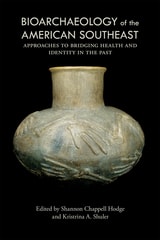
Bioarchaeology of the American Southeast
Approaches to Bridging Health and Identity in the PastEdited by Shannon Chappell Hodge and Kristrina A. Shuler
University of Alabama Press, 2018
Building on the 1991 publication What Mean These Bones? Studies in Southeastern Bioarchaeology, this new edited collection from Shannon Chappell Hodge and Kristrina A. Shuler marks steady advances over the past three decades in the theory, methodology, and purpose of bioarchaeology in the southeastern United States and across the discipline. With a geographic scope that ranges from Louisiana to South Carolina and a temporal span from early prehistory through the nineteenth century, the coverage aims to be holistic.
Bioarchaeology of the American Southeast: Approaches to Bridging Health and Identity in the Past is organized into two main parts. The first, “Context and Culture History in Bioarchaeology,” focuses on the fundamentals of archaeology—figuring out who lived at an archaeological site, when they lived there, what they did, and how they lived their lives.
This builds the framework that allows archaeologists to answer deeper questions, such as the ones addressed in the second part, “Social Identities in Bioarchaeology.” Here contributors explore questions of identity, ethnicity, gender and the status of women, social status, class, power and exploitation, migration, and conflict. These chapters implement and contribute to anthropological theory and showcase improved methods, such as innovative statistical analyses, and incorporate newer technology, including a DNA and geographic information system applications.

Biocultural Creatures
Toward a New Theory of the HumanSamantha Frost
Duke University Press, 2016
Biocultural Histories in La Florida
A Bioarchaeological PerspectiveChristopher Stojanowski
University of Alabama Press, 2005
Examines the effects of the Spanish mission system on population structure and genetic variability in indigenous communities in northern Florida and southern Georgia during the 16th and 17th centuries
This book examines the effects of the Spanish mission system on population structure and genetic variability in indigenous communities living in northern Florida and southern Georgia during the 16th and 17th centuries. Data on tooth size were collected from 26 archaeological samples representing three time periods: Late Precontact (~1200-1500), Early Mission (~1600-1650), and Late Mission (~1650-1700) and were subjected to a series of statistical tests evaluating genetic variability. Predicted changes in phenotypic population variability are related to models of group interaction, population demo-graphy, and genetic admixture as suggested by ethnohistoric and archaeological data.
Results suggest considerable differences in diachronic responses to the mission environment for each cultural province. The Apalachee demonstrate a marked increase in variability while the Guale demonstrate a decline in variability. Demographic models of population collapse are therefore inconsistent with predicted changes based on population geneticsl, and the determinants of population structure seem largely local in nature. This book highlights the specificity with which indigenous communities responded to European contact and the resulting transformations in their social worlds.

Biogenetic Paradoxes of the Nation
Finncattle, Apples, and Other Genetic-Resource PuzzlesSakari Tamminen
Duke University Press, 2019

Biography of a Chairman Mao Badge
The Creation and Mass Consumption of a Personality CultMelissa Schrift
Rutgers University Press, 2001
As China now enters an era in which people can more openly express their views about the Cultural Revolution, these icons have taken on new meanings, and people are wearing and talking about them in subversive ways. Melissa Schrift suggests that the badges developed "lives" that far surpass the intentions of their creators, as the Chinese ironically commodified them, both during the Cultural Revolution and today. During the Mao years, people wore the objects to symbolize their unquestioned loyalty to Mao. Yet even then many Chinese subverted the badges' symbolic meaning. Using them in socially approved rituals, they gained a measure of political credibility that masked their practice of prohibited customary rites.
Biography of a Chairman Mao Badge is a work of cultural history that contributes to our understanding not only of Chinese society but, more generally, of strategies people employ in responding to and transforming the meaning of propaganda campaigns and symbols.

Biography of a Hacienda
Work and Revolution in Rural MexicoElizabeth Terese Newman
University of Arizona Press, 2014
Biography of a Hacienda is a many-voiced reconstruction of events leading up to the Mexican Revolution and the legacy that remains to the present day. Drawing on ethnohistorical, archaeological, and ethnographic data, Elizabeth Terese Newman creates a fascinating model of the interplay between the great events of the Revolution and the lives of everyday people.
In 1910 the Mexican Revolution erupted out of a century of tension surrounding land ownership and control over labor. During the previous century, the elite ruling classes acquired ever-increasingly large tracts of land while peasants saw their subsistence and community independence vanish. Rural working conditions became so oppressive that many resorted to armed rebellion. After the war, new efforts were made to promote agrarian reform, and many of Mexico’s rural poor were awarded the land they had farmed for generations.
Weaving together fiction, memoir, and data from her fieldwork, Newman reconstructs life at the Hacienda San Miguel Acocotla, a site located near a remote village in the Valley of Atlixco, Puebla, Mexico. Exploring people’s daily lives and how they affected the buildup to the Revolution and subsequent agrarian reforms, the author draws on nearly a decade of interdisciplinary study of the Hacienda Acocotla and its descendant community. Newman’s archaeological research recovered information about the lives of indigenous people living and working there in the one hundred years leading up to the Mexican Revolution.
Newman shows how women were central to starting the revolt, and she adds their voices to the master narrative. Biography of a Hacienda concludes with a thoughtful discussion of the contribution of the agrarian revolution to Mexico’s history and whether it has succeeded or simply transformed rural Mexico into a new “global hacienda system.”
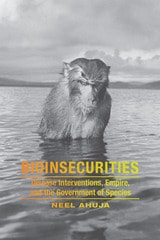
Bioinsecurities
Disease Interventions, Empire, and the Government of SpeciesNeel Ahuja
Duke University Press, 2016

Biological Relatives
IVF, Stem Cells, and the Future of KinshipSarah Franklin
Duke University Press, 2013
Biology at Work
Rethinking Sexual EqualityKingsley R. Browne
Rutgers University Press, 2002
Does biology help explain why women, on average, earn less money than men? Is there any evolutionary basis for the scarcity of female CEOs in Fortune 500 companies? According to Kingsley Browne, the answer may be yes.
Biology at Work brings an evolutionary perspective to bear on issues of women in the workplace: the "glass ceiling," the "gender gap" in pay, sexual harassment, and occupational segregation. While acknowledging the role of discrimination and sexist socialization, Browne suggests that until we factor real biological differences between men and women into the equation, the explanation remains incomplete.
Browne looks at behavioral differences between men and women as products of different evolutionary pressures facing them throughout human history. Womens biological investment in their offspring has led them to be on average more nurturing and risk averse, and to value relationships over competition. Men have been biologically rewarded, over human history, for displays of strength and skill, risk taking, and status acquisition. These behavioral differences have numerous workplace consequences. Not surprisingly, sex differences in the drive for status lead to sex differences in the achievement of status.
Browne argues that decision makers should recognize that policies based on the assumption of a single androgynous human nature are unlikely to be successful. Simply removing barriers to inequality will not achieve equality, as women and men typically value different things in the workplace and will make different workplace choices based on their different preferences.
Rather than simply putting forward the "nature" side of the debate, Browne suggests that dichotomies such as nature/nurture have impeded our understanding of the origins of human behavior. Through evolutionary biology we can understand not only how natural selection has created predispositions toward certain types of behavior but also how the social environment interacts with these predispositions to produce observed behavioral patterns.

Biomedicalization
Technoscience, Health, and Illness in the U.S.Adele E. Clarke, Laura Mamo, Jennifer Ruth Fosket, Jennifer R. Fishman, and Janet K. Shim, eds.
Duke University Press, 2010
Contributors. Natalie Boero, Adele E. Clarke, Jennifer R. Fishman, Jennifer Ruth Fosket, Kelly Joyce, Jonathan Kahn, Laura Mamo, Jackie Orr, Elianne Riska, Janet K. Shim, Sara Shostak
Biomedicine in an Unstable Place
Infrastructure and Personhood in a Papua New Guinean HospitalAlice Street
Duke University Press, 2014
In the hospital's clinics, biomedical practitioners struggle amid severe resource shortages to make the diseased body visible and knowable to the clinical gaze. That struggle is entangled with attempts by doctors, nurses, and patients to make themselves visible to external others—to kin, clinical experts, global scientists, politicians, and international development workers—as socially recognizable and valuable persons. Here hospital infrastructures emerge as relational technologies that are fundamentally fragile but also offer crucial opportunities for making people visible and knowable in new, unpredictable, and powerful ways.

Biomythography Bayou
Mel Michelle Lewis
Bucknell University Press, 2025
Biomythography Bayou is more than just a book of memoir; it is a ritual for conjuring queer embodied knowledges and decolonial perspectives. Blending a rich gumbo of genres—from ingredients such as praise songs, folk tales, recipes, incantations, and invocations—it also includes a multimedia component, with “bayou tableau” images and audio recording links. Inspired by such writers as Audre Lorde, Zora Neale Hurston, and Octavia Butler, Mel Michelle Lewis draws from the well of her ancestors in order to chart a course toward healing Afrofutures. Showcasing the nature, folklore, dialect, foodways, music, and art of the Gulf’s coastal communities, Lewis finds poetic ways to celebrate their power and wisdom.
Biopolitics, Geopolitics, Life
Settler States and Indigenous PresenceRené Dietrich and Kerstin Knopf, editors
Duke University Press, 2023
Contributors René Dietrich, Jacqueline Fear-Segal, Mishuana Goeman, Alyosha Goldstein, Sandy Grande, Michael R. Griffiths, Shona N. Jackson, Kerstin Knopf, Sabine N. Meyer, Robert Nichols, Mark Rifkin, David Uahikeaikaleiʻohu Maile

Biopolitics
A ReaderTimothy Campbell and Adam Sitze, eds.
Duke University Press, 2013
Michel Foucault gave new and unprecedented meaning to the term "biopolitics" in his 1976 essay "Right of Death and Power over Life." In this anthology, that touchstone piece is followed by essays in which biopolitics is implicitly anticipated as a problem by Hannah Arendt and later altered, critiqued, deconstructed, and refined by major political and social theorists who explicitly engaged with Foucault's ideas. By focusing on the concept of biopolitics, rather than applying it to specific events and phenomena, this Reader provides an enduring framework for assessing the central problematics of modern political thought.
Contributors. Giorgio Agamben, Hannah Arendt, Alain Badiou, Timothy Campbell, Gilles Deleuze, Roberto Esposito, Michel Foucault, Donna Haraway, Michael Hardt, Achille Mbembe, Warren Montag, Antonio Negri, Jacques Rancière, Adam Sitze, Peter Sloterdijk, Paolo Virno, Slavoj Žižek
Biopower
Foucault and BeyondEdited by Vernon W. Cisney and Nicolae Morar
University of Chicago Press, 2015
Situating biopower as a radical alternative to traditional conceptions of power—what Foucault called “sovereign power”—the contributors examine a host of matters centered on life, the body, and the subject as a living citizen. Altogether, they pay testament to the lasting relevance of biopower in some of our most important contemporary debates on issues ranging from health care rights to immigration laws, HIV prevention discourse, genomics medicine, and many other topics.